About The Kaʻū Calendar

Saturday, March 23, 2013

Ka`u News Briefs March 23, 2013

South Point Pali dropping off onto the west side of Ka Lae. South Point has long been considered a candidate
for space launches. Photo by European Space Agency astronaut Paolo Nespoli
THE BIG ISLAND is being considered once again for a space launch facility, as the state House of Representative’s Committee on Economic Development yesterday moved forward HCR226, a resolution urging the federal government to fund a study. Testimony for the resolution came from three parties, a company promoting the venture, the state Department of Business, Economic Development & Tourism, and 87-year-old George Ariyoshi, who supported space launches in Ka`u when he was governor of Hawai`i from 1974 to 1986.
      Testimony from OisinGroup, LLC mentioned the Big Island specifically. Its testimony touts Launch for Future (also called L4F) and “establishment of the world’s most modern, green and technologically advanced space launch complex and space operations center on the Big Island of Hawai`i.”
      The testimony was given by its principal Fred Eissler, a graduate of U.S. Naval Academy and vice president of Kama Kekoa, a defense contractor for Yorktown Naval Weapons Station and for Navy integrated warfare and nuclear engineering programs. Eissler states that the space launch facility “will be powered by the latest green technology and will incorporate the most innovative, cost effective, and proven engineering practices, while maintaining and enhancing Hawai`i’s pristine environment and ecosystem. This space launch capability will provide long-term technology-based economic growth to Hawai`i, enhance capitalism in innovative technologies, grow local businesses, support development of environmentally friendly infrastructure, enhance technology-intensive education and expand employment opportunity in Hawai`i.”
A federal study could weigh spaceport options for the Big Island.
Image from spaceports.blogspot.com
      The testimony also contends that during the last 50 years, three studies on space launch capability in Hawai`i “did not focus on Commercial/Government partnership for finance and incorporation or the use of green technologies as the centerpiece for building the support infrastructure.
      “Now is the right time for this study!” proclaims the OlsinGroup,LLC. “Our partnership and the people of this great state make an environmentally responsible and technologically feasible space launch capability in Hawai`i achievable.”
      The testimony compares the Big Island site to Orlando, Florida, saying: “Orlando tourist locations during any given launch week saw a 50 percent increase in patronage than those weeks without launches…. L4F will provide jobs, economic growth, science and innovation to improve the lives of all Americans.”
      The testimony states that a launch facility “will provide job growth that will increase the tax base for the state and federal government.”
      The testimony contends that previous studies for space launch facilities on the Big Island (when both lands makai of Pahala and around South Point were considered) “lacked the following: A detailed economic plan; a detailed plan for unobtrusive construction execution; a plan to create and execute affordability in a private-public financing approach; a plan that addressed the desires of all stakeholders’ and a sense of urgency to link the plan to immediate needs and opportunities.”
Gov. George Ariyoshi

      In his testimony, former governor George Ariyoshi says, “Hawai`i’s strategic mid-Pacific/near-equatorial location, resident expertise in multiple aerospace-related technologies, and long-standing ties with space-faring nations throughout Asia and the Pacific, clearly afford strategic assets and capabilities that can be leveraged to realize humankind’s full potential in space, and in so doing enable our state to engage as both a major contributor to and beneficiary of the global space enterprise.
      “In particular, these factors collectively make Hawai`i an ideal location to support commercial space launch operations to both the equatorial and polar orbits, and to do so in a manner that will enable safer and more cost-effective launch operations in comparison with other launch sites on the U.S. Mainland.”
      Ariyoshi testifies that the study would evaluate “both the economic viability and long-term benefits of establishing a commercial space launch and control facility in Hawai`i.”
     The former governor puts forth: “Even more importantly, this analysis will assess the ability to conduct commercial launch operation in ways that are both sensitive and responsive to our state’s priorities for local economic development and technology-based education, as well as local cultural and environmental concerns.”
      The state Department of Business, Economic Development & Tourism testifies that the resolution “builds upon Hawai`i’s strategic mid-Pacific, near-equatorial location, advanced telecommunications and IT infrastructure, resident expertise in aerospace technology, and other assets and capabilities that make our State an optimal location to support commercial space launch activities. Such operations would not only advance our nation’s aerospace industry, but also expand local transportation and communications infrastructure while providing new technology-based training and employment opportunities to help diversify our economic base.
      “In addition, the proposed feasibility study would engage Hawai`i residents and be conducted in a manner that would ensure the proposed launch facility and operations would be responsive to local development needs as well as cultural and environmental concerns.
       A companion resolution in the state Senate has been introduced with no testimony introduced or hearing set. One of the authors is Sen. Gil Kahele.
      Read both proposed resolutions and submit testimony at capitol.hawaii.gov.

Iwao Yonemitsu, left, and Tokuichi Nakano, veterans of the 442nd
Regimental Combat Team, with Gov. Neil Abercrombie.
Photo by Geneveve Fyvie
HAWAI`I STATE HOUSE OF REPRESENTATIVES’ Economic Development Committee has rejected a resolution asking the state to study potential social and economic effects of gambling in the state. Rep. Clift Tsuji said the proposal was rejected because it would be too expensive.
      East Ka`u’s Rep. Richard Onishi aligned with new Speaker of House Joe Souki in supporting some form of gambling. Onishi suggested that shipboard gambling would have less risk to the poor than putting gambling casinos on land in Hawai`i.
      Hawai`i and Utah are the only states without gambling.
   
Howard Shapiro, of Volcano, hands
over $1000 to Recycle Bowl winner.
KA`U RESIDENT TOKUICHI NAKANO, a veteran of the 442nd Regimental Combat Team of WWII, is attending events on O`ahu commemorating the team’s 70th anniversary. When the War Department called for volunteers for the Japanese-American combat unit, more than 12,000 signed up. The 442nd is recognized by the Army as having the most combat awards for a unit of its size.
      Events include a remembrance service, a tour of the U.S. Army Museum, a luncheon and a screening of the documentary Valor with Honor.
      On Monday, the state Senate and House of Representatives will honor the veterans at the State Capitol.

KA`U SCHOOLS ARE INVITED TO FORM environmental clubs and enter next year’s Recycle Bowl competition presented by Keep Hawai`i Beautiful. The organization recently announced Konawaena High School as the $1,0000 winner of its 2013 Recycle Bowl. Students were congratulated by Volcano resident Howard Shapiro, education director for Recycle Hawai`i. “By your efforts you’ve helped save energy, saved money for your families, school and community and made a statement that you care for the environment. You’ve also learned that we can create products from what we used to think of as trash,” Shapiro said.
      Keep America Beautiful, a nonprofit organization focusing on building and sustaining vibrant communities, recently held the nationwide Recycle Bowl competition for elementary, middle and high school students. The Recycle Bowl Competition reached more than a million students across America with schools in all 50 states and the District of Columbia competing.
      The president of Keep Hawai`i Beautiful, Paul J. Burklarewicz, also acknowledged environmental clubs from Konawaena and Pahoa high schools. “Keep Hawai`i Beautiful is pleased that environmental clubs from Konawaena and Pahoa high schools helped their schools become state champs for two years running,” he said.
      Information is available at recycle-bowl.org.

Two by Tenn with Tea, a performance of two one-act plays
by Tennessee Williams directed by Julie Dobbs, takes
place tomorrow at Pahala Plantation House.
TWO BY TENN WITH TEA, a performance of two of Tennessee Williams’ one-act plays, takes place tomorrow at Pahala Plantation House. Dick Hershberger and Arlene Araki perform in Talk to Me Like the Rain and Let Me Listen and I Can’t Imagine Tomorrow, directed by University of Hawai`i-Hilo drama department senior Julie Dobbs. The plays begin at 3 p.m. Tea and cookies will be served, and a potluck dinner follows.

SUPPORT OUR SPONSORS AT PAHALAPLANTATIONCOTTAGES.COM AND KAUCOFFEEMILL.COM. KA`U COFFEE MILL IS OPEN SEVEN DAYS A WEEK.

Friday, March 22, 2013

Ka`u News Briefs March 22, 2013

The Ka`u Coast could be a study area for adding more land to the National Parks. Photo by Peter Anderson
PLAN TO STUDY THE KA`U COAST and other places in Hawai`i with the goal of expanding national parklands drew praise from conservation groups this week. The commentary followed Sen. Brian Schatz introducing S.618 – Pacific Island Parks Act of 2013, his first bill in the U.S. Senate. It would launch a three-year study on values, resources and costs. The legislation says the Secretary of the Interior “shall conduct a special resource study of each of the following sites:
(A) The Ka`u Coast on the island of Hawai`i, Hawai`i.
(B) The northern coast of Maui, Hawai`i.
(C) The southeastern coast of Kauai, Hawai`i.
(D) Historic sites on Midway Atoll.”
      The initiative builds on community efforts in Ka`u dating back to the doubling of the size of Hawai`i Volcanoes National Park, with help from the late Sen. Dan Iouye, and to a state task force on conserving the coast. The task force, set up through state legislation from Rep. Bob Herkes, encouraged funding from federal, state, county and private sources for the subsequent preservation of Honu`apo, Kawa and lands west of Punalu`u. Most of the lands had been put up for sale by speculators, and community groups organized to preserve them.
The late Sen. Dan Inouye joined Hawai`i Volcanoes National Park
superintendent Cindy Orlando at the opening of the park's Kahuku Unit.
      One of the areas that would be studied under the Schatz bill is the Great Crack between Pahala and Hawai`i Volcanoes National Park, long on the acquisitions list for the National Park Service.
      Hawaiian Islands state director for the Trust for Public Land, Lea Hong, said: “Parks are a wise investment, supporting hunting, fishing, camping and other outdoor recreational activities that contribute a total of $725.5 billion annually to the U.S. economy and 6.15 million jobs, according to the Outdoor Industry Association. More broadly, outdoor recreation, nature conservation and historic preservation contribute a total of $1.06 trillion annually to the economy, supporting 8.4 million jobs – or one out every 16 jobs in the U.S.”
      Hawaiian Islands Land Trust executive director Ted Clement said, “We support Senator Schatz’s efforts to expand national parks in Hawai`i because Hawai`i’s long-term well being, environmentally, economically, and otherwise, is directly linked to the land and the choices we make about it. Indeed, Hawai`i’s state motto proclaims, ‘The life of the land is perpetuated in righteousness.’ The proposed legislation will help keep Hawai`i a world-class destination and highly desirable place to live, work and visit – factors critical to our economy.”
Lea Hong
      The Nature Conservancy’s Hawai`i State director Suzanne Case said, “The federal Land and Water Conservation Fund was enacted nearly 50 years ago to use revenues from the extraction of offshore oil and gas to support the conservation of other precious resources – our land and water. Today, the LWCF is the primary federal financing tool to conserve our national parks, forests, and wildlife refuges. Legislation like that introduced by Senator Schatz today proposes to identify some of those precious resources in Hawai`i and the Pacific that are at risk of being lost but have the potential for protection through the Land and Water Conservation Fund.”
      Robert D. Harris, director of the Sierra Club of Hawai`i, said, “The Sierra Club appreciates and strongly supports Senator Schatz’s efforts to protect Hawai`i’s special places. Recognizing the looming impacts of climate change and sea level rise, this is an important step toward preserving Hawai`i’s unique cultural and natural heritage and ensuring our children have amazing beaches and wild places to explore.”
      The latest action on the bill is that it has been referred to the U.S. Senate Committee on Energy & Natural Resources.
      Comments may be made by selecting the “new parks” from the topics drop-down menu at www.schatz.senate.gov/contact.

Sen. Josh Green
GMO LABELING IS SHELVED, and a study will be conducted on the costs and value of identifying for the public which foods are genetically engineered. The state Senate’s Agriculture Committee, in a joint meeting with the Consumer Protection and Health Committees, almost cancelled a public hearing on the issue yesterday, over the objections of West Ka`u Senator Josh Green. The Honolulu Star- Advertiser this morning quoted Green, who chairs the Health Committee: “I think the reason we have to have a hearing and we have to have labeling is just because of public trust.” Writer Sara Zoellic also reported Green saying: “Had we not had a hearing, it would have been easy to see people blame government in a conspiratorial way. That’s not OK.”
      Testimony on the issue came from all sides, with workers from Monsanto and other GMO seed producers lining up to testify alongside GMO labeling proponents.
      The committees voted to shelve the bill and authorize a study, noting that the state attorney general found flaws in the language that could deem it unconstitutional. Similar bills to label GMO are being heard at legislatures around the country.

IN TESTIMONY OPPOSING THE PROPOSAL for `Aina Koa Pono to sell biofuel that would be manufactured at a refinery off Wood Valley Road to Hawai`i Electric Light Co., Life of the Land concluded that “the contract should be rejected based on the proposed high price” and “the proposed secret price.”
      Life of the Land's testimony submitted last week to the Public Utilities Commission also noted that the utility's own testimony covers how the `Aina Koa Pono project would meet the utility's system requirements and also covers the price to be charged for the fuel. However, the utility has delayed its presentation of a  Life Cycle Analysis, which would evaluate the input costs versus the output value for the  `Aina Koa Pono project, and an evaluation of externalities that could result (such as traffic, pollution of air and groundwater and displacement of food producing agricultural operations).
      Life of the Land recommended that with the applicant opting "to file the Life Cycle Analysis/externalities data at a later date, the Commission should only issue preliminary approval of what is essentially a term sheet: prices and fuel characteristics. Final approval must await the submission of documentation regarding the Life Cycle Analysis/externalities. At that point the parties/participants and the public would have an opportunity to opine on the new submittals. The parties/participants would then propose a new schedule (information requests, testimony, and a possible evidentiary hearing) restricted to evaluating the Life Cycle Analysis/externalities.
      “If the Commission approves or modifies the proposed price, then we advocate that the Commission only give preliminary approval to the first two issues (meeting the utility’s system requirements; and the price), and defer ruling on the third issue (Life Cycle Analysis/externalities) pending further filing of relevant documentation by the applicant.”
      See this and more testimony at puc.hawaii.gov. Docket number is 2012-0185.

Pahala Public & School Library celebrates 50 years of service next month.
Photo by Julia Neal
THE FIFTIETH ANNIVERSARY of Pahala Public & School Library will be celebrated Friday, April 19 at the library located at 96-3150 Pikake Street. As part of National Library Week, the event begins at 10:30 a.m. with local hula halau, students of Ka`u High & Pahala Elementary School and a crafts demonstration from 11 a.m. until 2 p.m. with Hawaiian Civic Club of Ka`u. At 2 p.m. the winners of the Haiku Poetry Contest will be announced, and the haiku recited. Contests, door prizes and refreshments will be offered throughout the day.
      Pahala Library is now open three days a week on Mondays, Thursdays and Fridays.
      For more information call 928-2015.

TALK TO ME LIKE THE RAIN and Let Me Listen and I Can’t Imagine Tomorrow are the titles of two one-act plays by Tennessee Williams that will be performed Sunday at 3 p.m. at Pahala Plantation House. University of Hawai`i-Hilo drama department senior Julie Dobbs directs Dick Hershberger and Arlene Araki in the rarely performed plays. Tea and cookies will be served, and a potluck dinner follows.

TOMORROW IS A BUSY DAY for Ka`u sports. At home, the boys volleyball team plays Kohala/St. Joseph’s at 10 a.m., and the softball team meets Konawaena at 1 p.m. A Judo tournament takes place in Hilo at 9 a.m. Track and field team members travel to Laupahoehoe for a meet at 9 a.m., along with the tennis team, whose match begins at 10 a.m.

SUPPORT OUR SPONSORS AT PAHALAPLANTATIONCOTTAGES.COM AND KAUCOFFEEMILL.COM. KA`U COFFEE MILL IS OPEN SEVEN DAYS A WEEK.

Thursday, March 21, 2013

Ka'u News Briefs March 21, 2013

The Ka`u Coast is famous for being the remote home of sea turtles and could be the site of additional national park lands.
Photo by Suz Fields
MORE NATIONAL PARK LANDS could be added in Ka`u if legislation by Sen. Brian Schatz goes forward. The bill, aimed at expanding Hawai`i’s National Parks, including sections of the Ka`u Coast, is the first piece of legislation offered by the freshman U.S. Senator who was appointed to office by Gov. Neil Abercrombie at the end of last year, following the death of longtime Senator Daniel Inouye.
      Preservation of the Ka`u Coast has been a community initiative for more than a decade, leading to preservation of more than 1,000 acres between Honu`apo Pier and Punalu`u through county, state, federal and private money. The land is under the stewardship of the county with cooperation from community groups.
      Thousands of additional Ka`u acres are under consideration around Road to the Sea and the slope above Honu`po across lands toward South Point.
Sen. Brian Schatz, right, and Gov. Neil Abercrombie visited Ka`u for
inauguration ceremonies at historic Pahala Plantation House.
Photo by Geneveve Fyvie
      Called the Pacific Islands Parks Act of 2013, the Schatz legislation calls for resource studies on the Ka`u Coast and several other Hawaiian Islands locations to be overseen by the Secretary of the Interior. The studies over three years could be funded from revenues taken in by the federal government from offshore gas and oil operations.
      Schatz noted the value of national parks in Hawai`i for the visitor industry, as the parks bring in more than $260 million a year. Comments on the bill can be directed to Schatz’s website at schatz.senate.gov/contact.cfm. See the new parks link.
      Hawai`i Volcanoes National Parks Superintendent Cindy Orlando said that the park is very interested in the studies and has been working with Hawai`i’s delegation to congress on this initiative for a number of years. Rep. Ed Case and Mazie Hirono asked for the studies of the Ka`u Coast, following the state’s South Kona – Ka`u Coastal Conservation Task Force of community members recommending preservation of the Ka`u Coast in 2006.

HISTORIC PRESERVATION strategies diverged at a state Senate public hearing yesterday with county and state agencies and the construction industry taking a different path than professionals in the field, including representatives of the Office of Hawaiian Affairs, Hawaiian Civic Clubs, Historic Hawai`i Foundation, the Society for Hawaiian Archaeology and the International Archeological Research Institute.
      University of Hawai`i archeology professor Dr. Sara Collins presented testimony from Society for Hawaiian Archaeology, opposing Senate Bill 1171. She said the bill would allow approvals of large projects without completion of a full archaeological inventory survey ahead of construction. The proposed legislation, she explained, would allow “phased reviews.”
      Collins said the law “would only add confusion and uncertainty to the historic preservation review process in State law” and that state agencies already have the ability to allow phased reviews through their administrative rules. “It is the rules that establish the project review process and provide the context for when certain kinds of information are needed and when decisions are appropriately made. ….To amend the law without a full consideration of this overarching context is risky and unnecessary.” She concluded by saying that “the procedural safeguards contained in the established regulations are critical to the protection of historic properties and cultural resources.”
    
Dr. Sara Collins, of University of Hawai`i, testified
against the change in historic site survey laws.
  Most of the testimony from individuals opposed the change in the historic preservation law. Kaua Keaenui testified: “If developers and government entities followed the rules in the first place and didn’t try to undermine and sidestep the law, there wouldn’t be any delay in projects or rising penalty costs. The City (of Honolulu) pays out penalty costs at more than $7 million a month (and rising) for the rail. Is the community okay with this? Get the government to follow the rules. There’s nothing wrong with the rules addressing reviews of historic preservation projects. Government and developers just need to start following the rules and stop trying to circumvent it to address their needs.”
      Those supporting the bill include the statewide Hawai`i Chamber of Commerce, Hawai`i Construction Alliance, the Building Industry Association of Hawai`i, the General Contractors Association of Hawai`i, the Mason Union Local 1 & 630 and state and county agencies.

     Hawai`i County Planning Directory Bobby Leithead-Todd supported the bill to allow phased review. “We clearly see the benefit of accommodating for the phased review of projects on this island, especially linear projects that carry long distances, such as improvements to the Queen Ka‘ahumanu Highway in the North Kona District and to the Kea‘au-Pahoa Highway in the Puna District, and the construction of the Daniel K. lnouye Memorial Highway between East and West Hawai‘i.Large projects like these should not be handled with an “all-or-nothing” approach. Phased review, approval and implementation provide a practical solution for certain larger projects.
      “The proposed bill, if adopted, will have no detrimental impact on the state Department of Land & Natural Resources and Burial Council oversight of the State’s historic and cultural resources. It simply provides an option for the State DLNR to be able to consider a phased review and approval of projects. The fiduciary responsibility of the State DLNR to provide leadership in preserving, restoring, and maintaining the State’s historic and cultural properties, will remain in tact,” testified the Big Island’s Planning Director.
      Most of the testimony from community organizations, unaligned with the building industry, opposed the legislation. The Association of Hawaiian Civic Clubs, representing 69 member organizations and founded in 1918 when Prince Kuhio was a Delegate to the U.S. Congress, gave testimony saying that Kuhio “expressed serious concerns about the decline of the Hawaiian people, culture and traditions – issues that the Civic Clubs have always defended.” 
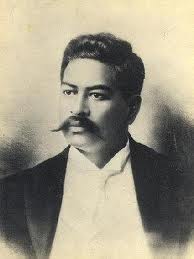
Hawaiian Civic Clubs testified that Prince
Kuhio worried about loss of Hawaiian culture.
     The Civic Clubs stated that the proposed “phased review could allow the inexorable approval and forward movement, development and construction of a project, regardless of what lies in its path, due to previous expenditures of time and money. In other words, Senators, if iwi kupuna (the buried remains of ancestors) are hindering the project after so much has already been finished, and after the passage of earlier phased reviews, the argument to press on is valid. But looked at holistically, given a project review in its entirety – not phased –this would not happen because what’s at the end of the path would be revealed before development begins and accommodations could be planned….At this time, SB1171 very much favors development and construction with potential of destroying iwi kupuna and trust in governmental process. We accept kuleana to protect iwi kupuna and oppose this bill.”
      Native Hawaiian Legal Corp. testified to examples of delays and cost overruns, as well as desecration of graves resulting from not doing the studies ahead of construction. Listed were a Wal-Mart, Ward Village Shops, and Kawaiaha`o Chruch’s multi-purpose center, all on O`ahu.
      Native Hawaiian Legal Corp. gave the example of an Archaeological Inventory Survey being done ahead of a ten-mile long, 600-acres area for Saddle Road, resulting in no delays.
      The International Archaeological Research Institute testified that “This bill runs contrary to the intent of historic preservation, as well as to the interests of the public, planners, developers, contractors and government agencies. The phasing of archaeological inventory surveys would build in poorly informed decision-making and planning regarding the protection of cultural resources.”
      Historic Hawai`i Foundation also opposed the bill on behalf of its 850 members who “work to preserve Hawai`i’s unique architectural and cultural heritage and believe that historic preservation is an important element in the present and future quality of life, economic
viability and environmental sustainability of the state.” The testimony says that “a blanket provision allowing for a phased review of projects could introduce unintended consequences that could lead to the detriment of historic properties ad cultural resources.”

`AINA KO PONO TESTIMONY from Life of the Land went to the Public Utilities Commission last week opposing the proposal for the hui to sell diesel that would be manufactured in a refinery off Wood Valley Road. The contract would be for 20 years.
      Life of the Land stated “There are several weaknesses in this proposed contract including the price, the technology, the externalities, and the availability of cheaper alternatives that make this project unreasonable and not in the public interest.”
      Concerning alternatives, Life of the Land testified that “Hawai`i is known around the world for its sun and sand, and for being a tropical paradise. We have every type of renewable energy that exists in the world. Every island has abundant solar, wind, wave and ocean energy resources and some have geothermal resources. We have enough energy resources to power our State (and perhaps to also power California). But we also have precious ecosystems and diverse communities.” 
      Life of the Land also testified that “Often proponenets of projects will assert that they have found the perfect solution, one with no impacts. What they really mean is that they are blind to the impacts. That sends up a red flag; Watch out! Caveat emptor! They are not looking!”
      The testimony gives an example: “Many renewable energy projects rely on trace (rare earth) minerals produced in truly unsustainable manners. Many renewable energy projects rely on fossil fuel to make their components.” The testimony refers to a federal study on Hidden Costs of Energy: Unpriced Consequences of Energy Production and Use, testifying how externalities should be considered in new energy projects. See more in tomorrow’s Ka`u New Briefs or see www.puc.hawaii/gov. Click on Aina Koa Pono, the link, and documents for all the testimony.

JUNIOR RANGER DAY takes place this Saturday when participants connect the culture, people and `aina of the Kahuku Unit of Hawai`i Volcanoes National Park through art, `oli, GPS, and compass and listen to the mo`olelo of Pupu-hulu-ena, Keo-ua-ku-a-hu`ula and Kamehameha I. The free event takes place from 10 a.m. to 2 p.m. and includes lunch and cultural craft demonstrations. Pre-registration required at 985-6019.

HAWAI`I VOLCANOES INSTITUTE presents Life on Recent Lava Flows with botanist Tim Tunison this Saturday from 9 a.m. to 3 p.m. Fee is $50 for Friends and $65 for non-members. Student fees (K-12 and college with valid ID) are $25 for members and $35 for non-members. For more and to register, see fhvnp.org, email institute@fhvnp.org or call 985-7373.