About The Kaʻū Calendar

Saturday, August 08, 2020

Ka‘ū News Briefs, Saturday, August 8, 2020

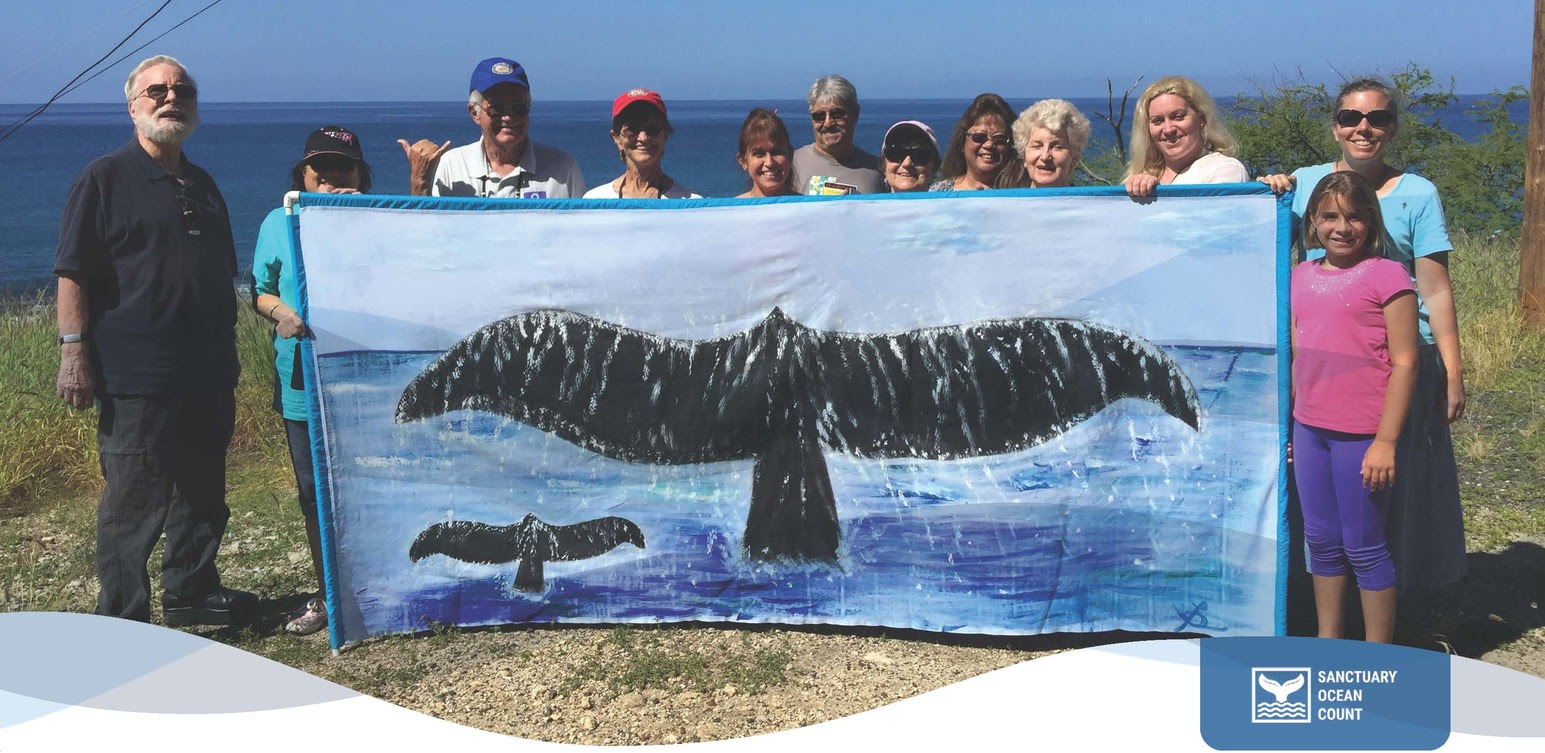
The  2021 Sanctuary Ocean Count organizers are looking for artists to promote the counting of humpback whales.
See more, below. Photo from Hawaiian Islands Humpback Whale National Marine Sanctuary
VOTERS PARTICIPATED WITH ENTHUSIASM STATEWIDE during the first mail-in primary election in Hawaiʻi's history. The voting began in July and wrapped up on Primary Election Day, Saturday, Aug. 8. The number of ballots cast statewide reached nearly 400,000, a record, following recent elections where voter turnout showed a steep decline.
     In Hawaiʻi County, at least 61,900 residents voted mostly by mail during this primary, slightly surpassing the 59,482 ballots cast in 2018. The General Election will also be by mail, from Oct. 16 through General Election Day, Nov. 3.

Mitch Roth during one of his food giveaways during the pandemic,
 this one in Pāhala. Photo by Julia Neal
To read comments, add your own, and like this story, see Facebook. Follow us on Instagram and Twitter. See our Fresh Food on The Kaʻū Calendar and our latest print edition at kaucalendar.com.

A RUNOFF FOR HAWAIʻI MAYOR between County Prosecutor Mitch Roth and community organizer Ikaika Marzo will churn up the political waters until the General Election.
     With a vast majority of the ballots counted by 10 p.m., Mitch Roth led with 31.4 percent, followed by Ikaika Marzo 20.8 percent, Harry Kim 15.5 percent, Neil Azevedo 11.2 percent, Stacy Higa 9.1 percent, Tante Urban 3 percent, Bob Fitzgerald 2.4 percent, Mike Ruggles 1.9 percent, Kelly Greenwell 1.1 percent, and six additional candidates under 1 percent.
     With no candidate for mayor with more than 50 percent of the vote, the battle between the top two Primary finalists, Roth and Marzo, will end during the General Election from Oct. 16 - Nov. 3.
     In his Facebook live celebration on election night, Roth said he looks forward to upcoming discussions with Marzo to take on some of the big issues for Hawaiʻi County. Roth also said and that he wants to work with those who ran in the primary, including Stacy Higa, who manages Nā Leo TV and other candidates who have business and community service backgrounds.
Ikaika Marzo is headed to a runoff with Mitch Roth in the battle for Mayor of Hawaiʻi County.
Photo from Marzo4Mayor
     After the 7 p.m. printout on Saturday, the post on the Marzo4Mayor Facebook said, "Imua Kakou! Mahalo to all you supporters around the island of Hawaiʻi and worldwide for showing your Aloha and dedication for the Marzo 4 Mayor campaign."
Mayor Harry Kim was busy during the campaign season, dealing with the
COVID-19 pandemic, seen here wishing Kaʻū High School graduates
well during the drive through ceremonies. Photo by Julia Neal
     Marzo, a fisherman, tour boat captain, and musician, became an online celebrity and activist during the 2018 Kīlauea eruption. He organized volunteers to establish Puʻuhonua O Puna, to feed people and set up a hub and communication center, featuring a live Facebook that kept the public up to date. Marzo filmed the eruption and made daily boat runs to Pohoʻiki and the rest of the coastline that was inundated with lava.
     He said he had no idea that his work during the eruption would lead to people telling him to run for mayor. He said the Primary Election "was like being in a championship game."
     Kim, the incumbent, said he didn't know what to expect from the election as he was busy working all the time during the last four months, with the  COVID-19 pandemic and other issues. He said, "I would not change anything."

Kelden Waltjen came in first
in the race for Prosecutor.
To read comments, add your own, and like this story, see Facebook. Follow us on Instagram and Twitter. See our Fresh Food on The Kaʻū Calendar and our latest print edition at kaucalendar.com.

KELDEN WALTJEN CAME IN FIRST IN THE RACE FOR COUNTY PROSECUTING ATTORNEY, with 51.5  percent of the vote, followed by Jared Auna with 28.4 percent and Christopher Bridges with 20 percent. Waltjen is a deputy Hawaiʻi County prosecutor and decided to campaign for the job when County Prosecutor Mitch Roth declined to run for reelection in order to seek the mayorship.

To read comments, add your own, and like this story, see Facebook. Follow us on Instagram and Twitter. See our Fresh Food on The Kaʻū Calendar and our latest print edition at kaucalendar.com.

Joy San Buenaventura wins the Democratic Primary for a seat in the Hawaiʻi Senate.
Photo from Friends of Joy San Buenaventura
JOY SAN BUENAVENTURA TOOK THE DEMOCRATIC PRIMARY FOR STATE SENATOR to represent Honuʻapo through Pāhala and Volcano into Puna. She won the endorsement from Sen. Russell Ruderman who chose not to run for another term. San Buenaventura took 67.5 percent of the vote, over Smile Burrows, with 18.3 percent. The Aloha ʻĀina candidate Ron Ka-Ipo ran unchallenged in the primary.
Rep. Richard Onishi wins
his primary election.
     The other Senator representing Kaʻū is Dru Kanuha, who is not up for reelection until 2022.

To read comments, add your own, and like this story, see Facebook. Follow us on Instagram and Twitter. See our Fresh Food on The Kaʻū Calendar and our latest print edition at kaucalendar.com.

INCUMBENT RICHARD ONISHI WON THE DEMOCRATIC NOMINATION FOR STATE HOUSE OF REPRESENTATIVE for the district that runs from Honuʻapo, through Pāhala, Volcano into Hilo. He took 49.4 percent of the vote. Challenger Shannon Matson took 30.7 percent and Fredrick Fogel 7.1 percent. Onishi faces Republican Susan Hughes in the General Election. Mailing in ballots begins on Oct. 16 and election results will be announced on Nov. 3.

Jeanné Kapela wins the primary to represent
West Kaʻū into Kona in the state House.
Photo from Friends of Jeanne Kapela
To read comments, add your own, and like this story, see Facebook. Follow us on Instagram and Twitter. See our Fresh Food on The Kaʻū Calendar and our latest print edition at kaucalendar.com.

JEANNÉ KAPELA WON THE DEMOCRATIC NOMINATION FOR STATE HOUSE OF REPRESENTATIVES to represent Nāʻālehu, and Ocean View through Miloliʻi into Kona. She received 54 percent of the vote, followed by Colehour Bondera with 23.7 percent. The race opened up when incumbent Rep. Richard Creagan decided to refrain from running again. Creagan endorsed Bondera, who entered late.
     Cittlalli Decker ran unopposed for the Aloha ʻĀina party. Michael Last ran unopposed in his Libertarian party.

To read comments, add your own, and like this story, see Facebook. Follow us on Instagram and Twitter. See our Fresh Food on The Kaʻū Calendar and our latest print edition at kaucalendar.com.

Kai Kahele ad that helped launch him into the General Election,
a chance to go to Congress. Photo from Friends of Kai Kahele
KAI KAHELE WON THE DEMOCRATIC NOMINATION TO REPRESENT KAʻŪ, VOLCANO, AND ALL RURAL HAWAIʻI IN THE U.S. CONGRESS. He defeated Brian Evans, Brenda Lee, and Noele Famera. Kahele takes on Republican Joe Akana, Aloha ʻĀina Party's Jonathan Hoʻomananawanui, Libertarian Michelle Rose Tippens, American Shopping Party's John Giuffre, and nonpartisan candidate Ron Burrus in the General Election, which wraps up on Nov. 3.

To read comments, add your own, and like this story, see Facebook. Follow us on Instagram and Twitter. See our Fresh Food on The Kaʻū Calendar and our latest print edition at kaucalendar.com.

DESIGN THE 2021 OCEAN COUNT T-SHIRT for Hawaiian Islands Humpback Whale National Marine Sanctuary. The National Marine Sanctuary Foundation is hosting a t-shirt design contest, with the top finalists' designs appearing on oceancount.org. The winner will also receive $500. Email the design and completed registration form to oceancount@marinesancutary.org by Sept. 30.
     The organizers are looking for a creative design highlighting humpback whales in Hawaiian waters to feature on the back of the t-shirt. The entire design must be of the artist's own creation. To ensure the design looks its best when printed, submit as a high definition PDF, .AI, .EPS or PNG with a quality of at least 1500px x 1500px and 300 DPI (dots per inch) with dimensions no greater than 11.5 inches by 14 inches. The front of the t-shirt will feature the logos of the Office of National Marine Sanctuaries, the National Marine Sanctuary Foundation, and the Department of Aquatic Resources.
To get ready for next winter's whale season, the National Marine Sanctuary invites artists to come up
with a design. Photo by Ralph Lee Hopkins
     Each year, thousands of humpback whales migrate between Alaska and Hawai‘i. The marine waters of Hawai‘i are one of the most important breeding, calving, and nursing grounds for humpback whales in the North Pacific. For that reason, the U.S. established Hawaiian Islands Humpback Whale National Marine Sanctuary to protect these ocean giants and their habitat. Every year, on the last Saturday in January, February, and March, volunteers count whales from the shores of Hawaiʻi Island, Oʻahu, and Kauaʻi for the annual Sanctuary Ocean Count. The goal of the Ocean Count is to increase public awareness of the sanctuary and current ocean issues, including threats to humpback whales, while also promoting responsible viewing of all marine wildlife. The project offers Hawaiʻi residents and visitors an opportunity to monitor humpback whales in their breeding grounds by conducting a yearly shore-based census during the peak season.
     The 2021 counts are scheduled for Saturdays, Jan. 30, Feb. 27, and March 27. Registration opens Dec. 15. Participants tally humpback whale sightings and document the animals' surface behavior during the surveys, which are from 8 a.m. to 12 noon. Since it is an Ocean Count, participants are encouraged to note down any other species seen during the count. The Sanctuary Ocean Count project is highly dependent on and hugely successful due to enthusiastic and dedicated volunteers. A similar effort is also done on Maui with the Pacific Whale Foundation.
     See https://oceancount.org/ for more.

To read comments, add your own, and like this story, see Facebook. Follow us on Instagram and Twitter. See our Fresh Food on The Kaʻū Calendar and our latest print edition at kaucalendar.com.

REVISED HOURS FOR KĪLAUEA MILITARY CAMP, in Hawaiʻi Volcanoes National Park, are announced, as well as a special meal for Oktoberfest.
     Crater Rim Café is open Fridays from 5p.m. to 8 p.m., Saturdays from 6:30 a.m. to 11 a.m. and 5 p.m. to 7 p.m., and Sundays from 6:30 a.m. to 11 a.m. 10-Pin Grill is open from 6:30 a.m. to 7 p.m. weekdays, 11 a.m. to 7 p.m. weekends. Java Café is open 6:30 a.m. to 7 p.m., daily. Lava Lounge is open Sunday through Thursday, 4 p.m. to 7 p.m., Fridays and Saturdays, 4 p.m. to 8 p.m.
KMC's Bowling Lanes are open daily, by reservation. Photo by Julia Neal
     Bowling Lanes, reservations required, are open 6:30 a.m. to 7 p.m. weekdays, 11 a.m. to 7 p.m. weekends. Recreation Lodge and Java Café are open 6:30 a.m. to 7 p.m., daily. Fitness Center is open 7 a.m. to 7 p.m, daily. General Store is open Monday through Saturday, 8 a.m. to 7 p.m., and Sundays, 8 a.m. to 4 p.m.
     Crater Rim Café offers a special Oktoberfest menu for dine-in or grab-and-go on Saturday, Sept. 19 from 5 p.m. to 8 p.m. The menu offers Bratwurst, Knockwurst, Bockwurst, German Potato Salad, Sauerkraut, Tossed Salad, and German Chocolate Cake. $14.95 per person. Call 967-8356 to book reservation for dine-in or place a grab-and-go order.
     Face coverings and six feet social distancing are required in common areas. KMC is open to all authorized patrons and sponsored guests. Park entrance fees may apply.

To read comments, add your own, and like this story, see Facebook. Follow us on Instagram and Twitter. See our Fresh Food on The Kaʻū Calendar and our latest print edition at kaucalendar.com.

FIVE NEW COVID-19 CASES are reported for Hawaiʻi Island by Department of Health today, including at least one in Volcano zip code 96785. The state recorded a record 231 new cases, with Maui reporting three and Oʻahu reporting a new record of 223. The state death toll is 31, with one previous death removed from the count and a new one added. The state's new case total is 3,346 since the pandemic began.
     Hawaiʻi Island's case count to date is 128, with ten active, none hospitalized. It has been more than 28 days since a case was recorded for a Kaʻū zip code. Since the pandemic began, no one died on this island. The 96740 zip code recorded between six and ten cases during the last 28 days.
Onset of COVID-19 cases in the last 28 days, by zip code.
White is zero cases. Yellow is one to five cases. Light
orange is six to ten cases. Dark orange (not pictured)
is 11 to 20 cases. Red (not pictured) is 21 to 50 cases.
Hawaiʻi Department of Health map
     Since the pandemic began, Oʻahu reported 2,964 cases, Maui County 184, and Kauaʻi 47. Twenty-three victims are residents diagnosed while visiting other places. Thirty-one people in the state died from COVID-19.
     In the daily message from Hawaiʻi County Civil Defense, Director Talmadge Magno said, "The Island of Oʻahu has seen a large increase in the number of positive cases due to gatherings. We need your help in taking special care when socializing and gathering. Do know special events, such as concerts and all other large gatherings, do require a permit. Everyone must do their part by following the preventive measures of face coverings, cleanliness, keeping yourself healthy, of staying at home when sick, and distancing. Thank you for taking the effort to keep our neighbors, friends, family, and community safe. As a reminder, do know the wearing of face masks is mandatory on the Island of Hawaiʻi, and please remember to vote. Thank you for listening and have a safe day. This is your Hawaiʻi County Civil Defense Agency."
     In the United States, more than 4,994,276 cases have been confirmed. The death toll is over 162,381. The worldwide COVID-19 case count is more than 19.49 million. The death toll is more than 723,854.

To read comments, add your own, and like this story, see Facebook. Follow us on Instagram and Twitter. See our Fresh Food on The Kaʻū Calendar and our latest print edition at kaucalendar.com.

THE TEMPERATURE OF THE LAKE IN HALEMAʻUMAʻU CRATER is the focus of this week's Volcano Watch, written by U.S. Geological Survey Hawaiian Volcano Observatory scientists and affiliates:
     How hot is Kīlauea's summit water lake?
     The recent first anniversary of the appearance of water at Kīlauea's summit is a reminder of how much has changed since the end of the 2018 eruption and summit collapse.
     Surface water at the summit has highlighted the potential for future hazards at the summit. Magma interacting with near-surface water can, in some circumstances, trigger steam-blast explosions.
     HVO continues to closely monitor the summit region and is keeping a keen eye on the new lake itself, as it may provide another useful "window" into what's happening beneath the surface.
This thermal image of the water lake at the summit of Kīlauea was taken from the western caldera rim on July 31. 
Warmer colors (yellow-orange) show higher temperatures, while cooler colors (blue) show lower temperatures. The 
image indicates that the maximum temperatures on the lake surface at this time are about 82 degrees Celsius 
(180 degrees Fahrenheit). The cooler zones on the lake surface are patches of rising steam. USGS photo
     Lake level is tracked regularly with a laser rangefinder, and visual observations record changes in water color and circulation patterns. Water chemistry has been analyzed in samples collected by two unoccupied aircraft systems missions. A continuously operating thermal camera was installed late last year to keep watch on temperature changes in the lake around the clock. We also use a handheld thermal camera during field visits to make more detailed measurements of lake temperature.  
     But what are those cameras telling us? Just how hot is the water?
     It turns out, the lake temperature can be a little difficult to measure. Right away, it was evident that the steam rising from the water surface (and mixing with air) was much cooler than the water, and the steam layer was thick enough that it masked much of the underlying water surface.
     Seeing through these gaps in the steam is key. Collecting and analyzing hundreds of images at a time provides the best chance to capture the occasional views through the steam and get an estimate of the hot, underlying water surface. The initial results in late 2019 showed maximum temperatures of 70–75 degrees Celsius (158–167 degrees Fahrenheit).
     Later, a higher-resolution thermal camera was used and showed higher values, with maximum temperatures around 80–85 degrees Celsius (176–185 degrees Fahrenheit). The higher resolution seemed to be better at seeing through the gaps in the steam. On numerous occasions we used both the low and high-resolution cameras at the same time to confirm that the higher resolution camera showed systematically higher temperatures – in other words, the comparison between the two cameras rules out a real rise in the lake temperature.  
     These estimates were confirmed by a UAS flight in January. The UAS carried a tiny thermal camera, and hovered just yards above the surface, where steam is much less of a problem. The maximum temperature in the images was about 85 degrees Celsius (185 degrees Fahrenheit).
Kīlauea's summit water lake, in Halema‘uma‘u, continues to slowly rise. 
On July 28, the lake colors were vibrant, with a zone of aquamarine 
water in the west end. These greenish zones tend to be slightly hotter, 
and appear to be zones of water influx. USGS photo by M. Patrick
     The thermal images over the past year show that the temperature isn't uniform across the surface. Hot zones are observed in several spots along the lake margin, and time-lapse imagery shows that these areas appear to be zones where groundwater enters the lake. The center of the lake is generally the coolest.  
     However, these values only represent the surface temperature, and it is still unknown how hot the lake is beneath the surface. Future UAS flights may carry a temperature probe to measure this.
     How do these temperatures compare to those of other volcanic lakes worldwide? The answer: Kīlauea's summit lake is definitely a hot one.
     Globally, only a few volcanic lakes have surface temperatures greater than 80 degrees Celsius (176 degrees Fahrenheit). So why is Kīlauea's water lake so hot? One likely factor is residual heat in the collapse rubble at the base of Halemaʻumaʻu, from rock that was heated by the lava column prior to the 2018 collapse. The nearby hot (at least 150 degrees Celsius – 302 degrees Fahrenheit) gas vents (fumaroles) are another potential explanation for the high temperatures.
     Why put so much work into measuring the lake temperature? One of the main reasons HVO is closely tracking the lake temperature is to identify any changes that might be precursors to upcoming hazards. For instance, at several other volcanic lakes around the world, changes in lake temperature have preceded explosions. Over the past year, Kīlauea's lake temperatures have stayed in the same range, and we do not yet see any significant or systematic change.  
     HVO will continue to track the lake temperature, as one of many tools that include seismic, gas, and ground deformation monitoring. This thermal monitoring will help us detect if and when Kīlauea decides to turn up the heat.
Watch a timelapse video taken at Kīlauea's summit at
https://volcanoes.usgs.gov/observatories/hvo/multimedia_uploads/multimediaFile-2949.mp4. It covers 
approximately 30 minutes and shows the dynamic nature of the water lake in Halema‘uma‘u crater. 
Steam from the hot water surface is constantly shifting in the winds, while the migrating color boundaries 
on the water surface appears to show circulation in the lake. USGS video by M. Patrick
     Volcano Activity Updates
     Kīlauea Volcano is not erupting. Its USGS Volcano Alert level remains at NORMAL (https://volcanoes.usgs.gov/vhp/about_alerts.html). Kīlauea updates are issued monthly.
     Kīlauea monitoring data for the month of July show variable but typical rates of seismicity and ground deformation, low rates of sulfur dioxide emissions, and only minor geologic changes since the end of eruptive activity in September 2018. The water lake at the bottom of Halema‘uma‘u continues to slowly expand and deepen. For the most current information on the lake, see https://volcanoes.usgs.gov/volcanoes/kilauea/summit_water_resources.html.
     Mauna Loa is not erupting and remains at Volcano Alert Level ADVISORY. This alert level does not mean that an eruption is imminent or that progression to eruption from current level of unrest is certain. Mauna Loa updates are issued weekly.
     This past week, about 141 small-magnitude earthquakes were recorded beneath the upper-elevations of Mauna Loa; most of these occurred at shallow depths of less than 8 kilometers (about 5 miles). Global Positioning System (GPS) measurements show long-term slowly increasing summit inflation, consistent with magma supply to the volcano's shallow storage system. Gas concentrations and fumarole temperatures as measured at both Sulphur Cone and the summit remain stable. Webcams show no changes to the landscape. For more information on current monitoring of Mauna Loa Volcano, see: https://volcanoes.usgs.gov/volcanoes/mauna_loa/monitoring_summary.html.
     There were 4 events with 3 or more felt reports in the Hawaiian Islands during the past week: a M1.8 earthquake 6 km (3 mi) SW of Honoka‘a at 0 km (0 mi) depth on Aug. 2 at 9:48 p.m., a M1.7 earthquake 8 km (4 mi) ENE of Pāhala at 30 km (19 mi) depth on Aug. 1 at 10:28 a.m., a M4.2 earthquake 8 km (4 mi) ENE of Pāhala at 31 km (19 mi) depth on Aug. 1 at 10:03 a.m., and a M1.7 earthquake 2 km (1 mi) WSW of Hōnaunau-Nāpōʻopoʻo at 6 km (3 mi) depth on July 31 at 1:38 p.m.
     HVO continues to closely monitor both Kīlauea and Mauna Loa for any signs of increased activity.
     Visit HVO's website for past Volcano Watch articles, Kīlauea and Mauna Loa updates, volcano photos, maps, recent earthquake info, and more. Email questions to askHVO@usgs.gov.

To read comments, add your own, and like this story, see Facebook. Follow us on Instagram and Twitter. See our Fresh Food on The Kaʻū Calendar and our latest print edition at kaucalendar.com.

Volcano Art Center's educational campus was one of many Experience Volcano venues in 2019.
Photo from Experience Volcano
Kaʻū Life: The Way We Were Last Year
     This time last year, the first Experience Volcano Festival on July 27 and 28 brought crowds numbering about 3,000 to boost revitalization of Volcano Village after the 2018 volcanic eruption. Residents and businesses of the gateway community to Hawaiʻi Volcanoes National Park, formed the organization. They said they want Volcano to be known for more than its proximity to Kilauea Caldera.
     Despite the tough economic times brought on by the 2018 eruption, with its air quality concerns and constant earthquakes, the community pulled together to invite visitors to come back and see Volcano through the eyes of the people who live there.
Volcano enthusiasts went from one location to another to enjoy the diversity 
of Volcano Village last year. Photo from Experience Volcano
     Jesse Tunison, one of the organizers, said that Experience Volcano Festival would likely continue in 2020, but due to the pandemic, the event has been postponed.
     Last year, Experience Volcano showed off the eclectic and creative community's talents, from one end of the village to the other. Art, food, music, and performances spanned the whole of the Volcano Village area, from Akatsuka Orchid Gardens to Volcano Winery, with a concentration of activities in the heart of the historic village.
     Restaurants – like ʻŌhelo Café, Lava Rock Café, Aunty Pon's Thia Food Truck, Kīlauea Lodge, Café Ono, Lava Lounge, Chicken N' Ribs at Volcano Art Center, and Tuk Tuk Thai Food Truck – featured special menus.
Hula at the Lava Rock Café in Volcano Village during last year's Experience 
Volcano Festival. Photo from Experience Volcano
     A variety of musical performances were offered: Lauren Elle Broido, Veronica Rose, The Brown Boys, Makana Kamahele, William Kauhane, Grand Slam Band, Lito Arkangel, Loyd Longakit & Doug Espejo, Randy Lorenzo, Loren & Lauren, Keoki Kahumoku, Ola Tripp Jr., and Rupert Tripp Jr.
     Keiki could enjoy Kids Activity Corner and Keiki & ʻOhana Time Activities, as well as Lili Farm House Petting Zoo.
     Hawaiian culture activities include an opening oli, chant, both days at 9 a.m., ʻukulele lessons, hula performances, and lei making.
     Winery and orchid tours were offered each day. Those who came to visit Volcano Garden Arts could get their hands dirty with make-and-take projects. Volcano Art Center's Niʻaulani Campus featured art demonstrations all day, both days. Workshops and demonstrations focused on tea, quilting, ceramics, pottery, orchids, batik, bansai, raku, wine, and more. Walks to learn about Volcano Village's Historic Homes or the surrounding rainforest were open to all.

directory for farms, ranches, takeout. Print edition of The Kaʻū Calendar is 
free, with 7,500 distributed on stands and to all postal addresses throughout 
Kaʻū, from Miloliʻi through Volcano throughout the district. Read online at 
kaucalendar.com and facebook.com/kaucalendar. To advertise your 
business or your social cause, contact kaucalendarads@gmail.com.
To read comments, add your own, and like this story, see Facebook. Follow us on Instagram and Twitter. See our Fresh Food on The Kaʻū Calendar and our latest print edition at kaucalendar.com.

Daily, weekly, and monthly recurring Kaʻū and Volcano Events, Meetings, Entertainment, Exercise, Meditation, and more are listed at kaucalendar.com.

EVENTS
Apply for Grants, through 6 p.m. on Aug. 10 at grants.gov, to Help Socially Disadvantaged Groups develop business and strategic plans in rural areas through USDA Rural Development. Eligible applicants include cooperatives, groups of cooperatives, and cooperative development centers. Key strategies include e-connectivity for rural America, developing rural economies, harnessing technological innovation, supporting a rural workforce, and improving quality of life.

AdvoCATS, at OV Community Center all day Tuesday, Aug. 11 – see advocatshawaii.org.

Writing for Inner Exploration and Life Reflection Workshop with author Tom Peek, Saturday, Aug. 159:30 a.m. to 4 p.m. "Have you ever wondered how the place you come from influenced who you are? Or what memories you carry from your ancestors? Or how your personal history impacts your view of the world? Take a day out of your busy life to explore your deeper self and ponder the life you’ve lived so far." volcanoartcenter.org/events, 967-8222

ONGOING
St. Jude's Episcopal Church Soup Kitchen, open every Saturday from 9 a.m. to 1 p.m., with a modified menu and increased health & safety standards. Hot showers, the computer lab, and in-person services and bible studies are suspended. Services and worship are posted online at stjudeshawaii.org. Join the Aloha Hour via Zoom at 11 a.m. on Sundays, us02web.zoom.us/j/6843449828?pwd=YW94djVvU0szOGNKaFZ1V0pUL1owUT09, Meeting ID: 684 344 9828, Password: Aloha.


The Food Basket, last Tuesday of the month, Aug. 25, provides food at St. Jude's to those in need. See hawaiifoodbasket.org.


On-Call Emergency Box Food PantryCooper Center, weekdays from 8 a.m. to noon. Eligible one time every three months. Call Kehau, 443-4130.

Pāhala and Nāʻālehu Public Libraries, open for pick-up services. Nāʻālehu is open Monday, Wednesday, and Friday from 9 a.m. to noon and 2 p.m. to 4 p.m. Pāhala is open Tuesday and Thursday from 9 a.m. to noon and 2 p.m. to 4 p.m. Library patrons schedule Library Take Out appointment times to pick up their hold item(s) at their favorite libraries by going to HSPLS Library Catalog and placing a hold on any item(s) they want to borrow, or they may call their favorite library branch to place a hold with the library staff. After receiving a notice that item(s) are ready for pick up, patrons schedule a Library Take Out time at picktime.com/hspls. For patrons who placed holds during the closure, their item(s) are ready for pickup after the patron schedules a Library Take Out appointment. For more information, visit librarieshawaii.org.

Free Book Exchanges, at the laundromats in Ocean View and Nāʻālehu, provided by Friends of the Kaʻū Libraries. Everyone is invited to take books they want to read. They may keep the books, pass them on to other readers, or return them to the Book Exchange to make them available to others in the community. The selection of books is replenished weekly at both sites.

Avocado Growers Survey Open. Help identify opportunities for expanding the local avocado industry, to assist local farmers, buyers, and agencies develop strategies to bolster Hawaiʻi's avocado industry, says Hawaiʻi Farmers Union United. Farmers and farm names kept anonymous, results shared publicly. Survey completion gives option to register to win a $200 gift certificate to Home Depot. For a hard copy of the survey, email: info@growfruithawaii.com. Take the survey: surveymonkey.com/r/Hawaiiavosurvey2020.

Receive Help Over the Phone with Critical Financial Issues, through Cities for Financial Empowerment Fund Financial Navigators from County of Hawaiʻi, in partnership with Hawaiʻi First Federal Credit Union. Access these remote services by completing the webform at hawaiifirstfcu.com/community-resource-center or by calling 808-933-6600 to sign up. The Financial Navigator will then send a short service agreement and call the client to begin their personal session. Organizations across the County can also refer clients directly to a Financial Navigator. For more information, contact Sharon Hirota at 808-961-8019.

Find Resources for LGBTQ+, Loved Ones, and Allies at Sexual and Gender Minority online resource hub. Hawaiʻi Department of Health's first website dedicated to LGBTQ+ resources. Developed by the Sexual and Gender Minority Workgroup in partnership with the DOH Harm Reduction Services Branch. Resources: Understanding the Pacific's alternative genders; Pronoun guide; Book lists for children and teens; ʻOhana support; and DOH data. For more information on joining the SGM Workgroup, email Thaddeus Pham at thaddeus.pham@doh.hawaii.gov. See health.hawaii.gov/harmreduction/sexual-gender-minority/sexual-and-gender-minorities-sgm-in-hawaii/.

Learn About Hawaiʻi's History & Culture through the Papakilo Database, a resource developed by The Office of Hawaiian Affairs. The Kahalo Center says database consists of "collections of data pertaining to historically and culturally significant places, events, and documents in Hawaiʻi's history. The purpose of this educational online repository is to increase the community's ability to preserve and perpetuate cultural and historical information and practices." See papakilodatabase.com.


Native Hawaiian Farmers and Ranchers urged to use U.S. Dept. of Ag On-Farm Market Directory. U.S. Office for American Indian, Alaskan Native, and Native Hawaiian Programs is developing a list of Native Hawaiian farmers willing to sell direct to consumers through the On-Farm Market Directory. On-farm markets are managed by a single farm operator that sells products on their farm, or on a property next to their farm. Some on-farm markets may also deliver or ship their goods directly to consumers. Visit the program website for more information and to register: ams.usda.gov/local-food-directories/onfarm.

Receive Free Marketing Assistance, for small businesses affected by COVID-19. Owners can receive free marketing assistance from Univeristy of Hawaiʻi-Hilo faculty and their senior class. They offer help with moving a business online, finding out more about the businesses' customers, analyzing marketing effectiveness, and providing customer service or website feedback. Visit https://bit.ly/2YvFxsl.

Find Grants and Loans Offered to Farmers and Ranchers, at oahuaca.org. The website has a new search feature to help find information that applies to the searcher.

Begin Learning Basics of Organic Farming, from two free modules of a virtual training program by the Organic Farming Research Foundation, the University of California Sustainable Agriculture Research & Education Program, and California Polytechnic State University in San Luis Obispo. See https://kohalacenter.us5.list-manage.com/track/click?u=54bdd67c601f0c0d3ea430053&id=9e1691c22d&e=0e3fe20c1f.

Apply for Internships with Sen. Brian Schatz's office. Internships for undergrad, graduate, and law students are offered in the Honolulu and Washington D.C. offices. Applications are considered on a rolling basis year-round. Non-office internships are open for high school students to advocate in their communities. Applications due Sunday, Sept. 13. Schatz may also nominate exceptional students for appointment to the U.S. Service Academies. Applications due Friday, Oct. 23. See schatz.senate.gov/services.

Exhibition Hawaiʻi Nei Invitational: Nā ʻAumākua, runs through Saturday, Sept. 12. Also available to view online, view the exhibition in person the Gallery in the Park during normal gallery hours, 9 a.m. to 5 p.m., Wednesday through Sunday. Free. The exhibition is a group exhibition will present works focusing on the theme of Nā ʻAumākua, family gods. VAC will not hold an opening reception on August 8th. volcanoartcenter.org/events, 967-8222

Volcano Art Center, Niʻaulani Campus in Volcano Village, open Monday through Friday, 10 a.m. to 4 p.m., closed Saturday and Sunday. The Gallery in Hawaiʻi Volcanoes National Park is open Wednesday through Sunday, 9 a.m. to 5 p.m., closed Monday and Tuesday. Virtual Shopping Appointments are offered at Volcano Art Center locations. Via Skype or FaceTime, a VAC associate helps customers browse the selection of artwork up close, and gives personalized tips and recommendations to help customers "find that perfect piece of locally made artwork, wherever you are in the world!" Book appointment online for $5 and VAC staff will help schedule a date and time at volcanoartcenter.org/shop. Shop the online gallery 24/7. Orders are shipped as regularly scheduled. Free local pickup is available.VAC now offers a Virtual Classroom, which features over 90 videos. volcanoartcenter.org/events, 967-8222

Guided Nature Walks through Nature Trail & Sculpture Garden, Mondays, 9:30 a.m. at Volcano Art Center Niʻaulani Campus in Volcano Village. No reservations for five or fewer – limited to ten people. Free; donations appreciated. Email programs@volcanoartcenter.org. Garden is open to walk through at one's own pace, 10 a.m. to 4 p.m. weekdays. Free. volcanoartcenter.org/events, 967-8222


Health and Fitness Website for Kūpuna808b-fit.com, contains videos for kūpuna to play and move along with. There are videos for stretching, tai chi, yoga, dancing, dance fitness, bon dance, hula, chair dancing, and chair yoga.

Yoga with Emily Catey Weiss, Mondays, Wednesdays, and Fridays, 8 a.m. to 9 a.m. at Volcano Art Center Niʻaulani Campus in Volcano Village. Advanced registration required; $5 per class. volcanoartcenter.org/events, 967-8222

Ocean View Community Market, open Saturdays and Wednesdays (starting next Wednesday, Aug. 12), 6:30 a.m. to 2 p.m., on the corner of Kona Drive and Highway 11, where Thai Grindz is located. New market location for vendors of the recently closed Ocean View Swap Meet. Managed by Mark Cocucci. Masks are mandatory. Limit of people is 100. Social distancing is required. Gate will be unlocked for vendors at 5:30 a.m. Vendors can show up without a reservation for now, with $15 dollars. Parking is in the upper lot; parking on the side of the road is prohibited. All vendors must provide their own sanitizer. All food vendors must have the permits required for the items that you are selling. Vendors and attendees are encouraged to carpool.

Volcano Farmers MarketCooper CenterVolcano Village, open on Sundays from 6 a.m. to 10 a.m., with much local produce, island beef, and prepared foods. Call 808-967-7800.

ʻO Kaʻū Kākou Market, in Nāʻālehu, open Monday, Wednesday, and Saturday, 8 a.m. to noon. The goal is no more than 50 customers on the grounds at a time. Vendor booths per day are limited to 25, with 30 feet of space between vendors. Masks and hand sanitizing are required to attend the market. Social distancing will be enforced. Contact Sue Barnett, OKK Market Manager, at 808-345-9374 (voice or text) or kaufarmer@aol.com for more and to apply to vend. See facebook.com/OKauKakouMarket.

To read comments, add your own, and like this story, see Facebook. Follow us on Instagram and Twitter. See our online calendars and our latest print edition at kaucalendar.com.


Friday, August 07, 2020

Ka‘ū News Briefs, Friday, August 7, 2020

Leo Norberte, right, leads a farm tour during an annual Kaʻū Coffee Festival, which was canceled this year. So are orders
from coffee buyers, and farmers say they need help from the government to tide them over and save the $50 million
Hawaiʻi Coffee industry. See more below. Photo by Jesse Tunison/Kaʻū Coffee Festival
KA‘Ū AND VOLCANO PUBLIC SCHOOLS WILL OPEN AUG. 17 FOR ON-CAMPUS AND DISTANCE LEARNING as planned. O‘ahu schools will offer distance learning, given the recent rise in COVID-19 cases. State Superintendent of Schools, Dr. Christina Kishimoto, said, "It is our mission to ensure that all students in Hawai‘i have equitable access to a quality education, even amidst this pandemic. Learning must take place as we continue to safeguard our island community. Mahalo to our students, teachers, staff, and school communities for their continued support and flexibility during these challenging times."
    The change in plans to offer on-campus school across the state Aug. 17, came after a push today from the teachers union, Hawaiʻi State Teachers Association.
       The HSTA statement says, "As coronavirus cases continue to rise exponentially in Hawaiʻi, HSTA believes our public schools should utilize 100-percent distance learning starting Aug. 17 rather than returning to in-person instruction. Distance learning should continue until the end of the first quarter or until such time that public schools are safe for students, teachers, and staff to be together on campuses."
     During a press conference, HSTA President Corey Rosenlee said, "Hawaiʻi can no longer pretend we are not in the middle of a pandemic and that somehow our keiki and our teachers are impervious to this virus. As teachers, we know how important education is, but we are most concerned about the lives of every one of our students. Online classwork cannot replace face-to-face learning, but it ensures that learning continues, and that our keiki and our communities remain safe."
Hawaiʻi State Teachers Association President Corey Rosenlee and Vice President Osa Tui, Jr. asked the state for
distance learning only for the first semester, which starts Aug. 17. Kaʻū and Volcano Schools will reopen as planned,
with a mixture of in-person and distance learning. Oʻahu schools offer distance-learning for the first four weeks.
See their news conference here. Photo from HSTA
   HSTA also called on the state Department of Health for "clear written guidance regarding the rate of positive coronavirus tests, community spread, and metrics to determine the ability of schools to resume in-person instruction safely. For weeks, HSTA has asked the state to provide specific triggers [of] when it would be safe to open schools and, conversely, when school buildings, campuses, or the entire system should close. So far, the state has not provided parents, students, and employees with those critical plans that many states and cities across the country have long had in place."
     The HSTA Board of Directors voted unanimously Thursday night to take these positions and pointed to its memorandum of understanding with the state to ensure acceptable conditions to reopen campuses. View more here.
     HSTA also noted that "With a daily case count now surging into triple digits, Hawaiʻi has become one of the top states in the nation with the fastest-growing number of COVID-19 cases, according to The New York Times. Health officials say if this rate continues, Hawaiʻi's existing hospital capacity will be at risk of being overwhelmed."
     In a letter Wednesday, Hawaiʻi's three neighbor island mayors urged the governor to keep public schools and universities closed for 28 days. State Director of Health Bruce Anderson said on Aug. 4 that rising cases in Hawaiʻi make reopening schools risky. "It doesn't look good, certainly for the schools. We can't open schools if your community isn't healthy. You're just asking for disaster," he said.
     The HSTA statement says, "Our state needs to join 11 of the 15 largest school districts in the country that are starting school with virtual learning. Hawaiʻi is the 12th largest school district in the nation... Six Hawaiʻi public school campuses reported COVID-19 cases over the summer. Yet this information was not disclosed until July 29, and only in response to a media inquiry. Given six cases per 8,000 students enrolled in summer school, infections among 179,000 students who would return to campus in the fall could spike into the hundreds, causing exponential growth in Hawaiʻi's overall case count. At that point, state officials will have no choice but to close school buildings. Starting the school year with distance learning allows our educators, students, and parents to be proactive and best prepared for this situation."
     HSTA also pointed to the pre-pandemic shortage of teachers. "Before the COVID-19 pandemic, Hawaiʻi already suffered from a critical teacher shortage crisis. Since the outbreak, HSTA has received an overwhelming amount of feedback from educators who are considering leaving the profession because they are worried about their health and/or the health of their family members. Many teachers are submitting Americans with Disabilities Act requests for accommodations while others are choosing to retire or take a leave from school this year.
DOD Dir. Kenneth Hara revoked military
exemptions from quarantine.
     "One-hundred percent virtual instruction will allow many of these teachers to remain on the job, and provide our keiki with a quality education during this crisis." See today's HSTA news conference here.

To read comments, add your own, and like this story, see Facebook. Follow us on Instagram and Twitter. See our Fresh Food on The Kaʻū Calendar and our latest print edition at kaucalendar.com.

SERVICE MEMBERS AND THEIR FAMILIES, including those coming to Kīlauea Military Camp and Pōhakuloa Training area on this island, are subject to the 14-day quarantine, whether traveling in-state or coming from out-of-state. Department of Defense Director Kenneth Hara revoked Military Exemption for service members traveling as of today. Arriving military service members must check with their commands for current orders and policies regarding restriction of movement. All arriving military, family members, DoD employees, and government contractors need to follow state restrictions. The military is following all state-directed restrictions.

To read comments, add your own, and like this story, see Facebook. Follow us on Instagram and Twitter. See our Fresh Food on The Kaʻū Calendar and our latest print edition at kaucalendar.com.

THE PLIGHT OF KAʻŪ COFFEE FARMERS went national with an Associated Press story carried widely today across the nation and beyond. The AP story quotes Kaʻū Coffee farmer Leo Norberte, of Pāhala, from his interview on Hawaiʻi Public Radio on Tuesday. AP says he "works eight hours a day, seven days a week to tend to his 50-acre coffee farm in Kaʻū... Norberte said he has lost over $20,000 per month since the pandemic began." Norberte told HPR, "I sell all roasted to all the store but now no can sell cause nobody buy."
Kaʻū Coffee Mill manager Louis Daniele, back right, promoting
the Hawaiʻi coffee industry at a national convention in Boston,
with Kaʻū Coffee Mill founder Ed Olson; agricultural land
planner John Cross; roaster Kalikoweo Keolanui; The
Kaʻū Calendar publisher Julia Neal; and the late Kaʻū
Coffee farmer Bull Kailiawa. Photo by William Neal
     The story also quotes Kaʻū Coffee Mill manager Louis Daniele, warning that the harvest season begins this month, but "he's still sitting on $1.2 million worth of coffee he bought in 2019. He questioned how he would be able to pay farmers without federal aid if he can't even move the crops he bought a year ago."
     Daniele told HPR, "Coffee is the second most valuable crop in the State of Hawaiʻi." He pointed out that there is assistance for farmers of papayas, guavas, and Brussels sprouts, but not coffee.
     The Hawaiʻi Coffee Association and its President Chris Manfredi have urged the community to make a plea to the U.S. Department of Agriculture to include coffee farmers in its agricultural assistance programs for the pandemic.
     The Kaʻū Coffee Growers Cooperative alone has 38 members, most of them becoming successful farmers, small business owners, and homeowners since 1996. In that year, the sugar plantation in Kaʻū shut down after more than 100 years of operating in the region, leaving much of the community without jobs. Former plantation workers and new farmers became entrepreneurs and built a successful industry, promoting Kaʻū Coffee as an award-winning specialty brand around the world.
     Farmers are looking to the $16 billion Coronavirus Food Assistance Program to help them save the $50 million coffee-growing industry throughout the islands.
     Manfredi said HCA submitted comment to the USDA Coronavirus Food Assistance Program, to ask coffee be listed as an eligible specialty crop. That would allow reimbursement to producers of green coffee for lost sales, or sales made at a reduced price of at least 5 percent, due to COVID-19. The deadline to submit comment was June 22. Read comments at regulations.gov/document?D=FSA-2020-0004-0003.
Hawaiʻi Coffee is a $50 million industry with decades of promotion on
the mainland, including Hawaiʻi Coffee Association and its President Chris
Manfredi's outreach annually at Specialty Coffee Association of America
events around the country. Photo by Kalikoweo Keolanui
     Manfredi noted that Hawaiʻi's coffee industry has the second-highest value crop in the state of Hawaiʻi. "A recent HCA member survey indicates that our members have been severely impacted by the pandemic." For coffee to gain eligibility, USDA needs to understand what were the commodity losses, market losses, and price losses during the period between January 15, 2020 and April 15, 2020. He said criteria for crops to be considered are "suffered a five percent-or-greater price decline between mid-January and mid-April as a result of the COVID-19 pandemic; shipped but subsequently spoiled due to loss of marketing channel; or not left the farm or remained unharvested as mature crops."
     Manfredi noted that USDA National Agriculture Statistics Service had an average green price in 2019 of $20.10 per pound. "The USDA staff told us that Value-Added (roasted) pricing is not eligible… You may apply now for relief. Please contact your local FSA office to begin this process. FSA can receive your application but they are unable to process it until coffee is made eligible. Applications will be accepted until August 28, 2020."
     Manfredi said HCA will follow up with more information. "Feel free to reach out to local FSA with questions regarding this program by visiting their website."

To read comments, add your own, and like this story, see Facebook. Follow us on Instagram and Twitter. See our Fresh Food on The Kaʻū Calendar and our latest print edition at kaucalendar.com.

REINSTATING THE 14-DAY QUARANTINE FOR TRAVEL TO ANY ISLAND BUT OʻAHU, Gov. David Ige signed the 11th emergency proclamation Friday. In effect on Tuesday, Aug. 11 quarantine rules don't change quarantine protocols for travelers coming into Hawai‘i from out-of-state. Inter-island quarantine continues through Aug. 31 unless terminated or extended by a separate proclamation. The previous inter-island travel quarantine affecting all inter-island travelers took effect on Apr. 1 and was lifted on June 16. The proclamation can be viewed here:  
     Ige. said, "I have been working closely with all of our county mayors and we agree that reinstating part of the inter-island travel quarantine is necessary and the right thing to do at this time. We must protect our neighbor island residents in light of the alarming increase in COVID-19 cases on O‘ahu."

To read comments, add your own, and like this story, see Facebook. Follow us on Instagram and Twitter. See our Fresh Food on The Kaʻū Calendar and our latest print edition at kaucalendar.com.

VOTERS WHO MISSED THE DEADLINE to postmark their ballots for the 2020 Primary Election can walk them into to Nāʻālehu Police Station, 24 hours a day, until tomorrow, Saturday, Aug. 8 at 7 p.m. Other drop-off places around the island include Pāhoa Police Station, County of Hawaiʻi Aupuni Center in Hilo, Waimea Police Station, West Hawaiʻi Civic Center in Kona, and Rodney Yano Hall in Capt. Cook.
     Saturday is primary election day, with county and state officials promising to tabulate the results as early as possible. It will be the first-ever election in Hawaiʻi with most of the ballots mailed.
     Those who did not receive a ballot in the mail or want to vote in-person may do so at Voter Service Centers in Kona at 74-5044 Ane Keohokalole Hwy and Hilo at 101 Pauahi St. Vote in-person through on Election Day from 7 a.m. to 7 p.m. Same-day voter registration is available at Voter Service Centers. See elections.hawaii.gov.

To read comments, add your own, and like this story, see Facebook. Follow us on Instagram and Twitter. See our Fresh Food on The Kaʻū Calendar and our latest print edition at kaucalendar.com.

NEW METRICS TO TACKLE TRACING COVID-19 will be available to the public, announced  Hawai‘i Department of Health Director Bruce Anderson, MD. 
     He said the metrics will help evaluate four pillars of the public health response: prevention, detection, containment, and treatment. They will be updated frequently on HawaiiCOVID19.com.
     Anderson said DOH has monitored most of the metrics since the beginning of the pandemic. They include response time for contact tracing;  percentage of positive laboratory results; hospital capacity; and number of hospital beds with COVID patients.
     "The combination of all of these tools and evaluating them together will enable us to make better decisions," said Anderson, noting the enhanced metrics were selected during meetings with district health officers and the counties. "This is not just an academic exercise. The accessibility of this information on a public dashboard allows us to clearly see how well we are dealing with this pandemic, helps others understand why decisions are made, and holds all of us to a higher standard."
Health Director Dr. Bruce Anderson announces new
metrics for COVID-19 control efforts.
     Prevention
     The prevention-related metrics track disease in Hawai‘i compared with other states and monitor implementation and compliance with safe practices, including wearing face masks. Also included are food establishment enforcement metrics, including number of complaints received and the number of red placards that are issued by DOH to indicate restaurants violating the rules.
     Detection
     Detection metrics track the epidemiological curve - - cases by county and sources of exposure, per day over time. They also include the number of tests completed and the percent of positive cases of those tested, and their sources of exposure.
     Containment
     Metrics relating to containment will include the percent of positive cases and contacts who are interviewed within 24 hours, the number of individuals and capacity of isolation and quarantine facilities, and laboratory testing turn-around time.
     Treatment
     In collaboration with the Healthcare Association of Hawai‘i and hospital partners, the DOH will continue to monitor hospital capacity, including acute care bed occupancy by day and county for COVID-19 positive cases, intensive care unit bed occupancy, and ventilator use by COVID patients.
     DOH says these metrics are especially important now as the number of COVID-19 cases have continued to climb rapidly over the past few weeks in Hawai‘i and elsewhere in the country. The escalating disease rate may potentially require the state to resume tighter controls and restrictions, says DOH, to prevent the spread of the disease. This will be especially important as Hawai‘i prepares for the opening of schools and, potentially, the welcoming of trans-Pacific travelers, says DOH.

To read comments, add your own, and like this story, see Facebook. Follow us on Instagram and Twitter. See our Fresh Food on The Kaʻū Calendar and our latest print edition at kaucalendar.com.

Lani Petrie of Kapāpala Ranch and other ranch, farm, and private forestland owners, are urged to take a survey on
how the USDA can improve. Photo by Julia Neal
FARMERS, RANCHERS, AND PRIVATE FORESTLAND OWNERS are encouraged to take a survey on how the U.S. Department of Agriculture can improve. The new annual survey will help USDA – specifically Farm Service Agency, Natural Resources Conservation Service, and Risk Management Agency – understand what they are doing well and where improvements are needed.
     A selection of 28,000 producers will receive the survey over the next few weeks, but all farmers are encouraged to take the survey at farmers.gov/survey.
     Under Secretary for Farm Production and Conservation Bill Northey said, "We want to hear from our customers so we can learn what we’re doing right and where we're missing the mark. Good data is critical to good decision-making. The more responses we receive, the better we can understand what we need to do to improve our services to America's farmers, ranchers, and private forestland owners."
     The survey is part of the President's Management Agenda. It requires High Impact Service Provider agencies across the federal government, including FSA and NRCS, to conduct annual surveys to measure and respond to areas needing improvement.
     Farm Service Agency Administrator Richard Fordyce said, "We recognize producers and our staff may be experiencing a lot of change in how they interact with USDA. This is a good time to check in with our customers."
     Natural Resources Conservation Service Chief Matthew Lohr said, "We will use this input to help improve the delivery of our conservation programs as our sister agencies will do for their programs."
     Risk Management Agency Administrator Martin Barbre said, "We're about our customers. RMA works to provide producers with crop insurance policies that meet their needs and we need to know where we can improve."
     The survey consists of 20 questions and takes approximately 10 minutes to complete. Responses are confidential, and individual responses will be aggregated. The survey will be open for at least six weeks and will be closed once USDA receives a 30 percent response rate. Learn more and take the survey at www.farmers.gov/survey.

Louis Sanchez, of HOVE, is wanted
by HPD.
To read comments, add your own, and like this story, see Facebook. Follow us on Instagram and Twitter. See our Fresh Food on The Kaʻū Calendar and our latest print edition at kaucalendar.com.

POLICE ASK FOR HELP locating a 26-year-old Ka‘ū man who is wanted on two outstanding bench warrants and for questioning in connection with stolen vehicles in Ocean View.
     Louis Sanchez, having a last known address in the Hawaiian Ocean View Estates Subdivision, is described as being 5-foot-six inches tall, 150 pounds with brown eyes and brown hair. 
     Anyone who may have information about his whereabouts is asked to call the Police Department’s non-emergency number at (808) 935-3311, or Sergeant Pernell Hanoa, of the Ka‘ū Patrol Division at (808) 939-2520, or via email at Pernell.Hanoa@hawaiicounty.gov.
     Tipsters who prefer to remain anonymous may call the island-wide Crime Stoppers number at 961-8300 and may be eligible for a reward of up to $1,000. Crime Stoppers is a volunteer program run by ordinary citizens who want to keep their community safe. Crime Stoppers does not record calls or subscribe to any Caller ID service. All Crime Stoppers information is kept confidential.

To read comments, add your own, and like this story, see Facebook. Follow us on Instagram and Twitter. See our Fresh Food on The Kaʻū Calendar and our latest print edition at kaucalendar.com.

TWO NEW COVID-19 DEATHS are reported today by Department of Health, for the second day in a row. The state death toll is 31. Gov. David Ige said, "Today we received the heartbreaking news that two more of our neighbors passed away due to COVID-19. I want to extend my sympathy to the families and friends of the victims." He said the 201 cases statewide are "a disturbing trend... I know you are concerned about these growing numbers. And this is why we needed to reinstate the inter-island quarantine and restrictions on Oʻahu, and although some of you are getting tired of hearing us repeat ourselves, we need to remind you that everyone needs to take personal responsibility to curb this surge in cases." The governor also reminded everyone to continue wearing masks, washing their hands, avoiding large gatherings, and staying home if they feel sick to help stop the spread of COVID-19.  
Onset of COVID-19 cases in the last 28 days, by zip code.
White is zero cases. Yellow is one to five cases. Light
orange is six to ten cases. Dark orange (not pictured)
is 11 to 20 cases. Red (not pictured) is 21 to 50 cases.
Hawaiʻi Department of Health map
     Health Director Bruce Anderson said, "We send our deepest sympathies to the family and friends of the latest victims of this terrible disease. Their passings are a stark reminder of the realities today. Unfortunately, we are going to see more and more casualties as the surge of cases over the last few weeks continues and, sadly, more and more families and neighborhoods will experience the loss of loved ones."
     Both of the latest victims are men from Oʻahu. One was older than 60 and had been in the hospital. He died on Aug. 4. He was exposed to a positive household member. The second man passed away on Wednesday and was in the 40 to 59-year-old age group. His death was reported by the Honolulu Medical Examiner because he died at home, unattended. His family reported he had symptoms but did not seek medical care. Both men are said to have had underlying medical conditions and the health investigations into their deaths continue.
     Anderson said, "Unfortunately, projections for increases in COVID case and ICU bed utilization are being realized." Many of the Intensive Care Units on O‘ahu are full or close to full, says DOH, and hospitals are surging, transferring patients, and opening new units to handle new patients. ICU bed use on Hawaiʻi Island and other Neighbor Islands has not changed significantly to date, reports DOH.
     Public health officials, including State Epidemiologist Dr. Sarah Park, have warned that people getting together in social settings – whether it be on the beach, in a park, in a home, or anywhere else – have let down their guard and fail to maintain safe practices, which will inevitably lead to further spread of this virus.
     On Thursday, State and County leaders issued a renewed plea for everyone to take personal responsibility and to maintain safe practices to stop the surge.
     Anderson said, "We all need to act now. Avoid crowded places, closed spaces, and close contact. Your life and the lives of your loved ones and friends will depend on it."
Civil Defense Director 
Talmadge Magno.
Photo from Big Island Video News
     No new COVID-19 cases are reported for Hawaiʻi Island. Oʻahu reported a record 200 cases, Maui reported one new case. The state death toll is 31. The state's new case total is 3,115 since the pandemic began.
     Hawaiʻi Island's case count to date is 123, with eight active, none hospitalized. The newest case is travel-related. It has been more than 28 days since a case was recorded for a Kaʻū zip code or for Volcano. Since the pandemic began, no one died on this island. The 96740 zip code recorded between six and ten cases during the last 28 days.
     Since the pandemic began, Oʻahu reported 2,741 cases, Maui County 181, and Kauaʻi 47. Twenty-three victims are residents diagnosed while visiting other places. Thirty-one people in the state died from COVID-19.
     In the daily message from Hawaiʻi County Civil Defense Director Talmadge Magno said, "Due to the high increase of positive cases on Oahu, the State will reinstate the fourteen-day quarantine for inter-island travel on Tuesday, August 11.  Details are being finalized and will be provided when available.  At this time, no policies have been changed for Hawaiʻi Island.
     "It is so critical that everyone follow the preventive polices already in place. Do know that night clubs, large indoor venues, and large outdoor venues remain closed. Special events, such as concerts, require a permit. Please follow the policies of face coverings, distancing, gatherings, cleanliness, keeping yourself healthy, and of staying at home when sick. As a reminder, the wearing of face masks is mandatory on the Island of Hawaiʻi. Thank you for listening and have a safe day. This is your Hawaiʻi County Civil Defense Agency."
     In the United States, more than 4,925,675 cases have been confirmed. The death toll is over 160,737. The worldwide COVID-19 case count is more than 19.26 million. The death toll is more than 718,414.

directory for farms, ranches, takeout. Print edition of The Kaʻū Calendar is 
free, with 7,500 distributed on stands and to all postal addresses throughout 
Kaʻū, from Miloliʻi through Volcano throughout the district. Read online at 
kaucalendar.com and facebook.com/kaucalendar. To advertise your 
business or your social cause, contact kaucalendarads@gmail.com.
To read comments, add your own, and like this story, see Facebook. Follow us on Instagram and Twitter. See our Fresh Food on The Kaʻū Calendar and our latest print edition at kaucalendar.com.

Daily, weekly, and monthly recurring Kaʻū and Volcano Events, Meetings, Entertainment, Exercise, Meditation, and more are listed at kaucalendar.com.

EVENTS
From Plant to Pigment Workshop with Puakea Forester, Saturday, Aug. 810 a.m. to 4 p.m. Learn how to create colorfast dyes, inks, and paints from common and invasive locally sourced plants. This workshop is good for painters and kapa enthusiasts alike who are interested in expanding their knowledge about natural dyes. volcanoartcenter.org/events, 967-8222

Exhibition Mixed Flock: Prints by Margaret Barnaby and Pottery by Emily Herb, held over through Aug. 8. Also available to view online, view the exhibition in person the Gallery in the Park during normal gallery hours, 9 a.m. to 5 p.m., Wednesday through Sunday. Free. The exhibition features two prominent female artists from Volcano Village "who find deep inspiration in Hawaiʻi's natural environment and specifically the native bird populations found within it." volcanoartcenter.org/events, 967-8222

Exhibition Hawaiʻi Nei Invitational: Nā ʻAumākua, Saturday, Aug. 8 through Saturday, Sept. 12. Also available to view online, view the exhibition in person the Gallery in the Park during normal gallery hours, 9 a.m. to 5 p.m., Wednesday through Sunday. Free. The exhibition is a group exhibition will present works focusing on the theme of Nā ʻAumākua, family gods. VAC will not hold an opening reception on August 8th. volcanoartcenter.org/events, 967-8222

Apply for Grants, through 6 p.m. on Aug. 10 at grants.gov, to Help Socially Disadvantaged Groups develop business and strategic plans in rural areas through USDA Rural Development. Eligible applicants include cooperatives, groups of cooperatives, and cooperative development centers. Key strategies include e-connectivity for rural America, developing rural economies, harnessing technological innovation, supporting a rural workforce, and improving quality of life.

AdvoCATS, at OV Community Center all day Tuesday, Aug. 11 – see advocatshawaii.org.

Writing for Inner Exploration and Life Reflection Workshop with author Tom Peek, Saturday, Aug. 159:30 a.m. to 4 p.m. "Have you ever wondered how the place you come from influenced who you are? Or what memories you carry from your ancestors? Or how your personal history impacts your view of the world? Take a day out of your busy life to explore your deeper self and ponder the life you’ve lived so far." volcanoartcenter.org/events, 967-8222

ONGOING
St. Jude's Episcopal Church Soup Kitchen, open every Saturday from 9 a.m. to 1 p.m., with a modified menu and increased health & safety standards. Hot showers, the computer lab, and in-person services and bible studies are suspended. Services and worship are posted online at stjudeshawaii.org. Join the Aloha Hour via Zoom at 11 a.m. on Sundays, us02web.zoom.us/j/6843449828?pwd=YW94djVvU0szOGNKaFZ1V0pUL1owUT09, Meeting ID: 684 344 9828, Password: Aloha.

The Food Basket, last Tuesday of the month, Aug. 25, provides food at St. Jude's to those in need. See hawaiifoodbasket.org.

On-Call Emergency Box Food PantryCooper Center, weekdays from 8 a.m. to noon. Eligible one time every three months. Call Kehau, 443-4130.

Pāhala and Nāʻālehu Public Libraries, open for pick-up services. Nāʻālehu is open Monday, Wednesday, and Friday from 9 a.m. to noon and 2 p.m. to 4 p.m. Pāhala is open Tuesday and Thursday from 9 a.m. to noon and 2 p.m. to 4 p.m. Library patrons schedule Library Take Out appointment times to pick up their hold item(s) at their favorite libraries by going to HSPLS Library Catalog and placing a hold on any item(s) they want to borrow, or they may call their favorite library branch to place a hold with the library staff. After receiving a notice that item(s) are ready for pick up, patrons schedule a Library Take Out time at picktime.com/hspls. For patrons who placed holds during the closure, their item(s) are ready for pickup after the patron schedules a Library Take Out appointment. For more information, visit librarieshawaii.org.

Free Book Exchanges, at the laundromats in Ocean View and Nāʻālehu, provided by Friends of the Kaʻū Libraries. Everyone is invited to take books they want to read. They may keep the books, pass them on to other readers, or return them to the Book Exchange to make them available to others in the community. The selection of books is replenished weekly at both sites.

Avocado Growers Survey Open. Help identify opportunities for expanding the local avocado industry, to assist local farmers, buyers, and agencies develop strategies to bolster Hawaiʻi's avocado industry, says Hawaiʻi Farmers Union United. Farmers and farm names kept anonymous, results shared publicly. Survey completion gives option to register to win a $200 gift certificate to Home Depot. For a hard copy of the survey, email: info@growfruithawaii.com. Take the survey: surveymonkey.com/r/Hawaiiavosurvey2020.

Receive Help Over the Phone with Critical Financial Issues, through Cities for Financial Empowerment Fund Financial Navigators from County of Hawaiʻi, in partnership with Hawaiʻi First Federal Credit Union. Access these remote services by completing the web form at hawaiifirstfcu.com/community-resource-center or by calling 808-933-6600 to sign up. The Financial Navigator will then send a short service agreement and call the client to begin their personal session. Organizations across the County can also refer clients directly to a Financial Navigator. For more information, contact Sharon Hirota at 808-961-8019.

Find Resources for LGBTQ+, Loved Ones, and Allies at Sexual and Gender Minority online resource hub. Hawaiʻi Department of Health's first website dedicated to LGBTQ+ resources. Developed by the Sexual and Gender Minority Workgroup in partnership with the DOH Harm Reduction Services Branch. Resources: Understanding the Pacific's alternative genders; Pronoun guide; Book lists for children and teens; ʻOhana support; and DOH data. For more information on joining the SGM Workgroup, email Thaddeus Pham at thaddeus.pham@doh.hawaii.gov. See health.hawaii.gov/harmreduction/sexual-gender-minority/sexual-and-gender-minorities-sgm-in-hawaii/.

Learn About Hawaiʻi's History & Culture through the Papakilo Database, a resource developed by The Office of Hawaiian Affairs. The Kahalo Center says database consists of "collections of data pertaining to historically and culturally significant places, events, and documents in Hawaiʻi's history. The purpose of this educational online repository is to increase the community's ability to preserve and perpetuate cultural and historical information and practices." See papakilodatabase.com.

Native Hawaiian Farmers and Ranchers urged to use U.S. Dept. of Ag On-Farm Market Directory. U.S. Office for American Indian, Alaskan Native, and Native Hawaiian Programs is developing a list of Native Hawaiian farmers willing to sell direct to consumers through the On-Farm Market Directory. On-farm markets are managed by a single farm operator that sells products on their farm, or on a property next to their farm. Some on-farm markets may also deliver or ship their goods directly to consumers. Visit the program website for more information and to register: ams.usda.gov/local-food-directories/onfarm.

Receive Free Marketing Assistance, for small businesses affected by COVID-19. Owners can receive free marketing assistance from Univeristy of Hawaiʻi-Hilo faculty and their senior class. They offer help with moving a business online, finding out more about the businesses' customers, analyzing marketing effectiveness, and providing customer service or website feedback. Visit https://bit.ly/2YvFxsl.

Find Grants and Loans Offered to Farmers and Ranchers, at oahuaca.org. The website has a new search feature to help find information that applies to the searcher.

Begin Learning Basics of Organic Farming, from two free modules of a virtual training program by the Organic Farming Research Foundation, the University of California Sustainable Agriculture Research & Education Program, and California Polytechnic State University in San Luis Obispo. See https://kohalacenter.us5.list-manage.com/track/click?u=54bdd67c601f0c0d3ea430053&id=9e1691c22d&e=0e3fe20c1f.

Apply for Internships with Sen. Brian Schatz's office. Internships for undergrad, graduate, and law students are offered in the Honolulu and Washington D.C. offices. Applications are considered on a rolling basis year-round. Non-office internships are open for high school students to advocate in their communities. Applications due Sunday, Sept. 13. Schatz may also nominate exceptional students for appointment to the U.S. Service Academies. Applications due Friday, Oct. 23. See schatz.senate.gov/services.

Volcano Art Center, Niʻaulani Campus in Volcano Village, open Monday through Friday, 10 a.m. to 4 p.m., closed Saturday and Sunday. The Gallery in Hawaiʻi Volcanoes National Park is open Wednesday through Sunday, 9 a.m. to 5 p.m., closed Monday and Tuesday. Virtual Shopping Appointments are offered at Volcano Art Center locations. Via Skype or FaceTime, a VAC associate helps customers browse the selection of artwork up close, and gives personalized tips and recommendations to help customers "find that perfect piece of locally made artwork, wherever you are in the world!" Book appointment online for $5 and VAC staff will help schedule a date and time at volcanoartcenter.org/shop. Shop the online gallery 24/7. Orders are shipped as regularly scheduled. Free local pickup is available.VAC now offers a Virtual Classroom, which features over 90 videos. volcanoartcenter.org/events, 967-8222

Guided Nature Walks through Nature Trail & Sculpture Garden, Mondays, 9:30 a.m. at Volcano Art Center Niʻaulani Campus in Volcano Village. No reservations for five or fewer – limited to ten people. Free; donations appreciated. Email programs@volcanoartcenter.org. Garden is open to walk through at one's own pace, 10 a.m. to 4 p.m. weekdays. Free. volcanoartcenter.org/events, 967-8222

Health and Fitness Website for Kūpuna, 808b-fit.com, contains videos for kūpuna to play and move along with. There are videos for stretching, tai chi, yoga, dancing, dance fitness, bon dance, hula, chair dancing, and chair yoga.

Yoga with Emily Catey Weiss, Mondays, Wednesdays, and Fridays, 8 a.m. to 9 a.m. at Volcano Art Center Niʻaulani Campus in Volcano Village. Advanced registration required; $5 per class. volcanoartcenter.org/events, 967-8222

Ocean View Community Market, open Saturdays and Wednesdays (starting next Wednesday, Aug. 12), 6:30 a.m. to 2 p.m., on the corner of Kona Drive and Highway 11, where Thai Grindz is located. New market location for vendors of the recently closed Ocean View Swap Meet. Managed by Mark Cocucci. Masks are mandatory. Limit of people is 100. Social distancing is required. Gate will be unlocked for vendors at 5:30 a.m. Vendors can show up without a reservation for now, with $15 dollars. Parking is in the upper lot; parking on the side of the road is prohibited. All vendors must provide their own sanitizer. All food vendors must have the permits required for the items that you are selling. Vendors and attendees are encouraged to carpool.

Volcano Farmers MarketCooper CenterVolcano Village, open on Sundays from 6 a.m. to 10 a.m., with much local produce, island beef, and prepared foods. Call 808-967-7800.

ʻO Kaʻū Kākou Market, in Nāʻālehu, open Monday, Wednesday, and Saturday, 8 a.m. to noon. The goal is no more than 50 customers on the grounds at a time. Vendor booths per day are limited to 25, with 30 feet of space between vendors. Masks and hand sanitizing are required to attend the market. Social distancing will be enforced. Contact Sue Barnett, OKK Market Manager, at 808-345-9374 (voice or text) or kaufarmer@aol.com for more and to apply to vend. See facebook.com/OKauKakouMarket.

To read comments, add your own, and like this story, see Facebook. Follow us on Instagram and Twitter. See our online calendars and our latest print edition at kaucalendar.com.