 |
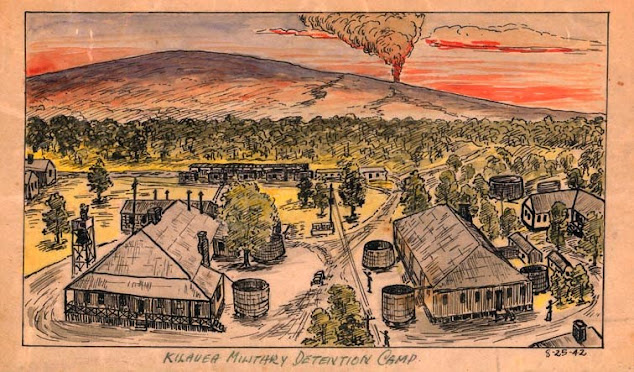
Kīlauea Military Camp during the period Japanese Americans were interred during WWII. The drawing from August 1942 shows a mess hall (bldg 34; left) and barracks (bldg 35; right) with guard tower, basketball court (in grassy area) and latrine (extended off the back of bldg. 35). Drawing by G. Hoshida. Image courtesy of Japanese American National Museum from HVNP |
TODAY IS THE 80TH ANNIVERSARY OF THE EXECUTIVE ORDER FOR INTERMENT OF JAPANESE AMERICANS DURING World War II. Pres. Franklin D. Roosevelt signed Executive Order 9066 on Feb. 19, 1942, which led to the internment of Japanese Americans. Sen. Mazie Hirono issued this message of Friday:
"Long-standing racism and xenophobia led to one of the worst decisions made by a President of this country 80 years ago. Due to unsubstantiated fear of Japanese Americans in 1942, President Roosevelt issued Executive Order 9066 which led to the unjust and unconstitutional internment of Japanese in the U.S. This horrific treatment of Japanese people, simply because of their ancestry, is a stain on our
country's history.
"Although we have come a long way since 1942, the last two years have shown us that we still have a long way to go when it comes to treating everyone in this country with dignity and respect. As the COVID-19 pandemic swept the world, we again saw the detrimental consequences of unfounded fear and misinformation as discrimination and racism incited a disturbing rise in violence and hate crimes against
Asians in communities across the country.
"In honor of the sacrifices made by those who survived such horrendous treatment, it is our responsibility to ensure that history does not repeat itself. We must do everything in our power to prevent the mistreatment of not just Asian American Pacific Islander communities, but also all marginalized groups."
"Long-standing racism and xenophobia led to one of the worst decisions made by a President of this country 80 years ago. Due to unsubstantiated fear of Japanese Americans in 1942, President Roosevelt issued Executive Order 9066 which led to the unjust and unconstitutional internment of Japanese in the U.S. This horrific treatment of Japanese people, simply because of their ancestry, is a stain on our
country's history.
"Although we have come a long way since 1942, the last two years have shown us that we still have a long way to go when it comes to treating everyone in this country with dignity and respect. As the COVID-19 pandemic swept the world, we again saw the detrimental consequences of unfounded fear and misinformation as discrimination and racism incited a disturbing rise in violence and hate crimes against
Asians in communities across the country.
"In honor of the sacrifices made by those who survived such horrendous treatment, it is our responsibility to ensure that history does not repeat itself. We must do everything in our power to prevent the mistreatment of not just Asian American Pacific Islander communities, but also all marginalized groups."
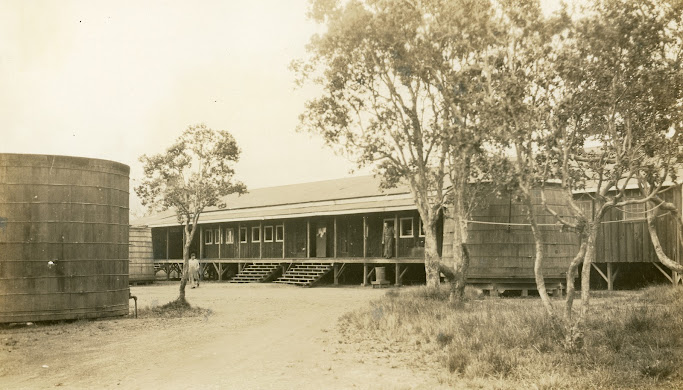 |
| Kīlauea Military Camp building #35, where Japanese detainees spent most of their days during its use as an internment camp. Image courtesy of Kīlauea Military Camp and HVNP |
Hirono noted that Executive Order 9066 "authorized the forced relocation and exclusion internment of 120,000 Japanese Americans during World War II, without trial, due process, or any allegation of wrong doing. In addition to losing their property and assets – which were sold, confiscated, or destroyed – incarcerated individuals and families were housed in isolated, dilapidated conditions. EO 9066 was not formally terminated until February 1976 and had lasting consequences for Japanese Americans for decades to come."
There are three notable legal cases that arose from the implementation of EO 9066 – Yasui v. United States (1943); Hirabayashi v. United States (1943); and Korematsu v. United States (1944). Yasui and Hirabayashi attempted to challenge the constitutionality of enforcing curfews against U.S. citizens and minority groups at the time. Both cases ended in convictions, which were later overturned in the 1980s. However, "the Supreme Court's decision in Korematsu (1944) resulted in a shameful precedent, which has been repudiated and recognized as a horrible mistake," said Hirono.
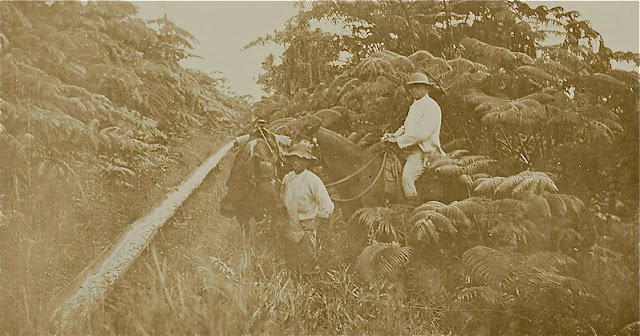
BLACK HISTORY MONTH AT HAWAI'I VOLCANOES NATIONAL PARK draws the telling of the history of the Buffalo Soldiers. The park message says that "More than 100 years ago, these Black servicemen built a 30-mile trail rock by ʻaʻā rock, with a hammer and a gunny sack, from the erupting summit of Kīlauea (4,024 feet) to the summit of Mauna Loa volcano (13,681 feet). They did this arduous work to help the founder of the Hawaiian Volcano Observatory, Dr. Thomas Jaggar, construct an easier route between the summits and to strengthen the appeal of establishing what is now Hawaiʻi Volcanoes National Park."
The Park also posted a photo from the 1931 Park superintendent’s report, "showing the rugged trail built by the Buffalo Soldiers more than a decade earlier. It was in such good shape that pack animals could withstand it."
The Park reports that "Before the Buffalo Soldiersʻ arrival, Jaggar lamented that “ Every expedition to the summit exhausts the energies of the men and animals employed and the animals are frequently crippled and have their legs cut through by the rough black lava. Consequently the ranchers will not rent good animals at any price and as there is no shelter on the summit, little water, no feed, violent winds and low temperatures, the men who can with difficulty be induced to go and act as guides or packers object to remaining overnight.”
See the trove of information about contributions of the Buffalo Soldiers on the Buffalo Soldiers park webpage, including a podcast with Park Archeologist Summer Roper Todd and Ranger Dean Gallagher.
Visit https://go.nps.gov/havo-buffalo-soldiers.
Even "sin" taxes, like the proposed surcharge on alcoholic drinks, could have effects that our legislators might not realize.
"When you ... find a cause that depends on that sin tax — for instance, using a tobacco tax to fund a school of medicine or a cancer center — the tax causes some people to stop smoking, but that means revenue goes down," said Yamachika. "Then the [supporters of the] causes being supported by the sin tax panic, wondering if [the revenues] are going to disappear. Their answer is to raise the tobacco tax even more."
While the supporters of these different tax proposals might be swept away by ideological considerations or the allure of playing Robin Hood, we need to keep reminding lawmakers that tax hikes have real economic consequences, like discouraging investment and raising the cost of living.
That's why we continue to urge that the Legislature ditch the tax hikes and focus on policies that will make Hawaii more affordable — like reducing regulations, removing barriers to housing and cutting taxes and fees.
Taxes should not be used as a policy tool to shape public behavior. All they do is make Hawaii more expensive and increase the number of people leaving our state for better opportunities on the mainland.
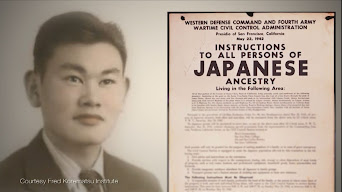 |
| Fred Korematsu took the internment of Japanese during WWII to the U.S. Supreme Court |
THE INTERNMENT OF JAPANESE DURING WORLD WAR II AT KILAUEA MILITARY CAMP is documented by Hawai'i Volcanoes National Park. KMC held Japanese American citizens from Dec. 7, 1941 until May 7, 1942. They were all transferred to O'ahu and internment camps on the mainland. Read the history at https://www.nps.gov/havo/learn/historyculture/japanese-detention.htm
To read comments, add your own, and like this story, see www.facebook.com/kaucalendar/. See latest print edition at www.kaucalendar.com. See upcoming events and Kaʻū Calendar newspaper sponsors at http://kaunewsbriefs.blogspot.com/2022/02/events-of-february-2022.html.
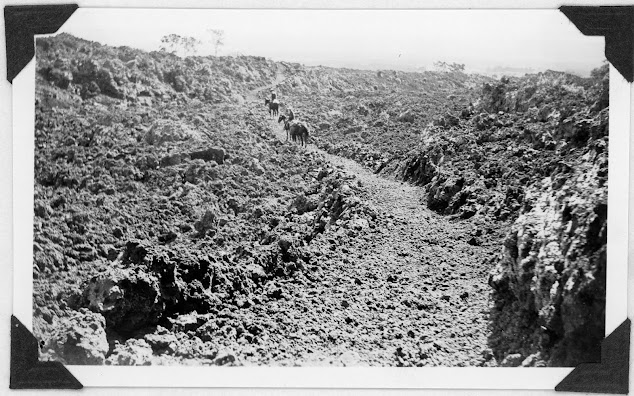 |
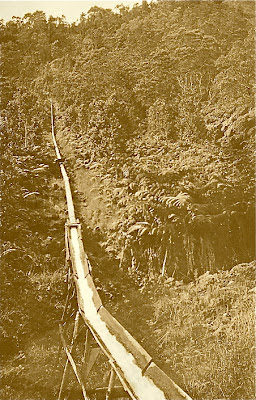
| The Buffalo Soldiers built the 30-mile 'a'a trail between Kīlauea and Mauna Loa summits Photo from HVNP |
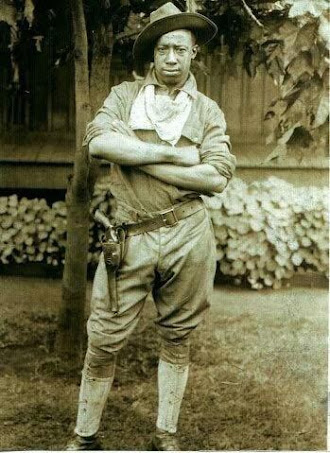 |
| Buffalo Soldier Linold Chappell. Photo Courtesy of Brian K Chappell and HVNP |
The Park reports that "Before the Buffalo Soldiersʻ arrival, Jaggar lamented that “ Every expedition to the summit exhausts the energies of the men and animals employed and the animals are frequently crippled and have their legs cut through by the rough black lava. Consequently the ranchers will not rent good animals at any price and as there is no shelter on the summit, little water, no feed, violent winds and low temperatures, the men who can with difficulty be induced to go and act as guides or packers object to remaining overnight.”
See the trove of information about contributions of the Buffalo Soldiers on the Buffalo Soldiers park webpage, including a podcast with Park Archeologist Summer Roper Todd and Ranger Dean Gallagher.
Visit https://go.nps.gov/havo-buffalo-soldiers.
To read comments, add your own, and like this story, see www.facebook.com/kaucalendar/. See latest print edition at www.kaucalendar.com. See upcoming events and Kaʻū Calendar newspaper sponsors at http://kaunewsbriefs.blogspot.com/2022/02/events-of-february-2022.html.
GRASSROOTS INSTITUTE OF HAWAI'I HAS ISSUED AN OPINION PEICE OPPOSING TAX INCREASES that are making their way through the Hawai'i Legislature. Its CEO Keali'i Akina writes:
Watching proposed tax hikes make their way through the Legislature has become an annual tradition in Hawai'i, like fireworks on the Fourth of July or hearing Christmas carols at the grocery store in mid-November.
There is actually no need to raise taxes right now, especially given the state's $3 billion budget surplus. But raising revenues is no longer the primary rationale for the tax increases being proposed. Instead, lawmakers want to use taxes to bring about social change.
Some tax bills seek to discourage certain behaviors, such as using fossil fuels or drinking alcohol. Others are purely redistributive in nature, like the bill that would create new income tax brackets and drive Hawaii's top marginal income tax to 19% — the highest in the nation. Or the proposed "wealth asset tax," which would levy a 1% tax on the global net worth of individuals with more than $20 million in assets.
Whatever the motivations, the problem with these tax bills, according to Tom Yamachika, president of the Tax Foundation of Hawaii, is that they would have "a lot of ramifications ... which I don't think people are thinking about so much."
Yamachika was my guest on this week's episode of "Hawaii Together" on ThinkTech Hawaii. As usual, Yamachika stays busy during each legislative session analyzing the many tax proposals, then explaining to the public their many possible ramifications.
For example, he said, the proposed massive increase in the state's so-called carbon tax, intended to wean Hawaii consumers away from fossil fuels, "would result, predictably, in a very large increase at the [gas] pump."
While that is bad news in itself, there hasn't been enough consideration about how significantly higher fuel prices would affect consumers and businesses in the islands as a whole.
"If you think you have it bad now commuting from one part of the island to the other," he said, "think about if you're a truck driver. That's your business, and while you may not pay the bill, it's going to be a heck of a lot bigger bill."
Or consider the proposed constitutional amendment that would let the state join the counties in taxing real property. Those who don't own a home might think that higher property taxes aren't their problem.
But, said Yamachika, "it's going to affect you whether you are renting somewhere, whether you own your own house or if you're in an apartment. Basically, the issue is that the cost of just staying somewhere is going to increase."
As for all the bills seeking to soak "the rich," hikes in the state's personal income tax, corporate income tax or capital gains tax, if enacted, would still affect the little guy.
"If you, for example, penalize somebody who has a business with a hundred employees, he's not going to just stand there and take it," explained Yamachika. "He's going to pull out more money from the business to cover the tax, which leaves less for the employees or higher prices for the consumers or both. ... Or, the person says, 'I don't need this, I'm getting out of Dodge. I'm going to jump on a plane, and I'm out of here.' So the business moves, the jobs move, and what happens to us? Well, we lose the revenue."There is actually no need to raise taxes right now, especially given the state's $3 billion budget surplus. But raising revenues is no longer the primary rationale for the tax increases being proposed. Instead, lawmakers want to use taxes to bring about social change.
Some tax bills seek to discourage certain behaviors, such as using fossil fuels or drinking alcohol. Others are purely redistributive in nature, like the bill that would create new income tax brackets and drive Hawaii's top marginal income tax to 19% — the highest in the nation. Or the proposed "wealth asset tax," which would levy a 1% tax on the global net worth of individuals with more than $20 million in assets.
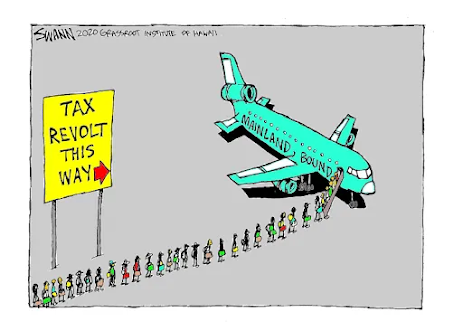 |
| Image from Grassroot Institute of Hawai'i |
Yamachika was my guest on this week's episode of "Hawaii Together" on ThinkTech Hawaii. As usual, Yamachika stays busy during each legislative session analyzing the many tax proposals, then explaining to the public their many possible ramifications.
For example, he said, the proposed massive increase in the state's so-called carbon tax, intended to wean Hawaii consumers away from fossil fuels, "would result, predictably, in a very large increase at the [gas] pump."
While that is bad news in itself, there hasn't been enough consideration about how significantly higher fuel prices would affect consumers and businesses in the islands as a whole.
"If you think you have it bad now commuting from one part of the island to the other," he said, "think about if you're a truck driver. That's your business, and while you may not pay the bill, it's going to be a heck of a lot bigger bill."
Or consider the proposed constitutional amendment that would let the state join the counties in taxing real property. Those who don't own a home might think that higher property taxes aren't their problem.
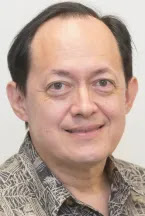 |
| Tom Yamachika, President of Hawai'i Tax Foundation |
As for all the bills seeking to soak "the rich," hikes in the state's personal income tax, corporate income tax or capital gains tax, if enacted, would still affect the little guy.
Even "sin" taxes, like the proposed surcharge on alcoholic drinks, could have effects that our legislators might not realize.
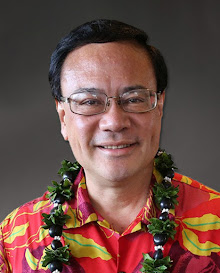 |
| Keli'i Akina, President of Grassroot Institute of Hawai'i, opposes state tax increases. |
While the supporters of these different tax proposals might be swept away by ideological considerations or the allure of playing Robin Hood, we need to keep reminding lawmakers that tax hikes have real economic consequences, like discouraging investment and raising the cost of living.
That's why we continue to urge that the Legislature ditch the tax hikes and focus on policies that will make Hawaii more affordable — like reducing regulations, removing barriers to housing and cutting taxes and fees.
Taxes should not be used as a policy tool to shape public behavior. All they do is make Hawaii more expensive and increase the number of people leaving our state for better opportunities on the mainland.

To read comments, add your own, and like this story, see www.facebook.com/kaucalendar/. See latest print edition at www.kaucalendar.com. See upcoming events and Kaʻū Calendar newspaper sponsors at http://kaunewsbriefs.blogspot.com/2022/02/events-of-february-2022.html.
KAʻŪ TROJANS MADE A STRONG SHOWING AGAINST HPA in boy's basketball Friday night. In the first quarter, Hawai'i Preparatory Academy came up with 21 points, with Trojans scoring 11. Trojans outscored HPA in the second with 12 -8. HPA took the third quareer with 11-9 and Ka'u outscored HPA with 10-9 in the fourth. HPA came out on top with a final score of 49-42.
Scoring for the Trojans were Kealiikoa Reyes-Nalu - 20; Kaimana Manini-Kaupu - 14; Jaestin Karasuda - 4; Jensen Villa - 2; Tyson Junior Kuahuia-Faafia - 1 and Jocyiah Mukini - 1.It was the final game of the season for the Trojans, with HPA traveling to the Ka'u campus from Waimea.
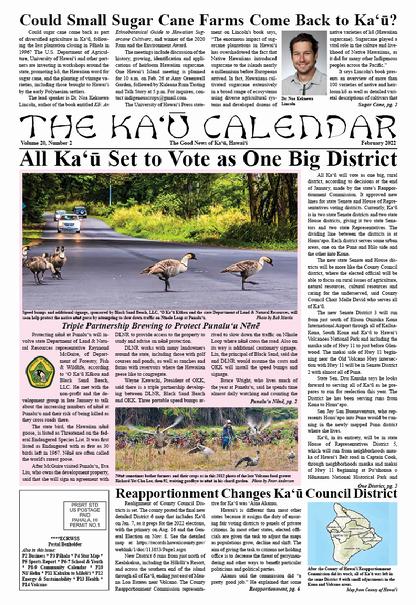 |
| See the February Print Edition of The Kaʻū Calendar at www.kaucalendar.com SEE MORE CALENDAR OF EVENTS & SPONSORS http://kaunewsbriefs.blogspot.com/2022/02/events-of-february-2022.html |
To read comments, add your own, and like this story, see www.facebook.com/kaucalendar/. See latest print edition at www.kaucalendar.com. See upcoming events and Kaʻū Calendar newspaper sponsors at http://kaunewsbriefs.blogspot.com/2022/02/events-of-february-2022.html.
VIRTUAL PUBLIC MEETING on Hawaiʻi Volcanoes National Park's Disaster Recovery Project. Thursday, Feb. 24, 12 - 1 p.m. and 6 - 7 p.m. To join the 12 p.m. meeting: https://swca.zoom.us/j/91430664015. Those without internet access can join by phone: (888) 475-4499 US Toll-free; Meeting ID: 914 3066 4015. To join the 6 p.m. meeting: https://swca.zoom.us/j/97252271515. Those without internet access can join by phone: (888) 475-4499 US Toll-free; Meeting ID: 972 5227 1515.
COVID-19 PFIZER VACCINE/BOOSTER CLINIC at Ocean View Community Center. Saturday, Feb. 26, 9 a.m. - 12 p.m. Open to ages 5 and up. Home test kits will be available while supplies last. Walk-ins and uninsured are welcome. Bring ID. Contact (808) 932-4205 for any questions.
MILOLIʻI ʻOHANA FUNDRAISER at Park Halau in Miloliʻi. Saturday, Feb. 26 10 a.m. - 3 p.m. Food, crafts, music, silent auction, and more. For more information, contact (808) 937-1310 or visit www.Kalanihale.com.
SEE MORE CALENDAR OF EVENTS & SPONSORS