About The Kaʻū Calendar

Wednesday, March 16, 2022

Ka‘ū News Briefs, Wednesday, March 16, 2022

Deputy Director of the county Department of Environmental Management, Brenda Iokepa-Moses, led
a public meeting at Pahala Community Center on Wednesday to propose individual septic systems in yards of those
 now hooked up to the old plantation gang cesspool system. Photo by Julia Neal
INDIVIDUAL WASTEWATER SYSTEMS IN EACH YARD, INSTEAD OF A SEWAGE TREATMENT PLANT for Pāhala, is a new concept presented by County of Hawai'i on Wednesday for homes on the old sugar plantation sewage system. During an informational meeting at Pāhala Community Center, the county suggested paying for septic tanks and other individual wastewater systems for some 175 homes. It would save the county tens of millions of dollars over the option of building a secondary wastewater treatment plant with concrete lined aerated lagoons and sewer collection systems. 
    County representatives said they are looking for an affordable and timely solution to stop operating the gang cesspools left over from plantation days. They became illegal nationwide in 1999, with the changeover taking decades. The gang cesspools in Pāhala built by the C. Brewer sugar plantation, are holes in the ground receiving sewage piped from old sugar plantation houses. The county took over maintenance of the old system years after the sugar company shut down and signed an agreement with the EPA in 2017 to fix the problem. It's called an Administrative Order on Consent.
     County officials said that installing IWS could speed up the process, avoid tearing up streets to put in sewer lines, avoid sewer hook up fees, and save money for the homeowners and the county.
   County representatives said that to install septic and other IWS, each houselot has to be studied for soil type, slope and other factor to design each system, with approval of the state Department of Health.
    The smallest footprint for a septic system would likely be in the smaller yards where the septic tank or other IWS could be installed vertically along with seepage pits for the smaller homes. Some initial impact from installing individual septic in yards could occur in the larger lots, those approximately 10,000 sq. ft. or bigger where leach fields would likely be required. To make room for the leach fields, which could later be covered with grass and other vegetation, portions of the yards would be cleared, with a likelihood of removing some trees and plants, along with moving or removing of some fences, walls, sidewalks, outbuildings and sections of driveways for installation. County representatives said they would repair or replace any damaged infrastructure.          
    The size of leach fields would depend on the type of soil and slope of the yard. An average leach field of about 1,000 square feet for a 2,500 sq. ft. three-bedroom home, is estimated on websites of various septic system companies. 
    To pay for the septic and other IWS, the county could provide vouchers and homeowners could use the money to pay authorized septic installation companies. Alternatively, the county could hire the contractors directly, said county representatives.
    Maintenance of septic systems could include pumping them about every five years. One idea brought up was that the homeowners could continue paying sewer fees, which they already pay to the county for maintaining the old plantation system. Once the septic is in, the fees would go towards pumping and possibly other repairs, when needed.
    One kink in the new IWS plan is that the EPA has already approved a lagoon wastewater treatment system for Pāhala and is pressing the county to go forward. County representatives pointed to economic and technical challenges of constructing the approved system on land it is acquiring for the project from Kamehameha Schools. The lagoon treatment system would require cutting down a macadamia orchard and digging into land that has lava tubes and perhaps graves. They pointed to public objections to the location next to the Norfolk Pine entry to Pāhala and said the iconic trees could be disturbed under the lagoon plan. Approval of Individual Wastewater Systems would mean the land goes back to Kamehameha Schools.
    To switch the plan from lagoon to IWS, the county needs concurrence from the EPA to reopen their 2017 agreement regarding replacing the gang cesspool system. County representatives said the community responded positively to the informational meeting and mentioned that representatives from the EPA are scheduled to discuss the issue with the county on April first and will follow up with an in-person meeting on April 6. They said that the septic systems, which are examples of available Individual Wastewater Systems, could become an example for other disconnected communities to follow. The state has mandated that all cesspools be converted by 2050.
A conventional septic system. Image from EPA
    Brenda Iokepa-Moses, who is Deputy Director of the county Department of Environmental Management, is a Pāhala resident and led the meeting. She noted that discussions about the solution to the sewage problem have been contentious within the community and that she hoped the Individual Wastewater System option could help bring the community together. 
     Also leading the meeting were the Director of Environmental Management, Ramzi Mansour, and facilitator Jessie Marques. In attendance was County Council Chair Maile David and other public officials.
    The EPA's requirement for the county says the county "shall take appropriate measures to fully and properly comply with the Safe Drinking Water Act with respect to the Pāhala Community Cesspools identified including constructing a secondary wastewater treatment facility to serve the Pāhala community (“Pahala Wastewater Treatment Facility”), closing the Pāhala Community Cesspools, and replacing and expanding the wastewater collection system serving Pāhala Community. As soon as practicable, but no later than the deadlines..." The deadlines have been extended to 2023 but the requirement remains unaltered and the county is asking for a change to accommodate the Individual Wastewater System option.
   To completely shut down the old gang cesspools, all of the Individual Wastewater Systems would have to be completed but there would be less flow into the gang cesspools as each IWS is completed.
   To ask questions, give input and for more information, email cohdem@hawaicounty.gov.

To read comments, add your own, and like this story, see www.facebook.com/kaucalendar/. See latest print edition at www.kaucalendar.com. See upcoming events at https://kaunewsbriefs.blogspot.com/2022/03/upcoming-events-for-kau-and-volcano.html
Image from DLNR

PERMITS FOR COLLECTING FOLIAGE, FRUIT, TREES AND MORE within the Hawai'i State Forest Reserves are now available online through the state Department of Land & Natural Resources. State Forest Reserves in Ka‘ū are Kapāpala Forest Reserve and Ka‘ū Forest Reserve.
    Kapāpala Forest Reserve, on the slopes of Mauna Loa, was designated on Oct. 17, 1930 through a Governorʻs Proclamation. It consists of approximately 37,276 acres and lies above Mamalahoa Highway and northwest of Kīlauea crater. Activities are birdwatching, hiking and hunting.
   "The Ka‘ū Forest Reserve is a critical watershed for the people of Ka‘ū." says the DLNR website. "The forest reserve’s water sources are used for domestic supplies as well as agriculture, and maintaining this water supply is important for the future viability of agriculture in Ka‘ū. The native forest replenishes springs and other groundwater, and reduces flooding and erosion.
    "The Ka‘ū Forest Reserve is important for preserving Hawai'i’s unique native forest ecosystems and its species, including a wide variety of rare or endangered plants and animals. Endangered birds for which the continuing health of the forest reserve may be a critical factor include the ‘Akiapōlā‘au (Hemignathus munroi), Hawai‘i Creeper (Oreomystis mana) and Hawai‘i ‘Akepa (Loxops coccineus).
    "The Ka‘ū Forest Reserve contains resources that are vital for maintaining Hawaiian culture and practices. Hawaiians consider native plants and animals as family and have a strong spiritual connection to the mountain landscape and the forest itself.
    "The Ka‘ū Forest Reserve is an important area for public use including hunting, recreational opportunities, cultural uses, personal gathering, and educational programs and activities. Public access is allowed in the Reserve for recreational and cultural uses, including hunting, hiking and gathering of plant material (with a permit)."
    The new permitting platform, developed by DLNR's Division of Forestry & Wildlife, covers personal-use collections and commercial harvesting. While commercial harvest permits are associated with a fee, permits for collecting items in quantities that are determined by DLNR as representing personal use are provided free of charge. 
    People wishing to apply for permits on hardcopy can still do so at any DOFAW District office. The online permitting platform can be accessed under permit topic #5 on the (State Forest Reserve System Permits) DOFAW Permits website. http://dlnr.hawaii.gov/dofaw/permits/

                                  SEE UPCOMING EVENTS IN KAʻŪ & VOLCANO
                 at https://kaunewsbriefs.blogspot.com/2022/03/upcoming-events-for-kau-and-volcano.html.
See March edition of The Kaʻū Calendar newspaper at 
www.kaucalendar.com

Tuesday, March 15, 2022

Ka‘ū News Briefs, Tuesday, March 15, 2022

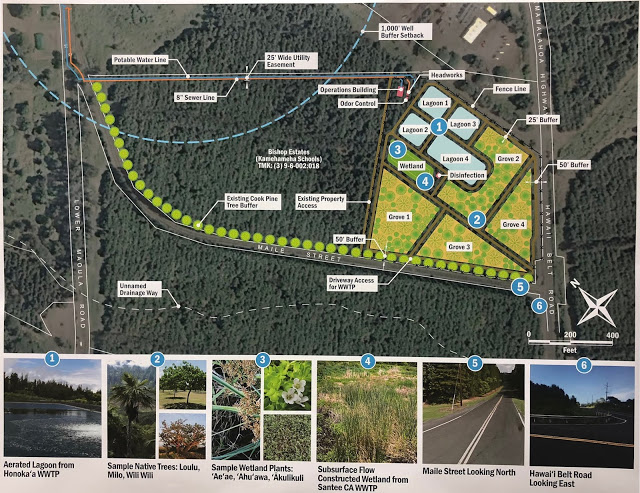
Alternatives to this lagoon-style wastewater treatment system are up for discussion this Wednesday, March 16 at 6 p.m.
at Pāhala Community Center, the meeting led by representatives of county Department of Environmental Management. 

THE PUBLIC MEETING ON OPTIONS FOR PĀHALA'S LONG-DEBATED WASTEWATER TREATMENT SYSTEM will be held tomorrow, Wednesday, March 16 at 6 p.m. at Pāhala Community Center. The county's Department of Environmental Management will host the session for public involvement and issued a statement earlier this month saying:
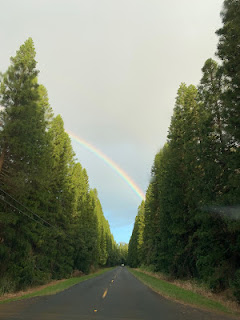
Alternatives to a lagoon-style wastewater
treatment system planned near Pāhala's
iconic pine tree entrance will be discussed
Wednesday, 6 p.m. at the Community Center.
Photo by Jana Kaniho
    "Hawai‘i County entered into an administrative order on consent with the United States Environmental Protection Agency to close the existing Pāhala Large Capacity Cesspools and provide secondary wastewater treatment to Pāhala residents. In January 2021, the (Mayor Mitch) Roth administration determined that the (proposed) Lagoon Wastewater Treatment system was excessively expensive, inefficient, disruptive, and ultimately unfeasible. Hawai‘i County has requested approval from EPA to take a new path, and is gathering community input on its proposal. Representatives from DEM and other departments will be present to answer questions about ongoing efforts to update the connections to the houses currently connected to the large capacity cesspools."
    In the meantime, the county remains in the process of acquiring land through condemnation in Pāhala for a sewage treatment plant, as required by the EPA, while alternatives are researched and brought before the public and EPA. The Kamehameha School land is 14.9 acres at the corner of Maile Street and Hwy 11 and is being subdivided from a larger piece.

To read comments, add your own, and like this story, see www.facebook.com/kaucalendar/. See latest print edition at www.kaucalendar.com. See upcoming events at https://kaunewsbriefs.blogspot.com/2022/03/upcoming-events-for-kau-and-volcano.html

HAWAI'I' STATE GOVERNMENT IS THE LEAST DEPENDENT ON FEDERAL MONEY, among all 50 states, according to a WalletHub study released this week. The metric calculates federal funding as a share of state revenue. It reflects the proportion of state revenue that came from the federal government in the form of intergovernmental aid in 2019.
    WalletHub reports that Hawai'i's citizens are the eighth most dependent on federal money. The metic was calculated by dividing federal funding in U.S. dollars by IRS collections from Hawai'i taxpayers in U.S. dollars. The metric also includes the share of federal jobs in Hawai'i.
    Overall, Hawai'i is rated 26th in dependency on the federal government, according to WalletHub. Alaska is the most federally dependent, followed by Mississippi, Kentucky, West Virginia, Montana, New Mexico, Arizona and Louisiana. See the study at http://wallethub.com/edu/states-most-leastdependent-on-the-federal-government/2700.

To read comments, add your own, and like this story, see www.facebook.com/kaucalendar/. See latest print edition at www.kaucalendar.com. See upcoming events at https://kaunewsbriefs.blogspot.com/2022/03/upcoming-events-for-kau-and-volcano.html

HOW TO START A BUSINESS IN HAWAI'I is the topic of a webinar on Wednesday, March 23, from 10 a.m. to 11:30 a.m., sponsored by Hawai'i Small Business Development Center. The organizers of the event ask the following: Have you ever thought about owning your own business? "How do you go about doing that . . .Deciding on a type of business entity? Setting up your business?Finding the money to start? Identifying your customers and marketing your product or services? Coming up with a business plan? Finding a system for keeping track of all that money you'll be making? We can help you answer those concerns and identify the resources you'll need to help you move forward."
    Register and pay the $15 fee for the webinar with Hawi'i Small Business Development Center at: https://clients.hisbdc.org/workshop.aspx?ekey=5420007. See more at www.hisbdc.org.

To read comments, add your own, and like this story, see www.facebook.com/kaucalendar/. See latest print edition at www.kaucalendar.com. See upcoming events at https://kaunewsbriefs.blogspot.com/2022/03/upcoming-events-for-kau-and-volcano.html

AN APOLOGY FOR PROHIBITING THE HAWAIIAN LANGUAGE IN PUBLIC SCHOOLS was requested this week in the Hawai'i Legislature. Rep. Patrick Pihana Branco introduced HCR130 requesting the State to make a formal apology for prohibiting the use of ‘Ōlelo Hawai‘i in public schools from 1896 to 1986.
    Branco, a member of the state House of Representatives, explained, "It's about equity; we are a State with two official languages, English and ‘Ōlelo Hawai‘i. Sadly, our native language was taken to the brink of extinction after the 1893 overthrow of the Kingdom of Hawai'i." Branco noted, "This legislation shows respect to Native Hawaiians negatively impacted by the banning of ‘Ōlelo Hawai‘i."    
Rep. Patrick Pihana Branco
    He said that Native Hawaiians spoke ‘Ōlelo Hawai‘i, the Hawaiian Language, for more than 2,000 years. In 1896, Act 57 passed, declaring only English would be taught and communicated in Hawai‘i public schools. Because of Act 57, many students were punished for speaking ‘Ōlelo Hawai‘i at school, and the number of Hawaiian language speakers declined from nearly 40,000 in 1896 to only 2,000 in 1978. 
     "My great-grandfather would go to school and be beaten for speaking Hawaiian; he would then go home and get punished for speaking English," said Branco. "For a child to be disciplined for speaking his Native tongue is a travesty." He also noted, "The exclusion of ‘Ōlelo Hawai‘i from Hawai‘i's public schools lasted 90 years, causing generational trauma. The time for a formal apology from the State of Hawai'i is long overdue. We need to begin the process of healing."

To read comments, add your own, and like this story, see www.facebook.com/kaucalendar/. See latest print edition at www.kaucalendar.com. See upcoming events at https://kaunewsbriefs.blogspot.com/2022/03/upcoming-events-for-kau-and-volcano.html.

Michael J. Aragon is missing.
MICHAEL J. ARAGON IS MISSING. Hawai‘i Island police are asking for the public’s assistance in locating the 29-year-old, who was reported missing on Sunday, March 13, 2022, by family members.
    Aragon Jr’s last known address was in Puna and he was last seen by a family member in June 2019. He is believed to be in the Hawaiian Ocean View Estates area in Ka‘ū.
    Aragon Jr. is described as being of Caucasian/Filipino/Hawaiian decent with a slim build, 5 feet 7 inches tall, 145 pounds, with black hair and brown eyes. He has a tribal design tattoo on his right arm.
    Anyone with any information on Aragon Jr.’s whereabouts is asked to call the police department’s non-emergency line at (808) 935-3311, or Officer Rodney Kekaualua, Jr., of the Ka‘ū Patrol Division at (808) 939-2520.

To read comments, add your own, and like this story, see www.facebook.com/kaucalendar/. See latest print edition at www.kaucalendar.com. See upcoming events at https://kaunewsbriefs.blogspot.com/2022/03/upcoming-events-for-kau-and-volcano.html

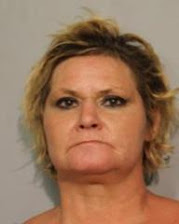
Amber Lave is wanted by police. 
AMBER LAVER OF KAʻŪ IS SOUGHT BY POLICE. The 52-year-old is wanted on an outstanding bench warrant and for questioning in connection with a criminal investigation. Laver is 5 feet 2 inches tall, 145 pounds, with brown hair and brown eyes. She is known to frequent the Ka‘ū and South Kona areas.
    Police remind the public that harboring or concealing a wanted person could result in criminal charges being filed against the person who harbors or conceals the wanted person.
    Those with information on Laver’s whereabouts are encouraged to contact Detective Donovan Kohara at (808) 326-4646 ext. 267; or via email at donovan.kohara@hawaiicounty.gov. They may also contact the police department’s non-emergency number at (808) 935-3311.
    Citizens who wish to remain anonymous can make an anonymous tip through Crime Stoppers at (808) 961-8300 and be eligible for a reward of up to $1,000. Crime Stoppers does not record any calls or subscribe to caller ID.

To read comments, add your own, and like this story, see www.facebook.com/kaucalendar/. See latest print edition at www.kaucalendar.com. See upcoming events at https://kaunewsbriefs.blogspot.com/2022/03/upcoming-events-for-kau-and-volcano.html

                                  SEE UPCOMING EVENTS IN KAʻŪ & VOLCANO
                 at https://kaunewsbriefs.blogspot.com/2022/03/upcoming-events-for-kau-and-volcano.html.
See March edition of The Kaʻū Calendar newspaper at 
www.kaucalendar.com

Monday, March 14, 2022

Ka‘ū News Briefs, Monday, March 14, 2022


U.S. military conducts training on Hawai'i Island, like this session at Pohakuloa called Exercise Lava Viper. The US. Department of Defense budget, passed last week, includes funding a study to create noise contour maps to be incorporated in community planning through a Noise Mitigation Community Partnership Program. See more on military funding for Hawai'i below.
Photo from U.S. Department of Defense

MANY PRIORITIES FOR HAWAI'I ARE INCLUDED IN BILLIONS OF DOLLARS IN DEFENSE SPENDING APPROVED LAST WEEK BY CONGRESS, said U.S. Rep. Ed Case. He is a member of the House Committee on Appropriations, responsible for all federal discretionary spending. Case voted March 9 with a majority of his colleagues to pass the $1.5 trillion funding for the federal government for the current fiscal year. The measure awaits the President’s signature.
    Among local funding measure is $4 million to expand the work of the Daniel K. Inouye Asia-Pacific Center for Security Studies, the premier defense-supported research and education center in that fosters shared understanding and networked relationships among civilian and military leaders throughout the Indo-Pacific.
    Another $293 million for Environmental Restoration will help accelerate efforts to remove unexploded ordnance and discarded military munitions in Hawai‘i and throughout the nation.
    The budget also funds a study from the DoD’s Office of Local Defense Community Cooperation on how local communities are impacted by military helicopter and tiltrotor noise. This study will result in noise contour maps that can be incorporated in community planning through the OLDCC’s existing Noise Mitigation Community Partnership Program.
    The funding includes $235 million for military construction throughout the state, and billions to fund the Pacific Deterrence Initiative to strengthen America’s national security in the Indo-Pacific and Hawai'i’s central role. The language includes a military contracting preference for Native American tribes and Native Hawaiian Organizations.
    Case stressed the Pacific Deterrence Initiative as key to ensuring a free and open Indo-Pacific. “PDI provides the foundation for establishing a forward-deployed, properly equipped and postured force to deter aggression and assure our allies and partners,” he explained. “We must deter and deny our adversaries’ ability to engage in acts of aggression or coercion against our partners and allies. We need investments in Guam, our Pacific Island partners, training ranges throughout the Indo-Pacific and a new generation of weapons to overcome the tyranny of distance.”
    Case emphasized continued Congressional support for the Homeland Defense Radar Hawai‘i. “Given the prominence of Hawaii’s military and strategic value, Hawai’i has become far more of a target to those who wish to do us harm. The need for a fixed, persistent and comprehensive missile defense cannot be understated. This requirement hasn’t gone away and won’t. The Homeland Defense Radar Hawai‘i is the solution. It is regarded by the Missile Defense Agency and U.S. Indo-Pacific Command as vital and appropriate,” he said.
    He said Hawai'i’s strategic importance is growing with the continued threats and instability in the Indo-Pacific, home to more than 50% of the world’s population, several of the world’s largest militaries, and two of the three largest economies in the world.
    Case said this investment in the State of Hawai‘i has a direct economic impact, pointing to a 2021 report from the state Department of Business, Economic Development & Tourism. It places total defense-related payroll and contract spending in the state at $7.2 billion. He said construction for Hawai‘i military installations "plays a crucial role in keeping the U.S. safe and protecting the national interests worldwide, especially given the shift in our national security strategies and resources to the Indo-Pacific. Improvements to these facilities also expand Hawaii’s economy and support high-paying construction jobs that ensure a high-quality standard of living."
    Key programs and provisions requested and secured by Case that are relevant to Hawai‘i include: $75 million to continue development of HDR-H. This “discriminating radar," said Case, is a "critical state-of-the-art system designed to protect our country and state from ballistic missile threats that is strongly supported by Indo-Pacific military leaders." It will identify and classifying specific missile threats and address current and emerging threats.
    Funding includes non-construction elements of the Shipyard Infrastructure Optimization Program , to include $264 million for ongoing operations and maintenance (in addition to military construction described below). Case requested funds to ensure support for the SIOP, which is undertaking a multi-year $21 billion effort to improve the Navy’s public shipyards, including Pearl Harbor Naval Shipyard and Intermediate Maintenance Facility, Hawai'i’s largest industrial employer. The budget supports a Naval Shipyard Apprentice Program, with instructions to the Secretary of the Navy to induct classes of not fewer than 100 apprentices at each of the respective naval shipyards and to include the costs of the class of apprentices in the Fiscal Year 2023 budget request.
    Case noted that he helped to block efforts to change the command and control structure of the U.S. Pacific Fleet. He said efforts within the department to streamline control of forces under one command structure would have limited the ability of Navy forces in Hawai‘i to respond quickly to changing threats in the Indo-Pacific region.
    He pointed out the approval of the Readiness and Environmental Protection Initiative, in response to land development and loss of habitat in the vicinity of or affecting military installations, ranges and airspace. It requires the Department of Defense to work with state and local governments, conservation organizations and willing private landowners to address these challenges to the military mission and the viability of DoD installations and ranges.
    Efforts to confront the climate crisis is shown with investments for clean energy and climate adaptation to protect facilities, readiness and global security, to include $1.6 billion for restoration and modernization of military facilities.
    Congress also funded $88 million for wargaming analytical tools to support U.S. Indo-Pacific Command, $59 million for the U.S. Indo-Pacific Command to support planning and design efforts to advance future construction projects throughout the Indo-Pacific, $19 million to advance a Pacific multi-domain training and experimentation capability, a $4.6 million increase for the Asia Pacific Regional Initiative, a key program supporting U.S. Indo-Pacific Command. This program enables the military to execute Theater Security Cooperation activities, such as humanitarian assistance and paying incremental personnel costs of training and exercising with foreign security forces. The initiative is a critical tool for the U.S. military to strengthen relationships throughout the Indo-Pacific region.
    Congress also approved $500,000 for U.S. Indo-Pacific Command’s proposed Pacific Movement Coordination Center. It funded international security cooperation programs with countries in the Indo-Pacific, with a focus on Maritime Security Programs.
    The bill’s defense section supports federal agencies and programs in the DoD and Intelligence Community, including the military branches of services, the Central Intelligence Agency and the National Security Agency. The bill provides $728.5 billion for these national defense programs, an increase of $32.5 billion over the FY 2021 enacted level.

To read comments, add your own, and like this story, see www.facebook.com/kaucalendar/. See latest print edition at www.kaucalendar.com.  See upcoming events at https://kaunewsbriefs.blogspot.com/2022/03/upcoming-events-for-kau-and-volcano.html

LOW INTEREST RESIDENTIAL REPAIR LOANS ARE AVAILABLE from County of Hawai'i to eligible low-and moderate-income homeowners. Funds may be used to repair, improve or modernize homes or remove health and safety hazards. Loans range from $2,500 to $25,000 at 3% simple interest.
    Loan payments are deferred for 15 years, at which time full payment will be due. Eligible homeowners who are 62 years or older or persons with a disability may be eligible to have 30% of the loan’s principal
balance forgiven at the end of the loan period. Funds are limited and granted on a first-come-first-serve basis.
    County Housing Administrator Susan Kunz said, “Helping people stay in their own home and keep it in good repair supports families and their communities. Homeownership helps families and individuals build savings over time. In addition, it strengthens communities and helps many kinds of businesses that support the local economy.”
    Mayor Mitch Roth said, "Our administration is committed to fostering a sustainable Hawaiʻi Island where our keiki can thrive and succeed. By helping local families upkeep their homes, we are helping them in ensuring their home’s viability for their keiki and loved ones for generations to come. That is sustainability.” Applications and program information may be found online at: tinyurl.com/4twc5557 or by contacting Marcia Yoshiyama by email at ohcdloans@hawaiicounty.gov or phone at (808) 961-8379.


SUMMER JOBS AT SUMMER FUN ARE AVAILABLE AT NA'ALEHU COMMUNITY CENTER. The County of Hawai'i has extended its application deadline. Applicants must possess a current First Aid certification, submit a completed Summer Fun application, and be available to work June 2 through July
Jobs are available for working at Summer
Fun in Na'alehu. Photo by Julia Neal
15, 2022. Summer Fun starts June 6, following a mandatory two-day training period for all temporary employees.
    Summer Fun applications are available online at: https://www.parks.hawaiicounty.gov/facilities-parks/recreation, the Recreation Division Office at 799 Pi‘ilani Street in Hilo, and various County gymnasiums located around the island. The department will continue to accept completed job applications until all positions are filled. For more information about the Department of Parks and Recreation’s 2022     Summer Fun Program job opportunities, please contact the Recreation Division at 961-8740.


STREAMLINING THE BUILDING PERMIT PROCESS is a goal of the county Planning Department.
Hawai'i County is streamline photovoltaic permits.
Photo from Hawaiian Electric
One effort is Office of Housing and Community Development's streamlining photovoltaic installations with an updates Residential PV Worksheet & Declaration of Compliance Form (eff. 3/2/22). This form is to be completed and submitted by property owners or owner’s authorized agents utilizing a pre-approved PV system. This form shall include the structural engineer stamped railing system and related span tables (as provided by the railing manufacturer). This form is to be attached to a Residential PV building permit application submitted to our EPIC System. Electrical drawings certified by a Hawaii Licensed Electrical Engineer will still be required. These drawings shall include applicable site plans and mounting details: PV ELECTRICAL DRAWING EXAMPLE_rev.pdf This form can be located on our DPW Building website under our Permit Information: Applications/Forms section: PV Structural Evaluation Worksheet (hawaiicounty.gov)

To read comments, add your own, and like this story, see www.facebook.com/kaucalendar/. See latest print edition at www.kaucalendar.com.  See upcoming events at https://kaunewsbriefs.blogspot.com/2022/03/upcoming-events-for-kau-and-volcano.html


SOME AGRICULTURAL STRUCTURES ARE EXEMPT FROM BUILDING CODES and the county Department of Public Works Building Division has the paperwork. DPW has updated the HRS 46-88 Declaration of Compliance form for qualifying agricultural structures as covered by HRS Section 46-88. The two-part form is to be submitted by property owners or owner’s authorized agents to declare exemption from building code requirements for agricultural structures under the provisions of HRS 46-88.      

    Upon completion of construction of structures covered by this declaration, the HRS 46-88 Final As-Built Notification form is required to be submitted. The Final As-Built Notification form is to be submitted within one year of Declaration of Compliance acceptance date and within 30 days of completion, occupancy, or use of the structure. 
     A Declaration of Compliance form without a Final As-Built Notification form will be declared invalid. This form can be located on our DPW Building website under our Permit Information: Applications/Forms section Declaration of Compliance Forms may be submitted via email at cohbuild@hawaiicounty.gov or in person at Building Division locations in Kona or Hilo.
    Questions can be addressed to DPW Information and Education Specialist, Sherise Kana’eKāne at sherise.kanae-kane@hawaiicounty.gov or 808-961-8499.


POHAKEA LIPE, OF KA'U, IS SOUGHT BY HAWAI'I ISLAND POLICE. The police department is
asking for the public’s assistance in locating the 32-year-old. He is wanted on an outstanding bench warrant and for questioning in connection with other criminal investigations.
    Lipe is described as 5 feet 10 inches tall, 190 pounds, with black hair and hazel eyes. He is known to frequent Nā‘ālehu and Kona.
   Police remind the public that harboring or concealing a wanted person can result in criminal charges being filed against the person who harbors or conceals the wanted person.
    Persons with information on Lipe’s whereabouts is encouraged to contact Detective Donovan Kohara at (808) 326-4646 ext. 267; or via email at donovan.kohara@hawaiicounty.gov. They may also contact the police department’s non-emergency number at (808) 935-3311.
    Citizens who wish to remain anonymous can make an anonymous tip through Crime Stoppers at (808) 961-8300 and be eligible for a reward of up to $1,000. Crime Stoppers does not record any calls or subscribe to caller ID.

To read comments, add your own, and like this story, see www.facebook.com/kaucalendar/. See latest print edition at www.kaucalendar.com.  See upcoming events at https://kaunewsbriefs.blogspot.com/2022/03/upcoming-events-for-kau-and-volcano.html

                   SEE UPCOMING EVENTS IN KAʻŪ & VOLCANO
            at https://kaunewsbriefs.blogspot.com/2022/03/upcoming-events-for-kau-and-volcano.html.
See March edition of The Kaʻū Calendar newspaper at 
www.kaucalendar.com