About The Kaʻū Calendar

Tuesday, August 23, 2022

Ka‘ū News Briefs, Tuesday, Aug. 23, 2022

A humpback whale mom with calf in Hawaiian waters of the Humpback Whale National Marine 
Sanctuary. Its Advisory Council is seeking applicants. Photo by Ed Lyman/NOAA

ADVISORY COUNCIL APPLICANTS ARE SOUGHT FOR HAWAIIAN ISLANDS HUMPBACK WHALE NATIONAL MARINE SANCTUARY. Applications are due Friday, Sept. 9 at 5 p.m. Hawaiian Islands Humpback Whale National Marine Sanctuary is seeking to fill seven primary and 12 alternate seats. Those eligible to apply from Hawai'i Island would represent: Business/Commerce (primary and alternate); Commercial Shipping (primary and alternate); Conservation (alternate); Fishing (primary and alternate); Native Hawaiian (primary); Native Hawaiian (two alternates); Research (alternate); and Youth
(primary and alternate). A statement from the Sanctuary says, "The council ensures public participation in sanctuary matters and provides advice to sanctuary management."
National Marine Sanctuary System and the U.S. Postal Service
issued this Forever stamp in August, depicting a humpback whale, as
 one in a set of 16 stamps honoring the 50th anniversary of National
National Marine Sanctuaries in the U.S. See https://sanctuaries.noaa.g
ov/news/aug22/introducing-sanctuaries-forever-stamps.html.
    
    Sanctuary Superintendent Kim Hum said, "The members of our sanctuary advisory council are essential to ensuring community input and engagement in our sanctuary management. We rely on their local knowledge, experience and expertise to assist us in making informed and timely decisions on how best to protect and conserve our humpback whales and important cultural and natural resources."
    Candidates are selected based on their expertise and experience in relation to the seat for which they are applying, community and professional affiliations, and views regarding the protection and management of marine resources. Applicants who are chosen as primary or alternate members should expect to serve a three-year term.

    To receive an application kit or for further information, contact Cindy Among-Serrao via email at Cindy.Among-Serrao@noaa.gov or visit the sanctuary website at https://hawaiihumpbackwhale.noaa.gov/management/advisory/recruitment.html.
    Hawaiian Islands Humpback Whale National Marine Sanctuary, administered by NOAA's Office of National Marine Sanctuaries and the state Division of Aquatic Resources, protects humpback whales and their habitat in Hawaiian waters where they migrate each winter to mate, calve and nurse their young. See http://hawaiihumpbackwhale.noaa.gov. Also see NOAA Office of National Marine Sanctuaries: http://sanctuaries.noaa.gov, as well as the state Division of Aquatic Resources: https://dlnr.hawaii.gov/dar/.

Two examples of marine debris art, made from 50 percent marine debris or more. 
Images from Hawaiian Islands Humpback Whale National Marine Sanctuary

THE FIRST EVER MARINE DEBRIS ART CONTEST hosted by Hawaiian Islands Humpback Whale National Marine Sanctuary has set a deadline of noon, Sept. 30 to submit artwork. "Students and families are encouraged to participate by collecting local marine debris and creating artwork with it - turning trash into treasure!" says the statement from the Sanctuary.
    To Participate: Safely collect marine debris from a local beach. Collect as much as can; it can be any shape, size, or material. Take the marine debris home and sort through it. Make sure to clean and thoroughly dry the debris planned for use in the work of art. Artwork can be a painting, collage, sculpture,
or other creation, as long as it consists at least 50 percent marine debris.
     Submit photos of marine debris artwork online here. Include a signed copy of this release form with the submission.

To read comments, add your own, and like this story, see www.facebook.com/kaucalendar. See latest print edition at wwwkaucalendar.com. See upcoming events at https://kaunewsbriefs.blogspot.com/2022/04/upcoming-events-for-kau-and-volcano.html.

THROUGH THE ARTIST EYES, a short walk and talk in the Kahuku Unit of Hawai'i Volcanoes National Park at 2 p.m. this Thursday, Aug. 25, invites participants to join Artist in Residence Mary Babock to celebrate art and national parks on the 106th birthday of the National Park Service.
Meet Mary Babcock on a walk at Kahuku on Thursday. This
tapestry by the artist is from an exhibition called Thirst:
Thinking with Our Senses.
 
    Babcock is an eclectic and renowned installation and performance artist as well as professor of sculpture and expanded practices at the University of Hawaiʻi at Mānoa’s Department of Art and Art History. In this short walk on Puʻu o Lokuana Trail, Babcock will share her perceptions about the park as well as create space for participants to acknowledge and share their own discoveries. This experience, says the artist, “will explore attending to the path, the light, the flora and fauna that cross, the feeling of the air, the internal conversation along the path, and those less easily articulated but equally significant deep perceptions best conveyed through poetry and art.”
    Meet at the Kahuku Visitor Contact Station. Attendees should be prepared for sun, rain, hot and cold conditions. Wear sturdy footwear and bring water.
    Kahuku is located on the mauka side of Highway 11 near mile marker 70.5. Meet near the parking area.
The Artist in Residence program is a collaboration with the National Parks Arts Foundation, and supported by the park and the Friends of Hawai`i Volcanoes National Park.

To read comments, add your own, and like this story, see www.facebook.com/kaucalendar. See latest print edition at wwwkaucalendar.com. See upcoming events at https://kaunewsbriefs.blogspot.com/2022/04/upcoming-events-for-kau-and-volcano.html.

ELECTRIC VEHICLES ARE HIGH PRIORITY ON THE AGENDA OF U.S. SEN. MAZIE HIRONO. During her visit this week to Hawai'i, she encouraged their use and said, “As we work to combat climate change, transitioning to electric vehicles is one of the most important things we can do to reduce carbon emissions and protect our environment.” She pointed to the recent "historic investments in electric vehicles, including buses, and the infrastructure needed to operate them in both the Infrastructure Investment and Jobs Act and the Inflation Reduction Act."
Sen. Mazie Hirono, Chair of U.S. Senate Subcommittee on Energy,
 checks out the interior of an electric bus in Hawai'i on Monday after 
successful efforts to fund their expanded use nationwide.
Photo from Office of Sen. Hirono
    
    Hirono toured an electric charging station in Honolulu on Monday and "saw firsthand how these funds are working to benefit the thousands of people who rely on public transportation to get to work, while reducing our carbon footprint. I also had the opportunity to thank some of our bus drivers who have worked on the frontlines throughout this pandemic to keep our communities and our economy running. Thanks to these important pieces of legislation, I look forward to seeing Hawai'i’s electric vehicle infrastructure continue to grow in the years ahead.”
    The Infrastructure Investment and Jobs Act, which Hirono helped pass, includes $7.5 billion over five years for transit agencies nationwide to modernize their bus fleets, including over $5.5 billion for the Low-No Grant Program and nearly $2 billion for the Grants for Buses and Bus Facilities Program. Earlier this month, Hirono also helped pass the Inflation Reduction Act, which includes $1 billion for Environmental Protection Agency grants to states or municipalities to cover the incremental cost of purchasing heavy-duty vehicles, like school and transit buses and garbage trucks.
    As Chair of the Senate Subcommittee on Energy, Hirono said, she is working to expand the presence of electric vehicles and speed the transition to clean, renewable energy in Hawai'i and across the country. In July, she convened a Subcommittee hearing on lowering energy costs that featured testimony from the President and CEO of Kaua'i Island Utility Cooperative about the long-term cost-savings offered by renewable power and electric vehicles.
    In June, Hirono introduced legislation to require Department of Defense to transition its fleet of non-combat vehicles to electric vehicles. She also recently helped pass the Chips and Science Act, which includes billions in funding to support and accelerate Hawai'i’s transition to clean, renewable electricity.

To read comments, add your own, and like this story, see www.facebook.com/kaucalendar. See latest print edition at wwwkaucalendar.com. See upcoming events at https://kaunewsbriefs.blogspot.com/2022/04/upcoming-events-for-kau-and-volcano.html.

COP ON TOP WILL RAISE MONEY FOR SPECIAL OLYMPICS. After a hiatus due to the pandemic, the Hawai‘i Police Department is sponsoring the 19th annual Cop on Top fundraiser for Special Olympics Hawai‘i with a three-day event at the Hilo and Kona Walmart stores starting at 7 a.m. this Thursday, Aug. 25, through Saturday, Aug. 27 at 3 p.m.

    For three straight days, law enforcement officers will spend their off-duty time perched on top a 15-foot scaffolding at the east and west Hawai‘i Walmart locations, eating, sleeping and raising awareness for Special Olympics Hawai‘i within the community.
    Donations collected from Cop on Top directly benefit Special Olympics Hawai‘i and its efforts to provide year-round sports programs for athletes, including opportunities to participate in regional and national competitions. Since 2001, Cop on Top has raised more than $3,437,236 for Special Olympics Hawai‘i athletes statewide.
During this year’s event there will be giveaways, prizes, and much more. The Special Olympics Hawai‘i will also be giving away visors, caps, and t-shirts to those who donate.
    For more information, visit http://sohawaii.org/letr/cop-on-top/.

 To read comments, add your own, and like this story, see www.facebook.com/kaucalendar. See latest print edition at wwwkaucalendar.com. See upcoming events at https://kaunewsbriefs.blogspot.com/2022/04/upcoming-events-for-kau-and-volcano.html.


Monday, August 22, 2022

Ka‘ū News Briefs, Monday, Aug. 22, 2022

The Pono Pledge video, winner of a Telly Award, received more praise today. See story below.
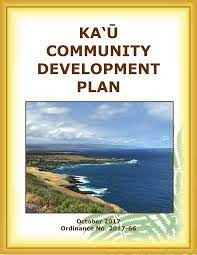
KA'Ū COMMUNITY DEVELOPMENT PLAN ACTION COMMITTEE MEETINGS are cancelled by the County of Hawai'i. Planning Director Zendo Kern made the announcement today, cancelling all Action Committee meetings for all the districts around the island. He said: "Due to recent staffing changes in the Long-Range Division within the Planning Department, it has become necessary to adjust staff time and resources. This means staff will unfortunately not have the capacity to organize or facilitate AC meetings for the foreseeable future."
   Kaʻū's Action Committee members are: Leina'ala Enos, Babette Morrow, Catherine Williams, Kaohinani Mokuali'i, Pernell Hanoa, Jason Masters, Kaweni Ibarra and Jessie Ke. 
    The Planning Director urged the public to "Please know that this does not prevent your continued participation and involvement in community-driven efforts to implement CDPs. In the time being, we aim to empower your active involvement in community groups and Permitted Interaction Groups (investigatory subcommittees) to continue working and moving forward.
    "We will also continue to aid and promote efforts of AC members to organize independent, official meetings. The CDP Team is continuing to support the implementation of CDPs and to serve as your resource for news and updates regarding our community planning efforts."
    The Planning Director said that "In the absence of County led AC meetings, the CDP Team will engage in a forward-looking approach to help shape the future of this program. This will include a concerted effort to connect with you and the broader community to gather feedback, along with consultation with Corporation Counsel to assess the benefits and limitations relative to Action Committee engagement. This effort will focus on the applicability of Sunshine Law and County mandates that place constraints on AC community-based stewardship of CDPs, and the ongoing challenge to develop a robust approach to Community Planning. In addition, the CDP team will continue to collaborate on other planning initiatives, including but not limited to the continued work of the General Plan Comprehensive Review. We appreciate your ongoing advocacy and diligence in implementing the Community Development Plans of our island. Please reach out to the CDP team at cdp@hawaiicounty.gov if you have any questions or would like additional information or guidance."

To read comments, add your own, and like this story, see www.facebook.com/kaucalendar. See latest print edition at wwwkaucalendar.com. See upcoming events at 

A MAGNITUDE 4.0 EARTHQUAKE ROLLED THROUGH PAHALA Monday evening, following a swarm of eight earthquakes in seven hours, with magnitudes ranging from M 2.2 to M 2.5. No damage was reported. 

To read comments, add your own, and like this story, see www.facebook.com/kaucalendar. See latest print edition at wwwkaucalendar.com. See upcoming events at 

Capt. Akira Edmundson is named to 
oversee Ka'u District for HPD.

THE NEW POLICE CAPTAIN OVERSEEING KA'Ū DISTRICT IS CAPT. AKIRA EDUMUNDSON, who has been with the department for 23 years. Prior to being promoted to the rank of Captain, he served as a Lieutenant in Kona Patrol. Previous assignments included working as a Detective in Area II Juvenile Aid Section, Sergeant in Kona and Ka‘ū Districts, a Canine Handler for Area II Vice Section, a Field Training Officer in Kona and a Patrol Officer.
    Other appointments announced by Hawai'i Police Department on Monday are Capt. Calvin Delaries, assigned to command the Kona District and Captain Rio Amon-Wilkins, assigned to command the Area I Criminal Investigation Division encompassing the Area I Criminal Investigation Section (CIS), Vice, and Juvenile Aid Sections, plus the Crime Laboratory.
    Hawai'i Police Department is also looking for recruits, with a starting salary topping $65,000. Deadline to apply is Aug. 30. See http://kaunewsbriefs.blogspot.com/2022_08_17_archive.html

To read comments, add your own, and like this story, see www.facebook.com/kaucalendar. See latest print edition at wwwkaucalendar.com. See upcoming events at 
https://kaunewsbriefs.blogspot.com/2022/04/upcoming-events-for-kau-and-volcano.htm

NARCOTICS CANINE RORY HAS RETIRED. Hawai'i Police Department made the announcement Monday with a rundown of some of his accomplishments, including the recovery of 35 pounds of methamphetamine; two pounds of heroin; three pounds of cocaine; 20 pounds of marijuana and more than $500,000 in U.S. currency.
Rory. the Springer Spaniel Narcotics specialist, retires and
will live with his handler, Officer Stephen Kishimoto Jr.
  Photo from HPD
    Longtime narcotics canine Rory served Hawai‘i Island for seven years. The department acquired Rory in 2015 when he was three years old from a California program that raises and trains narcotics canines. Since then, the energetic floppy-eared springer spaniel has worked as a narcotics canine for the Area II (west Hawai‘i) Vice Section.
     “To an uneducated eye, Rory does not look like your typical narcotics police canine,” said Area II Vice Lt. Edwin Buyten. “He was one of our secret weapons. “Let me tell you, this cute and cuddly ball of energy possesses one of the highest work drives of any narcotic canine I have ever had the pleasure to work with.”
    Area II K9 Supervisor and Vice Detective Chad Taniyama echoed the sentiment, saying “Rory is the epitome of don’t judge a book by its cover.” Taniyama described a situation during Rory’s most recent annual K9 certification in which someone mistook the police dog for a personal pet. “By the end of the day that same person was singing Rory’s praises and asking where could he get a K9 like Rory,” said Taniyama.
    Now ten years old, Rory still has a lot of spunk, says Buyten, but age and health were considerations in his retirement. “We want him to have a good quality of life in his retirement,” said Buyten.
     Rory will enjoy his retirement living with the family of Officer Stephen Kishimoto Jr., who was Rory’s most recent handler.

To read comments, add your own, and like this story, see www.facebook.com/kaucalendar. See latest print edition at wwwkaucalendar.com. See upcoming events at 

Walter Hammond was reported
missing on Mauna Loa's summit, then
 then found by Monday morning.
Photo from HPD
A MAN REPORTED MISSING AT THE SUMMIT OF MAUNA LOA was found in good health. Hawai'i Police Department on Monday morning reported Walter E. Hammond, a 75 year old, Caucasian, 5'10, 185 lb. man, was last seen at 4 p.m. on Sunday, wearing jeans, orange U of Texas pullover, tennis shoes and carrying a green drawstring bag at the summit of Mauna Loa. Later, Monday morning, HPD reported that Hammond was found alive and well, with no other detail.

To read comments, add your own, like this story, see www.facebook.com/kaucalendar
Missing man named
Henry Henry
See latest print edition at wwwkaucalendar.com. See upcoming events at
https://kaunewsbriefs.blogspot.com/2022/04/upcoming-events-for-kau-and-volcano.htm.

A PACIFIC ISLANDER NAMED HENRY HENRY is missing, according to Hawai Police Department. The report says he was last seen on August 20 after he left a retail outlet located on the 300 block of Makaala Street, in Hilo. He is described as Pacific Islander, approximately 5 feet 2 inches tall, 200 pounds, dark complexion, brown eyes, and black hair. He was last seen wearing a green shirt, black shorts.
    "If you have information that can assist in helping safely locate Henry Henry, please call 911 or contact the police," says the alert from HPD.

To read comments, add your own, and like this story, see www.facebook.com/kaucalendar. See latest print edition at wwwkaucalendar.com. See upcoming events at https://kaunewsbriefs.blogspot.com/2022/04/upcoming-events-for-kau-and-volcano.htm

CREATORS OF THE ISLAND OF HAWAI'I PONO PLEDGE video received praise from County of Hawai'i on Monday, after winning a 2022 Silver Telly Award. Hawai'i Visitors Bureau and County of Hawai'i made the announcement at the mayor's office. See The Pono Pledge video at https://www.ponopledge.com.
    The Island of Hawaiʻi Pono Pledge "advocates for mindful, safe, and pono interactions by travelers while on Hawai‘i Island," says the statement. The Telly Award in the Online General, Public Interest/Awareness category recognizes the video for sharing the Pono Pledge in ‘Ōlelo Hawai‘i (Hawaiian language) and English.  Also winning in the same Telly category were productions by Comcast, NBC News/MSNBC, CBS News, 60 minutes, and Honolulu Star Advertiser.

Lito Arkangel
Photo from U.H. Hilo
   The public information Pono Pledge video, created in 2018 in partnership between the Island of Hawaiʻi Visitors Bureau and the County of Hawaiʻi, is "a collaborative effort to accurately depict the people and place from which the pledge aims to protect," says the statement. 
    The Pono Pledge is also identified in Hawai‘i Tourism Authority’s Hawaiʻi Island Destination Management Action Plan and Hawaiʻi County’s Tourism Strategic Plan as a vessel to communicate with and educate visitors on pono practices.
    Ross Birch, Island of Hawai‘i Visitors Bureau Executive Director, said, “The Pono Pledge is a direct ask to our Hawai‘i Island visitors on the behaviors and actions we expect them to take while they’re enjoying the island’s splendor. The island of Hawai‘i is a special place, and our community comes first, which is why we continue to advocate for our visitors to not only traverse the island with respect and safety, but to take it a step further and give back to protect our natural resources and wildlife.”
    Lito Arkangel, who teaches at University of Hawai'i-Hilo, directed and produced The Pono Pledge video, featuring Hawaiʻi Island residents who embody the pledge and apply it in their everyday lives. Another Hilo-born creative, Tracey Niimi, of TN Photography, and a U.H. Hilo alum, assisted with the video’s creative direction and videography. Arkangel and Niimi said it was important to involve the community and have representation from residents of diverse backgrounds, upbringings, and ethnicities.
Tracey Niimi
Photo from U.H.-Hilo

The entire Pono Pledge and its website was translated to ʻŌlelo Hawaiʻi by Bruce Torres Fischer, a Master’s student of the Hawaiian language and literature program at the Ka Haka ʻUla O Keʻelikōlani College of Hawaiian Language at the at U.H.-Hilo. Larry Lindsey Kauanoe Kimura, associate professor of Hawaiian language and Hawaiian studies at the Ka Haka ʻUla O Keʻelikōlani College of Hawaiian Language at the University of Hawaiʻi at Hilo, and internationally recognized grandfather of Hawaiian language revitalization, also assisted Torres Fischer in The Pono Pledge video and website’s ‘Ōlelo Hawai‘i translation.
    Arkangel said, “Mahalo nui to all of you who contributed to an awesome expression of who we are as residents and what it means to be pono on Hawaiʻi Island. “We believe in The Pono Pledge and its teachings full heartedly and we’re honored to be able to work on this project and accept this award on behalf of the Island of Hawai‘i Visitors Bureau and the County of Hawai‘i.”
    Arkangel added, “Whether you are a visitor or resident, you must understand that not being pono is detrimental to the welfare and safety of not only yourself and your ʻohana, but to the ʻāina and all of the ʻohana here at home as well. Please help by sharing The Pono Pledge with friends and family near and far. Together, we can make a difference and protect the island of Hawaiʻi and all that makes it special.”
    The Island of Hawai‘i Visitors Bureau and the County of Hawai‘i held the ceremony on Monday at Mayor Mitch Roth’s office to recognize Arkangel, Niimi, Fischer and all those involved in the video. The mayor acknowledged them for "their great work in perpetuating The Pono Pledge and educating visitors on the appropriate behaviors to take while visiting the island of Hawai‘i," said the announcement.

Bruce Torres Fischer
Photo from U.H.-Hilo
    “Ensuring that our visitors who come to enjoy our beautiful island home have a clear understanding of how to interact with our ʻāina and our people is critical to how we reimagine tourism moving forward,” said Roth. “A huge mahalo for all who played a role in creating The Pono Pledge, as it offers our guests a perfect snapshot of our island and its values.”
    Roth added, “If all of our visitors can get on board and take the pledge, both our residents and visitors alike will benefit greatly.”

    For more information, visit PonoPledge.com and follow Pono Pledge on Facebook (@PonoPledgeHawaii) and Instagram (@PonoPledge).  Here are words to The Pono Pledge in Hawaiian and English:
E kū i ka pono ke kipa i Hawaiʻi.
I pledge to be pono (righteous) on the island of Hawaiʻi.

E nanea i ka ʻikena, ʻaʻole hoʻi e kiʻihele hewa i kahi kuleana ʻole.
I will mindfully seek wonder, but not wander where I do not belong.

E nihi ka helena i ka uka o Puna, mai pūlale i ka ʻike a ka maka.
I will not defy death for breathtaking photos, trespass or venture beyond safety.

E mālama ʻia ke kai a me ka honua, a e mahalo ʻia ko laila mau ola lōhiu mai kahi mamao aku.
I will mālama (care for) land and sea, and admire wildlife only from afar.

Hoʻohihi ka maka i ke ahi a ka Wahine, he ahi ʻenaʻena e akahele ai.
Molten lava will mesmerize me, but I will not disrupt its flow.


ʻAʻole e kāʻili ʻia kā haʻi, e waiho ʻia ka pōhaku a me ke one i kona wahi ponoʻī.
I will not take what is not mine, leaving lava rocks and sand as originally found.

E nānā pono i ke kai, ʻaʻole e huli kua ʻia.
I will heed ocean conditions, never turning my back to the Pacific.

Ke loku mai ka ua i uka, e ao aʻe i ia wai makamakaʻole.
When rain falls ma uka (inland), I will remain high above ground, out of rivers and streams.

He aliʻi ka ʻāina, he kauā ke kanaka.
I will embrace the concept of being a steward of the land, revered as my loving chief.


Silver Tele Awards in hand, producers of The Pono Pledge video win the praise of Mayor
Mitch Roth (second from left). They are Tracey Niimi (l), Bruce Torres Fischer and Lito Arkgangel.
Photo from Big Island Visitors Bureau

To read comments, add your own, and like this story, see www.facebook.com/kaucalendar. See latest print edition at wwwkaucalendar.com. See upcoming events athttps://kaunewsbriefs.blogspot.com/2022/04/upcoming-events-for-kau-and-volcano.htm

OCEAN VIEW KA'U PANTRY FOOD DISTRIBUTION is  Tuesday, Aug. 23, 9:30 a.m. - Pau. at St. Jude's Episcopal Church above the county Kahuku Park, Sponsored by Hawai'i Island Food Basket.

O KA'U KAKOU FOOD PANTRY DISTRIBUTION is Tuesday, Aug. 23, 10 a.m. - Pau. Ka'u District Gym in Pahala. Sponsored by Hawai'i Island Food Basket.

COOPER CENTER COMMUNITY PANTRY FOOD DISTRIBUTION is Wednesday, Aug. 24, 9:30 a.m. - 11 a.m. at 19-4030 Wright Road in Volcano. Sponsored by Hawai
i Island Food Basket.

KUPUNA FOOD BASKET is Thursday, Aug. 25, 9 a.m. to 11 a.m., Ka'u District Gym. Sponsored by Hawai'i Island Food Basket.

SIGN UP FOR KAʻŪ COFFEE TRAIL RUNS with a change of date from July 3 to Sept. 17. Registration deadline for the annual event is Sept. 14. Organized by Hawaiʻi Island Racers, the 50K begins at 6 a.m., Half Marathon at 7 a.m., and 5K at 7:15 a.m., all starting from Kaʻū Coffee Mill at 96-2696 Wood Valley Road in Pāhala. Proceeds go to support ʻO Kaʻū Kakou. For more details on the event and registration fees, visit https://www.kaucoffeetrailruns.com/.


Sunday, August 21, 2022

Ka‘ū News Briefs, Sunday, Aug. 21, 2022


View of south part of western side of Nuʻutele Island, off the west coast of Ofu Island in the Manuʻa Islands, American Samoa. Nuʻutele Island is an eroded tuff cone of Ofu-Olosega volcano. A tuff cone can form when magma and water interact at shallow depths, causing localized explosions. The layers exposed within the unvegetated cliff are the result of individual explosions during the eruption that created this tuff cone. The age of the eruption which formed Nuʻutele Island is thought to be Holocene (erupted within the last 12,000 years). After the eruption, ocean waves and currents eroded part of the tuff cone. USGS photo by N. Deligne
MANU'A ISLANDS MAGMATIC ACTIVITY is focus of this week's Volcano Watch, the weekly column by USGS Hawaiian Volcano Observatory scientists and affiliates. The focus is on possible volcanic eruptions and the ongoing earthquakes in American Samoa, with Hawaiian Volcano Observatory sending a crew there to help set up more monitoring:
    Earthquakes have been felt since late July in the Manuʻa Islands of American Samoa in the South Pacific. These earthquakes are likely associated with magmatic activity beneath the islands. The USGS Hawaiian Volcano Observatory is working closely with federal partners, American Samoan officials, and local residents to better understand the source and potential hazard implications of these ongoing earthquakes.
    Volcanoes in American Samoa are similar to those in Hawai'i, with the Pacific Plate moving to the northwest over the Samoa hotspot and building submarine volcanoes that eventually emerge from the ocean as islands. These islands are the tops of large basaltic shield volcanoes rising over 15,000 feet (4,500 m) from the surrounding seafloor.
    The Samoan hotspot is currently centered on Vailuluʻu seamount, which has had several historic eruptions. The Manuʻa Islands of Ofu, Olosega, and Ta‘ū—along with the main island of Tutuila—are all considered potentially active as they have erupted within the last 10,000 years.
    Tutuila is the most populous island in American Samoa and is where the capital city of Pago Pago is located. The youngest dated eruption in American Samoa on land is on Tutuila and occurred approximately 1400–1700 years ago. However, numerous submarine eruptions have occurred more recently at volcanoes east of Tutuila.
    The Manu‘a Islands, located about 60 miles (97 km) east of Tutuila, include Ofu, Olosega and Taʻū. Ofu and Olosega, separated by the narrow Asaga Straight, are the tops of two shield volcanoes. Taʻū, the largest of the Manuʻa group, is a shield volcano with rift zones to the northeast and northwest. In 1866, a submarine eruption formed a cone between Taʻū and Olosega.
    The Vailuluʻu seamount, the youngest Samoan volcano, is located about 25 miles (40 km) east of Taʻū. It is a submarine volcano with a summit about 2,000 feet (600 m) below sea level. Vailuluʻu has erupted multiple times over the past 50 years. During the past 20 years, a young cone has grown within the summit caldera.
    Based on felt reports and historic activity, Taʻū and Vailuluʻu were identified as likely possible sources for the recent earthquakes. It was initially difficult to confirm the source because, until a few days ago, there were no seismometers close enough to determine the distance to the source of the earthquakes.
    The latest data, obtained from rapidly deployed microseismometers, indicate that the source is closer to Taʻū than Olosega and not close to Vailuluʻu. The earthquake swarm is most likely due to magma movement beneath the volcanoes and not tectonic faulting.
    HVO became aware of these earthquake reports on Aug. 7. HVO and federal partners—NOAA National Weather Service Office in Pago Pago, NOAA Pacific Tsunami Warning Center, NOAA-IOC International Tsunami Information Center, NPS National Park of American Samoa, NOAA National Marine Sanctuary of American Samoa, and USGS National Earthquake Information Center—are working closely together with American Samoa officials to respond to this evolving situation.
    HVO staff traveled to American Samoa on Aug. 11 to consult with federal partners, local officials and residents. They are working with NWS staff and local residents to install volcano-monitoring equipment. Additional HVO scientists and equipment will arrive in American Samoa later this week.
   The USGS Alaskan Volcano Observatory and Wellington Volcano Ash Advisory Center are monitoring American Samoa using remote sensing satellite data, which could show thermal anomalies, volcanic plumes, or volcanic gases related to potential volcanic activity.
    It is unclear if this unrest will escalate to a volcanic eruption. If an eruption does occur, it will most likely include slow-moving lava flows or low-level explosions that are localized to a small area. Other hazards could include volcanic gases, ground shaking, and local tsunami. An eruption like Hunga Tonga–Hunga Ha'apai in Tonga earlier this year is extremely unlikely as it is a different type of volcano. Volcanoes in Tonga erupt much more explosively than ones in American Samoa and Hawai'i.
    HVO would like to acknowledge every agency and every individual person who has contributed to this response. We especially thank Manuʻa island residents for their observations. Mahalo and Fa'afetai!
    Read more about the activity on the Taʻū Island USGS website: https://www.usgs.gov/volcanoes/ta-u-island.

To read comments, add your own, and like this story, see www.facebook.com/kaucalendar. See latest print edition at wwwkaucalendar.com. See upcoming events at  https://kaunewsbriefs.blogspot.com/2022/04/upcoming-events-for-kau-and-volcano.html
This reference map depicts the ongoing Kīlauea summit eruption on Aug. 18. One eruptive vent (orange) is active within Halema‘uma‘u, on the western side of the crater floor. An adjacent pond (purple) is feeding lava to a larger lake (red) via a crusted-over tube. The eruption statistics provided are from the last HVO overflight on Aug. 16/ This map provides a volume-averaged elevation for the crater floor—2,887 feet (880 meters) above sea level—and its rise since Sept. 29, 2021—449 feet (137 meters). Lava is presently visible from three public visitor overlooks in Hawai‘i Volcanoes National Park: Keanakāko‘i Overlook and Kūpina‘i Pali (Waldron Ledge) where viewers can see the eruptive vent and lava lake, while viewers at Kīlauea Overlook can occasionally see lava ooze-outs in the southeast part of the crater. Visit the park eruption page for more info: https://www.nps.gov/havo/learn/nature/september-2021-eruption.htm

HAWAI'I VOLCANIC ACTIVITY UPDATES FROM USGS:
    Kīlauea volcano is erupting. Its USGS Volcano Alert level is at WATCH (https://www.usgs.gov/natural-hazards/volcano-hazards/about-alert-levels). Kīlauea updates are issued daily.
    Over the past week, lava has continued to erupt from the western vent within Halemaʻumaʻu crater. All lava is confined within Halemaʻumaʻu crater in Hawai‘i Volcanoes National Park. Sulfur dioxide emission rates remain elevated and were last measured at approximately 1,150 tonnes per day on Aug. 12. Seismicity is elevated but stable, with few earthquakes and ongoing volcanic tremor. Over the past week,
Mauna Loa summit from a Civil Air Patrol
plane in 2019. Photo from USGS
summit tiltmeters recorded several deflation-inflation sequences (DI-events). For more information on the current eruption of Kīlauea, see https://www.usgs.gov/volcanoes/kilauea/recent-eruption.
    Mauna Loa is not erupting and remains at Volcano Alert Level ADVISORY. This alert level does not mean that an eruption is imminent or that progression to an eruption from the current level of unrest is certain. Mauna Loa updates are issued weekly.
    This past week, about 96 small-magnitude earthquakes were recorded below the summit and upper elevation flanks of Mauna Loa—the majority of these occurred at shallow depths less than 15 kilometers (9 miles) below sea level. Global Positioning System (GPS) measurements show low rates of ground deformation over the past week. Gas concentrations and fumarole temperatures at both the summit and at Sulphur Cone on the Southwest Rift Zone have remained stable over the past week. Webcams show no changes to the landscape. For more information on current monitoring of Mauna Loa, see: https://www.usgs.gov/volcanoes/mauna-loa/monitoring.
    One earthquake was reported felt in the Hawaiian Islands during the past week: a M3.4 earthquake 7 km (4 mi) E of Pāhala at 34 km (21 mi) depth on August 16 at 4:37 p.m. HST.
    HVO continues to closely monitor Kīlauea's ongoing eruption and Mauna Loa for any signs of increased activity.
    Visit HVO’s website for past Volcano Watch articles, Kīlauea and Mauna Loa updates, volcano photos, maps, recent earthquake info, and more. Email questions to askHVO@usgs.gov.

To read comments, add your own, and like this story, see www.facebook.com/kaucalendar. See latest print edition at wwwkaucalendar.com. See upcoming events at  https://kaunewsbriefs.blogspot.com/2022/04/upcoming-events-for-kau-and-volcano.html

FARMERS AND RANCHERS CAN APPLY FOR HELP WITH TRANSPORTATION COSTS, through the U.S. Department of Agriculture's Farm Services Administration. Funding for the Reimbursement Transportation Cost Payment program has increased in Hawaiʻi and Pacific Basin to $3 million for fiscal year 2022 and enrollment is being taken through Sept. 2.
    Joy Kono, Executive Director for Farm Services Administration in Hawai'i and the Pacific Basin, said,
Joy Kono, Executive Director
of Farm Services Administration
in Hawai'i and Pacific Basin

“COVID-19 revealed vulnerabilities in our food system, and we’re working toward a fairer, more competitive and resilient food system. RTCP is a critical tool to help U.S. farmers and ranchers offset a portion of the cost of transporting agricultural products over long distances, which is especially important to producers in Hawai'i.This program is part of our commitment to give farmers the tools and resources they need to boost production, lower food prices, and feed the world.”
    The Consolidated Appropriations Act of 2022 reauthorized RTCP and allows farmers and ranchers in Alaska, Hawai'i and insular areas including the Commonwealth of Puerto Rico, Guam, American Samoa, Commonwealth of the Northern Mariana Islands, Virgin Islands of the United States, Federated States of Micronesia, Republic of the Marshall Islands and Republic of Palau, to recover any costs to transport agricultural commodities or inputs used to produce an agricultural commodity. Nearly $2 million was issued to 882 producers through the 2021 Reimbursement Transportation Cost Payment program in May 2022.
    RTCP payments are calculated based on the costs incurred for transportation of the agricultural commodity or inputs during a 12-month period, subject to an $8,000 per producer cap per fiscal year once the allocated $3 million has been reached. If total transportation cost for payments exceeds the funds available from the program for a fiscal year, payments will be reduced on a pro-rata basis.
    Farmers and ranchers can obtain applications and other documents by calling toll-free 1-866-794-1079 or by contacting FSA at the local USDA Service Center.

To read comments, add your own, and like this story, see www.facebook.com/kaucalendar. See latest print edition at wwwkaucalendar.com. See upcoming events at  https://kaunewsbriefs.blogspot.com/2022/04/upcoming-events-for-kau-and-volcano.html