About The Kaʻū Calendar

Friday, November 25, 2022

Kaʻū News Briefs, Friday, Nov. 25, 2022

The strength of family is honored during Thanksgiving weekend with a message in Hawaiian
from Hawai'i Volcanoes National Park. Photo from Hawai'i State Archives PP-32-2-030

FOR THE THANKSGIVING WEEKEND, this message in Hawaiian and English has been sent out by Hawai'i Volcanoes National Park:
      Wahi a nā kūpuna, ʻIke aku, ʻike mai, kōkua aku, kōkua mai; pēlā ihola ka nohona ʻohana. 'O ka 'ohana, he pilina ko'iko'i nō ia i ka Hawaiʻi. Ola nā iwi i ka paʻa pono o ka ʻohana. Mai ka ʻohana mai kākou e pili pū ai i ka ʻāina, i ka moʻomeheu, a me ka lāhui. He wā maikaʻi kēia no ka hōʻike ʻana aku i ke aloha, me ka mahalo i kou poʻe ʻohana.
     Its translation into English is: Many Native Hawaiians embrace ʻohana (family) as a fundamental form of human expression. It defines their relationship to each other, their ancestors, and the ʻāina (land). In a traditional Hawaiian society, a person would be incomplete without these bonds. Today, take the time to nurture and commemorate these ties.

To read comments, add your own, and like this story, see www.facebook.com/kaucalendar. See latest print edition at wwwkaucalendar.com. See upcoming events at https://kaunewsbriefs.blogspot.com/2022/04/upcoming-events-for-kau-and-volcano.html.

OUTSTANDING HIKES IN HAWAI'I VOLCANOES NATIONAL PARK are listed in a post from the Park as Kaʻū residents host families and friends from a far during the holidays: "There is nothing like getting some fresh air on a stunning hike. Whether it is hiking to witness an active eruption or exploring the scenic coastline, we’ve got you covered. These are some of the best hikes at Hawai’i Volcanoes National Park to put on your bucket list:
     Crater Rim Trail to Kūpinaʻi Pali – Where is the lava? Right across the street from the Kīlauea Visitor Center. Follow the eruption viewing signs along an old road damaged by an earthquake in 1983 and get some of the best views of Kaluapele (Kīlauea caldera). The trail is only a ½ mile one-way and is family-friendly. Don’t forget a flashlight and rain jacket if you plan to see the glow at night!
    Nāhuku – Walk through a lush rainforest filled with rare plants, birds, and giant tree ferns. This will lead you to a cave where a river of lava flowed 550 years ago during the ʻAilāʻau eruption. For the best experience, visit before 9 a.m. or after 4 p.m. to hear the Hawaiian honeycreepers' chorus and avoid large crowds. This trail is an easy ½ mile round trip from the Nāhuku parking area or a 1.5-mile round trip from the Kīlauea Iki parking area.
   
Outstanding, safe hiking trails in Hawai'i Volcanoes Park are listed as family and friends visit area residents for
the holidays. NPS photo by Janice Wei
    Maunaulu
– Always wanted to be a geologist? Visit Maunaulu down the Chain of Craters Road. It is a treasure trove of geologic formations and a great place to get away from crowds between 10 a.m. and 2 p.m. Stand next to a fissure than unzipped the earth and produced fountains up to 1,700 feet. That’s taller than the empire state building! This trail is a moderate 2.5 miles round-trip.
     Kīlauea Iki – There is no way around it! This is one of the most scenic day hikes, where you descend 400 feet through the rainforest into a volcanic crater. Kīlauea Iki parking area is an excellent place to start if you arrive before 10 a.m. If not, hike to the Kīlauea Iki loop from the Devastation parking area via        Byron Ledge Trail.
    For more on these trails, visit the park website: https://go.nps.gov/HAVO_hikes\

To read comments, add your own, and like this story, see www.facebook.com/kaucalendar. See latest print edition at wwwkaucalendar.com. See upcoming events at https://kaunewsbriefs.blogspot.com/2022/04/upcoming-events-for-kau-and-volcano.html.

VOLCANO ALERT LEVEL AND AVIATION COLOR CODES in Hawai'i and American Samoa are explained inn this week's Volcano Watch by USGS Hawaiian Volcano Observatory scientist Natalia Deligne:
    Currently, Kīlauea is erupting and is at WATCH/ORANGE, Mauna Loa is in elevated unrest and is at ADVISORY/YELLOW, and the remaining six monitored volcanoes are at NORMAL/GREEN.
What do these designations mean, how does HVO assign them, and how can you find out if there is a change?
    The first of the two-word designation is the Volcano Alert Level, which reflects the danger the volcano poses to people on the ground and infrastructure (“life and property”). USGS Volcano Alert Levels were established in 2006 and the four terms (NORMAL, ADVISORY, WATCH, WARNING) were chosen to mirror those used at the time by NOAA's National Weather Service for severe storms and floods.
    NORMAL indicates a non-eruptive background state of activity, ADVISORY reflects an activity level elevated above background, WATCH is used when an eruption is likely, or an eruption is occurring with limited hazards, and WARNING means a hazardous eruption is imminent, underway, or suspected.
    What does the color mean? The Aviation Color Code is designed specifically for the aviation sector. It was originally developed by the Alaska Volcano Observatory in the 1990s to rapidly communicate to pilots, dispatchers, and air traffic controllers the threats posed to aviation by restless or erupting volcanoes. In the early 2000s, the International Civil Aviation Organization adopted the system, and the Aviation Color Code is now a recommended practice for all volcano observatories around the world.
Icons for the ground-based Volcano Alert Level and Aviation Color Code. Right now in Hawaii and American Samoa, Kīlauea is erupting and is at WATCH/ORANGE, Mauna Loa is in elevated unrest and is at ADVISORY/YELLOW, and the remaining six monitored volcanoes are at NORMAL/GREEN. An additional resource for Volcano Alert Levels and Aviation Color Codes is the USGS Fact Sheet FS2006-3139 (https://pubs.usgs.gov/fs/2006/3139/).

    The Aviation Color Code approach is similar to the Volcano Alert Level (the Aviation Color Code inspired the Volcano Alert Level) but is specifically for the aviation sector. GREEN and YELLOW have the same definition as NORMAL and ADVISORY, while ORANGE (eruption likely or an eruption is occurring with no/minor ash) and RED (eruption with significant ash emission is imminent, underway, or suspected) are focused on whether there is a threat to aviation posed by volcanic ash.
    To determine the appropriate Volcano Alert Level and Aviation Color Code, HVO monitors volcanic activity around the clock with seismometers, cameras, satellites, and other instruments that can detect signs of magma moving underground or lava and ash actively erupting.
    Knowing exactly when to change the Volcano Alert Level and Aviation Color Code can be challenging. We do not have set thresholds: each situation is different. We decide by looking at all monitoring data, previous unrest and eruption patterns, and what is known about the processes occurring at the volcano. Typically, there is extended discussion among HVO scientists before a change is made. Sometimes the designation is unchanged for many years, although occasionally, frequent changes are warranted.
The north wall of Moku‘āweoweo, Mauna Loa’s summit caldera, includes
 the true summit of Mauna Loa, at an elevation of 13,679 feet (4,169 meters).
 The floor of the caldera is visible in the foreground, with the fissure vents
 1984 cross-cutting the bottom left portion of the image.
USGS image by K. Mulliken
    Kīlauea's current status is WATCH/ORANGE. The ongoing eruption is confined within Halemaʻumaʻu crater—posing no threat to life or property—and the eruption has no to minor volcanic ash emission.
    Mauna Loa's current status is ADVISORY/YELLOW. This reflects elevated rates of earthquakes and ground deformation above background. This activity indicates that magma is being supplied to Mauna Loa’s magma chamber, but at this stage magma is not moving beneath the ground to erupt on the surface. If signs of magma on its way to erupt appear, or if Mauna Loa returns to background levels of activity, HVO will change Mauna Loa's Volcano Alert Level and Aviation Color Code accordingly.
    Volcano Alert Level changes are announced in a USGS Volcanic Activity Notification, which explains why the change was made and what is likely to happen next based on the current scientific consensus (Aviation Color Code changes are also announced in a Volcano Observatory Notice for Aviation). These notifications are posted on our website and social media. You can subscribe to get them delivered by email or text through the Volcano Notification Service (https://volcanoes.usgs.gov/vns2/).
    In summary, the Volcano Alert Level and Aviation Color Code communicates the degree and, in some cases, the time frame of a particular volcanic threat for people on the ground and in the aviation sector. With this information, public safety and emergency managers, individuals and families, and businesses can take appropriate and timely steps to keep our communities safe.

VOLCANO ACTIVITY UPDATES: Kīlauea volcano is erupting. Its USGS Volcano Alert level is at WATCH (https://www.usgs.gov/natural-hazards/volcano-hazards/about-alert-levels). Kīlauea updates are issued daily.
    Over the past week, lava has continued to erupt from the western vent within Halemaʻumaʻu crater in
A southwest-facing view of the eruption within Halema‘uma‘u,
at the summit of Kīlauea. Diffuse steam and volcanic gases are
 emitted from the crater floor and eruption site.
USGS image by K. Mulliken
Hawai‘i Volcanoes National Park. Sulfur dioxide emission rates remain elevated and were last measured at approximately 350 tonnes per day (t/d) on November 22. Seismicity is elevated but stable, with few earthquakes and ongoing volcanic tremor. Over the past week, summit tiltmeters recorded two deflation-inflation (DI) events. For more information on the current eruption of Kīlauea, see https://www.usgs.gov/volcanoes/kilauea/recent-eruption.
    Mauna Loa is not erupting and remains at Volcano Alert Level ADVISORY. This alert level does not mean that an eruption is imminent or that progression to an eruption from the current level of unrest is certain. Mauna Loa updates are issued daily.
    This past week, about 144 small-magnitude earthquakes were recorded below the summit and upper elevation flanks of Mauna Loa—the majority of these occurred at shallow depths less than 15 kilometers (9 miles) below sea level. Global Positioning System (GPS) measurements show continued ground deformation consistent with inflation of a magma chamber beneath the summit. Gas concentrations and fumarole temperatures at both the summit and at Sulphur Cone on the Southwest Rift Zone have remained stable over the past week. Webcams show no changes to the landscape. For more information on current monitoring of Mauna Loa, see: https://www.usgs.gov/volcanoes/mauna-loa/monitoring.
    There were five events with three or more felt reports in the Hawaiian Islands during the past week: a M3.6 earthquake 12 km (7 mi) ESE of Pāhala at 29 km (18 mi) depth on Nov. 20 at 5:07 p.m. HST, a M2.8 earthquake 5 km (3 mi) E of Waimea at 14 km (9 mi) depth on Nov. 18 at 3:45 p.m. HST, a M3.5 earthquake 6 km (3 mi) SSW of Pāhala at 32 km (20 mi) depth on Nov. 17 at 3:07 p.m. HST, a M3.0 earthquake 26 km (16 mi) E of Honaunau-Napoopoo at 0 km (0 mi) depth on Nov. 17 at 7:22 a.m. HST, a M3.9 earthquake 5 km (3 mi) SSW of Pāhala at 31 km (19 mi) depth on Nov. 16 at 6:56 p.m. HST.
    HVO continues to closely monitor Kīlauea's ongoing eruption and Mauna Loa for any signs of increased activity.
     Visit HVO’s website for past Volcano Watch articles, Kīlauea and Mauna Loa updates, volcano photos, maps, recent earthquake info, and more. Email questions to askHVO@usgs.gov.

THE ALOHA FRIDAY MARKETPLACE WILL OPEN in early December every Friday from 9 a.m. to 2 p.m. at Nāʻālehu Hongwanji Mission 95-5695 Mamalahoa Highway.
    Aloha Friday Marketplace features Made in Hawai'i Products, Organic Produce, Creative Crafts, Art, Flowers and Plants, Food, Kaʻū Coffee, Gluten Free, Low Carb Goodies, Wellness Services and Products, Clothing, Hand Crafted Treats and more. For questions and vendor inquiries, email AlohaFridayMarket@gmail.com or text 808-256-3193.





Thursday, November 24, 2022

Kaʻū News Briefs, Thursday, Nov. 24, 2022

Thanksgiving in traditional Hawai'i is the Makahiki Season, with games and an appreciation of
agriculture and peacemaking. Makahiki events are being held this year in Kaʻū.

A HAWAI'I THANKSGIVING WAS DECLARED in 1849, as a a national holiday in the Kingdom of Hawai‘i by King Kamehameha III. "This was 14 years before President Lincoln had declared Thanksgiving a national holiday in the United States. Going even further back, before European influence and the introduction of the American Thanksgiving to Hawai‘i, Hawaiians had their own version of the harvest season holiday," according to a story in Honolulu Magazine. It was the Makahiki.
     The November 1967 edition reported that "The Makahiki was a three-month-long festival celebrating the return of Lono, the Hawaiian god of agriculture and peace.
    The festival season officially began on the first night of the 11th month and ended on the last night of the first month. Before the festival, everyone would gather their crops and pay their taxes in food, live animals or other fruits or products of their particular crafts. Once Makahiki began, men, women, chiefs and royalty would cast aside everyday work, religious observances and even war to mingle and enjoy the festivities, which included week after week of grand feasts, boxing tournaments and other sports, games and activities, music and dancing."

Area schools participated in Makahiki Games on Tuesday.
Photo from Kahua Olohu Stewardship Committee

    This year, the Makahiki Grounds between Nāʻālehu and Honu'apo were the site of Makahiki games for students from area schools this past Tuesday. See http://kaunewsbriefs.blogspot.com/2022_11_22_archive.html/. The Makahiki Run through Kaʻū, carrying the wooden image of Lono, took place Nov. 12. See http://kaunewsbriefs.blogspot.com/2022_11_12_archive.html.

    A Makahiki Festival at Punalu'u Beach Park is planned for Dec. 3 and 4 with free food, drinks, Makahiki games, music and hula from 9 a.m. to 9 p.m. With the New Year, as part of the Makahiki season, Vibrant Hawai'i and Resilience Hubs in Kaʻū will host a session on future planning for the district. It will take place on Saturday, Jan. 21 from 10 a.m. to 1 p.m. at Na'alehu Hongwanji, 95-5698 Hawai'i Belt Road - Hwy. 11.
    Hau'oli Lā Ho'omaika'i means Happy Thanksgiving.

To read comments, add your own, and like this story, see www.facebook.com/kaucalendar. See latest print edition at wwwkaucalendar.com. See upcoming events at https://kaunewsbriefs.blogspot.com/2022/04/upcoming-events-for-kau-and-volcano.html.

SEN. MAZIE HIRONO'S THANKSGIVING MESSAGE IS:"Today, let us reflect on our nations' history of colonization and the impact it continues to have on Native communities—including learning the true First Thanksgiving of the Wampanoag Peoples and English settlers. We can all do more to listen to and support Indigenous communities."

Rep. Kai Kahele and Joe Biden
KAI KAHELE SENT OUT A MAHALO MESSAGE on Thanksgiving Day, as he wraps up his term in Congress, thanking "the people of Hawai'i for putting your trust in me and allowing our team the opportunity to serve you in the United States Congress.        
    "This year, I am so thankful for our community leaders, the hundreds of volunteers who serve on our neighbor boards, the non-profits that touch every fabric of our island state, from keiki to kupuna, the community organizers that continue to protect our environment, our 'aina, our mauna and our kai."
    He also thanked the service members "in our armed forces and their families who protect our freedoms each and every day."
   Kahele this week also published a photo from a baseball game to wish the U.S. President a Happy 80th Birthday. "Mahalo for your continued leadership and commitment to our nation and families," Kaʻū's member of the U.S. House of Representatives said to Joe Biden.

To read comments, add your own, and like this story, see www.facebook.com/kaucalendar. See latest print edition at wwwkaucalendar.com. See upcoming events at https://kaunewsbriefs.blogspot.com/2022/04/upcoming-events-for-kau-and-volcano.html.

DESPITE THE FIRE DAMAGE ALONG MOA'ULA ROAD,  the County Transfer Station in Pāhala remains open. Residents can travel down Maile Street to Hwy 11 and loop back on Moa'ula Road to reach the facility on Fridays, Sundays and Tuesdays, 6 a.m. to 6 p.m. Over the next week, crews will be clearing huge eucalyptus and silver oak trees from the intersection of Maile and Moa'ula toward the transfer station. Firefighters on the scene said that fire damaged trees must be cut because they have become unstable and could fall across the road.
Eucalyptus and silver oaks damaged by the Maile Street Fire in Pāhala this week at the corner of Maile and Moa'ula Road to the county transfer station are being cut since they could fall on vehicles. Photo by Julia Neal


To read comments, add your own, and like this story, see www.facebook.com/kaucalendar. See latest print edition at wwwkaucalendar.com. See upcoming events at https://kaunewsbriefs.blogspot.com/2022/04/upcoming-events-for-kau-and-volcano.html.

MALIA KEKAI IS THE NEW DEPARTMENT OF PUBLIC WORKS DEPUTY director for County of Hawaiʻi. Kekai has worked for the County of Hawaiʻi since 2016 as a Deputy Corporation Counsel. "She
Malia Kekai, new Deputy Director of
county Department of Public Works.
Photo from County of Hawai'i
brings with her excellent institutional knowledge and a wealth of experience in County operations, policies, and procedures. During her time with the County, Malia has advised numerous departments, boards, and commissions," says the county statement.
    Mayor Mitch Roth said, “We’re excited to bring Malia on as Deputy of our Department of Public Works as we continue to strive towards a thriving Hawaiʻi Island. She has proven herself a vital asset to our Corporation Counsel, and we know she will continue to bring a balanced, thoughtful, and, most importantly, local perspective to her new position in Public Works.”
    Kekai was born and raised on Maui and graduated from Maui High School. She received a Bachelor of Arts from the University of Hawaiʻi at Mānoa in Communications and Hawaiian Studies. She received her Juris Doctor degree from Southwestern Law School in Los Angeles, California.

To read comments, add your own, and like this story, see www.facebook.com/kaucalendar. See latest print edition at wwwkaucalendar.com. See upcoming events at https://kaunewsbriefs.blogspot.com/2022/04/upcoming-events-for-kau-and-volcano.html.

SIXTEEN WERE ARRESTED FOR DUI during the week of Nov. 14 through Nov. 20. Hawai‘i Island police arrested 16 motorists for driving under the influence of an intoxicant. Two were involved in a traffic accident. One was under the age of 21.
    So far this year, there have been 877 DUI arrests compared with 960 during the same period last year, a decrease of 8.7 percent.
    There have been 737 major accidents so far this year compared with 718 during the same period last year, an increase of 2.6 percent.
    To date, there were 31 fatal crashes (one fatal crash reclassified on May 30 due to a medical condition) resulting in 33 fatalities (one of which had multiple deaths, and one reclassified due to a medical condition), compared with 25 fatal crashes, resulting in 25 fatalities for the same time last year. This represents an increase of 24 percent for fatal crashes, and 32 percent for fatalities.
    HPD promises that DUI roadblocks and patrols will continue island wide.

To read comments, add your own, and like this story, see www.facebook.com/kaucalendar. See latest print edition at wwwkaucalendar.com. See upcoming events at https://kaunewsbriefs.blogspot.com/2022/04/upcoming-events-for-kau-and-volcano.html.

'I'iwi, a Hawaiian honeycreeper, threatened by mosquitoes that spread avian malaria.
Photo by Jack Jeffrey/ American Bird Conservancy

RIDDING THIS ISLAND OF MOSQUITOES IS FOR THE BIRDS, say Kahuku Coffee Talk presenters, who explained the goal of a Birds Not Mosquitoes group last Saturday. The organization’s goal is to eradicate a mosquito species that carries the avian malaria parasite from all of the Hawaiian Islands' forest areas, where native Hawaiian birds live.
    Evelyn Wight, representing The Nature Conservancy, and Chris Farmer of the American Bird Conservancy explained how mosquito eradication can save endangered native birds. The audience was a group of Kaʻū residents who gathered at Hawai'i Volcanoes National Park's Kahuku Unit Visitor Center.
Evelyn Wight of The Nature Conservancy and Chris Farmer
of American Bird Conservancy at Kuhuku Unit of Hawai'i
 Volcanoes National Park. Photo by Peter Bosted

    “There were no mosquitoes in Hawai’i before western ships arrived on these islands”, explained Farmer, adding that the introduction of the pest in 1826 is well documented.
    According to Farmer, before avian malaria was introduced the Honeycreepers in Hawai’i embodied an explosion of diversity unseen elsewhere. Birds have been evolving on the islands for about six to seven million years. At one time, there were 55 Honeycreepers, all with a huge diversity of plumages, bills and other adaptations.
    “The Galapagos islands, where Darwin made his famed studies of the evolution of finch, had nothing on the huge evolution among the birds on these islands,” he explained.
    Farmer said that of the six species of mosquito that bite people on this island, only one species, the Aedes aegypti, carries malaria and threatens the birds. Over the millions of years that Honeycreepers have been evolving, they have lost their resistance to malaria as that trait was never needed. Then, suddenly, overnight, in 1826, malaria and the Aedes aegypti mosquitoes were on the islands. The birds succumbed in droves and many species were wiped out. However, the mosquito and the malaria parasite are both cold intolerant. Thus the only birds that could survive were those who lived high above the range of the Aedes aegypti mosquitoes, high enough on Mauna Loa where it is too cold for the insects and for the malaria parasite.
    Over the past 40 years, according to Farmer, climate change has been impacting the birds again. As the earth warms, the cold intolerant Aedes aegypti mosquitoes can migrate further up the mountain and infect birds that were previously beyond their range. The mortality rate for the birds has been extremely high, and some species are dangerously close to extinction.
Hawai'i Akepa. Photo by Richard Armeding
    Against this crisis backdrop, Birds Not Mosquitoes was formed as a multi-agency partnership. According to its website, the hui is urgently working to save the native honeycreepers of Hawai’i from extinction, writing: “We plan to use common, naturally-occurring bacteria as a 'mosquito birth control' to suppress mosquito populations in Hawai’i.”
    Scientists in Florida have been testing bacteria-infested Aedes aegypti mosquitoes with the aim of eradicating viruses like dengue, Zika, yellow fever and chikungunya that pose a danger to humans, explained Wight and Farmer. According to them, scientists have developed the Incompatible Insect Technique, which is used on male aedes aegypti mosquitoes.
    This technique is explained on the website for the Centers for Disease Control and Prevention. First, scientists introduce a bacteria named Wolbachia into Aedes aegypti mosquito eggs. From these eggs, mosquitoes with Wolbachia are bred. Male and female mosquitoes with Wolbachia are sorted - only males are released. The females are not released, but may be used for breeding in the lab. Typically, when a male
Aedes aegypti mosquito. Photo from Wikipedia
Aedes aegypti mosquito that has been infected with Wolbachia mates with a wild female mosquito that does not have Wolbachia, the resulting eggs never hatch. Birds Not Mosquitoes hopes to use this technique to reduce the mosquito population and save the rare and endangered birds.
    Wolbachia bacteria is not harmful to humans or animals. The CDC states: “In the United States, the use of mosquitoes with Wolbachia is regulated by the U.S. Environmental Protection Agency. Prior to release of mosquitoes with Wolbachia into an area, EPA must grant an Experimental Use Permit.
   “Aedes aegypti mosquitoes spread viruses including dengue, Zika, and chikungunya. Aedes species of mosquitoes are common throughout many areas of the United States. EPA has registered mosquitoes with Wolbachia to evaluate how effective they are in reducing numbers of aedes aegypti mosquitoes, not other types of mosquitoes. Mosquitoes with Wolbachia are not genetically modified.”

To read comments, add your own, and like this story, see www.facebook.com/kaucalendar. See latest print edition at wwwkaucalendar.com. See upcoming events at https://kaunewsbriefs.blogspot.com/2022/04/upcoming-events-for-kau-and-volcano.html.


THE ALOHA FRIDAY MARKETPLACE WILL OPEN in early December every Friday from 9 a.m. to 2 p.m. at Nāʻālehu Hongwanji Mission 95-5695 Mamalahoa Highway.
    Aloha Friday Marketplace features Made in Hawai'i Products, Organic Produce, Creative Crafts, Art, Flowers and Plants, Food, Kaʻū Coffee, Gluten Free, Low Carb Goodies, Wellness Services and Products, Clothing, Hand Crafted Treats and more. For questions and vendor inquiries, email AlohaFridayMarket@gmail.com or text 808-256-3193.


Wednesday, November 23, 2022

Kaʻū News Briefs, Wednesday, Nov. 23, 2022

Fine handmade glass from 2400 Fahrenheit will be shown and for sale during Volcano Village Artist Hui's
36th Annual Studio Tour & Sale this Friday, Saturday and Sunday. See studio map below. Photo from 2400 Fahrenheit

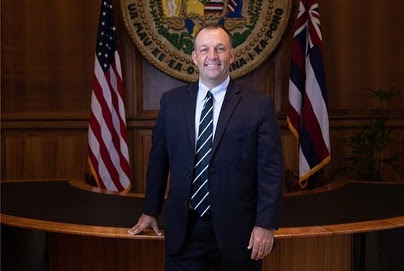
TEAM MEMBERS FOR THE NEXT HAWAI'I GOVERNOR'S executive office staff have been selected ahead of former Kaʻū physician Josh Green's swearing in on Monday, Dec. 5 in Honolulu. Green said,  “I am assembling a team that will help me drive an ambitious agenda for Hawaiʻi during the next four years.” He said the group is comprised of "dedicated, qualified professionals with years of experience in their respective fields. Each brings with them the passion to make a difference and meet the challenges facing Hawaiʻi.”
    The Governor-elect's transition team released the following names with backgrounds of the so-far, all-women team:
    Brooke Wilson will serve as Green’s Chief of Staff, a position she held during his tenure as Lieutenant Governor. Over the last four years, Wilson worked with Green on the state’s first master-planned Kauhale
 Joining Gov-elect Josh Green's staff are: Krystle Cook, Keala Patterson, Makana
 McClellan, Lori Abe, Brooke Wilson, Nani Medeiros, Felea'i Tau and
 Shari Carter. Photo from Green's transition team
(tiny home village), and the development of the Housing is Healthcare model to address chronic homelessness. Wilson has 20 years of career experience in multiple industries including government, construction, non-profit, technology, and communications.
    Nani Medeiros will join as Green’s Chief Housing Officer. Medeiros will be driving the Governor’s initiatives on workforce and affordable housing, homelessness and social service policies. Medeiros is Executive Director of HomeAid Hawai'i and developed Kama’okū, a Kauhale of 37 tiny homes to address homelessness. She spent six years in healthcare at the Hawaii Primary Care Association, 13 years at the state legislature, and five years in the executive branch of the state.
    Lori Abe, Deputy Chief of Staff, most recently served as a Vice President for the Chamber of Commerce of Hawaiʻi.
    Makana McClellan, Director of Communications, most recently served as the Director of Business Development & Community Relations and the Director of Marketing & Communications at Shriners Children’s Hospital and was previously the Public Information Officer for The Queen’s Health Systems.
    Feleaʻi Tau, Director of Constituent Services and Protocol, worked for Green for the last 18 years as his
Lt. Gov. Josh Green will be sworn in as Governor,
on Monday, Dec. 5 at noon in Honolulu.
Photo from Green
Office Manager and most recently as the Special Assistant to the Lieutenant Governor.
   Keala Patterson, Protocol Officer, most recently served as the Director of Public Affairs at Waianae Coast Comprehensive Health Center.
    Krystle Cook, Administrative Services Officer, most recently served as an Advancement Operations Officer at Punahou School.
   Shari Carter, Executive Assistant to the First Lady as the Administrative Services Officer for the Office of the Lieutenant Governor for the last nine years.
   In addition, the incoming administration announced "an additional 15 staff for critical roles in the Governor’s office. Together, this team will support the Governor-elect in his day-to-day operations and priorities for the state." 
    As cabinet-level interviews continue this week, Green said he continues to encourage interested Hawaiʻi residents to apply to serve at every level of government through the administration portal, GreenTransition2022.org, or the hiring portal of the State of Hawaiʻi: jobs.hawaii.gov with applications considered as they are received.
    “I have been so excited to see the incredible quality of applicants who have already applied to work in the administration. This really gives me hope that a great future lies ahead for our state.”
    Green's inauguration will be held at the Neal S. Blaisdell Center Arena, Dec. 5 at noon. Doors open at 9 a.m. with ceremony at 11 a.m. The event is open to the public and free of charge.

To read comments, add your own, and like this story, see www.facebook.com/kaucalendar. See latest print edition at wwwkaucalendar.com. See upcoming events at https://kaunewsbriefs.blogspot.com/2022/04/upcoming-events-for-kau-and-volcano.html.

PUTTING FILIPINO HISTORY CLASSES IN SCHOOL is gaining traction with Sen. Mazie Hirono meeting this week with high school student leaders of the Filipino Curriculum Project. The effort aims to create an elective course within the Hawai'i Department of Education to tell the history and contributions of Filipinos in Hawai'i.
    "Hawai'i's rich diversity is central to our state's history and culture, and it's important that our keiki learn about all of the communities that comprise our unique state," said Hirono. "The Filipino community has made significant contributions in areas such as health care, education, the arts, business, military
U.S. Sen. Mazie Hirono meets with Filipino students
who advocate Filipino history in the schools.
Photo from Hirono's office
service, and more in Hawaii and across the country. Developing a curriculum that celebrates these contributions, as well as the rich history and culture of the Filipino community is long overdue. The students leading the Filipino Curriculum Project are a testament to the drive and dedication of the next generation, and I'm very encouraged by what they're doing. I've asked for their feedback on my bill to expand AAPI history in our schools, and I look forward to continuing our dialogue."
    The Filipino Curriculum Project is a collaboration between Hawaii students from public and private schools. The group is developing a curriculum with four components: Ethnic Identity, Cultural Connection, Historical Context and Filipinos in Hawai'i. The group has participated in curriculum workshops, met with leadership from Department of Education, and engaged with State legislators to pass

House Resolution 50 to implement a Filipino history, culture, and identity social studies course for high school students.


    Hirono has long advocated on behalf of Asian Pacific Islander American communities in Hawai'i, the U.S., and Pacific Island nations and territories. In May, she introduced a bill to promote the teaching of Asian Pacific American history for high school students and teachers who enroll in the U.S. Department of Education's American History and Civics Academies programs. Hirono also brought legislation to the Senate floor, signed into law by President Biden, establishing a commission to study the creation of a National Museum of Asian Pacific American History and Culture. Additionally, for the last several years, she has led the Senate resolution recognizing May as Asian Pacific American Heritage Month.

To read comments, add your own, and like this story, see www.facebook.com/kaucalendar. See latest print edition at wwwkaucalendar.com. See upcoming events at https://kaunewsbriefs.blogspot.com/2022/04/upcoming-events-for-kau-and-volcano.html.

FOR THIS THANKSGIVING WEEKEND, Hawai‘i Police Department is teaming up with U.S. Department of Transportation’s National Highway Traffic Safety Administration to remind motorists that drug-impaired driving is dangerous and illegal. Before heading out to any holiday event, remember: If You Feel Different, You Drive Different.
    “People are familiar with the phrase ‘don’t drink and drive,’ however, they are less familiar with the impacts of driving impaired by prescription or illegal drugs,” said Torey Keltner, Program Manager for Hawai‘i Police Department’s Traffic Services Section. He noted that drivers need to understand that using
some cold medications or over-the-counter sleep aids can impair driving, which may lead to being arrested for a DUI. Medications have directions on how to properly use them and people should be follow them closely. “We want our Big Island community members to stay safe on the roads during the Thanksgiving holiday,” added Keltner. “Driving impaired due to drugs is deadly and illegal, and no one should ever take that risk.”
    "Unfortunately, this year there have been 33 traffic fatalities on Hawai‘i Island roads, with impairment a factor in 14, or 42 percent, of those deaths," said Keltner.  Six of the fatalities were due to drugs only, an additional six deaths were due to a combination of drugs and alcohol, and two deaths were caused by alcohol only. However, toxicology reports are still pending on the other 19 fatalities and the percentage of fatalities due to impairment is expected to increase.
    In 2021 there were 26 traffic fatalities on Hawai‘i Island roads. Impairment was a factor in 21 of the 26 fatalities, with drugs playing a role in 20 of the 21 impaired deaths.
    Driving under the influence of a drug played a similar role in 2020 traffic fatalities. Of the 15 traffic deaths in 2020, impairment was a factor in 12 people dying, with drugs playing a role in nine of the 12 impaired traffic fatalities.
     “With so many safe driving options available, there’s no excuse to drive impaired this holiday season,” says Keltner. “We are asking our community members to please make good decisions during the upcoming holidays and commit to sober driving.”
    He said that Hawai‘i Police Department will be out in force and on the lookout for impaired drivers throughout the holiday season. "For those heading out to the bar or parties during the Thanksgiving
holiday, make sure to plan for a safe ride home." He provided a few tips to help you prepare for a safe night out.
    If planning to go to a party or event, designate a sober driver or use public transportation or a ride-sharing service. Someone who is affected by drugs or alcohol shouldn’t be making decisions about driving; that’s why having a plan is key.
    If using an impairing substance, do not drive. Passengers should never ride with an impaired driver. If the driver may be impaired, do not get in the car.
     If seeing a friend who is about to drive while impaired by drugs, take the keys away and arrange to get them home safely. Don’t worry about offending someone — they’ll give thanks later.
    If seeing an impaired driver on the road, contact the police department’s non-emergency line at (808) 935-3311.

To read comments, add your own, and like this story, see www.facebook.com/kaucalendar. See latest print edition at wwwkaucalendar.com. See upcoming events at https://kaunewsbriefs.blogspot.com/2022/04/upcoming-events-for-kau-and-volcano.html.