About The Kaʻū Calendar

Thursday, March 16, 2023

Kaʻū News Briefs, Thursday, March 16, 2023

View of Mauna Loa eruption before dawn Nov. 27,  2022 from Hwy 11 between Pāhala and Volcano at Mile Marker 34. 
Photo by Tanya Ibarra

MAUNA LOA'S ALERT LEVEL HAS BACKED DOWN TO NORMAL, following the eruption that lit up the island last November into December. U.S. Geological Survey changed the alert level from advisory to normal on Thursday. Aviation Color Code for Mauna Loa is lowered from Yellow to Green.
    According to USGS, since its 1843 eruption, Mauna Loa erupted 34 times with intervals lasting months and decades. Before last November, this largest active volcano on the planet last erupted in 1984.
    USGS Hawaiian Volcano Observatory issued a statement on Thursday, saying, "Mauna Loa has been quiet for the past three months since the eruption ended on December 13, 2022. The number of earthquakes beneath Mauna Loa’s summit has returned to background levels. Inflation of Mauna Loa continues as magma replenishes the summit magma chamber."

To read comments, add your own, and like this story, see facebook.com/kaucalendar. See latest print edition at kaucalendar.com, in the mail and on stands.

James Takamine, President & CEO of CU
Hawai'i Federal Credit Union
CU HAWAI'I FEDERAL CREDIT UNION HAS ISSUED A STATEMENT TO ASSURE MEMBERS THAT DEPOSITS ARE SAFE in the wake of bank failures on the mainland in the past week. The message notes that CU Hawai'i Credit Union members are owners of the not-for-profit financial cooperative, governed by a volunteer board composed of respected leaders across Hawai'i Island.
    James Takamine, CEO of CU Hawai'i, said, "It is much safer to keep your deposits in a financial institution such as CU Hawai'i than to take deposits out and hold them as cash. Any cash on hand is not insured and may be destroyed in the case of fire or other natural disaster. Also, cash may be stolen or lost. CU Hawai'i has been serving the community on Hawai'i Island since 1955 and has weathered many financial downturns in the economy. We have a long history and track record of managing risk, liquidity, and ensuring the safety of member deposits, and are well-capitalized. Please rest assured that your deposits are safe with CU Hawai'i Federal Credit Union. We look forward to continuing to meet your needs and those of our community."          In Ka'u, CU Hawai'i has offices in Nā`ālehu and Pāhala with an ATM in Ocean View. Its message says, "CU Hawai'i’s first priority is your financial success, and we focus on financial security." Not a bank, CU Hawai'i is a federal credit union regulated and insured by the National Credit Union Administration.             
    Created by the U.S. Congress in 1970, the National Credit Union Administration is an independent federal agency that insures deposits at federally insured credit unions, protects the members who own credit unions, and charters and regulates federal credit unions. See MyCreditUnion.gov.
    Member deposits at CU Hawai'i are insured by the NCUA, a separate fund not associated with the Federal Deposit Insurance Corporation for banks. The NCUA website says: “The National Credit Union Share Insurance Fund was created by Congress in 1970 to insure members’ deposits in federally insured credit unions. Each credit union member has at least $250,000 in total coverage. Administered by the NCUA, the Share Insurance Fund insures individual accounts up to $250,000. Additionally, a member’s interest in all joint accounts combined is insured up to $250,000. The Share Insurance Fund also separately protects members’ IRA and KEOGH retirement accounts up to $250,000 and provides additional coverage for members’ trust accounts.
    "The Share Insurance Fund has the backing of the full faith and credit of the United States. Credit union members have never lost even a penny of insured savings at a federally insured credit union.” 
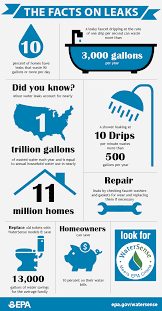
FIX A LEAK WEEK is coming up March 20 through 26 and the county  Department of Water Supply is celebrating the U.S. Environmental Protection Agency’s event by helping water customers save valuable water and money. 
    According to the EPA, “The average household’s leaks can account for nearly 10,000 gallons of water wasted every year and ten percent of homes have leaks that waste 90 gallons or more per day.”
     To determine if other household water leaks are occurring, DWS customers should check their water meter after turning off all faucets, spigots, and household appliances that use water such as dishwashers. If the meter is still moving, a leak may be present. Customers should also examine their water bill for spikes in water usage that could indicate an undetected leak. 
    DWS will distribute FREE toilet tank leak detection tablets, while supplies last, during normal business hours at its offices in Hilo, Kona, and Waimea starting Monday, March 20. Toilet leak detection tablets offer a quick and easy way to check for leaking toilets, which can waste up to 200 gallons of water every day, needlessly increasing customers’ water bills. Toilet leaks are often caused by a worn-out toilet flapper that easily can go undetected. Replacing worn out flappers is an affordable way to reduce water waste. For additional leak detection and water conservation tips, please visit the Department of Water Supply website at: www.hawaiidws.org or the Environmental Protection Agency website at: www.epa.gov/watersense/fix-leak-week.


In the mail and on stands.

FREE FOOD

St. Jude's Hot Meals are free to those in need on Saturdays from 9 a.m. until food runs out, no later than noon. Volunteers from the community are welcome to help and can contact Karen at pooch53@gmail.com. Location is 96-8606 Paradise Circle Drive in Ocean View. Those in need can also take hot showers from 9 a.m. to noon and use the computer lab from 9:30 a.m. to 1 p.m.

Free Meals Mondays, Wednesdays, and Fridays are served from 12:30 p.m. to 3:30 p.m. at Nā'ālehu Hongwanji. Volunteers prepare the food provided by 'O Ka'ū Kākou with fresh produce from its gardens on the farm of Eva Liu, who supports the project. Other community members also make donations and approximately 150 meals are served each day.

OUTDOOR MARKETS

https://www.okaukakou.org/scholarships
-for-local-students
Volcano Evening Market, Cooper Center, Volcano Village, Thursdays, 3 p.m. to 6 p.m., with live music, artisan crafts, ono grinds, and fresh produce. See facebook.com.

Volcano Swap Meet, fourth Saturday of the month from 8 a.m. to noon. Large variety of vendors with numerous products. Tools, clothes, books, toys, local made healing extract and creams, antiques, jewelry, gemstones, crystals, food, music, plants, fruits, and vegetables. Also offered are cakes, coffee, and shave ice. Live music.                                                                                                                                  Volcano Farmers Market, Cooper Center, Volcano Village on Sundays, 6 a.m. to 10 a.m., with local produce, baked goods, food to go, island beef and Ka'ū Coffee. EBT is used for Supplemental Nutrition Assistance Program, formerly Food Stamps. Call 808-967-7800.

O Ka'ū Kākou Market, Nā'ālehu, Wednesdays, 8 a.m. to 2 p.m. Contact Nadine Ebert at 808-938-5124 or June Domondon 808-938-4875. See facebook.com/OKauKakouMarket.

Ocean View Community Market, Saturdays and Wednesdays, 6:30 a.m. to 2 p.m., corner Kona Dr. Drive and Hwy 11, near Thai Grindz. Masks mandatory. 100-person limit, social distancing required. Gate unlocked for vendors at 5:30 a.m., $15 dollars, no rez needed. Parking in the upper lot. Vendors must provide their own sanitizer. Food vendor permits required. Carpooling is encouraged.


Wednesday, March 15, 2023

Kaʻū News Briefs, Wednesday, March 15, 2023

Wood for koa canoes would be grown, managed, harvested and regrown, under the new plan for the Kapāpala Koa Canoe Management Area.  April 1 is a meeting on the plan at Ka'ū District Gym Multi-Purpose Room from 9 a.m. to 11 a.m. Above is restoration of the koa canoe Malolo in 2015, belonging to the Miloli'i community. Photo from Pa'a Pono Miloli'i

A HARVEST AND EXTRACTION PLAN FOR CANOE-QUALITY KOA TREES has been developed for the Kapāpala Koa Canoe Management Area, with a public informational meeting to be held on Saturday, April 1 at the Robert Herkes Ka'ū District Gym Multi-Purpose Room in Pāhala from 9 a.m. to 11 a.m. 
    The plan would also allow for regenerating koa resources on a 100-year timeframe. It is part of the state Department of Land & Resources' Division of Forestry & Wildlife's overall Management Plan for Kapāpala Canoe Management Area. It is "the only state land in Hawai'i specifically zoned for the purpose of producing koa canoe resources," according to a statement inviting the public to the meeting.
A Kapāpala Canoe Forest Working Group that has visited
the area over the years of creating the plan.
Photo from DLNR
    It says that current plans call for involvement of "organizations who have been selected to independently implement the harvest of canoe logs with guidance of Department of Forestry & Wildlife. DOFAW will also implement stand improvement actions, such as pre-commercial and commercial thinning, that will enhance the ability of the forest to produce large, straight koa trees capable of being made into canoes. Organizations in the state of Hawai'i may apply for a permit to harvest a canoe log, which will be reviewed by a group of experts consisting of cultural practitioners, voyaging and racing members, kālaiwa'a (canoe builders); forestry experts; conservationists; and community members, who will advise DOFAW/DLNR on the final allocation of canoe log permits.
    "Multiple protection measures will be implemented to ensure that the resources in the area are not
Kapāpala Canoe Forest has hosted student volunteers
 including these in a Three Mountain Alliance Program.
Photo from DLNR
degraded due to threats such as non-native animals, invasive weeds, human impacts, climate change, and/or erosion. In order to minimize impacts on threatened and endangered species as well as archeological and historical sites, mitigation measures will be implemented. Botanists, ornithologists and archaeologists will undertake targeted surveys prior to any silviculture actions. Areas of higher value native forest and bird habitat will be designated as lower priority harvest areas."
    A Cultural Impact Assessment has been completed by ASM Affiliates and the Environmental Assessment is being prepared by Geometrician Associates, LLC. A "first public release draft of the plan will be available online for public review within the next one to two months.                  "Finalization of the management plan and the draft EA will occur after consideration of comments and suggestions from reviewing parties."
    Forest Solutions, Inc. is hosting the public informational event. There will be coffee and refreshments along with the status update and informational event on the Kapāpala Koa Canoe Management Area.
    See more and a map in the March 9 story http://kaunewsbriefs.blogspot.com/2023_03_09_archive.html.  

JILL TOKUDA, WHO REPRESENTS KAʻŪ IN U.S. CONGRESS, came out with a statement on Wednesday regarding the meaning of Equal Pay Day, which she celebrated on Tuesday. "It's a call for action for policymakers, business leaders, and individuals to push for policies that promote pay transparency, eliminate pay discrimination, and increase access to education and training for women," said Tokuda. "The persistent pay gap between men and women isn't just a matter of fairness; it continues to affect the financial well-being of millions of families and slows down the growth of our economy."
    The Congresswoman noted that "On average, women still earn only 82 cents for every dollar earned by men for the same work, and this gap is even wider for women of color. "It is unacceptable. This pay gap impacts women throughout their lifetime."
    Tokuda said that "On average, women joining the workforce with student debt will take longer to pay
their loans. The pay gap makes it harder to save for retirement, leading more older women than men to live in poverty. The pay gap creates a cycle where many women are forced to choose between providing for their families financially or ensuring their loved ones receive care. And when women leave the workforce, we have fewer women in the room making decisions on family-friendly policies, like providing access to affordable childcare, paid family and medical leave, and more fair work schedules."
    Tokuda, who represents all of rural Hawai'i in Congress, said she co-sponsored a resolution authored by Rep. Lois Frankel, recognizing the significance of equal pay and the disparity between wages paid to men and women. "So, yesterday, today, and tomorrow let us renew our commitment to achieving gender equality in the workplace and take concrete steps toward making it a reality," said Tokuda.

HAWAI'I ISLAND POLICE ARRESTED 17 FOR DUI during the week of March 6 through March 12. The motorists were arrested for driving under the influence of an intoxicant. Five were involved in a traffic accident. One was under the age of 21.
    So far this year, there have been 211 DUI arrests compared with 231 during the same period last year, a decrease of 8.7 percent.
    A review of all updated traffic crashes by Hawai‘i Police Department’s Traffic Services Section found 180 major crashes so far this year compared with 146 during the same period last year, an increase of 23.3 percent.
    To date, there have been four fatal crashes, resulting in five fatalities, (Rvsd. 2/07/23: one fatal crash reclassified—manner of death was due to natural causes) and (one fatal crash had multiple deaths); compared with seven fatal crashes, resulting in nine fatalities (one of which had multiple deaths) for the same time last year. This represents a decrease of 42.9 percent for fatal crashes, and 44.4 percent for fatalities. Police promised that DUI roadblocks and patrols will continue island wide.

In the mail and on stands.

FREE FOOD

St. Jude's Hot Meals are free to those in need on Saturdays from 9 a.m. until food runs out, no later than noon. Volunteers from the community are welcome to help and can contact Karen at pooch53@gmail.com. Location is 96-8606 Paradise Circle Drive in Ocean View. Those in need can also take hot showers from 9 a.m. to noon and use the computer lab from 9:30 a.m. to 1 p.m.

Free Meals Mondays, Wednesdays, and Fridays are served from 12:30 p.m. to 3:30 p.m. at Nā'ālehu Hongwanji. Volunteers prepare the food provided by 'O Ka'ū Kākou with fresh produce from its gardens on the farm of Eva Liu, who supports the project. Other community members also make donations and approximately 150 meals are served each day.

OUTDOOR MARKETS

https://www.okaukakou.org/scholarships
-for-local-students
Volcano Evening Market, Cooper Center, Volcano Village, Thursdays, 3 p.m. to 6 p.m., with live music, artisan crafts, ono grinds, and fresh produce. See facebook.com.

Volcano Swap Meet, fourth Saturday of the month from 8 a.m. to noon. Large variety of vendors with numerous products. Tools, clothes, books, toys, local made healing extract and creams, antiques, jewelry, gemstones, crystals, food, music, plants, fruits, and vegetables. Also offered are cakes, coffee, and shave ice. Live music.                                                                                                                                  Volcano Farmers Market, Cooper Center, Volcano Village on Sundays, 6 a.m. to 10 a.m., with local produce, baked goods, food to go, island beef and Ka'ū Coffee. EBT is used for Supplemental Nutrition Assistance Program, formerly Food Stamps. Call 808-967-7800.

O Ka'ū Kākou Market, Nā'ālehu, Wednesdays, 8 a.m. to 2 p.m. Contact Nadine Ebert at 808-938-5124 or June Domondon 808-938-4875. See facebook.com/OKauKakouMarket.

Ocean View Community Market, Saturdays and Wednesdays, 6:30 a.m. to 2 p.m., corner Kona Dr. Drive and Hwy 11, near Thai Grindz. Masks mandatory. 100-person limit, social distancing required. Gate unlocked for vendors at 5:30 a.m., $15 dollars, no rez needed. Parking in the upper lot. Vendors must provide their own sanitizer. Food vendor permits required. Carpooling is encouraged.


Tuesday, March 14, 2023

Kaʻū News Briefs, Tuesday, March 14, 2023

Some farmed eucalyptus between Pāhala and Nā'ālehu is still standing. Much has been cut and stacked
in anticipation of burning it at Hu Honua's biofuel plant north of Hilo. On Monday, Hawai'i Supreme Court
rejected the plan to sell Hu Honua electricity to Hawaiian Electric. Photo by Julia Neal

HU HONUA PLANNED TO BURN EUCALYPTUS GROWN IN KAʻŪ AT ITS POWER PLANT north of Hilo, but lost its case before Hawai'i Supreme Court on Monday. "The proposed tree burning project is dead," said Henry Curtis of Life of the Land, who opposed the project as an intervenor in front of the Public Utilities Commission. The Supreme Court's vote was unanimous. Associate Justice Todd W. Eddins wrote: 
    "Over ten years ago, energy company Hu Honua had a brainwave: it could produce renewable energy by burning trees. The company sought regulatory approval to supply energy to Hawaiʻi Island using a biomass power plant. Last summer, approval for that
energy deal was denied. Hu Honua appeals the denial, arguing that the Public Utilities Commission misunderstood its mandate and held Hu Honua to an unfair standard.
    "We disagree. The PUC understood its public interest-minded mission. It faithfully followed our remand instructions to consider the reasonableness of the proposed project’s costs in light of its greenhouse gas emissions and the project’s impact on intervenor Life of the Land’s members’ right to a clean and healthful environment. It stayed true to the language of its governing statute HRS § 269-6(b) (Supp. 2021) by measuring the project’s cost and system impact. And it acted properly within its role as fact-finder when it evaluated Hu Honua by its own statements and promises and, ultimately, found them unconvincing.
    "Finding no error, we affirm the PUC’s decision rejecting the power purchase agreement between Hu Honua and the Hawaiʻi Electric Light Company, Inc."
  Referring to the PUC's rejection of Hu Honua, the Justice also wrote:
    "In the order, the PUC found that the project would produce massive GHG emissions, and that Hu Honua’s promise of carbon neutrality rested on speculative, uncertain assumptions. The commission expressed serious doubts that Hu Honua could actually live up to its sequestration estimates. It pointed out that Hu Honua had no firm plans for leasing land to plant trees. Using the carbon calculator provided by Hu Honua, the commission found that even changes as small as one-percent in Hu Honua’s emissions and sequestration estimates would make the project a net carbon emitter. The commission
calculated that the back-up money Hu Honua pledged, even if carbon offsets were available at the rate it expected, would only buy 30,000 metric tons of carbon offsets — less than one sixth of the carbon the project (per Hu Honua’s own estimates) would emit annually.
    "The PUC was particularly troubled by the frontloading of GHG emissions in the project. While Hu Honua pledged to be carbon neutral on an annual basis by the end of 2035, the commission determined (again based on Hu Honua’s numbers) that the overall impact of the project would not be carbon neutral until 2047, two years after Hawaiʻi’s 2045 zero emissions target came and went. For the first 25 years of the project, Hu Honua would be a significant net emitter. If Hu Honua did not meet its sequestration commitments, the PUC feared that the damage to the atmosphere could not be easily undone.
    "The PUC also found that the Amended PPA would significantly increase costs for rate-payers. Six years into the project, the fuel price was set to spike 15%, for no discernible
reason. That spike – in combination with other pricing terms and adjustments for inflation – meant that the cost would continually rise. Overall, the PUC found that the project would increase the typical consumer bill by an average of $10.97 a month throughout the full 30-year term. The PUC deemed this a significant bill impact. HELCO stated that there were no realistic modeling assumptions under which the project “could produce a net savings to the system or customer.” Based on the project’s high GHG emissions, the PUC did not
Justice Todd W. Edins
consider these higher costs to consumers reasonable.
    "The PUC had another big time concern. The commission found that not only would the project fail to accelerate the retirement of fossil-fuel, it would displace other, more environmentally friendly renewable resources. Hu Honua said that its plant would only displace the fossil fuel-based Keāhole power plant. However, HELCO, which actually controls energy dispatch, testified that this claim was “unrealistic” and “contrary to [HELCO’s] practices” and “actual operational conditions.” HELCO said that it would be “impossible” for the project to avoid displacing other renewable resources. The Consumer Advocate, a statutorily-mandated party to the proceedings, estimated that almost 60% of Hu Honua’s generation would replace renewable energy generation. Here, the commission credited the testimony of HELCO and the Consumer Advocate over Hu Honua’s. The PUC also credited HELCO’s testimony that the Hu Honua project filled no pressing need in its power grid.
    "Summing up, the PUC found that the proposed project would emit substantially more carbon than it sequestered for at least the first 25 years of operation and raise ratepayer prices for the full term. And the PUC found Hu Honua’s promise of eventual carbon neutrality speculative at best. Based on these findings, the PUC concluded that the Amended PPA was not in the public interest. It rejected the agreement.
Justice Michael D. Wilson
    Hawai'i Supreme Court Associate Justice Michael D. Wilson also wrote his opinion:
    "Given the climate emergency, and the need to limit atmospheric CO2 concentrations to below 350 ppm in order to leave Hawai‘i’s future generations a habitable earth, approval of the amended PPA would violate the people of Hawai‘i’s right to a life-sustaining climate system. Because the PUC properly evaluated the Project’s emissions—and found them to be unacceptably high given the impending climate emergency—it complied with its duty to protect the right of Hawai‘i’s people to a life-sustaining climate system.
    "We are facing a sui generis climate emergency. The lives of our children and future generations are at stake. With the destruction of our life-sustaining biosphere underway, the State of Hawai‘i is constitutionally mandated to urgently reduce its greenhouse gas emissions in order to reduce atmospheric CO2 concentrations to below 350 ppm.
    "I join with the Majority opinion. In concurrence, it is noted that in this time of dire climate emergency, the people of Hawaiʻi have the protection of the right to a life-sustaining climate system derived from substantive due process pursuant to Article I, section 5 and the public trust doctrine enshrined in Article XI, section 1 of the Hawaiʻi Constitution."
Hu Honua's biomass burning plant to make electricity was rejected by Hawai'i Supreme Court.
Photo from Life of the Land

ROLLING BLACKOUTS WERE NOT PLANNED FOR KAʻŪ AND VOLCANO on Tuesday evening, as Hawaiian Electric initiated 30-minute rolling outages in parts of Hawaiʻi Island. The situation involves unexpected loss of two large generators and calm weather taking wind resources down to near zero.
    Outages were set to start in Ainaloa and Pāhoa, Captain Cook to Honaunau, and Halaula along Akoni Pule Highway from Iole Road to Niuli Place at about 6:45 p.m. The brief emergency outages "are initiated in various areas around the island to protect the electric system and prevent loss of power to an even greater number of customers. The impacted areas and the timing of the outages are based on the amount of
No breeze for Tawhiri windmills at South Point and other windmill
 locations on the island, along with a breakdown in  Hawaiian Electric
 generators led to a rolling blackout Tuesday. Photo by Peter Anderson


electric demand that needs to be reduced," said the statement from Hawaiian Electric.
    Earlier on Tuesday, Hawaiian Electric urged customers to conserve energy as much as possible, especially between 5 p.m. and 9 p.m. Commercial customers were also asked to voluntarily reduce electricity usage.
    "We apologize for the need to initiate rolling blackouts this evening and appreciate the patience of all who are impacted," said Kristen Okinaka, spokesperson for Hawaiian Electric's operations on Hawai'i Island. "We are faced with a generation shortfall, and it's necessary to leave some people without power for short periods to protect the entire electrical grid until needed generation can be returned to service."
    Hawaiian Electric advised impacted customers to unplug televisions, computers and other electronics and appliances to protect them from electrical surges when power is restored, and to minimize opening refrigerator-freezer doors while power is out.
    "The need to conserve is prompted by the unavailability of two large generators. Hamakua Energy tripped offline and is undergoing repairs and Hawaiian Electric's Hill Plant Unit #6 is offline due to a mechanical issue. Combined, these units supply about 80 megawatts of power. In addition, wind resources are forecast to be near zero, said the Hawaiian Electric statement. See @HIElectricLight on Twitter for updates.

In the mail and on stands.

FREE FOOD

St. Jude's Hot Meals are free to those in need on Saturdays from 9 a.m. until food runs out, no later than noon. Volunteers from the community are welcome to help and can contact Karen at pooch53@gmail.com. Location is 96-8606 Paradise Circle Drive in Ocean View. Those in need can also take hot showers from 9 a.m. to noon and use the computer lab from 9:30 a.m. to 1 p.m.

Free Meals Mondays, Wednesdays, and Fridays are served from 12:30 p.m. to 3:30 p.m. at Nā'ālehu Hongwanji. Volunteers prepare the food provided by 'O Ka'ū Kākou with fresh produce from its gardens on the farm of Eva Liu, who supports the project. Other community members also make donations and approximately 150 meals are served each day.

OUTDOOR MARKETS

https://www.okaukakou.org/scholarships
-for-local-students
Volcano Evening Market, Cooper Center, Volcano Village, Thursdays, 3 p.m. to 6 p.m., with live music, artisan crafts, ono grinds, and fresh produce. See facebook.com.

Volcano Swap Meet, fourth Saturday of the month from 8 a.m. to noon. Large variety of vendors with numerous products. Tools, clothes, books, toys, local made healing extract and creams, antiques, jewelry, gemstones, crystals, food, music, plants, fruits, and vegetables. Also offered are cakes, coffee, and shave ice. Live music.                                                                                                                                  Volcano Farmers Market, Cooper Center, Volcano Village on Sundays, 6 a.m. to 10 a.m., with local produce, baked goods, food to go, island beef and Ka'ū Coffee. EBT is used for Supplemental Nutrition Assistance Program, formerly Food Stamps. Call 808-967-7800.

O Ka'ū Kākou Market, Nā'ālehu, Wednesdays, 8 a.m. to 2 p.m. Contact Nadine Ebert at 808-938-5124 or June Domondon 808-938-4875. See facebook.com/OKauKakouMarket.

Ocean View Community Market, Saturdays and Wednesdays, 6:30 a.m. to 2 p.m., corner Kona Dr. Drive and Hwy 11, near Thai Grindz. Masks mandatory. 100-person limit, social distancing required. Gate unlocked for vendors at 5:30 a.m., $15 dollars, no rez needed. Parking in the upper lot. Vendors must provide their own sanitizer. Food vendor permits required. Carpooling is encouraged.