About The Kaʻū Calendar

Wednesday, May 03, 2023

Kaʻū News Briefs, Wednesday, May 3, 2023

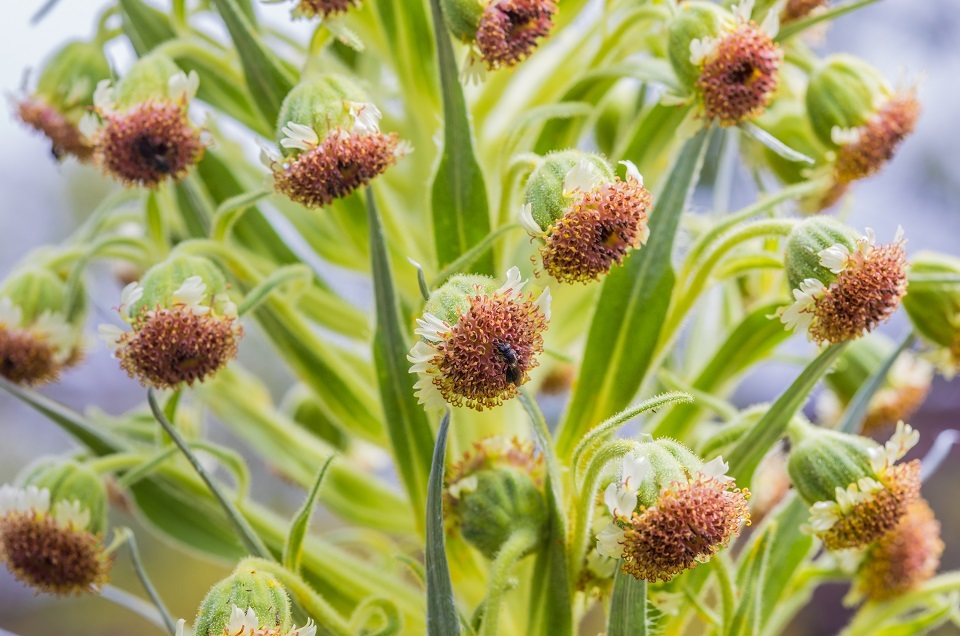
Closeup of a Kaʻū silversword blooming with a native yellow-faced bee on the center blossom. NPS Photo/J.Wei. 


A NEW KA'U SILVERSWORD SITE SOWS PROMISE in Hawai'i Volcanoes National Park's remote upper Kahuku Unit. A statement released Wednesday says that Kaʻū 'āhinahina, "the critically endangered Kaʻū silversword is staging a comeback within Hawaiʻi Volcanoes National Park, thanks to decades of collaborative conservation efforts and a stroke of luck."
Ka'u Silversword, the 'āhinahina. NPS Photo

    Kilohana is a high-elevation haven on the slopes of Mauna Loa where National Park Service biologists and partner agencies have re-established the endemic silver-leafed plants. A few years ago, a member of the park's fence crew looked down and noticed a wee rosette-shaped plant growing in the dry, rocky ground. It looked like a tiny 'āhinahina (silversword). It was a chance discovery that confirmed Kaʻū silverswords (Argyroxiphium kauense), while exceedingly rare, were present in the park's upper Kahuku Unit miles from any known populations. Five more plants were found during follow up surveys. "That was one of the best texts I've ever received," recalls Sierra McDaniel, Hawaiʻi Volcanoes National Park's natural resources program manager. "We were already reintroducing plants at two sites on Mauna Loa, but to think there could be a third population really galvanized our enthusiasm," she said.

    While Kilohana and the other remote, protected areas are closed to the public, a new digital storymap produced by the park shares the story of intense effort and collaboration across generations to protect the Kaʻū 'āhinahina and the ecosystems in which they grow.

Sierra McDaniel works with critically
endangered silverswords. NPS photo

    At Kilohana, park biologists and conservation partners planted 330 young silverswords and more than 152,000 seeds within a protected fenced area between October 2021 and October 2022. So far, the initial survival rate of the plants is 97% which is good news for a plant that blooms once, then dies.
    "One of the reasons the initial survival rate is so high is because Kilohana is fenced and that prevents invasive non-native goats, sheep and pigs from coming in and devouring the 'āhinahina," McDaniel said. "Fences are our best ally in protecting endemic plants and ecosystems."
    For more information about 'āhinahina in Hawaiʻi Volcanoes National Park, please visit the new storymap and park website.
    Other agencies working hard alongside Hawaiʻi Volcanoes National Park to save Kaʻū silverswords include the University of Hawaiʻi Pacific Cooperative Studies Unit; the U.S. Geological Survey; Hawaiʻi Division of Forestry and Wildlife; Hawaiian Silversword Foundation at the University of Arizona; U.S. Fish and Wildlife Service, Pacific Islands Office; Kupu; Three Mountain Alliance; and the Hawaiʻi Plant Extinction Prevention Program.

To read comments, add your own, and like this story, see facebook.com/kaucalendar. See latest print edition at kaucalendar.com, in the mail and on stands.

ALA KAHAKAI NATIONAL HISTORIC TRAIL IS APPROVED BY HAWAI'I PACIFIC PARKS ASSOCIATION, to be represented in its visitor center park stores on this island, and online. The partnership means Hawai'i Pacific Parks Association will develop and carry Ala Kahakai National Historic Trail sales items and will be positioned to help support Ala Kahakai programs and projects through HPPA donations.
    Nearly half of the Ala Kakahai Trail is in Ka'u. The trail runs between and through four national park sites. These are: Hawaiʻi Volcanoes National Park, Puʻuhonua o Hōnaunau National Historical Park, Kaloko-Honokōhau National Historical Park and Puʻukoholā Heiau National Historic Site.
    HPPA Executive Direct Mel Boehl says, “We are excited to have Ala Kahakai National Historic Trail join our partnership. This was an easy yes for HPPA! The trail is an integral part of Hawaii's national park system and of Hawaiian history. This partnership will allow us to expand our interpretive products and services, which will further our mission to inspire and connect visitors and the community to national park sites in the Pacific region, and to Hawaiian culture. We look forward to working with Superintendent Aric Arakaki and his team to support their interpretive programs.”
    Ala Kahakai National Historic Trail was established in 2000 and is administered by the National Park Service. This "trail by the sea" traverses wahi pana (storied landscapes), ancient Hawaiian sites, and over 200 ahupuaʻa (traditional land divisions). It follows 175 miles of Hawaiʻi Island’s diverse coast.
    Superintendent Aric Arakaki says, "Mahalo a nui loa to the HPPA board of directors, staff, and NPS parks in Hawai'i for welcoming the Ala Kahakai National Historic Trail into this partnership ‘ohana! Hawai'i’s trails have been in continuous use from when they were created centuries ago till today. We’re looking forward to working with HPPA to enhance, educate, and engage visitors and our communities on and with our parks and trail."

To read comments, add your own, and like this story, see facebook.com/kaucalendar. See latest print edition at kaucalendar.com, in the mail and on stands.


Gov. Josh Green delivered presentations on Hawai'i's kauhale housing program for the homeless and on solving the challenges of
health care delivery at the Milken Institute Global Conference in LA. Photo from the Governor's Office


TINY HOMES FOR HOMELESS AND DELIVERING BEHAVIORAL HEALTHCARE THROUGH PRIMARY CARE were two topics of presentations by Gov. Josh Green at the 26th Annual Milken Institute Global Conference in Los Angeles, April 29 - May 3. Milken Institute is a nonprofit, nonpartisan think tank focused on accelerating measurable progress on the path "to a meaningful life, with a focus on financial, physical, mental, and environmental health." Its founder is Michael Milken, the financier who made his fortune in high yield "junk" bonds, and later through investing in health and education, followed by philanthropy.

    The Conference, with its theme Advancing a Thriving World, brought together hundreds of leaders from around the globe to tackle critical issues facing society. The leaders come from all disciplines, including celebrities and entrepreneurs like Snoop Dog, to medical journalists like Sanjay Gupta and leaders of

Michael Milken, founder of the think tank
Milken Institute and its Global Conference,
which featured Gov. Josh Green this week.
international non-profits, corporations, and governments. Topics included gene therapies, renewable energy, AI, infrastructure, DEI, and FinTech.

      Presentations ranged from How 10,000 Communities Can Build Resilient and Equitable Economies to Investing in a Resilient Food System to Build a Better Tomorrow. All of the public presentations and panel discussions are available free online. See: https://milkeninstitute.org/ and https://milkeninstitute.org/events/global-conference-2023/speakers

      Green, whose statement noted that he is the only U.S. governor who is also a physician, emphasized the need for healthcare reform to increase efficiency and accessibility for all.
    "Housing is health care," said Green during a live interview, as he introduced Hawai'i's kauhale program of building tiny houses for those who are houseless. He stated that average spending on emergency room care for a homeless person in Hawaiʻi is $82,000 per person per year. Putting people in tiny homes following discharge from the hospital for follow-up care will reduce that cost from between 43 percent to 73 percent, depending on the severity of the patient's illness. These follow-up services will dramatically reduce ER visits and bring the average cost down to $21,000 a year. The savings can be reinvested in our communities, he said.

Gov. Josh Green, from the  program of the
Milken Institute's 2023 Global Conference.
    Green encouraged conference attendees to examine investment opportunities in health systems that have workforce shortages. He noted that many health care facilities wind up housing patients in need of long-term when beds in long-term-care homes are not available. "People who invest in that way are really investing in something that's more efficient than probably the heart pills we're putting into people's bodies," said Green.
    A statement from the Governor's office said Green "emphasized the need to bridge political gaps across the nation to focus less on bickering and more on leading with compassion and helping people in need across red and blue states."
    He discussed a planned pitch to President Joe Biden for pilot housing projects, three for blue states and three for red, to test reduction in Medicaid costs and promote better housing and health care options using the kauhale model. The statement says, "Kauhale is a new approach to offering housing for neighbors who have experienced persistent homelessness. As a community-centered model, various forms of kauhale can provide previously houseless people an opportunity to thrive in a community they can call home."
    He also stated that n Hawai'i, his loan forgiveness legislation for health care professionals has been approved.
    See the video of Green's presentation: Healthcare of the Future, Part 1: Governing America: A Conversation with Hawai'i Governor Josh Green' posted by the Milken Institute. Milken Institute is based in Santa Monica, Washington D.C., New York, London, Abu Dhabi, and Singapore.  The Global Conference was based at the Beverly Hilton Hotel.


To read comments, add your own, and like this story, see facebook.com/kaucalendar. See latest print edition at kaucalendar.com, in the mail and on stands.


HAWAI'I HAS 2023's SMALLEST DRUG PROBLEM, according to a WalletHub report released Wednesday. The report states that Hawai'i, among the 50 states and Washington, D.C., has the least drug use and addiction and is the second best when comes to drug use issues and rehab. It also ranked Hawai'i on the following: 

    41st – Share of Teenagers Who Used Illicit Drugs in the Past Month
    48th – Share of Adults Who Used Illicit Drugs in the Past Month    
    51st – Opioid Pain Reliever Prescriptions per 100 People
    46th – Drug Overdose Deaths per Capita
    30th – Drug Arrests per Capita
    47th – Share of Adults Who Couldn't Get Treatment for Illicit Drug                      Use in the Past Year
    49th – Substance Abuse Treatment Facilities per 100,000 People (Age                 12+) Using Illicit Drugs
   Concerning the national drug problem, WalletHub stated: "There were more than 103,500 drug overdose deaths in the 12-month period ending in November 2022. It’s crucial for the government to address this issue and prevent it from getting any worse. The government must also deal with the changing landscape of drug use, as newer drugs like fentanyl become more widespread. In fact, the DEA seized the equivalent of more than 410 million lethal doses of fentanyl in 2022."
    To view the full report, visit https://wallethub.com/edu/drug-use-by-state/35150


Tuesday, May 02, 2023

Kaʻū News Briefs, Tuesday, May 2, 2023

The Nature Conservancy is working to reduce the number of Fish Aggregation Devices
that drift in the open ocean and often wind up on reefs. Photo from TNC


IT'S WORLD TUNA DAY AND THE NATURE CONSERVANCY HAS AN ANNOUNCEMENT.  The Nature Conservancy Hawai'i & Palmyra is expanding the first drifting Fish Aggregation Device partnership with commercial purse seine tuna vessels in the Pacific Ocean. The partnership formally began in June 2021 with the U.S. Pacific Purse Seine Tuna Group; the Cape Fisheries fleet joined. In 2023, it more than doubled in size with the addition of the Spanish Pacific Asociaicón de Grandes Atuneros Congeladores purse seine fleet.
    "We commend the purse seine industry partners for their commitment to TNC and this conservation action by covering many costs of the program and approving crucial amendments to the scientific data being collected from their fishing devices," said Kydd Pollock, Pelagic Conservation Strategy Lead for TNC.

dFAD in the water at Palmyra Atoll. Photo from TNC
   Pollock has been working on Palmyra Atoll, located 1,000 miles south of Honolulu, removing dFADs from its reefs, lagoons and beaches since 2008. He developed the partnership to enhance the protection of marine resources within the Pacific Remote Marine National Monument around Palmyra Atoll.
    
Fishery Improvement Projects coordinator, Bill Sardina, of the U.S. Pacific Tuna Group, said, "The U.S. Pacific Tuna Group appreciates the opportunity to work with TNC on the Palmyra FAD Watch Program and its relationship we have developed over the past few years. We recognize the benefits of working with trusted partners that collect scientific data on drifting FADs with the goal that our participation will lead to better FAD management and contribute to the sustainability and viability of the fishery in the Pacific Region."

    The Western and Central Pacific Fisheries Commission reported an estimated value of the total tuna catch to be $4.6 billion, with the purse seine fleets accounting for approximately 56% of that in 2021. The Western and Central Pacific Ocean, where Palmyra Atoll is located, is home to the world's largest tropical tuna purse seine fishery, numbering at 262 vessels in 2021.
    Purse seine fishers legally use dFADs to aggregate valuable schools of tuna. The floating raft structures are made from durable material such as bamboo, floats, nylon netting and PVC pipes, fitted with a satellite buoy that incorporates an echo sounder that conveys location and fish abundance. The devices float across the ocean with the currents, letting commercial fishers know where to go for their best chance of securing a catch.
   Approximately 30-40,000 dFADs are deployed across the Pacific annually with around 7-10% drifting away from productive fishing grounds where retrieval is not cost effective. Those that enter the waters around Palmyra Atoll can damage the fragile coral reef ecosystem if not intercepted prior to grounding. Through a relationship built on trust and common goals, the commercial fishing partners share location from the dFADs with TNC, allowing TNC to recover any dFADs that threaten to impact Palmyra's coral reefs.

Pulling in a drifting Fish Aggregating Device.
Photo from The Nature Conservancy
    "Cape Fisheries is very grateful to be a member of this ongoing effort between the U.S. flagged purse seine vessels and TNC," says Beth Vanden Heuvel, Director of Scientific Operations for Cape Fisheries. "The fishing industry is continuously looking for ways to improve the sustainability of our operations, so the opportunity to build these types of partnerships is invaluable. The project's success thus far is a wonderful example of the win-win scenarios that can result from collaborations between scientists and the industry."
    Tracking the dFADs also provides important scientific data about fish biomass inside and outside the PRIMNM. This data is especially important because the area has been largely unstudied.
    "AGAC is committed to the best FAD management and has demonstrated this for many years through pioneering the FAD Watch project in the Seychelles, Indian Ocean since 2017," says Julio Moron, PhD, Managing Director of AGAC. "We are very happy to engage with TNC in the Pacific for this FAD Watch project at Palmyra Atoll. We frankly believe that FAD geofencing is a practical and effective way to prevent adverse dFAD effects on vulnerable marine ecosystems," he says.
TNC is working to transform tuna fisheries worldwide for 
food security and sustainable fishing. TNC photo

    The latest development within the program is the repurposing of dFAD satellite buoys collected at Palmyra and attaching them to local anchored FADs (aFADs) for a TNC-led Pacific Island community artisanal fishing project in Micronesia.
    "Many Micronesian fishing communities we work with want to shift their fishing effort from coastal coral reef fisheries to pelagic (deep water) resources to improve local food security," says Alex Filous PhD, TNC Director of Sustainable Fisheries Micronesia and Polynesia. The echosounder buoys help local fishers focus their fishing efforts when increased concentrations of tuna are around their aFADs. "It's nice to see the fishing industry willing to support this initiative and give this technology back to these communities," says Filous.
    "The future in this space between sustainable fishing and environmental awareness is exciting and it can't happen without all user groups working together to conserve precious ocean resources," Pollock says.

To read comments, add your own, and like this story, see facebook.com/kaucalendar. See latest print edition at kaucalendar.com, in the mail and on stands.

HAWAI'I WILDLIFE FUND OFFERS SCHOLARSHIPS FOR KA'U HIGH STUDENTS AND RECENT GRADUATES looking to pursue their passions in college or a career technical school. Preferences will be given to high school seniors, but juniors and recent graduates may apply. Applicants must live in or go to school in Kaʻū, or have other relevant ties to this moku.
    The application form is relatively simple (link HERE) and requires submission of a one-page essay (400-500 words recommended) focusing on a favorite native wildlife species (plant or animal) that lives in or transits through Kaʻū.    
    Bonus points will be given for describing how the applicant and others can help protect the favorite wildlife species, and why the plant or animal is important to Hawaiʻi lifeways. Applicants can be pursuing any career or college pathway they desire, but it might be helpful to include any connections that might exist between this species and the future career goal. 
     Awardees will be given the opportunity to work with the HWF mentors and project advisors and gain hands-on experience in the conservation field. Those who do not receive a scholarship may be offered other opportunities. HWF prioritizes local students in volunteer and internship programs, too.
    Applications are being accepted immediately and with rolling deadlines throughout the summer. Scholarships will be provided until funds run out. Hawai'i Wildlife Fund anticipates providing at least ten $500 scholarships. See more info about HWF and this opportunity at www.wildhawaii.org/contact.


PRODUCTION OF HYDROGEN FOR FUEL ON THIS ISLAND is center stage for a trip by Mayor Mitch Roth who travels to California this week to officially sign a Memorandum of Understanding affirming the County of Hawaiʻi's commitment to clean hydrogen exploration. The Mayor meets with 
Partners in hydrogen: Lancaster Mayor Rex Parrish, Namie Mayor
Eiko Yoshida, Mayor Mitch Roth and Japanese Consulate General
Kenko Sone. Photo from Hawai'i County

mayors from Namie, Japan; Lancaster, CA, and other dignitaries to sign the MOU. It "will be a significant step in developing a hydrogen economy in Hawaiʻi," says a statement from the County. Namie, Japan and Lancaster, CA are two of the world's leading hydrogen producers, weaning those cities from oil and choosing to mentor Hawai'i County.
    The MOU will be signed by the mayors to reinforce their dedication to the H2 Twin Cities program, sponsored by U.S. Department of Energy. The program aims to reduce the country's dependence on fossil fuels by promoting the use of clean, renewable hydrogen energy systems. Participation in the program will provide Hawaiʻi County with technical assistance, funding, and other resources to support the development of regional hydrogen energy networks.
    "This is about walking the talk of sustainability," said Roth. "We need to find ways to diversify our energy portfolio and economy while decreasing our dependence on fossil fuels, and we're confident that the conversion to a hydrogen economy will significantly help us do both of those things."
    The H2 Twin Cities program will see the formation of a Pacific Hydrogen Alliance between Hawaiʻi County, Lancaster, California, and Namie Town in Japan. Lancaster and Namie will share best practices and strategies with Hawaiʻi County to support targets of carbon neutrality by 2035 and address shared aims to develop a trained workforce, improve diversity, fairness and inclusion, and environmental justice practices. In addition, the partnership will emphasize the benefits of clean hydrogen solutions on people's lives, the local economy, and the environment.
    The Hawaiʻi County Council will consider Resolution 163 this Wednesday, May 3, to allow the Director of Research & Development of Hawaiʻi County to enter into the agreement to form the partnership with
Lancaster and Namie. According to Council Chair Heather Kimball, the resolution is merely a formality, as the Hawaiʻi Revised Statutes stipulate that council approval is necessary for county departments to engage in agreements with the federal and state governments. Therefore, a waiver of Resolution 163 directly to Council was granted so that the contract could be signed on May 5.
    "Hawai'i County's visit to California is a significant milestone for Hawaiʻi County, demonstrating its commitment to reducing its carbon footprint and supporting the expansion of renewable energy jobs. In addition, the selection of Hawaiʻi County for the H2 Twin Cities program is a significant achievement for the County and represents a crucial step toward creating a clean, sustainable hydrogen economy," says the County statement.
     For more information about H2 Twin Cities program and Hawaii County's participation, visit Department of Energy's website at: https://www.energy.gov/eere/h2twincities/h2-twin-cities-2022-winners or contact the Hawai'i County Department Research and Development.

To read comments, add your own, and like this story, see facebook.com/kaucalendar. See latest print edition at kaucalendar.com, in the mail and on stands.

INTERNATIONAL WORKERS DAY WAS HONORED BY DENNIS JUNG on Monday, May Day. Jung, Chair of Hawai'i Democratic Party, released this message:
    “We take this moment to reflect upon the sacrifices of workers in Hawaiʻi. In Hawaiʻi, there were
thousands of migrant workers and native Hawaiians who protested the exploitation and oppression of the early plantation workers. We also need to remember the Hilo Massacre of August 1, 1938. Life back then was unnecessarily harsh, but these workers had the courage to stand up. They had the fortitude to fight back. Out of their sacrifice, we have created an island community that is sensitive to basic human issues of social justice and economic justice.”

    A statement from Hawai'i Democratic Party says, "Let us take a moment to reflect upon the hardships of the many generations of workers who have helped to make our world a better place in which to live. We ought to be very grateful for the role that workers have played in building our island community. The Democratic Party of Hawaiʻi was built on the sacrifices of workers. We stand together in profound solidarity to honor the workers of the past and the present. We take this moment to honor organized labor."
    Hawaiireads.com put out a list of books on the history of labor in Hawai'i: Rutledge Unionism: Labor Relations in the Honolulu Transit Industry by Bernard W. Stern (UH Press, 1986); A Spark is Struck! by Sanford Zalburg (2nd Edition, Watermark Publishing, 2007); Reworking Race: The Making of Hawaii’s Interracial Labor Movement by Moon-Kie Jung (Columbia University Press, 2006); Aupuni i Lā’au: A History of Hawai’i’s Carpenters Union Local 75 by Edward D. Beechert (Honolulu: University of Hawai’i, Center for Labor Education & Research, 1993); Working in Hawaii: A Labor History by Edward D. Beechert (University of Hawai’i Press, 1985).

Ben: A Memoir, From Street Kid to Governor by Benjamin J. Cayetano (Watermark Publishing, 2009)

To read comments, add your own, and like this story, see facebook.com/kaucalendar. See latest print
edition at kaucalendar.com, in the mail and on stands.

GOLD MEDAL UNBLEACHED ALL PURPOSE FLOUR in two, five and ten lb. bags are recalled. State
Department of Health Food & Drug Branch warns of the voluntary national recall by General Mills. The recalled bags of flour are those with a "better-if-used by" date of March 27and 28, 2024. The recall is due to potential presence of Salmonella Infantis. All other types of Gold Medal Flour are unaffected by this recall.


HAWAI'I IS RATED AS THE WORST STATE FOR NURSES, according to WalletHub which released its findings ahead of National Nurses Week, which begins May 6. Hawai'i's ranks as number 50, just below Oklahoma, Arkansas,

Alabama Mississippi and Louisiana. The top state for nursing is Washington, followed by Maine, New Mexico, Oregon, New Hampshire and Minnesota.
   Nationwide, nurses earn a mean annual wage of more than $89,000. Other metrics reported by WalletHub range from monthly average starting salary for nurses to health-care facilities per capita to nursing-job openings per capita.
    California has the highest annual mean wage for registered nurses (adjusted for cost of living), $91,719, which is 1.5 times higher than in South Dakota, the lowest at $60,848.
    Minnesota has the highest ratio of nurses to hospital beds, 5.09, which is 2.1 times higher than in Wyoming, the lowest at 2.44.
    To view the full report and more detail about Hawai'i, and recommendations for attracting and keeping more nurses, see https://wallethub.com/edu/best-states-for-nurses/4041

To read comments, add your own, and like this story, see facebook.com/kaucalendar. See latest print edition at kaucalendar.com, in the mail and on stands.

HAWAI'I VOLCANOES NATIONAL PARK AND USGS ANNOUNCE MAY FLIGHT OPERATIONS:       May 3 between 8 a.m. and 3 p.m. multiple flights are planned by USGS to deploy temporary seismic instruments in areas west of Kīlauea summit and south of the caldera, between 3,000- and 4,000-ft elevation. Similar missions may occur later this month, exact dates and times to be determined.
     May 4 between 7 a.m. and 10 a.m. at Great Crack fence line for removal of old fence material between 2,500- and 1,000-ft. elevation.
    May 5 between 8:30 a.m. and 12:30 p.m. for survey of invasive fountain grass in the Kahuku-Pōhue area between sea level and 2,000-ft. elevation.
Managing the Great Crack
Hawai'i Volcanoes National Park acquired the 1,951-acre Great Crack, a geologically rich and rugged area on the remote Southwest Rift Zone of Kīlauea volcano, in 2018. The area is mostly barren lava rock, with no surface water, few trees, and little shade, but it is a superb example of the geologic dynamism of the area. The Pacific Ocean borders this exposed, windward shoreline. To improve the area, old fences are being removed. The Park has worked to create a long-term plan for managing the Great Crack area. It was designated as potential wilderness in 1978 while under private ownership. Over the years, various commercial developments were proposed by the previous landowner, including a space launch facility, but none were implemented. NPS photo by Janice Wei

    May 9 between 6:30 a.m. and 1 p.m., for ʻuaʻu (Hawaiian petrel) monitoring on Mauna Loa between 4,000- to 9,000-ft. elevation and for fountain grass control and mapping from the park's west boundary to Keauhou from sea level to 4,000-ft. elevation.
    May 10 between 9 a.m. and 10 a.m., for ʻuaʻu (Hawaiian petrel) monitoring on Mauna Loa, from 4,000-ft. to 9,000-ft. elevation.
    In addition, the U.S. Geological Survey (USGS) will conduct several low-level helicopter flights in May over Kīlauea caldera, the volcano's summit area and rift zones:
    USGS may conduct additional flight operations over Kīlauea and Mauna Loa to assess volcanic activity and maintain instrumentation.
    A statement from the Park says it "regrets any noise impact to residents and park visitors. Dates and times are subject to change based on aircraft availability and weather. Management of the park requires the use of aircraft to monitor and research volcanic activity, conduct search-and-rescue missions and law enforcement operations, support management of natural and cultural resources, and to maintain backcountry facilities."

COUNTY WASTEWATER CHIEF DORA BECK will retire June 1, capping a 20-year career with the Department of Environmental Management. Beck, a licensed professional engineer, has worked in various engineering capacities for the department since 2003. She also served as DEM Acting Director under the Kenoi administration from 2011 to 2013.
    "Dora has been with Wastewater Division almost since the founding of the department, and she has gathered a wealth of institutional knowledge in her time with the County of Hawai'i," said Director Ramzi Mansour. "We thank her for all her years of service and wish her all the best of luck in her next adventure." Christopher Laude has been temporarily assigned the duties of Wastewater Division Chief.
Keoki Sereno begins a free six week 'ukulele course for all ages
on Wednesday, May 10. Photo by Julia Neal


FREE 'UKULELE LESSONS begin Wednesday, May 10 at 2:30 p.m. for children 8 to 108 at the United Methodist Church. 'Ukulele will be available to borrow.     
    The location is 95-5668 Mamalahoa Hwy in  Naalehu, cross the street from the post office. The six week course will be taught by musician and teacher Keoki Sereno, who plays at many venues and celebrations throughout Kaʻū.

Monday, May 01, 2023

Kaʻū News Briefs, Monday, May 1, 2023

 ʻĀkulikuli, Sesuvium portulacastrum, is an indigenous plant of Kaʻū. Illustration by Joan Yoshioka

IT'S MAY DAY AND TIME TO CELEBRATE A NATIVE PLANT OF KAʻŪ, ʻĀkulikuli. Sesuvium portulacastrum is the subject of the Lāʻau Letters column written by Jodie Rosam and illustrated by Joan Yoshioka. Each month, read about Kaʻū’s native plants and their moʻolelo (stories), uses, preferred habitats, and opportunities to adopt them for stewardship. This column seeks to encourage making new plant friends and to reunite with others.
    Description: Introducing one of the most salt-tolerant of all of Hawaiʻi’s coastal plants: ʻākulikuli! ʻĀkulikuli, a.k.a. sea purslane, is in the Aizoaceae (ice plant or fig-marigold family). The Sesuvium genus contains eight species, and of those eight, S. portulacastrum is the only species native to Hawaiʻi Nei. This sweet and salty succulent is a common component of Hawaiian wetlands and coastal ecosystems, where it provides habitat for wetland invertebrates and is a food source for native waterbirds. Its slender, green leaves are roughly ½ to 2 inches long, and turn reddish-orange as they age. ʻĀkulikuli flowers are small but beautiful and bloom year-round in shades of pink, purple, and white. It can be mistaken for its riparian friend ʻaeʻae, but just remember that ʻaeʻae flowers are always white and have rounded petals while ʻākulikuli petals are more pointed, and ʻaeʻae leaves tend to be more rounded than slender.
    Uses: ʻĀkulikuli is one of the few plants that was listed as an emergency food source during WWII. The
ʻĀkulikuli, with its striking flower and edible leaves.
U.H. Botany photo by G.D. Carr
fleshy parts of ʻākulikuli are edible and can be eaten raw or cooked, and I highly encourage you to try it! Everyone loves an edible plant. The succulent leaves pack a salty crunch that is delicious when sprinkled on salads, in stir-fry, or (my personal favorite) in your favorite fresh poke bowl. Aside from culinary uses, ʻākulikuli can be used to clean stagnant waters through its root system. In fact, platforms of ʻakulikuli were placed in the Ala Wai Canal (near Waikīkī on Oʻahu) to filter toxins and unwanted materials from the water. The small flowers of ʻākulikuli can be used in lei if you can find enough of them!
    Habitat: ʻĀkulikuli grows along our shorelines on all of the main islands and on Pihemanu (Midway Atoll), Holoikauaua (Pearl & Hermes Atoll), Papaʻāpoho (Lisianski), Kauō (Laysan), and Mokumanamana (Necker). It thrives in sunny and windy sandy beaches, coastal coralline areas, and around wetlands and anchialine pools. It is common along the Kaʻū coastline, so the next time you are at the beach, go find a nice ʻākulikuli patch and introduce yourself!
    Growing and Purchasing: ʻĀkulikuli grows easily from cuttings and will thrive along a water feature in your yard (or somewhere that is constantly wet or can be watered regularly). They can handle full sun and wind, and even thrive off of salt spray. ʻĀkulikuli require little to no fertilization, especially if they are part of a water feature. Plant them 6-12” apart to allow the plants to spread, and before long, you will have a hardy groundcover to admire. Because plants need friends too, consider planting ʻākulikuli alongside other native coastal species like ʻilima or pāʻū o Hiʻiaka. Planted in your home garden or in the wild, take a moment to focus in on this little native plant, and I promise you will find yourself admiring her succulent beauty, and maybe even snacking on her tasty leaves!

To read comments, add your own, and like this story, see facebook.com/kaucalendar. See latest print edition at kaucalendar.com, in the mail and on stands.

Kalia, Keone, Jennifer and Kaikala with their Four Scoops
 of Aloha food truck, at their home base in Pāhala.
Photo from Four Scoops of Aloha
GRACE FAMILY BRINGS FOOD TRUCK TO PĀHALA. Keone Grace is servicing Pāhala with a food truck and parks it most weekdays and soon on Saturdays next to Kamani Street by Kamae Gas Station.
    A long time food manager at Kaʻū Hospital, Grace said he has been dreaming of going out on his own for many years to support his family, Kalia and Kaikala and their mom Jennifer, who grew up in Kaʻū. Grace was able to purchase an 18-foot food truck with a stainless steel interior and finish it off with certification. He left his post at the hospital and said he is happy to provide food to Kaʻū folks from approximately 10 a.m. to 4 p.m. and return the rig to his Pāhala home each day to make ready for the next.
    The name of the enterprise is Four Scoops of Aloha and the menu varies from burgers to chicken and pork, Thai and seared ahi, along with burritos, quesadillas and more. He also takes orders for family and group dining and catering. Text, call 808-747-2910. Email kaliakahu@gmail.com. See Four Scoops of Aloha for the menu on instagram.


THE PUBLIC IS INVITED TO THE KAʻŪ  RURAL HEALTH ANNUAL MEETING on Friday, May 26. The public Conference and Annual Meeting of Kaʻū Rural Health Community Association, Inc. is set for 9 a.m. to 1 p.m. at Robert Herkes Gym multipurpose room next to the Pahala school campus.

    The organization has invited Gov. Josh Green, Mayor Mitch Roth and food guru Derek Kurisu to be speakers. There will be door prizes, lucky numbers and refreshments. Focus will be workforce development, employment opportunities and continuing education in the health fields and beyond. Numerous participating employers in the community will be on hand. 

To read comments, add your own, and like this story, see facebook.com/kaucalendar. See latest print edition at kaucalendar.com, in the mail and on stands.

A NEW DEPUTY DIRECTOR FOR COUNTY DEPARTMENT OF RESEARCH & DEVELOPMENT is a familiar face in the field. Frecia Cevallos has worked at R&D for more than 15 years as an Economic Development Specialist. She takes the post of long time public servant Bob Agres, as he retires.
    Mayor Mitch Roth made the announcement Monday, saying, “Frecia’s dedication and commitment to the County of Hawaiʻi, along with her years of expertise in regenerative tourism, culture, sustainability, and community building makes her a natural candidate to assume the role of Deputy Director. We’re confident that Frecia will bring all the skills necessary to bolster our efforts as we continue to forge a sustainable Hawaiʻi Island where our keiki can thrive and succeed for generations to come.”

Frecia Cevalos is new Deputy
Director for County R&D
 
Hawai'i County photo
    As Deputy Director, Cevallos will continue to oversee economic development and sustainability efforts and initiatives, working closely with the department’s leadership team to ensure the implementation of sound policies and practices that support the County’s economic growth and development.
Bob Agres retires as Hawai'i County Dept. of
Research & Development Deputy Director.
Photo from Hawai'i County
    For the past nine years, Ms. Cevallos has successfully managed the development and implementation of the Hawaiʻi Island Tourism Strategic Plan and Destination Management Action Plan, which includes the County’s community-based tourism initiatives and the Hawaiʻi Island Visitor Promotions Program.
    In addition to her work with the County, Ms. Cevallos has also worked in the social service sector, providing outreach and capacity-building support for culture-based education, community-based stewardship, and economic diversification initiatives on Hawaiʻi Island. She has also managed public relations and political campaigns for the United Nations Center for Human Rights and Amnesty International, coordinated special events and student activities at the Seattle Center and the University of Washington, and owned a small business.
    Cevallos holds a Bachelor’s Degree in Communications and a Master’s Degree in Political Science. She is a passionate runner, swimmer, biker, and surfer and resides in her hometown of Hilo with her husband and three sons.
A NEW DIRECTOR OF DEPARTMENT OF INFORMATION & TECHNOLOGY will take the helm on May 15 at  Hawai'i County after working at the Planning Department. A statement from  the County says
Robert Ewbank "has over 20 years of hands-on technical and supervisory experience. As Director of the Department of Information Technology, Robert will focus on providing users and clients with a stable computing environment that maintains confidentiality, integrity, and availability.
    "Robert brings extensive experience with IT systems and supervision in various settings, as well as years of experience in county government. His appointment reflects the County’s commitment to providing the best possible technology services internally and externally."
    Mayor Mitch Roth said, “We are thrilled to have Robert Ewbank join our team as the Director of the Department of Information Technology,” said Mayor Mitch Roth. “Robert’s experience and expertise make him the ideal candidate for the position, and we look forward to working with him to continue to improve technology services for the County.”
     Ewbank takes over the post held by Scott Uehara who transitions to Civil Defense to work on emergency communication systems.