About The Kaʻū Calendar

Wednesday, August 30, 2023

Kaʻū News Briefs, Wednesday, August 30, 2023

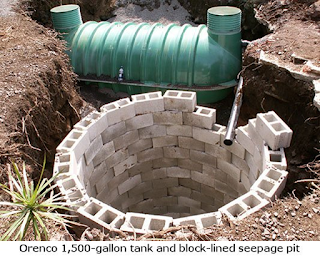
A small footprint individual wastewater system that could go next to Pāhala houses currently
served by illegal gang cesspools. Photo from County of Hawai'i

INDIVIDUAL WASTEWATER SYSTEMS AND SEWER TREATMENT PLANT OPTIONS were presented at a public meeting in Nā‘ālehu on Aug. 22. Another meeting in the coming month is planned for Pāhala, date to be determined. County of Hawai‘i Department of Environmental Management Deputy Director Brenda Iokepa-Moses led the meeting, presenting several solutions for closing down gang cesspools in Pāhala and Nā‘ālehu. The gang cesspools are leftovers from old sugar plantation housing days and have been illegal since 2005. With fines looming from the federal Environmental Protection Agency, Iokepa-Moses said that the gang cesspools must shut down by 2026 in Pāhala and the end of 2027 in Nā‘ālehu.

Talking about Pāhala, she said a sewage treatment plant remains an option and that land was still possibly available where Maile Street turns from the Norfolk Tree lined lane into the village. She described the option of a sewage treatment plant as being more expensive to the county than individual wastewater septic systems in each yard. She noted that a sewage treatment plant would likely require new sewer pipes and digging up the roads in the town and would take a lot longer, probably missing the deadline the EPA has imposed.
    She said the county already has plans for new collection lines should a sewage treatment plant be approved. However, she said, “This will have effects in the community right? We’re going to have to dig up roads to lay lateral lines down. Some of you have laterals in front of your homes the plantation laid before they left.”
    Iokepa-Moses said, that with a sewer, the plan would be to "have a direct collect from our home to the line in front of. your house to the sewer collection. You don’t want county government people walking through property and trying to maintain the most direct line.”
    For the sewage treatment plant option, the EPA would have to agree to the time it would take to build it and government has promised to pay for the cost of all options, with no cost to the homeowners.
    Iokepa-Moses explained that individual wastewater systems - septic tanks - for each yard could be done more quickly at less cost and would not use the existing sewer lines from people’s homes that are probably too fragile for future use. She acknowledged that individual wastewater systems could require setbacks from trees and property lines and possible removal of some improvements in yards, like rock walls and other structures but that the county would replace. She said that leach fields would be replanted with grass.
    Several options for building individual wastewater systems were presented including the county hiring contractors for all the work and maintaining the systems, leaving the homeowners with monthly sewer fees, currently $52.
    Another was for the county to engineer the systems and give vouchers to the homeowners to hire their own contractors. The county would oversee the work to make sure it complies. The homeowner would not be responsible for sewer fees but would be responsible for pumping the septic tank an average of three to five to ten years and otherwise inspecting it and maintaining it.
    Iokepa-Moses said that all options except for the voucher program would be “a heavy lift.” With the voucher program, “We will partner with you but mainly the homeowners will be able to steer that boat from the contractors and what they’re doing on the property.”
    Homeowners not tied to the old sugar plantation cesspools who have their own cesspools are required to switch over to sewer or septic by 2050. The county said it would pay for those with cesspools in the area of the old gang cesspool collection system to convert, whether it be to a new sewer system or individual wastewater system. One speaker asked whether it was fair to give free septic or sewer to those with individual cesspools who live in the area and not pay for cesspool conversions for the rest of the community. Iokepa-Moses said that future funding would be sought to help those outside the old gang cesspool area.
    County of Hawai‘i Closing the gang cesspools will bring the county into compliance with the Federal Safe Drinking Act or face EPA fines of $300 to $1000 a day. The county is also working on an environmental information document for the project for the EPA, which is to show economic and other impacts on the community and environment connected to the options. Listen to an audio of the meeting at https://tinyurl.com/2s3b5895.

To read comments, add your own, and like this story, see facebook.com/kaucalendar. See latest print edition at kaucalendar.com, in the mail and on stands.

THE ARMY CORPS OF ENGINEERS AND COUNTY DEPARTMENT OF PUBLIC WORKS are  asking for help from the Pāhala community to protect the integrity and funding for maintenance and repair of the Pā‘au‘au Flood Channels. The Flood Channels include a levee that keeps floodwaters out of the town of Pāhala. Pā‘au‘au Gulch skirts the Volcano side of Pāhala village
Pā‘au‘au Gulch, which skirts Pāhala, is often the scene of rushing waters, with adjacent homes protected by Army Corps of Engineers levee, walls and hardened slopes. A public meeting at Pāhala Community Center discussed issues and further
 assistance to prevent flooding. Photo by Julia Neal
and runs under the bridge at Highway 11. The Army Corps of Engineers states that its levee, walls and boulder slopes help protect approximately 273 homes in the area. A flood in 2001 destroyed the bridge at Highway 11 but no homes were lost. 
     According to officials speaking at a public meeting in Pāhala on Aug. 9, homeowners along the gulch have made personal additions and improvements that encroach on the flood walls. Consequently, the federal government is unable to guarantee money for repairs and money to replace the levee should a flood damage it. Officials said they plan to communicate with homeowners to encourage them to take their structures, animals, trees and other impediments away from the flood wall. Due to encroachments, the levee and walls have failed to meet standards to allow federal funding to keep them up and repair them since 2008.


5,000 in the mail, 2,500 on the street. See www.kaucalendar.com


Tuesday, August 29, 2023

Kaʻū News Briefs, Tuesday, August 29, 2023

A silent auction with original art, music and a feast helps raise $21K to assist with the Maui firestorm recovery. It was sponsored by The Club at Discovery Harbour. Photo from The Club
MORE THAN $21K WAS RAISED FOR MAUI BY THE CLUB AT DISCOVERY HARBOUR last weekend in the wake of the deadly firestorm on Aug. 8 that destroyed Lāhainā and killed hundreds of people. The Club board member Jeff Jones reported, "The devastating fires on Maui quickly generated a desire to help those affected by the horrific event. Our chef, Jason Lofland, of DaBomb BBQ, was trained and worked on Maui. He approached The Club at Discovery Harbour management with the idea of holding a prime rib buffet dinner as a benefit. It was quickly decided to hold the dinner on Sunday, Aug. 27. It was also decided to solicit donations for a Silent Auction from local artisans."
Chef Jason Lofland, Da Bomb, rallies
volunteers to raise $21K for Maui.
Photo from The Club
       Dinner tickets sold out within three days of ticket sales announcement and the chef went to work. He, along with his staff, donated their time cooking and serving a smoked prime rib buffet dinner to the supportive 72-plus members and guests. Local vendors and artists provided an array of beautiful items ranging from various goods and services, vacation lodging, jewelry, quilted bags, clothing, sculptures and original paintings. All net proceeds for the dinner are going to the Council for Native Hawaiian Advancement, Kako‘o Maui, which is matching the amount with other funding.
      Jones said, "The Club at Discovery Harbour core staff and volunteers worked feverishly decorating and staging the clubhouse in preparation to receive an overall attendance of 115 people who were anxious to donate to the cause." The doors opened at 3 p.m. and as folks signed in, they were greeted by live music provided by 19 Degrees North, Pat Wake, Keoki Sereno and Tommy Psunami. Dinner was served at 4 p.m. following a Hawaiian Blessing song performed by Sereno. He provided the musical background throughout the dinner hour.
    "Now, it was up to everyone else to open their hearts and checkbooks and boy, did they ever!" said Jones. Silent Auction bidding continued for approximately three hours. 
Sold out dinner and auction to at The Club at Discovery Harbour to support Maui firestorm victims. Photo from The Club

    In addition, some live auction activity was spontaneously incorporated into the festivities when artist, Jeff Barger, decided to sell his original painting, Honu Watching, and his large giclee, Honu Resting, by live auction. Crowd involvement created a party atmosphere which resulted in a feverish bidding war. Artist Megan Collins of Paradise Meadows, donated her original painting, Mamoapus, garnering the highest single donation of the night.

The dinner sold out within three days after The Club's
announcement to fundraiser for Maui. Photo from The Club
 

        Artist Scott Manly, of Historic Stone Art, also got into the action at the last minute, by bringing out one of his larger pieces of etched slate "that was quickly bid up to a nice donation amount," said Jones.
        The Club at Discovery Harbour Pub staff donated their time. They, along with other volunteers served attendees refreshments throughout the evening. A dollar for every drink sold was added to the bottom-line donation.    "Additional volunteers contributed to the overall success; greeting guests at sign-in, managing the Silent Auction, and collecting additional monetary donations for Council for Native Hawaiian Advancement, Kako‘o Maui and the Maui Humane Society."
    Jones said, "The outpouring of support for our Maui ‘Ohana has been overwhelming throughout this endeavor. Jason and The Club at Discovery Harbour staff are humbled by the Aloha Spirit all have shown. We cannot thank everyone enough who donated to this cause."


ONSITE HELP WITH GRANTS FOR FARMERS MAKING VALUE ADDED PRODUCTS, ENERGY EFFICIENCY, NATURAL RESOURCE CONSERVATION, AND FARM PROGRAMS AND LOANS comes to Ka‘ū. Iokepa-Moses said that all options except for the voucher program would be "a heavy lift." With the voucher program, "We will partner with you but mainly the homeowners will be able to steer that boat from the contractors and what they're doing on the property." 
    This Wednesday, Aug. 30, from 2 p.m. to 6 p.m., the site is the annex conference room next to the Herkes Kaʻū Gym on the school grounds at 96-1219 Kamani Street. 
    On hand will be Denise Salmeron, a USDA Business Programs Director; Malia Kantrowitz, a Hawai‘i Energy, Energy Advisor; Chloe Gallegos and Kevin Burke from Natural Resources Conservation Service; and Jennifer Balderas and Keisan Tamura from USDA Farm Service Agency.


HAWAI‘I VOLCANOES NATIONAL PARK HAS announced flight operations for September:
    September 1 between 8:00 a.m. to 10:00 a.m. for Hawaiian petrel monitoring on Mauna Loa between 4,000 and 9,000-ft. elevation.
    September 5 between 6 a.m. and 8 a.m. for an ungulate survey at Kahuku between 4,000 and 6,000-ft. elevation.
    September 11 and 15 between 8 a.m. to 11 a.m. for Hawaiian petrel monitoring on Mauna Loa between 4,000 ft and 9,000-ft elevation.
    September 14 between 7 a.m. to 11 a.m. for Fountain Grass control and monitoring from the park's west boundary to Keauhou and from sea level to 3,500-ft elevation.
 
A cone along the Maunaiki Trail in the Kaʻū Desert where aerial monitoring for invasive tree control will happen on Sept. 19.
Photo by A. LaValle/NPS

  September 18 between 8 a.m. and 12 p.m. multiple flights are planned by U.S. Geological Survey Hawaiian Volcano Observatory to retrieve temporary seismic instruments on Kīlauea caldera floor around 4,000-ft. elevation.
    September 18 and 21 between 10 a.m. and 12:30 p.m. for Red Hill Cabin repairs and waste removal on Mauna Loa between 8,500 ft and 10,000-ft elevation.
    September 19 between 6 a.m. and 10 a.m. for an ungulate survey at Kahuku between 4,000 and 6,000-ft. elevation and for invasive tree control and monitoring in the Ka‘ū Desert from 1,000 to 2400-ft. elevation.
    USGS HVO may conduct additional flight operations over Kīlauea and Mauna Loa to assess volcanic activity and maintain instrumentation. The park statement says, it "regrets any noise impact to residents and park visitors. Dates and times are subject to change based on aircraft availability and weather conditions. Management of the park requires the use of aircraft to monitor and research volcanic activity, conduct search-and-rescue missions and law enforcement operations, support management of natural and cultural resources, and maintain backcountry facilities."


5,000 in the mail, 2,500 on the street. See www.kaucalendar.com


Monday, August 28, 2023

Kaʻū News Briefs, Monday, August 28, 2023

Kaʻū Coffee farmers who recently purchased their lands were praised by Kaʻū Coffee marketer Chris
Manfredi at a mahalo event to thank him for helping to bring the region's coffee into the international market.
Photo by Geneveve Fyvie
CHRIS MANFREDI, A LONG TIME KAʻŪ COFFEE MARKETER, was honored by Kaʻū Coffee Growers Coop recently with a dinner and much praise at Pāhala Community Center. 
     The former land manager of thousands of acres of Kaʻū Coffee lands, pastures and property planned for
Gloria Camba, President of Kaʻū Coffee Growers Cooperative,
 presents Chris Manfredi a plaque for his efforts in successfully
marketing the Kaʻū brand. Photo by Julia Neal

community development said he will be spending most of his time in his home state of New York where he has two new grand babies and 88 year-old parents with whom he needs to be. He said he has also returned to the specialty car business and is working with one of the top companies in the country. He sold his own auto enterprise to his employees when he decided to focus on Kaʻū more than 20 years ago.
     Manfredi praised Kaʻū Coffee farmers for recently buying their farms from the land holder who subdivided and sold it. He reviewed plans he made with partners who bought that same land many years ago and planned a coffee mill, labor housing and covenants that would protect the views from Hwy 11 to the mountains above. The 2008 crash of the national economy took down Lehman Brothers, the lender for the project, and Manfredi and partners could not move forward. Manfredi said he had fallen in love with Kaʻū and its people and decided to throw himself into marketing the coffee for the Kaʻū growers.
     He helped the growers to enter the international Specialty Coffee Association of America contests and small farmers from Kaʻū won consistently for years until the competition was stopped. Manfredi became a broker for Kaʻū Coffee and was able to sign contracts with such buyers as Starbucks.
     Manfredi was also a lead organizer of Kaʻū Coffee Festival and reminded the farmers of the Coffee College he produced each year at the end of the festival to help further farmer education.
    He also helped relaunch the Hawai‘i Farm Bureau in Kaʻū, became President of the statewide Hawai‘i Farm Bureau, and President and Executive Director of Hawai‘i Coffee Growers Association. With his move to spend most time with family in New York, he stepped down from the Hawai‘i Coffee Association earlier this year.
Kaʻū Coffee Growers Cooperative held an appreciation event for Kaʻū coffee marketer Chris Manfredi
 who is leaving his Kaʻū home to be with family in New York. Photo by Julia Neal
     Kaʻū Coffee farmer Lorie Obra said she remembered the day her late husband Rusty Obra first met Manfredi and came home to tell her that the farmers had found someone who could really market their coffee as its own Kaʻū brand, rather than selling it all to Kona. Gloria Camba, President of Kaʻū Coffee Growers Coop, thanked Manfredi for all the work he did to build the brand. Willie Tabios, also an award-winning Kaʻū Coffee farmer, praised Manfredi for his contributions to the growth of the local industry.
     Manfredi encouraged the coffee farmers to stay strong in refraining from selling to Kona and to protect the quality of Kaʻū Coffee to retain its reputation as a high-quality specialty coffee. He said he is also proud of his support of traceability testing that is now available to determine coffee origin in order to prevent sales of counterfeit Kaʻū Coffee and to maintain its integrity.
     He said he is not completely out of the Kaʻū Coffee industry and invited anyone with questions, ideas, and wanting to talk story to contact him at cmanfredi@kaufarmandranch.com. He said he owns land in Kaʻū and may be seen in the future in a rocking chair on the deck, looking at the ocean.


COUNTY OF HAWAI‘I CIVIL DEFENSE has issued a Coastal Flooding Statement for the entire Island of Hawai‘i for low-lying coastal areas due to higher than normal tides through Thursday. Civil Defense advises:
     Flooding of beaches and minor coastal erosion can occur.
     Secure all property and ocean craft.
     For more information, visit the County of Hawai‘i Hazard Impact Map.

NATIONAL WEATHER SERVICE HAS ISSUED A FIRE WEATHER WATCH FOR ALL OF KA‘Ū into Volcano, from Wednesday afternoon through Thursday afternoon. National Weather Service predicts trades at 15 to 30 mph, with gusts of 40 to 45 mph. The strongest gusts are expected to be "downward of the terrain."

 
AFTER DARK IN THE PARK at Kīlauea Visitor Center is canceled for Tuesday evening due to a leak in the visitor center auditorium ceiling. The presentation was to be Nani o Kahuku, about a day on historic Kahuku Ranch, adapted by Jackie Pualani-Johnson directly from the diary of Hannah (Nani) Piʻilani Jones. Nani, portrayed by actress Alya-Joy Kanehailua. Jones was the eleventh and second-to-youngest child of George W.C. Jones, who owned Kahuku Ranch from 1871 to 1887. 
    The play is expected to be rescheduled.


5,000 in the mail, 2,500 on the street. See www.kaucalendar.com


As climate change continues to impact Hawai`i, we should learn how Native Hawaiians lived with the land for so many centuries. We should learn from them to care for the earth and live in harmony with her. Native Hawaiians call this “Malama i ka `Aina.”