About The Kaʻū Calendar

Sunday, October 21, 2012

Ka`u News Briefs Oct. 21, 2012

Cultural tourism advocates met in Pahala on Friday. Left to right are Emi Aoi, of JST travel ; Heather Kanahele, of Kanahele Jewelry; `ukulele instructor BJ Soriano; quilting teacher Donna Masaniai; musician Kahea Dolan; weaver Leviette; massage therapist and yoga teacher Noa Caiserman; musician, composer and radio personality Demetrius Oliveira; singers, musicians and hula dancers Phoebe
and Bobby Gomes; Hale Nani owner Minako Yamazaki; and Ka`u Community Radio manager Christine Ka`ehu`ae`a.  
Photo by Myra Sumida
CULTURAL TOURISM AND AGRITOURISM were the focus of small-group meetings in Ka`u over the last week. A cultural tourism meeting was held at Hale Nani in Pahala where representatives of weaving, Hawaiian jewelry making, quiltmaking, `ukulele, guitar, Hawaiian singing, massage therapy and guest houses gathered to talk about the kind of tourism that is based on cultural exchange.
      Minako Yamazaki, owner of Hale Nani in Pahala, and Emi Aoi, of JST Travel Co. in Nagoya, Japan said that a niche of Japanese return visitors is looking for deeper cultural experience rather than the crowded tourist situations. Aoi reported on thousands of halau, studying hula in Japan, encouraging appreciation of the Hawaiian cultural experience. These Hawaiian enthusiasts would be a perfect fit for the small-scale Ka`u accommodations and classes, she said.
      On Saturday, an organizing meeting was held for agritourism training under a grant from U.S. Department of Agriculture. Participants talked about keeping their operations scaleable to the neighborhoods and small enough so that visitors have a rich experience connecting to the land, people and agriculture of Ka`u. Among participants are growers of Ka`u Coffee, orchids and protea. The program will last through June and is being led by the Hawai`i Agritourism Association.

NO ARCHITECT OR ENGINEERING STAMP will be needed for solar photovoltaics on homes, with a bill initiated by County Council member J Yoshimoto passing unanimously last week. Contractors have been complaining to Council members that the added time and cost for a structural engineer or architect review has been holding back the burgeoning solar industry. The bill does not eliminate the requirement for a building permit, and county Public Works says that county staff time, rather than architects and engineers reviewing and approving the plans, could make the building permit process take more time.

Lava in the Halema`uma`u vent has been rising and falling over the last week and could spill onto the crater floor. Best views are from Jaggar Museum inside Hawai`i Volcanoes National Park.  Photo from USGS


KILAUEA VOLCANO is the target of study through a 2012 recipient of a MacArthur Fellowship. Geochemist Terry Plank will receive $100,000 a year for five years through what is known as the “genius grant.” Her specialty is researching activity deep inside the planet and how it contributes to the life of the world’s most explosive volcanoes. Her academic affiliation is with Columbia University’s Lamont-Doherty Earth Observatory. She is also a Columbia professor.
Terry Plank studies the changing personality of Kilauea
Volcano.  Photo from Columbia University.
      Plank’s science related to Kilauea Volcano includes development of a chemical proxy to measure the heat of plates beneath volcanoes and how measuring the temperature may be able to predict explosions. She also studies the amount and water inside volcanoes before they explode.
      She researches the history of Kilauea Volcano to determine what causes its apparent shift in personalities, from angry and destructive explosions in the past to the gentle oozing of lava today. Plank and researchers have gathered cinders and ash from Kilauea to measure tiny inclusions that reveal the amount of water and carbon dioxide in the magma during the explosive eruption more than three centuries ago.
      Kilauea is currently putting on a show, with lava rising and falling in the Halema`uma`u vent, and some volcano watchers predicting it will spill onto the floor of the crater. Best views are at night at Jaggar Museum with the overlook open 24 hours a day.

Dr. Anita Ciarleglio
UNIVERITY OF HAWAI`I – HILO’S pharmacy program has earned national accreditation for its residency program in community pharmacy, giving licensed pharmacists opportunities for further training here in the Hawaiian Islands. 
       “Pharmacy residency programs are similar to training that allows medical doctors to gain postgraduate training,” noted Anita Ciarleglio, assistant professor in College of Pharmacy’s Department of Pharmacy Practice.
      Accreditation by both the American Society of Health-System Pharmacists and the American Pharmacists Association is necessary for the program to be considered a validated educational experience.
       “Receiving a three-year accreditation was a coup for us because we’re so new,” Ciarleglio said. “It means we can continue to concentrate on patient care while giving licensed pharmacists from all over the country the experience they need to get on with their careers and gives them credentials to compete for jobs.”
      Community pharmacy training teaches pharmacists to act as liaison between the community, the hospital and the physician and provide a continuity of care.
      Hawai`i’s College of Pharmacy at UH-Hilo is the only school for pharmacists in the Pacific. In addition to its Residency Program, degree programs include the Doctor of Pharmacy, the Ph.D. in Pharmaceutical Sciences, the Master’s in Clinical Psychopharmacology, and a Bachelor of Arts in Pharmacy Studies, which are available to students enrolled in the Pharmacy program. Pharmacy students have held outreach programs into Ka`u and South Kona.

AUDITIONS FOR THE AWAKENING OF EVERYONE take place today from 4 p.m. to 6 p.m. at Pahala Plantation House. The cast for the modern revival of a 15th century Greek morality play includes about 15 characters. Call 928-0007 for more information.

SEASONED AND NOVICE COMEDY TALENTS of all ages are invited to audition for Volcano Art Center’s upcoming cabaret Ho, Ho, Ho! Ha, Ha, Ha! - Comedy at Kilauea today from 1 p.m. to 3 p.m. Holiday themes are appreciated, but not mandatory. For more information, visit volcanoartcenter.org or contact Tanya Aynessazian or Julie Callahan at 967-8222 or info@volcanoartcenter.org. 

A FORUM FEATURING state Senate candidates Russell Ruderman and Daryl Lee Smith and County Council District 6 candidates Maile David and Brenda Ford takes place at Cooper Center in Volcano Village tomorrow at 6 p.m. The event is sponsored by League of Women Voters. For more information, call Margaret Drake at 967-7295.

Palila, or Hawaiian finch. Photo from NPS
THE PROGRAM AT TUESDAY’S After Dark in the Park is entitled The Palila’s Future: Restoring a Mamane Forest on Mauna Kea. Jackson Bauer, Mauna Kea Forest Restoration Project volunteer coordinator, discusses the restoration of this rarely visited forest that harbors the critically endangered Hawaiian finch, whose populations have been severely degraded by over 200 years of damage by grazing animals. The program begins at 7 p.m. at Kilauea Visitor Center Auditorium in Hawai`i Volcanoes National Park. $2 donations support park programs, and park entrance fees apply.

VISIT OUR SPONSORS AT PAHALAPLANTATIONCOTTAGES.COM AND KAUCOFFEEMILL.COM. KA`U COFFEE MILL IS OPEN SEVEN DAYS A WEEK.

Saturday, October 20, 2012

Ka`u News Briefs Oct. 20, 2012

Lava lake rises and falls rapidly at Halema`uma`u yesterday. Photo courtesy of USGS/HVO
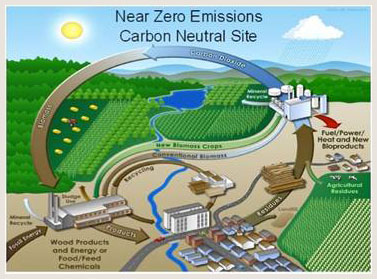
`AINA KOA PONO plans to install the first module of its microwave depolymerization diesel refinery off Wood Valley Road above Pahala, independent of Public Utilities Commission approval. A statement released yesterday, entitled `Aina Koa Pono: An Update from the Source, says the one unit will be able to process 33 tons of biomass per day and one million gallons of biofuel per year and will be for transportation fuel only.
       “We expect it to be in place by the first quarter of 2014,” writes AKP managing partner Chris Eldridge, who has been hosting private meetings with community members to outline the plan. He writes that the first Micro Dee unit will give the community “an opportunity to see and understand the technology. The fuel it produces will be shipped by truck, likely one a week, to Hilo, and it is intended as transportation fuel.”
      When built out to capacity, the refinery “is to have about 24 to 30 of the 33-ton units, operating in modules of three, for an estimated 900-ton-a-day facility with 24 million gallons a year of biofuel output,” Eldridge writes. Most of the diesel would service a Hawai`i Electric Light Co. contract for 16 million gallons a year, now up for approval by the PUC. Another 8 million gallons would be sold for transportation fuel. The fuel for HELCO would be trucked up Hwy 11 to the power plant near Kona Airport.
`Aina Koa Pono plans to process biofuel for transportation, independent
of PUC approval to sell fuel to Hawai`i Electric Light Company.
      Eldridge notes that AKP has a 20-year agreement to deliver the 16 million gallons of biofuel a year to Keahole power plant. “The fuel must be able to replace imported fossil fuel with no plant modification and meet all the specifications of HELCO.” Eldridge acknowledges that the agreement with HELCO “is subject to review and approval by the Hawai`i Public Utilities Commission, and the PUC has posted a year-long schedule for the process.” 
      Mayor Billy Kenoi stated that the county will oppose the AKP contract with HELCO if it raises electric rates and is sending in the county lawyers to participate in the arguments. Life of the Land has intervened in the case, saying the plan would be unfair to ratepayers, given less expensive alternatives likely on the horizon. The Big Island Community Coalition formed to reduce electric rates has also declared opposition to the `Aina Koa Plan, based soley on the proposed hike in electric bills. Last year the PUC turned down a similar `Aina Koa Pono proposal.
      While the proposal before the PUC asks for surcharges that would increase electric bills on O`ahu and the Big Island, Eldridge contends that “this development is being done at AKP’s expense. We have no government funding, and the electric ratepayer pays none of these development costs. Only after PUC approval, plant construction and delivery of fuel that meets all of HELCO’s specifications, will the utility, and therefore the ratepayer, bear any of the costs.”
      He states that the cost of the diesel to be manufactured near Pahala “will be higher at the outset than what HELCO pays for imported fossil fuel, but the world’s oil prices are expected to climb well past our cost. HELCO estimates that over the life of the contract, its customers will save a half billion dollars by using locally produced fuel. That is an average of about $1,300 per electric customer.”
Chris Eldridge, AKP partner
      Eldridge also writes that because the diesel would be locally produced, “residents would benefit from nearly $200 million in general excise and payroll taxes over the contract life – 90 times more taxes than if we continue to import the same amount of fuel. Those taxes can be used to improve schools, build roads and protect the environment.”
      After harvesting existing brush and trees between Pahala and Na`alehu, AKP plans to grow crops to grind and dry into pellets to put through the microwave machines and send the gas up a cooling tower to make diesel. In the press release, Eldridge promises that “no genetically modified crops (GMOs) are in our plan. We are evaluating non-GMO crops that will offer us high yields per acre. These tests have begun; we are working with the Hawai`i Agricultural Research Center and consulting with the Hawai`i Islands Land Trust regarding acceptable, non-invasive crops.”
      Eldridge compares the planned AKP operation and its practices to the “good stewardship” of the defunct sugar operations that shut down in 1996. “Like the sugar plantation that once was the center of a thriving Ka`u community, we intend a planned agricultural operation and good stewardship, not clear cutting that causes erosion. Additionally, unlike sugar cane, we will use perennial crops that will be ratooned (cut instead of bulldozed), further eliminating risks of erosion.”
      The AKP statement says the hui has “a memorandum of understanding with the ILWU for operations and have or are working on project labor agreements with other worker groups. AKP’s Ka`u operation will require 400 construction workers—adding 13 percent to current sector jobs—and 200 permanent jobs,” writes Eldridge.
      “We intend to be good neighbors,” states the AKP partner. “Our principals and all but one of our investors are State of Hawai`i residents. The one makes Alaska home. We are good citizens and contribute to our communities. As a company, we have pledged a $250,000 benefits package geared to environmental and educational issues once we are operational at Ka`u.”
      Eldridge writes that “some complain that agricultural operation and biorefinery will impact tourism in the area, yet it is a place that once was a bustling agriculture and sugar mill area. Other long time residents welcome a return of local jobs.”
       Eldridge also brings up the public hearings on Monday, Oct. 29 at Hilo High School Cafeteria and Tuesday, Oct. 30 at Kealakehe High School in Kona, both at 6 p.m., where HELCO’s current rate hike proposal and `Aina Koa Pono’s request for a surcharge of about $1 per 500 kilowatt hours for its project in Ka`u will be the subject of testimony. Writes Eldridge: “The proposed 4.2 percent HELCO rate increase has nothing to do with our project, and it is unfortunate for us that the issue is being heard at the same time as ours.”

HVO scientist-in-charge Jim Kauahikaua
THE LAVA LAKE INSIDE HALEMA`UMA`U Crater at Kilauea is tantalizing visitors and park staff as it continues repetitive rising and falling, attracting many to the best vantage point: the overlook at Jaggar Museum. The lava lake rose to levels approximately 125 feet or less beneath the crater floor yesterday morning, and Hawaiian Volcano Observatory webcams suggested the lake rose even higher before sinking again Friday afternoon.
      Dr. Jim Kauahikaua, HVO’s scientist-in-charge, says the lava lake will be visible from the overlook at Jaggar Museum if it comes within about 65 feet of the crater floor.
      All visitors who plan to come after dark are urged to bring flashlights, especially those who park at Kilauea Overlook, which affords panoramic views of the crater and Kilauea caldera. Earth cracks, rocks, and other hazards are not easily seen in the dark.
Hawai`i Volcanoes National Park urges motorists to
be cautious of nene when visiting Halema`uma`u.
Photo by Julia Neal
      In addition, several pairs of nene, the federally endangered Hawaiian goose, are beginning to nest near the Jaggar Museum parking lot and are sometimes spotted along roadsides and trails. Cars are the leading cause of nene fatalities, and drivers are cautioned to be alert and to drive the speed limit.
      “Safety is our number one priority,” said Park Superintendent Cindy Orlando. “We encourage everyone to visit during this fascinating episode, but to exercise caution. Staff will be assisting visitors with parking and interpretation of the current activities. If people come prepared and proceed as directed, they should have an unforgettable experience,” she said. Hawai`i Volcanoes National Park is open 24 hours a day.

THOSE INTERESTED IN FREE AGRITOURISM WORKSHOPS through the Hawai`i AgriTourism Association are urged to attend an organizational meeting today from 2 p.m. to 3:30 p.m. at Pahala Community Center. Information will be provided on scope and timing. Those with agritourism potential in Ka`u can sign up for the workshops, which are funded by a U.S. Department of Agriculture grant.
      “The intention of the trainings is to help build economic development for the Ka`u agricultural community and its partners,” said Hawai`i Agritourism Association executive director Lani Weigert. For more, visit hiagtourism.org.

AUDITIONS FOR THE AWAKENING OF EVERYONE take place today from 2 p.m. to 4 p.m. and tomorrow from 4 p.m. to 6 p.m. at Pahala Plantation House. The cast requires about 15 characters. Call 928-0007 for more information.

MEMBERS OF THE PUBLIC are invited to a candidate forum sponsored by League of Women Voters of Hawai`i County, American Association of University Women Hilo Branch and Volcano Community Association Monday at Cooper Center in Volcano.
      Hawai`i County Council District 6 candidates Maile David and Brenda Ford discuss issues from 6 p.m. to 7 p.m. At 7:15 p.m., Erica Johnson, AAUW co-president and moderator, presents an hour with state Senate District 2 candidates Russell Ruderman and Daryl Lee Smith.
      Candidate profiles and election information are available at vote411.org and lwv-hawaii.com.
      For more information about the forums, contact Margaret Drake at 967-7295.

VISIT OUR SPONSORS AT PAHALAPLANTATIONCOTTAGES.COM AND KAUCOFFEEMILL.COM. KA`U COFFEE MILL IS OPEN SEVEN DAYS A WEEK.

Friday, October 19, 2012

Ka`u News Briefs Oct. 19, 2012

Big Bird from Sesame Street is presented to the candidates for U.S. Senate by PBS moderator Day Boylan. Photo from PBS Hawai`i
BIG BIRD from Sesame Street became a symbol of the latest debate between the U.S. Senate candidates who want to represent Ka`u, Volcano and the rest of the state. Last night during the debate broadcast statewide on PBS, moderator Dan Boylan presented the two candidates with a Big Bird doll and asked about presidential candidate Mitt Romney’s plan to cut funding to Sesame Street. It was the second of three debates leading up to early voting next week and the Nov. 6 election day.
Mazie Hirono
Linda Lingle
      Democrat Mazie Hirono and Republican Linda Lingle both said they back Big Bird. While Lingle suggested during an earlier debate that cutting funding to PBS should be considered, last night she claimed friendship with management of the national Corporation for Public Broadcasting and said she supports the nonprofit.
      During last night’s debate, Hirono accused Lingle of changing her mind about PBS, and Lingle responded by saying she was talking about PBS in the broader context of government spending across “the spectrum of how we spend our money and set some priorities.” However, she confirmed stating that she was “not sure that Big Bird is essential to the defense of America.”
      The free-ranging discussion included an exchange about the so-called “fiscal cliff,” with Lingle accusing Hirono of being party to its creation and to a pending annual cut of $50 billion a year in the military’s budget, should Congress be unable to come to an agreement on spending and taxes by the end of this year. Lingle argued that the military is too important to the economy to be jeopardized by the “fiscal cliff.”
      Hirono said Congress should compromise to avoid the cuts and blamed Republicans for failing to come to an agreement, charging that they want to avoid a hike for the wealthiest taxpayers. Hirono said Congress is “fine sending our country over the economic cliff." She said she doesn’t favor weakening the country’s security and military. She and Lingle both warned against the U.S. becoming more isolated in its diplomatic relations with other countries.
      The next and final debate between the U.S. Senate candidates is scheduled for 7 p.m. Monday. It will be telecast on KFVE Channel 5, KGMB Channel 7 and KHNL Channel 8.

Interactive map at hawaii.gov shows ag statistics for Ka`u.
THE FOOD SELF-SUFFICIENCY BASELINE STUDY for the Big Island has earned the 2012 Planning Award from the American Planning Association, Hawai`i Chapter.
      Produced by Jeff Melrose of Island Planning, the county Department of Research & Development and University of Hawai`i Geography Department, the study earned the award Innovations for Sustaining Places.
      The study was undertaken as the result of the Hawai`i County Agricultural Development Plan adopted in 2010. It provides a summary of the current state of local food production and import data for Hawai`i County. It includes detailed maps of existing agricultural activity on the island as a way to measure current farm activity, and to distinguish the unique circumstances that drive farming in each region around the island.
      The report provides a list of 100 Things to Do to Increase Food Self-Sufficiency, emphasizing the need for everyone from consumers and government to farmers and retailers to be involved in the process for increasing food self-reliance.
      The judges noted “the creation of a self-sufficiency scorecard and maps depicting agricultural activity throughout the County,” staying that “information on area-specific food production is particularly useful. The development of key metrics related to production and consumption is particularly useful, and many of the concepts, tools, and findings are transferable to other communities. The study provides a good foundation for future action affecting agriculture in Hawai`i.”
Farmers markets in Ka`u offer locally
grown produce. Photo by Geneveve Fyvie
      Department of Research & Development director Randy Kurohara said “the baseline study is an important tool for improving the quality of conversation we have about the future of Hawai`i Island’s food self-reliance, and it makes some very useful suggestions about the role that everyone has to play in this process.”
      Dr. Tim Richards, of Kahua Ranch and Hawai`i Cattlemen’s Association, said that the “Baseline Study is a defining piece on agriculture on Hawai`i Island and is the envy of others around the state.”
      The study and many of its maps and graphics can be viewed under the Announcement section at hawaiicounty.gov.

FIFTEEN NATIVE BIG ISLAND SPECIES are up for protection through the Endangered Species Act, according to a statement from U.S. Fish and Wildlife Service. Public and scientific input will be accepted through Dec. 17.
      The two animals nominated for the Endangered Species List are an anchialine pool shrimp and a picture-wing fly. The plants and animals live in a range of ecological niches on the Big Island including anchialine pools, coastal, lowland dry, lowland mesic, lowland wet, montane dry, montane mesic, montane wet, dry cliff and wet cliff.
Bidens micrantha, or ko`oko`olau
      The Service first identified seven of the 15 species as candidates for ESA protection from 1996 to 1999, due to threats throughout their ranges, including habitat destruction and modification caused by invasive, non-native plants, feral pigs, sheep and goats, and agricultural and urban development.
      Other threats include consumption of rare species by non-native feral pigs, sheep and goats, and other introduced species such as rats and non-native invertebrates.
      “Native habitat is also threatened by the effects of climate change, which may intensify existing natural threats such as fire, hurricanes, landslides and flooding. In addition, existing regulatory mechanisms are inadequate to protect the species,” the U.S. Fish & Wildlife statement says.
      Biologists have identified habitat essential to conservation of one of the 15 proposed plant and animal species – Bidens micrantha ssp. ctenophylla (ko`oko`olau) – and of two previously listed plant species – Mezoneuron kavaiense (uhiuhi) and Isodendrion pyrifolium (wahine noho kula). These are currently without designated critical habitat on the island of Hawai`i. They live in the same lowland dry ecosystem and share physical or biological features such as elevation, annual rainfall, substrate and associated native plants as well as threats from development, fire and non-native ungulates and plants, the statement says.
Mezoneuron kavaiense, or uhiuhi
      Proposed critical habitat totals 18,766 acres on both occupied and unoccupied habitat. Approximately 55 percent of proposed critical habitat is designated critical habitat for 42 plants and the Blackburn’s sphinx moth. Sixty-four percent is on state lands, two percent on federal lands, less than one percent on county lands, and 34 percent on private lands.
       “The Hawai`i Island listing and critical habitat designation, if finalized, will allow us to better address and manage Hawai`i’s endangered species and the unique ecosystems on which these species depend,” said Loyal Mehrhoff, field supervisor for the Pacific Islands Fish & Wildlife Office.
      The Service will consider comments from all interested parties received by Dec. 17. Requests for a public hearing must be received in writing by Dec. 3. Comments may be submitted by one of the following methods:
      For more, contact Loyal Mehrhoff, Field Supervisor, Pacific Islands Fish & Wildlife Office, U.S. Fish & Wildlife Service, 300 Ala Moana Boulevard, Room 3-122, Box 50088, Honolulu, HI 96850; call 808-792-9400 or fax 808-792-9581.

KA`U CHAMBER OF COMMERCE sponsors a Police and Fire Department Child Safety presentation tomorrow from 1 p.m. to 3 p.m. at Na`alehu Community Center. Police and fire personnel will teach children how to stay safe during Halloween. Keiki will also have an opportunity to have photos taken with fire and police staff and vehicles. Keiki ID will be handed out, along with refreshments. For more information, call 939-8449.

AUDITIONS FOR THE AWAKENING OF EVERYONE take place tomorrow from 2 p.m. to 4 p.m. and Sunday from 4 p.m. to 6 p.m. at Pahala Plantation House. The play is a modern revival of the 15th century Greek morality play The Summons of Everyman. It will be performed locally in early December.
      The cast requires about 15 characters. Rehearsals will be held for about two hours, three times a week, until production. Not all cast members will be required to attend all rehearsals. Call 928-0007 for more information.

BRING YOUR SILLIEST STORIES, funniest jokes and wackiest skits to Volcano Art Center’s Ni`aulani Campus in Volcano Village to audition for the upcoming comedy cabaret Ho, Ho, Ho! Ha, Ha, Ha! - Comedy at Kilauea Sunday from 1 p.m. to 3 p.m. This open audition call invites seasoned and novice comedy talent of all ages to present three minutes of material. Holiday themes are appreciated, but not mandatory. For more information, visit volcanoartcenter.org or contact Tanya Aynessazian or Julie Callahan at 967-8222 or info@volcanoartcenter.org.

A CANDIDATE FORUM featuring state Senate candidates Russell Ruderman and Daryl Lee Smith and County Council District 6 candidates Maile David and Brenda Ford takes place at Cooper Center in Volcano Village on Monday at 6 p.m. The event is sponsored by League of Women Voters. For more, visit lwv.org.

SUPPORT OUR SPONSORS AT WWW.PAHALALANTATIONCOTTAGES.COM AND WWW.KAUCOFFEEMILL.COM.