About The Kaʻū Calendar

Thursday, January 10, 2013

Ka`u News Briefs Jan. 10, 2013

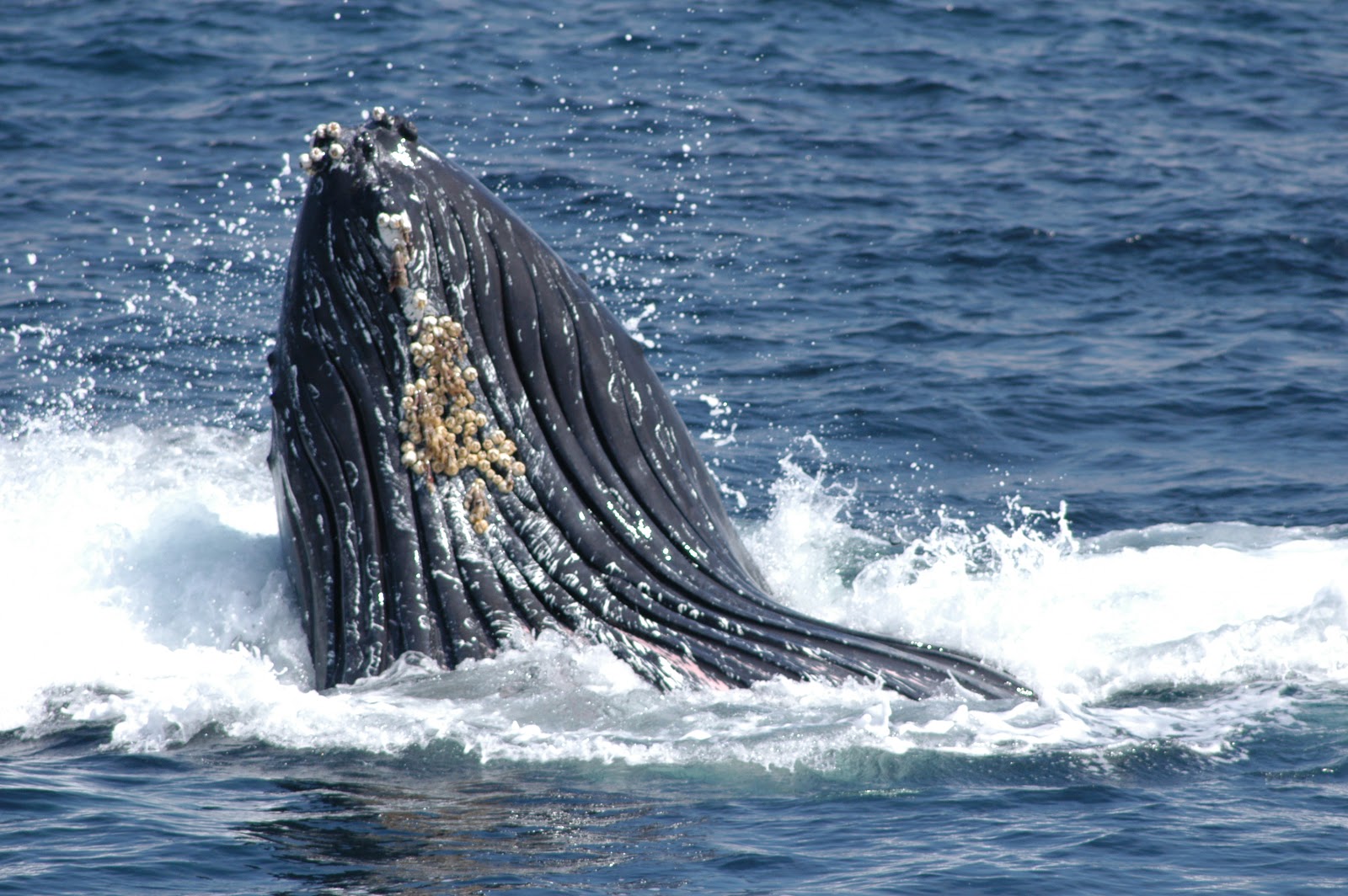
Humpback whales will be studied in an EIS on Hawaiian sanctuary waters.
Photo by Geoff Grow, National Marine Sanctuaries.

KA`U IS A DROUGHT DISASTER AREA, proclaimed the U.S. Department of Agriculture yesterday. Ka`u is included with other parts of the island that led to Hawai`i County becoming one of 597 counties in 14 states nationwide named as drought disaster areas. This is the seventh consecutive year that the Big Island has suffered this distinction, following a minimum of eight consecutive weeks of severe drought measured by the U.S. Drought Monitor.
      Dianne Ley, director of the USDA’s Farm Service Agency in Hawai`i, said the most damaging droughts are in Ka`u, North Kona and South Kohala.
      Those interested in low-interest emergency loans can contact Miki Miyasato, manager of the USDA Farm Service Agency Farm Loan Programs on this island. She said this morning that she works with Ka`u Coffee farmers and ranchers on operating loans. She said that the interest rate is low for the operating loans as well as the emergency loans. Her office is in Hilo, and she can be contacted at 933-8344. Interested persons can also go to usda.gov/drought.
Extreme drought is shown at South Point, with a band of severe drought
inland and moderate drought through the rest of Ka`u, in the most
recent U.S. Drought map.

      U.S. Secretary of Agriculture Tom Vilsack promised to “partner with producers to see them through longer-term recovery, while taking the swift actions needed to help farmers and ranchers prepare their land and operations for the upcoming planting season.” He said he will go to Congress to “encourage passage of a Food, Farm and Jobs bill that gives rural America the long-term certainty they need, including a strong and defensible safety net.”
      The USDA has authorized up to $5 million in grants to evaluate and demonstrate ag practices to help farmers and ranchers adapt to drought and put $14 million into the Emergency Conservation Program to help farmers and ranchers rehabilitate farmland and implement water conservation.

CONCERNING THE `AINA KOA PONO proposal, the Public Utilities Commission this week published responses to questions asked by the state Consumer Advocate, Hawai`i County, the Department of Business, Economic Development & Tourism, and Life of the Land. The questions concern the proposed contract for `Aina Koa Pono to annually sell, at a fixed price for 20 years, 16 million gallons of diesel that would be manufactured at a refinery off Wood Valley Road above Pahala. The fuel, produced in 27 microwave units, would be sold to Hawai`i Electric Light and Hawaiian Electric Companies, with most of it trucked up Hwy 11 to a power plant in Kona. It would mean higher electric bills on O`ahu and the Big Island.
      The state Department of Business, Economic Development & Tourism asked HELCO and HECO for clarification on their statement that “the fixed Biodiesel price, with a nominal escalation provision, is reasonable and is projected to fall below the price of petroleum diesel during the term of the Biodiesel Supply Contract.’ DBEDT asked the utilities to provide analysis and justification for how AKP arrived at this contract’s price per gallon of biodiesel supplied compared with the price in the contract that was previously denied.
     HELCO and HECO replied that, “according to AKP, pricing for AKP’s biodiesel was based on a per gallon price that would provide a reasonable rate of return to project investors so as to attract the necessary project financing. Following AECOM’s work and testing at the demonstration plant, AKP was able to receive more concrete numbers regarding the output of the process. The test results were better than expected, which allowed AKP to adjust the price downward and still provide a reasonable return to project investors.”
      DBEDT also asked the companies to provide analysis and justification for how AKP arrived at the annual escalator. The companies’ response is confidential and available only to the Public Utilities Commission, parties and participants in the docket.
      When DBEDT asked if alternatives were considered in the pricing and escalator formulas, the companies responded that “much of the negotiations following the denial of the first AKP contract centered around lowering the initial fixed per gallon price of AKP’s biodiesel.” HELCO and HECO said “alternatives in the pricing and annual escalator were not negotiable, according to AKP.”
      DBEDT asked the utilities to provide the cost per gallon to produce the biodiesel and the approximate rate of return earned on each gallon of biodiesel, but, according to HELCO and HECO, “AKP is not willing to share their proprietary information regarding the cost per gallon to produce the biodiesel and the approximate rate of return earned on each gallon of biodiesel.”
      Regarding the companies’ statement in the contract that “utilizing biofuel in existing generating units is expected to achieve cleaner air emissions and facilitate compliance with new and revised environmental regulations,” DBEDT asked, “How will AKP’s biofuels contribute to meeting air emissions in compliance with Mercury and Air Toxics Standards and National Ambient Air Quality Standards or other environmental regulations? The companies replied, “AKP’s biodiesel will meet current environmental regulations applicable to the Keahole Power Plant and will also meet the maximum 15 ppm sulfur requirements to comply with upcoming May 2013 Reciprocating Internal Combustion Engines National Emission Standards for Hazardous Air Pollutants requirements.” They also said Keahole Power Plant is already in compliance with National Ambient Air Quality Standards, and that Mercury and Air Toxics Standards do not apply to the units at Keahole.
      The companies also stated that there are no additional costs to achieve environmental compliance at Keahole using AKP’s biodiesel.
      DBEDT asked the utilities to provide the total and cost to the ratepayer for HELCO to achieve air emissions in compliance with Mercury and Air Toxics Standards and National Ambient Air Quality Standards or other environmental regulations without AKP’s biofuel. The utilities said the approximate total cost to install air emissions equipment this year is $250,000. “Operating Keahole Power Plant with AKP biodiesel does not offset any cost of environmental compliance associated with fossil diesel,” the utilities said, “because the infrastructure changes required for Keahole Power Plant to achieve compliance … will have been completed by May 2013.” They also said no infrastructure changes are required for Keahole Power Plant’s compliance to Mercury and Air Toxics Standards or National Ambient Air Quality Standards.
      DBEDT asked the companies to provide assumptions and sources for data regarding the Incremental Cost of Biodiesel Supply Contract and to provide the incremental cost of the Biodiesel Supply Contract for each year of the Contract. The companies’ responses to these requests are confidential. Complete responses to the DBEDT’s questions are online at puc.hawaii.gov. Docket number is 2012-0185.


HAWAIIAN ISLANDS HUMPBACK WHALE NATIONAL MARINE SANCTUARY will be studied for an Environmental Impact Statement. According to a notice filed with the state Office of Environmental Quality Control, the EIS will involve revising a management plan completed for the sanctuary in 1992 and previously revised in 2002.
Humpback whales will be studied in a new EIS for the National
Marine Sanctuary in Hawai`i.
The state Department of Land & Natural Resources and the federal National Oceanic & Atmospheric Administration co-manage the sanctuary and have been hosting public meetings on the new management plan over the past two years. The public can weigh in on the plan for an EIS. Recommendations for the new managment plan already include education about entanglement of whales in fishing  lines and other debris, as well as management of ocean-going vessels and their speeds around whales, to include the military, cruise ships, and fishing, tour and family recreational boats. The state of Hawai`i has jurisdiction over the nearshore jurisdiction over the nearshore waters with submerged lands and other resources. The notice regarding the EIS was filed by William Aila, Jr., chair of the DLNR. Comments may be emailed to dlnrsanctuary@hawaii.gov or sent to: Sanctuary Management, Department of Land & Natural Resources, Hawaiian Islands Humpback Whale National Marine Sanctuary, 1151 Punchbowl St., Room 330, Honolulu, HI 96813 or faxed to 808-587-0115. 

HAWAIIAN ISLANDS HUMPBACK WHALE National Marine Sanctuary is seeking volunteers in Ka`u for its 2013 Sanctuary Ocean Count. The project offers the community a chance to monitor humpback whales and provide important population and distribution information. Site leaders and general volunteers are needed for events on Jan. 26, Feb. 23 and March 30. For more information and to register, visit hawaiihumpbackwhale.noaa.gov.

Cleaning up Kamilo Beach is on the agenda this Saturday.
Photo from Hawai`i Wildlife Fund
RESIDENTS LOOKING for more community involvement and to spend more time at the beach caRESIDENTS LOOKING for more community involvement and to spend more time at the beach caWai`ohinuWai`ohinu Park to carpool to Kamilo Point. Sign up with Megan Lamson at 769-7629 or kahakai.cleanups@gmail.com.

FRIENDS OF HAWAI`I VOLCANOES NATIONAL PARK offers its Sunday Walk in the Park on Jan. 13 from 1 p.m. to 3 p.m. Nick Shema leads this easy to moderate 3.5-mile round-trip walk exploring the summit area of the park. Free to members, and memberships are available at event. Call 985-7373 or email admin@fhvnp.org. Park entrance fees apply.
SUPPORT OUR SPONSORS AT PAHALAPLANTATIONCOTTAGES.COM AND KAUCOFFEEMILL.COM. KA`U COFFEE MILL IS OPEN SEVEN DAYS A WEEK.

Wednesday, January 09, 2013

Ka`u News Briefs Jan. 9, 2013

Ancient Dreams is part of Boone Morrison's exhibit Silver Magic opening Saturday at Volcano Art Center Gallery.
UTILITY-BILLED SOLAR PANELS at home may be in the future, further cutting Hawai`i’s dependence on fossil fuel. A study commissioned by the Public Utilities Commission shows that “on-bill financing, which allows residents to pay for systems through their electricity bills over a period of years, could work well in Hawai`i,” says a story in Civil Beat.
Utility-billed solar panels may be in the future.
      The Sophie Cocke story notes that “Blue Planet Foundation, a renewable energy advocacy group that has lobbied hard for the program," offers an overview on its website blueplanetfoundation.org:
      “This solution removes two major hurdles to participation: cost and complexity. Many folks who want to adopt clean energy don’t have an extra few thousand extra dollars to purchase a solar water heater or upgrade their old appliances. The existing sea of financing options, cluttered with differing terms and interest rates, requires credit checks and considerable effort to navigate. On-bill streamlines this process, removing the guesswork and applying the payment directly to the reduced electric bill. The financing is worked out between the program administrator and a local bank, removing the customer’s burden of negotiating the transaction. 

Think about it this way. How many people would pay $2,400 for an iPhone? Probably not many. Mobile service providers realize this. They provide a discounted phone and require customers to sign a multi-year contract—spreading out usage payments instead of requiring it all upfront. Similarly, if the electric company required payment for 10 years of power upfront ($22,000 for most families), who would be able to afford electricity? Yet that’s what the current system requires of residents who want to purchase clean energy. If we want to achieve energy self-sufficiency, we need to stop getting in our own way and make it easy to do the right thing.”
     See more at www.civilbeat.com and blueplanetfoundation.org.

CONCERNING THE `AINA KOA PONO proposal, the Public Utilities Commission this week published responses to questions asked by the state Consumer Advocate, Hawai`i County, the Department of Business, Economic Development & Tourism, and Life of the Land. The questions concern the proposed contract for `Aina Koa Pono to annually sell, at a fixed price for 20 years, 16 million gallons of diesel that would be manufactured at a refinery off Wood Valley Road above Pahala. The fuel, produced in 27 microwave units, would be sold to Hawai`i Electric Light and Hawaiian Electric Companies, with most of it trucked up Hwy 11 to a power plant in Kona. It would mean higher electric bills on O`ahu and the Big Island.
      Hawai`i County asked the utilities for clarification on several points of the contract.
      The county asked if AKP would provide year-round, reliable production of biofuel. The utilities replied that, according to AKP, it would, because crops would be grown in “sequential maturation plots to allow for sequential harvesting.”
      Regarding the county’s question of price stability, the utilities contended that the price would be “relatively stable because the starting price of the biodiesel is fixed for the first year and, in subsequent years, the fixed price is adjusted only once per year in accordance with the fixed annual escalator. Therefore, the price is known for the life of the AKP Biodiesel Supply Contract, and fluctuation in the biodiesel price is very minimal.”
Pellets are put into the system to be microwaved into gas that is turned
into diesel. See a film of the operation at
http://www.youtube.com/watch?v=b4cfQGeW2mMn 
      Performance of the microwave catalytic depolymerization technology was questioned by the county. HELCO and HECO’s response was that AKP’s plant in North Carolina is “running at 2.15 tons per day using pine wood pellets and has successfully produced biofuel capable of being distilled to meet the AKP Biodiesel Supply Contract fuel specification.” The utilities also contended that the single pilot unit ccould be scaled up to run at 33 tons per day and that, prior to construction of the larger Ka`u facility, a single 33 tons per day unit would be constructed and tested “prior to completing the remainder of the units at Ka`u to achieve commercial scale.”
      The utilities report that AKP has a target date of March 1, 2013 to reach final confirmation of commercialization scale capabilities. Also, regarding energy balance, or the ratio of energy used to energy created, AKP expects data to be available by the end of this month and that “AKP will be able to provide the data at that time.” 
      “A concern that arises from the proposed contract is the twenty-year commitment to providing biodiesel at a price based on parity with oil at above $200 per barrel, with escalation,” the county said in its information request. “Please explain your rationale for burdening the ratepayers with this level of commitment to an early-stage technology.” In its reply, the utilities said that the “forecast price of petroleum diesel exceeds the AKP biodiesel price several years before the AKP Biodiesel Supply Contract term ends. The AKP biodiesel price reaches parity with the forecast diesel price during the AKP Biodiesel Supply Contract term and succeeds in displacing fossil fuel with a lower cost, locally sustainable, renewable fuel.”
      To the county’s question as to whether it would be “worthwhile to investigate more alternatives before making a long-term commitment to one particular approach, especially one that is at the very early stages,” the electric companies replied that AKP’s biodiesel price is competitive with commercially available biodiesel. It said that biofuel pricing is often based on the price of fossil fuel. “The AKP biodiesel price is intentionally delinked from oil to provide price stability to the Companies and their customers,” the utilities stated. “There are no provisions in the AKP Biodiesel Supply Contract to adjust the biodiesel price based on the cost of other energy or fuel options. AKP did not base the biodiesel price on market economics of other fuels or on other energy options that may be available to the Companies. The AKP biodiesel price is based on the AKP project economics and financing while providing the Companies with a stable and competitive biodiesel price.” They also pointed out that the contract with AKP is the result of a competitive bidding process.
Mansfield Oil would transport biofuel from Wood Valley
to Kona's Keahole Power Plant in 34 trucks per week.
Photo from mansfieldoil.com
      The county asked for information about the transportation of fuel from Ka`u to Keahole Power Plant. The utilities replied that, according to AKP, Mansfield Oil would handle all ground transportation and related logistics. According to the utilities, AKP estimates that 34 trucks per week would each transport 9,000 gallons of biodiesel. They also noted that “AKP is only replacing fuel that is currently being imported to the Big Island and already being transported via truck to Keahole, so there should not be an increase in the amount of vehicles used.”
      The utilities said that AKP is preparing a Traffic Impact Assessment and that AKP “intends to propose as required improvements to maintain safety of the traveling public.”
      When asked about adverse impacts on quality of life and the visitor industry, the utilities replied that, “according to AKP, AKP plans to work closely with the residents of Pahala and Na`alehu to minimize or eliminate any adverse effects on these communities. AKP also intends to minimize any adverse effects on tourism.”
      Hawai`i County asked if AKP has an engineering-procurement-construction contract that guarantees the cost of the AKP plant, the schedule for completion of the AKP plant and the performance specifications of the AKP plant. The utilities response was that AKP requires an engineering-procurement-construction contract with all those guarantees. “AKP requires a performance guarantee in order to secure financing for the large scale project,” the utilities said.
      When the county asked if AKP’s engineering-procurement-construction contract contains liquidated damages if the project is late or does not perform as expected, the electric companies replied that AECOM, AKP’s engineering, procurement and construction management partner, would provide a performance guarantee for the plant to be built in Ka`u.

SHARY CROCKER, OF MARK TWAIN ESTATES, offers classes in Compassionate Communication beginning tomorrow at 5:30 p.m. Crocker has been practicing and facilitating groups for five years. All levels are invited. For more information and to register, contact her at 929-7647 or grantcrocker@aol.com.

Boone Morrison Photo by James Hawkins
VOLCANO ART CENTER’S FIRST EXHIBIT of the New Year, a collection of landscape photographs by Boone Morrison, begins Saturday, Jan. 12. Hours at the gallery in Hawai`i Volcanoes National Park are 9 a.m. to 5 p.m. daily. An opening reception takes place Saturday at 5 p.m.
 
      “We are honored to feature Boone as our first artist of 2013,” said gallery manager Emily Catey. “More than a friend, neighbor and longtime supporter, we affectionately refer to him as our Founding Father. This exhibition will be a welcome homecoming nearly 40 years in the making and sets the standard for the rest of the year.”
      Ansel Adams mentored Morrison from 1966 to until 1971, and his photographs have since been widely exhibited across the U.S. and Hawai`i. He has taught fine arts photography for University of Hawai`i in Manoa and Hilo, as well as for Volcano Art Center.
 In addition to awards received in the field of architecture, Morrison has been repeatedly recognized for his fine arts photography, arts advocacy and entrepreneurship in Hawai`i.
      The exhibit, entitled Silver Magic, is free to the public, and park entrance fees apply. For more information, visit www.volcanoartcenter.org or contact Emily Catey at 967-7565 or gallery@volcanoartcenter.org.

SUPPORT OUR SPONSORS AT PAHALAPLANTATIONCOTTAGES.COM AND KAUCOFFEEMILL.COM. KA`U COFFEE MILL IS OPEN SEVEN DAYS A WEEK.

Tuesday, January 08, 2013

Ka`u News Briefs Jan. 8, 2013


A diesel refinery would be built on Meyer Camp Road, just off Wood Valley Road above Pahala. `Aina Koa Pono promises roads
connecting with Hwy 11 that would spare Pahala from the truck traffic. Diesel would be hauled to Kona.  Photo by Julia Neal
CONCERNING THE `AINA KOA PONO proposal, the Public Utilities Commission yesterday published responses to questions asked by the state Consumer Advocate, Hawai`i County, the Department of Business, Economic Development & Tourism, and Life of the Land. The questions concern the proposed contract for `Aina Koa Pono to annually sell, at a fixed price for 20 years, 16 million gallons of diesel that would be manufactured at a refinery off Wood Valley Road above Pahala. The fuel, produced in 27 microwave units, would be sold to to Hawai`i Electric Light and Hawaiian Electric Companies, with most of it trucked up Hwy 11 to a power plant in Kona. It would mean higher electric bills on O`ahu and the Big Island.
      One of the parties is Hawai`i’s state Consumer Advocate Jeffrey Ono who asked for a timetable illustrating significant estimated milestones of the AKP project.
Jeffrey Ono
      Hawai`i Electric Light Co. and Hawaiian Electric Co. responded: Within six months from the contract's execution date, AKP would provide HELCO with a Life Cycle Assessment of the environmental impact of its project plan. “The results must show that AKP’s project achieves at least a fifty percent favorable reduction in greenhouse gases over the petroleum diesel currently used by HELCO. AKP has provided a LCA for the project,” states the utilities.
      Within nine months, applications for key permits for AKP’s production facility would be filed.  Within 24 months, AKP would provide documentation of Project Financing. Within 36 months, all equipment and materials necessary to construct and complete AKP’s production facility would be delivered.
      AKP would produce biodiesel at a rate of 38,000 gallons per week no later than 42 months from the contract execution date. Within 50 months, AKP would commercially produce the biodiesel at a rate of 300,000 gallons per week.
      Regarding `Aina Koa Pono’s intent to conduct a voluntary Environmental Assessment, the Consumer Advocate asked for the current status of the EA and for a copy of it, “to the extent that the EA is complete.”
      The electric companies replied that, “according to AKP, AKP has engaged RM Towill to conduct the EA. The first phase of the EA is to complete a Traffic Impact Assessment Report. The first of five tentatively planned phases for the EA are: Socioeconomic Impact Assessment, Archaeological Inventory Survey Plan, Cultural Impact Assessment, Flora & Faunal Biological Assessment & the Traffic Impact Assessment Report. No other phases of the process have been initiated at this time. Because the EA is not complete, there are no reports available.
HELCO and HECO report that contingency provisions would allow them
to use AKP's biofuel at other power plants as well as at Keahole.
      “According to AKP, the timeline for the completion of the EA is dependent on the outcome of the Traffic Impact Report because any roadway improvements identified for the project could serve as a trigger for a HRS, Chapter 343 compliant EA.” 
      The Consumer Advocate asked why, if the minimum purchase amount of 14 to 16 million gallons of the proposed biodiesel will meet the annual fuel requirements to operate Keahole Power Plant, the proposed Biodiesel Supply Contract will not result in additional displacement or curtailment of other renewable energy projects in the future. HELCO replied that it expects to be able to use all of the contract biodiesel volume through consumption at Keahole Power Plant, and “contingency provisions allow for consumption” at other Hawaiian Electric Companies’ generating facilities. “The Hawaiian Electric Companies in aggregate currently consume over sixty-five million gallons of fossil diesel. Therefore, the proposed AKP Biodiesel Supply Contract will not result in additional displacement or curtailment of other renewable energy projects in the future,” the electric companies stated.
      The Consumer Advocate asked for a description of the specific benefits associated with the community benefits package that has or will be provided by AKP.
      According to the electric companies, “AKP provides that once the plant becomes operational and is delivering fuel, AKP would contribute at least $250,000 per year to a community benefits package focusing on education and the environment.
`Aina Koa Pono's refinery would have 27 microwave catalytic
depolymerization units, according to HELCO and HECO.
Image from ainakoapono.com
      “According to AKP, on the advice of people in the non-profit funding community, AKP consulted with the Hawai`i Community Foundation on the efficacy of setting up the program through HCF. Talks between AKP and HCF have begun on this program. AKP anticipates working with HCF to develop the specifications for the fund (AKP has already identified that education and environment would be the focus). People knowledgeable in the funding community are expected to administer the benefits package, screen applicants to appropriate criteria (non-profit status, etc.) and present AKP with vetted options." AKP would then determine the actual recipients. 
      The electric companies reported that AKP would also set up an advisory board that would include community members from the Island of Hawai`i and the Ka`u District, as well as others. The report also states that “AKP has identified candidates for the advisory board."
      HELCO and Hawaiian Electric Companies also stated that AKP plans to keep a portion of the $250,000 package separate from the HCF to enable response to “smaller, more pressing needs as they arise,” such as youth sports teams needing travel funds.
      The Consumer Advocate asked for a detailed discussion of the companies’ and AKP’s efforts to conduct community meetings since the Commission’s rejection of its first contract “to get a better appreciation of the communities’ concerns with the proposed project.” The document asks the companies to identify each meeting held, the date of the meeting, the number of participants and the groups.
      The electric companies reported that, “According to AKP, AKP determined with its consultants that formal open community meetings should be held after the impact assessments on traffic, archaeology, cultural factors and environment were at least in draft. Then, RM Towill would help organize formal, facilitated community meetings.
      “However, AKP retained on-island consultants to help with outreach, and principals began to meet directly, one-on-one or in smaller groups, with people identified as key opinion leaders or community stakeholders. The purpose of the meetings was to give an overview of the plans, but more specifically, to elicit questions, concerns and ideas from these leaders. According to AKP, AKP met with members of `O Ka`u Kakou on the Island of Hawai`i on Oct. 4, 2012. AKP also had a group meeting with community members at Ka`u Coffee Mill on the Island of Hawai`i on Oct. 10, 2012.
      “According to AKP, meetings were held with Hawai`i state legislators and legislators-elect from Hawai`i Island, as well as those in key energy positions. AKP renewed its relationship and held meetings with labor and trade groups, both on the Island of Hawai`i and state headquarters personnel on O`ahu. AKP also met with the Big Island Community Coalition and sought meetings (still being organized) with the Chambers of Commerce and other business groups. In the community, AKP principals met with Julia Neal of The Ka`u Calendar, the members of OKK and other members of the community.
The only operating Micro Dee plant is in Wilkesboro, NC, according to
the report from HELCO and HECO. Photo from biofuels-solutions.com
      “There are a number of efforts made by AKP to actively address the community’s concerns,” the electric companies said. “According to AKP, AKP announced it would first locate a single unit of the planned 27 (microwave) units onsite so residents could see the technology demonstrated.” Also, reported the electric companies, AKP has offered to take several community residents to the only operating plant in Wilkesboro, North Carolina.
      “In addition, AKP agreed to carefully select truck routes from fields to the plant to minimize impact on residences,” stated the electric companies. AKP would also set aside 200 acres (of the 11,000 it plans to use) that farmers would be able to use for sustainable, agriculture crops, the utilities stated.
      According to the electric companies, “AKP announced it would set up a community advisory board to maintain a dialogue with the impacted area.” The electric companies also report that AKP has collected and continues to solicit email addresses for eNews communication and that currently there are more than 300 names on the distribution list.
      Complete responses to the Consumer Advocate’s questions are online at puc.hawaii.gov. Docket number is 2012-0185.
      Responses to questions asked by other parties and participates will be reported in later Ka`u News Briefs.

COMPASSIONATE COMMUNICATION is the topic of a practice group holding five weekly sessions begin this Thursday, Jan. 10 at 5:30 p.m. Shary Crocker has been practicing and facilitating groups for five years. All levels are invited. For more information, contact her at 929-7646 or grantcrocker@aol.com. 

THE DEADLINE FOR YOUNG WOMEN to enter this spring’s Miss Ka`u Coffee Pageant is one week from today, Tuesday, Jan. 15. Categories are Miss Ka`u Coffee and Miss Ka`u Peaberry. By May 13, Miss Ka`u Coffee candidates must be ages 17 to 24, and Miss Ka`u Peaberry candidates must be ages 7 to 9. The winners reign over the annual Ka`u Coffee Festival on Saturday, May 4.
      Applications are available at R&G Store in Pahala, Pahala Community Center, Grandma’s Closet in Na`alehu and Kahuku Gift & Garden Shop in Ocean View. For more information, call Gloria Camba at 928-8558 or Pahala Plantation Cottages at 928-9811. Organizers also welcome volunteers to help produce the pageant.

SUPPORT OUR SPONSORS AT PAHALAPLANTATIONCOTTAGES.COM AND KAUCOFFEEMILL.COM. KA`U COFFEE MILL IS OPEN SEVEN DAYS A WEEK.