About The Kaʻū Calendar

Tuesday, December 23, 2014

Ka`u News Briefs Tuesday, Dec. 23, 2014

Kilauea Military Camp's Christmas tree brightens the darkness in front of decorated cabins that spectators can vote for through New Year's Eve. Photo by Dave Berry
EIGHTY-TWO THAI FARM WORKERS found to have been exploited on Ka`u and other farms in Hawai`i have been awarded $150,000 each by U.S. District Judge Leslie Kobayashi.
Anna Park, trial lawyer for U.S. Equal
Employment Opportunity Commission
      The awards follow a federal lawsuit filed by the U.S. Equal Employment Opportunity Commission filed in 2011against Global Horizons and six Hawai`i farms, including MacFarms of Hawai`i, which draws a majority of its local workers from Ka`u to its macadamia orchards just north of the Ka`u and South Kona district borders. The lawsuit focused on working and living conditions, including the accusation that 20 MacFarms workers hired by Global Horizons were crowded into a house in Na`alehu that was ill-equipped for even five persons. According to allegations, the accommodations “lacked a fully functioning toilet, toilet paper and hot water and had a buckling kitchen floor.” Five farms settled for a total of $3.6 million.
      According to a story by Jennifer Sinco Kelleher in West Hawai`i Today, Mordechai Orian, former president of Global Horizons, continued to deny the workers were mistreated. “We paid those guys to the last penny they worked for,” he said. “We tried to keep legal farming in the United States alive, and this is the thanks we get.”
      Orian said the company is no longer in business and cannot pay the awards. “We will fight this ridiculous decision,” he said, and called the awards “insane.”
      Anna Park, EEOC trial attorney in Los Angeles, said the agency is pleased, but the next challenge will be getting money from Global Horizons, she said.
      Awards come from $3.6 million in settlements and $8.7 million Global Horizons is liable for.
      “The million dollar question is whether they’ll ever see any of it,” said Clare Hanusz, an attorney who represents several of the workers with immigration issues. “I’d be surprised if there really was no money, though. I think it’s very carefully hidden.”
      According to the story, Global Horizons plans to appeal.
      See westhawaiitoday.com.
      To comment on or like this story, go to facebook.com/kaucalendar.

Wes Machida is Gov. David Ige's Director of Budget
and Finance.
GOV. DAVID IGE AND WES MACHIDA, Director of Budget and Finance designee, yesterday outlined the proposed biennium budget for the upcoming fiscal years 2016 and 2017. The budget was developed primarily by the outgoing Abercrombie administration to ensure continuation of state services at current levels and to provide the Ige administration with flexibility to make budget adjustments that are in line with its policy and budget priorities.
      The budget anticipates four percent increases in spending during each of the next two fiscal years. Revenues are projected to grow by 5.5 percent each year.
      “One of the most important responsibilities that I have, as governor of the state of Hawai`i, is to deliver a balanced budget to the Legislature and to the people of our state,” Ige said. “To that, I am fully committed.
      “We will not propose new programs when we cannot afford to pay for them – we will live within our means, just like Hawai`i’s families. We will spend public funds wisely to avoid raising taxes.
      “State government should be run like a business, striving to increase efficiency and reduce waste and costs. Accountability and transparency will be the core principles upon which we provide services to our customers, the people of Hawai`i.
      “As government, we must focus our energies to nurture a sustainable economy – a healthy economy to support Hawai`i’s families and allow them to thrive. There is hard work to be done, but we expect no less of ourselves than the public expects of us.
      Highlights of the budget and copies of documents that have been submitted to the Legislature are available online at http://budget.hawaii.gov/budget/executive-biennium-budget.
      To comment on or like this story, go to facebook.com/kaucalendar.

Lopaka Ryder Photo from youtube
KUMU HULA DEBBIE RYDER, of Pahala, yesterday asked the murderer of her son to turn to God during his sentencing in a Kona courtroom to life imprisonment. Martin Frank Booth pled guilty to the killing, in late 2013, of the popular musician Lopaka Ryder, of Kona, whose body was found in a lava field on the Kohala Coast after he had been missing for months.
      According to the story by Chelsea Jensen, of West Hawai`i Today, Debbie Ryder stood in the court and stated: “You are inhumane to take someone’s life like you did my son. He was a kind and loving person. He was God’s child; Lopaka believed in Him, and he tried his best throughout his 37 years to apply what the Lord guided him to do,” she said.
      “You will have nightmares, and you will have flashbacks for murdering my son. You need to put God in your heart so he can help you live the rest of your life behind bars, and my family and I will make sure of that. And, in the end, only God will judge you according to your actions and the way you choose to live your life.”
The snow-white summit of Mauna Loa as seen from Mauna Kea.
Photo from NOAA
     Booth apologized to the family. “Lopaka was a very talented and loving person. He was a friend of mine. I’m sorry,” he said. “There’s nothing I can do to change that and what I’ve done, and for that I am sorry, and there is no excuse.”
      See more at westhawaiitoday.com.
      To comment on or like this story, go to facebook.com/kaucalendar.

IT COULD BE A WHITE CHRISTMAS on the slopes of Mauna Loa, with the National Weather Service issuing a blizzard watch for Big Island summits in effect this morning through tomorrow afternoon. Snowfall could exceed six inches. Even if the heavy snow does not materialize, very strong winds are expected, according to NWS.
      A blizzard watch means there is a potential for falling and/or blowing and drifting snow with strong winds and extremely poor visibilities. This can lead to whiteout conditions and make travel very dangerous.
      To comment on or like this story, go to facebook.com/kaucalendar.

Chad Keone Farias Photo from Hawai`i DOE
CAREER EDUCATOR CHAD KEONE FARIAS will take the helm of complex area superintendent for the Ka`u-Keaau-Pahoa complex, succeeding Mary Correa, who mentored him for the position and will be retiring on Dec. 31.
      Farias, 43, has spent his entire career on Hawai`i Island, most recently as Kea`au Elementary principal since 2008. Under his leadership, Kea`au Elementary was one of the pioneers in digital learning among its staff and students, boosting student achievement and lowering chronic absenteeism. Farias previously served as vice principal at Keonepoko Elementary and his alma mater, Hilo High, where he held his first teaching job.
      Hawai`i State Board of Education appointed Farias to the Complex Area post on Sept. 16 to be effective on Jan. 1.
      Correa retires with more than 40 years in the state Department of Education, the last decade as the KKP complex area superintendent. She also served as an administrator at Ho`okena Elementary, Hilo Community School for Adults, Pahoa High and Intermediate and Hilo Intermediate schools. Early in her career, Correa taught at Waiakeawaena Elementary, Laupahoehoe Elementary, Waimea Elementary and Intermediate and Saint Joseph Elementary and Intermediate.
      Correa is known for her phrase, “If can, can; if no can, how can,” which challenged educators to overcome severe socioeconomic barriers and raise student achievement among what had been historically known as Hawai`i’s lowest performing schools. The KKP complex schools have since emerged as a successful improvement model for the state after receiving targeted supports as “Zones of School Innovation” in the DOE’s Race to the Top federal grant. The KKP complex has close to 5,500 students in nine schools spread across the largest geographic region of any complex area in the state.
      Correa’s leadership has been vital in the last four months in weathering two hurricane threats that closed schools, and the Puna lava flow, which forced closure of Keonepoko Elementary indefinitely. She led her KKP team in ensuring a seamless education transition for 1,700 students and 300 staff to relocate to other schools within the complex.
      To comment on or like this story, go to facebook.com/kaucalendar.

Santa took center stage at Ocean View
Community Center Saturday.
SANTA MADE IT TO OCEAN VIEW COMMUNITY CENTER Saturday for the community association’s annual keiki Christmas party. Gift, food and other goodies made for a festive event.

KA`U GIRLS BASKETBALL TEAM STARTED the season off strong last night. It was the first season game for the girls varsity team against Pahoa and successfully showcased Ka`u’s strength as a team. Holding the lead for most of the game, Trojans took the win with a score of Ka`u 59 and Pahoa 42.
      With a majority of experienced seniors on the roster, the Trojans’ season looks promising. Seniors include Kerrilynn Domondon, Denisha Navrro, Shyann Flores-Carvalho, Kehaulani Ke, Sky Kanakaole-Esperon, Jennifer Tabios, and Bridget Pasion.
      Pasion was high scorer with 15 points, and 
Domondon contributed 12
 points.
      The Ka`u Calendar’s journalism intern Kaweni Ibarra wrote the majority of this story.
      To comment on or like this story, go to facebook.com/kaucalendar.

NA`ALEHU UNITED METHODIST CHURCH offers Christmas Eve Candlelight Service tomorrow at 7 p.m. with carols, biblical Christmas story and specialty music featuring choir, Aloha Handbells, spiritual dance, trumpets, flutes, `ukulele and more.

CHRISTMAS BUFFET IS AN OPTION for holiday meals Thursday from 4 p.m. to 7 p.m. Kilauea Military Camp’s Crater Rim Café in Hawai`i Volcanoes National Park features prime rib au jus, stuffed roast turkey and holiday lamb stew. $26.95 for adults and $13.50 for child 6-11 years old. Open to authorized patrons and sponsored guests. Park entrance fees apply. Call 967-8356 for more information.

SUPPORT OUR SPONSORS AT PAHALAPLANTATIONCOTTAGES.COM AND KAUCOFFEEMILL.COM. KA`U COFFEE MILL IS OPEN SEVEN DAYS A WEEK.



Monday, December 22, 2014

Ka`u News Briefs Monday, Dec. 22, 2014

The brightest and most well known open cluster of stars, the Pleiades, is visible in Ka`u's night sky this month. Astronomer Lew Look, author of Stars Over Ka`u, asks, "How many can you count?" NASA image from Lew Cook
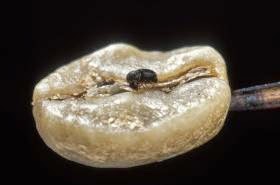
COFFEE BERRY BORERS are making headlines not only for their destructive behavior on Ka`u Coffee farms but also what news and social media are spreading as "kinky sex." 
      “See that cup of coffee you grabbed this morning?” asks Brandon Ambrosino at vox.com. “That delicious, life-sustaining beverage comes from coffee beans. And before those beans were roasted, insects were having sex in them.
The sex life of coffee berry borers is the subject of several media reports.
Photo by Peggy Greb/USDA Ag Research Service
      “According to a recent study published in the Journal of Insect Behavior, coffee berry borers (Hypothenemus hampei), which are native to Africa, spend a good deal of their lives in coffee beans, which means, writes Discovery News, ‘kinky sex takes place in many coffee beans before they are roasted.’
      “As The Week points out, the sex is also incestuous sometimes. When females aren’t reproducing through parthenogenesis (i.e. by herself) then they ‘have to be copulated by their sibling males before leaving the native coffee fruit to improve their chances of successful colonization,’ writes study co-author Weliton Dias Silva.
      “These insects, which are tiny beetles, are incredibly small, with the females averaging slightly larger lengths (.07 inches) than males (.06 inches). Because the males are smaller, they're called ‘dwarves.’
      “So how do the insects find their way into the actual coffee beans? According to Discovery, they find their way into the beans ‘after sniffing out chemicals released by coffee plants.’ Females leave the beans at 15 days old, but males stick around, which means, yeah, your roasted coffee beans could have male insects in them.
      “If you’re worried about using sex-ruined coffee beans, here are two tips for avoiding them. If the coffee beans seem more hollow than others, or if there are tiny, beetle-sized holes in them, avoid them. And if you like Arabica beans, find a new flavor because that seems to be the most infested bean.
      “Granted, writes The Week, you probably shouldn’t be too worried about the sexual history of your coffee beans as most of the infected ones are taken off the market. That’s good news for coffee drinkers, but bad news for farmers. According to estimates from the USDA, these losses can add up to more than $500 million annually.”
      To comment on or like this story, go to facebook.com/kaucalendar.

Spinner dolphins rest in Hawai`i's bays, where tourists go to interact with them.
Photo from wikipedia
IMPORTANCE TO TOURISM is a strategy suggested by a new study outlining dangers to spinner dolphins and how to preserve their populations in Hawai`i. The study from Duke University attempts to find ways to reduce pressures placed on dolphins as the number of tours to the state’s bays such as Kealakekua Bay in West Hawai`i, which dolphins use as safe places to rest, increases.
      According to the researchers, a combination of federal regulations and community-based conservation measures is the best way to protect Hawai`i’s wild spinner dolphins in Hawai`i. Community-based conservation efforts involve local residents working together to manage the bays and discourage human behaviors that can harm dolphins. Educating and reaching out to the public are key to the efforts, according to the study.
      Heather Heenehan, a doctoral candidate at Duke University’s Marine Laboratory who led the study, said it “explicitly acknowledges that all users of these bays have the right to take advantage of the resources they offer – including dolphins, which are protected from harassment under federal law.”
      David Johnston, assistant professor at Duke’s Nicholas School of the Environment, said, “A combination of management approaches is needed immediately to make interactions between humans and dolphins sustainable. Neither top-down mandates nor bottom-up stakeholder efforts are the sole answer to this problem.”
       To comment on or like this story, go to facebook.com/kaucalendar.

As lava approaches Pahoa Marketplace, Jungle Love gift shop employees told
Gov. David Ige they hope to remain open until Christmas.
Photo from Big Island Video News
AS CHRISTMAS APPROACHES, so does lava on its way toward Pahoa Marketplace. Merchants still open are taking advantage of a slowing of the lava’s progress. A Jungle Love employee, a gift shop in the center, told Gov. David Ige during his visit Thursday that this is their busiest time of year. “This is how we get our bread and butter,” she said. She hopes to stay open until Christmas. “I don’t know very much after that,” she said. 
      Lava remains active about about one-half mile upslope of Pahoa Marketplace. Having entered a more level area, the flow front is widening rather than following a narrow path downhill.
      To comment on or like this story, go to facebook.com/kaucalendar.

IN HIS CURRENT ISSUE OF STARS OVER KA`U in The Ka`u Calendar, astronomer Lew Cook discusses how planets are formed, their relationships to stars and stars visible in late December. 
      “Astronomers have known planets come from gas and dust that forms around very young stars,” Cook says. “Those stars themselves were born from this very dust and gas cloud. For the first time, ESO, the European Southern Observatory in Chile, reports imaging clearly the disk around a young star.
      “‘A new image from ALMA, the Atacama Large Millimeter/sub-millimeter Array, reveals extraordinarily fine detail that has never been seen before in the planet-forming disc around a young star. ALMA‚ Ao’s new high-resolution capabilities, were achieved by spacing the antennas up to 15 kilometers apart. This new result represents an enormous step forward in the understanding of how protoplanetary discs develop and how planets form.
The disk and gas around the star HL Taurus ALMA image from Lew Cook
      ‘ALMA has obtained its most detailed image yet showing the structure of the disc around HL Tau (a variable star), a million-year-old sun-like star located approximately 450 light-years from Earth in the constellation of Taurus. The image exceeds all expectations and reveals a series of concentric and bright rings, separated by gaps.’ 
      “Planets are forming in the gaps seen in the image. The location of the star, HL Taurus, is shown on the Dec. 2014 star chart, but don’t expect to be able to see it, as it is 14th magnitude. You can see, on a good night, stars to the sixth magnitude. Even with a large amateur telescope of 12 inches diameter, it is only just visible.
      “Nearly overhead … at 9 p.m. during the last part of the month is the group of stars called the Pleiades. Galileo was the first to examine the Pleiades through a telescope, discovering there were many stars in the cluster. He counted 36. I doubt he was aware of how may stars there were at the time. Astronomers term this grouping an Open Cluster of stars. The Pleiades is about 400 light years away.
      “It has recently formed from a dust and gas cloud like the Orion nebula and contains around 3,000 stars. Over the next 250 million years they will lose their association with each other, becoming random stars in the Milky Way. The founders of our civilization used the Pleiades as a test of vision for their soldiers: If a person could see seven stars, he passed the test for an archer.
      “The Pleiades is the brightest and most well known open cluster. There are many other star clusters like the Pleiades, but fainter. The stars being born in the Orion nebula are an example (at 1,300 light years). So is the Hyades (150 light years) just southeast of the Pleiades. “Although Aldeberan appears to be part of the Hyades, it is much closer to us at 65 light years. There is another type of cluster that has so many stars in it that the cluster’s gravitational stronghold on the stars keep it together for a very long time. We’ll discuss these globular clusters of stars at a later time. 
      “Speaking of Orion, he rises and continues his relentless chase of the seven sisters of the Pleiades where the Ancient God Zeus cast him after his death from the scorpion’s sting. Be sure to look for the Andromeda Galaxy – the most distant object visible to the unaided eye before it follows Pegasus past the western horizon. Use binoculars or a telescope for a better view.”
      To comment on or like this story, go to facebook.com/kaucalendar.

Aloha Handbells return for Wednesday's Christmas Eve candlelight service
at Na`alehu United Methodist Church. Photo from Julie White
KA`U RESIDENT DICK HERSHBERGER brings Hawaiian Volcano Observatory founder Thomas Jaggar to life tomorrow. A Walk into the Past programs begin at 10 a.m., 12 p.m. and 2 p.m. Participants meet at Hawai`i Volcano National Park’s Kilauea Visitor Center and walk to his underground laboratory near Volcano House. 

NA`ALEHU UNITED METHODIST CHURCH offers Christmas Eve Candlelight Service Wednesday at 7 p.m. with carols, biblical Christmas story and specialty music featuring choir, Aloha Handbells, spiritual dance, trumpets, flutes, `ukulele and more.

SUPPORT OUR SPONSORS AT PAHALAPLANTATIONCOTTAGES.COM AND KAUCOFFEEMILL.COM. KA`U COFFEE MILL IS OPEN SEVEN DAYS A WEEK.





Sunday, December 21, 2014

Ka`u News Briefs Sunday, Dec. 21, 2014

Minnie Mouse invites spectators to vote for their favorite decorated cottages all month during Kilauea Military Camp's Holiday Challenge. Photo by Dave Berry
ALTHOUGH THE KA`U-KALAPANA emergency route remains closed, officials have opened the Railroad Ave. route for residents to get used to in advance of lava possibly covering Hwy 130 near Pahoa. Lava continues a slow advance to Pahoa Marketplace, which is between the current flow front and the highway. If lava makes its way across the highway, lower Puna residents will have to use the new gravel emergency road to get to Kea`au and other parts of the island. Civil Defense Chief Darryl Oliveira estimates the route would add 30 minutes to commute times.
Officials have opened Railroad Ave. in Puna as an emergency route in case
lava continues to flow and cover Hwy 130 near Pahoa.
Photo from Big Island Video News
      At 8 a.m., Hawai`i County Civil Defense announced that the flow front is currently .6 miles upslope of the intersection of Hwy 130 and Pahoa Village Road, where the shopping center is located. The front is narrow and moving slowing, according to the report.
      Unlike east Ka`u residents, lower Puna-area residents no longer have easy access to Long’s Drugs, with the store across from Pahoa Marketplace closing yesterday. Their nearest option is now in Kea`au, which sells products similar to the Pahala store.
      To comment on or like this story, go to facebook.com/kaucalendar.

VOLCANO RESIDENT JACK LOCKWOOD, who was a staff volcanologist at USGS Hawaiian Volcano Observatory for more than 20 years, released the following editorial regarding the feasibility of lava diversion to The Ka`u Calendar and Stephens Media. Lockwood worked on lava diversion efforts at Mt. Etna, Italy in 1983. He also designed lava diversion structures at NOAA’s Mauna Loa Observatory and supervised their construction. 
      “Pele is now sending lava flows north of Kilauea’s East Rift Zone and is threatening property in the Pahoa area for the first time since 1840,” Lockwood writes.
Jack Lockwood
      “Because humans now have the technical capability to alter lava flow paths under certain circumstances, I feel it is time for government agencies and the lower Puna community to re-examine ‘lava diversion’ as a means to lessen property damage from the ongoing eruption. For such an evaluation, two principal questions must be answered: (1) Is it technically feasible, and (2) if feasible, would the artificial diversion of lava be the pono thing to do? 
      “Economic, legal, political and cultural realities also must be evaluated, with the realization that any decision to ‘mess with Mother Nature’ and to interfere with Pele’s activity will always be controversial. In fact, though, we humans do ‘mess with Mother Nature’ all the time — from simple acts such as carrying umbrellas to major projects such as flood control. Channeling water into artificial diversion spillways (such as the Alenaio Stream diversion to protect Hilo from flooding) is socially acceptable — should the potential to divert lava flows be off the table?
      “Lava diversion is a proven technique to protect valuable property and has been successfully carried out in Italy and Iceland, but only after major, government-supported efforts. Lava diversion is only feasible when the terrain is favorable, where there are lesser-value lands downslope toward which flows can be directed, and when sufficient time is available to carefully plan and carry out the operations. Molten lava is a fluid, albeit a very viscous one, and like water will respond to gravity and flow along the easiest terrain pathway to lower elevations.
      “Three methods to divert lava flows have been used successfully in the past: (1) Use of explosives to disrupt lava flow supply conduits near eruptive vents, far from flow fronts; (2) application of large volumes of water on flow fronts to thicken flows and to form barriers of frozen lava; and (3) construction of lava deflection structures at advancing flow fronts to deflect flows toward less destructive paths.
      “Neither of the first two options seem appropriate for the current situation; the construction of bulldozed berms to minimize losses is the best option in the Pahoa area.
      “Lava diversion has been attempted several times in Hawai`i (bombing operations of 1935 and 1942; barrier construction in 1955 and 1960), but none of these attempts were well-planned, and all failed. A great deal is now known about the rheology (physical properties) of flowing lava, and significant engineering knowledge has accumulated about the means to construct diversion structures.
`A`a lava approached a barrier at Mt. Etna in 1983, adding six feet to the top
of the barrier but not going beyond. Photo by Jack Lockwood
      “Because of the legal issues involved, however, lava diversion can only be attempted by government entities operating under the umbrella of a Federal Disaster Declaration (such as now exists in Puna) when questions of liability regarding actions to protect the public good are moot. Independent efforts to protect one’s property are ill-advised, since diversion of lava onto someone else’s property by private individuals will invariably involve liability issues.
      “I, like most long-term Hawai`i residents, have great respect for Pele, and the diverse opinions of Hawaiian people about the question of lava diversion must be seriously considered. Most Hawaiians I’ve spoken with say something like, ‘You can mess with Pele if you want, but she’s going to do what she wants to do in any event.’ I basically agree, and would approach any lava diversion attempts not in an effort to ‘Stop Pele’ or to confront her, but in a spirit of cooperation — using an earthen wall to politely request that she might want to follow a different path.
      “Any such attempts should involve Hawaiian practitioners who know best how to explain to Pele what we might like her to do. Princess Ruth set a good example in July 1881 when she spoke to Pele from the Halai Hills and stopped a Mauna Loa lava flow from entering Hilo!
      “Volcanologists, engineers, emergency agencies and legal experts should meet soon to discuss options for lava diversion and to make recommendations to government. In the end, of course, only our elected politicians will be able to make final decisions about how best to protect the interests of lower Puna residents.
      “There might not be time now to protect structures at the Pahoa Marketplace, and Hwy 130 will be cut in any event if the eruption continues, but if thousands of homes are eventually threatened makai of Pahoa, it would be good to have evaluated the options for lava diversion in advance.”
Pahala swimming pool is open daily this month except Christmas day.
Photo by Tanya Ibarra
      See more at Lockwood’s website, www.volcanologist.com.
      To comment on or like this story, go to facebook.com/kaucalendar.   

TO HELP PREPARE FOR THE HOLIDAYS, Ka`u residents can include exercise in their daily schedules throughout this month.
      Pahala pool offers public recreational swim Saturdays and Sundays from 8 a.m. to 12 p.m. and every day from 1 p.m. to 4 p.m., including weekends. Adult lap swim is available Mondays, Wednesdays and Fridays from 10 a.m. to 12 p.m. and weekends between 8 a.m. and 12 p.m. The pool is closed Christmas Day.
      Open Play Basketball is available at Na`alehu Community Center Mondays through Thursdays, 5:30 to 6:30 p.m. Call 939-2510. 
      Kahuku Park offers an hour of Adult Walk for Fitness Mondays through Fridays at 1:30 p.m. Call 929-9113.
      Call Becky at 345-4334 for information about Exercise for Energy at Discovery Harbour Community Center Mondays and Wednesdays from 3:30 p.m. to 4:30 p.m.
      Zumba Fitness is also available. Linda Fanene teaches at New Hope Christian Fellowship in Volcano Mondays and Thursdays at 5:30 p.m. and Saturdays at 9 a.m. Call her at 990-3835. Erin Cole has hour-long classes at Na`alehu Community Center Mondays and Thursdays at 6 p.m. Call Cole 938-4037 for more information.
Inside the Whitney Vault, Thomas Jaggar, aka Dick
Hershberger, explains seismographic equipment.
Photo by Ron Johnson
      Yoga classes in Volcano on Wednesdays include Debra Serrao’s self-guided yoga at Cooper Center from 9:30 a.m. to 11 a.m. and Bob Kennedy’s beginner’s yoga at Volcano Art Center’s Niaulani Campus from 5:30 p.m. to 7 p.m.
      At Na`alehu Hongwanji, Stephanie Pepper teaches gentle senior yoga Wednesdays from 3 p.m. to 4 p.m., followed by an hour of meditation with Velvet Replogle.
      See more in your December issue of The Ka`u Calendar and at kaucalendar.com.

A DRIVE TO THE COOL ELEVATIONS of Hawai`i Volcanoes National Park promises to instill the holiday spirit during Christmas week.
      On Tuesday, Ka`u resident Dick Hershberger brings Hawaiian Volcano Observatory founder Thomas Jaggar to life at 10 a.m., 12 p.m. and 2 p.m. Participants meet at Kilauea Visitor Center and walk to his underground laboratory near Volcano House.
      Volunteers come together to work off some holiday calories as they clear invasive ginger from park trails Saturday from 9 a.m. to 12 p.m. Meet at Kilauea Visitor Center.
      Christmas in the Country continues this week and through Jan. 4 at Volcano Art Center Gallery from 9 a.m. to 5 p.m. The annual exhibit and sale features handmade ornaments, gifts and wreaths.
      On Friday, Kaipo AhChong shares the art of lei making on the gallery porch between 11 a.m. and 1 p.m.
      While in the park, visitors are encouraged to view the front row of decorated cottages at Kilauea Military Camp and vote for their favorites.  
      All events are free; park entrance fees apply.

SUPPORT OUR SPONSORS AT PAHALAPLANTATIONCOTTAGES.COM AND KAUCOFFEEMILL.COM. KA`U COFFEE MILL IS OPEN SEVEN DAYS A WEEK.