 |
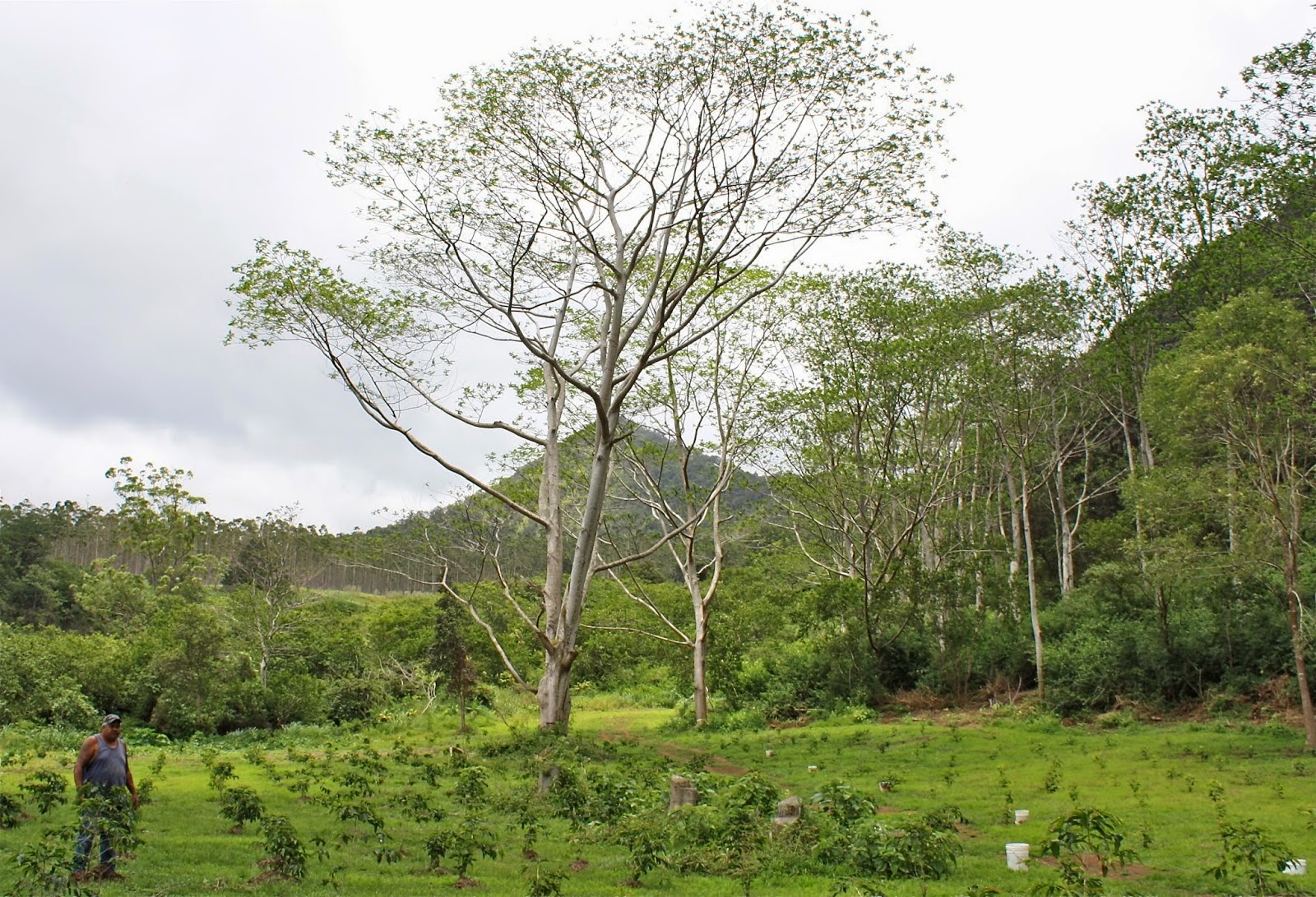
| Invasive albizia trees share the Ka`u landscape with newly planted Ka`u Coffee trees. Photo by Geneveve Fyvie |
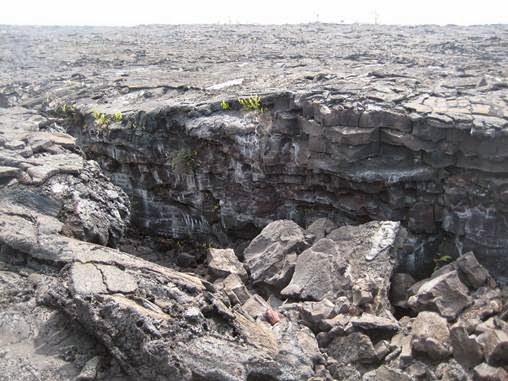
A 4.3-MAGNITUDE EARTHQUAKE OCCURRED at 8:16 a.m. eight miles west southwest of Volcano Village this morning. Hawaiian Volcano Observatory received reports of it being felt around the island, with most reports coming from Volcano, Hawai`i Volcanoes National Park and the Hilo area.
 |
| Reports of feeling the 4.3-magnitude earthquake this morning came from several areas. Map from HVO |
Originally reported as 4.0-magnitude, HVO first increased it to 4.2, then 4.3.
The word from the rim of Ha`ema`uma`u Crater comes from the front desk staff at Volcano House, reporting that the earthquake was barely felt and didn’t even take artwork on the walls out of position. Several guests asked if there was an earthquake and were shown the USGS map at hvo.wr.usgs.gov.
Volcano Art Center also reported no damage, no cleanup required.
To comment on or like this story, go to facebook.com/kaucalendar.
To comment on or like this story, go to facebook.com/kaucalendar.
CONTROLLING INVASIVE ALBIZIA TREES is the topic of nine bills being considered by the state Legislature this year. Ka`u’s Sen. Russell Ruderman introduced one of the bills, SB 591, following devastation in Puna during Tropical Storm Iselle last year. Albizias fell on homes and across roads and power lines, cutting off electricity and access to many residents there. While not as numerous as in Puna, the fast-growing, brittle trees grow in Ka`u, present the same dangers and caused damage during the storm.
 |
| An albizia tree in Wood Valley split during Tropical Storm Iselle. Photo by Julia Neal |
“The Legislature finds that albizia, Falcataria moluccana, is an invasive species that presents an increasingly costly threat to the economy, critical infrastructure and public safety on Hawai`i Island,” according to the bill. “The pre-planned removal of each albizia tree costs significantly less than the combined direct and indirect costs of removal if and when it falls into a road, power line or building. The likelihood of albizia trees falling and the long distances between residential areas and emergency services add significantly to the uncertainty of emergency response capability, resulting in the potential loss of property and human life following a hurricane.”
Springer Kaye, manager of the Big Island Invasive Species Committee, told Hawai`i Tribune-Herald reporter Colin M. Stewart that albizia “is the only invasive species we have in Hawai`i that can kill people. When you think about it, it’s a miracle no one died during the storm.”
More on this and other bills related to albizia is available at capitol.hawai.gov.
See hawaiitribune-herald.com.
FOLLOWING REPORTS THAT PRESIDENT OBAMA plans to send to Congress a proposed Authorization for the Use of Military Force specific to the war against the Islamic State of Iraq and the Levant, Sen. Brian Schatz said:
More on this and other bills related to albizia is available at capitol.hawai.gov.
See hawaiitribune-herald.com.
To comment on or like this story, go to facebook.com/kaucalendar.
 |
| Daniel Ho collaborated with others on the Grammy- nominated album Our World in Song. |
A HAWAIIAN MUSICIAN receiving a Grammy nominations this year has a Ka`u connection. Daniel Ho, along with Ka`u community musicians, wrote a song for the mountain Kaiholena during a Ka`u Coffee Festival Music Workshop at Pahala Plantation House. Ho recorded the song on one of his albums previously nominated for a Grammy. Ho’s composition Our World in Song was nominated for best world music album for the 2015 Grammy Awards which were revealed over the weekend and televised last night.
The music of Ka`u music teacher Keoki Kahumoku has been featured on five Grammy-winning Hawaiian albums.
To comment on or like this story, go to facebook.com/kaucalendar.
U.S. REP. TULSI GABBARD HAS CO-AUTHORED a bipartisan letter warning congressional colleagues of sequestration’s potential devastating impact to military readiness in Fiscal Year 2016.
The letter highlights a recent U.S. Army study illustrating effects of sequestration on 30 Army installations across the country, including Schofield Barracks in Hawai`i. Under the Budget Control Act of 2011, 50 percent of the across-the-board sequestration cuts must come from military accounts.
“Inaction will put us further down the path of undermining our national security, local economies and the livelihoods of military families who have sacrificed so much over the last thirteen years,” the letter states.
The music of Ka`u music teacher Keoki Kahumoku has been featured on five Grammy-winning Hawaiian albums.
To comment on or like this story, go to facebook.com/kaucalendar.
U.S. REP. TULSI GABBARD HAS CO-AUTHORED a bipartisan letter warning congressional colleagues of sequestration’s potential devastating impact to military readiness in Fiscal Year 2016.
The letter highlights a recent U.S. Army study illustrating effects of sequestration on 30 Army installations across the country, including Schofield Barracks in Hawai`i. Under the Budget Control Act of 2011, 50 percent of the across-the-board sequestration cuts must come from military accounts.
“Inaction will put us further down the path of undermining our national security, local economies and the livelihoods of military families who have sacrificed so much over the last thirteen years,” the letter states.
 |
| U.S. Rep. Tulsi Gabbard |
While Congress has mitigated the effect of sequester cuts by delaying implementation and allowing inter-branch spending flexibility, sequestration will go into full effect at the end of FY2016 absent an agreement to remedy the cuts.
“Considering the national security threats that we face today and the uncertain threats we will likely face tomorrow, Congress should not allow a dramatic reduction in the Army’s end strength or a similar reduction in the capabilities of the other service branches,” the letter continues. “We believe alleviating the impact of sequestration on the military must be a top priority of the 114th Congress, and that there is the will within the Congress to do so.”
The growing terrorist threat from the self-declared Islamic State is just one reason why the United States must fully fund the military, Gabbard argues.
“The world we face today is very different from the one we faced two years ago. We did not anticipate the requirement to send soldiers to Europe to face a resurgent Russia, or back to Iraq to face the rising threat from Islamic State of Iraq and Levant, or to Africa to support the international effort to battle Ebola. The Army must maintain rotational presence in Korea and Europe to meet our security obligations and to surge around the world if needed. We must have a security debate in this country and decide what we want the Army to do in the next ten years before we consider further Army reductions.”
To comment on or like this story, go to facebook.com/kaucalendar.
“Considering the national security threats that we face today and the uncertain threats we will likely face tomorrow, Congress should not allow a dramatic reduction in the Army’s end strength or a similar reduction in the capabilities of the other service branches,” the letter continues. “We believe alleviating the impact of sequestration on the military must be a top priority of the 114th Congress, and that there is the will within the Congress to do so.”
The growing terrorist threat from the self-declared Islamic State is just one reason why the United States must fully fund the military, Gabbard argues.
“The world we face today is very different from the one we faced two years ago. We did not anticipate the requirement to send soldiers to Europe to face a resurgent Russia, or back to Iraq to face the rising threat from Islamic State of Iraq and Levant, or to Africa to support the international effort to battle Ebola. The Army must maintain rotational presence in Korea and Europe to meet our security obligations and to surge around the world if needed. We must have a security debate in this country and decide what we want the Army to do in the next ten years before we consider further Army reductions.”
To comment on or like this story, go to facebook.com/kaucalendar.
FOLLOWING REPORTS THAT PRESIDENT OBAMA plans to send to Congress a proposed Authorization for the Use of Military Force specific to the war against the Islamic State of Iraq and the Levant, Sen. Brian Schatz said:
 |
| U.S. Sen. Brian Schatz |
“While I have not seen the President’s proposal for an Authorization of the Use of Military Force to destroy the Islamic State of Iraq and the Levant, sending an AUMF to Congress is a critical first step. Congress must exercise its constitutional role in authorizing the use of force. Under the 2001 and 2002 AUMFs, the President does not have the authority to conduct an open-ended war against ISIL.
“ISIL is a group of barbaric terrorists, and their extreme tactics display a shocking brutality that must be confronted. But the United States needs a clear strategy for defeating this threat. Congress should revoke the existing AUMFs and debate a strategy for a new authorization tailored specifically for ISIL. A new time-limited and geographically targeted authorization will help sharpen our policy and align appropriations for the mission. And it must make clear that the United States cannot commit U.S. ground forces to combat ISIL.”
Last December, Schatz sent a letter to President Obama urging him to submit for Congressional consideration a proposed AUMF specific to ISIL.
To comment on or like this story, go to facebook.com/kaucalendar.
KA`U LITTLE LEAGUE STARTS PRACTICE today at 4 p.m. at Pahala Park. Interested players can register up until Feb. 20. Participants must be five years old by May 1, 2015 for t-ball and seven years old by that date for coach pitch. Registration fee is $30, and a copy of player’s birth certificate as well as proof of residence with a physical address is needed. For more information, call Jolisa at 640-2135 or Tammy at 896-7373.
HAWAI`I VOLCANOES NATIONAL PARK will conduct flight operations several days this month. Management of the park requires use of aircraft to monitor and research volcanic activity, conduct search-and-rescue missions and law enforcement operations, support management of natural and cultural resources and to maintain backcountry facilities.
Feb. 10, 13, 23 and 27, 8 a.m. to noon, to transport fencing material from near the top of Mauna Loa Road to approximately 9,000-ft. elevation.
Feb. 11, 9 a.m. to 3 p.m., to survey and control invasive fountain grass in the Ka`u Desert.
Feb. 17 and 19, 9 a.m. to 11 a.m., to transport crew and equipment to field camp for fountain grass control in Kamo`oali`i.
Feb. 17, 6 a.m. to 8 a.m., for ungulate surveys and control work in Kahuku between 3,000- and 7,000-ft. elevation.
Feb. 23, 9 a.m. to noon, to survey and control invasive faya tree in Kahuku above 5,000-ft. elevation.
Feb. 27, 9 a.m. to noon, to survey and control mullein above Mauna Loa Road.
According to a statement from the park, management regrets any noise impact to residents and park visitors. Dates and times are subject to change based on aircraft availability and weather.
To comment on or like this story, go to facebook.com/kaucalendar.
KA`U COMMUNITY DEVELOPMENT PLAN Steering Committee meets tomorrow at 5:30 p.m. at Na`alehu Community Center. The committee will discuss plans for community review of the draft CDP and ways to help members prepare for it and decision-making that will follow. Public feedback on these agenda items is welcome.
“ISIL is a group of barbaric terrorists, and their extreme tactics display a shocking brutality that must be confronted. But the United States needs a clear strategy for defeating this threat. Congress should revoke the existing AUMFs and debate a strategy for a new authorization tailored specifically for ISIL. A new time-limited and geographically targeted authorization will help sharpen our policy and align appropriations for the mission. And it must make clear that the United States cannot commit U.S. ground forces to combat ISIL.”
Last December, Schatz sent a letter to President Obama urging him to submit for Congressional consideration a proposed AUMF specific to ISIL.
To comment on or like this story, go to facebook.com/kaucalendar.
KA`U LITTLE LEAGUE STARTS PRACTICE today at 4 p.m. at Pahala Park. Interested players can register up until Feb. 20. Participants must be five years old by May 1, 2015 for t-ball and seven years old by that date for coach pitch. Registration fee is $30, and a copy of player’s birth certificate as well as proof of residence with a physical address is needed. For more information, call Jolisa at 640-2135 or Tammy at 896-7373.
HAWAI`I VOLCANOES NATIONAL PARK will conduct flight operations several days this month. Management of the park requires use of aircraft to monitor and research volcanic activity, conduct search-and-rescue missions and law enforcement operations, support management of natural and cultural resources and to maintain backcountry facilities.
Feb. 10, 13, 23 and 27, 8 a.m. to noon, to transport fencing material from near the top of Mauna Loa Road to approximately 9,000-ft. elevation.
Feb. 11, 9 a.m. to 3 p.m., to survey and control invasive fountain grass in the Ka`u Desert.
Feb. 17 and 19, 9 a.m. to 11 a.m., to transport crew and equipment to field camp for fountain grass control in Kamo`oali`i.
Feb. 17, 6 a.m. to 8 a.m., for ungulate surveys and control work in Kahuku between 3,000- and 7,000-ft. elevation.
Feb. 23, 9 a.m. to noon, to survey and control invasive faya tree in Kahuku above 5,000-ft. elevation.
Feb. 27, 9 a.m. to noon, to survey and control mullein above Mauna Loa Road.
According to a statement from the park, management regrets any noise impact to residents and park visitors. Dates and times are subject to change based on aircraft availability and weather.
To comment on or like this story, go to facebook.com/kaucalendar.
KA`U COMMUNITY DEVELOPMENT PLAN Steering Committee meets tomorrow at 5:30 p.m. at Na`alehu Community Center. The committee will discuss plans for community review of the draft CDP and ways to help members prepare for it and decision-making that will follow. Public feedback on these agenda items is welcome.
The agenda, draft CDP and other information is available at kaucdp.info.
 |
| Demonstrations of `ohe kapala, Hawaiian bamboo stamping, take place Wednesday. Photo from NPS |
PARK RANGER NOAH GOMES PRESENTS `ohe kapala, traditional Hawaiian bamboo stamping, Wednesday, Feb. 11 from 10 a.m. to 12 p.m. at Kilauea Visitor Center’s lanai in Hawai`i Volcanoes National Park.
Gomes is a graduate student in Hawaiian Language and Literature at University of Hawai`i at Hilo, with an undergraduate degree in Hawaiian Language. Originally from Wahiawa, O`ahu, he now resides in Hilo. Gomes has been a lifelong student of Hawaiian natural history and is currently researching the ancient bird hunters of the Hawaiian archipelago.
`Ohe kapala is a traditional skill he has learned from his university education and through his own pursuit.
Part of Hawai`i Volcanoes’ ongoing `Ike Hana No`eau: Experience the Skillful Work workshops. Free. Park entrance fees apply.
SUPPORT OUR SPONSORS AT PAHALAPLANTATIONCOTTAGES.COM AND KAUCOFFEEMILL.COM. KA`U COFFEE MILL IS OPEN SEVEN DAYS A WEEK.
`Ohe kapala is a traditional skill he has learned from his university education and through his own pursuit.
Part of Hawai`i Volcanoes’ ongoing `Ike Hana No`eau: Experience the Skillful Work workshops. Free. Park entrance fees apply.
SUPPORT OUR SPONSORS AT PAHALAPLANTATIONCOTTAGES.COM AND KAUCOFFEEMILL.COM. KA`U COFFEE MILL IS OPEN SEVEN DAYS A WEEK.
 |
| See kaucalendar.com/Directory2015.swf and kaucalendar.com/Directory2015.pdf. |
 |
| See kaucalendar.com/KauCalendar_February2015.pdf. |