|
| Kilauea's summit lava lake continues to maintain high levels. The black rim visible on the crater wall occurred when it rose to within 16 feet of the floor of Halema`uma`u Crater. Photo from USGS/HVO |
KILAUEA’S SUMMIT LAVA LAKE ROSE to within about 16 feet of the floor of Halema`uma`u Crater this morning before dropping back down slightly with the onset of spattering, USGS Hawaiian Volcano Observatory reported.
 |
| According to HVO, increased seismic activity at the summit is related to high pressurization there. Map from USGS/HVO |
Summit inflation switched to deflation late yesterday afternoon, which continued overnight and stopped this morning. The lake level, generally tracking the deflation, dropped to about 66 feet below the floor of Halema`uma`u Crater by this morning. However, it is likely that the summit will begin to inflate, and the lava lake will begin to rise again sometime today, according to HVO.
An increase in summit seismicity occurred during the day yesterday, probably in response to the relatively high summit pressurization, as illustrated by the high lava lake level. There was also a burst of seismicity, with one felt earthquake and several smaller events, early this morning along Kilauea’s upper East Rift Zone.To read comments, add your own, and like this story, see Facebook. Follow us on Instagram and Twitter.
TODAY MARKS THE 15TH ANNIVERSARY of attacks when terrorists commandeered planes and crashed them into the World Trade Center in New York and the Pentagon. Another plane crashed into a Pennsylvania field after passengers stormed the cockpit and kept terrorists from achieving their goal.
 |
| Sen. Josh Green |
“As Americans, we remember the tragic events of Sept. 11, 2001,” Ka`u’s state Sen. Josh Green said. “We remember the horror of being attacked at home. We remember the anger of an unprovoked act of terrible violence. We remember the crushing sadness of 2,977 lives lost.
“We also remember the bravery of the first responders who risked their own lives to save the lives of others. We remember the outpouring of compassion and generosity from all corners of this country and the world over to help the victims and their loved ones. We remember the courageous men and women who were inspired to join our armed services and protect the values that fell under attack that Tuesday morning 15 years ago.
“It was for these same values that we fought in World War II: That all people are deserving of certain, inalienable freedoms, and have the right to live their lives peacefully with dignity and respect. We believed this then, we believed this on Sept. 11th, 2001, and now, more than ever, despite any attempts to derail those beliefs or scare us away from them, we believe this today.
“It was for these same values that we fought in World War II: That all people are deserving of certain, inalienable freedoms, and have the right to live their lives peacefully with dignity and respect. We believed this then, we believed this on Sept. 11th, 2001, and now, more than ever, despite any attempts to derail those beliefs or scare us away from them, we believe this today.
 |
| Sen. Mazie Hirono |
“Today I want to extend a sincere ‘Thank you’ to everyone who has fought for and promoted these freedoms across the globe. Not only in an American way, but in a human way.
“I ask you today to consider a kind act in support of anyone who has suffered loss as a result of 9/11, be it a child who lost a parent, a firefighter, policeman or medic who rushed to the towers, or a young soldier who continues to stand up for us and fight for deserved human freedoms worldwide.”
U.S. Sen. Mazie Hirono said, “Fifteen years ago, our nation stood stunned as we learned about attacks on the World Trade Center and Pentagon. Today, we again stand together, in memory of the thousands who were killed on Sept. 11, and gratitude for the heroism of first responders and ordinary Americans who showed extraordinary bravery and resilience in one of our darkest hours.
“In the wake of immense tragedy, our nation came together with unity and aloha to support the loved ones of those we lost, and resolved to rebuild and bring the perpetrators to justice. We owe a great debt to those who gave their lives fighting terrorism, those who continue to defend our communities today at home and abroad, and the families of those who served. In their honor, we must continue to fight for first responders, service members and veterans to ensure that they have timely access to the benefits and support they have earned.”
U.S. Sen. Mazie Hirono said, “Fifteen years ago, our nation stood stunned as we learned about attacks on the World Trade Center and Pentagon. Today, we again stand together, in memory of the thousands who were killed on Sept. 11, and gratitude for the heroism of first responders and ordinary Americans who showed extraordinary bravery and resilience in one of our darkest hours.
“In the wake of immense tragedy, our nation came together with unity and aloha to support the loved ones of those we lost, and resolved to rebuild and bring the perpetrators to justice. We owe a great debt to those who gave their lives fighting terrorism, those who continue to defend our communities today at home and abroad, and the families of those who served. In their honor, we must continue to fight for first responders, service members and veterans to ensure that they have timely access to the benefits and support they have earned.”
 |
| Rep. Tulsi Gabbard |
U.S. Rep. Tulsi Gabbard co-introduced a bipartisan House resolution on Friday marking the anniversary and honoring the innocent men, women, children and first responders killed on 9/11 and the more than one million men and women who have served in the U.S. military since 9/11, including more than 6,800 who have made the ultimate sacrifice. The resolution also honors the sacrifices made by military families and reaffirms the responsibility of the U.S. Congress to honor the generation of post-9/11 veterans.
Members of Congress also gathered on the House steps to remember the victims of 9/11 and hold a moment of silence in their memory.
“Fifteen years after our nation experienced one of the most horrific attacks in our history, we must remember the cost of war and those who have sacrificed so much in service to our country,” said Gabbard, a twice-deployed combat veteran of the Iraq War. “As we stand together to defend our nation against those who wish to do us harm, we must strengthen our commitment to those who continue to serve our nation at home and abroad, honor our veterans, and focus on the common values and principles that bind us together as we do the people’s work.”
To read comments, add your own, and like this story, see Facebook. Follow us on Instagram and Twitter.
“Fifteen years after our nation experienced one of the most horrific attacks in our history, we must remember the cost of war and those who have sacrificed so much in service to our country,” said Gabbard, a twice-deployed combat veteran of the Iraq War. “As we stand together to defend our nation against those who wish to do us harm, we must strengthen our commitment to those who continue to serve our nation at home and abroad, honor our veterans, and focus on the common values and principles that bind us together as we do the people’s work.”
To read comments, add your own, and like this story, see Facebook. Follow us on Instagram and Twitter.
HAWAIIAN VOLCANO OBSERVATORY scientists discuss a prediction by founder Thomas Jaggar that came true in the current issue of Volcano Watch.
“After working for 20 years building the Hawaiian Volcano Observatory, Thomas Jaggar had achieved almost everything he set out to do,” the article states. “He had directed continuous observations of Kilauea Volcano, installed seismic monitoring instruments at four locations around the Island of Hawai`i, and published these findings regularly. His budget for the fiscal year 1931–1932 from the U.S. Geological Survey was his largest ever—$35,000.
“But these were the years of the Great Depression. Over the next two years, HVO’s budget was slashed to $6,000, forcing a reduction in publishing and requiring supplemental funding from HVO’s private funding source, the Hawaiian Volcano Research Association, to pay salaries.
“While government funding was being cut, volcanic and seismic activity on Hawai`i did not diminish. In late 1933, a six-week-long swarm of earthquakes culminated in a 17-day-long eruption within Moku`aweoweo, the summit caldera of Mauna Loa. Almost a year later, Halema`uma`u Crater at the summit of Kilauea erupted for a month.
“After working for 20 years building the Hawaiian Volcano Observatory, Thomas Jaggar had achieved almost everything he set out to do,” the article states. “He had directed continuous observations of Kilauea Volcano, installed seismic monitoring instruments at four locations around the Island of Hawai`i, and published these findings regularly. His budget for the fiscal year 1931–1932 from the U.S. Geological Survey was his largest ever—$35,000.
“But these were the years of the Great Depression. Over the next two years, HVO’s budget was slashed to $6,000, forcing a reduction in publishing and requiring supplemental funding from HVO’s private funding source, the Hawaiian Volcano Research Association, to pay salaries.
“While government funding was being cut, volcanic and seismic activity on Hawai`i did not diminish. In late 1933, a six-week-long swarm of earthquakes culminated in a 17-day-long eruption within Moku`aweoweo, the summit caldera of Mauna Loa. Almost a year later, Halema`uma`u Crater at the summit of Kilauea erupted for a month.
“On March 26, 1934, Jaggar gave a bold speech titled The Coming Lava Flow, in which he predicted – based on analyses of 60 years of Mauna Loa eruptions – that ‘a lava flow from Mauna Loa, or else another summit eruption, is expected within two years.’ He further predicted that, if it was a Mauna Loa lava flow, it would break out along the Northeast Rift Zone and flow in the ‘likely direction’ of Hilo.

“Jaggar also pointed out that, despite the coming lava flow, HVO had been reduced to two staff, including himself. He further campaigned for increased membership in HVRA to hopefully make up for the federal funding cuts.
“The HVRA funding did not come, and, as of July 1, 1935, HVO was transferred from the USGS to the National Park Service under what was then known as Hawai`i National Park. While this looked like defeat for Jaggar, it may have been a blessing.
“Edward G. Wingate, a USGS topographical engineer, had worked at HVO for two years before being selected as HNP Superintendent in November 1933. After HVO was transferred to the park, he was able to provide Jaggar with additional staff and funds when needed. So, when Mauna Loa erupted on Nov. 21, 1935, as Jaggar had predicted, Wingate directed park staff to the eruption site to make observations and relay information to HVO.
“The 1935 Mauna Loa eruption started from a four-mile-long fissure that extended from the summit caldera down the Northeast Rift Zone. Several lava flows moved northward down the flank of the volcano toward the Saddle area between Mauna Loa and Mauna Kea.
“Contrary to Jaggar’s prediction, these flows would probably flow toward Kona if they continued, not toward Hilo. Still, Jaggar’s predicted time frame and location of the eruption source were spot-on.
“But then, on Nov. 27, smoke was observed from a patch of ground east of the 1935 lava flows, well away from the Northeast Rift Zone, at the 8,500 feet elevation. `A`a lava (later called the Humuula flow) soon issued from that location and flowed north into the Saddle area. It stalled, but was followed by a pahoehoe flow that ponded in a flat area between Mauna Loa’s 1843 `a`a flow and Pu`uhuluhulu, an ancient cinder cone.
“After ponding for two weeks, the Humuula flow began moving and advanced eastward past Pu`uhuluhulu. The increasingly steep slope resulted in a narrow flow advancing at an alarming rate of one mile per day.
“Fearing that the flow would reach the headwaters of the Wailuku River, which supplied water for the town of Hilo, Jaggar called on the Army Air Service on Dec. 22 to bomb the lava flow source. His hope was that the lava tubes or channels could be destroyed, robbing the advancing flow to feed another flow that would re-cover the same area. The flow was bombed on Dec. 27, and the flow stopped during the night or early morning of Dec. 30-31.
“Despite severely reduced funding and staffing, Jaggar made an important and successful prediction based on Mauna Loa’s past pattern of eruptions. Whether or not the bombing caused the 1935 lava flow to stop is still a controversial topic.”
“Edward G. Wingate, a USGS topographical engineer, had worked at HVO for two years before being selected as HNP Superintendent in November 1933. After HVO was transferred to the park, he was able to provide Jaggar with additional staff and funds when needed. So, when Mauna Loa erupted on Nov. 21, 1935, as Jaggar had predicted, Wingate directed park staff to the eruption site to make observations and relay information to HVO.
“The 1935 Mauna Loa eruption started from a four-mile-long fissure that extended from the summit caldera down the Northeast Rift Zone. Several lava flows moved northward down the flank of the volcano toward the Saddle area between Mauna Loa and Mauna Kea.
“Contrary to Jaggar’s prediction, these flows would probably flow toward Kona if they continued, not toward Hilo. Still, Jaggar’s predicted time frame and location of the eruption source were spot-on.
“But then, on Nov. 27, smoke was observed from a patch of ground east of the 1935 lava flows, well away from the Northeast Rift Zone, at the 8,500 feet elevation. `A`a lava (later called the Humuula flow) soon issued from that location and flowed north into the Saddle area. It stalled, but was followed by a pahoehoe flow that ponded in a flat area between Mauna Loa’s 1843 `a`a flow and Pu`uhuluhulu, an ancient cinder cone.
“After ponding for two weeks, the Humuula flow began moving and advanced eastward past Pu`uhuluhulu. The increasingly steep slope resulted in a narrow flow advancing at an alarming rate of one mile per day.
“Fearing that the flow would reach the headwaters of the Wailuku River, which supplied water for the town of Hilo, Jaggar called on the Army Air Service on Dec. 22 to bomb the lava flow source. His hope was that the lava tubes or channels could be destroyed, robbing the advancing flow to feed another flow that would re-cover the same area. The flow was bombed on Dec. 27, and the flow stopped during the night or early morning of Dec. 30-31.
“Despite severely reduced funding and staffing, Jaggar made an important and successful prediction based on Mauna Loa’s past pattern of eruptions. Whether or not the bombing caused the 1935 lava flow to stop is still a controversial topic.”

To read comments, add your own, and like this story, see Facebook. Follow us on Instagram and Twitter.
KA`U HIGH GIRLS VOLLEYBALL teams hosted Christian Liberty yesterday. Junior varsity kept scores close but couldn’t overcome their opponents. Final scores were 20-25 and 22-25.
Varsity also made valiant efforts but lost, 24-26, 16-25 and 18-25.
Varsity also made valiant efforts but lost, 24-26, 16-25 and 18-25.
TOMORROW IS FAMILY MOVIE NIGHT at Pahala Community Center. The show begins at 6 p.m. Call 928-3012 for more information.
SUPPORT OUR SPONSORS AT PAHALAPLANTATIONCOTTAGES.COM AND KAUCOFFEEMILL.COM. KA`U COFFEE MILL IS OPEN SEVEN DAYS A WEEK.

 |
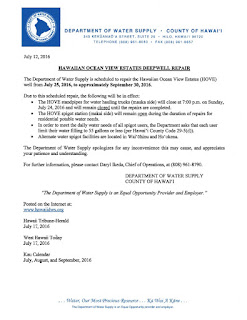
| Click on document to enlarge. |
 |
| See kaucalendar.com. |
 |
| See kaucalendar.com/TheDirectory2016.html and kaucalendar.com/TheDirectory2016.pdf. |