About The Kaʻū Calendar

Monday, January 16, 2017

Ka`u News Briefs Monday, Jan. 16, 2017

HI-SEAS dome welcomes eight crew members for an eight-month stay beginning this Thursday on
Mauna Loa. The goal is to simulate life confined to long-distance space exploration. See story below.
 Photo from HI-SEAS

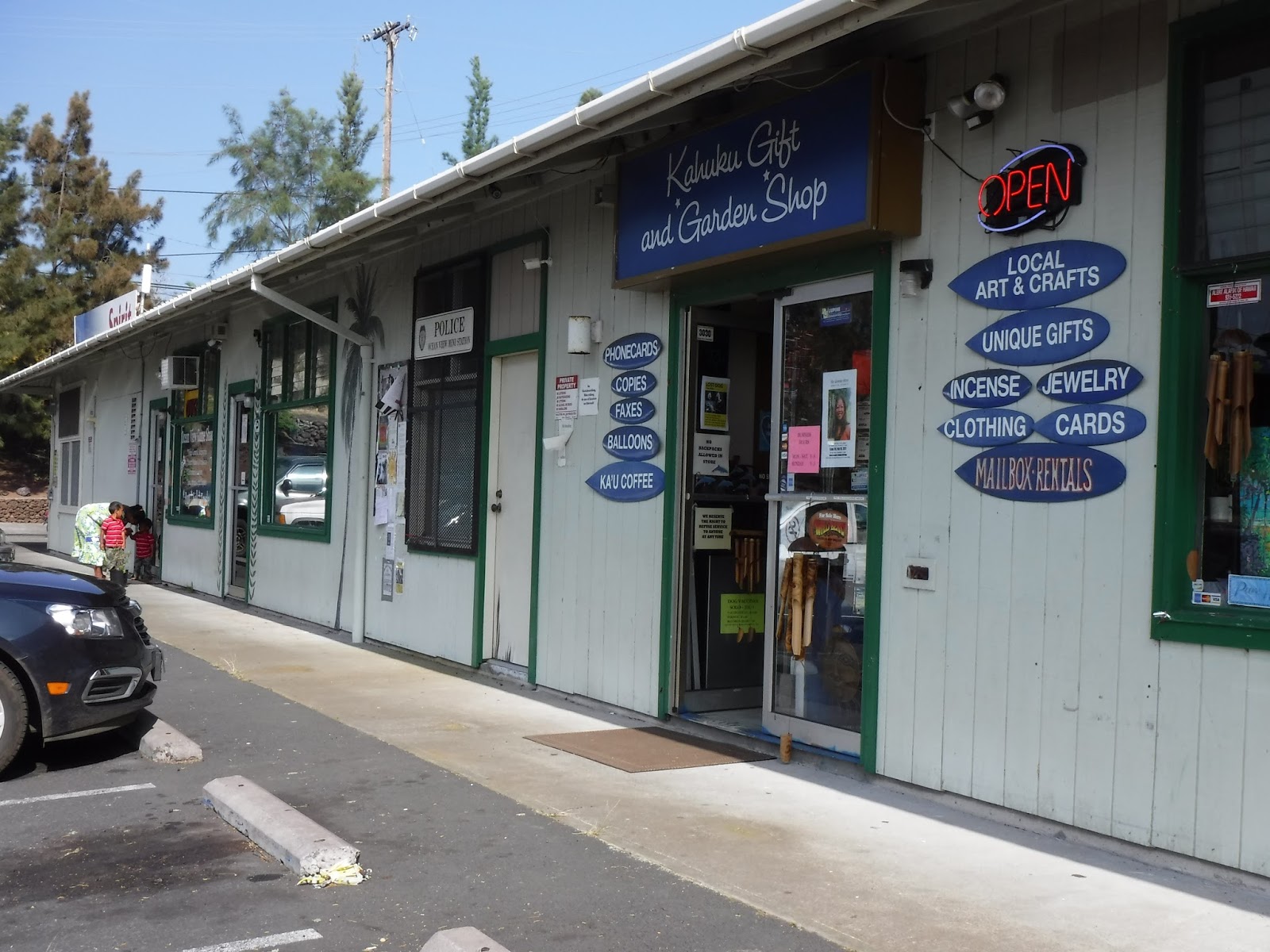
THE NEW OCEAN VIEW PETITION FOR LOCAL POLICING can be signed by area residents at Ocean View Community Center daily from 9 a.m. to 4 p.m. and also at South Point U Cart and at Kahuku Gift and Garden Shop. The petition calls for more policing in Ocean View and a new police station there.
The petition calls for replacing the mini station with
 a larger Ocean View Police Station next to 
the fire station. Photo by Ann Bosted
    A supporter of the petition is Ocean View Community Association's newly elected President, Ron Gall, who met with the recently appointed Community Policing Officer Aron Tomota. Gall praised the Community Policing Officer, saying that Tomota has a “real initiative, and a good attitude. He is going to do well. He is not one to pass the buck.” Gall reported that when Tomota first took the Community Policing Officer position in Ka`u,  “The first thing on his desk was all the abandoned vehicles on our streets.  He quickly had seven hauled out of here, and now all ten are gone." Gall reported that Tomota is in favor of the localized policing, as called for in the petition.
     The petition calls for the new police station to be built next to the fire station in Ocean View where communications would be better for police officers, who could file their reports without driving to Na`alehu.
     Gall recommends: “The police officers should have input about the design of the new police station.  Among other needs - they would require a holding cell, where suspects can be kept before being transported to Kona. The County owns property in Ocean View – I have been told they have upwards of 20 one-acre lots." 
Community Policing Officer
Aron Tomota
      Gall said one of the problems with remote communities is that “the Police Dispatch is based in Hilo, and they know nothing about Ocean View. They could use electronic maps, which have been in use on the mainland since the early eighties. There, dispatch officers punch in the address and a dispatcher can tell the police officer where to go. As an example, the dispatch staff in Hilo have no idea where Lotus Blossom is,” exclaimed Gall. “Localized policing would end that problem.”
Ron Gall, President of
Ocean View Community
Association
      Debbie Dubois, one of the organizers of the petition drive, said that having police more often in Ocean View would help with the following: “The criminals can get scanners and tune into the police channels, and know exactly where the police are and what they are doing.”
     Dubois also described interaction with the police and community: “We go to Neighborhood Watch meetings with the police, but they are very unsatisfactory. Key information is missing, and they won’t share stuff with us. Localized policing is crucial and this petition is a start."
     She gave an example of the long wait time in Ocean View for some victims of crime. “A few days ago, a resident saw his neighbor being robbed. He immediately phoned in the crime, and the police told him that under no circumstances should he interfere. Only after the burglary was over and his neighbor had been cleaned out, did the the cops show up. They took about 45 minutes to arrive. This is totally unacceptable, yet it happens over and over again. We need to take action. Every one knows who the repeat criminals are. But they are almost never arrested, and if they are nabbed, they are let go again. We have to stop this ‘catch and release’ pattern,” said Dubois.
       Concerning the petition drive, over 200 signatures have already been collected, and the team expects to collect about 500, Dubois reported.

To read comments, add your own, and like this story, see Facebook. Follow us on Instagram and Twitter.

Dr. Martin Luther King was remembered in the writings of
Hawai`i Gov. David Ige today. Photo from Gov. Ige
DR. MARTIN LUTHER KING was the focus of a message from Gov. David Ige on Martin Luther King Day, celebrated in Hawai`i and around the country.
    Wrote the governor: "Today, we honor the Reverend Dr. Martin Luther King, Jr, a mortal man with an immortal dream. Some will honor him with public service, some through quiet reflection.
     "While much may have changed since the time of Dr. King, inequality remains one of the primary issues that we must work together to resolve. Dr. King once wrote that  'Life's most persistent and urgent question is what are you doing for others?'
     "Here in Hawai’i we believe in lifting up our fellow citizens by helping to raise the standard of living for all our residents. We have committed millions to ease the homelessness crisis and make housing affordable. We have worked to bring meaningful job opportunities to Hawai’i, jobs that pay well enough so people can live without being burdened with a life time of debt. We are 17th in the nation in personal income growth and we have the 3rd lowest unemployment rate in the country. For Dr. King economic equality was just as important as racial equality.
     "I want to encourage all our citizens, as we celebrate the life of Dr. Martin Luther King, to ask themselves how we can work to make our communities stronger for everyone and what can we do as individuals to make someone’s life better.
     "So I would like to end with the same call to action that Dr. King made so clear that night in Memphis: 'Let us rise up tonight with a greater readiness. Let us stand with a greater determination. And let us move on in these powerful days, these days of challenge to make America what it ought to be. We have an opportunity to make America a better nation.'”
To read comments, add your own, and like this story, see Facebook. Follow us on Instagram and Twitter.

At 8,000 feet, astronaut-like crew members in the HI-SEAS dome will live together in
close quarters, simulating long-distance space travel. Photo from HI-SEAS
SIX ASTRONAUT-LIKE CREW MEMBERS WILL ENTER THE HI-SEAS GEODESIC DOME ON MAUNA LOA this Thursday for an eight-month mission of isolation to simulate space exploration.
HI-SEAS crew member Samuel Payler, a doctoral candidate at UK 
Centre for Astrobiology, University of Edinburgh. He has been involved 
in NASA’s BASALT program, the MINAR project and BISAL,  the 
world’s first deep subsurface astrobiology laboratory. He has an MSci 
from University of Birmingham and prior to HI-SEAS was 
researching life in hypersaline deep subsurface environments.
     The Mission V crew has been selected, and research confirmed to study human behavior and performance in such a remote and confined environment.
     The NASA-funded project, in partnership with University of Hawai`i and its Hawai`i Space Exploration Analog and Simulation - HI-SEAS, aims to help determine the individual and team requirements for long-duration space exploration missions including travel to Mars. The HI-SEAS dome is located at the 8,000 feet elevation in an abandoned quarry on Mauna Loa. There are two stories within the dome. Ground floor is 993 square feet and second floor loft is 424 square feet. Another 160 square-fee of space is created by a shipping container attached to the dome.
      HI-SEAS principal investigator and UH Mānoa Professor Kim Binsted said she is proud of the project’s contribution to understanding human behavior and performance in space.
     “Since 2012, HI-SEAS has been contributing to NASA’s plans for long-duration space exploration. We are an international collaboration of crew, researchers and mission support, and I’m proud of the part we play in helping reduce the barriers to a human journey to Mars.”
Joshua Ehrlich is a systems engineer for 
Lockheed Martin working on test and 
verification of the Orion European Service 
Module. He has a BS in aerospace engineering 
from University of Florida, an MS in 
mechanical engineering from Embry-Riddle
 Aeronautical University. Experience includes 
integration and testing on the SpaceX Falcon
 9 launch vehicle and Veggie and Advanced 
Plant Habitat payloads at NASA’s
 Kennedy Space Centre.
Ansley Barnard is an engineer from Reno,
Nevada who has worked for NASA and
Boeing on advanced composite structures and
has designed aerodynamic bodywork for cars
 racing in the100th Indy 500. She has a BS in
aeronautics and astronautics from University
of Washington. Prior to HI-SEAS, she
worked in engineering optimization
 for Ford Motor Company.
    During the eight-month HI-SEAS Mission V the crew will perform exploration tasks such as geological fieldwork and life systems management. The isolated and confined conditions of the mission, including 20-minutes of delayed communication and partial self-sufficiency, have been designed to be similar to those of a planetary surface exploration mission.
James Bevington is a freelance
researcher with a passion for space.
He has a BSC from the University 
of Tennessee, an MSc from
University of Georgia and an MSc
from International Space University. 
Prior to HI-SEAS he was a researcher 
at International Space University and 
consulted for Northwestern University.
Daily routines include food preparation from only shelf-stable ingredients, exercise, research and fieldwork aligned with NASA’s planetary exploration expectations.
     Under watchful eyes of the research team and supported by experienced mission control, the crew will participate in eight primary and three opportunistic research studies. 
Brian Ramos is a Portuguese-
American with dual engineering
 degrees in biomedical and 
electrical engineering. He has 
a master’s degree in international
 space studies from  International
 Space University. Prior to joining 
HI-SEAS his experience included
 project work at NASA’s Johnson
 Space Centre and Engineering 
World Health to repair media 
equipment in Rwanda.
   The NASA-funded primary research will be conducted by scientists from across the U.S. and Europe who are at the forefront of their fields.
     The primary behavioral research includes a shared social behavioral task for team building, continuous monitoring of face-to-face interactions with sociometric badges, a virtual reality team-based collaborative exercise to predict individual and team behavioral health and performance and multiple stress, cognitive countermeasure and monitoring studies.
     HI-SEAS Mission V follows the successful 12-month Mission IV that was completed in August 2016. That mission placed HI-SEAS in the company of a small group of analogs capable of operating very long duration missions in isolated and confined environments similar to Mars500, Concordia and the International Space Station.
  To read comments, add your own, and like this story, see Facebook. Follow us on Instagram and Twitter.

Laura Lark grew up on a small farm
in Whatcom County, Washington. 
She has a BS in computer science 
from Brown University and, prior 
to joining the HI-SEAS crew, 
she spent five years as a software 
engineer at Google working on 
search serving and indexing 
infrastructure. 
Photos from HI-SEAS
TRIALS AND TRIBULATIONS OF HALEMA`UMA`U CRATER is the topic of After Dark in the Park at 7 p.m. on Tuesday at Kilauea Theater Auditorium in Hawai`i Volcanoes National Park. Don Swanson, a geologist with USGS makes the presentation with history and personal anecdotes about his encounter with the crater. Free. Park entrance fees apply.To read comments, add your own, and like this story, see Facebook. Follow us on Instagram and Twitter.


Sunday, January 15, 2017

Ka`u News Briefs Sunday, Jan. 15, 2017


The Police Ocean View Mini Station is not used enough to keep the police around the neighborhood, according to
Ocean View residents who have launched a petition drive for a larger station next to the fire station.
Photo by Ann Bosted
LOCALIZED POLICING FOR OCEAN VIEW is the goal of a group of residents who have launched a petition signing campaign. The petition asks Mayor Harry Kim for “Localized Policing” to include round-the-clock police presence so that the high crime rate can be reduced. 
     Although the county pays to rent a store in the Pahoe Plaza shopping center, this sub-station is not used by the police as an office as they claim that the internet lines are not secure, so their reports cannot be electronically filed there. Instead they drive about 20 miles to the Na’alehu police stateion to do their paperwork, reducing their time in Ocean View.
      According to the 2010 census, Ocean View has the largest population of any town in the Ka’u District. This, petition organizers point out, is a strong argument for having a fully functional police station in their town. They have suggested that the police station be located next to the fire station, which has the secure lines that the sub-station lacks.
The Mini Station is in Pohue Plaza but not used much because of its lack of
secure communication for police to file reports. Photo by Ann Bosted
      “The criminals can see the cops leaving town – one blue light following the other – so they know they can do what they like,” explained Mike DuBois, who drafted the petition.
      The petition reads in part: “We call upon the government to provide a permanent, around-the-clock Police Station in Ocean View, replacing the out dated and seldom used substation. This petition is in response to the area’s consistent excessive crime rate, and slow police response time in emergencies and the lack of full-time police presence.
     “In order to reduce crime and effectively quicken police response and more immediate police interaction with the criminally minded, we need a localized police station in Ocean View.
      “We, the undersigned, petition our Mayor, Police Chief and County Council to provide public safety and protection of our property for Ocean View residents by expeditiously establishing a 24-hour Police Station in Ocean View,” concludes the petition. 
      DuBois explained that at recent Ocean View community meetings, residents have asked that “a permanent operational station be established” next to the town’s fire station, “which has a secure communication system already in place. 
    “Signing this petition shows mutual support for a localized policing approach to reduce crime.  This is an important grassroots effort to show the island government that our town of 7,000 people knows what is needed to protect itself from the consistently extreme levels of crime,” explained Dubois.
  
      Debbie DuBois said, “We hope that Mayor Kim will take a fresh look at this situation. The petition has got people talking and thinking.  We have had community meetings with various people, like Prosecutor Mitch Roth and Assistant Chief Kealoha, and they have listened to our concerns."  
To read comments, add your own, and like this story, see Facebook. Follow us on Instagram and Twitter.

MARTIN LUTHER KING DAY IS MONDAY, JAN 16, with a celebration at the Mo`oheau Bandstand in Hilo from 3 p.m. to 5 p.m. with speeches, artists and performers.
     The commemoration reminds some old timers of King's speech before the Hawai`i legislature in 1959. King said: "I come to you with a great deal of appreciation and great feeling of appreciation, I should say, for what has been accomplished in this beautiful setting and in this beautiful state of our Union.
Martin Luther King in Hawai`i in 1959.
     "As I think of the struggle that we are engaged in, in the South land, we look to you for inspiration and as a noble example, where you have already accomplished in the area of racial harmony and racial justice, what we are struggling to accomplish in other sections of the country, and you can never know what it means to those of us caught for the moment in the tragic and often dark midnight of man's inhumanity to man, to come to a place where we see the glowing daybreak of freedom and dignity and racial justice.
     "We have come a long, long way. We have a long, long way to go. I close, if you will permit me, by quoting the words of an old Negro slave preacher. He didn't quite have his grammar right, but he uttered some words in the form of a prayer with great symbolic profundity and these are the words he said: 'Lord, we ain't what we want to be; we ain't what we ought to be; we ain't what we gonna be, but thank God, we ain't what we was.' Thank you."
To read comments, add your own, and like this story, see Facebook. Follow us on Instagram and Twitter.


Vince Mina, statewide President of
Hawai`i Farmers Union United
THE HAWAI`I FARMERS UNION UNITED has reached 1,020 members across ten chapters, its president Vince Mina announced on Sunday. 
     "This accomplishment is reflective of the tireless work of leaders within the HFUU who continuously focus on serving our growing membership along with those expanding our impact and effectiveness through grants, donations and sponsorships, said Mina.
     "Day after day, HFUU's mandate is to provide education and solutions for our family of farmers so that they are supported in growing the agriculture sector for Hawai`i.
     "Our preferred methods are ecologically oriented, economical and enfironmentally sustainable (regenerative) - to the farmer, rancher, fisherman and the consumer. While this is no easy task, we are continually inspired by those who have shown their commitment to the local regenerative food movement," said Mina.
     President for the Ka`u Chapter is Greg Smith from Earth Matters Farms and Vice President is Richard Creagan, a physician and chair of the agriculture committee in the state House of Representatives. Creagan lives on a Ka`u farm.
      Mina will represent the Hawai`i Farmers Union United at the National Farmers Union Convention in San Diego March 5-8. He formed and heads the National Farmers Union's Regenerative Agriculture Local food Committee, which will host talks by Jen Kuchera of the soil health division of the USDA and Mark McAffee, owner/operator of Raw Milk Dairy, Organic Pastures, in California.
     See more at hfuuhi.org.
To read comments, add your own, and like this story, see Facebook. Follow us on Instagram and Twitter.

TRIALS AND TRIBULATIONS OF HALEMA`UMA`U CRATER is the topic of After Dark in the Park at 7 p.m. on Tuesday at Kilauea Theater Auditorium in Hawai`i Volcanoes National Park. Don Swanson, a geologist with USGS makes the presentation with history and personal anecdotes about his encounter with the crater. Free. Park entrance fees apply.


Saturday, January 14, 2017

Ka`u News Briefs Saturday, Jan. 14, 2017

Redoubt Volcano, shown here on April 4, 2009, is just one of the more than 50 historically active volcanoes monitored by the Alaska
Volcano Observatory, a sister USGS organization to Hawaiian Volcano Observatory. Gray ash draping the flanks of the volcano
 creates a stark contrast to the surrounding snow-covered landscape and white steam rising from Redoubt’s summit crater. Top left,
 the USGS office of AVO, located in Grace Hallon the Alaska Pacific University campus in Anchorage, coordinates the observatory’s
 operations. Other AVO offices are at the University of Alaska and the Alaska Division of Geological and Geophysical Surveys
 in Fairbanks.  See Volcano Watch story below. USGS photos
RESHAPING THE STATE DEPARTMENT OF EDUCATION is a promise Gov. David Ige made on Saturday. He pledged to support dreams and aspirations of each student in remarks he made at the third annual Hawai‘i School Empowerment Conference at the Hawai‘i Convention Center. The conference was sponsored by the Education Institute of Hawai‘i, a non-profit organization committed to improving public education. The conference aims to increase awareness and deepen understanding to improve public education through school empowerment and innovation in learning.
Gov. David Ige promised on Saturday to reboot Hawai`i's p ublic education system.
Photo from Office of the Governor
     Ige entitled his talk A Clear Path to Achieving Excellence in Hawai`i's Public Schools. Here is the governor's speech:
     "Coding. Robotics. Digital media. International education exchanges. None of these programs were offered when I attended public schools in Pearl City, and it’s impossible to predict what fascinating opportunities await students in coming years.
     "What I can tell you is this: The success of today’s students in the future workplace and in our communities requires an absolute reboot of the rigid school system built over a century ago. Our school system is simply not relevant to today’s students.
     "That’s why I asked the members of the Board of Education, those I appointed and those who began serving prior to my taking office, to develop and implement a plan to transition from yesterday’s system to one that truly prepares students to think creatively and to be innovators. I asked board members to design a system that encourages teachers and principals to make meaningful decisions about curriculum and instruction, educational programs, and expenditure of schools funds.
     "The Board responded to my challenge. They worked with the community to develop a new strategic plan for the department. They courageously determined transformation requires a fresh mindset, starting at the top. And they initiated a search for a new superintendent. I fully support this decision. We need a change agent who is committed to exploring unconventional options in the quest to prepare our students for the future.
     "I want students, parents, teachers and other educators to be assured that my goal is to reshape the department so that it supports the dreams and aspirations of each student. I believe those closest to the students understand best how their students should be educated. That is the type of system we are working together to achieve.
     "The community supports this goal as evidenced by the tremendous participation in last summer’s Education Summit and dozens of follow-up meetings in communities throughout the state. I am proud of the work my volunteer team, parents, teachers, business leaders and community members have done to create a Blueprint for Hawaiʻi’s Education System. I asked them to think big, and they did. I can tell you, there is no shortage of innovative thinking in Hawaiʻi.
Ka`u High has competed in robotics, which Gov. David Ige says is a start to
building communities of the future. Photo from FIRST
     "My passion for education isn’t new, and the solutions I am promoting now aren’t a surprise to anyone who has been recently engaged in the dialogue on education. I campaigned on this issue and education remains my top priority.
     "We don’t know what the next technological wave will bring. But we do know that Hawaiʻi’s public education system must be set up so teachers are able to exercise their professional judgement and employ tools that enable student success.
     "Students who design robots in elementary school will build the communities of the future. Students who experience what it’s like to be innovators and entrepreneurs in high school will drive the state’s new economy. Students who travel with their class will collaborate with their peers around the world to solve global challenges. It is our responsibility to provide them with a robust learning experience so they can achieve rewarding and successful lives."
To read comments, add your own, and like this story, see Facebook. Follow us on Instagram and Twitter.


BANKRUPTCIES IN HAWAI`I would have been at a 24-year low in 2016, with the exception of the year 2006, which saw a run on filing for bankruptcy before it became more difficult. A recent story in the Honolulu Star Advertiser quoted Honolulu bankruptcy attorney Blake Goodman saying that President-elect Donald Trump could play a role in the future of bankruptcy filings in Hawai`i. Goodman told the Advertiser that “Trump is either going to deliver as promised and make America great again with more solvency, more opportunities, more economic prowess, more jobs, lower taxes. To me it sounds like a Santa Claus list. But if he’s got the magic that everybody voted for, then we may see a continued decrease in bankruptcies for years to come. I think, though, the outcome will be as real as Santa Claus.”
     A trend that could lead to more bankruptcies, according to Goodman, would be increased interest rates; “which, if that continues will decrease the real estate values. It always translated to more bankruptcies when there is less equity in properties and people no longer have the option of taking cash out of their real estate to pay off debt,” he explained.
     The Advertiser reported statistics released early this month from the U.S. Bankruptcy Court, District of Hawai`i, showing there were 1,383 bankruptcy cases statewide in 2016, representing an 11.9 percent decline from 2015 and the lowest level in nine years.
To read comments, add your own, and like this story, see Facebook. Follow us on Instagram and Twitter.

VOLCANO WATCH LOOKS AT ALASKA THIS WEEK in a continuing series of stories for Volcano Awareness Month. The scientists of Hawaiian Volcano Observatory write about the USGS observatories in Alaska and their relation to Hawai`i:
     "Hawai`i may be the most volcanically active state in the U.S., but in terms of sheer numbers of volcanoes, Alaska is the hands-down winner. Of the nation’s 169 active volcanoes, 90 are located in Alaska. Eruptions there are common, and some volcanoes are in a semi-constant state of low-level activity.
Augustine Volcano in the Cook Inlet during a 2015 eruption. It was the 1986 eruption
 of this volcano that led to creation of the Alaska Volcano Observatory, the sister
to Hawaiian Volcano Observaotry. Photo by Cyrus Read/ USGS
     "The 1986 eruption of Augustine volcano in Cook Inlet (near Anchorage) emphasized the need for volcano monitoring and research in Alaska. It also prompted the establishment of the Alaska Volcano Observatory, which was founded in 1988.
     "AVO is a partnership between three organizations: the U.S. Geological Survey, the Geophysical Institute of the University of Alaska Fairbanks, and the Alaska Division of Geological and Geophysical Surveys. These three groups contribute to observatory operations, although hazards notifications are issued by the USGS, which has federal responsibility for such declarations.
    "AVO did not have to wait long after its establishment for its first “test.” On December 14, 1989, Redoubt volcano, also in Cook Inlet, erupted. The next day, KLM flight 867, carrying 231 passengers from Amsterdam to Tokyo with a stop in Anchorage, flew through a Redoubt ash plume, causing all four engines to fail. The aircraft dropped more than 3 km (2 mi) in altitude within five minutes before the flight crew managed to restart the engines and land the plane safely in Anchorage. All four engines on the aircraft had to be replaced, with damages totaling about $80 million. The Redoubt eruption continued through early June 1990.
     "The KLM flight 867 incident reemphasized that hazards from even remote volcanoes can impact an increasing number of vulnerable jet aircraft—a lesson that had previously been demonstrated by similar ash-aircraft encounters around the world. These encounters represent a significant difference in emphasis between AVO and the Hawaiian Volcano Observatory. In Hawai`i, we focus primarily on ground-based volcanic hazards such as lava flows, whereas Alaska has both ground and airborne concerns. AVO’s area of responsibility is also much broader than that of HVO, extending from southeast Alaska to Anchorage, along the Alaska Peninsula, and then out the chain of Aleutian Islands towards Russia’s Kamchatka Peninsula—a distance of over 3,000 km (2,000 mi)!
     "Nevertheless, AVO uses volcano monitoring methods similar to those employed by HVO, including webcams, seismic and GPS stations, and geological mapping. Ground-based monitoring and research field work are considerable challenges owing to Alaska’s harsh environment and the remoteness of so many volcanoes, so satellite data are used extensively.
    "Aircraft pilot reports are also important sources of information about Alaskan volcanoes. In fact, it was pilot reports, confirmed by satellite data, that documented the unheralded December 20, 2016, eruption of Bogoslof—a tiny island with no ground-based volcano monitoring—which sent an ash plume to an altitude of over 10 km (6 mi).
The volcano on Uniyak in the Aleutian Islands. USGS photo
     "Since its founding, AVO has made tremendous strides in mapping the largely unknown volcanoes of Alaska to better understand their eruptive histories and future eruptive potential. Even some of the remote volcanoes of the western Aleutian Islands have been instrumented to track unrest and detect eruptions that might be hazardous to aircraft.
     "AVO has also developed state-of-the-art tools for viewing the abundance of available satellite observations that can detect ash plumes and thermal anomalies. Some of these tools have been exported to Hawaii, where HVO scientists use them to enhance their monitoring of Kīlauea and Mauna Loa volcanoes.
    "Scientists at AVO are researching Alaskan volcanoes to contribute to a better understanding of how volcanoes work in general. Of particular importance are AVO’s investigations into the dynamics of explosive eruptions and their deposits, relations between seismic energy and ash plumes, and hydrologic hazards due to eruptions at snow- and ice-covered volcanoes.
    "Next week we’ll visit the most populous state in the U.S., which is also home to 19 active volcanoes—California."
     HVO scientists encourage everyone to attend upcoming Volcano Awareness Month programs on the Island of Hawai‘i. The complete schedule, including descriptions of the talks, is posted on HVO’s website at hvo.wr.usgs.gov.
     Volcano Activity Updates: Kīlauea continues to erupt at its summit and East Rift Zone. This past week, the summit lava lake level varied between about 16.5 and 33.5 m (54–110 ft) below the vent rim. The 61g flow was still active, with lava entering the ocean near Kamokuna and surface breakouts near Pu‘u ‘Ō‘ō. The 61g flow does not pose an immediate threat to nearby communities.
Lava continues to enter the ocean near Kamouna, creating a
plume of hot water. USGS image.
     Mauna Loa is not erupting. During the past week, small-magnitude earthquakes continued, primarily beneath the upper Southwest Rift Zone and summit caldera at depths less than 5 km (3 miles). GPS measurements continue to show deformation related to inflation of a magma reservoir beneath the summit and upper Southwest Rift Zone, although rates appear to have slowed over the past month.
    Two earthquakes were reported felt in Hawai`i this past week. On Jan. 9, at 2:20 p.m., HST, a magnitude-3.1 earthquake occurred 62 km (38.5 mi) southwest of Lāna‘i City, Lāna‘i, at a depth of 10 km (6.2 mi). On January 7, at 10:24 a.m., HST, a magnitude-3.5 earthquake occurred 16.0 km (9.9 mi) north of Pāhala, Hawaiʻi, at a depth of 9.4 km (5.8 mi).
     Visit HVO's website http://hvo.wr.usgs.gov for past Volcano Watch articles, Kīlauea daily eruption updates, Mauna Loa weekly updates, volcano photos, recent earthquakes info, and more; call for summary updates at 808-967-8862 (Kīlauea) or 808-967-8866 (Mauna Loa); email questions to askHVO@usgs.gov.
To read comments, add your own, and like this story, see Facebook. Follow us on Instagram and Twitter.
KA`U HIGH WON IN SOCCER again on Saturday, with a score of 2-1 on the home field against Kohala, reports Athletic Director Kalei Namohana. Kobe Moses and Brennan Nishimura scorecd the goals for the Trojans. Ka`u's goal keeper for the game was Mark Galacio.

PEOPLE & LAND OF KAHUKU, Sunday, Jan. 15 from 9:30 a.m. to 11 a.. Free,  guided, 2.5 mile, moderately difficult hike over rugged terrain to illustrate the human history of the area, within the Kahuku Unit of Hawai`i Volcanoes National Park.

MARTIN LUTHER KING, JR. DAY will be celebrated in Kona and Hilo. In Kona, the 36th Anniversary Birthday Commemoration of the civil rights leader will be Sunday, Jan. 15 from 11:30 a.m. to 5 p.m. at Old Kona Airport Beach Park, Makaeo Pavillion. Art, songs, music by local schools and the community will be featured. In Hilo, it will take place Monday, Jan. 16 at the recently rernovated Mo`oheau Bandstand from 3 p.m. to 5 p.m. with performers, speakers and artists commemorating MLK.