About The Kaʻū Calendar

Sunday, January 02, 2022

Ka‘ū News Briefs, Sunday, Jan. 2, 2022

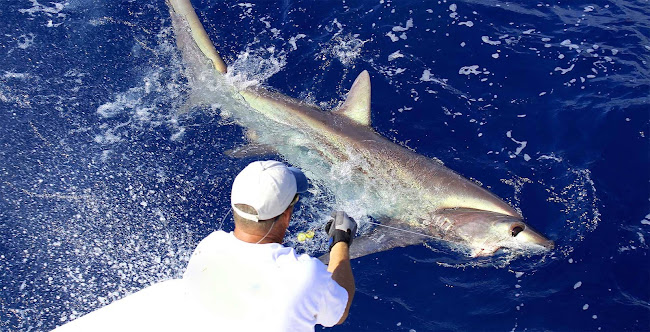
Charter fishing operations like Lahela have had to drop their shark fishing program and concentrate on marlin, ono and other species, as well as whale watching, since shark fishing became illegal Jan. 1. Photo from Lahela
EVERY KIND OF SHARK IS OFF LIMITS FOR KILLING IN HAWAIIAN WATERS. The new law went into effect on Jan. 1. It is also illegal to knowingly entangle or capture sharks. House Bill 533 passed 
the Hawai'i Legislature during its last session. It protects the approximately 40 species of sharks living in Hawaiian waters. See them at https://dlnr.hawaii.gov/sharks/hawaii-sharks/shark-identification-guide/.
    Brian Neilson, Administrator of the state Department of Land & Natural Resources Division of Aquatic Resources, said, “We are well aware of how important sharks are to maintain healthy marine ecosystems. 
    We also recognize their importance in native Hawaiian cultural practices and beliefs.”
See Hawaiian shark species at https://dlnr.hawaii.gov/sharks/hawaii-sharks/shark-identification-guide/.
    The new law does not apply to: People with special activity permits issued by DLNR; shark fishing for public safety purposes as authorized or conducted by DLNR; sharks taken outside of state marine waters, with required documentation; sharks captured, entangled, or killed for self-defense or the defense of another; sharks captured or killed according to a permit issued by DLNR.
    Neilson pointed out that DLNR still has "work to do before it’s fully implemented.” According to the statute, DLNR may adopt administrative rules to implement the new law, including but not limited to: ensuring that the incidental capture and release of sharks while targeting other species is not a violation; preventing the wanton waste of sharks; and limiting gear, such as gill nets, in areas identified as shark nursery habitats. According to Act 51, the conditions of non-commercial permits for the take of sharks “shall include native Hawaiian cultural protocol, size and species restrictions, and a prohibition on species listed as endangered or threatened.”

Shark killing fines are $500 for first offense, $2,000 for second and $10,000
for the third. Photo from DLNR
    The DLNR recommended that "people avoid fishing in areas known to be frequented by sharks, especially pupping areas, and use barbless circle hooks. If a shark is caught accidentally from a boat, avoid bringing it onto the vessel whenever possible. To release it, cut the line as safely as possible close to the shark’s mouth.
    Violation of the new law will be a misdemeanor, but carries significant penalties: $500 for a first offense; $2,000 for a second offense; $10,000 for a third or subsequent offenses; a civil fine not exceeding $10,000 per offense; an administrative fine of no more than $10,000 for each shark captured or entangled, whether alive or dead; seizure and forfeiture of any captured sharks or any part or product, commercial marine license, vessel, and fishing equipment; assessment of administrative fees and costs, and attorney’s fees and costs. For information about sharks in Hawaiian waters, visit the DLNR shark website at hawaiisharks.org.

To read comments, add your own, and like this story, see www.facebook.com/kaucalendar/. See latest print edition at kaucalendar.com.
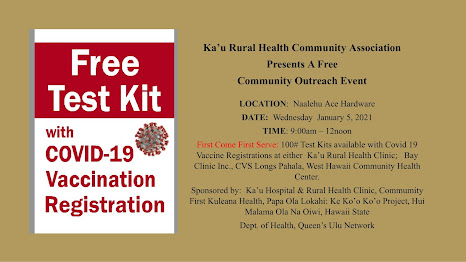
FREE COVID TEST KITS WILL BE AVAILABLE WEDNESDAY, Jan. 5 at Ace Hardware in Na`alehu. The event is led by Ka'u Rural Health Community Association to provide COVID test kits first come, first served to those who register to receive a COVID vaccine at Ka`u Rural Health Clinic, Bay Clinic, CVS Longs in Pahala or West Hawai'i Community Heath Center. 
    Other sponsors are Ka`u Hospital & Rural Health Clinic, Community First Kuleana Health, Papa Ola Lukahi: Ke Ko'o Ko'o Project, Hui Malama Ola Na Oiwi, state Department of Health and Queen's Ulu Network.   

To read comments, add your own, and like this story, see www.facebook.com/kaucalendar/. See latest print edition at kaucalendar.com.
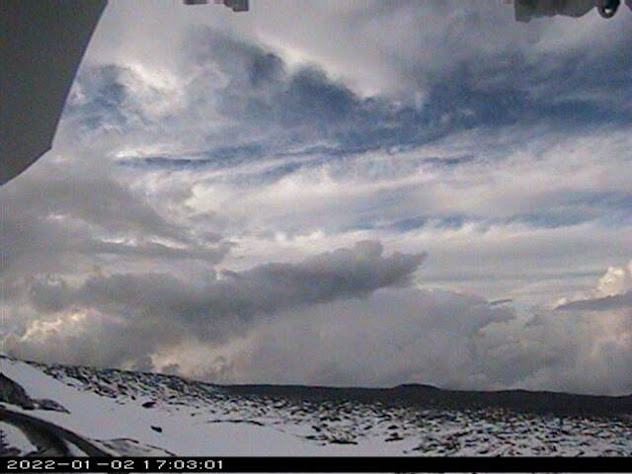
The Canada-France-Hawai'i Telescope webcam on the evening of Jan. 2 shows snow that likely lured a family
in their truck to go up Mauna Kea Jan. 1 in rain and ice conditions. The driver lost control and the truck fell 
into a ravine, leaving one child dead and others critically and seriously injured.
A DEADLY MAUNA KEA TRIP TO THE SNOW led to the death of a nine-year-old girl and injuries to seven people in a 2018 Toyota Tacoma truck on Saturday. Hawai‘i Island police are investigating a single-vehicle traffic collision that occurred on Mauna Kea Access Road around 3:28 p.m.
    Police investigators have determined that the driver of the truck traveling west on Mauna Kea Access Road appears to have lost control of the vehicle when the brakes did not respond. The Tacoma then crossed the roadway in a right curve and went off the left shoulder, approximately 100 yards and fell into a ravine after rolling over, with some of the passengers ejected from the vehicle. At the time of the collision the roadway was wet and it was raining.  The location was about 8,000 ft in altitude just below the visitor center. 
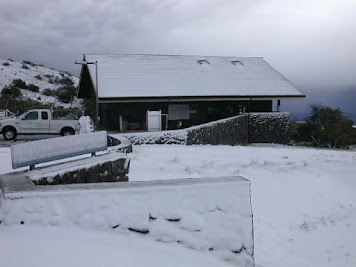
The fatal accident happened just below Mauna Kea 
Visitor Information Center. U.H. Photo
    Five occupants were inside the truck at the time of the collision and three were in the bed of the pickup. All the vehicle’s occupants sustained injuries from the collision and were transported to Hilo Medical Center for treatment and further evaluation.
    The operator of the pick-up truck, a 40-year-old female, and a 33-year-old male occupant, were airlifted to Queens Medical Center on O'ahu. A three-year-old boy was airlifted to Kapiolani Medical Center on O'ahu in critical condition. The nine-year-old female, in the back seat of the cab, was transported to Hilo Medical Center and pronounced dead at 5:03 p.m. An autopsy has been ordered to determine the exact cause of death.
    Police believe that speed, brake failure, and not wearing seatbelts appear to be major factors in the outcome of this collision. Further investigation will be conducted relative to any additional contributing factors, reported Hawai'i Police Department.
    This is the first fatal traffic collision of 2022 compared to zero fatal traffic collisions during this same time period last year.
    The East Hawaii Traffic Enforcement Unit has initiated a negligent homicide investigation, which is pending. Police are asking for anyone who may have witnessed the collision or who has information to contact Officer Jared Cabatu at (808) 961-2339 or via email Jared.Cabatu@HawaiiCounty.gov. Tipsters who prefer to remain anonymous may call Crime Stoppers at (808) 961-8300.

To read comments, add your own, and like this story, see www.facebook.com/kaucalendar/. See latest print edition at kaucalendar.com.

JANUARY PROGRAMS FOR KAHUKU section of Hawai'i Volcanoes National Park have been announced. Ranger Orientation Talks are Thursdays and Fridays at 10 a.m. at the Visitor Contact Station. The following Ranger Guided Hikes are scheduled for Saturdays and Sundays. Meet at the Visitor Contact Station.
    The Kaʻū Field System: Farming the Rock: On Saturday, Jan. 8 at 9:30  a.m., walk along an old ranch road to the remnants of the field system at Kahuku. Learn how pre-western-contact Hawaiians intensively farmed this area and fed the large population of Kahuku.. This is an easy 1/2 mile, one hour hike to kipuka kāʻopapa and back.
    Palm Trail: On Sunday, Jan. 9, at 9:30  a.m., hike a 2.6 mile loop along an old ranch road that leads to amazing volcanic features from the 1868 eruption. Discover relics of the ranching era and learn about hulihia (catastrophic change) and kūlia (restoration). Enjoy panoramic views of Kahuku and the Kaʻū coast. This is a 1.5 hour program

Pele-honua-mea (Pele) and Hi‘iaka-i-ka-poli-o-pele,
 and the natural phenomena they represent come
 alive through epic stories depicted in natural
 landscape of Kahuku on a two-mile, 1.5 hour hike.
 Image by Dietric Varez
    Nature & Culture: An Unseverable Relationship: (He Pilina Wehena ‘Ole). On Saturday, Jan. 15 at 9:30 a.m., hike the Palm Trail and be inspired by a place where hulihia (catastrophic change) and kūlia (restoration) can be observed as the land transitions from the 1868 lava flow and its pioneer plants to deeper soil with more diverse and older flora. Learn about native plants and their significance in Hawaiian culture. This moderate hike is about two miles and takes two hours.
    Realms and Divisions of Kahuku: On Jan. 16 at 9:30 a.m, discover the classification system, the realms, and the vertical and horizontal land divisions, that have been used in Hawaiʻi for centuries. Hawaiians made scientific observations of natural phenomena based on their astute powers of observation. This is a moderately difficult two-mile, 1.5-hour guided hike on Kamakapaʻa Trail.
    ‘Ōhi‘a Lehua: On Saturday, Jan. 22 at 9:30 a.m., learn about the vital role of ‘ōhi‘a lehua in native Hawaiian forests, the many forms of the ‘ōhi‘a tree, and the threat of a new fungal disease, Rapid ‘Ōhi‘a Death. Visitors will be able to identify the many differences of the most prominent native tree in Kahuku on this program, which is an easy, one-mile one-hour (or less), walk.
    Hi‘iaka & Pele. On Sunday, Jan. 23 at 9:30 a.m., discover two fascinating Hawaiian goddesses, sisters Pele-honua-mea (Pele) and Hi‘iaka-i-ka-poli-o-pele, and the natural phenomena they represent. Visitors will experience the sisters coming alive through the epic stories depicted in the natural landscape of Kahuku on this moderate two-mile, 1.5 hour hike. Walk across the 1868 lava flow along an old ranch road, and down the old ranch airstrip.
    People and Land of Kahuku: On Saturday, Jan 29 t 9:30 a.m., take a moderate two-mile, three-hour guided hike that loops through varied landscapes to explore the human history of Kahuku. Emerging native forests, pastures, lava fields, and other sites hold clues about ways people lived and worked on the vast Kahuku lands  from the earliest Hawaiians, through generations of ranching families, to the current staff and volunteers of Hawai‘i Volcanoes National Park. Learn about the powerful natural forces at work in Kahuku and how people have adapted to, shaped, and restored this land.
    Birth of Kahuku. On Sunday, Jan. 30 at 9:30 a.m., explore the rich geologic history of Kahuku. Traverse the vast 1868 lava flow, see different volcanic formations, including the Southwest Rift Zone of Mauna Loa. Learn about the Kānāwai o Pele, the natural laws of land building that govern Peleʻs realm.

To read comments, add your own, and like this story, see www.facebook.com/kaucalendar/. See latest print edition at kaucalendar.com.


Saturday, January 01, 2022

Ka‘ū News Briefs, Saturday, Jan. 1, 2022

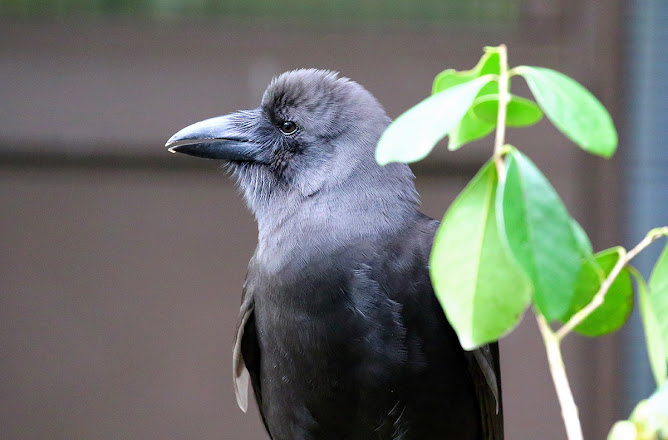
ʻAlalā could be introduced into the Kaʻū Forest Reserve in the future, according to The ʻAlalā Project.
Photo from The ʻAlalā Project

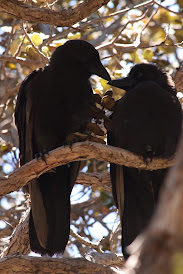
A pair of ʻAlalā. 
Photo by Mamo Waianuhea
THE 61,000-ACRE KAʻŪ
 FOREST RESERVE COULD BE A RELEASE AREA FOR 'ALALA , the endangered native Hawaiian crows, raised in captivity at the Keauhou Bird Conservation Center in Volcano and at San Diego Zoo. ʻAlalā no longer live in the wild and attempts at reintroduction are ongoing, with adults residing and nesting in captivity.
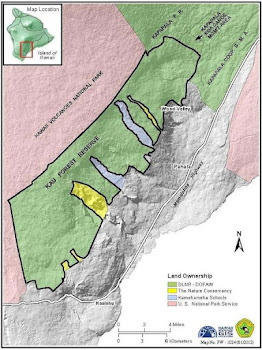
    "It is hoped that releases could be planned for the Kaʻū Forest Reserve after more management for promoting native forest habitat has occurred," says a statement from the ʻAlalā Project. Kaʻū Forest Reserve was established in 1906 to protect forest on lower slopes of Mauna Loa in Ka'ū District.
    From 2018 to 2019, ʻAlalā release efforts took place in the Pu'u Maka'ala Natural Area in Puna. "Pu'u Maka'ala Natural Area Reserve has been managed for many years to promote native forests, is fenced and free of ungulates (cows, pigs, sheep, etc.), has a dense understory, and lots of ʻAlalā food plants," according to The 'Alalā Project.
Kaʻū Forest Reserve could be a future release
 site for endangered ʻAlalā, the Hawaiian crow.
Map from Dept. Land & Natural Resources
    The ʻAlalā Project is also working on reintroduction plans to release ʻAlalā within Maui Nui.
    Project goals are: " To establish a wild self-sustaining population of ʻAlalā; that wild ʻAlalā will fulfill their ecological roles in the native forest ecosystem; and the population will need little help from humans to survive."
    The latest newsletter from The ʻAlalā Project notes that the organization is often asked how to "tell a male ʻalalā from a female ʻalalā by looking at them. It is very hard to tell them apart just by their appearance. Male ʻalalā are usually slightly larger and heavier than the females but often you cannot tell this apart just by looking at the birds. In order to determine the birdsʻ sexes at the conservation breeding center a simple blood test is done which looks at the bird's genetics. Each bird is given a color band combination to help keep track of the individual and to identify each bird." 
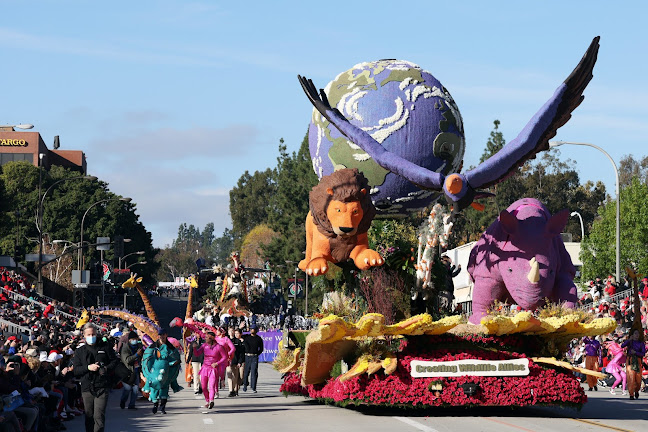
    In other  news, The ʻAlalā Project was represented Jan. 1 in the 133rd  Rose Bowl Parade in Pasadena. The float was sponsored by San Diego Zoo Wildlife Alliance to highlight conservation work around the world with its partners. See a video on the float at https://twitter.com/sandiegozoo/status/1477394503363
San Diego Zoo Wildlife Alliance's float in the Rose Bowl parade, honoring The ʻAlalā Project and many
other conservation efforts by the organization and its partner around the world. Photo from SDZWA

To read comments, add your own, and like this story, see www.facebook.com/kaucalendar/. See latest print edition at kaucalendar.com.

FOR ITS NEWS YEAR'S RESOLUTION, STATE OF HAWAI'I SHOULD GO ON A BUDGETARY DIET, says Keli'i Akina of Grassroot Institute of Hawai'i. The founder and President of the organization issued the following:
    The first day of a new year is traditionally a time for resolutions and self-improvement. So, in that spirit of personal growth, it's time we engage in some brutal candor about a problem in our state that's difficult to ignore. Yes, Hawaii's state budget needs to go on a diet. I admit, the past two years have been tough for all of us. Who hasn't put on a few pounds since March 2020, when most of us were ordered to hang around the house more — where our refrigerators are located — in an effort to stop the spread of COVID-19?
    But Hawai'i's state budget had been packing on the pounds long before the coronavirus lockdowns started; its current ballooning figure is the result of years of indulgence and bad habits.
    If anything, 2021 was a wake-up call. Some state policymakers actually started to consider eating a few fresh vegetables, which in this case means spending cuts. But then state tax revenues came in higher than expected, the federal bailout added more money to the coffers, and most of them went right back to snacking on high-calorie tax dollars, avoiding balanced budgeting as if it were an actual treadmill.
    In releasing his executive supplemental budget for fiscal 2023, Gov. David Ige announced that Hawai'i's rebounding economy has resulted in "astounding" tax revenues. As a result, I am happy to say, he says he is not planning any tax increases.
    But the Legislature is a wild card, and I am pretty sure some of its members have different plans. The truth is, however, that the best way to increase state revenues is not through tax hikes, but through policies that grow the economy. The state can reap far more through economic growth than it can through an increase in taxes, as the first five months of fiscal 2023 just proved.
    During the 2021 legislative session, too many of our lawmakers refused to see this and simply went ahead and increased our taxes, further burdening Hawai'i's businesses and taxpayers.
    The panic over the possible loss in revenues caused by the lockdowns was so severe that the Legislature took away the county shares of the state transient accommodations tax,
leaving the counties to levy their own TATs, which all have done.
    Combined with the state's general excise tax of 4%, plus the 0.5% county GET surcharges on Kaua'i, O'ahu and Hawai'i island, which tourists also pay, the Aloha State now has the highest tourist taxes in the nation, topping out at 17.75% — not exactly ideal to help Hawaii's ailing tourism industry recover.
    But back to the bloated budget: At present, the state is looking at a budget windfall, thanks to higher tax revenues and an infusion of federal aid funds. But rather than revert to its usual bad habits, the state should resolve for 2022 to slim down and achieve good health. As any fitness guru will tell you, the first step toward improvement is to stop the bad habits.
    No more saddling future generations with high debt. Don't postpone paying down unfunded liabilities. Don't borrow more for new projects. Post a reminder on the refrigerator to not raise taxes on Hawai'i residents or businesses. Even better, look for ways to cut taxes and lower the cost of living, perhaps by working more with the private sector to deliver certain public services. As I said, the best way to produce tax revenues is through economic growth.
    Sure, it won't be easy; significant self-improvement is usually a major challenge. But we're not looking to put the state budget on a crash diet.
    We want state policymakers to embrace a lifestyle change for 2022, one that will lead to a healthier, happier and more prosperous Hawai'i for generations to come.

To read comments, add your own, and like this story, see www.facebook.com/kaucalendar/. See latest print edition at kaucalendar.com.

COUNTY OF HAWAI'I CIVIL DEFENSE ISSUED ANOTHER COVID ALERT on New Year's Day: "For Hawai'i County the Department of Health reports 195 new cases with 1284 active cases and nine persons hospitalized. As we celebrate the 2022 New Year the entire State and Island of Hawaii is
experiencing high rates of Coronavirus transmissions and community spread. Know that when you leave your residence you may be exposing yourself to Coronavirus.
    "Be reminded that the mandate requiring wearing of face coverings indoors continues along with gatherings of no more than 10 persons indoors and 100 persons out of doors. Distancing oneself from others outside your family group and staying home when you are sick are necessary to stop the spread.
   "The Department of Health recommends getting vaccinated and getting a booster shot to protect yourself, your family, and friends."
     For a comprehensive calendar and list of all pharmacies and clinics providing vaccination and testing, please visit the Civil Defense website. Civil Defense: www.hawaiicounty.gov.

To read comments, add your own, and like this story, see www.facebook.com/kaucalendar/. See latest print edition at kaucalendar.com.


Ka‘ū News Briefs, Friday, Dec. 31, 2021

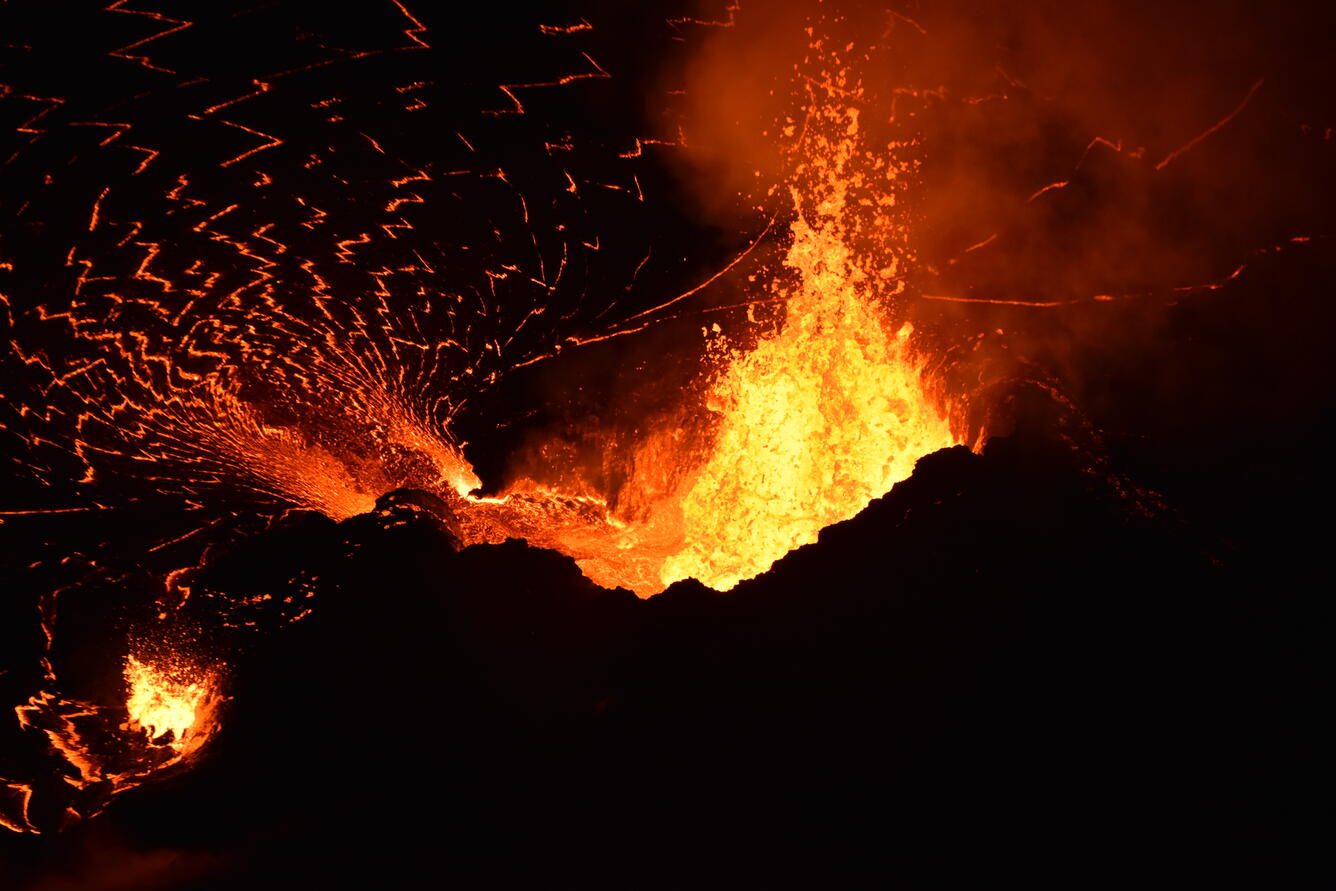
Low-light telephoto color image of lava fountains supplying lava into lava lake
Much like New Year's fireworks, incandescent lava fountains in Halema'uma'u can be a beautiful display. This photo, taken on Oct. 12, 2021, shows lava from the western vent in Halema'uma'u reaching heights of 10–15 meters (30–50 ft) and supplying lava into the lake through a short spillway. USGS photo by B. Carr
SHOULD OLD ERUPTIONS BE FORGOT? That's the title of this week's Volcano Watch column, written by USGS scientists and affiliates to bring in the new year:
    We traditionally spend the New Year singing Auld Lang Syne, a song that reminisces about times long past. For the first month of the New Year, staff at the USGS Hawaiian Volcano Observatory, and hopefully you too, will reflect on past and ongoing eruptions during the annual Volcano Awareness Month.
    Recent summit eruptions of Kīlauea have remained confined to Halema'uma'u crater within Hawai'i Volcanoes National Park. These eruptions, one of which is ongoing, have attracted many volcano-viewers, with stunning displays of eruption glow, lava fountaining, and a lava lake filling in the deepest part of Halema'uma'u crater that collapsed in 2018.
    While eruptions of Hawai'i's volcanoes are beautiful and can often be safely viewed, they also have the ability to directly impact people and commerce on the Island of Hawai'i. Kīlauea's 2018 lower East Rift Zone eruption and summit collapse remain fresh on the minds of residents. These were the largest and most destructive events on Kīlauea in at least 200 years and will not soon be forgotten.
     January was established as the Island of Hawai'i's annual Volcano Awareness Month in 2010 as part of an effort to increase understanding of Hawaiian volcanoes among residents and visitors. Important eruption anniversaries in January include the start of Kīlauea's long-lived Pu'u'ō'ō eruption on the middle East Rift Zone (1983–2018) and the 1960 Kapoho eruption. Until 2018, these were the two most destructive recent eruptions of Kīlauea.
    Mauna Loa hasn't erupted in over 36 years, but it can never be forgotten because of the potential impact a future large eruption could have.
A history of lava flows from Mauna Loa. USGS image
     January also marks the anniversary of Mauna Loa's 1859 eruption that filled Kīholo Bay and destroyed the village of Wainānāli'i south of the Waikoloa resorts. A similar eruption today could potentially close both the upper and lower highways in that area (Highways 19 and 190), severely disrupting the Island of Hawai'i's economy without destroying a single home.

    Repeats of many past Mauna Loa eruptions would not only close roads but threaten communities as well. For example, lava flows crossed Highway 11 and entered the ocean between Miloli'i and Captain Cook a mere four hours after the 1950 eruption began. Today, houses have replaced ranchlands greatly complicating evacuation planning in this area.
    And we should remember that while Hualālai erupts much less frequently than Mauna Loa and Kīlauea, a repeat of the 1800–1801 lava flow that the Kona International Airport sits on would also be highly disruptive.
    Past eruptions in Hawaii should encourage us all to increase our volcano awareness, as similar events will occur again in the future. We hope that this year's Volcano Awareness Month happenings will help you achieve that. HVO, in cooperation with Hawai'i Volcanoes National Park, Hawaii County Civil Defense Agency, and the University of Hawai'i at Hilo, work together to promote the importance of understanding and respecting the volcanoes on which we live through this year's "virtual" Volcano Awareness Month.
    Have you ever wondered how the eruption maps that HVO shares on our website are generated? Or what you can learn from olivine—the small green mineral that's visible in many lava flows? What about how HVO is utilizing the Supplemental funds that it received to support recovery efforts after the 2018 Kīlauea events?
    A series of recorded talks by HVO staff will be posted on our website throughout the month of January which will answer these questions and more. Talks will cover Kīlauea's volcanic year in review and Mauna Loa's sporadic restlessness and deformation. Other topics include a throwback to some of Kīlauea's most photogenic activity over the past decade, and a description of the Keanakāko'i Tephra, which represents Kīlauea's most recent explosive phase.
    So, while reminiscing about old acquaintances during your the New Year, take a moment to also reflect your relationship with the volcanoes in your backyard. We hope that residents and visitors alike learn something new and valuable about Hawai'i's active volcanoes and their eruptive activity during this coming Volcano Awareness Month. A calendar with descriptions of all Volcano Awareness Month 2022 programs is provided on HVO's website usgs.gov/hvo. Questions about Hawaii's volcanoes or Volcano Awareness Month can be emailed to askHVO@usgs.gov.

To read comments, add your own, and like this story, see www.facebook.com/kaucalendar/. See latest print edition at kaucalendar.com

HIGHLIGHTS IN CONGRESS FOR THE PAST YEAR were released by Rep. Ed Case on New Years Eve. Case, who represents urban Hawai'i, works as a team with Rep. Kai Kahele who represents rural Hawai'i, including all of Ka'u. Case wrote:
    "When I was sworn into the two-year 117th Congress on Jan. 3, I knew 2021 would be another difficult year. The continuing COVID-19 pandemic, economic uncertainty, worsening inequality, climate change, an unstable world and more were all compounded by deepening political division. The January 6th attack on our Capitol, the Afghanistan withdrawal, inflation, COVID-19 conflicts and a new variant, and destructive weather and the Navy water system crisis back home were just some of the additional challenges the year brought.
    "But the role of our government is to overcome challenges and forge the best path forward for us all. My mission as your U.S. Congressman remains to: (1) contribute to national leadership for our country and world; (2) assure that Hawaii's needs are addressed by our federal government; and (3) assist you with your individual concerns.
   "The year brought some successes. We passed a third major COVID-19 emergency assistance measure with federal COVID-19 aid to Hawai'i topping $20 billion. We passed the largest-ever $1 trillion bipartisan infrastructure package, which will bring some $3 billion to Hawai'i. And I continued to use my positions and relationships in Congress, especially on the House Appropriations Committee, to focus on the needs of Hawai'i and the Pacific. But so much more remains for 2022, from COVID-19 to restoring full public confidence in our drinking water." Case Reviewed highlights of his work in 2021:
     JANUARY: Sworn into 117th Congress (2021-2023); reappointed to House Appropriations and Natural Resources Committees, to Executive Board of Congressional Asian Pacific American Caucus, as Co-Chair of Congressional Pacific Islands Caucus, and other caucuses and leadership positions; co-introduced H.R. 1, the For the People Act, the broadest government reform proposal in a generation (later passed by the House); co-hosted seminar with Rep. Kahele for state and county government colleagues on "How To Work With Your Congressional Representatives"; conducted first live talk story (on COVID-19) and roundtable (on small business).
Case honored issuance of the
Go for Broke U.S. Postal Service
Stamp in 2021.
    
    FEBRUARY: Began full appropriations season to develop $1.5 trillion Fiscal Year '22 spending bills (continued six months thru House passage in July); reintroduced Jones Act reform proposals.
    MARCH: Passed the American Rescue Plan, $1.9 trillion in additional emergency assistance to combat COVID-19; began Natural Resources Committee oversight hearings; updated Chamber of Commerce of Hawai'i on COVID-19 economic assistance.
    APRIL: Conducted roundtable for Hawai'i labor unions on federal issues and opportunities; joined Congressional delegation to Texas border to review immigration crisis firsthand; visited Boys and Girls Club of 'Ewa Beach as part of ongoing community outreach; attended the Filipino-American community vaccination drive.
    MAY: Co-introduced Boosting Longterm U.S. Engagement in the Pacific (BLUE Pacific) Act (largely included in measure pending House passage); presented personally to Mililani/Waipi'o/Melemanu Neighborhood Board as part of office's ongoing participation in boards.
    JUNE: Organized House speeches with colleagues honoring issuance by the U.S. Postal Service of the Go for Broke: Japanese American Soldiers of World War II stamp; marked COVID-19 emergency economic impact (direct) payments to Hawai'i residents exceeding $1.9 billion.
    JULY: Joined Rep. Kahele and Hawaiian leaders in D.C. to recognize the 100th anniversary of the Hawaiian Homes Commission Act and honor the legacy of its author, Delegate Jonah Kūhiō Kalaniana'ole; co-introduced the Sustaining America's Fisheries for the Future Act, a major update of our ocean resources management laws.
    AUGUST: Urged immediate House passage of the $1 trillion Bipartisan Infrastructure Package, the largest infrastructure reinvestment in our history, including critical climate change and broadband projects (signed into law November 15th); co-introduced the John Lewis Voting Rights Advancement Act (later passed by the House); walked Chinatown with Honolulu Police Dept. and community leaders to review crime and homelessness concerns.
Rep. Ed Case is a member of the Problem Solvers
Caucus in the U.S. Congress

   SEPTEMBER: Devoted the full resources of the office to evacuating Afghan partners; joined Congress, country and world in remembering 9/11; co-introduced the Women's Health Protection Act to confirm a woman's right of choice (later passed by the House).
    OCTOBER: Gave keynote speech at Hawai'i Economic Association annual conference: What Have We Learned From COVID-19; Where Do We Go From Here; walked small businesses in Mānoa, Kaimukī, Kapahulu and Kalihi to update status and needs; hosted delegation in Capitol to honor Saint Damien; conducted social services roundtable for providers on federal programs.
    NOVEMBER: Passed the $2.1 trillion Build Back Better Act with major investments in climate change and our social safety net; appointed co-chair of the Problem Solvers Caucus China Task Force to coordinate legislative proposals regarding our greatest foreign challenge; joined Hawai'i delegation colleagues in expressing serious concerns with then-emerging Navy water system crisis.
    DECEMBER: Continued full focus on the Navy water system crisis, including joining Hawai'i delegation colleagues in demanding immediate suspension of Red Hill fuel tank operations and full independent review of leaks; addressed COVID-19 Omicron variant concerns while remembering 800,000-now 'ohana lost.

To read comments, add your own, and like this story, see www.facebook.com/kaucalendar/. See latest print edition at kaucalendar.com.
See the December and past issues of The Ka`u Calendar


KAʻŪ COFFEE MILL & VISITOR CENTER. Buy online at kaucoffeemill.com and in person at 96-2694 Wood Valley Road, daily, 9 a.m. to 3 p.m.


PUNALUʻU BAKESHOP online at bakeshophawaii.com and in-person 8:30 a.m. to 5 p.m., seven days a week in x.


ALIʻI HAWAIʻI HULA HANDS COFFEE. Order by calling 928-0608 or emailing alihhhcoffee@yahoo.com.


AIKANE PLANTATION COFFEE COMPANY. Order online at aikaneplantation.com. Call 808-927-2252


MIRANDA'S FARMS KAʻŪ COFFEE. Order online at mirandafarms.com or, in person at 73-7136 Mamalahoa Hwy.


KUAHIWI RANCH STORE, in person. Shop weekdays, 10 a.m. to 5 p.m., Sunday, 11 am to 3 p.m. at 95-5520 Hwy 11. Locally processed grass-fed beef, live meat chickens, and feed for cattle, goats, sheep, chickens, horses, dogs, and pigs. Call 929-7333 of 938-1625, email kaohi@kuahiwiranch.com.


DEPRESSED, ANXIOUS, NEED SOMEONE TO TALK TO? Call Department of Health's expanded Hawai‘i C.A.R.E.S. program at 1-800-753-6879 – the same number previously used by Crisis Line of Hawai‘i. Individuals in crisis can also text ALOHA to 741741, available 24/7.


LEARN SELF-CARE THROUGH Big Island Substance Abuse Council's Practice Self-Care Series. For additional series that feature refreshing wellness tips, follow the Behavioral Health & Homelessness Statewide Unified Response Group at facebook.com/bhhsurg


WOMEN'S COLLECTIVE OFFERS HEALTH PROGRAMS. Piko focuses on reproductive health; increasing access, respect, cultural competence, education, and choice. Pilina aims to grow membership and establish a culture of collaborative decision-making. Follow @kau_womens_health_collective. Contact rootsmedieshawaii@gmail.com. Call 808-450-0498.


YOGA WITH EMILY Catey Weiss, Mondays, Wednesdays, and Fridays, 8 a.m. to 9 a.m. at Volcano Art Center Niʻaulani Campus in Volcano Village. Advanced registration required; $5 per class. volcanoartcenter.org/events, 967-8222.


CHOOSE ALOHA FOR HOME is available to families, to provide a healthy way to grow together using neuroscience and positive psychology. Program uses a series of self-guided videos, activities, and "dinner table discussion topics." Sign up at chooselovemovement.org/choose-love-home.


EDUCATION


Register for Boys & Girls Club Mobile Outreach and Tutoring Programs at rb.gy/o1o2hy. For keiki grades 1-6. Contact Boys & Girls Club of the Big Island Administrative Office, Monday through Friday, 9 a.m. to 5 p.m., at (808) 961-5536 or email mobiletutoring@bgcbi.org or info@bgcbi.org.


ʻOhana Help Desk offers online How-To Guides for Chromebooks and iPads at rb.gy/8er9wm. ʻOhana Help Desk also available by phone, weekdays, 7 a.m. to 8 p.m., Sundays from 4 p.m. to 8 p.m.


Invite Park Rangers to Virtually Visit Classes, through connecting with teachers and home-schoolers with distance learning programs and virtual huakaʻi (field trips). Contact havo_education@nps.gov.


Public Libraries are open for WiFi, pick-up, and other services. Nāʻālehu open Monday and Wednesday, 9 a.m. to 4 p.m., Friday, 11 a.m. to 4 p.m. Pāhala open Tuesday, noon to 7 p.m., Thursday, 9 a.m. to 4 p.m., limited entry into library with Wiki Visits. Schedule a Library Take Out time at picktime.com/hspls. Open for library card account help and reference assistance from the front door. WiFi available to anyone with a library card, from each library parking lot. See librarieshawaii.org.


Free Book Exchanges, at laundromats in Ocean View and Nāʻālehu, provided by Friends of the Kaʻū Libraries. Open to all. Keep the books, pass them on to other readers, or return them. Selection of books replenished weekly at both sites.


Read Report on Public Input about Disaster Recovery from damage during the 2018 Kīlauea eruption.View the Civic Engagement and Comment Analysis Report at rb.gy/awu65k.


Learn About Hawaiʻi's History & Culture through Papakilo Database, papakilodatabase.com.


Virtual Workshops on Hawaiʻi's Legislative Processes through Public Access Room. Sign up by contacting (808) 587-0478 or par@capitol.hawaii.gov. Ask questions and discuss all things legislative in a non-partisan environment. Attend Coffee Hour with PAR: Fridays at 3 p.m. on Zoom, meeting ID 990 4865 9652 or click zoom.us/j/99048659652. PAR staff will be available to answer questions and to discuss the legislative process. Anyone wanting to listen in without taking part in discussions is welcome. Learn more at lrb.hawaii.gov/public-access-room.


Online Directory at shopbigisland.com, co-sponsored by County of Hawai‘i, has a signup sheet for local businesses to fill in the blanks. The only requirement is a physical address on this island.
COMMUNITY

Food Assistance: Apply for The Volcano School of Arts & Sciences COVID-19 Family Relief Funds. Funded by Volcano Community Association, and members of the VSAS Friends and Governing Boards, who have donated, the fund supplies KTA or Dimple Cheek Gift Cards, or gift cards to other locally owned business, to VSAS families in need. Contact Kim Miller at 985-8537, kmiller@volcanoschool.net. Contributions to the fund can be sent in by check to: VSAS, PO Box 845, Volcano, HI 96785 – write Relief Fund in the memo. See volcanoschool.net

ENROLL CHILDREN, from first through eighth grade, in Kula ʻAmakihi, a program from Volcano School of the Arts & Sciences. It started Aug. 3. Call 808-985- 9800 or visit www.volcanoschool.net.


WALK THROUGH A GUIDED NATURE TRAIL & Sculpture Garden, Mondays, 9:30 a.m. at Volcano Art Center Niʻaulani Campus in Volcano Village. No reservations for five or fewer – limited to ten people. Free; donations appreciated. Email programs@volcanoartcenter.org. Garden is open to walk through at one's own pace, 10 a.m. to 4 p.m. weekdays. www.volcanoartcenter.org. Call 967-8222.


KAʻŪ ART GALLERY is open Wednesdays and Saturdays from 9 a.m. - 3 p.m. in Nāʻālehu. It features and sells works by local artists and offers other gift items. "We are always looking to collaborate with local artists in our community," said assistant Alexandra Kaupu. Artists with an interest in being featured at Kaʻū Art Gallery and Gift Shop, contact gallery owner and director Corrine Kaupu at kauartgallery@hawaiiantel.biz.


GOLF & MEMBERSHIPS for Discovery Harbour Golf Course and its Clubhouse: The Club offers Social Memberships, with future use of the clubhouse and current use of the pickleball courts as well as walking and running on specified areas of the golf course before 8 a.m. and after 3 p.m. to enjoy the panoramiocean views. Golf memberships range from unlimited play for the avid golfer to casual play options. Membership is required to play and practice golf on the course. All golf memberships include Social Membership amenities. Membership fees are designed to help underwrite programs and improvements to the facilities.Call 808-731-5122 or stop by the Clubhouse during business hours, 8 a.m. to 4 p.m. daily at 94-1581 Kaulua Circle. Email clubatdiscoveryharbour@gmail.com. See The Club at Discovery Harbour Facebook page.


ALOHA FRIDAY MARKETPLACE, hosted by Main Street, is from 9 a.m. to 2 p.m., grounds of The Old Shirakawa Estate in Waiʻohinu. It features: Made in Hawai'i Products, Organic Produce, Creative Crafts, ARt, Flower and Plants, Food, Ka`u Coffee, Gluen Free Low Carb Goodies, Wellness Services and Products, Clothing, Hand Crafted Treats, Music and more. Vendor and customer inquiries: AlohaFridayMarket@gmail.com.


VOLCANO FARMERS MARKET, Cooper Center, Volcano Village on Sundays. 6 a.m. to 10 a.m., with much local produce, baked goods, food to go, island beef and Hawai‘i Coffee. Cooper Center's EBT Machine, used at the Farmer's Market, is out of service until further notice. EBT is used for Supplemental Nutrition Assistance Program, formerly Food Stamps. Call 808-967-7800.


OCEAN VIEW COMMUNITY MARKET, open Saturdays and Thursdays, 6:30 a.m. to 2 p.m., on the corner of Kona Drive and Highway 11, where Thai Grindz is located. Managed by Mark Council. Masks mandatory. 100-person limit, social distancing required. Gate unlocked for vendors at 5:30 a.m., $15 dollars, no reservations needed. Parking in upper lot only. Vendors must provide own sanitizer. Food vendor permits required. Carpooling encouraged.


O KAʻŪ KĀKOU MARKET, in Nāʻālehu, open Wednesday, and Saturday, 8 a.m. to noon. Limit of 50 customers per hour, 20 vendor booths, with 20 feet of space between vendors. Masks and hand sanitizing required, social distancing enforced. Contact Sue Barnett, OKK Market Manager, at 808-345-9374 (voice or text) or kaufarmer@aol.com for more and to apply to vend. See facebook.com/OKauKakouMarket.


OCEAN VIEW SWAP MEET is open at Ocean View makai shopping center, near Mālama Market. Hours for patrons are 8 a.m. to 3 p.m. Saturday and Sunday. Vendor set-up time is 5 a.m. Masks required.


BUY LOCAL GIFTS ONLINE, IN-PERSON


VOLCANO ART CENTER ONLINE, in person. Shop at Niʻaulani Campus in Volcano Village, Monday through Friday, 10 a.m. to 4 p.m. Gallery in Hawaiʻi Volcanoes National Park, open Wednesday through Sunday, 9 a.m. to 4 p.m. Virtual Shopping Appointments offered via Skype or FaceTime. Book at volcanoartcenter.org/shop for $5. Shop online gallery 24/7. Orders shipped or free local pickup available. See the VAC Virtual Classroom, which features over 90 videos. See volcanoartcenter.org/events, call 967-8222.