About The Kaʻū Calendar

Friday, January 28, 2022

Ka‘ū News Briefs, Friday, Jan. 28, 2022

Kaʻū Coffee Trail Runs are open for registration for the event planned for Sunday, July 3, starting
at Kaʻū Coffee Mill, above Pāhala. See more below. Photo from Kaʻū Coffee Runs

THE MINIMUM WAGE IN HAWAI'I WILL BE SCALED UP TO $18 AN HOUR BY 2026, if the state House of Representatives agrees with the state Senate and the governor doesn't veto the measure. It passed the Senate in the early days of the 2022 Hawai'i Legislature and moves to the House. Minimum hourly wage would increase from $10.10 to $12 an hour on Oct. 1, to $15 an hour on Jan. 1, 2024, and to $18 an hour on Jan. 1, 2026. A minimum wage of $15 for federal workers went into effect on Jan 21.   
Dr. Noa Kekuewa Lincoln
sees sugar in Hawai'i's
agricultural future.

To read comments, add your own, and like this story, see www.facebook.com/
kaucalendar/. See latest print edition at www.kaucalendar.com.

COULD SUGAR CANE COME BACK AS PART OF DIVERSIFIED AGRICULTURE IN KAʻŪ?  The U.S. Department of Agriculture and other partners are investing in workshops around the state, promoting Kō, the Hawaiian name for sugar cane and the planting of vintage varieties, including those brought to Hawai'i by the early Polynesian settlers.
    The lead speaker is Dr. Noa Kekuewa Lincoln, author of the book entitled 
Kō: An Ethnobotanical Guide to Hawaiian Sugarcane Cultivars, and winner of the 2020 Rum and the Environment Award.
       The meetings include discussion of the history, growing, identification and applications of heirloom Hawaiian sugarcane. The Hawai'i Island meeting is planned for 10 a.m. on Feb. 26 at Amy Greenwell Garden, followed by Kuleana Rum Tasting and Talk Story at 5 p.m.

     For inquires, contact indigenouscrops@gmail.com.

To read comments, add your own, and like this story, see www.facebook.com/kaucalendar/. See latest print edition at www.kaucalendar.com.

KAʻŪ COFFEE TRAIL RUNS are earlier this year. Registration opens Feb. 1 for the annual event to be held on Sunday, July 3. Organized by Hawai'i Island Racers, the 50K begins at 6 a.m., Half Marathon at 7 a.m. and 5K at 7:15 a.m., all starting from Kaʻū Coffee Mill at 96-2696 Wood Valley Road in Pahala. The 50K cutoff time is nine hours. RFID Chip Timing will come up with the results after the races take off with a gun start.
    Proceeds go to support O Kaʻū Kakou, the Kaʻū nonprofit to fund local scholarships, land for a proposed senior housing project, purchase of life-saving equipment for Kaʻū Hospital, restoration and maintenance of three historical cemeteries, sponsorship of a free Veterans Day celebration, and Fourth of July Parades and fun day.
    Registration deadline for the lowest fees is March 31, with 50K at $100, Half Marathon $80, and 5K $40. From April 1 to June 25, registration fees are 50K $110, Half Marathon $90, and 5K $50. Registration fees June 26 to June 28 are 50K $120, Half Marathon $100, and 5K $60. Registration closes on June 28. There will be no race day registrations.
    After the race, hydration and light snacks will be provided to participants. Local vendors from the Kaʻū community will sell chili and rice bowls, Portuguese beach soup, nachos and other foods as well as beverages. Kaʻū Coffee Mill's shop will open at 8 a.m.

Ka'u Coffee Trail Runs will be Sunday, July 3. Registration
opens on Feb. 1. Photo by Mikey Brown
     The website says, "From Keiki to Kupuna, the Kaʻū Coffee Trail Run is a challenging course that meanders over Pahala’s unpaved trails. It is the perfect race venue, through coffee fields and macadamia nut groves.                           The Kaʻū Coffee Mill’s 1,900 acres features courses from 50K, Half Marathon and 5k distances. Please join us for the southern most race in the U.S. The run is done entirely on private property." See last year's results from the late September event, photos and much more at https://www.kaucoffeetrailruns.com/

To read comments, add your own, and like this story, see www.facebook.com/kaucalendar/. See latest print edition at www.kaucalendar.com.


THE HAWAI'I MACADAMIA ASSOCIATION has posted free training videos for caring of macadamia  orchards and sends out a periodic newsletter.  See https://www.hawaiimacnut.org/. Included are films on Nutrition Management, Nursery Management & Grafting, Integrated Orchard Management and more. There are Growers Resources and industry news.

To read comments, add your own, and like this story, see www.facebook.com/kaucalendar/. See latest print edition at www.kaucalendar.com.

KAMA'EHAUKANALOA, the Volcano formerly known as Lōʻihi Seamount, is the subject of this week's Volcano Watch, written by USGS Hawaiian Volcano Observatory geologist Natalia Deligne:                Kamaʻehuakanaloa volcano may seem unfamiliar, perhaps because its name was recently updated: in July 2021, Lōʻihi Seamount was renamed Kamaʻehuakanaloa by the Hawaii Board on Geographic Names.
    The USGS Hawaiian Volcano Observatory monitors six volcanoes: Kīlauea (currently erupting within Halemaʻumaʻu), Mauna Loa (most recent eruption in 1984), Hualālai (most recent eruption in 1801), Haleakalā (on Maui; most recent eruption sometime between 1480 to 1600 AD), Mauna Kea (most recent eruption over 4 thousand years ago), and Kamaʻehuakanaloa (most recent activity in 1996).
    This last volcano may seem unfamiliar, perhaps because its name was recently updated: in July 2021, Lōʻihi Seamount was renamed Kamaʻehuakanaloa by the Hawaii Board on Geographic Names.
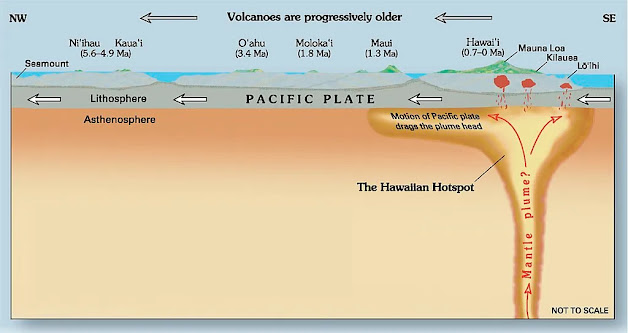
Lo'ihi, now known as Kama'ehaukanaloa, is the next seamount expected to rise as a volcano
out of the the Pacific from the mantle plume, the hotspot of the Hawaiian Islands. Image from National Geographic

   The former name was introduced in 1955 by Dr. Kenneth O. Emery, following a four-day bathymetric (sea-floor topography) survey in 1954 off the south coast of the Island of Hawai'i. The survey was done at the request of the Office of Naval Research and five seamounts were identified.
    Emery, a professor at the University of Southern California, asked Mary Kawena Pukui and Martha Hohu (both Bishop Museum staff), and Dr. Gordon A. Macdonald (HVO Director) to name the seamounts. They selected names based on a short physical description. For the seamount located about 30 miles (19 km) south of the Kīlauea coastline and rising to 3,189 ft (975 m) below sea level, the name Lōʻihi was assigned, meaning long; indeed, this seamount is longer than its neighbors.
    At the time, Dr. Emery speculated that: "There is a high degree of probability that the seamounts are of volcanic origin, and correspondingly that the differences which exist may be indications of the nature of the early stages of a volcano forming well below sea level. If this conclusion is correct then the two shallowest seamounts (Papa'u and Loihi) must be considered parasitic (in the sense of topography not activity) volcanoes on the flank of Kilauea..."
    In other words, Emery interpreted "Loihi" to be a volcanic cone erupted by Kīlauea. However, the seamount was recognized to be an active submarine volcano, and the youngest volcano in the long line of the Hawaiian-Emperor chain, because of earthquake swarms in the 1970s. Kamaʻehuakanaloa's most recent eruption is thought to have been in 1996, when HVO detected 4,377 earthquakes between mid-July and mid-August. Recent oceanographic surveys have also determined that Papa'u is an uplifted fault block on the margin of the Hilina slump, not a volcano.
  Kamaʻehuakanaloa's previous name was descriptive but failed to reflect Hawaiian cultural knowledge. Several mele (chants), orally passed down and documented in writing decades before the 1954 expedition, describe Kamaʻehuakanaloa, an undersea volcano. As explained by Kuʻulei Kanahele of the Edith Kanakaʻole Foundation, Kamaʻehuakanaloa "is a powerful name that invokes the name of Pelehonuamea and her birth out of Kanaloa [the ocean]." 
Color map of submarine volcano and earthquakes
Earthquakes detected by HVO's seismic network in December 2021, with the size of the circles corresponding the earthquake magnitude and the color corresponding to the earthquake depth. The cluster of mostly blue earthquakes are from a persistent swarm about 30 km (19 miles) underneath Pāhala. Kamaʻehuakanaloa's earthquake swarm was mostly 5–13 km (3–8 miles; yellow) below sea level, with a few shallower events. USGS map.

    The new name was unanimously adopted in July 2021 by the Hawaiʻi Board on Geographic Names. The recent violent explosive activity at Hunga Tonga-Hunga Ha'apai volcano, in the South Pacific, has some residents wondering if Kamaʻehuakanaloa has a potential for similar eruptions. We expect that as Hawaiian volcanoes near the surface and emerge, explosive interactions with ocean water may occur, but Kamaʻehuakanaloa is currently too deep underwater. Additionally, because Hawaiian volcanoes have more fluid magma than Hunga Tonga-Hunga Ha'apai, we expect smaller eruptions than the January 14, 2022, Hunga Tonga-Hunga Ha'apai catastrophic blast.
    It will be a millennia before Kamaʻehuakanaloa emerges from Moananuiākea (the Pacific Ocean). The volcano does make its presence known with earthquakes that are occasionally felt on Island of Hawai'i, though.
    Most recently, just before Christmas in the early morning of December 24th, 2021, a magnitude 4.9 earthquake under Kamaʻehuakanaloa caused weak to light shaking felt by at least 29 people from Nāʻālehu to as far north as Kailua Kona and Honomū. In the 2 weeks leading up to this earthquake, over 50 smaller earthquakes had been detected by HVO's earthquake-monitoring network.
    Kamaʻehuakanaloa may be out of sight, but it is not out of mind. It is honored in mele and though it remains under the ocean surface, it continues to occasionally remind us of its presence with earthquakes we can feel on land. In thousands of generations, perhaps our descendants will witness Kamaʻehuakanalo, the "reddish child of Kanaloa," finally emerging and forming a new island.

To read comments, add your own, and like this story, see www.facebook.com/kaucalendar/. See latest print edition at www.kaucalendar.com.

AN EARTHQUAKE MAGNITUDE 6.6 RATTLED the Kermadec Islands in the South Pacific, south of Tonga and northeast of New Zealand on Friday. Pacific Tsunami Warning Center reports the quake happened at approximately 4:46 p.m. There is no tsunami threat to Hawai'i Island and State of Hawai'i, according to Civil Defense, which also stated, "You will be informed should conditions change.Thank you for your attention. This is your Hawaii County Civil Defense Agency."

To read comments, add your own, and like this story, see www.facebook.com/kaucalendar/. See latest print edition at www.kaucalendar.com.

KAʻŪ RESIDENTS CAN DRIVE HOUSEHOLD HAZARDOUS WASTE to Kona and Hilo for free disposal. The events are between 7:30 a.m. and 2:30 p.m. on Saturday, Feb. 5 at Waiākea High School Parking Lot B in Hilo (entry via Po‘okela Parkway, upper driveway off W. Kāwili Street), and on Saturday, Feb. 12, at West Hawai‘i Civic Center Parking Lot (entry via Ane Keohokalole Highway). New location. 
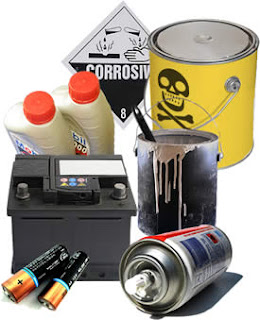
    The County of Hawai‘i’s Department of Environmental Management holds these regular collection events at no charge to the public, so households can dispose acceptable household hazardous waste in a manner that protects both public health and the environment. Acceptable household hazardous waste includes automotive fluids, used batteries, fluorescent bulbs, and pesticides. 
    For a list of acceptable and unacceptable household hazardous waste, visit https://www.hawaiizerowaste.org/recycle/householdhazardous-waste/.  

    The website includes other information on solid waste diversion and recycling. The two events are
for household-generated and self-hauled waste only. Businesses, government agency, non-profit agency and farm wastes are prohibited by law. No latex paint, no electronic waste, and no tires will be accepted. 
     Social/Physical Distancing Rules for Household Hazardous Waste (HHW) Collection Events include remaining in vehicles unless directed by authorized personnel. Prior to arriving at the event, place household waste items in trunk or truck bed. Make sure trunk can be unlocked or opened remotely. Those without have a trunk or truck bed can place in back seat of vehicle. All containers must be disposable and will not be returned. Distancing of six feet and face masks are required.
    With questions, contact Chris ChinChance, Recycling Specialist with the Department of Environmental Management, at (808) 961- 8554, or email recycle3@hawaiicounty.gov.

To read comments, add your own, and like this story, see www.facebook.com/kaucalendar/. See latest print edition at www.kaucalendar.com.


The Pacific Internship Programs for Exploring Science (PIPES) is accepting applications
for its summer 2022 internship program. PIPES is a 10-week undergraduate internship
program May 31 to Aug. 5, offered through University of Hawai'i at Hilo.
The goal is "to connect under-represented undergraduate students, especially those
who are Native Hawaiian or kamaʻāina, to internship opportunities with agencies and
organizations responsible for research, management, and education relating to
environmental issues in Hawaiʻi and throughout the Pacific region. Internships are
paid experiences. Participants may be eligible for additional housing assistance.
For more information, visit: https://hilo.hawaii.edu/uhintern/
The deadline to apply is January 31, 2022.


Thursday, January 27, 2022

Ka‘ū News Briefs, Thursday, Jan. 27, 2022

Hawai'i Pacific Parks Association, which manages funds received from the Department of Motor Vehicles providing this
 style of license plate to Hawai'i drivers, has raised an additional $28,500 through a campaign in December. See more below.

STRENGTHEN COMMUNITY IS GOV. DAVID IGE'S second headline in his State of the State address this week. "To do that, we must first help our struggling families—to malama pono, make things right for them. It means making sure they can secure the very basics of food, shelter, and jobs," said the governor. "That’s why our Department of Human Services developed online applications for SNAP benefits (formerly Food Stamps) and added 32,000 additional families during the pandemic. As many faced job losses, we provided $6.6 billion in unemployment benefits, allowing those who are out-of-work to continue to receive essential income for their families."
    Ige noted that the pandemic caused many workers to lose long-held jobs and pursue new career paths. "To help them, the Department of Labor is rolling out the Hawai’i Career Acceleration Navigator, with its one-stop, online hub to help unemployed workers with new career and training opportunities."
    The pandemic also highlighted the need for childcare for working families and how it is essential for many to continue to hold jobs. "To help them, the state’s Child Care Program Office is distributing nearly $80 million to support access to childcare and provide much needed relief for young families," said the governor. "These funds will support childcare businesses weathering the challenges of the pandemic, and can be used for personnel costs, training, rent, mortgage, utilities, supplies, and equipment related to COVID-19."
'Ohana Zones that serve the homeless and other housing initiatives
were featured in Gov. David Ige's State of the State this week.
Photo from State of Hawai'i
    
    To assist renters and homeowners, "we provided $260 million in emergency rent and mortgage assistance to ensure that no family would be evicted because of the pandemic. Meanwhile, the Hawaiian Homes Commission postponed mortgage payments and provided its beneficiaries with rent and utility assistance. The state is also working closely with the counties to increase the number of affordable rentals on all islands," said Ige. The state is also working closely with the counties to increase the number of affordable rentals on all islands, "including more than a thousand across the neighbor islands since we took office."
    Two years ago, the Legislature created 'Ohana Zones. "Working with the counties, we opened 20 sites across all islands that provide a wide range of services for individuals and families. These projects have assisted over 5,500 homeless individuals statewide, with more than 1,300 placed directly into permanent housing. By increasing funding for the homeless by 68 percent since taking office, we’ve assisted more individuals to, not only find temporary shelter, but lift them out of the vicious cycle of homelessness."
    The governor said the "biggest factor affecting home ownership in Hawai’i is supply.That’s why we set out to build 10,000 new homes by 2020—and we did it! We also expect to build another 3,000 homes by the end of this year."
    Ige said, "We can strengthen our communities in another way too. Given the recent revenue projections, we’re asking the Legislature to return some of those dollars back to taxpayers. We want to issue refund checks of $100 for every taxpayer and for each dependent.For a family of four that means an extra $400. In this way, we’ll also inject $110 million back into our economy, giving it a boost as well."

To read comments, add your own, and like this story, see www.facebook.com/kaucalendar/. See latest print edition at www.kaucalendar.com.
HAWAI'I PACIFIC PARKS ASSOCIATION, which operates visitor
centers at national parks and historic sites, announced a contribution of $28,500 to Volcanoes, Haleakalā, Pu'uhonua o Hōnaunau and Kaloko-Honokōhau National Historic Parks, along with Puʻukoholā Heiau National Historic Site.
    The donation comes from an initiative entitled $10,000 for 10 Years, to celebrate the ten year mark since Hawai'i Pacific Parks Association rebranded to generate more avenues of Park support. The goal of the December campaign was $5,000 in visitor donations that would be matched with another $5,000. However, by mid December, more than triple the 
amount was raised and matched.
    "Donations to national parks help support wildlife programs, youth ranger programs, cultural events, publications, demonstrations and so much more," says a statement from HPPA.
    HPPA is the nonprofit partner of six national parks in Hawai'i and American Samoa. Proceeds from its visitor center park stores and online ship have contributed over $20 million in support to parks since 1933. See more at https://shop.hawaiipacificparks.org/

To read comments, add your own, and like this story, see www.facebook.com/kaucalendar/. See latest print edition at www.kaucalendar.com.

Roger Bong, founder of Aloha Got Soul record label and vinyl record shop, hosts the new Mauka to Makai radio show on
Sundays, to be heard on HPR1 at 88.8 FM in Ka'u and online. Photo from Aloha Got Soul

MAUKA TO MAKAI IS THE NEW HAWAIIAN MUSIC SHOW on Hawai'i Public Radio, the broadcast beginning Sunday, Feb. 6. The weekly program explores the rich musical diversity of the Hawaiian Islands and the artists who call Hawai'i home. Mauka to Makai will air every Sunday from 4 p.m. to 5 p.m. on HPR1 at 88.8 FM in Ka'u and online.
    Hosted by Roger Bong, creator of Aloha Got Soul, a record label and vinyl record shop that celebrates new music and rare reissues from Hawaiʻi, Mauka to Makai completes HPR's Hawaiian music lineup on Sundays, which showcases Hawaiian and local music from its beginnings to now, exploring the musical diversity as well as the depth of history and songwriting that makes these islands unique.
    Bong shares, "I'm excited to bring more local music to HPR's Sunday programming, alongside the excellent Hawai'i Kulāiwi and Kanikapila Sunday shows. With Mauka to Makai, my hope is to help listeners discover the rich, musical diversity of our islands by exploring all genres and generations, from jazz to rock, funk and soul, electronic, Hawaiian music, and more."
    Mauka to Makai takes the place of Applause in a Small Room, a showcase of music recorded live in HPR's Atherton Studio, which has been paused due to the COVID pandemic.
    In addition to radio broadcast in Ka`u at KAHU 88.8, HPR's programming can be streamed via smart speaker, the HPR website, or on the HPR mobile app. Updated program schedules are available online at hawaiipublicradio.org.

To read comments, add your own, and like this story, see www.facebook.com/kaucalendar/. See latest print edition at www.kaucalendar.com.

HAWAIIAN ELECTRIC WILL GIVE BACK $2 MILLION IN CREDITS TO CUSTOMERS "who have struggled to pay their electric bill during the COVID-19 pandemic," says a statement from the utility on Thursday. The Kokua Fund Bill Credit Program will automatically provide a one-time credit of $90 to past-due balances for about 22,000 residential and business customers by Jan. 31.
HECO President and CEO Shelee Kimura
    
    “Our priority during the pandemic has been to keep customers connected,” said Hawaiian Electric President and CEO Shelee Kimura. “Many people have been affected by the pandemic and we have designed this program to reach as many as we can, especially those for whom this credit will be the most meaningful. No application is necessary, as we envisioned a quick, simple way to provide some relief for qualified customers in the new year.”          The credits will be automatically applied to past-due balances for about 22,000 active residential and business accounts that were at least 30 days past due as of Dec. 31, 2021, with a minimum current past-due balance of at least $200. For more information, go to hawaiianelectric.com/kokuafund.
    Hawaiian Electric explained that the The Kokua Fund bill credit uses funds from company shareholders – not other customers – to help Hawaiian Electric residential and business customers on O'ahu, Hawai'i Island and in Maui County with qualifying balances. Not every customer will qualify for the credits, which are meant to supplement other pandemic-related financial assistance programs. 
    To learn more about available assistance administered by government agencies or nonprofits, go to hawaiianelectric.com/COVID19. Aloha United Way’s 2-1-1 also has additional information and resources available on food, shelter, financial assistance, elderly care, financial counseling/education and disability services.
    This is the second program Hawaiian Electric has funded to help utility customers who were financially affected by the pandemic. Hawaiian Electric was the founding sponsor of Aloha United Way’s Hawai'i Utility Bill Assistance Program in 2021, pledging $2 million in shareholder money from its parent company, HEI, to help households pay electric, water, sewer and gas bills.
    Hawaiian Electric continues to offer special payment arrangement options for past-due customers. Customers may go to hawaiianelectric.com/paymentarrangement for more information.

To read comments, add your own, and like this story, see www.facebook.com/kaucalendar/. See latest print edition at www.kaucalendar.com.

HAWAI'I HAS BEEN THE SAFEST U.S. PLACE DURING THE PANDEMIC, according to a study released by WalletHub this week. Rankings based on available data on Wednesday, Jan. 26 show Hawai'i with second least death rate, fifth least transmission rate, ninth least hospitalization rate and 11th in the
number of people vaccinated.
    The nationwide summary from WalletHub: "As the U.S. continues its efforts to overcome the COVID-19 pandemic and the surging omicron variant, staying safe is one of Americans’ top concerns. Safety is
also essential for getting the economy back on track, as the lower COVID-19 transmission and deaths are in a state, the fewer restrictions there will be and the more confidence people will have to shop in person. While the country has mostly reopened, increasing the percentage of people who have been vaccinated and received booster doses is key to getting back to life as normal. The good news is that around 64% of the population has been fully vaccinated against COVID-19 as of January 25. Some states are already safer than others, though, based on how well they have kept the pandemic under control and how much they are vaccinating."
    To view the full report, visit: https://wallethub.com/edu/safest-states-during-covid/86567. The top ten places in the U.S. for safety during COVID, according to WalletHub, are: Hawai'i, California, Virginia, District of Columbia, Maine, Oregon, Florida, Vermont, New Hampshire and Maryland.  Metrics used for the rankings include data set includes the rates of COVID-19 transmission, positive testing, hospitalizations and death, as well as the share of the eligible population getting vaccinated.

To read comments, add your own, and like this story, see www.facebook.com/kaucalendar/. See latest print edition at www.kaucalendar.com.


The Pacific Internship Programs for Exploring Science (PIPES) is accepting applications

for its summer 2022 internship program. PIPES is a 10-week undergraduate internship

program May 31 to Aug. 5, offered through University of Hawai'i at Hilo.

The goal is "to connect under-represented undergraduate students, especially those

who are Native Hawaiian or kamaʻāina, to internship opportunities with agencies and

organizations responsible for research, management, and education relating to

environmental issues in Hawaiʻi and throughout the Pacific region. Internships are

paid experiences. Participants may be eligible for additional housing assistance.

For more information, visit: https://hilo.hawaii.edu/uhintern/ 

The deadline to apply is January 31, 2022.

See archives of The Ka`u Calendar at
www.kaucalendar.com and find the
monthly print copy in mailboxes from 
Volcano through Ocean View.