 |
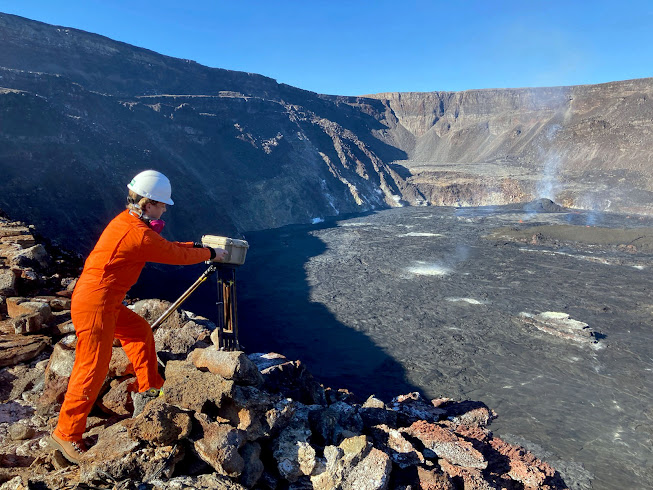
| A new video and story on the the history of the last ten years at Kīlauea Volcano is available through Volcano Awareness Month with numerous presentations that can be read and seen at https://www.usgs.gov/observatories/hvo/news |
Sustainable Energy Hawai'i Chair Richard Ha said, “I’ve spent years studying what’s happening with oil, and it’s clear that within ten years, we’re really going to start seeing the consequences of declining fossil fuels. Prices of everything will keep going up, and that will put pressure on what I call the ‘rubbah slippah’ folks. That’s those of us out here who are just trying to raise our families. We can’t afford endless discussions about what to do about it. We need to make decisions and changes now.”
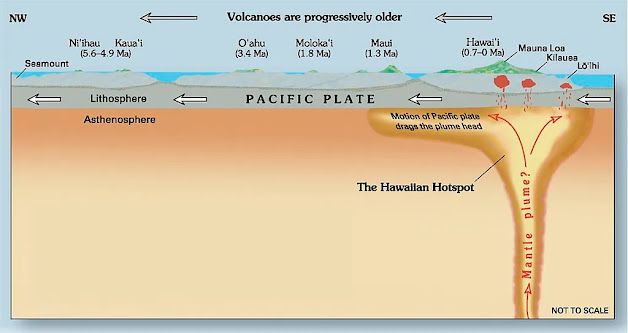
Ha, who is known as a successful farmer and businessman on Hawai'i Island, contends that the solution is geothermal energy. "Hawai‘i Island is lucky to be among the few locations in the world with prime geothermal conditions. Scientists tell us that Hawai‘i will be over the 'hot spot' and have geothermal activity for more than a million years. By creating and using energy from our geothermal resources, Hawai‘i’s people will be able to achieve independence from gas and oil imports,
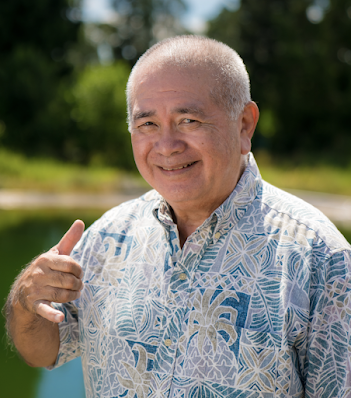 |
| Richard Ha advocates for more geothermal. |
Speakers and panelists at the Feb. 5 webinar include Ha; SEH board member Peter Sternlicht; Dr. Donald Thomas of the University of Hawai‘i Manoa’s School of Ocean & Earth Science and Technology; Dr. Nicole Lautze of the University of Hawai‘i Manoa’s Hawai‘i Ground Water & Geothermal Resource Center; Mike Kaleikini, Puna Geothermal Venture; Mililani Trask, Attorney; and State Rep. Nicole Lowen.
Ha said he will provide an overview, "talk about how using more geothermal energy can provide base power to keep our electric utility dependable and affordable, let us create a clean, hydrogen economy, and help keep Hawai‘i affordable, so our children and grandchildren don’t have to leave the islands to raise their families."
Sternlicht will broadly discuss oil and energy-related natural resources, their role in everyone's lives over the past 150 years, where these stand right now, and "how much longer we’ll be able to rely on them," says the agenda for the program.
Thomas will give a historical perspective on the island’s geothermal resource from its earliest days to today.
Thomas will give a historical perspective on the island’s geothermal resource from its earliest days to today.
Lautze, as Director of the Hawai‘i Groundwater and Geothermal Resources Center at UH Manoa, leads a team of senior scientists in developing an updated geothermal resource assessment for the state of Hawai‘i. She will discuss collecting and compiling geological, geochemical, and geophysical data across the state and developing and implementing a statistical methodology that integrates the data into a geothermal resource probability map.
Kaleikini is Senior Director of Hawai‘i Affairs at Ormat and a former Puna Geothermal Venture plant and operations manager. He will talk about where Hawai‘i Island is with geothermal energy today, how it’s regulated, where geothermal fields are located now, what development options might be in the future, and what a timeline might look like.
 Trask, Hawai‘i Island attorney and kupuna, will discuss her extensive research, knowledge, and experience of geothermal operations.
State Rep. Nicole Lowen (District 6), Chair of the House Energy and Environmental Committee, will discuss policy and regulatory considerations and relevant measures.
A second webinar, planned for Feb. 19, will cover obstacles to geothermal energy deployment and various strategies to address them.
Other future SEH webinars will focus on improving the economy and lifestyle of the island’s people now and in the future. Future events will discuss Maunakea and a proposed Culture and Science Center Above the Clouds.
“You’ll come away from our webinars knowing a lot more about the decisions we need to make now to improve life for our future generations,” said Ha.
Sustainable Energy Hawaii (formerly Big Island Community Coalition) is a grassroots 501(c)3 non-profit "dedicated to improving the quality of life and security of life for Hawai‘i Island residents. It is an action-oriented advocacy group dedicated to raising public awareness and stimulating the political will to enable change. At Sustainable Energy Hawaii, we understand that the price of energy is the common factor affecting the cost of everything in our state. Through that lens, our vision is a future of affordable energy for Hawai‘i, produced using only local renewable resources. This will keep money in our local economy, producing economic equity, energy independence, and prosperity."
Kaleikini is Senior Director of Hawai‘i Affairs at Ormat and a former Puna Geothermal Venture plant and operations manager. He will talk about where Hawai‘i Island is with geothermal energy today, how it’s regulated, where geothermal fields are located now, what development options might be in the future, and what a timeline might look like.
State Rep. Nicole Lowen (District 6), Chair of the House Energy and Environmental Committee, will discuss policy and regulatory considerations and relevant measures.
A second webinar, planned for Feb. 19, will cover obstacles to geothermal energy deployment and various strategies to address them.
Other future SEH webinars will focus on improving the economy and lifestyle of the island’s people now and in the future. Future events will discuss Maunakea and a proposed Culture and Science Center Above the Clouds.
“You’ll come away from our webinars knowing a lot more about the decisions we need to make now to improve life for our future generations,” said Ha.
Sustainable Energy Hawaii (formerly Big Island Community Coalition) is a grassroots 501(c)3 non-profit "dedicated to improving the quality of life and security of life for Hawai‘i Island residents. It is an action-oriented advocacy group dedicated to raising public awareness and stimulating the political will to enable change. At Sustainable Energy Hawaii, we understand that the price of energy is the common factor affecting the cost of everything in our state. Through that lens, our vision is a future of affordable energy for Hawai‘i, produced using only local renewable resources. This will keep money in our local economy, producing economic equity, energy independence, and prosperity."
See more on geothermal and other alternative energy sources at www.sustainableenergyhawaii.org.
THE LAST TEN YEARS OF HISTORY OF KĪLAUEA VOLCANO is a new video called Video Throwbacks of the Past Decade at Kīlauea. It was released Thursday, during January's Volcano Awareness Month. The 23-minute presentation by USGS Hawaiian Volcano Observatory geologist Matt Patrick feathers highlights of activity, including roiling lava lakes, fountaining fissures, ocean entries, and fast-moving lava flows.
Volcano Awareness month is spearheaded by the USGS–Hawaiian Volcano Observatory, in cooperation with Hawai‘i Volcanoes National Park, Hawai'i County Civil Defense Agency, and University of Hawai‘i at Hilo.
The Sayre Foundation is a volunteer-run, non-profit organization providing essential equipment and training to Hawai'i County Fire Department. It was founded by the family of Daniel Sayre, who died, falling off the Pololu Valley Trail. The Foundation honors efforts by the county rescue crew to save him and its need for more rescue equipment.
Over $1 million in donations and pledged equipment have been raised since the Sayre Foundation inception in 1997. The Sayre Foundation website says, "100% of our donations go to funding rescue equipment and training vital to saving lives."
“Charitable giving remains a cornerstone of the Mitsubishi Electric Championship at Hualālai, and this past year was no different,” said Tournament Manager Kelly Fliear. “We are thankful for the donations that have impacted our community and look forward to continue making an impact in 2022.” Since the Mitsubishi Electric Championship moved to Hualālai Golf Course in 1997, the tournament has donated $1.65 million to charity. In further support of communities surrounding Mitsubishi Electric’s PGA TOUR Champions tournaments, contributions also will be made to Blessings in a Backpack. At both title events, guests will pack 500 backpacks for local elementary schoolchildren who might be experiencing food insecurity, as almost 1 in 4 children struggle with access to meals.
"These initiatives further Mitsubishi Electric’s commitment to charity through its golf partnership," says a statement from the tournament.
Mitsubishi Electric is an official marketing partner of the PGA TOUR as well as the title sponsor of two PGA TOUR Champions events, The Mitsubishi Electric Championship at Hualālai and the Mitsubishi Electric Classic. Through both PGA TOUR Champions events, more than $5 million has been donated to local charities.
The Kaʻū Calendar has worked with the Mitsubishi Electric Championship, assisting with the PGA event's pairing guides, posters and other publications, since 1997.
 KA'Ū BEAT PAHOA IN GIRLS BASKETBALL on Saturday. The home game saw the final score at Trojans 39, Daggers 36. The first quarter saw a tie of 7-7, followed by Pahoa 20, Ka'u 18. Kaʻū came back with 8-5 in the third and 11-4 in the fourth.
To read comments, add your own, and like this story, see www.facebook.com/kaucalendar/. See latest print edition at www.kaucalendar.com.
 |
| USGS geologist Matt Patrick's film is one of a series of presentations during Volcano Awareness Month. See https://www.usgs.gov/observatories/hvo/news |
A statement on the film says, "The past ten years have seen historic changes on Kīlauea volcano, spanning from the summit, down the East Rift Zone, and to the coast. Throughout this time, USGS Hawaiian Volcano Observatory geologists have been documenting the activity with high-resolution video, which provides detail as to eruption processes or allows for comparison of long-term changes over time."
Talks and films this month are available online. They include: Kīlauea Erupts Twice in 2021!; The Olivine Time Capsule, 2021 Eathquake Activity in Review; Kīlauea's Recent explosive History; Three-Diminsional Mapping of Kīlauea; Ups and Downs of Kīlauea's Recent Gas Emissions; Mauana Loa Storymap; HVO's Ongoing Recovery from Kīlauea's 2018 Events; A New Chapter in Deformation at Hawai'i's Volcanoes; Mauna Loa: Are You Ready for the Next Eruption?
Read the presentations and see the images at https://www.usgs.gov/observatories/hvo/news.
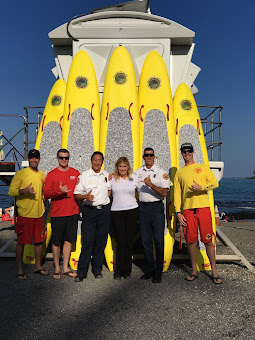 |
| Rescue surfboard purchased through funding from Mitsubishi Electric and Daniel R. Sayre Memorial Foundation |
To read comments, add your own, and like this story, see www.facebook.com/kaucalendar/. See latest print edition at www.kaucalendar.com.
THE DANIEL R. SAYRE MEMORIAL FOUNDATION, which supports Hawai'i Island's first responders, received a grant from the PGA golf tournament that Mitsubishi Electric sponsored at Hualālai Jan. 20-22. Some of the equipment purchased with this annual donation can be seen in Kaʻū with lifeguards and other first responders.
 |
Over $1 million in donations and pledged equipment have been raised since the Sayre Foundation inception in 1997. The Sayre Foundation website says, "100% of our donations go to funding rescue equipment and training vital to saving lives."
“Charitable giving remains a cornerstone of the Mitsubishi Electric Championship at Hualālai, and this past year was no different,” said Tournament Manager Kelly Fliear. “We are thankful for the donations that have impacted our community and look forward to continue making an impact in 2022.” Since the Mitsubishi Electric Championship moved to Hualālai Golf Course in 1997, the tournament has donated $1.65 million to charity. In further support of communities surrounding Mitsubishi Electric’s PGA TOUR Champions tournaments, contributions also will be made to Blessings in a Backpack. At both title events, guests will pack 500 backpacks for local elementary schoolchildren who might be experiencing food insecurity, as almost 1 in 4 children struggle with access to meals.
"These initiatives further Mitsubishi Electric’s commitment to charity through its golf partnership," says a statement from the tournament.
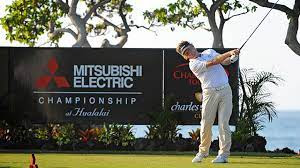 |
| Mitsubishi Electric Championship at Hualalai recently completed and donated to the Daniel Sayre Foundation. Photo from PGA |
The Kaʻū Calendar has worked with the Mitsubishi Electric Championship, assisting with the PGA event's pairing guides, posters and other publications, since 1997.
Donate and find out more about the Daniel R. Sayre Memorial Foundation at https://www.danielsayrefoundation.org/
To read comments, add your own, and like this story, see www.facebook.com/kaucalendar/. See latest print edition at www.kaucalendar.com.
Scoring big for Kaʻū were Heidi Vidal with 16, Tyra Wong-Yuen, with 10, Grace Smith with 6, Nalani Blanco-Louis with 4 and Riley-Ann Brown with 3. For Pahoa, Florrie Mei Tagabi scored 26, Azariya Brown 4, Kuuipo Silva 3 and Jaylyn Kaawaloa-Aldon 3.
To read comments, add your own, and like this story, see www.facebook.com/kaucalendar/. See latest print edition at www.kaucalendar.com.
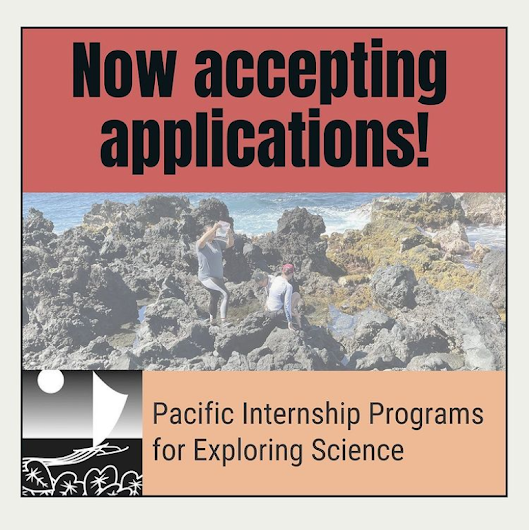


The Pacific Internship Programs for Exploring Science (PIPES) is accepting applications
for its summer 2022 internship program. PIPES is a 10-week undergraduate internship
program May 31 to Aug. 5, offered through University of Hawai'i at Hilo.
The goal is "to connect under-represented undergraduate students, especially those
who are Native Hawaiian or kamaʻāina, to internship opportunities with agencies and
organizations responsible for research, management, and education relating to
environmental issues in Hawaiʻi and throughout the Pacific region. Internships are
paid experiences. Participants may be eligible for additional housing assistance.
For more information, visit: https://hilo.hawaii.edu/uhintern/
The deadline to apply is January 31, 2022.