|
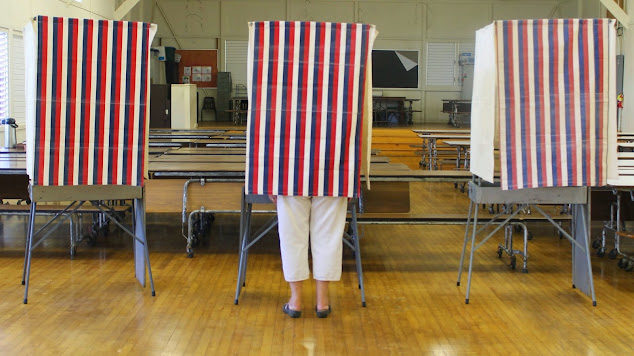
It's Time to Vote State House of Representative member Jeanne Kapela who is running for reelection, this time to represent all of Kaʻū and into Volcano and Kona, issued a statement on Sunday, urging everyone to cast their votes through ballots received in the mail. Ballots are due Nov. 8 and the USPS urges people to mail them by Nov. 3. They can also be dropped off at Nāʻālehu Police Station. Running against Kapela are Republican Lohi Goodwin and Libertarian Michael Last. Photo from Kapela |
Chief scientist at the Hawaiian Volcanoes Observatory, Ken Hon, painted the big picture, explaining that the alert levels for the mountain have vacillated between green (normal) and yellow (advisory). According to Hon, the mountain was in the yellow/advisory for much of 2015 and 2016, then in the green/normal for much of 2017 and 2018, and has been back in the yellow since 2019. The next stage would be watch (orange), indicating a high likelihood of an eruption) and then red warning (red); eruption imminent.
 |
| Mauna Loa, the "volcano in your back yard," was cause for concern at a Civil Defense and USGS meeting in Ocean View on Saturday. Photo by Peter Bosted |
Scientist Frank Trusdell presented a slide talk, along with more facts about the history of the mountain and what can be expected should an eruption occur.
He explained that the mountain has erupted 33 times since 1832, and that the lava from half of those events remained in the summit caldera. Once the lava leaves the caldera the flow times vary according to the terrain. The 1950 flow produced lava that raced over precipitous terrain, reaching the ocean in a mere three hours, while the 1980 flow took 280 days of flowing over almost level land to reach into Hilo.
Trusdell presented a series of maps showing where lava from past eruptions had flowed, and also maps forecasting where lava may flow in the future, depending on which part of the Southwest Rift Zone is
 |
| Ocean View Community Center filled up with residents, Civil Defense representatives and volcano scientists to prepare for a possible eruption. Photo by Peter Bosted |
While the mountain is very heavily instrumented, Trusdell emphasized that there was no way to accurately predict when or where the eruption would happen as the mountain changes in its strength and resilience. He explained that scientists are able to determine that lava is moving within the mountain, inflating it in all directions much like a balloon. Just as it would be hard to predict exactly when too much air would burst a balloon, so scientists cannot know exactly how much lava can be moved into the mountain before it fails and erupts.
 |
| Numerous illustrations about Mauna Loa and its lava flow potential were presented to the public. Photo by Peter Bosted |
Seismicity always ramps up before an eruption, noted Trusdell, adding that there has been a spurt of small earthquakes in the past three weeks - over 100 events on some days. Prior to the eruptions of 1975 and 1984 the mountain swelled due to the influx of magma. Trusdell presented several maps and graphs as evidence that the mountain is currently swelling.
The county Civil Defense administrator, Talmadge Magno, urged residents to go to the County web site and sign up for alerts. Each resident can choose whether they want to be alerted via text or email or phone. He urged residents to not select all of the options. He added that residents should listen to their radios for news, but when a resident pointed out that Kaʻū needs a radio station that can be received in Ocean View, he replied “we are working on that.”
The county Civil Defense administrator, Talmadge Magno, urged residents to go to the County web site and sign up for alerts. Each resident can choose whether they want to be alerted via text or email or phone. He urged residents to not select all of the options. He added that residents should listen to their radios for news, but when a resident pointed out that Kaʻū needs a radio station that can be received in Ocean View, he replied “we are working on that.”
Magno advised residents to pack a “Go Bag,” which should contain all that is needed to survive and also put in claims for losses to their insurance companies.
The Ocean View Community Center is not recognized as a shelter because it has large windows that could fail in a hurricane. However, Magno said, the community could designate it as a shelter. The closest official county shelter is at Pāhala.He also pointed out that OV has one ambulance and one fire truck, and that the town’s emergency personnel will be under the same evacuation orders as other residents.
An audience member drew loud exclamations of agreement and applause when she said: “So, we are all on our own, right?”
After the meeting ended, HVO scientists and county staff remained in the community center to discuss posters and maps with residents, and answer questions.
HVO scientists and County personnel will again meet with Kaʻū residents this Thursday at the Robert Herkes District Gym in Pāhala at 5 p.m.
The Ocean View Community Center is not recognized as a shelter because it has large windows that could fail in a hurricane. However, Magno said, the community could designate it as a shelter. The closest official county shelter is at Pāhala.He also pointed out that OV has one ambulance and one fire truck, and that the town’s emergency personnel will be under the same evacuation orders as other residents.
An audience member drew loud exclamations of agreement and applause when she said: “So, we are all on our own, right?”
After the meeting ended, HVO scientists and county staff remained in the community center to discuss posters and maps with residents, and answer questions.
 |
| Hawai'i County Civil Defense Director Talmadge Magno recommended that people in Ocean View prepare a Go Bag for a possible Mauna Loa eruption. Another meeting will be at 5 p.m. Thursday at the Robert Herkes District Gym in Pāhala. Photo by Peter Bosted |
HVO scientists and County personnel will again meet with Kaʻū residents this Thursday at the Robert Herkes District Gym in Pāhala at 5 p.m.
To read comments, add your own, and like this story, see www.facebook.com/kaucalendar. See latest print edition at wwwkaucalendar.com. See upcoming events at https://kaunewsbriefs.blogspot.com/2022/04/upcoming-events-for-kau-and-volcano.html.
HAWAI'I WILDLIFE CENTER HOSTS THREE THOUSAND BIRDS AND BATS IN TEN YEARS, garnering a Citizen Conservation Award last week from the state Department of Land & Natural Resources. The DLNR statement notes that "On any given day, the Hawai‘i Wildlife Center has 20-30 patients. Many of the injured birds and bats that arrive here were hurt by things people created, like golf balls, power lines, cars, guns, and poisons. Add cats, dogs, mongoose, and rats to the long list of things that threaten both forest birds and seabirds."
HWC President and Founder Linda Elliott said that more than a decade ago, she became concerned Hawai‘i was the only state in the country without a wildlife response center for downed birds. “Here we were, working in the endangered species capitol of the world and we lacked a care resource for our native wildlife. In the 1990’s it became my mission to fill this need. Now ten years after opening, we have treated 3,000 feathery patients, and a few bats."
On Friday, DLNR Chair Suzanne Case presented HWC with the DLNR & You Citizen Conservationist Award "for their tireless, professional efforts. Though the wildlife center is on Hawai‘i Island, injured birds come from all the other main islands. Each year, from O‘ahu alone, HWC responds to 600-700 Wedgetail shearwaters, with those needing longer-term care being flown to the main Kap‘au
facility for assessments, rehabilitation if necessary, and release,” Case commented.
Right now, and through mid-December is the time of year when shearwaters are downed. Demonstrating the center’s statewide reach and influence, the Hawai'i Wildlife Center founder said, “The shearwater fall-out season keeps us really busy, as does the manu-o-Kū program in urban Honolulu. Also known as white or fairy terns, orphans that can’t be returned to their nests, are flown to us and then in partnership with the Honolulu Zoo, we do a soft release.”
Stories of treatment, care, rehabilitation, and release are boundless. In August, HWC veterinarian Dr.
Juan Guerra joined Raymond McGuire of the DLNR Division of Forestry & Wildlife to release a pair of nēnē (the native Hawaiian goose and state bird) into the Hawai‘i Island Nēnē Sanctuary. Guerra commented, “Our ultimate goal is to get birds back out in the wild. Each time we release birds it’s a renewal to my spirit. We have good days and bad days at the center. Some days we have to help a bird by ending their suffering. Other days we get to experience the triumph of release.”
McGuire added, “Even with nēnē that have been through rehab, whether it was a golf ball strike to a leg, or an injured or amputated wing…in which case they’d have to be euthanized…we’re lucky to have the combination of HWC’s hospital and DOFAW’s predator-proof sanctuary where birds can be released to safely live out their lives in their natural habitat.”
Elliott noted that last year 88 percent of the birds and bats cared for at the center were either released or are in permanent care. “In wildlife rehabilitation, typically success rates can be around 50 percent. It depends on the health of the animal. The sooner it’s found, the sooner we get it into care, the better the prognosis.”
In addition to the hospital building and visitor information exhibits, the grounds have numerous aviaries. In one is three-year-old Maka‘io, an 'io, the native Hawaiian hawk. He arrived at HWC with an eye injury and a wing injury. The wing healed, but he’s blind in the right eye.
Guerra explained, “This bird can fly. Birds of prey, like ‘io, need to have binocular vision so they don’t miss. They don’t do well in the wild if they can’t see with both eyes.” He exercises Maka‘io daily to prepare him for moving into his own aviary in the future, where thanks to his training with the good doctor, he’ll be able to fly wherever he wants. “We want to provide him the best life possible and as much opportunity to make his own choices,” Guerra said.
“That is the overriding philosophy and result of everything the Hawai‘i Wildlife Center does,” commented the DLNR chair. “We are proud to have them as partners in the vital work of caring for our native wildlife.”
On Friday, DLNR Chair Suzanne Case presented HWC with the DLNR & You Citizen Conservationist Award "for their tireless, professional efforts. Though the wildlife center is on Hawai‘i Island, injured birds come from all the other main islands. Each year, from O‘ahu alone, HWC responds to 600-700 Wedgetail shearwaters, with those needing longer-term care being flown to the main Kap‘au
facility for assessments, rehabilitation if necessary, and release,” Case commented.
Right now, and through mid-December is the time of year when shearwaters are downed. Demonstrating the center’s statewide reach and influence, the Hawai'i Wildlife Center founder said, “The shearwater fall-out season keeps us really busy, as does the manu-o-Kū program in urban Honolulu. Also known as white or fairy terns, orphans that can’t be returned to their nests, are flown to us and then in partnership with the Honolulu Zoo, we do a soft release.”
Stories of treatment, care, rehabilitation, and release are boundless. In August, HWC veterinarian Dr.
 |
| Nēnē is one of the species assisted by the Hawai'i Wildlife Center, returning them to the wild after caring for them following illness and injuries. Photo from DLNR |
McGuire added, “Even with nēnē that have been through rehab, whether it was a golf ball strike to a leg, or an injured or amputated wing…in which case they’d have to be euthanized…we’re lucky to have the combination of HWC’s hospital and DOFAW’s predator-proof sanctuary where birds can be released to safely live out their lives in their natural habitat.”
Elliott noted that last year 88 percent of the birds and bats cared for at the center were either released or are in permanent care. “In wildlife rehabilitation, typically success rates can be around 50 percent. It depends on the health of the animal. The sooner it’s found, the sooner we get it into care, the better the prognosis.”
 |
| Maka'io is a hawk, now blind and living as an ambassador of his species at Hawai'i Wildlife Center. DLNR Photo |
Guerra explained, “This bird can fly. Birds of prey, like ‘io, need to have binocular vision so they don’t miss. They don’t do well in the wild if they can’t see with both eyes.” He exercises Maka‘io daily to prepare him for moving into his own aviary in the future, where thanks to his training with the good doctor, he’ll be able to fly wherever he wants. “We want to provide him the best life possible and as much opportunity to make his own choices,” Guerra said.
“That is the overriding philosophy and result of everything the Hawai‘i Wildlife Center does,” commented the DLNR chair. “We are proud to have them as partners in the vital work of caring for our native wildlife.”
To read comments, add your own, and like this story, see www.facebook.com/kaucalendar. See latest print edition at wwwkaucalendar.com. See upcoming events at https://kaunewsbriefs.blogspot.com/2022/04/upcoming-events-for-kau-and-volcano.html
IMAGINE A DAY WITHOUT WATER. Gov. David Ige declared Oct. 21 the Imagine a Day Without Water. It’s part of a national effort to raise awareness about the importance of water in daily lives and to commit to ensuring a sustainable water future. DLNR Commission on Water Resource Management and Division of Forestry & Wildlife are partnering with city, state, and county government agencies to bring attention to the value of water.
The governor said: “An aging water infrastructure and the prospect of a drier climate threaten our natural water supply. The Imagine a Day without Water campaign recognizes the importance of protecting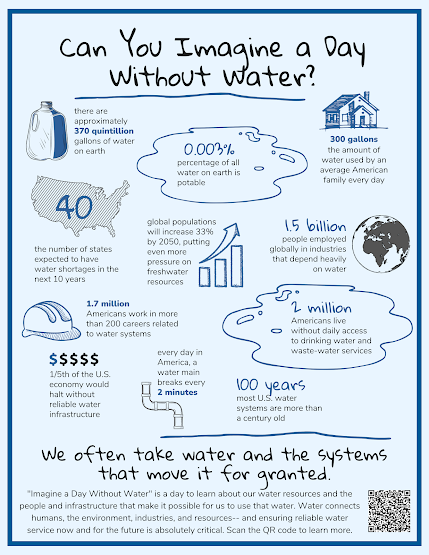 our fresh water and the need for maintaining the critical infrastructure that allows our residents to have reliable access to clean water service.”
The statement from the governor on Imagine a Day Without Water says, "A lack of fresh water is also a public health and safety crisis. Much of Hawai‘i’s water infrastructure is aging and in need of repair or replacement. Without investment, water and wastewater systems will continue to deteriorate, leading to further serious consequences to everyone’s health and the economy.
“We need to be alert in our efforts to cautiously plan, monitor, regulate, and manage our streams and aquifers,” DLNR Chair Suzanne Case said. “A big challenge is that many times the demand for water is in areas where the water supplies are less abundant.”
The organizers of the event said in a statement, "While water infrastructure is important, protecting Hawai‘i’s only source of freshwater is just as important. Maintaining healthy native forests and watersheds and ensuring the sustainability of aquifers and streams will enable public water systems to continue to provide life giving water to residents across the state."
The example of what's happening on O'ahu with clean water was given in the statement: “The Red Hill fuel release is threatening current and future drinking water,” Honolulu Board of Water Supply Manager & Chief Engineer Ernie Lau said. “Emergencies like this highlight the essential need for water.”
"Imagine a Day Without Water is an opportunity to share why water is important to you, your business, and your community. Please take a few moments to share your thoughts on why you value and cherish water in your lives with a loved one, friend, or associate," said the governor's statement.
The governor said: “An aging water infrastructure and the prospect of a drier climate threaten our natural water supply. The Imagine a Day without Water campaign recognizes the importance of protecting

The statement from the governor on Imagine a Day Without Water says, "A lack of fresh water is also a public health and safety crisis. Much of Hawai‘i’s water infrastructure is aging and in need of repair or replacement. Without investment, water and wastewater systems will continue to deteriorate, leading to further serious consequences to everyone’s health and the economy.
“We need to be alert in our efforts to cautiously plan, monitor, regulate, and manage our streams and aquifers,” DLNR Chair Suzanne Case said. “A big challenge is that many times the demand for water is in areas where the water supplies are less abundant.”
The organizers of the event said in a statement, "While water infrastructure is important, protecting Hawai‘i’s only source of freshwater is just as important. Maintaining healthy native forests and watersheds and ensuring the sustainability of aquifers and streams will enable public water systems to continue to provide life giving water to residents across the state."
The example of what's happening on O'ahu with clean water was given in the statement: “The Red Hill fuel release is threatening current and future drinking water,” Honolulu Board of Water Supply Manager & Chief Engineer Ernie Lau said. “Emergencies like this highlight the essential need for water.”
"Imagine a Day Without Water is an opportunity to share why water is important to you, your business, and your community. Please take a few moments to share your thoughts on why you value and cherish water in your lives with a loved one, friend, or associate," said the governor's statement.
To read comments, add your own, and like this story, see www.facebook.com/kaucalendar. See latest print edition at wwwkaucalendar.com. See upcoming events at https://kaunewsbriefs.blogspot.com/2022/04/upcoming-events-for-kau-and-volcano.html

 |