About The Kaʻū Calendar

Sunday, November 11, 2012

Ka`u News Briefs Nov. 11, 2012

Large pelagic fish like ahi and swordfish are expected to decline in Hawaiian waters with plankton moving north as the Pacific warms.
Photo from NOAA


FEWER TUNA AND SWORDFISH may be frequenting Hawaiian waters in the future, according to National Oceanic and Atmospheric Administration scientists. Research by Phoebe Woodworth-Jefcoats and Jeff Polvina predicts a decline in large pelagic fish by as much as 75 percent in the central Pacific Ocean north of the equator. A story published Friday in Civil Beat says, “This could mean far fewer fish to be caught and sold in local markets and higher prices for consumers. The Hawai`i commercial fishing industry alone generates roughly a half-billion dollars in sales annually and provides 11,000 jobs, according to a recent report. The Aloha State’s recreational fishery adds another 7,000 jobs and more than $773 million in total sales.”
Honolulu Fish Co. sends fresh catch all over the world.
   The Nathan Eagle story points to a conclusion of researcher Polvina: “The fishing industry is generally more concerned with short-term impacts from weather changes like those caused by El Nino. This is a long-term slow change on a decadal basis. It’s sort of like rust on your car that is slowly going along."
     Polvino told Civil Beat that a decline in tuna and swordfish near the Hawaiian Islands brings up a need to plan for a fishing fleet that could reach farther into the Pacific and also brings up food security issues.
     The reason for the prediction that large, pelagic, ocean-roaming fish will become less plentiful near Hawai`i, the researchers explained, is that the density of phytoplankton and zooplankton in the water is expected to decrease with increased ocean acidification and higher water temperaturees. With global warming, the phytoplankton and zooplankton are expected to increase north of Hawai`i and big fish could become more plentiful off the coast of such places as California as the water gets warmer.
     The story quotes state Board of Land & Natural Resources chief William Aila, saying, “The whole food chain is primarily dependent on phytoplankton and zooplankton. So if the zooplankton and the phytoplankton cannot get their skeletons in place, then they don’t exist. And if they don’t exist, everything that depends on them on up no longer exists.”
     The Civil Beat story also summarizes state aquatic biologist Don Heacock’s take on the issue. “Especially given fishing’s role in Hawai`i’s culture, he said, it’s important to do everything possible to prepare for the effects of climate chainge. He said this effort could start on land by doing things like accounting for sea-level rise in planning, taking steps to control erosion and working harder to become food self-sufficient.” See more at www.civilbeat.com.

PROPOSED PUBLIC LAND DEVELOPMENT CORP. rules go to a hearing this Tuesday, Nov. 13. However, no hearings are set for the neighbor islands where many citizens last summer urged government to abolish the PLDC. The new agency under the Department of Land & Natural Resources is designed to set up partnerships with private entities to use state land for economic development to create more revenue for the DLNR.
      However, fearing an erosion of home rule and overdevelopment of publically owned lands under the stewardship of the state, the Hawai`i and Kaua`i county councils recently passed resolutions asking the 2013 Legislature to get rid of the law that created the PLDC.
      In response to public concern the PLDC has come up with several drafts of its rules, calling for more public input and transparency when proposals are made to use state lands.
The governor says good credit ratings make state bonds
 an excellent way to invest in Hawai`i
      This Tuesday’s hearing is scheduled for 10:30 a.m. in the DLNR boardroom in Honolulu. A previous public meeting on PLDC in the same room drew an overflow crowd, spilling out into the hallway where citizens watched proceedings broadcast on public television. Sierra Club executive director Robert Harris told Civil Beat reporter Sophie Cocke: “I think it is pretty obvious by what they are doing, that they really don’t want a lot of public input.”
     Board members of the PLDC are: its chair, state Budget & Finance Director Kalbert Young; DLNR chief William Aila; real estate developer and Punalu`u Bake Shop and Ka`u property owner Duane Kurisu, who is the designee of the state Senate; state Department of Business, Economic Development & Tourism deputy Mary Alice Evans; and state House of Representatives designee, former state senator Robert Bunda. See more at www.civilbeat.com. Read the draft rules at http://hawaii.gov/dlnr/pldc.

INVEST IN STATE BONDS, urges Gov. Neil Abercrombie, who says that Hawai`i’s “AA/AA/Aa2” credit rating was recently reaffirmed by three major credit agencies. In a statement released Friday, the governor says he encourages Hawai`i investors to take advantage of this strong rating and purchase tax-exempt state bonds on Tuesday, Nov. 13 and Wednesdady, Nov. 14.
      “This reaffirmation by these agencies validates the progress that we have made as a state over the last two years and demonstrates that the financial strategies and ideas of my Administration are the right ones for Hawai`i,” said Abercrombie. “By purchasing state bonds, Hawai`i residents can invest in our state’s future and put their money to work building public facilities, improving our highways and repairing our children’s schools. This pre-sale puts individual investors ahead of Wall Street to buy Hawai`i bonds, keeping money here at home to help build the local economy while providing a tax-exempt investment opportunity for Hawai`i residents.”
      The state is planning to sell approximately $800 million in General Obligation bonds. Fitch Ratings and Standard & Poor’s Rating Service reaffirmed their “AA” rating, while Moody’s Investors Service reaffirmed its “Aa2” rating of the state. They also attached “stable” outlooks on their ratings, indicating positive expectations on future economic and financial trends for Hawaii. As part of the review process, each agency visited Hawai`i in October to meet with state finance officials and the Governor, the statement from Abercrombie says.
HSTA, which is asking for a new teacher's contract, endorsed
Mazie Hirono who won the Nov. 6 election for U.S. Senator.
Photo from HSTA

THE HAWAI`I STATE TEACHERS ASSOCIATION is accusing the Hawai`i Labor Relations Board of delaying action on its complaint concerning the union contract for teachers working in public schools. HSTA President Wil Okabe said he hopes the Hawai`i Supreme Court will consider the harm caused by the delays. He said a precedent could be in the making to allow the state to bypass good faith bargaining, impose its will over contract terms and rely on appointed labor boards to delay justice. “We sought relief from the deep cuts to our pay and health care premiums. We sought relief from the imposed furlough days for all public school teachers. The labor board is telling the Supreme Court it has the discretion to take as long as it wants, possibly years, to render a decision; the labor board has offered no time table,” said the teachers union leader.
     The state Supreme Court gave the labor board until Friday, Nov. 9 to explain the delay. In its response, the labor board pointed to the voluminous record of the case – some 8,000 pages of records and exhibits but said it will come up with a decision. The teachers are working without a union contract in place.

A HOUSE FIRE on Paradise Parkway in Ocean View engulfed the single-story, 20 by 40 – foot structure on Friday. Three walls of the house had collapsed by the time firefighters arrived at 10:02 a.m. and damage estimates are at $120,000, according to the Hawai`i Fire Department. There were no injuries reported by the house owner who was on the scene when firefighters arrived. There was no electricity wired to the home and no nearby hydrant.
Keoki Kahumoku organizes the workshop and sings with Diana Aki. Photo by Julia Neal
THE SEVENTH ANNUAL KAHUMOKU WORKSHOP that gives scholarships to local youth and provides a venue for adults to learn `ukulele, guitar, steel guitar, bass, fiddle, voice and music composition from some of the top Hawaiian music masters, wraps up today. Yesterday the workshop held its annual free Veterans Day concert for the public, featuring John and Hope Keawe, Moses and Keoki Kahumoku, Diana Aki, Sonny Lim, Bolo, Kona Bob,  James Hill, Anne Davison and many more. The event, held at Pahala Plantation House and sponsored by the Center for Hawaiian Music Studies, was founded by Keoik Kahumoku. To donate, sponsor a youth or sign up for next year’s workshop, see www.konaweb.com/keoki or contact Tiffany Crosson at 938-6582 or tiffayfredom@gmail.com

Hula at the free concert yesterday in Pahala.
Photo by Julia Neal
TODAY IS VETERANS DAY AND KILAUEA MILITARY CAMP hosts an open house, inviting all park visitors to experience how KMC supports America’s troops by utilizing any of KMC’s facilities and services. A Veterans Day ceremony begins at 3 p.m, by KMC's flagpole. A Veteran's Day buffet will follow at 4:30 p.m. at KMC's Crater Rim Cafe. The menu offers prime rib, spinach and mushroom fettuccini, breaded ono, roasted rosemary red potatoes, bacon green beans, French onion soup, rice, fruit cocktail cake, ice cream and beverage. Entry for the buffet is $23.95 for adults and $12.50 for children 6-11. Public is invited to attend.

SUNDAY WALK IN THE PARK is set for Nov. 11 in the Kahuku Unit of Hawai`i Volcanoes National Park. Friends of Hawai‘i Volcanoes National Park explore Palm Trail, a 2.6-mile loop with some of the best panoramic views Kahuku offers. Free to members; membership available at event. Call 985-7373 or email admin@fhvnp.org for more.

LUNCH WITH A RANGER is at noon today at Hawai`i Volcanoes National Park’s Kahuku unit. Meet at the Kahuku Visitor Greeting Area. Rangers choose varied topics ranging from land management and conservation issues to environmental and cultural history and guide an open discussion with visitors over a bring-your-own-bag lunch. Check the Activities Boards at the Kahuku Visitor Greeting Area for the day’s Lunch With a Ranger topic and location. Lunch with a Ranger is also offered Nov. 18.

MEDICINE FOR THE MIND is Sunday from 4 p.m. to 5:30 p.m. at Volcano Art Center’s Ni`aulani Campus in Volcano Village. Free Buddhist healing meditation for beginners and advanced. Call Patty Johnson for more, 985-7470.

PAHALA AND NA`ALEHU PUBLIC LIBRARIES are closed tomorrow for Veteran’s Day holiday. The closure means no library this week in Pahala as the facility is only open on Mondays.

Saturday, November 10, 2012

Ka`u News Briefs Nov. 10, 2012


HELCO released its draft Request for Proposals to add 50 megawatts of geothemral power to the island grid, which would provide
electricity to most houses on the island. Photo from HELCO
MORE GEOTHERMAL for the Big Island is proposed by Hawai`i Electric Light Co., which filed a draft plan on Friday with the state Public Utilities Commission and released a draft Request for Proposals for potential geothermal developers. The plan calls for increasing geothermal production to 88 megawatts, which could power an estimated 57,200 housing units - most of the households on the island. The plan says geothermal would be “renewable, dispatchable energy” with “firm capacity.”
      HELCO plans to issue a final RFP by the end of this year or early in January. HELCO will ask geothermal developers to submit proposals that would be due 60 days after the final RFP is published. The winning bidder would be announced next summer. HELCO would submit a proposed contract to the PUC by Spring of 2014.  The plan calls for achieving “a target date for commercial operations between 2018 and 2023 or earlier.” The contract could be for up to 20 years.
      HELCO President Jay Ignacio said: “The primary goal is to lower rates for our customers through the use of a renewable energy source like geothermal,” noting that geothermal is “available 24 hours a day, seven days a week. It can be dispatchable. We can control its output and it can respond to grid needs.”
      The proposal calls for 50 additional megawatts to be used on this island. It does not include a cable to send geothermal energy to other islands. Locations for producing geothermal are not restricted to Puna where Puna Geothermal Venture is already approved for 38 megawatts. Geothermal hot spots have been identified in the Ka`u Desert, near South Point, Hualalai Volcano above Kona and other places on the island. A statement from HELCO says that the added geothermal power “must also blend operationally with other resources, including renewable energy from wind, solar, biomass and hydro.”
HELCO's proposal for increased geothermal says it will have to blend with other renewables like wind energy at South Point.
Photo by Peter Anderson
      Last year HELCO asked for information on developing geothermal to be provided to the utility and received 20 responses. The Geothermal Working Group released a study saying that geothermal could provide 500 to 600 megawatts, less expensively and cleaner than using oil, generating much more than the island’s electrical needs. The statement from HELCO says that interested parties, including bidders, can read the proposal to the PUC and the draft RFP at www.helcohi.com and may submit comments on the Draft Geothermal RFP to the HELCO Geotheral RFP email at GeothermalRFP@helcohi.com and to the PUC. HELCO has set the tentative date of Wednesday, Dec. 5 for a webinar technical conference on the subject of geothermal. Questions to be discussed during the webinar must be submitted in writing and signing up for the webinar will be through the website www.helcohi.com once the time of the conference is determined. 
      The County Council and Planning Commission are discussing monitoring and analyzing possible health risks of living near geothermal operations, concerning emissions from blowouts and constant low level emissions. Another area of study is the risk of dependence on geothermal and planning for back up generation of power, should a large earthquake or lava cut off a geothermal well.

STATE CONSUMER ADVOCATE Jeffrey Ono has asked for public input on whether Hawai`i county residents would support the proposed `Aina Koa Pono biofuel project if there were no electric bill hikes on the Big Island associated with the project. Ono brought up the question at last week’s public hearing on the proposal to build a refinery, develop a biofuel farm and produce diesel to sell to HELCO. 
Richard Ha opposes raising electric bills on
O`ahu to pay for `Aina Koa Pono.
Photo by Julia Neal
      Richard Ha, a supporter of geothermal and opponent of HELCO purchasing `Aina Koa Pono diesel for the HELCO power plant in Keaohole, responded in writing: “Would we change our minds if all the costs were given to the O`ahu rate payers?,” the answer is no! I think that giving AKP a 20-year contract will forego the opportunity of developing lower cost alternatives. And it will take up valuable time. Liquid natural gas is an option. Ocean energy might be ready within the 20-year period. “Geothermal is an affordable, proven technology. For instance, there is an 11 cent difference between geothermal and oil today. We could replace liquid fuels with 80MW of geothermal electricity, and apply that savings to pay the remaining debt of the Keahole 80 MW liquid fuel burning plant.(80 MW is equal to 80,000 kilowatts. That 11 cents/kilowatt hour savings multiplied by 80,000 kilowatt hours equals $8,800 that you save each hour. And the savings per day is $211,200. That times 365 days equals an annual savings of $77 million. That is enough to write off the plant and still give the rate payers a break.),” writes Ha.
      Ha writes that “Most of the time, making electricity has to do with making steam to turn a turbine. You can burn coal to make steam, or you can burn oil to make steam. You can burn firewood to make steam, or use the steam from underground – that’s geothermal.  AKP takes the long way. They grow plants using fossil fuels, then they use electricity to make microwaves to vaporize the plants, then take the liquid that rises and convert it to a burnable liquid, and haul it to Keahole, where they burn it to make steam. It isn't surprising that it is expensive.
      “More than a few engineer folks tell me that this process uses more energy than it makes. And if that is the case, it will always be more expensive than oil. This is not a good bet for us,” says Ha. See more at http://hahaha.hamakuasprings.com/. See `Aina Koa Pono’s testimony and proposal at www.hawaii.puc.com and its website at www.ainakoapono.com.
Wallace Ishibashi, of the ILWU
THE BIG ISLAND COMMUNITY COALITION released a newsletter yesterday thanking citizens for “helping to demonstrate to the Consumer Advocate that folks on the whole Big Island are concerned about the rising electricity rates. With your help, the Public Utility Commission’s hearings in Hilo and Kona strongly made the point that people cannot take continuously rising electricity rates and that the Consumer Advocate should be on our side.” The newsletter points out that deadlines to submit letters to the PUC is Nov. 30 on both the proposed 4.2 percent rate hike proposed by HELCO and the separate application for the contract with `Aina Koa Pono that would raise electric bills by an average of $1 per month per household. 
      The newsletter says that the $1 average increase in the electric bill per household “does not stop simply at our monthly bill. It is reflected in virtually all goods we purchase and all services we receive. A 1 percent or even $1 increase to us comes back to us in either more costly or reduced service for essential services from our government. Just look at the uproar that a potential tax increase causes – such increases are now virtually unthinkable to our political leaders. 
OHA Trustee Bob Lindsey
      “In a community that pays four times the national average for its power is it any mystery why our long term economy is stalled? Is it any question why many of our citizens are stuck living like they are in a third world country? And yet we are now being asked to pay an additional surcharge – for the ‘benefit’ of buying fuel at twice today’s market cost. It is hard not to wonder if we have found ourselves living with Alice in her Wonderland.” 
      The newsletter points to geothermal and imported natural gas as lower cost options currently available and solar, wave action and other alternatives becoming more affordable soon.
      The Steering Committee of the Big Island Community Coalition is comprised of state contractors licensing board member John E.K. Dill; vice president of student affairs at University of Hawai`i, Rockne Freitas; state Board of Agriculture member and farmer Richard Ha; union leader in the ILWU, Wallace Ishibashi; geothermal proponent Ku`ulei Kealoha Cooper; former military attorney and renewable energy advocate D. Noelani Kalipi; executive director of `Imiloa Observatory, Ka`iu Kimura; the Big Island’s Office of Hawaiian Affairs Trustee Robert Lindsey; Big Island rancher H.M. Monty Richards; Dean of University of Hawai`i – Hilo School of Business and Economics Marcia Sakai; Kamehameha School – Keaau Principal Kumu Lehua Veincent and W.H. Shipman President Bill Walter. See www.bigislandcommunitycoalition.com.

SONNY LIM, JOHN AND HOPE KIAWE, DIANA AKI, THE KAHUMOKUS, JAMES HILL and many more Hawaiian musicians and dancers celebrate Veterans Day until 4 p.m. this afternoon on the grounds of Pahala Plantation House. The concert is free and is the culmination of the Hawaiian music workshop all week where students came from around the world and local youth received scholarships to study with Hawaiian music masters. 

Friday, November 09, 2012

Ka`u News Briefs Nov. 9, 2012

Petrels who nest in the mountains above Ka`u are at risk of becoming disoriented during this season of fledglings taking their first flights.
Photo from HVNP/ Jim Denny
THE PROPOSED 4.2 PERCENT HELCO RATE INCREASE before the state Public Utilities Commission is the target of another quest for intervention by consumer and environmental group Life of the Land. In his motion, filed yesterday with the PUC, Life of the Land Executive Director Henry Curtis writes that the PUC has already urged HELCO to adopt a “shared sacrifice” policy rather than loading the burden of increased costs of producing electricity onto ratepayers. Life of the Land points to a PUC order to HELCO, which states “….the commission is not persuaded that HELCO has sufficiently considered and implemented aggressive cost-cutting measures to help reduce its rate increase request…Considering and implementing cost-cutting measures …should be a standard component of HELCO’s business practices.”
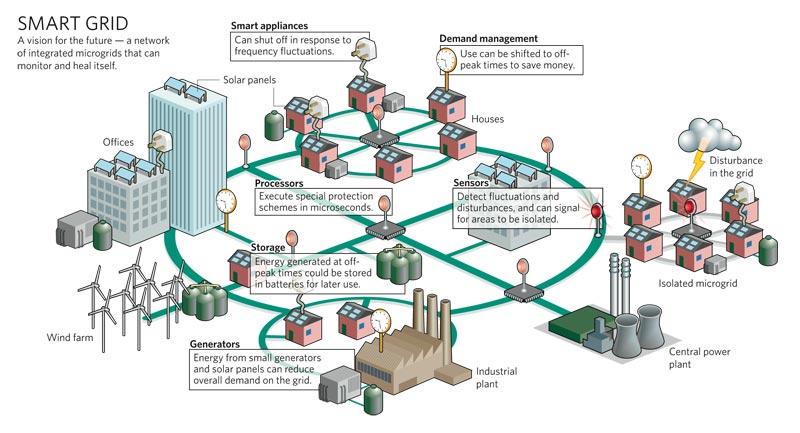
      Among cost cutting measures, Life of the Land notes, is establishing a smart grid to make delivery of electricity more efficient. Life of the Land states that HELCO’s proposed rate hike “is not reasonable, not in the public interest, and is not a cost effective use of ratepayers funds.” The motion states that Life of the Land’s mission “is to preserve and protect the life of the land by promoting sustainable land use and energy policies and to promote open government through research, education, advocacy, and, when necessary, litigation.”
      Life of the Land puts forth its concern for “the Utility’s continued emphasis on rate-payer financed dividends paid to shareholders in excess of company earnings, which forces the utility to raise rates. A public utility should be at least as concerned about ratepayer impacts as it is with executive pay and payments to shareholders.”
With the Big Island already meeting required renewable energy targets, smart grids are suggested by Life
of the Land in order to distribute  electricity more efficiently. Image from horizonenergy.blogspot.com
      Life of the Land also points to renewable energy already in place and approved for sale to HELCO. “The utility’s current renewable portfolio standards requirement (dictated by the state) is 40 percent by 2030. HELCO has already exceeded the 2020 requirements of Hawai`i Revised Statute 269 in the amount of renewable energy it accommodates on its grid, and has or could shortly meet its 2030 requirement.” Life of the Land reports HELCO penetration of renewable energy on the Big Island as 36.7 percent in 2011, 39 percent in 2013, some 48 percent with the Hu Honua bioenergy plant going online in Pepekeo and 70 percent in the near future with additional geothermal added to the grid. Writes Life of the Land, “Another reason for exceeding the 40 percent by 2030 RPS requirement is to reduce consumption of imported oil. But at what price? Should one exceed the legal limit if the options have a higher price, higher environmental impacts, and/or higher cultural impacts? Meeting or surpassing the RPS level should lead the utility to look for cost effective indigenous renewable energy resources that have a small footprint.”
      Life of the Land was recently accepted by the PUC as intervener in opposing separate electric bill hikes proposed by `Aina Koa Pono, which plans a refinery and biofuels farm in Ka`u.
      According to Life of the Land, “Biofuels can have enormous environmental repercussions, ranging from impacts on water use, land use, air emissions, transportation, energy consumption, genetic engineering, climate change, pesticide contamination, non-point source pollution, increase or decrease in jobs and/or an increase or decrease in labor union employment, competition with food and/or ranching operations, health impacts, monocropping, etc.”
      The organization contends that the 4.5 percent rate increase, separate from the `Aina Koa Pono proposal, “will in part be used to finance biofuel/biomass studies, promote biofuel/biomass solutions, and finance biofuel/biomass power purchase agreements.”
Calf production drops when trichomoniasis infects pregnant cows. Photo by Julia Neal

VENEREAL DISEASE AMONG CATTLE is being controlled by testing bulls, which are destroyed when they come up positive. Tests are done on some ranches before allowing the bulls to breed and at slaughterhouses around the state to find out which herds are infected.
       A story in today’s Hawai`i Tribune Herald quotes rancher Kyle Soares, who in 2010 became the first to discover the disease on this island. Called trichomoniasis, the bacterial infection that travels from bull to cow and cow to bull can cause infertility and pregnant cows to abort and the fetus to mummify. The story says that eight ranches are under quarantine on the Big Island, six of them in Ka`u.
      According to ranchers, the disease is usually found in older bulls, which are pulled from the herds when tested positive or when they naturally become too aggressive. Younger bulls, which usually test negative, are kept for breeding. Over time, the herds become clean as infected cows take a rest from breeding and the bulls are taken out. In the meantime the infected ranches are quarantined from sending their cows and bulls to other ranches.
      Soares told Hawai`i Tribune Herald that he would like the state to adopt a regular testing program for bulls, saying such programs have worked in western states where the disease is more prevalent.

FLEDGLING HAWAIIAN PETRELS are getting ready for their first flight. “It’s a precarious time of year for one of Hawai‘i’s rarest endemic seabird species,” says a statement from Hawai`i Volcanoes National Park, which “is is keeping a watchful eye on its small population.”
      The ‘ua‘u, or Hawaiian petrel (Pterodroma sandwichensis), is a federally endangered native seabird, and the only known nests on Hawai‘i Island are within Hawai‘i Volcanoes National Park on the lower alpine and subalpine slopes of Mauna Loa. Wildlife biologists estimate that only 50 to 60 breeding pairs are left here. 
Fledgling petrels can be grounded by streetlights, vehicle and buuilding lights.
Photo from National Park Service
     In November, young ‘ua‘u leave their nests for the first time and fly at night to the ocean searching for food. A primary threat to fledglings are bright urban lights that cause them to become disoriented and fall to the ground or collide with structures. Once grounded, it is difficult for ‘ua‘u to take flight, leaving them extremely vulnerable to cats, dogs and mongooses.
      While a primary threat on other islands, groundings are not as common on Hawai‘i Island, likely due to a much smaller population of ‘ua‘u combined with minimal urban lighting, particularly in and around the national park. The last grounding in the park was in 2006. As a result, the park modified existing lighting to be downcast and shielded on the top, and the park pays careful attention to all new lighting to ensure it meets requirements to minimize disorientation.
      “‘Ua‘u numbers are so low here that the odds of encountering them are rare. The fact that we have only a handful make it important that we protect these remaining few,” said Dr. Rhonda Loh, Chief of Natural Resources Management for the park.
      Adult ‘ua‘u arrive on land in early spring and nest in underground burrows, entering and leaving after dark. The female lays a single egg in May. Both parents take turns incubating for 60 days and then feed the chick until it fledges in November or early December.
      ‘Ua‘u are 16 inches from head to tail, have a three-foot wingspan, and are dark grey on top and white below. They make a variety of calls and one sounds just like its name: oo-AH-oo.
      Anyone finding a grounded seabird in the national park, can call dispatch at 985-6170. Outside the park, contact the Department of Land & Natural Resources Division of Forestry Wildlife 974-4221. For more information, videos and sound recordings of ‘ua‘u, visit the Pacific Island Parks blog, http://pacificislandparks.com/2012/11/02/hawaiian-petrels-get-ready-for-first-flight/.

A CROP INSURANCE WORKSHOP will be held on Monday, Nov. 11at Pahala Community Center. Sponsored by University of Hawai`i College of Tropical Agriculture and Horticultural Research, it is open to everyone from 10 a.m. to 12 p.m. The workshop will also take place 3 p.m. to 5 p.m. on Tuesday, Nov. 13, and from 6 p.m. to 8 p.m. on Wednesday, Nov. 14, at the Kona Cooperative Extension Service in Kealakekua.
      Deadline to apply for crop insurance policies with coverage beginning in January is Dec. 31. Hawai`i has policies for AGR-Lite, macadamia nut tree and nut, banana tree and fruit, coffee tree and fruit, and papaya tree and fruit. Those interested can email andreak@hawaii.edu or call 322-4894. 

PROCESS PAINTING - SPIRIT OF CREATIVITY is Saturday 9:30 a.m. to 3:30 p.m. at Ni`aulani Campus in Volcano Village. Patricia Hoban teaches - $45 for the general public, $40 for VAC members. A $5 supply fee is assessed. For more, call 967-8222.

DREAMTIME CONCERT starts at 7 p.m. Saturday at Volcano Art Center’s Ni`aulani Campus in Volcano Village. John Dumas plays handmade flutes and didgeridoos, rattles and drums and chants. The concert is $12 for the general public and $10 for VAC members. Call 967-8222 for more.
A FREE CONCERT HONORING VETERANS is offered at the Pahala Plantation House this Saturday, 11 a.m. to 4 p.m. The Center for Hawaiian Music Studies presents Keoki and Moses Kahumoku, John and Hope Keawe, Sonny Lim, Diana Aki, James Hill, Bolo, Andy Andrews, Darci Baker, Anne Davison, Lopaka Naihe, Robert Kennedy, Peter DeAquino and Andy Rising, along with workshop students. Water and plate lunches will be available for purchase. For more, call Tiffany Crosson at 938-6582.

HAWAI`I VOLCANOES NATIONAL PARK waives entrance fees during Veterans Day holiday weekend this Saturday through Monday, Nov. 12.

KILAUEA MILITARY CAMP'S VETERANS DAY OPEN HOUSE is Sunday, Nov. 11. KMC invites all park visitors to experience how KMC supports America’s troops by utilizing any of KMC’s facilities and services. 

Iwao Yonemitsu and Toku Nakano, Ka`u vets of the 442nd,
 attend KMC ceremonies. Photo by Julia Neal
A VETERANS DAY CEREMONY is Sunday afternoon, at 3 p.m, by KMC's flagpole. A Veteran's Day buffet will follow at 4:30 p.m. at KMC's Crater Rim Cafe. The menu offers prime rib, spinach and mushroom fettuccini, breaded ono, roasted rosemary red potatoes, bacon green beans, French onion soup, rice, fruit cocktail cake, ice cream and beverage. Entry for the buffet is $23.95 for adults and $12.50 for children 6-11. Public is invited to attend.

SUNDAY WALK IN THE PARK is set for Nov. 11 in the Kahuku Unit of Hawai`i Volcanoes National Park. Friends of Hawai‘i Volcanoes National Park explore Palm Trail, a 2.6-mile loop with some of the best panoramic views Kahuku offers. Free to members; membership available at event. Call 985-7373 or email admin@fhvnp.org for more.

PEOPLE & LAND OF KAHUKU is Sunday from 9:30 a.m. to 12:30 p.m. in the Kahuku Unit of Hawai‘i Volcanoes National Park between miles 70 and 71 on Hwy 11. The guided 2.5-mile moderately difficult hikes over rugged terrain focus on the area’s human history. The hike is also offered Nov. 25. For more, call 985-6011.

LUNCH WITH A RANGER is also Sunday, starting at 12 p.m. in the Kahuku Visitor Greeting Area. Rangers choose varied topics ranging from land management and conservation issues to environmental and cultural history and guide an open discussion with visitors over a bring-your-own-bag lunch. Check the Activities Boards at the Kahuku Visitor Greeting Area for the day’s Lunch With a Ranger topic and location. Lunch with a Ranger is also offered Nov. 18.

MEDICINE FOR THE MIND is Sunday from 4 p.m. to 5:30 p.m. at Volcano Art Center’s Ni`aulani Campus in Volcano Village. Free Buddhist healing meditation for beginners and advanced. Call Patty Johnson for more, 985-7470.

VISIT OUR SPONSORS AT PAHALAPLANTATIONCOTTAGES.COMAND KAUCOFFEEMILL.COM. KA`U COFFEE MILL IS OPEN SEVEN DAYS A WEEK.