About The Kaʻū Calendar

Tuesday, January 08, 2013

Ka`u News Briefs Jan. 8, 2013


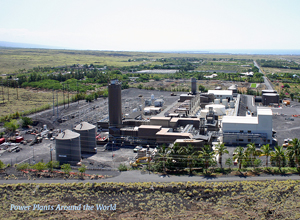
A diesel refinery would be built on Meyer Camp Road, just off Wood Valley Road above Pahala. `Aina Koa Pono promises roads
connecting with Hwy 11 that would spare Pahala from the truck traffic. Diesel would be hauled to Kona.  Photo by Julia Neal
CONCERNING THE `AINA KOA PONO proposal, the Public Utilities Commission yesterday published responses to questions asked by the state Consumer Advocate, Hawai`i County, the Department of Business, Economic Development & Tourism, and Life of the Land. The questions concern the proposed contract for `Aina Koa Pono to annually sell, at a fixed price for 20 years, 16 million gallons of diesel that would be manufactured at a refinery off Wood Valley Road above Pahala. The fuel, produced in 27 microwave units, would be sold to to Hawai`i Electric Light and Hawaiian Electric Companies, with most of it trucked up Hwy 11 to a power plant in Kona. It would mean higher electric bills on O`ahu and the Big Island.
      One of the parties is Hawai`i’s state Consumer Advocate Jeffrey Ono who asked for a timetable illustrating significant estimated milestones of the AKP project.
Jeffrey Ono
      Hawai`i Electric Light Co. and Hawaiian Electric Co. responded: Within six months from the contract's execution date, AKP would provide HELCO with a Life Cycle Assessment of the environmental impact of its project plan. “The results must show that AKP’s project achieves at least a fifty percent favorable reduction in greenhouse gases over the petroleum diesel currently used by HELCO. AKP has provided a LCA for the project,” states the utilities.
      Within nine months, applications for key permits for AKP’s production facility would be filed.  Within 24 months, AKP would provide documentation of Project Financing. Within 36 months, all equipment and materials necessary to construct and complete AKP’s production facility would be delivered.
      AKP would produce biodiesel at a rate of 38,000 gallons per week no later than 42 months from the contract execution date. Within 50 months, AKP would commercially produce the biodiesel at a rate of 300,000 gallons per week.
      Regarding `Aina Koa Pono’s intent to conduct a voluntary Environmental Assessment, the Consumer Advocate asked for the current status of the EA and for a copy of it, “to the extent that the EA is complete.”
      The electric companies replied that, “according to AKP, AKP has engaged RM Towill to conduct the EA. The first phase of the EA is to complete a Traffic Impact Assessment Report. The first of five tentatively planned phases for the EA are: Socioeconomic Impact Assessment, Archaeological Inventory Survey Plan, Cultural Impact Assessment, Flora & Faunal Biological Assessment & the Traffic Impact Assessment Report. No other phases of the process have been initiated at this time. Because the EA is not complete, there are no reports available.
HELCO and HECO report that contingency provisions would allow them
to use AKP's biofuel at other power plants as well as at Keahole.
      “According to AKP, the timeline for the completion of the EA is dependent on the outcome of the Traffic Impact Report because any roadway improvements identified for the project could serve as a trigger for a HRS, Chapter 343 compliant EA.” 
      The Consumer Advocate asked why, if the minimum purchase amount of 14 to 16 million gallons of the proposed biodiesel will meet the annual fuel requirements to operate Keahole Power Plant, the proposed Biodiesel Supply Contract will not result in additional displacement or curtailment of other renewable energy projects in the future. HELCO replied that it expects to be able to use all of the contract biodiesel volume through consumption at Keahole Power Plant, and “contingency provisions allow for consumption” at other Hawaiian Electric Companies’ generating facilities. “The Hawaiian Electric Companies in aggregate currently consume over sixty-five million gallons of fossil diesel. Therefore, the proposed AKP Biodiesel Supply Contract will not result in additional displacement or curtailment of other renewable energy projects in the future,” the electric companies stated.
      The Consumer Advocate asked for a description of the specific benefits associated with the community benefits package that has or will be provided by AKP.
      According to the electric companies, “AKP provides that once the plant becomes operational and is delivering fuel, AKP would contribute at least $250,000 per year to a community benefits package focusing on education and the environment.
`Aina Koa Pono's refinery would have 27 microwave catalytic
depolymerization units, according to HELCO and HECO.
Image from ainakoapono.com
      “According to AKP, on the advice of people in the non-profit funding community, AKP consulted with the Hawai`i Community Foundation on the efficacy of setting up the program through HCF. Talks between AKP and HCF have begun on this program. AKP anticipates working with HCF to develop the specifications for the fund (AKP has already identified that education and environment would be the focus). People knowledgeable in the funding community are expected to administer the benefits package, screen applicants to appropriate criteria (non-profit status, etc.) and present AKP with vetted options." AKP would then determine the actual recipients. 
      The electric companies reported that AKP would also set up an advisory board that would include community members from the Island of Hawai`i and the Ka`u District, as well as others. The report also states that “AKP has identified candidates for the advisory board."
      HELCO and Hawaiian Electric Companies also stated that AKP plans to keep a portion of the $250,000 package separate from the HCF to enable response to “smaller, more pressing needs as they arise,” such as youth sports teams needing travel funds.
      The Consumer Advocate asked for a detailed discussion of the companies’ and AKP’s efforts to conduct community meetings since the Commission’s rejection of its first contract “to get a better appreciation of the communities’ concerns with the proposed project.” The document asks the companies to identify each meeting held, the date of the meeting, the number of participants and the groups.
      The electric companies reported that, “According to AKP, AKP determined with its consultants that formal open community meetings should be held after the impact assessments on traffic, archaeology, cultural factors and environment were at least in draft. Then, RM Towill would help organize formal, facilitated community meetings.
      “However, AKP retained on-island consultants to help with outreach, and principals began to meet directly, one-on-one or in smaller groups, with people identified as key opinion leaders or community stakeholders. The purpose of the meetings was to give an overview of the plans, but more specifically, to elicit questions, concerns and ideas from these leaders. According to AKP, AKP met with members of `O Ka`u Kakou on the Island of Hawai`i on Oct. 4, 2012. AKP also had a group meeting with community members at Ka`u Coffee Mill on the Island of Hawai`i on Oct. 10, 2012.
      “According to AKP, meetings were held with Hawai`i state legislators and legislators-elect from Hawai`i Island, as well as those in key energy positions. AKP renewed its relationship and held meetings with labor and trade groups, both on the Island of Hawai`i and state headquarters personnel on O`ahu. AKP also met with the Big Island Community Coalition and sought meetings (still being organized) with the Chambers of Commerce and other business groups. In the community, AKP principals met with Julia Neal of The Ka`u Calendar, the members of OKK and other members of the community.
The only operating Micro Dee plant is in Wilkesboro, NC, according to
the report from HELCO and HECO. Photo from biofuels-solutions.com
      “There are a number of efforts made by AKP to actively address the community’s concerns,” the electric companies said. “According to AKP, AKP announced it would first locate a single unit of the planned 27 (microwave) units onsite so residents could see the technology demonstrated.” Also, reported the electric companies, AKP has offered to take several community residents to the only operating plant in Wilkesboro, North Carolina.
      “In addition, AKP agreed to carefully select truck routes from fields to the plant to minimize impact on residences,” stated the electric companies. AKP would also set aside 200 acres (of the 11,000 it plans to use) that farmers would be able to use for sustainable, agriculture crops, the utilities stated.
      According to the electric companies, “AKP announced it would set up a community advisory board to maintain a dialogue with the impacted area.” The electric companies also report that AKP has collected and continues to solicit email addresses for eNews communication and that currently there are more than 300 names on the distribution list.
      Complete responses to the Consumer Advocate’s questions are online at puc.hawaii.gov. Docket number is 2012-0185.
      Responses to questions asked by other parties and participates will be reported in later Ka`u News Briefs.

COMPASSIONATE COMMUNICATION is the topic of a practice group holding five weekly sessions begin this Thursday, Jan. 10 at 5:30 p.m. Shary Crocker has been practicing and facilitating groups for five years. All levels are invited. For more information, contact her at 929-7646 or grantcrocker@aol.com

THE DEADLINE FOR YOUNG WOMEN to enter this spring’s Miss Ka`u Coffee Pageant is one week from today, Tuesday, Jan. 15. Categories are Miss Ka`u Coffee and Miss Ka`u Peaberry. By May 13, Miss Ka`u Coffee candidates must be ages 17 to 24, and Miss Ka`u Peaberry candidates must be ages 7 to 9. The winners reign over the annual Ka`u Coffee Festival on Saturday, May 4.
      Applications are available at R&G Store in Pahala, Pahala Community Center, Grandma’s Closet in Na`alehu and Kahuku Gift & Garden Shop in Ocean View. For more information, call Gloria Camba at 928-8558 or Pahala Plantation Cottages at 928-9811. Organizers also welcome volunteers to help produce the pageant.

SUPPORT OUR SPONSORS AT PAHALAPLANTATIONCOTTAGES.COM AND KAUCOFFEEMILL.COM. KA`U COFFEE MILL IS OPEN SEVEN DAYS A WEEK.

Monday, January 07, 2013

Ka`u News Briefs Jan. 7, 2013

Royal Hawaiian Orchards, one of Ka`u's largest employers, changed the old Ka`u Agribusiness
signage at its Pahala offices in time for the Plantation Days parade. Photo by Julia Neal
ROYAL HAWAIIAN ORCHARDS CEO Dennis Simonis, with satellite offices in Pahala and thousands of acres in macadamia nuts in production in Ka`u, has been named one of the top ten business persons to observe this year by Pacific Business News. The list is called PBN’s 10 to Watch in 2013. A story in Friday’s PBN by Stephanie Silverstein says that Simonis’ “efforts to create a new business model for his company” led to the acknowledgement.
      The article describes the change from the name ML Macadamia Orchards to Royal Hawaiian Orchards and says the company “will produce, package and distribute a line of macadamia nut snack foods in a rainbow of colorful packages and flavors.”
       Products include Seasoned Macadamia varieties: Sea Salt, Sea Salt & Cracked Pepper, Maui Onion, Wasabi and Soy, and Hawaiian BBQ. Fruit & Macadamia Crunches include: Papaya Banana, Mango Pineapple, Passion Fruit Orange Guava, Kona Coffee Banana, Banana Nut and Papaya Lime.
      The website royalhawaiianorchards.com promotes macadamia as a health food and says Royal Hawaiian Orchards products are GMO-free, sulfite-free, wheat-free, soy-free, cholesterol-free, gluten-free, whole foods. It says that macadamia oil is similar to olive oil.
Royal Hawaiian Orchards is the new name of ML Macadamia,
and the company has launched a new website.
Image from royalhawaiianorchards.com
      “Though deliciously sweet, macadamia nuts are also a healthy, nutritious and all-natural addition to a well-balanced diet. Macadamias are a high source of protein and rich in a number of components that contribute to well-being such as fiber, phytochemicals, minerals and vitamins. Our nuts are also cholesterol-free and have a favorable fatty acid profile that is comparable to olive oil. The macadamias contain 80 percent monounsaturated fat (the good kind!), which lowers overall cholesterol and harmful LDL cholesterol while raising levels of HDL (good) cholesterol. Macadamia nuts can be a healthy substitute for foods rich in saturated fatty acids.” the website says.
      Slogans include “Good for Your Body” and “Good For Nature,” and the website includes sections entitled “How Do You Live Aloha,” “From Our Orchard to Your Market,” and “Share Some Aloha With a Tasty Gift.”
      The website also promises:  “At Royal Hawaiian, we show our respect for the land and Hawai`i’s delicate ecosystem by practicing sustainability. We conserve water by relying almost exclusively on rainfall for irrigation. We’ve rejuvenated hundreds of acres and plan to rejuvenate hundreds more. Giving back to nature is the Royal Hawaiian way.”
      The website also states that the company turns waste into energy. “We recycle and reuse almost every part of the nut to fuel our next batch of home-grown macadamias. The hulls of the nuts are composted to renourish the soil and fertilize the rest of our orchards. Used macadamia nut shells are burned as an energy source to power our facilities. Our macadamia nuts are a gift from nature that never stop giving.”
      PBN quotes Simonis saying the revamped business “will be as successful and big as we have the nut supply to fuel it.”
      The story notes that “among the challenges that lie ahead for Simonis in 2013 is the limited supply of macadamia nuts to meet growing consumer demand.”
      It quotes Simonis: “I think that’s probably the biggest issue in the industry right now – are there enough macadamia nuts to go around? If we had five million pounds of nuts, I think we could sell them all today.”
      Contracts that required ML Macadamia to deliver most of its nuts to Mauna Loa are set to expire over the next three years, the PBN story says. “When the first contract expires this year, Royal Hawaiian Orchards will reallocate seven million pounds of macadamia nuts, which equates to about 1.5 million kernel pounds, to its supply,” PBN reports.
      Royal Hawaiian Orchards has offices in the old sugar plantation headquarters building on the corner of Maile and Pikake streets in Pahala and also in Kea`au. See more at royalhawaiianorchards.com and bizjournals.com/pacific.

Hawaiian Airlines plans to purchase 16 A321 neo airplanes from Airbus.
Photo from airbus.com
MORE FUEL EFFICIENCY AND CONNECTIVITY with the rest of the world, provided by Hawaiian Airlines, headlines a plan to purchase 16 A321neo long-range Airbuses. “Everyone at Hawaiian wants us to keep our position as the market leader in service quality, cost efficiency and choice of destinations,” said the company’s CEO and President Mark Dunkerly, in a statement this morning. 
      The 146-foot-long A321neo will be the most fuel-efficient airplane in its category. “With its slightly smaller size we’ll be able to open new markets that are not viable for wide-body service, while also being able to augment service on existing routes to the West Coast of North America,” said Dunkerly.
      The planes are expected to roll into service over time, between 2017 to 2020, and Hawaiian has reserved the rights to buy nine more, Dunkerly said, noting that the investment could generate 1,000 new jobs.
      According to Hawaiian, the aircraft are valued at about $2.8 billion. However, going forward with the contracts to purchase them is contingent on agreements with pilots and attendants.
      “Our tourism-based economy and local employment will benefit as we continue our strategy of diversifying our business while improving the efficiency of our operation,” Dunkerly said.
      The 190-seat, single-aisle aircraft will join the twin-aisle, wide-body aircraft now used for flights between Hawai`i and the West Coast.

Hawai`i Natural Energy Institute has issued a report on importing
liquified natural gas. Photo from ferc.gov
A STUDY RELEASED BY HAWAI`I NATURAL ENERGY INSTITUTE concludes that liquefied natural gas “has the potential to achieve huge savings for Hawai`i energy consumers—but it is critical to obtain it from the right source on gas-indexed prices.” The report also says that, while LNG could provide fuel savings in the O`ahu power sector of 40 to 50 percent or more compared to oil, neighbor-island generation could also reap major savings from LNG even with the additional costs of interisland transportation. In an example steam plant of 40 MW, savings in power costs were 22 to 44 percent.
      While Gov. Neil Abercrombie favors importing LNG, environmental groups such as Blue Planet Foundation and the Sierra Club oppose it. Jeff Mikulina, of Blue Planet Foundation, told Civil Beat that replacing oil imports with LNG will detract from large-scale investments needed for the switch to renewable fuel sources and that lower LNG prices could also make it more difficult for renewables to compete.
      Robert Harris, executive director of the Sierra Club, told Civil Beat’s Sophie Cocke, “We don’t stop smoking by switching from cigarettes to cigars. Similarly, we don’t wean ourselves off of fossil fuels by simply switching to a different fossil fuel.”
      The report in online at hnei.hawaii.edu/sites/web41.its.hawaii.edu.www.hnei.hawaii.edu/files/story/2013/01/Liquefied%20Natural%20Gas%20for%20Hawaii%20Policy%20Economic%20and%20Technical%20Questions-FINAL.pdf.
      See more at civilbeat.com.

THE FIRST MEETINGS OF 2013 for Hawai`i County Council committees begin at 9 a.m. tomorrow, and the full Council meets Wednesday at 9 a.m. in Hilo. Residents can participate from Ocean View Community Center’s remote testimony site.
      Agendas for the meetings are available at hawaiicounty.gov.

Volunteers help Hawai`i Wildlife Fund with Ka`u Coast cleanups several
times each year. Photo from HWF
TOMORROW’S AFTER DARK IN THE PARK program begins at 7 p.m. at Kilauea Visitor Center Auditorium in Hawai`i Volcanoes National Park. Hawaiian Volcano Observatory geologist Tim Orr reviews highlights from the past 30 years of Kilauea’s ongoing east rift zone eruption and talks about recent developments. $2 donations support park programs, and park entrance fees apply. 

HAWAI`I WILDLIFE FUND is looking for volunteers for its first Ka`u Coast cleanup for 2013 this Saturday, Jan. 12 at Kamilo Beach. Sign up with Megan Lamson at 769-7629 or kahakai.cleanups@gmail.com.

SUPPORT OUR SPONSORS AT PAHALAPLANTATIONCOTTAGES.COM AND KAUCOFFEEMILL.COM. KA`U COFFEE MILL IS OPEN SEVEN DAYS A WEEK.

Sunday, January 06, 2013

Ka`u News Briefs Jan. 6, 2013

John Carroll (left) and Michael Thieman, of `Aina Koa Pono, worked with Lance Santo (center), from Hawai`i Agricultural Research Center, in 2011 to plant and grow sugar cane and bana grass to see which would do best on the proposed biofuels farm between
 Wood Valley and Pahala and Na`alehu. Photo by Michael Neal
HAWAI`I ELECTRIC INDUSTRIES CHAIR Constance Lau says HEI and its subsidiaries “will work with the community and potential renewable-energy developers this year, using requests for proposals to determine the best sources for O`ahu, Maui and the Big Island,” reports a story in Friday’s Pacific Business News.
HEI chair Constance Lau
      The Duane Shimogawa article reports: “Some say that the success of the Hawaiian Electric Industries, Inc.’s companies is inextricably linked to the health of Hawai`i and its economy.
      “That is why HEI President and CEO Constance Lau plays such an important role as the state moves farther away from its dependence on imported oil,” Shimogawa concludes.
      Lau told Shimogawa that “together with American Savings Bank’s financing of clean-energy projects, our companies aim to lead Hawai`i’s transition to a clean-energy economy and to break the state’s dependence on imported oil, which hurts the pocketbooks of Hawai`i families and our state’s economy.”
      One of HEI’s proposals is to finalize a fixed-rate, 20-year contract to purchase diesel that would be manufactured by `Aina Koa Pono at a proposed refinery off Wood Valley Road above Pahala. The company promises 400 union construction jobs and 200 permanent farm and factory jobs. Land that is currently in pasture, trees and brush would be cleared between Pahala and Na`alehu, and `Aina Koa Pono would plant biofuel crops to be harvested for the refinery where biomass would be dried into pellets. The pellets would be processed in microwave units that would turn them into diesel. The diesel would be trucked up Hwy 11 to the Kona power plant.
      The state Public Utilities Commission turned down the proposal last year based on the projected high cost of the fuel, and the hui has reapplied with a lower fixed price  – some $200 per barrel. Opponents say that such a long-term contract for pricing higher than current costs for oil could deter other alternative energies, like geothermal, which could be much less expensive. Opponents also state that an emerging local beef industry could lose pasture, and coffee farmers, whose demand is outstripping supply, could lose opportunity to expand, if most of the good ag land goes into biofuel crops.
     The County of Hawai`i is participating in the legal discussions before the PUC. Mayor Billy Kenoi stated that the island does not need more renewable energy. "We need cheaper renewable energy." Environmental and consumer group Life of the Land has intervened in the PUC proceedings and the Consumer Advocate and state Department of Business, Economic Development & Tourism are also participating. Testimony from citizens and various agencies can be seen on the PUC website at http://puc.hawaii.gov/dockets. Click on `Aina Koa Pono and on Documents.

OCEAN CHAMPIONS has bestowed the title of Congressional Champion for the 113th Congress on both Sen. Mazie Hirono and Rep. Colleen Hanabusa. The political action committee endorses and backs candidates. It bills itself as the “Only Political Voice for the Ocean.” The PAC is “dedicated to protection of the ocean and its wildlife. Ocean Champions is focused on building champions for ocean conservation in the U.S. Congress,” says its website at www.oceanchampions.org.
Rep. Colleen Hanabusa
      According to Ocean Champions, in her first term in Congress, Hanabusa stole “the spotlight with her active, bipartisan, responsible governance. Representing the state of Hawai`i, she maintains a firm commitment to protecting the health of the environment and ecosystems that are so important to her state. She has co-sponsored Amendments to the Endangered Species Act that increased the protections for endangered species and joined the Congressional Sustainable Energy and Environment Coalition which promotes the development of renewable energy technologies. Furthermore, in the debate over offshore drilling, she proposed amendments that require the calculation of a worst-case scenario, and, that the responsible party demonstrates it has the capacity and technology to respond to future leaks. Rep. Hanabusa’s cool-headed demeanor and philosophy of bipartisan cooperation makes her an ideal ocean champion; a champion that protects our oceans through cooperation with a long-term, sustainable mindset."
      Ocean Champions points out that Hanabusa is co-sponsor of:
  • H.R. 738 (Coral Reef Conservation Act Reauthorization and Enhancement Amendments of 2011) 
  • H.R. 1171 (Marine Debris Act Reauthorization Amendments of 2011) 
  • H.R. 1229 (Putting the Gulf of Mexico Back to Work Act of 2011) 
  • H.R. 1375 (Clean Water Protection Act of 2011) 
  • H.R. 1689 (Big Oil Welfare Repeal Act of 2011) 
  • H.R. 1761 (Marine Turtle Conservation Reauthorization Act of 2011) 
  • H.R. 1938 (North American-Made Security Act of 2011) 
Sen. Mazie Hirono
      According to Ocean Champions, “Mazie Hirono was committed to protecting the environment as the Representative for Hawai`i’s 2nd District. Since 2007, “the Congresswoman has co-sponsored legislation to prevent expanded offshore drilling, clean up ocean garbage and protect coral reefs. She has supported implementation of the National Ocean Policy and co-sponsored its legislative precursor, Oceans-21, because she knows that improved ocean governance is needed to protect, maintain and restore ocean and coastal resources for the future.”
      Ocean Champions points out that in 2012, Hirono sponsored two Coastal Preservation Acts for Hawai`i’s North Maui (H.R. 3907) and Ka`u coasts (H.R. 3908). In 2011, she co-sponsored the West Coast Protection Act (H.R. 612), and the Coral Reef Conservation Act Reauthorization and Enhancement Amendments of 2011 (H.R. 738). Ocean Champions noted that Hirono is a member of many environmentally focused House committees and caucuses including the National Marine Sanctuary and House Oceans caucuses and the Water Resources and Environment subcommittee. “We look forward to Rep. Hirono championing new ocean conservation legislation in the Senate in 2013,” Ocean Champions states. Its website lists her accomplishments:
      Hirono Sponsored:
  • H.R. 288 (Renewable Energy Applied Partnerships (REAP) ACT of 2011) 
  • H.R. 3907 (North Maui Coastal Preservation Act of 2012) 
  • H.R. 3908 (Ka`u Coast Preservation Act of 2012) 
  • H.AMDT.469 to H.R.2112 ($3 million for preventive measures under the Watershed Protection and Flood Prevention Act and the Soil Conservation and Domestic Allotment Act of 2011) 
      Hirono Co-Sponsored:
  • H.R. 612 (West Coast Ocean Protection Act of 2011) 
  • H.R. 738 (Coral Reef Conservation Act Reauthorization and Enhancement Amendments of 2011) 
  • H.R. 192 (Gulf of the Farallones and Cordell Bank National Marine Sanctuaries Boundary Modification and Protection Act of 2011) 
  • H.R. 501 (Implementing the Recommendations of the BP Oil Spill Commission Act of 2011) 
  • H.R. 502 (Clean Energy Technology Manufacturing and Export Assistance Act of 2011) 
  • H.R. 572 (Clean Ports Act of 2011) 
  • H.R. 601 (End Big Oil Tax Subsidies Act of 2011) 
  • H.R. 1171 (Marine Debris Act Reauthorization Amendments of 2011) 
  • H.R. 860 (Coral Reef Conservation Act Reauthorization and Enhancement Amendments of 2009) 
  • H.R. 81 (Shark Conservation Act of 2009) 
  • H.R. 2055 (Pacific Salmon Stronghold Conservation Act of 2009) 
  • H.R. 21 (Ocean Conservation, Education, and National Strategy for the 21st Century Act of 2009)
Residents can participate in Hawai`i County committee and Council
meetings, to be held this week in Hilo, at Ocean View Community Center.
HAWAI`I COUNTY COUNCIL COMMITTEE meetings begin at 9 a.m. Tuesday, and the full Council meets Wednesday at 9 a.m. in Hilo. Ocean View Community Center’s new remote testimony site is available for residents to participate in the meetings. 
      One resolution on the County Council’s agenda strongly urges the state to continue funding the HI-5 recycling program for another year while budget and related issues are addressed. Council member Margaret Wille, who introduced the measure, says an estimated $765,000 is needed to continue the program through the fiscal year.
      Agendas for the County Council and committee meetings are available at hawaiicounty.gov.

Lava enters the ocean 30 years after Kilauea Volcano's
current eruption began. Photo from USGS/HVO
AS PART OF VOLCANO AWARENESS MONTH, After Dark In The Park has programs every Tuesday at 7 p.m. at Kilauea Visitor Center Auditorium in Hawai`i Volcanoes National Park. This Tuesday, USGS Hawaiian Volcano Observatory geologist Tim Orr reviews highlights from the past 30 years of Kilauea’s ongoing east rift zone eruption and talks about recent developments. During its first three years, spectacular lava fountains spewed episodically from Pu`u `O`o vent. Since then, nearly continuous lava effusion has built a vast plain of pahoehoe lava that stretches from the volcano’s rift zone to the sea. Although the eruption has been relatively quiet during the past year, with mostly steady but unusually weak activity, it has produced some dramatic lava flows in past years. 

HAWAI`I WILDLIFE FUND’S first Ka`u Coast Cleanup for 2013 is this Saturday, Jan. 12. Volunteers meet at Wai`ohinu Park to carpool to Kamilo Point. Sign up with Megan Lamson at
769-7629 or kahakai.cleanups@gmail.com.

SUPPORT OUR SPONSORS AT PAHALAPLANTATIONCOTTAGES.COM AND KAUCOFFEEMILL.COM. KA`U COFFEE MILL IS OPEN SEVEN DAYS A WEEK.