About The Kaʻū Calendar

Monday, January 23, 2017

Ka`u News Briefs Monday, Jan. 23, 2017

Shaka Tea, made from māmaki grown in Wood Valley above Pahala, made Hawai`i's
State of the State address by Gov. David Ige today. Photo from Shaka Tea
 MAMAKI GROWN ON  WOOD VALLEY RANCH MADE THE STATE OF THE STATE ADDRESS by Gov. David Ige today. The māmaki cultivated above Pahala is the major component of Shaka Tea, a start-up by Bella Hughes and her husband Harrison Rice, which the governor gave as an example of a local success story.
Wood Valley māmaki tea, the major ingredient
of Shaka Tea, praised today by Gov.
David Ige as a successful startup company.
Photo from Shaka Tea
     Ige said that “Bella and Harrison have taken māmaki leaves, grown in Pahala on Hawai`i Island, and used them to grow an exciting new local company. The benefits of the māmaki plant, native to and found only in Hawai`i, are well known among native Hawaiians. Recent studies by the University of Hawai`i have confirmed its health properties. But to make māmaki commercially viable as a ‘ready to drink’ beverage, Bella and Harrison had to find a way to extend its shelf life so that it could be marketed beyond the islands," said the governor.
     “It took them over a year. But, working with R&D partners in Hawai`i and on the mainland, they overcame that obstacle. Today, they are not only well established in local markets, but are looking to expand to the West and East Coast, Japan, and on the Internet." The governor introduced the Shaka Tea partners during his State of the State address. After the speech, Harrison Rice told The Ka`u Calendar,  “We are humbled” by the governor’s recognition. 
Wood Valley māmaki tea farm where Koa and
his family source ingredients for their
Shaka Tea. Photo from Shaka Tea
     According to www.shakatea.com the māmaki tea grown in Wood Valley is available in various flavors. “We start our crisp, refreshing Hawaiian iced teas with handpicked Māmaki leaves cultivated in the mineral-rich, volcanic soil on the foothills of Mauna Loa. Our brews are then naturally sweetened with organic juices and flavored with fruit purees for a touch of tropical flavor... which means they're all made without any added sugar." According to the Shaka Tea company, “Peer-reviewed university studies show māmaki contains antioxidants including catechins, chlorogenic acid and rutin, as well as macro and micro minerals, including: potassium, calcium, magnesium, copper, iron and zinc.”
    The labeling of Shaka Tea celebrates communities around the state with blends called Hilo, Honoka`a and Koloa. On this island it is sold at Abundant Life Natural Foods, Choice Mart, Island Naturals in Kona and Hilo, all five KTA Super Stores and all Matsuyama Markets. See more at www.shakatea.com.
See more on the State of the State address in tomorrow's Ka`u News Briefs.
To read comments, add your own, and like this story, see facebook.com/kaucalendar.


A BILL THAT WOULD KEEP UTILITY-SCALE SOLAR FARMS out of residential communities zoned Agriculture passed its first reading in the state House of Representatives today.  
      The bill would modify law that allows solar installations on all Agriculture-zoned land (except land with the best soil) without a county permit. The bill is supported by Ka’u's Rep. Richard Creagan, who has opposed the industrialization of residential communities that are zoned Agriculture in spite of the fact that the subdivisions were created for homes.  

Rep. Richard Creagan is lobbying for a bill to prevent industrialization of
neighborhoods, like those in Ocean View where solar farms are planned.
Photo from the Office of Rep. Richard Creagan 
   
Also supporting the bill are Reps. Beth Fukumoto, Cedric Gates, Linda Ichiyama, Sam Kong, Matthew PoPresti, and Gregg Takama.
      The town of Ocean View, the most populous in the Ka`u District, is composed of seven subdivisions, all zoned Agriculture. An estimated 7,000 people live in Ocean View. There are also an estimated 14 non-conforming old subdivisions in the Puna District, which are home to thousands of people. They are termed “non-conforming” because they do not conform to modern subdivision standards and rely on catchment systems for water, and often have substandard roads.
     Most of the subdivisions were created in the 1960s and 1970s when the county and state did not require developers to cover the cost of bringing roads, water and other services to the far-flung homes in sparsely-populated vast areas classified and zoned Agriculture.
     When, in 2008, state legislators and officials embraced the Hawai`i Clean Energy Initiative to free the state from imported oil and coal for energy, they looked for ways to make it easier for photovoltaic developers to build solar installations. It was decided that removing the requirement for   a permit to use agricultural land would be a good idea. After debate as to whether land should be used for food or energy, the law was modified to allow solar farms on ag land.  The impact on neighborhoods located on ag-zoned land was not considered, nor mentioned in documents on file at the legislature for SB 2502 or SB 631 in 2011.
     “This was an unintended consequence of a very well-meaning law,” explained Creagan.  “When legislators talk about ag land, they think of wide open spaces and swathes of unused land. They could not see the downside of removing the permit requirement, as none of them thought of the non-conforming subdivisions we have on the Big Island.”
     “It was not until SPI Solar, an international based in Shanghai, bought up housing lots in Ocean View and were given 26 building and electrical permits to build two-acre solar installations among homes, because the state law allowed them on Ag land, that the unintended consequences became apparent," said Creagan.
     Randy Iwase, Chairman of the PUC, was quoted by the Honolulu Star Advertiser as saying that the FIT program is obsolete because the cost is too high. “Nobody is going to move on the FIT project.  We have suspended any action on the application pending a review or an investigation or resolution of the complaint filed by the Bosteds”. 
      The Consumer Advocate at the time,Jeff Ono, is quoted by the Honolulu Star Advertiser as saying in a filing that he was concerned with the competitive bidding of the FIT projects in Ocean View. Ono worte, It is apparent that the solar project owners effectively 'gamed' the FIT process in order to avoid going through the more rigorous competitive bidding framework.”
To read comments, add your own, and like this story, see facebook.com/kaucalendar.

HO`OMALU KA`U, The Ka`u Heritage Center, will hold a Giant Rummage Sale fundraiser on Saturday,  Jan. 28 at Na`alehu Hongwanji from 9 a.m. to 2 p.m. For sale will be tools, household goods, car parts, artwork, jewelry, collectibles, clothes toys, books, utensils, glass, and more. Funds raised will be used for programs in Ka`u.  Call 929-8526, or email hoomalukau@gmail.com  to donate any items, or with questions about the fundraiser or about Ho`omalu Ka`u.

HOVE ROAD MAINTENANCE BOARD OF DIRECTORS MEETING. Tuesday, Jan. 24, 10 a.m. at St. Jude's Church 929-9910.

HOW DO HVO GEOLOGISTS TRACK LAVA FLOWS AND LAVA LAKES? A Volcano Awareness Month presentation at After Dark in the Park on Tuesday, Jan. 24, 7 p.m., Kīlauea Visitor Center Auditorium in Hawai`i Volcanoes National Park. USGS Hawaiian Volcano Observatory geologist Matt Patrick explains the toolkit he uses and describes how scientists continuously improve their methods of tracking volcanic activity. Free; park entrance fees apply.

HO`OKANE UKULELE - Wednesday, Jan. 25, 10 a.m. – 12 p.m., Kīlauea Visitor Center lānai in Hawai`i Volcanoes National Park. Learn the basics of the beloved and iconic part of Hawaiian music culture. Free; park entrance fees apply.
 www.kaucalendar.com


Sunday, January 22, 2017

Ka`u News Briefs Sunday, Jan. 22, 2017


MARCHES IN HILO AND KONA DREW THOUSANDS yesterday as women and men walked in support of equal rights and other causes.
     Big Island Video News reported that in Hilo, "thousands gathered at the Mo’oheau Bandstand at 10 a.m., rallying around music and speeches before taking to the street. The streets were blocked to vehicular traffic only at certain crosswalks. For the most part, the marchers stuck to the sidewalks. The Hawai`i County Police provided some assistance.
"Build Bridges Not Walls" was one of the many signs at the Hilo
 march. Photo by David Berry
     "The crowd was large; some called it the biggest they had ever seen gathered for a demonstration in Hilo. The line was continuous, stretching along the route from the start at the bandstand, down Mamo Street, across Keawe Street, makai on Wainuenue and back down Kamehameha Avenue. Participants were finishing the march before everyone had even started.
   "The Kona march, estimated to have drawn about 3,000, started at Queen Ka’ahumanu Highway just south of Henry Street and headeded north, down Palani Road to the Edible Institute where the march came to an end, and a rally began."
      The Kona organizers' facebook page said that “the rhetoric of the past election cycle has insulted, demonized, and threatened many of us – women, immigrants of all statuses, those with diverse religious faiths particularly Muslim, people who identify as LGBTQIA, Native and Indigenous people, Black and Brown people, people with disabilities, the economically impoverished and survivors of sexual assault. We are confronted with the question of how to move forward in the face of national and international concern and fear.
Marchers vowed to work on their issues.
Photo by Barry Fackler
     “In the spirit of democracy and honoring the champions of human rights, dignity, and justice who have come before us, we join in diversity to show our presence in numbers too great to ignore,” the statement continues.
     “The Women’s March on Washington will send a bold message to our new administration on their first day in office, and to the world that women’s rights are human rights. We stand together, recognizing that defending the most marginalized among us is defending all of us.”
     Marches were held in many U.S. and foreign cities. See more at www.bigislandvideonews.com.
To read comments, add your own, and like this story, see facebook.com/kaucalendar.

"Women's Rights are Human Rights," said a Hilo
march sign. Photo by David Berry
A FATAL ACCIDENT ON HWY 11 at the Nāmakanipaio Campground intersection in Hawai'i Volcanoes National Park on Saturday afternoon, prompting National Park Service rangers to seek witnesses. Witnesses to the fatal two-vehicle accident are asked to call Park Dispatch at (808) 985-6170, and may remain anonymous.
      Rangers reported that a white Hyundai Elantra and a blue Toyota Scion were involved in the traffic accident about 1 p.m. The driver of the Hyundai, a 65-year-old man from New Jersey, was fatally injured. The other driver, a 33-year-old local male, was transported to Hilo Medical Center by ambulance.
     Rangers and bystanders performed CPR on the 65-year-old male, then a medic unit from the Hawai'i County Fire Department arrived and took over patient care. The man was pronounced dead at the scene by medical personnel.
      Both men were the sole occupants of their vehicles.
     The accident caused a complete closure of Highway 11 between mile markers 32 and 34 for several hours Saturday afternoon while officials investigated the scene. Both lanes of the highway were open by 6:30 p.m. Saturday.
      The Hawai'i County Police Department is aiding the NPS in the investigation. The identification of the victims is being withheld pending notification of next of kin.
To read comments, add your own, and like this story, see facebook.com/kaucalendar.


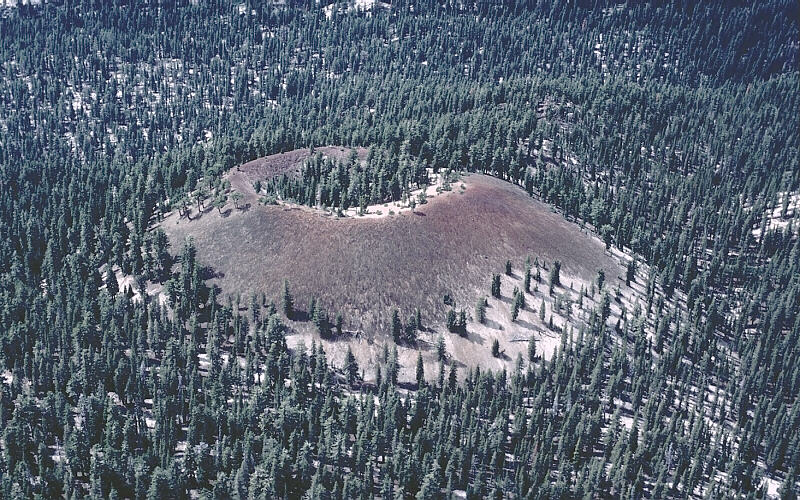
Mount Shasta, a steep-sided Cascade Range stratovolcano in Northern California,
loomsabove Little Glass Mountain, a thick obsidian flow erupted from the
Medicine Lake shield volcano about 1,000 years ago. They are two of 19 young
volcanic areas monitored by the USGS California Volcano Observatory. Also
shown is the observatory’s operations center in Menlo Park, CA, with Margaret
 Mangan (far right), who worked at the USGS HawaiianVolcano Observatory
 in 1990-1998. She is now CalVO’s Scientist-in-Charge. Dave Hill, who worked at
HVO from 1964-1966, was Scientist-in-Charge at LVO in 1982-2009. USGS photos.
HAWAI`I VOLCANO OBSERVATORY WRITES ABOUT ITS CALIFORNIA SISTER OBSERVATORY in this week's Volcano Watch, as the scientists focus on January being Volcano Awareness Month:
     "The USGS California Volcano Observatory, with its staff and data center based in Menlo Park, California, is relatively young. But it grew from strong parentage through what was known as the Long Valley Observatory.   Long Valley Caldera in eastern California formed as the result of a huge eruption 760,000 years ago. That event was followed by many smaller eruptions ever since. The caldera is at the southern edge of the Mono-Inyo Craters chain of lava flows and domes, which were active as recently as 300 years ago.
     "In 1980, seismic unrest in Long Valley Caldera, near the resort town of Mammoth Lakes, motivated the USGS to begin intensive study and monitoring of the region. This led to the establishment of the Long Valley Observatory (LVO) in 1982.
     "LVO leaned heavily on techniques that were pioneered at the USGS Hawaiian Volcano Observatory, including laser ranging, which was further refined in Long Valley to produce an extensive and high-resolution time series of how the caldera inflated and deflated. In fact, Dave Hill, the LVO Scientist-in-Charge from 1982 until 2009, was on staff at HVO in 1964–1966.
     "Although the caldera was the focus of LVO’s monitoring efforts, most LVO staff worked from offices in Menlo Park. They made site visits to the caldera as needed to conduct research and to work with local residents and emergency managers to help them understand the volcanic activity and its potential hazards.
     "However, Long Valley Caldera is just one of 19 young volcanic areas in California. Recognizing the value of a local authority responsive to state emergency managers and residents, LVO was reorganized and renamed the USGS California Volcano Observatory (CalVO) in 2012. CalVO is now responsible for researching and tracking volcanic activity throughout California and neighboring Nevada (https://volcanoes.usgs.gov/observatories/calvo/calvo_about.html).
Red Cones in Long Valley Caldera in California. USGS Photo
     Having a formal USGS volcano observatory focused on California has many benefits. These range from better coordination with emergency managers during a crisis, to increased potential for improving awareness of and preparedness for volcanic hazards within local communities.
     "CalVO has spent its first years of existence supporting a flurry of new research into California’s volcanoes. Among the more significant results has been the discovery that the Salton Buttes, a volcanic area in southern California, are much younger than previously thought—the most recent eruption was only 2,000 years ago!
     "USGS-CalVO scientists have continued their work in the Long Valley region, where they have documented hazardous gas emissions from Mammoth Mountain, seismic swarms associated with magmatic intrusions, and the general swelling of the caldera due to subsurface magma accumulation.
     "As the youngest USGS volcano observatory, CalVO has drawn much from the experience of HVO. As was the case for LVO, the current CalVO Scientist-in-Charge, Margaret Mangan, is an HVO alumnus. Many other CalVO staff have also been based in Hawaiʻi at some point in their careers or have conducted research on Hawaiian volcanoes.
    "CalVO continues to grow. There are big plans to enhance monitoring and research at numerous California volcanoes in the coming years, including the volcanoes in the state’s northern mountains—Lassen Peak, Mount Shasta, and Medicine Lake.
     Next week, the SGS volcano observatory series concludes with a visit to the largest volcanic system in the United States—Yellowstone.
     Visit HVO's website http://hvo.wr.usgs.gov for past Volcano Watch articles, Kīlauea daily eruption updates, Mauna Loa weekly updates, volcano photos, recent earthquakes info, and more; call for summary updates at 808-967-8862 (Kīlauea) or 808-967-8866 (Mauna Loa); email questions to askHVO@usgs.gov.
To read comments, add your own, and like this story, see facebook.com/kaucalendar.

HOVE ROAD MAINTENANCE BOARD OF DIRECTORS MEETING. Tuesday, Jan. 24, 10 a.m. at St. Jude's Church 929-9910.

HOW DO HVO GEOLOGISTS TRACK LAVA FLOWS AND LAVA LAKES? A Volcano Awareness Month presentation at After Dark in the Park on Tuesday, Jan. 24, 7 p.m., Kīlauea Visitor Center Auditorium in Hawai`i Volcanoes National Park. USGS Hawaiian Volcano Observatory geologist Matt Patrick explains the toolkit he uses and describes how scientists continuously improve their methods of tracking volcanic activity. Free; park entrance fees apply.

HO`OKANE UKULELE -  Wednesday, Jan. 25, 10 a.m. – 12 p.m., Kīlauea Visitor Center lānai in Hawai`i Volcanoes National Park. Learn the basics of the beloved and iconic part of Hawaiian music culture. Free; park entrance fees apply. 


Saturday, January 21, 2017

Ka`u New Briefs Saturday, Jan. 21, 2017

Most Fish Caught in three age groups went to Rylan Egusa, Hanalei Baji and Dana Jo Akana at today's Ninth
Annual Keiki Fishing Tournament sponsored by O Ka`u Kakou at Punalu`u Beach. See story below.
Photo by Lee McIntosh
SEN. MAZIE HIRONO CARRIED THE "ALOHA FOR ALL" WOMEN'S MARCH SIGN to the streets of Washington, D.C. today. The march in Washington, including an event on the Mall, drew a much larger crowd than yesterday's Inauguration of Donald Trump, now President. Hirono tweeted, "Aloha trumps hate and we will not back down." The Washington march was mirrored by many protests across the country from New York City to Hilo and Kona, with millions of men and women participating to protect civil rights and other progress in the U.S. government. Marches in cities outside the U.S. also drew huge crowds. In Washington, Hirono talked to participants about learning from the mistake of interning Japanese-American families during World War II.
To read comments, add your own, and like this story, see facebook.com/kaucalendar.

Sen. Mazie Hirono. herself and immigrant, talks to families of
Japanese Americans who were interned during WWII who oppose
any new registry of immigrants by race or religion.
Photo from Mazie Hirono
A YES VOTE FOR GENERAL JOHN KELLY was cast this week by Sen. Mazie Hirono as he became Secretary of Homeland Security in the administration of Pres. Donald Trump. After voting, Hirono released the following statement:
     "General Kelly has testified before the Senate Armed Services numerous times as the commander of U.S. Southern Command. I believe he will provide candid, reasoned advice to President Trump.
     "While I supported his confirmation as Secretary of Homeland Security, I have serious concerns about whether he would accede to and implement President Trump's problematic immigration policies, such as building a border wall, registering Muslims, and deporting millions of undocumented immigrants – particularly if participants in the Deferred Action for Childhood Arrivals program, or DREAMers, are targeted.
    "During his confirmation hearing, General Kelly said that deporting DREAMers 'might not be the highest priority.' The DACA program gave these young men and women a chance to go to college, get a job, and live legally in the only country they know. Let me be clear. The deportation of DACA participants should not occur under his watch, period. 
     "As a strong advocate of comprehensive immigration reform, I will hold General Kelly and the Trump administration accountable if they choose to target immigrants and immigrant families, and will continue to fight for a more just immigration system that prioritizes family unity."
To read comments, add your own, and like this story, see facebook.com/kaucalendar.

CONGRESSWOMAN TULSI GABBARD tweeted on Inauguration Day: "We must not allow the darkness of divisiveness to overcome. Let us work together for the wellbeing of others and our planet."
Largest hinalea in three age groups were caught by Chazhahtee-Ann Cabrera,
Hanalei Keaiaahia and Pablo Roura-Giddings at the Keiki Fishing
Tournament at Punalu`u. Photo by Lee McIntosh

THE STATE WATER PROJECTS  PLAN UPDATE drew only one testifier this week at the hearing in Hilo. Sierra Club's Corey Harden said, "I'm glad the commission is planning to protect the water rights of the Department of Hawaiian Homelands and its beneficiaries and the plan will help the state meet the legal obligations to Hawaiian Home Lands."  
     Water for a Hawaiian Homelands in the  South Point area has been a request of beneficiaries for many decades. 
     Harden suggested the plan be updated more often than every 25 years and that she hopes project funding would be for more than supporting Hawaiian Homelands.
      The plan shows possible taro growing areas on this island. "I really think that is goof for food self sufficiency and supporting Native Hawaiian culture. I am glad to see consideration of conservation measures to make water go further," said Harden.
     The need for more water for firefighting, in addition for agriculture and drinking water, should also be emphasized, she said.
    For those with water from catchment systems, she recommended more government support to keep the water as safe and reliable as county water, particularly for older persons. She said the plan could address more on stream diversion and also the use of water by private water companies. "If you want water for an area, it's kinda like first come first served, and especially the people who make the most noise maybe get served first and they can start pumping water out of an aquifer, and there's no consideration about how much water you can take out until there's a crisis from the water levels getting low or the saltwater intrusion starts to get bad." See Harden's testimony at www.bigislandvideonews.com.
      The state Commission on Water Resource Management is reviewing the plan and accepting public input. The plan is managed by the state Department of Land & Natural Resources.
      More on the plan is available at http://dlnr.hawaii.gov/cwrm/planning/hiwaterplan/swpp/
To read comments, add your own, and like this story, see facebook.com/kaucalendar.

Largest Hinalea the three age groups were caught by Aial Gacayan, Desirae Barrios and
Tysen Navorat the Keiki Fishing Tournament at Punalu`u. Photo by Lee McIntosh
EXTRA CARE FOR KA`U COFFEE TREES at the end of the season is advised by the University of Hawai`i College of Tropical Agriculture & Human Resources. Andrea Kawabata, Associate Extension Agent, writes that the rain has been "a nice relief  from the dry weather we've been having. If you are still harvesting or have young green berries from (around) the early December flowering, please be aware that the rain may have encouraged coffee berry borers to leave cherry and raisins and infest berries nearby. 
     "Monitor and sample your coffee to determine if CBB are active in your farm, and are in the A/B position, and vulnerable to spraying. If your sampling indicates that you should be spraying, spray immediately.
     "If you haven't already done so, make sure to document the date of your first flowering as well as your main flowering. Also, if you have finished harvesting, please strip pick your trees prior to pruning. Contain and kill the CBB in these berries and raisins," she recommends.
     The U.H. Extension Service has been working with Ka`u Coffee farmers since the CBB pest was first found in Kona Coffee and spread to this region. While CBB is found here, farmers were able to harvest a good crop this season.
To read comments, add your own, and like this story, see facebook.com/kaucalendar.


Largest Po`opa`a winners at the Keiki Fishing Tournament today at Punalu`u were
 caught by Kai Ornelas, Loea Kaup and Makaayla Fukanaga Aiwohi.
Photo by Lee McIntosh
THE NINTH ANNUAL KEIKI FISHING TOURNAMENT was graced with good weather and relatively calm seas compared to the forecast of high waves and rain. Hundreds of children entered and won prizes and a free lunch for all the fishing contestants and their families. The tournament at  Punalu`u Beach is in its ninth year, sponsored by O Ka`u Kakou and led by Guy Entriques and Wayne Kawachi.
    Keiki used barbless hoods and the event was catch and release. It also included a food drive.
To read comments, add your own, and like this story, see facebook.com/kaucalendar.

A KA`U HOSPITAL COMMUNITY MEETING will be held by the East Hawai’i Regional Board of Directors of the Hawai’i Health Systems Corp. on Saturday, Feb. 25 from 1:30 p.m. to 2:30 p.m. at Ka`u Hospital in Pahala. All residents are invited and encouraged to attend.
     A statement from the hospital says that "An overview of the operations and financial condition of all facilities as well as a view toward the future will be presented. Ample time will be available for community members to share their perspectives and concerns regarding access to health care services."
     Kurt Corbin, Chair of the East Hawai’i Regional Board of HHSC said, “Personal conversations and dialogue with our community stakeholders are absolutely essential in helping guide the decisions that the Regional Board must make.” 
     For more information, contact Terry Larson, Regional Board Secretary at 932-3103.
To read comments, add your own, and like this story, see facebook.com/kaucalendar.

Largets Aholehole in three age groups were caught by Malika Straface,
Wade Baji and Kaleb Cohen. Photo by Lee McIntosh
THE BLUE ZONE PROJECT will likely make a presentation soon to the County Council at the request of Ka`u's council member Maile David. In this coming Tuesday's agenda for the council Committee on Human Services and Social Services, David asks for a presentation by Carol Ignacio of Blue Zone to describe "the progress and purpose of the Blue Zones Project and to provide an update regarding the status of selection and designation of Blue Zones on Hawai`i's Island to improve the overall well-being of Hawai1`i County citizens."
To read comments, add your own, and like this story, see facebook.com/kaucalendar.

HOW DO HVO GEOLOGISTS TRACK LAVA FLOWS AND LAVA LAKES? The After Dark in the Park talk is Tuesday, Jan. 24, 7 p.m. at Kilauea Visitor Center Auditorium in Hawai`i Volcanoes National park. Free, park entrance fees apply.

THE GIRLS BASKETBALL 
CHAMPIONSHIP for the Big Island Interscholastic Federation is scheduled with Ka`u winding up the regular season in third place in Division II. Ka`u travels to play Kohala on Thursday, Thursday, Jan. 26 with game time at 4 p.m. If Ka`u wins, the Trojans play the winner between Kamehameha and Pahoa on Friday, Jan. 27.
To read comments, add your own, and like this story, see facebook.com/kaucalendar.

KA`U'S JV TEAM BEAT KOHALA last night in boys basketball. The Trojans racked up 50 points to Kohala's 32. Kyson Toriano and Micah Koi each made 15 points at the new Ka`u gym. Seth McMasters scored 13 Points. The hard fought Varsity game ended with Kohala on tip, scoring 55 to Ka`u's 53. The Trojan's scorers were: Titan Ault with 12, Andre Carvalho with 11, Jansiae Badua with 10, Pete Dacalio with 9, Joven Padrigo with 5 and Masen Dacalio with 2, reports Athletic Director Kale Namohala.

OHIA LEHUA WALK at the Kahuku Unit of Hawai`i Volcanoes National Park in Sunday, Jan. 22 at 9:30 a.m. Learn about the vital role of ohi`a lehua in native Hawaiian forests on this one mile, easy hike. npes.gov/havo

HOVE ROAD MAINTENANCE BOARD OF DIRECTORS MEETING. Tuesday, Jan. 24, 10 a.m. at St. Jude's Church 929-9910.