About The Kaʻū Calendar

Monday, October 03, 2022

Ka‘ū News Briefs, Monday, Oct. 3, 2022

KULU'I IS THE NATIVE PLANT OF KA'Ū for October in the monthly column for The Kaʻū Calendar newspaper called Lāʻau Letters by Jodie Rosam with illustration by artist Joan Yoshioka. Read about Kaʻū’s native plants and their moʻolelo (stories), uses, preferred habitats, and opportunities to adopt them for stewardship. This column seeks to encourage making new plant friends and reuniting with others:

    Kuluʻī (Nototrichium sandwicense) is also the 2022 Run for the Dry Forest’s featured plant. See
https://akakaforests.org/events/run-for-the-dry-forest-2022.
    Description: Kuluʻī is an endemic shrub (or small tree, though it is usually branched at the base rather than having a single trunk) in the Amaranthaceae family, a cousin to pāpala and ʻāweoweo. If you look closely at the gray trunk, you may notice a diamond patterning within the bark, and that the twigs have small, silvery hairs. The size and shape of the leaves tend to vary, though they are always fuzzy and silverish-green in color and tend to be twice as long as they are wide. Fun fact: the name Nototrichium comes from the Latin root nota, which means remarkable, and tricho, which means hair, likely referring to the “remarkable” pubescence (hairs) on the plant. The very small flowers occur in thick spikes which emerge from the tips of the plant in a soft white hue.
    Uses: The soft, beautiful foliage and flower spikes can be used in lei poʻo, wreaths, and as an addition to flower arrangements. Kuluʻī was also possibly used similarly to pāpala, in which the flowers were packed into ʻohe (bamboo), lit on fire, and thrown from the top of a particular cliff with ideal wind conditions. Once thrown, the wind would ignite the flowers, and they would eject from the ʻohe and put on a spectacular aerial display much like modern-day fireworks.
    Habitat: Kuluʻī grows on all of the main Hawaiian Islands from sea level to approximately 2,400 feet. It grows in open lava flows, dry forests, and exposed ridges, and can tolerate full sun or understory shade. Similar to many of our native plants, kuluʻī like to grow up with friends (who doesn’t?), including wiliwili, naio, lama, and ʻohe makai. In Kaʻū, kuluʻi can be found scattered through the lowland dry forests. You can visit them at the Amy Greenwell Ethnobotanical Garden as well.
    Growing and Purchasing: While it is easy to propagate kuluʻī from seeds, propagation from cuttings will be much quicker and likely more successful. The small (1/16”) fruits can be collected when red and then cleaned, and surface sown on a very well-drained media mixture (which should be at least half perlite). Cuttings can be taken from small branch tips (soft wood). Remove the lower leaves and cut the top ones in half (to reduce water loss from the leaves) and immediately place them into the potting mixture. Keep the cuttings moist and in the shade. Roots should form in about one month. Once they get larger, you can begin to harden them into the sun. Give them a light feeding twice a year. Once they are big enough, they can be planted into full sun and xeric (dry) conditions, and could possibly grow to be the highlight of your landscape and a fun, new friend to love.

To read comments, add your own, and like this story, see www.facebook.com/kaucalendar. See latest print edition at wwwkaucalendar.com. See upcoming events at https://kaunewsbriefs.blogspot.com/2022/04/upcoming-events-for-kau-and-volcano.html.

A BODY IN A SHALLOW GRAVE IN KA'Ū, just off Hwy 11 along a remote road south of the Hawai'i Volcanoes National Park boundary toward Pāhala, has been identified. Following autopsy results, the case is listed as a homicide. Hawai'i Police Department on Monday identified the victim as George Edward
Dodge, of Mountain View. 
    Dodge was reported on July 7 to be missing for a couple of weeks. The badly decomposed body was found in late July and was exhumed from the shallow grave. An autopsy was performed on July 29 and the forensic pathologist ruled the death was a homicide. The exact cause is still under investigation and the final autopsy results are pending.The identity of the man was made through DNA comparisons.
    The HPD report says that Area I Criminal Investigation Section detectives are continuing this investigation and ask anyone who may have information relative to this case to call the police department’s non-emergency number at (808) 935-3311, or Detective Jeremy Kubojiri at (808) 961-2378 or email 
    Tipsters who prefer to remain anonymous may call the islandwide Crime Stoppers number at (808) 961-8300 and may be eligible for a reward of up to $1,000. Crime Stoppers is a volunteer program run by ordinary citizens who want to keep their community safe. Crime Stoppers doesn’t record calls or subscribe to caller ID. All Crime Stoppers information is kept confidential.

To read comments, add your own, and like this story, see www.facebook.com/kaucalendar. See latest print edition at wwwkaucalendar.com. See upcoming events at https://kaunewsbriefs.blogspot.com/2022/04/upcoming-events-for-kau-and-volcano.html.

HAWAI'I ISLAND POLICE RECENTLY ISSUED A WARNING ABOUT ONLINE SCAMS and offered tips to help island residents keep their financial and digital information safe after receiving reports about different types of telephone and online scams affecting citizens in our community.
    One of the scams includes criminals posing as police officers demanding money via wire transfer. Police remind the public that impersonating a police officer is a crime, punishable by up to one year in prison and a $2,000 fine for each offense upon conviction.
    "The Hawai'i Police Department will never ask you to wire money," says the HPD statement. Payment is only needed after a service request, such as duplication of police reports and applications related to firearms. Payment is generally required once someone is charged for an offense and their bail is set. The only acceptable forms of bail payment at the local police station are cash or a bond through a licensed bail bonds company. When the bail payment is received you will be provided with a receipt.

    The following scams have been reported recently: 
    Spoofing scam: Spoofing is a type of scam that criminals use to make something, like a telephone number, appear to be legitimate. In one situation, a victim recently reported receiving several telephone calls, one of which was from a person identifying themselves as an officer with Hawai'i Police Department. The local police station’s phone number was spoofed, giving the impression the call was legitimate and the suspect convinced the victim to wire them a large sum of money.
    Prize-winner scam:
    This scam involves the scammer contacting a victim via e-mail, telephone, or some other means to inform them they have won a spectacular, life-altering prize. The scammer then convinces the victim to send payment in various forms, such as wire transfers, gift cards, pre-paid debit cards and cash.
    Check payment for online sales scam:
    This scam involves items for sale on popular online buy/sell websites and social media platforms. The scammer will contact a victim stating that they’re interested in the product and will send a check as payment. The check will be larger than the agreed upon price and the scammer will request the victim to send back the balance. Although the check initially appears to be legitimate, it ultimately will bounce.
    The counterpart to this scam is when the scammer advertises an item at a sensational price preying on the victim’s desire to get a great deal. The target then sends payment for an item they subsequently never receive.
    Google authentication code scam:
    This online scam is when scammers state they want to purchase an item, or reunite the victim with a lost pet, and will send a confirmation code to prove the victim is a real person. The scammer will try to create a Google voice account using the victim's phone number, which requires the confirmation code to activate it, or unlock the account with the confirmation code. The scammer will have a confirmation sent to the victim's telephone number through Google and will ask for the number.
    Once in possession of the authentication code, the scammer can scam other people using the victim's telephone number. "Even more alarming, with enough information they can apply for fraudulent lines of credit using your information," says the HPD warning.
    Useful tips to protect yourself from being scammed:
    When contacted by someone claiming to be a representative of an entity, ask for their name, identification number, or some other form of identification that can be traced back to the person. Independently obtain a telephone number for that entity and call them to confirm the validity of the call you received.
    If a caller claims to be with a law enforcement agency, ask that person to provide you with a name, badge or identification number, and the agency’s section they are representing. Use that information to independently verify the person’s credentials.
    Legitimate businesses and utility services accept traditional forms of payment and do not ask for payment in the form of gift cards or pre-paid debit cards.
    Always check with a trusted friend or family member prior to sending a large sum of money to someone, especially if the person is not already known.
When knowing the person, before sending money, call the recipient to confirm the identity of the person and that there is a legitimate reason to send the money.
    Be mindful of aggressive callers that try to intimidate and threaten with legal actions. Ask them questions and be mindful of callers who get increasingly agitated when they can’t provide reasonable answers.
    When locating an item online, inspect the photo and / or website carefully for anything that appears out of place and may indicate that the photo was not taken in Hawai'i or the web address has been altered slightly to appear legitimate.
Be cautious of telephone numbers with out-of-state area codes and generic locations listed which is a frequently used technique by scammers.
    If unsure or uneasy about a situation that may be a scam, contact the local police station or call the Hawaii Police Department’s non-emergency number at (808) 935-3311.

To read comments, add your own, and like this story, see www.facebook.com/kaucalendar. See latest print edition at wwwkaucalendar.com. See upcoming events at https://kaunewsbriefs.blogspot.com/2022/04/upcoming-events-for-kau-and-volcano.html.


Sunday, October 02, 2022

Ka‘ū News Briefs, Sunday, Oct. 2, 2022

How to Apply for a Federal Job is the subject of an After Dark in the Park presentation this Tuesday, Oct. 4 at 7 p.m in Kīlauea
 Visitor Center Auditorium. See more below. NPS photo
BRANDY EBANEZ WAS FOUND DEAD IN THE COLUMBIA RIVER IN WASHINGTON STATE on Tuesday and police and family suspect murder connected to domestic violence. Her body was found floating downstream of the cable bridge across the Columbia River in Kennewick, WA. by a fisherman.
    Family members have flown from Hawai'i in an attempt to retrieve her two children and bring them
The late Brandy Ebanez
back to her family home town of Pahala. See https://www.gofundme.com/f/in-the-loving-memory-of-brandy-ebanez.
    Brandy Ebanez is the daughter of Joanne Ebanez, of Pāhala, and the late Almarich Douglas Ebanez, two of Ka'u's first coffee farmers.
    A message from Brandy Ebanez's siblings, entitled Justice for Brandy, says, "She was a mother, a daughter, a sister an auntie and a niece. She was beautiful, feisty and kind-hearted.
    "But she was also a vicim of domestic violence. Because of this heinous act of violence, she will never get to teach her two girls how to drive. She will never get to watch them graduate. She won't get to watch them walk down the aisle when they get married and all of the little beautiful and precious moments in between that a mother should be experiencing with her babies."
    "Our sister, Brandy Elizabeth Irene Ebanez, was born and raised in Pāhala, Hawai'i and was 34 years young and left us way to soon by the worst imaginable way to be taken. Let's just call a spade a spade she was murdered. She was killed, then her body was put into the water to not be found, like she didn't matter, like no one was out there worried and wondering where she was for weeks. But by the grace of God, she was found and we thank the fisherman who did find her. Because of him/her, we get to bring her home where she belongs and we're sure her soul is now resting in peace.
    "Because the laws of domestic violence being light, he continued to do what he did, not caring for the consequences. And if we had more harsh laws, this could have been prevented. But now our mom has to

say goodbye to her baby girl before any parent should bury their child.
    "Our sister Brandy was loved wholeheartedly, so if you have any information about this case please contact Kennewick Police in Washington. Please share our sister's story so it's out there and her story is told. Justice for Brandy."
    Brandy Ebanez's sister Breann Ebanez, of Pāhala, said, "I don't think anybody should go through this, especially that she leaves two young kids behind." Friend Melrae Smith told Hawai'i News Now that Brandy Ebanez is remembered her for her kind and loving nature. "Brandy has a heart of gold. She is loved everywhere she touches. We work in the medical field and everybody loves her.” Hawai'i News Now reported that Ebanez’s friends encourage anyone who experiences domestic violence to seek help. Hawai'i News Now also reported that it is "unclear if the suspect has been charged." Media in Washington state reported that the apartment where she lived with her boyfriend and two children was being scoured by police during their investigation. Anyone with any information can call the Benton County Sheriff's Office at 509-735-6555.

To read comments, add your own, and like this story, see www.facebook.com/kaucalendar. See latest print edition at wwwkaucalendar.com. See upcoming events at https://kaunewsbriefs.blogspot.com/2022/04/upcoming-events-for-kau-and-volcano.html.

West Kaʻū's member of the state House of Representatives
 Jeanne Kapela. Photo from Office of Kapela
MINIMUM WAGE IN HAWAI'I ROSE TO $12 AN HOUR from $10.10 an hour on Saturday. The hike was approved by the 2022 Hawai'i Legislature and signed by Gov. David Ige. The rise in minimum wage will continue incrementally. Minimum wage will go up incrementally to $14 on Jan. 1, 2024, $16 on Jan. 1, 2026 and $18 on Jan. 1, 2028.    
    West Kaʻū's member of the state House of Representatives Jeanne Kapela said, "Finally, the workers on whom our economy relies are getting a raise. Yet, we must do more to deliver prosperity for working families. That's why I'm fighting for paid sick and family leave, truly affordable housing, a state child tax credit, and an education system that gives all keiki the opportunities they deserve. This is a good day for our islands' workforce. Together, we can ensure that the future includes many more victories for the people of Hawai'i Nei."
To read comments, add your own, and like this story, see www.facebook.com/kaucalendar. See latest print edition at wwwkaucalendar.com. See upcoming events at https://kaunewsbriefs.blogspot.com/2022/04/upcoming-events-for-kau-and-volcano.html.

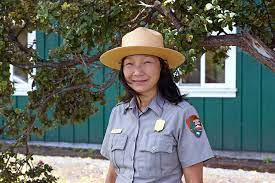
Top job: Hawa'i Volcanoes Superintendent Rhonda Loh. After
 Dark in the Park this Tuesday helps people to apply for
employment at the Park and other federal agencies. NPS photo
AFTER DARK IN THE PARK: How Do I Apply for a Federal Job? Shape America’s Future: Find Your Fit in the federal government. Join Park Ranger Ben Hayes, this Tuesday, Oct. 4 at 7 p.m. in Kīlauea Visitor Center Auditorium, as he explains how to find and apply for federal career opportunities. Hayes will demonstrate navigating the USAJobs website, share resume writing tips, and "how to find your fit" in the National Park Service and other federal agencies.
    Program is co-sponsored by Friends of Hawaiʻi Volcanoes National Park. For information, call (808) 985-6011. A $2 donation helps to support park programs. Park entrance fees apply.
To read comments, add your own, and like this story, see www.facebook.com/kaucalendar. See latest print edition at wwwkaucalendar.com. See upcoming events at https://kaunewsbriefs.blogspot.com/2022/04/upcoming-events-for-kau-and-volcano.html.

OCTOBER IS ENERGY AWARENESS MONTH. Hawai'i Energy issued a statement: "As we face record-breaking (and not in a good way) climate impacts and sky-high expenses, making smart choices about how and when we use energy matters more than ever. Hawai'i Energy encourages everyone to

"Level Up. Try one new habit as a family, like taking shorter showers, or maybe finally give that contractor a call about a more efficient water heater replacement." Hawai'i Energy urges replacing old appliances with ENERGY STAR® models, switching from incandescent or CFL to LED bulbs and "consider producing your own energy with renewable technologies, like a solar photovoltaic system."    For more ways to #LEVELUPNOW visit HawaiiEnergy.com/EAM.

To read comments, add your own, and like this story, see www.facebook.com/kaucalendar. See latest print edition at wwwkaucalendar.com. See upcoming events at https://kaunewsbriefs.blogspot.com/2022/04/upcoming-events-for-kau-and-volcano.html.

KA'Ū SCORED ONE TOUCHDOWN AGAINST HONOKA'A on Saturday, with the Dragons taking hold to the win the game on the Pāhala ballfield 36-6.

To read comments, add your own, and like this story, see www.facebook.com/kaucalendar. See latest print edition at wwwkaucalendar.com. See upcoming events at https://kaunewsbriefs.blogspot.com/2022/04/upcoming-events-for-kau-and-volcano.html.

Saturday, October 01, 2022

Ka‘ū News Briefs, Saturday, Oct. 1, 2022

The Jones Act is temporarily suspended for Puerto Rico, allowing foreign built ships to deliver needed cargo after a hurricane. Grassroot Institute of Hawai'i is asking for the same for Hawai'i to lower shipping costs. See opinion piece below.
Photo from Grassroot Institute of Hawai'i
THE FIRST-EVER PACIFIC ISLANDS COUNTRY SUMMIT, hosted this week by the U.S. President in Washington, D.C., was important in "enhancing connectivity and mutual aid, addressing climate change and meeting the geopolitical challenge of China,” according to Hawa'i Congressman Ed Case. He said, “Our country’s interests, and in fact our future, hinge on how we formulate, advance and strengthen our role and relationships in the Pacific.”
    Attending were leaders from: Cook Islands, Federated States of Micronesia, Fiji, French Polynesia, Nauru, New Caledonia, Palau, Papua New Guinea, Republic of the Marshall Islands, Samoa, Solomon Islands, Tonga, Tuvalu, Vanuatu, and the United States of America.
    During the summit, Pres. Joe Biden told the leaders of Pacific Island nations, “The security of America, quite frankly, and the world depends on your security and the security of the Pacific Islands.” He committed to returning the Peace Corps to Pacific Island nations, including Fiji, Tonga, Samoa and Vanuatu, and to establish U.S. embassies in Kiribati, Solomon Islands and Tonga. U.S. investments would go to battling climate resilience, maritime security, developing tourism, digital connectivity and law enforcement training.
    The effort is in part to offset the influence of China, which has been investing heavily into the economies of the Pacific Island nations.
    The Guardian reported a letter to the U.S. Administration from ambassadors attending the summit representing Federated States of Micronesia, the Republic of the Marshall Islands and the Republic of Palau asking for more help, particularly with climate change. The Guardian reported the letter saying the "primary point is that this [climate change] is our hottest and most important topic. We are unable to solve climate change, and unable to provide for our citizens’ education and health needs, unless and until these negotiations conclude, and conclude in such a manner that genuinely meet our development needs....The gaps between the needs of our peoples and what has been offered are narrowed, but are far from closed."
    Case noted that Hawai'i "serves as our gateway to the Pacific and Asia and is critical to the defense posture of our country in our half of the world. Hawai‘i will continue to have a unique role in the Pacific because of the values, history and identify we share with the rest of our island ‘ohana.”
    As a member of the House Appropriations Committee, Case has won Congressional approval for many initiatives focusing on Asia and the Pacific, including funding that includes: Millions for the Pacific Deterrence Initiative, in part to strengthen America’s contributions to Pacific Islands security-related concerns; $19.7 million in further federal funding for the East-West Center to advance Hawai‘i’s leadership role in the Indo-Pacific; and $4 million for the Defense Security Cooperation Agency’s Regional Centers. This funding will help expand the work of the Daniel K. Inouye Asia-Pacific Center for Security Studies.
The Peace Corps is planning to return to Fiji, Tonga, Samoa and Vanuatu,
according to commitments made at the Pacific Islands Country Summit,
hosted by the White House this week in Washington, D.C.
    
    On July 25, 2019, Case co-announced the formation of the first-ever Congressional Pacific Islands Caucus, which he serves as co-chair, saying, “I have been convinced for some time that our country’s and world’s future are in the Indo-Pacific, and the islands of the Pacific are a key yet too-often overlooked part of that region.” On July 30, 2020, Case co-introduced the BLUE Pacific Act, focusing on security, development and shared values.”
   Case and congressional colleagues urged the Administration to prioritize negotiations with the Freely Associated States of Micronesia and the Republic of Palau. The letter stated that “Compacts of Free Association, their subsidiary agreements and enacting legislation define a decades-old special and mutually beneficial relationship and provide our country with valuable economic and security benefits.” Case also pointed to a report released this month by the U.S. Institute of Peace, entitled China’s Influence on the Freely Associated States of the Northern Pacific.” It says that since achieving full sovereignty in the late 1980’s and early 1990’s “the FAS have considered the United States their most important partner on economic and security issues. However, in the last decade, and especially the last five years, China’s role in the region has grown.”
    On April 8 to 14, Case joined a Congressional delegation with stops in the Philippines and Papua New Guinea to foster and strengthen ties between the United States and the two countries, and attended the Our Ocean Conference in Palau. 5. On May 17, in testimony before the House Committee on Appropriations Subcommittee on State and Foreign Operations, Case said “we have made progress through renewed diplomatic and other efforts to engage Pacific leaders, including Secretary Blinken’s and Congress’ own travels to the region. However, without funding to support specific initiatives, visits alone and promises made will ring hollow. Now is the time to ensure that our foreign policy budget reflects the importance of our ties to the Pacific Islands and our support for a secure and stable Indo-Pacific, committed to an order based on mutual respect, cooperation and freedoms."

To read comments, add your own, and like this story, see www.facebook.com/kaucalendar. See latest print edition at wwwkaucalendar.com. See upcoming events at https://kaunewsbriefs.blogspot.com/2022/04/upcoming-events-for-kau-and-volcano.html.

HAWAI'I SHOULD RECEIVE AN EXEMPTION FROM THE JONES ACT, according to an opinion piece issued Saturday by Grassroot Institute of Hawai'i leader, Keli'i Akina:
    Watching the controversy unfold over the delivery of fuel to hurricane-ravaged Puerto Rico has been especially poignant to those of us who live in Hawai'i. It's hard not to look at the delay, political gamesmanship and dueling press statements and wonder how long it will be until Hawai'i is in a similar situation.
    As you may be aware, Puerto Rico was hit by Hurricane Fiona on Sept. 18. The storm killed 21 residents, caused serious flooding and left approximately 1 million people without electricity. The island is still recovering from the damage caused five years ago by Hurricane Maria, and it was immediately evident that Puerto Rico would need significant aid and support.
    Disaster relief has been finding its way toward the beleaguered territory, but an old barrier we in Hawai'i are all too familiar with is once again blocking the delivery of necessary goods: the 1920 Jones Act. This blatantly protectionist federal maritime law requires that all goods shipped between American ports be on ships that are U.S. built and flagged and mostly owned and crewed by Americans.
  The effect of the law on Hawaii and Puerto Rico — both of which are heavily dependent on waterborne imports — is to make goods more expensive and inhibit economic growth. Worse, when there is an emergency, aid is restricted to the few ships that meet Jones Act requirements. All of which explains why a ship carrying 300,000 barrels of essential diesel fuel from Texas sat off Puerto Rico's coast earlier this week, legally unable to dock. 
Image from Grassroot Institute of Hawai'i
    Why? Because the ship was not Jones Act compliant. For days, the ship sat there, a symbol of the Jones Act's failure, while politicians, lobbyists, activists and maritime experts argued over whether the Biden administration should allow it to dock and unload its cargo. Even before the issue of this one ship arose, prominent voices nationwide were calling for a general Jones Act waiver for Puerto Rico.
    As president of the Grassroot Institute of Hawaii, I wrote President Joe Biden asking him to authorize a one-year Jones Act waiver for the territory. In Congress, both Republican and Democratic senators and representatives added their voices. The New York City Council called for a general exemption. And so did the editorial boards of The Boston GlobeThe Washington Post and The Wall Street Journal, among many others in the media.
    When the issue of the one fuel tanker took center stage, even more people stepped forward. So why the delay in granting the waiver? Because the Biden administration has repeatedly proclaimed its support for the Jones Act — and the corporations and unions that support the law are well-heeled and highly focused on protecting their turf. But public pressure kept intensifying. So on Wednesday, after days of dispute, Homeland Security Secretary Alejandro Mayorkas granted a "temporary and targeted" waiver so the Marshall Islands-flagged vessel could deliver the fuel.
   The action confirmed that the Jones Act hurts people who need aid. If the Jones Act worked, there would be enough ships and enough maritime workers to deliver help in a crisis. It doesn't and there aren't. If the Jones Act worked, issuing waivers for areas with emergency needs — like Puerto Rico after a hurricane or
Image from Grassroot Institute of Hawai'i
the New England states trying to ensure sufficient liquid natural gas for the upcoming winter — wouldn't become a nightmare of political wrangling and bureaucracy.
    As this latest incident demonstrates, ordinary people suffer while lobbyists claim that the domestic merchant fleet will crumble if a foreign-built ship is allowed to deliver American fuel to Americans who were hit by a natural disaster.
    Reams of research produced by the Grassroot Institute of Hawaii and other organizations has shown that the Jones Act has failed to achieve its stated goals of boosting America's maritime industry and protecting national security.
    Yet, this law — crafted for long-ago era — continues to cause real harm to Puerto Rico. We in Hawai'i should be watching carefully, because one day we might be the ones begging for a waiver that will help us power our hurricane-ravaged communities. We should not wait for an emergency to start working to protect ourselves. Lawmakers at every level of government in Hawai'i should be doing what they can now to update the Jones Act for the 21st century.

 U.S. Drought Monitor shows an area of Extreme Drought,
in red, with east Ka'u in Moderate Drought in beige
and west Ka'u Abnormally Dry in yellow.
To read comments, add your own, and like this story, see www.facebook.com/kaucalendar. See latest print edition at wwwkaucalendar.com. See upcoming events at https://kaunewsbriefs.blogspot.com/2022/04/upcoming-events-for-kau-and-volcano.html.
EASTERN TIP OF SOUTH POINT IS IN EXTREME DROUGHT, EAST KAʻŪ IS EXPERIENCING MODERATE DROUGHT while west Kaʻū is Abnormally Dry, according to the U.S. Drought Monitor analysis released on Friday. None of the island is receiving its normal rainfall. The Severe Drought at Kalae means pasture conditions are poor and fire risk is high, according to the federal report.

To read comments, add your own, and like this story, see www.facebook.com/kaucalendar. See latest print edition at wwwkaucalendar.com. See upcoming events at https://kaunewsbriefs.blogspot.com/2022/04/upcoming-events-for-kau-and-volcano.html.