About The Kaʻū Calendar

Saturday, November 18, 2023

Kaʻū News Briefs Saturday, Nov. 18, 2023

Eucalyptus that was piled up years ago above Pāhala to haul and burn in Hū Honua's biofuel plant, which hasn't opened north of Hilo. Hū Honua is suing Hawaiian Electric, claiming the utility is responsible for the biofuel plant remaining idol.
Photo by Julia Neal

HŪ HONUA, WHICH PLANNED TO MAKE ELECTRICITY BY BURNNG EUCALYPTUS TREES GROWN AROUND PĀHALA, filed a suit Friday in federal court in an attempt to open its new but unused power plant on the coast north of Hilo. Hū Honua, which would haul eucalyptus logs from tree farms in Pāhala and up the Hamakua Coast, claims "Hawaiian Electric’s termination of Hū Honua’s power purchase agreement in January 2016 delayed Hawai‘i’s transition to renewable energy mandated by state law." 
    Hū Honua also states that feedstock for its biomass power plant would include woody invasive species. It contends that its "productive use of such overgrown and invasive species would benefit the environment
Life of the Land opposes Hu Honua's
efforts to burn wood to make electricity.

and mitigate well-documented wildfire risks presented by such overgrowth."
    Hū Honua's plans were earlier rejected by the Hawai‘i Supreme Court and opposed by Life of the Land. Arguments included the cost of electricity from cutting trees, hauling and burning them being more expensive than solar, wind, geothermal and hydroelectric. Other arguments included the environmental impact of hauling the logs long distance, and pollution from burning it at the factory on the coast.      
    Hū Honua argued that its method of energy production is "firm" and needed in the island's energy portfolio and that burning trees is not subject to variables of sun, wind, river flow and geothermal to make electricity.
    In its latest filing, Hū Honua contends that Hawaiian Electric violates antitrust laws with a monopoly that has caused direct harm to Hu Honua and Hawai‘i Island residents, who have been plagued by increasingly higher rates and grid reliability issues. It accuses Hawaiian Electric “with shameless arrogance and disregard not just for competition, but for the people, economy, and environment of Hawai‘i Island.” 

Hu Honua is suing Hawaiian Electric,
asking for $1 billion.
   Hū Honua asks the U.S. District Court to "end all monopolistic conduct and requests the Court award it more than $1 billion in antitrust damages." Hū Honua also requests that "Hawaiian Electric be ordered to transfer its Hamakua power plant, a facility Hawaiian Electric acquired via a 'straw purchase' scheme, to an independent owner to restore competition for the benefit of Hawai‘i Island ratepayers. This 'straw purchase' was designed to obscure Hawaiian Electric’s controlling interest after state regulators had denied its previous bid to acquire Hamakua," says the statement from Hū Honua.
    Daniel G. Swanson of Gibson, Dunn & Crutcher LLP, attorney for Hū Honua, said, “Hū Honua’s newly constructed facility would bring reliable, renewable energy to Hawai‘i Island at a competitive price, but sits idle today solely due to Hawaiian Electric’s predatory and anticompetitive conduct, which it has ruthlessly wielded to entrench and expand its monopoly over Hawai‘i’s power sector.”
   The statement says that Hawai‘i residents "already face the highest average electricity prices by far in the
Hu Honua lost in the Hawai'i Supreme Court
and is seeking relief in federal court.
United States—nearly three times the U.S. average price—due to costly imported petroleum products being burned in Hawaiian Electric’s aging and increasingly unreliable power generation facilities, whose costly operation continues to be extended and protected by Hawaiian Electric’s monopoly."
    Hū Honua contends that by keeping Hū Honua out of the market and acquiring the largest independent power plant on Hawai‘i Island in 2017, "Hawaiian Electric has cornered more than 90 percent and at times nearly 100 percent of all firm power generation capacity on the Island. Since 2017, ratepayers have seen their electric rates skyrocket by 50-100 percent or more while energy reserve margins have deteriorated, and the risk of power outages has increased. Hawai‘i Island residents have been instructed at least nine times between August 2022 and March 2023 to reduce power consumption during peak hours."
    Hawaiian Electric and Life of the Land have not yet responded or commented on Hū Honua's latest federal court filing.


Hawaiian was the first cultural component of Kaʻū presented
 at the Rural Health Community Association's 25th anniversary.
Photo by Julia Neal

KAʻŪ RURAL HEALTH COMMUNITY ASSOCIATION CELEBRATED ITS 25TH ANNIVERSARY on Saturday, with a program on the heritage of Kaʻū communities. Held at Pāhala Community Center, it included dance, music and food of people who migrated here, from Polynesians who became Hawaiians to Chinese, Japanese, Okinawan, Filipino, Korean, and Portuguese to Latin American immigrants who come here to work in agriculture. 
    National anthems from the homelands were played before short histories and presentations of traditional dress, dance, and music were given. Decorations featured the checkered palaka table cloths in red and white and blue and white, and centerpieces with flags of homeland countries pinned into peeled banana stalks. The cultural presentation was produced by Sophia Hanoa and Kaʻū Advisory Council, led by Kupuna Jessie Ke.
     The celebration also honored founder and Executive Director of Kaʻū Rural Health Community Association Jessie Marques, who is instrumental in numerous health initiatives, from Kaʻū Hospital being federally designated as a critical care facility to organizing Certified Nursing Assistant education and research on lung health during times of volcanic activity. The organization has also been active in promoting and cosponsoring vaccination drives during the COVID pandemic and into the future. Many of its youth members have developed careers in health.
Keiki wore the traditional dress of the many peoples who make up Kaʻū, including the Portuguese. Photo by Julia Neal

Mayor Mitch Roth and Kaʻū Rural Health Community
 Association founder and Executive Director Jessie
 Marques at the 25th Anniversary celebration.
Photo by Julia Neal
     Mayor Mitch Roth honored Marques with a certificate of appreciation. He recalled being involved with the organization at the time of its founding and praised Marques for the many years of hard work to build Kaʻū Rural Health Community Association to provide its services to the community. 
    Numerous current and former board members and other supporters were acknowledged, including CU Hawai‘i Federal Credit Union, which gave Kaʻū Rural Health Community Association $3,000 earlier this year.  
     The celebration wrapped up with food sampling from the cultures that make up Kaʻū and with a Taiko drumming group that invited the audience to participate. 


FENTANYL ARREST MONTHLY UPDATE has been released by Hawai‘i Police Department. HPD provides monthly updates on number of fentanyl-related arrests (possession/distribution) in Hawai‘i County and quantity of fentanyl recovered for the preceding month.
   During month of October, there were three fentanyl-related arrests, three in East Hawai‘i and zero in West Hawai‘i. Police recovered 43.69 grams of illicit fentanyl last month, 1.79 grams in East Hawai‘i and 41.9 grams West Hawai‘i. HPD recovered 312 fentanyl pills, with zero in East Hawai‘i and 312 in West Hawai'i.
    An HPD statement says, "Hawai‘i Police Department is committed to fighting drugs on the island and apprehending those that distribute and sell illegal narcotics. In recent years, the use of illicit fentanyl has reached epidemic proportions on the mainland and Hawai‘i. Criminal drug networks are mixing this
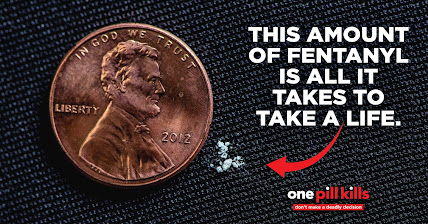
dangerous synthetic opioids into illegal counterfeit pills and selling them as legitimate prescription pills, often with deadly consequences." 
    HPD's Fentanyl safety tips: To learn how to recognize fentanyl poisoning, and more, go to HPD’s website: https://www.hawaiipolice.com/services/crime-tips#fentanyl.
    Have a drug tip? Information relating to illicit drug use and distribution, as well as vice issues such as prostitution, gambling, and other related crimes can be provided to Vice Sections 24-hour anonymous vice/drug tip hotline at (808) 329-“ZERO-ICE” (808) 329-0423 for Kaʻū, Kona, South Kohala, and North Kohala and to (808) 934-“VICE” (808) 934-8423 for Puna, South Hilo, North Hilo, and Hāmākua.
    How does the hotline work? Callers will be asked to provide information, but not name, address or telephone number. All information is kept confidential and within the Criminal Investigation Division.
    What happens to info? Information is cross-referenced, allowing detectives to determine if additional information related to the criminal activity about which you are calling has been reported in the past. Even “small” bits of information can at times provide detectives with the “missing link” that allows them to take action.


7,500 printed, 5,000 in the mail


Friday, November 17, 2023

Kaʻū News Briefs Friday, Nov. 17, 2023

Kauaha‘ao Congregational Church Bazaar on Saturday
The annual Fall Fundraiser Kauaha‘ao Church will be Saturday, Nov. 18 from 10 a.m. to 2 p.m. with vendors, teriyaki beef plate lunch, rotisserie chicken gravy bowl, baked goods, popcorn, crafts, and rummage sale. Location is on Hwy 11 in WaiʻōhinuPhoto by Debbie Wong Yuen
EXPANDING ACCESS TO HIGH QUALITY AFFORDABLE EARLY CHILDHOOD PROGRAMS in Hawai‘i will receive over $6.6 million from the federal Department of Health & Human Services. Its Preschool Development Grant Birth through Five program will provide the money to University of Hawai‘i to support existing child care programs in Hawai'i and to fund efforts "to better connect and align child care programs throughout the state," says a statement from Sen. Mazie Hirono.
    “In 2023, federal and state early learning opportunities will serve nearly 9,000 children and families in Hawai‘i,” said Hirono. “These programs provide supportive environments to build a strong foundation for our keiki and set them up to lead successful lives. Expanding access to high-quality, affordable early childhood programs has long been a priority of mine, which is why I am glad to announce this important investment. This funding will help children and families continue to access quality child care and early learning programs.”
        Earlier this year, Hirono and colleagues led 42 Senators who asked the Senate Appropriations Subcommittee on Labor, Health & Human Services, Education, and Related Agencies for a substantial increase in funding for PDG B-5 and other early childhood programs such as the Child Care & Development Block Grant program, Head Start, and Early Head Start. In 2018, she led a letter of support for the state Department of Human Services to receive an initial grant through PDG B-5. She advocated for funding to assist Hawai‘i’s plans to provide new and improve existing programming and services for children from birth to age five.
     "PDG B-5 helps states improve their child care and early learning programs. The funding is used to provide working families, and their children, with access to high-quality early childhood programs," says the Hirono statement. 


THE ADVANCED LAW ENFORCEMENT ACCREDITATION AWARD has gone to Hawai‘i Police Department for the fourth consecutive year. Police Chief Benjamin Moszkowicz said, “With only four
percent of police departments nationwide achieving CALEA accreditation, this recognition solidifies Hawai‘i Police Department's position as a leader in public service.” HPD received the Commission on  Accreditation for Law Enforcement Agencies' Advanced Law Enforcement Accreditation Award during a ceremony on Nov. 11 in Bellevue, Washington.
    A statement from the commission said, "Achieving CALEA accreditation is a challenging process in which the department must continuously demonstrate every year during a four-year cycle that it complies with more than 400 rigid CALEA® standards. It involves a dedicated team of department personnel reviewing and—when necessary—revising the department's General Orders, policies, and procedures to ensure they all meet CALEA® standards."
    Every year of the accreditation process a CALEA Service Manager conducts a web-based assessment, inspecting HPD’s files and interviewing personnel. In the fourth year of the accreditation cycle, a team of certified CALEA® assessors conducts an on-island assessment, visiting district police stations and facilities, examining all aspects of the department while focusing on HPD programs, their outcomes and effectiveness.
Anthony B. Purcell, President CALEA Executive Board, Sgt. Brian Souki, Sgt. Matthew Bartz,
 Lt. Levon Stevens, Clerk III Keahi Armitage, Chief Benjamin Moszkowicz, Deputy Chief
 Reed Mahuna, Craig Hartley, Jr. Executive Director, CALEA. Photo from CALEA
    The national assessment team held its on-island assessment in August and conducted interviews with community leaders to gauge HPD’s accreditation impact on the community. The final step of the accreditation renewal process featured members of the department, including the Police Chief, Deputy Chief Reed Mahuna, and HPD Accreditation Section staff appearing before the national CALEA® review committee to present and answer questions about the department's programs and outcomes.
    During the committee review, Moszkowicz formally recognized the department's Accreditation Section members for their dedication and hard work in achieving this coveted recognition. The HPD Accreditation Section is led by Lt. Levon Stevens and staffed by Sgt. Matthew Bartz, Sgt. Brian Souki, and Clerk III Keahi Armitage.
    The Police Chief said, "Our department’s Accreditation team works daily to ensure our department maintains the highest standards of professionalism, accountability, and community service, and I

am immensely proud of their unwavering commitment to help us achieve this prestigious accreditation.”
    Of the roughly 18,000 law enforcement agencies in the United States, only about 793 are CALEA® accredited. HPD first achieved accreditation 11 years ago, on Nov. 17, 2012, and was reaccredited twice on Nov.21, 2015, and Nov. 16, 2019.
    Community members seeking information about CALEA® and the accreditation process can visit the CALEA® website at calea.org. For questions about the Hawai‘i Police Department's accreditation program, please contact Lieutenant Levon Stevens at (808) 961-2260.


Keiki with special needs are invited to a surfing experience at Richardsons in Hilo on Friday, Nov. 24,
 an event from 9 a.m. to 3 p.m. sponsored by Surfers Healing. Photo from Surfers Healing
SURFERS HEALING INVITES KAʻŪ CHILDREN WITH SPECIAL NEEDS TO Richardson Ocean Park in Hilo on Friday, Nov. 24 from 9 a.m. to 3 p.m. Supported by Hawaiʻi County Department of Parks, it offers an opportunity to experience the thrill of riding the waves alongside skilled surfers and volunteers. Surfers Healing camps originated in California and are now held around the world, providing the opportunity for more than 6,000 children annually.
    The event aims to create a safe and supportive environment where children with special needs can connect with the ocean and enjoy the transformative power of the ocean waves. It embodies the spirit of inclusivity, compassion, and the healing power of the ocean.
   To participate in this event, interested individuals can sign up at www.surfershealing.org.
   Participants are encouraged to register in advance to secure their spot.
   For more information about the event, visit surfershealing.org or contact Recreation Specialist Kalani Kahalioumi at 808-238-6566.


HIGH SURF ADVISORY FROM the National Weather Service for all east-facing shores of Hawai‘i Island, from Upolu Point in North Kohala through Cape Kumukahi in Puna to South Point in Kaʻū has been extended through Saturday.
    Beach-goers, swimmers, and surfers exercise caution and heed all advice given by ocean safety officials, urges Hawai‘i County Civil Defense Agency.
    For more information, visit County of Hawaii Hazard Impact Map.


7,500 printed, 5,000 in the mail


Thursday, November 16, 2023

Kaʻū News Briefs Thursday, Nov. 16, 2023

Growing kalo organically would be a practice that could be supported by a new program through USDA, Hawai‘i Farmers Union United, U.H., and MAO Organic Farms. Dryland kalo was a crop grown in Wood Valley many years ago. Photo from HFUU
A TRANSITION TO ORGANIC PARTNERSHIP PROGRAM is open for applicants with the aim to support farmers and agricultural businesses in their journey from conventional farming methods to organic practices. The TOPP grant is a nationwide program and is a part of the USDA initiative to support the organic agriculture sector. The USDA is investing $300 million over five years to support the organic sector. USDA chose locally based partners to carry out the program.
    Hawai‘i Farmers Union United will provide mentorship, training, and outreach. The University of Hawai‘i CTAHR will provide Technical Assistance and Resources. MAO Organic Farms on O'ahu will provide Workforce Development and Field days. All three of the Hawai‘i partners are working in collaboration to help promote organic farming in Hawai‘i. "This is monumental since it is the first time that there has been a significant amount of resources for organic farming through the USDA," said a statement from HFUU.
    Program Overview: Farmers will be matched with a mentor to help guide them on the steps to transitioning to a certified organic operation through 90 hours of mentorship over a two-year period. Mentors will be experts in the field and will provide guidance on farming practices, methods of management, record keeping, and the application process. There are available resources to help make the transition (i.e. soil tests and similar) as well as a $500 stipend per farmer. Mentors will need to have a minimum of three years of experience working in a certified organic operation and will be compensated at an hourly rate.
    Who should apply? HFUU is seeking all interested farmers in crop production, livestock, value-added, or wild harvest. Applicants must have a desire to make the transition to certified organic and should be actively farming. New farmers are also encouraged to apply if they are planning on becoming a certified organic operation.
    How to become involved: Those interested in participating as a farmer or becoming a mentor, reach out to Christian Zuckerman at organictransitions@hfuu.org.


A FARM TO SCHOOL GRANT PROGRAM SEEKS APPLICATIONS. USDA Patrick Leahy Farm to School Grant Program is designed to help implement farm-to-school programming to increase access to local food in eligible schools, connect children with agriculture for improved health, and inspire youth to consider careers in agriculture. For more information and to apply, visit the program's website. Applications are due by Friday, Jan. 12, 2024. See https://www.grants.gov/search-results-detail/350548.


HAWAI'I RESIDENTS HAVE THE NINTH HIGHEST AVERAGE CREDIT SCORES in the country, according to a WalletHub study released on Thursday. With household debt on the rise, fueled by inflation and record-high interest rates, the personal finance website WalletHub released its report on the States
with the Highest & Lowest Credit Scores in 2023 to illustrate how people in different parts of the country are holding up financially. 
   The average credit score in Hawai‘i is 715, which ranks ninth highest in the U.S. Cassandra Happe, WalletHub Analyst. said, "It is encouraging to see these positive credit scores, despite the challenges that many consumers are facing with the current economy and inflation. These high scores are a sign that even though many Americans are struggling with financial obstacles, they are still prioritizing their debts."
    Highest credit scores are in Minnesota, New Hampshire, Vermont, Massachusetts, Wisconsin, North Dakota, Washington, South Dakota and Hawai‘i. The worst credit score is in Mississippi, followed by Louisiana, Alabama, Texas, Oklahoma, Arkansas, Georgia, Nevada and South Carolina.


KAPAPAHULIAU CLIMATE RESILIENCE PROGRAM will receive $20 million, according to U.S. Senator Mazie K. Hirono, a member of the Senate Energy and Natural Resources Committee, and local Hawaiian organizations can apply for funding. The program aims to help strengthen climate resilience in the Native Hawaiian community. The funding will support the U.S. Department of the Interior’s Office of Native Hawaiian Relations, which manages Kapapahuliau Climate Resilience Program. The program promises to provide Native Hawaiian organizations with resources to navigate the effects of climate change.
    Hirono said, “Compared to the rest of the country, Hawai‘i is unique in many ways—our food, our communities, our local culture—and the climate challenges we face are no exception. Sea level rise,

higher land and ocean temperatures, and invasive species all present serious challenges to our islands. By making $20 million available specifically for Native Hawaiian Organizations, this new program reflects the Biden-Harris administration’s commitment to supporting indigenous communities’ needs, values, and priorities. Environmental stewardship is an important part of Native Hawaiian culture, so I’m glad that this funding will be available to support the community’s efforts to combat the effects of climate change and strengthen climate resilience.”
    The funding is provided through the Inflation Reduction Act, which Hirono helped pass into law in 2022. The funding follows the Biden-Harris Administration’s release of the Fifth National Climate Assessment, a congressionally mandated report assessing the science of climate change in the United States, its impacts, and options for reducing present and future risk, including specific impacts on Hawai‘i and U.S.-Affiliated Pacific Islands.
    Office of Native Hawaiian Relations will host two 120-minute virtual pre-proposal informational sessions on Nov, 29 and Dec. 13 at 2:30 p.m. to provide an overview of the Kapapahuliau Program and address questions for interested applicants. The deadline to apply for funding is Thursday, Feb. 29, 2024.


WATER PREPAREDNESS FOR EXTENDED POWER OUTAGES is the message Thursday from county Department of Water Supply. It requires a significant amount of dependable electricity to move approximately 25 million gallons of water each day and deliver it to more than 45,000 homes, businesses, farms, and community facilities located throughout much of Hawai‘i Island. 
     Hawaiian Electric mentioned in its Nov. 3 statement on its Wildfire Safety Strategy, “If a fault or
disturbance is detected on a circuit, power lines in risk areas shut off automatically until crews visually confirm that it is safe to restore power. This may result in longer outages in some areas, including outages that last overnight” See www.hawaiianelectric.com/hawaiianelectric-advances-wildfire-safety-strategy-expands-grid-resilience-work
   Department of Water Supply reminded the public in its own statement Thursday that it utilizes backup generators at key well sites to help maintain a limited amount of water service during temporary power outages. However, an extended power outage could leave portions of DWS’ water systems empty and customers with no water. Should this scenario be anticipated, DWS stated that it "will instruct its affected customers to use their tap water only for drinking, cooking, and hygiene purposes to preserve the limited amount of available potable water. Irrigation, car washing, and non-essential uses of water would be suspended until power is restored. DWS strongly urges its customers and those who depend on a continuous supply of DWS water to review their personal situations and prepare accordingly. Customers should have alternate sources of potable water and enough supply to meet their essential needs during a prolonged power outage that disrupts DWS service."
     Ways to safely store drinking water are listed in the Water Emergency Preparedness guide available under the “Community” drop-down menu option on the Department’s website, www.hawaiidws.org. Updated messaging is posted at www.hawaiidws.org and at www.facebook.com/HawaiiDWS/. To reach DWS, call (808) 961-8050.

HAWAI‘I HAS ONE OF THE LOWEST RATES OF SMOKING AND NEW LUNG CANCER CASES. However, the American Lung Association's State of Lung Cancer 2023 report released this week ranks
Hawai‘i worst in the country for early diagnosis and five-year survival and ranks Hawai‘i below average in screening, lack of treatment and surgical treatment. Hawai‘i is sixth lowest in new cases, with least cases occurring in Utah, followed by New Mexico, California, Colorado, Wyoming and Hawai‘i. The most new cases of lung cancer are found in Kentucky, West Virginia, Mississippi. Tennessee, Maine and Missouri.
    Regarding smoking, in Hawai'i, 10.1 percent of adults smoke, fourth lowest in the country. Least  number of smokers is in Utah, followed by California, District of Columbia, Hawai‘i. Maryland and Massachusetts. Most smokers are found in West Virginia, followed by Arkansas, Tennessee, Kentucky, Mississippi and Louisiana.

Children watch from a distance during a volcanic eruption demonstration using liquid nitrogen
Trashcano eruption is created with liquid nitrogen during a school visit at UH Hilo.
UH Hilo photo by Meghann Decker.
CENTER FOR THE STUDY OF ACTIVE VOLCANOES training, school and community outreach on this island are the subject of this week's Volcano Watch, written by Center staff Darcy Bevens and Meghann Decker and presented by USGS Hawaiian Volcanoes Observatory:
    During volcanic crises, USGS Hawaiian Volcano Observatory plays a pivotal role, sharing information on activity and associated hazards with close partners on the Island of Hawai‘i, including the Mayor's Office, Hawai‘i County Civil Defense Agency, Hawaiʻi Volcanoes National Park, and Hawai‘i Emergency Management Agency. However, during non-crisis periods, HVO maintains a range of lesser-known partnerships with state and county agencies.
    One noteworthy outreach comes from the collaborative program between USGS and University of Hawaiʻi at Hilo, called Center for the Study of Active Volcanoes. Beyond its contributions to Center for the Study of Active Volcanoes International Training Program (See International Volcano Scientist Training Course Returns to Hawaii July 6 2023 at ), USGS Volcano Hazards Program upholds a cooperative agreement that facilitates UH Hilo students' working alongside HVO scientists and technical teams dedicated to monitoring Hawai‘i's volcanoes. It also supports an active hazards outreach program to educate Hawai‘i's keiki about our natural hazards and the importance of preparedness.
   To fulfill this educational mission, Center for the Study of Active Volcanoes launched an array of public outreach programs in the early 1990s, including community seminars, teacher training workshops, and school visits across the Island of Hawaiʻi. The team quickly recognized the eagerness of schoolchildren to learn about natural hazards, particularly enjoying hands-on demonstrations such as the tsunami wave tank and baking soda volcano. The outreach endeavors even extended to preschools, adhering to the adage, "If you plan for a year, plant kalo. If you plan for ten years, plant koa. If you plan for 100 years, teach the children."
CSAV staff Meghann Decker and UH Hilo Geology Alumni Sadie Nguyen
 talk with children at a Science Night. UH Hilo photo by Darcy Bevens.
    One of Center for the Study of Active Volcanoes' goals is to educate the general public on hazards associated with volcanoes, earthquakes, and tsunamis. This education encompasses both scientific aspects of hazards and strategies for mitigating risk. It emphasizes educating children and adolescents of Hawai‘i nei about the importance of emergency kits, evacuation plans, and effective communication during disasters. This cultural shift towards preparedness can save lives and reduce damage during hazardous events.
   The COVID-19 pandemic necessitated suspending face-to-face school visits. However, the Center for the Study of Active Volcanoes' staff is happy to have recently resumed in-person public outreach through classroom visits and community events. Hawaiian Volcano Observatory remains steadfast in its commitment to monitoring volcanoes in Hawai‘i, gathering data, assessing potential hazards, and disseminating information to relevant agencies and the public. Working in tandem emphasizes the importance of educating the younger generation. By engaging and educating youths on volcanic hazards, we can create a more resilient and informed community prepared to respond to and mitigate the impact of these events.
    While teaching natural hazards to schoolchildren, Center for the Study of Active Volcanoes staff noted that students exhibited a strong interest in science and local geology. Consequently, the outreach program expanded to include educational sessions for school groups on rocks and minerals, with a specific focus on Hawaiian volcanic products like pāhoehoe, pumice, and Pele's Hair. Students are encouraged to consider STEM (Science, Technology, Engineering, Math) courses, and, at events such as Career Day for high school groups, they are recommended to explore science programs at UH Hilo and Hawai‘i Community College.
     Center for the Study of Active Volcanoes' efforts are supported by the UH Hilo Geology department to facilitate mentorship, and to support science fair participants and visiting schools. Students are exposed to analytical equipment and spectacular demonstrations such as the Trashcano, a simulated volcanic eruption with a 50-gallon trash can and liquid nitrogen.
Double Ānuenue on Kīlauea Volcano
On Kīlauea volcano this morning, down Chain of Craters Road, NPS photographer Janice Wei captured this double ānuenue near Muliwai a Pele overlook. See more on Hawai‘i Volcanoes National Park at https://www.facebook.com/hawaiivolcanoesnps

    Working together, HVO, CSAV, and UH Hilo educate and inform Island of Hawaiʻi kamaʻāina. We hope to better prepare people of all ages, from keiki to tutu, for the range of natural hazards associated with volcanoes in our backyard that can potentially impact them. Look for CSAV at upcoming community events such as career days, Girl Scouts STEM, West Hawai‘i Exploration Fair, and school science nights.
   To learn more, visit the CSAV outreach page: https://hilo.hawaii.edu/csav/outreach.php.

Volcano Activity Updates:
    Kīlauea is not erupting. Its USGS Volcano Alert level is ADVISORY.
    The unrest associated with the intrusion that began in early October southwest of Kīlauea's summit continues. An earthquake swarm located immediately south of Kīlauea's caldera. which began Friday, Nov. 10, persists with moderate levels of seismicity and HVO continues to monitor this activity. Unrest may continue to wax and wane with changes to the input of magma into the area and eruptive activity could occur in the near future with little or no warning. The most recent sulfur dioxide (SO2) emission rate for the summit—approximately 100 tonnes per day—was measured on Oct. 19.
    Mauna Loa is not erupting. Its USGS Volcano Alert Level is at NORMAL.
    Webcams show no signs of activity on Mauna Loa. Summit seismicity has increased slightly in the past month, while ground deformation indicates slow inflation as magma replenishes the reservoir system following the 2022 eruption. SO2 emission rates are at background levels.
    No earthquakes were reported in the Hawaiian Islands during the past week.
    HVO promises to continue to closely monitor Kīlauea and Mauna Loa. Email questions to askHVO@usgs.gov.


7,500 printed, 5,000 in the mail.