About The Kaʻū Calendar

Saturday, June 01, 2024

Kaʻū News Briefs June 1, 2024

Kaʻū Coffee Festival Kicks Off
Kaʻū Coffee Festival kicked off with a recipe contest using Kaʻū Coffee in pupu, entree and dessert categories at Kaʻū Coffee Mill on Saturday. See the results, with local chefs wining in upcoming Kaʻū News Briefs. Kaʻū Coffee Festival Continues Wednesday with tours of Kaʻū Coffee farms, followed by a Mountain Hike & Lunch, Kaʻū Coffee & Cattle Day, Stargazing, and next Saturday, the Kaʻū Coffee Festival Ho'olaulea. See www.kaucoffeefestival.com.
Photo by Julia Neal
Opening Pule & Dance for Kaʻū Coffee Festival
Debbie Ryder's Halau Hula O Leionalni gave the opening Pule and dance to start the Kaʻū Festival Welcome Party
at Pāhala Plantation Managers House on Saturday. Events continue in the farms, rainforest, coffee mill and village 
throughout the week. See www.kaucoffeefestival.com. Photo by Julia Neal

OLOMEA IS KAʻŪ PLANT OF THE MONTH for June in the column Lāʻau Letters: Native Plants of Kaʻū by Jodie Rosam, with illustration by Joan Yoshioka. Olomea's scientific name is Perrottetia sandwicensis.
    Description: Olomea is a striking endemic tree in the Dipentodontaceae family (formerly in the Celastraceae family). Up until about 5 years ago, P. sandwicensis was the only recognized endemic species, until two botanists - David Lorence and Warren Wagner - documented a new species (P. wichmaniorum) from Kauaʻi. Olomea can be recognized by its finely-toothed light green leaves with prominent red veins and stems. Our friends on Maui refer to olomea as waimea (which is also another
name for a type of māmaki, probably because its red veins and stems resemble those of olomea). Olomea can grow short like a shrub or a small tree, but can break through the subcanopy where light gaps allow, reaching heights of 18+ meters (over 50 feet). The orange-to-red flowers bloom sporadically year young and are something to be admired when they do! The small (5 mm), bright red, and round juicy fruits dangle in panicles (clusters) from the branches and contain 2-4 shiny green seeds. Olomea wood is golden brown with a reddish tint, moderately hard, and straight grained.
    Uses: Olomea flowers and leaves were used to treat ʻea or thrush during childhood. Perhaps the most interesting use of olomea is that it was used to ignite fires. A large flat ʻaunaki (stick rubbed in obtaining fire by friction) of hard-wooded olomea was rubbed against soft-wooded hau (Hibiscus tiliaceus), and the friction would cause sparks and eventually was a means to ignite ahi (fire).
    Habitat: Olomea is a rather common understory species that can thrive in both wet and mesic forests 
Olomea is a favorite plant for native Hawaiian snails,
called kāhuli. Photo from EMWP
on all of the main Hawaiian Islands (except Kahoʻolawe and Niʻihau) at elevations from about 1,000 to 6,000 feet. Although it is not a rare species to encounter as a mature tree, seedlings are much less commonly seen (you can imagine how tasty the juicy berries are to rats and feral pigs). This again highlights the importance of protecting our native forest species from external pressures, primarily those of feral mammals. In Kaʻū, olomea can be admired in elevations above about 3,000 feet where the native forest remains (relatively) intact. Growing and Purchasing: While I have never seen olomea grown and marketed for landscaping, it absolutely should be! However, some specialty small-op nurseries may be able to grow some out, so if you are interested, please contact the author. If you do get your hands on an olomea (or two or three, remember that plants need friends, too), be sure you give it plenty of water and plant it in a location with at least partial shade. This species loves rich, organic soils, so mimic forest understory conditions as much as possible. Once your olomea establishes, you can enjoy its gorgeous fruiting season (roughly October-December) which is really something to admire. And of course, if you are up for it, maybe you can even try getting your campfire (safely) started using olomea!

To read comments, add your own, and like this story, see facebook.com/kaucalendar. See upcoming events, print edition and archive at kaunews.com. Support this news service with advertising at kaunews.com. 7,500 copies in the mail and on stands.

ZONTA CLUB OF HILO is accepting microgrant applications to provide funding for women-owned small businesses on Hawai'i Island. Women entrepreneurs who are seeking financial support are encouraged to apply.
    The Pay It Forward program goal is to help women in the community start up or expand a business through a microgrant intended to give a helping hand. Each grant will be up to $2,000. Awardees are encouraged to "Pay It Forward" when they are financially able.
   "After a record-breaking number of applications in 2023, the club is thrilled to increase funding from $6,000 to $10,000 in order to assist even more female business owners," said Zonta Club of Hilo President Julie Tulang.
   "Helping women to succeed and improve our communities advances the mission of Zonta. Pay It Forward is one of the many programs our club offers to empower women and girls through service and advocacy," Tulang added.
    The Pay It Forward program of the local chapter of Zonta was launched in 2014 with an initial generous donation from Nancy Cabral, a Zonta member and owner of Day-Lum Rentals & Management, Inc. Cabral's desire was to encourage other women to achieve financial independence and business success. Since its inception, many other generous donors have contributed to these microgrants for women entrepreneurs.
    Applications are being accepted by midnight HST on July 31, 2024. The online application is available at https://zontahilo.org/pay-it-forward-microgrant/
    The Zonta Club of Hilo was founded in 1950 and is a member of Zonta International, whose mission is to build a better world for women and girls. For more information, visit zontahilo.org or email info@zontahilo.org.

To read comments, add your own, and like this story, see facebook.com/kaucalendar. See upcoming events, print edition and archive at kaunews.com. Support this news service with advertising at kaunews.com. 7,500 copies in the mail and on stands.


Friday, May 31, 2024

Kaʻū News Briefs May 31, 2024

Bolo will play at the Kaʻū Coffee Festival Opening Party on Saturday, June 1, Bolo co-wrote the song about the place in
Kaʻū named Kaiholena during an earlier Kaʻū Coffee Festival. The event is 6 p.m. to 9:30 p.m. at Pāhala Plantation House.
Photo from the 'ekahi album cover.

IN SUPPORT OF KAʻŪ COFFEE AND ITS FESTIVAL, June 1-8, 'Ohana Foods has announced that it will establish a special section, long term in its Mizuno Superette in Pāhala, for the No Mark Up sales and promotion of Kaʻū Coffee. 'Ohana Foods founder Carl Okuyama said the Mizuno Coffee Program will 
refrain from marking up from the wholesale price of Kaʻū Coffee as a way to make it more affordable to local residents and to visitors. 
    Okuyama also operates 'Ohana Foods adjacent to the '76 in Na'alahu, and 'Ohana Foods in Hilo. 
     Okuyama said he wants to support the Kaʻū Coffee community of small farmers and give them additional opportunities to spread their brand names in the community and beyond. 
    He will be available to talk to farmers and the public at the Kaʻū Coffee Festival Opening Party on Saturday. June 1 from 6 p.m. to 9:30 p.m. at Pāhala Plantation House on the corner of Maile and Pikake Streets.
     Also attending and available to meet the public will be County Council member Michelle Galimba, state Rep. Jeanne Kapela and members of the Kaʻū Coffee Growers Cooperative with its President Gloria Camba. In addition, Connie Koi, CFO of Punalu'u Bake Shop will attend and guests will be able to sample the new Voyager, Espresso Energy Bar, made at Punalu'u Bakeshop with local ingredients including Kaʻū Coffee. Another local enterprise at the event will be Volcano Winery with wine tasting. 
     Founder of Kaʻū Coffee Mill, and major supporter of Kaʻū Coffee Festival for many years, Edmund C. Olson, will be a special guest. Chris Manfredi, an organizer of past Ka'u Coffee Festivals and a lobbyist for coffee legislation and broker in the Kaʻū Coffee business, is also expected. The event will host many sponsors of the Kaʻū Coffee Festival and provide them the opportunity to meet the farmers.
     Entertainment will be by keiki of Debbie Ryder's Halau Hula O Leionalani, The Jazz Gardeners, Bolo and the Mexican dance ensemble Ballet Folklorico La Negra. 

To read comments, add your own, and like this story, see facebook.com/kaucalendar. See upcoming events, print edition and archive at kaunews.com. Support this news service with advertising at kaunews.com. 7,500 copies in the mail and on stands.


FLIGHT OPERATIONS BY HAWAI'I VOLCANOES NATIONAL PARK are announced for June:
    June 4 and 7 between 6:30 a.m. and 11 a.m. for ʻuaʻu (Hawaiian petrel) monitoring on Mauna Loa, between 4,000- and 9,000-ft. elevation.
    June 6 between 6 a.m. and 7 a.m., for vegetation surveys in the Kahuku Unit between 5,000- and 7,000-ft. elevation.
    June 24 between 8 a.m. and 11 a.m. for survey and control of banana poka on Mauna Loa between 3,800- and 6,800-ft. elevation.
'Ua'a fish at sea and nest in the mountains.
HVNP photo
    
    June 27 between 8 a.m. and 11 a.m. for invasive guinea grass control work in the coastal backcountry from sea level to 2,400-ft. elevation.
    USGS Hawaiian Volcano Observatory may conduct additional flight operations over Kīlauea and Mauna Loa to assess volcanic activity and maintain instrumentation.
   An announcement from the Park says it regrets any noise impact to residents and park visitors. Dates and times are subject to change based on aircraft availability and weather.
   "Management of the park requires the use of aircraft to monitor and research volcanic activity, conduct search-and-rescue missions and law enforcement operations, support management of natural and cultural resources, and to maintain backcountry facilities."


Thursday, May 30, 2024

Kaʻū News Briefs May 30, 2024

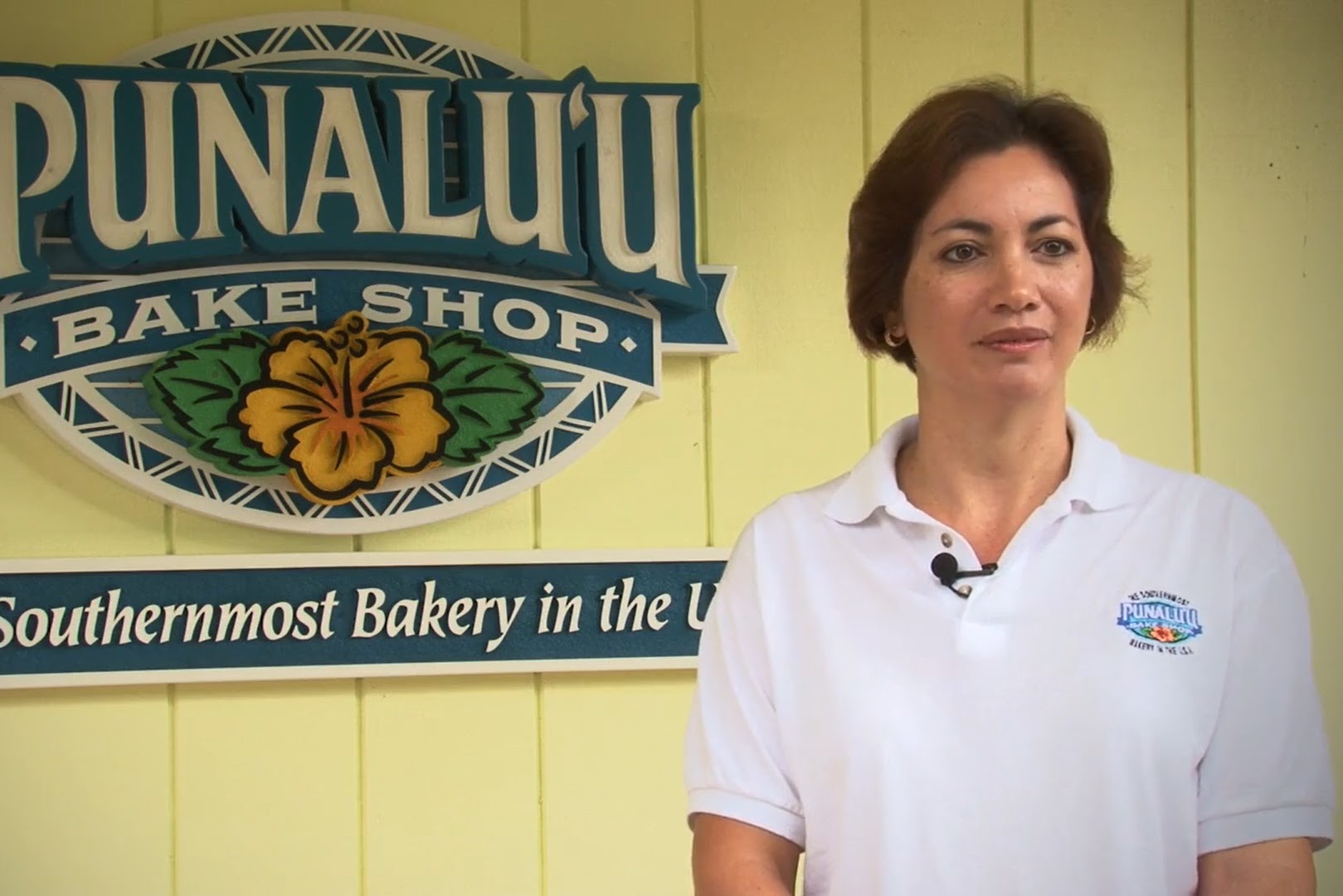
Connie Koi, Chief Financial Officer of Punalu'u Bake Shop, announces the launch of Voyager, Hawai'i's Energy Bar. 


VOYAGER BARS, SOME MADE WITH KAʻŪ COFFEE, ARE A NEW PRODUCT manufactured in Nāʻālehu by the 48 employees of Punalu'u Bake Shop. A statement from Punalu'u Bake Shop's Chief Financial Officer Connie Koi describes the origins of Voyager, Hawai'i's Energy Bar.
   "When ancient Polynesians paddled their canoes to the islands of Hawai'i, they carried precious life-sustaining cargo: ulu (breadfruit), niu (coconut) and maʻa (banana). Today, Punaluʻu Bakeshop is honoring the rich cultural heritage of these traditional 'canoe foods' with its new Voyager Bars – nutritious energy bars made with ulu, niu and maiʻa plus other delicious quality ingredients to support the health and active lifestyles of Hawaii’s residents and visitors. The only energy bars made in Hawaiʻi, the Voyager Bars are baked at Punaluʻu Bakeshop, located in Nāʻālehu on the southernmost part of Hawaiʻi Island."
    Voyager Bars are dairy free, grain free, soy free, egg free and non-GMO. Each 41-gram bar contains breadfruit flour, coconut flour and dehydrated banana and provides 3.5 grams of protein from vegan ingredients including sunflower seeds, pumpkin seeds, chia seeds and pea protein. The bars are naturally sweetened with honey and tapioca syrup. 
    Koi said, “Our goal was to create energy bars that are richly delicious and healthy, featuring the foods that provided sustained energy and vital nutrition for the earliest Hawaiians. While other energy bars are imported to Hawaiʻi, our amazing crew of local Kaʻū residents bake our Voyager Bars right here at our locally owned bakery in Nāʻālehu.
    “Voyager Bars are perfect as an easily digestible, tasty snack when you need energy for work or school, as well as for swimming, surfing, paddling, hiking or other sports. They are individually wrapped and don’t require refrigeration, so you can tuck them into a lunch box, bag, backpack or purse.” 
    Voyager Bars are available in three flavors:
    Dark Chocolate Espresso features locally sourced Kaʻū coffee from Hawaiʻi Island, with rich notes of dark chocolate complimenting the bold, invigorating essence of espresso. 
    Pineapple Coconut Macadamia offers a delightful fusion of tropical flavors, including sun-ripened pineapple, dehydrated bananas, macadamia nuts and rich coconut. 
   Chocolate Chip Ginger blends dark chocolate chips with the invigorating zing of tropical ginger. 
   Voyager Bars are available in KTA, Foodland, Sack & Save, ABC Stores, Nāʻālehu 76,  Abundant Life Natural Food Store in Hilo as well as at the Punaluʻu Bakeshop and Visitor Center in Nāʻālehu. The price per bar at most retail outlets ranges from $2.49 to $2.99. A box of 12 bars can be purchased at the Punaluʻu Bakeshop for $23.88 or $1.99 per bar. 
     Established in 1991 in Nāʻālehu and locally owned, Punaluʻu Bakeshop and Visitor Center is known for its world-famous sweet bread (in flavors including taro, guava and honey whole wheat), fresh malasadas, irresistible tropical-flavored cookies and baked goods, fresh-brewed Kaʻū coffee and beverages, salads, sandwiches and local-style plate lunches.
    The most visited bakery in the state of Hawaiʻi, Punaluʻu Bakeshop is located on Mamalahoa Highway (Route 11) midway between Kailua-Kona and Volcanoes National Park in the town of Nāʻālehu. It welcomes more than 400,000 visitors from near and far every year, who enjoy strolling the tropical landscaped grounds, shopping in its gift shop and dining in comfortably shaded gazebos. 
    In addition to employing the 46 local residents, Punaluʻu Bakeshop, has a proud tradition of supporting local community groups with fundraisers featuring its bread and local products. To learn more, visit www.bakeshophawaii.com

To read comments, add your own, and like this story, see facebook.com/kaucalendar. See upcoming events, print edition and archive at kaunews.com. Support this news service with advertising at kaunews.com. 7,500 copies in the mail and on stands.

UNITED PUBLIC WORKERS LOCAL 646 ENDORSED C. KIMO ALAMEDA FOR MAYOR on
Thursday. UPW State Director Kalani Werner said he believes that "Dr. Kimo has the vision and experience to help improve the lives of its members and their families." UPW Local 646 is the Hawaii chapter of the American Federation of State, County and Municipal Employees (AFSCME) and a member of the Hawaii AFL-CIO.
    Alameda attended the UPW interview in April and was the unanimous choice for mayor. "I am so 

humbled by the UPW leaders and their nearly 1,500 county employees islandwide and over 13,000 statewide. Hawaii County public workers are the backbone of our county's infrastructure and operations. We count on them in almost every department for park maintenance, janitorial services, environmental management, wastewater, landfill operations, roads, painting, carpentry, and other blue-color services. These are dedicated hard working people who care about the future of our island. I am very grateful for their courageous support and commitment to a better Hawaii." 
    The Alameda campaign statement says, "Alameda has a long list of accomplishments and leadership positions in both the private and public sector and is grateful for another major endorsement following the recent endorsement by the Hawaiʻi Iron Workers Union Local 625 back in February.'
    More information on Alameda and his candidacy can be found at www.kimoformayor.com.

To read comments, add your own, and like this story, see facebook.com/kaucalendar. See upcoming events, print edition and archive at kaunews.com. Support this news service with advertising at kaunews.com. 7,500 copies in the mail and on stands.

BEYOND THE LAVA: MAUNA LOA'S DEFORMATION STORY is title of this week's Volcano Watch,
the weekly column by USGS Hawaiian Volcano Observatory scientists and affiliate:
    Mauna Loa volcano stands as the largest and most active volcano on Earth. With a rich history of eruptions that have shaped the Island of Hawaʻi's geography, Mauna Loa has captivated the fascination of scientists, residents, and people worldwide. Let's take a closer look at how Mauna Loa's surface deformation has changed over the last several decades, focusing on its three most recent eruptions.
most recent eruptions.
    By comparing data from past eruptions, scientists gain valuable insights into a volcano's patterns and cycles. This knowledge helps us better understand a volcano's behavior, preparing us for future unrest and allowing us to communicate potential hazards to nearby communities.
    Global Positioning System (GPS), borehole tiltmeters, Interferometric Synthetic Aperture Radar (InSAR), and seismometers are currently the primary geophysical instruments for measuring changes and unrest at volcanoes. These have replaced older, less advanced surveying instruments that were used in the past.
Color image of scientist next to survey equipment and truck
HVO scientist setting up temporary GPS equipment south of Kaluapele (the summit caldera of Kīlauea volcano).
The long profile of Mauna Loa volcano is prominent in the background. USGS image by D.A. Phillips.

    The most recent Mauna Loa eruptions in 1975, 1984, and 2022 each offer unique insights into this volcano's eruptive behavior.
    In 1975, lava suddenly flowed from Mauna Loa's summit, creating a mesmerizing sight. The eruption lasted less than a day. Although brief, it left its mark on the landscape, reminding us of the volcano's power and unpredictability. Prior to the 1975 eruption, Mauna Loa showed slight extension across the summit caldera in 1974, indicating inflation. There was also an uptick in seismic activity beforehand. After the 1975 eruption, Mauna Loa inflated by about 8 inches (20 centimeters) across its caldera between 1975 and 1976.
Mauna Loa 1975 eruption. Lava fountains up to 20 m (65 ft) high
 erupted from fissures on the north flank of the volcano early
 Sunday morning, July 6, 1975. USGS imager
    Nine years later, Mauna Loa came to life again. This time, there was almost a year of clues indicating an eruption could be coming. Some of these included elevated rates of ground inflation and increased numbers of earthquakes. USGS Hawaiian Volcano Observatory (HVO) scientists were able to detect changes in the volcano and were able to communicate to the public that there was a high likelihood for an eruption.
    In March 1984, the volcano erupted with renewed vigor. This time, the eruption lasted longer, spewing lava for 22 days. The lava flowed from the summit, creeping down the northeast flank of the volcano from fissures on the volcano's Northeast Rift Zone. As lava was erupted on the surface of the volcano, it deflated. Then, after the eruption stopped, Mauna Loa reinflated for more than a year and a half.
   Following decades of quiet, Mauna Loa stirred from its slumber once again in 2022. With increased seismic activity beneath its summit and notable surface deformation starting in September 2022, Mauna Loa signaled its awakening. HVO scientists worked with the Hawaii County Civil Defense Agency to inform communities about the potential for an eruption. On November 27, 2022, lava began to flow—first in the caldera, to the south caldera, and then to the Northeast Rift Zone. The eruption lasted for two weeks, captivating the world with its awe-inspiring display of molten lava flows.
View of the Mauna Loa eruption before dawn Nov. 29, 2022 morning from Hwy 11 between
Pāhala and Volcano at Mile Marker 34. Photo by Tanya Ibarra
    Following all three eruptions, reinflation was very fast right after lava effusion ended but gradually waned over the following years. Maybe more interesting are the differences in Mauna Loa's detectable behavior before each of these eruptions. There were small changes in ground deformation and many earthquakes before the 1975 summit eruption, whereas the 1984 and 2022 eruptions were proceeded by many earthquakes and major ground deformation.
    It's possible that small and short-lived Mauna Loa summit eruptions like 1975 may not show as intense precursors compared to larger, longer eruptions with rift-zone activity. It's also possible that the differences in technology, improved instrumentation, and data collection techniques between the 1970s and today contributed to the improved detection of volcano deformation in 2022 compared to previous eruptions.
    As Mauna Loa slumbers once more, HVO scientists continue to monitor the volcano with advanced technology, refining our understanding of its behavior and enhancing early warning systems. Ground deformation prior to and after recent Mauna Loa eruptions have provided us with insights into the patterns of behavior, and we will only learn more during future unrest and eruptions.

Volcano Activity Updates
    Kīlauea is not erupting. Its USGS Volcano Alert level is ADVISORY. Earthquake activity beneath Kīlauea's summit region continued at relatively lower levels over the past week. There were less than 50 earthquakes detected each day, with magnitudes smaller than 2 and depths concentrated between 2-4 km (1.2-3.1 miles) beneath the surface. Tiltmeters near Sand Hill and Uēkahuna bluff continued to record inflationary trends. Kīlauea's summit region remains pressurized, and changes could occur quickly moving forward. See the Information Statement published on May 2 for background information: https://volcanoes.usgs.gov/hans-public/notice/DOI-USGS-HVO-2024-05-03T07:42:02+00:00.
    Mauna Loa is not erupting. Its USGS Volcano Alert Level is at NORMAL.
    Webcams show no signs of activity on Mauna Loa. Summit seismicity has remained at low levels over the past month. Ground deformation indicates continuing slow inflation as magma replenishes the reservoir system following the 2022 eruption. SO2 emission rates are at background levels.
    No earthquakes were reported felt in the Hawaiian Islands during the past week.
    HVO continues to closely monitor Kīlauea and Mauna Loa.

To read comments, add your own, and like this story, see facebook.com/kaucalendar. See upcoming events, print edition and archive at kaunews.com. Support this news service with advertising at kaunews.com. 7,500 copies in the mail and on stands.

Ballet Folklorico La Negra joins the Kaʻū Coffee Fest opening event on Saturday.
KAʻŪ COFFEE FESTIVAL'S WELCOME PARTY, open to the public this Saturday, June 1, will welcome
Ballet Folklorico La Negra, under the direction of Carmina Machuca. She has been dancing since childhood and carried the folk traditional Mexican dance from her home region in Mexico to Hawai'i. 
    She noted the long history of Mexican people living and working in Hawai'i, including the first cowboys who came here centuries ago. Members of the dance group are Marlina Lee Shirley, Claudia Harz, Carla Blevins and Marle Villatoro. The Mexican dance group is sponsored by Aloha Latinos Hawai'i and its president and coffee farmer Armando Rodrigues.
    Also dancing will be keiki from Halau Hula O Leionalani.
    Musical entertainers for the Saturday event are the Jazz Gardeners and Bolo. The event welcomes the public to meet the farmers and sponsors of this first Kaʻū Coffee Festival since the pandemic. The location is Pāhala Plantation House, corner of Maile and Pikake, 6 p.m. to 9:30 p.m.

To read comments, add your own, and like this story, see facebook.com/kaucalendar. See upcoming events, print edition and archive at kaunews.com. Support this news service with advertising at kaunews.com. 7,500 copies in the mail and on stands.