About The Kaʻū Calendar

Saturday, March 17, 2018

Ka‘ū News Briefs Saturday, March 17, 2018


An endangered sea turtle, overshadowed by a piece of polystyrene foam rubbish. Photo from @erinmdillon Twitter
A STATEWIDE BAN ON SELLING PREPARED FOODS IN STYROFOAM CONTAINERS is moving through the Hawaiʻi Legislature. The state House of Representatives Committees on Energy & Environmental Protection and Health & Human Services approved the measure on Friday, March 16. The Senate passed the bill on March 6. Without House amendments, it would go straight to the governor for his signature, according to groups supporting the measure.     Hawaiʻi Wildlife Fund, Recycle Hawaiʻi, Plastic Free Hawaiʻi, Kōkua Hawaiʻi Foundation, Surfrider Foundation, and others have advocated for a full ban on use of polystyrene foam in the state for over ten years. These groups have also gone to county governments to propose the ban.
     Senate Bill 2498 SD2: "Prohibits the sale of polystyrene foam containers and serving of prepared foods using polystyrene foam containers statewide. Authorizes the department of health to include within its administrative rules a requirement for prepared food vendors to educate their customers about proper disposal of nonreusable food containers and litter reduction," says the bill summary on the legislature website.
     Scheduled to take affect July 1, 2019, the bill's intent, according to its description, is to lower the leaching of styrene, a known carcinogen, into the environment and the local food chain - as it contributes to the potential death of marine animals and avian populations through ingestion. It also aims to limit the amount of visible litter, as it negatively affects the tourism industry.
     About 500 testimonies came into the legislature, all but seven in support. Those in opposition represent interest groups and companies connected to the food container industry.
     Chamber of Commerce Hawaii claimed the bill will raise food costs, hurt small businesses and increase prices to consumers by raising the cost of containers. It could also affect jobs connected to manufacturing containers, the Chamber stated. "Creating a mandate for the use of compostable and other plastic containers stifles the free market place, where businesses and consumers have the right to choose among the various types of safe, FDA approved food service containers."
Styrofoam bans have also been proposed on the county level around
the state, with this symbol as one of the images submitted with testimony.
     The Hawaii Restaurant Association testified: "The majority of restaurants that use polystyrene food containers are usually smaller ethnic restaurants with cost as one of the determining factors but their primary reason is safety and performance of the packaging because of the heat and moisture of the food they serve (Chinese, Korean, Filipino, and general plate lunches). Polystyrene packing provide product integrity in holding and safety in transporting the any delicious varieties of ethnic foods here in Hawaii."
     K Yamada Distributors, a packaging distributor, claimed, "A ban that singles out food-grade EPS food containers does little to reduce litter or ocean debris harmful to marine life and the environment. Litter is litter; there is no such thing as environmentally responsible litter."
     American Chemistry Council stated that its members "certainly support efforts to reduce litter and marine debris; however, tackling this issue requires a broader approach to improving waste management."
     The Plastics Industry Association stated they remain, "committed to the recycling of plastic products... to fight pollution and make recycling easier and more available. Marine debris is a serious issue, however the discriminatory approach of selecting and eliminating a given type of food service product has proven an ineffective method to address the issue."
     Matthew Rose of Sanikleen Corporation USA called the bill, "a 'feel good' measure to try and please constituents, most of whom do not have a good understanding of the negative impacts, including further increases in food and menu item prices, as well as to take the easy way supposedly addressing our litter problem by forcing an already struggling and challenged industry to make up for the general irresponsibility of those consumers who can't properly dispose of used items, or don't care about how much trash and litter they propagate."
Polystyrene foam rubbish from food containers, jumbled together. Photo from Surfrider Foundation O‘ahu Chapter
      Tina Yamaki, President of the Retail Merchants of Hawaii, wrote: "Bans are not the simple answer. This government mandate would place an undue burden on grocers, restaurants, mom & pop establishments, non-profits organizations and others as their cost of business would increase... Yes we are aware that the cost of the containers has decreased, however often they are still more expensive than the polystyrene containers. And the effective date would not allow for many businesses to use up the inventory that they already purchased."    
     The remainder of the approximate 500 testimonies were all in favor of banning the use and sale of the foam containers. Many of these supporting testimonies were from individuals associated with and owners of small restaurants. A new program lists of over 150 registered ocean-friendly Hawaiʻi restaurants - one criteria of which is a complete absence of foam containers; they can be found at oceanfriendlyrestaurantshawaii.org.
     Read testimonies here.

To read comments, add your own, and like this story, see Facebook. Follow us on Instagram and Twitter. See our online calendars and our latest print edition at kaucalendar.com.

An evening view of Kīlauea Volcano's summit lava lake in the "Overlook crater" within Halemaʻumaʻu. Since 2008, when the vent first opened, this crater has grown from 115 feet wide to about 919 by 656 feet in size. The shield-shaped top of Mauna Loa can be seen in the distance (top center). 
USGS photo by M. Patrick
KῙLAUEA VOLCANO'S SUMMIT ERUPTION IS NOW A DECADE OLD, states this week's Volcano Watch, written by U.S. Geological Survey Hawaiian Volcano Observatory scientists and affiliates.
     A little more than ten years ago, conditions around Kīlauea Volcano's summit were much different than today. The caldera floor was open to the public, and the air above it was normally clear. Halema‘uma‘u was an impressive sight, but peacefully in repose.
     That quiet phase at Kīlauea's summit ended abruptly in 2008, ushering in a new era of lava lake activity that continues today. Here is a review of the past decade of this summit eruption:
     After several months of increased seismic tremor and gas emissions, there was a small explosion in Halema‘uma‘u on March 19, 2008. The explosion marked the opening of a new crater, informally called the "Overlook crater." During the remainder of 2008, several more explosions deposited spatter around Halema‘uma‘u, and the Overlook crater enlarged through collapses of its rim.
     During 2009, small lava lakes were sometimes active deep within the Overlook crater. But since early 2010, the lava lake has been continuously present, steadily growing and rising higher.
     The rise was interrupted on March 5, 2011, when the lava lake briefly drained away due to the Kamoamoa eruption on Kīlauea's East Rift Zone.
     The lava lake stabilized in 2012, rose to a higher level in 2013, and remained stable in 2014 and early 2015. In April 2015, the lava lake rose abruptly and briefly overflowed, spilling lava onto the floor of Halema‘uma‘u. High lake levels in 2016 allowed lava to be frequently observed from public viewing areas in Hawaiʻi Volcanoes National Park, but a gradual drop in 2017 has made direct viewing of the lake less common over the past year.
Just before noon on March 15, HVO's summit webcam (KIcam) captured this striking image of Kīlauea Volcano's ongoing summit eruption. A small rockfall on the north side of the Overlook crater triggered a small explosion in the lava lake, sending a dark-colored ash plume skyward. Visitors (lower right) who happened to be looking toward Halema‘uma‘u from the Jaggar Museum Overlook in Hawai‘i Volcanoes National Park witnessed the event, but were in no danger from it given their distant vantage point. USGS photo
     The lava lake activity in 2018 is similar to that during the previous several years - relatively steady - and there are no signs that the summit eruption is slowing down.
     Halema‘uma‘u now hosts one of the two largest lava lakes on Earth. It is likely the largest, but this cannot be said with complete certainty, as regular measurements are not available from the closest contender - Nyiragongo volcano in the Democratic Republic of the Congo.
     Most persistent lava lakes are difficult to access, either due to geographic location (for example, Erebus in Antarctica) or political instability (for example, Nyiragongo). The size and accessibility of the Halema‘uma‘u lava lake, as well as the existing network of monitoring instruments, make it one of the premier locations to study lava lake behavior.
     USGS Hawaiian Volcano Observatory scientists, along with collaborators from other institutions, are engaged in research to understand how the lava lake works and what it can tell us about the behavior and hazards of Kīlauea. For instance, we have learned that the lake rises and falls in concert with changes in summit ground tilt. This tells us that the lake responds to the pressure of the magma chamber, so the lake level can be used like a pressure gauge.
HVO's HMcam also captured an image of today's rockfall and 
subsequent explosion (upper right) as it occurred. USGS photo
     The lake also fluctuates in concert with the lava pond at Pu‘u ‘Ō‘ō on Kīlauea's East Rift Zone, illustrating the hydraulic connection between the two eruption sites. Lava chemistry at the two sites is also similar, adding further evidence of a close connection.
     Another important finding deals with the nature of small explosions that occur at the lava lake from time to time. HVO webcams revealed that the explosions are triggered by rockfalls from the Overlook crater rim impacting the lake surface. This observation is further evidence that the lava lake is very gassy, akin to lava foam. Rocks falling into this gas-rich, frothy lava triggers violent releases of gas that sends spatter flying.
     While the summit eruption has benefited science, it comes with many challenges, including persistent volcanic air pollution (vog) resulting from elevated sulfur dioxide gas emissions from the lava lake. Vog impacts the entire State at times, but the Ka‘ū and Kona districts on the Island of Hawai‘i have been particularly hard hit.
     Kīlauea has a history of long-lasting summit eruptions, but it remains to be seen if the current eruption will go on for another decade. The past few years of stable activity suggest that the summit lava lake is likely to continue into the near future. However long it lasts, HVO will continue to study this awe-inspiring, unique feature to discover what more it can reveal about the volcano.
     Visit HVO's website https://volcanoes.usgs.gov/hvo for past Volcano Watch articles, Kīlauea daily eruption updates, Mauna Loa weekly updates, volcano photos, maps, recent earthquake info, and more. Call for summary updates at 967-8862 (Kīlauea) or967-8866 (Mauna Loa). Email questions to askHVO@usgs.gov.

To read comments, add your own, and like this story, see Facebook. Follow us on Instagram and Twitter. See our online calendars and our latest print edition at kaucalendar.com.

THE NATIONWIDE WALKOUT OF SCHOOL STUDENTS last Wednesday drew support from Hawaiʻi's governor and other legislators.
     Gov. David Ige's team sent out a message: "As the first governor in the nation to take on the NRA, Governor Ige stands in solidarity with the students, teachers, and administrators across the country who are raising their voices, standing up, and walking out of their classrooms and into the streets to push Congress to act now.
     "Under Governor Ige's leadership, Hawai‘i is leading the nation with responsible, common-sense gun laws. We have some of the strictest gun control laws in the country, requiring more rigorous FBI background checks for gun owners to keep guns out of the hands of stalkers, sexual harassers, and the mentally ill.
     "But, we need national gun reform. All American children, not just those in Hawai‘i, deserve schools that are safe from gun violence. We are simply asking for a common-sense solution to a fixable problem - our children's voices need to be heard and taken seriously. Ige joined students during a walkout on O‘ahu.
     Rep. Colleen Hanabusa, who is running for Governor, tweeted, "It is very sad, although not surprising, that Trump looks recent gun violence survivors in the eye, promises change, then sides with the NRA," and "The next generation of America's leaders are united on this issue. We should be too. We have to listen and fight for bipartisan legislation to keep America's kids safe and help end gun violence. Our schools must be safe havens for students to learn and grow."
     Sen. Brian Schatz tweeted, "These young people across the country are going to save the world. Our job is to listen and follow," and "I'm going to be at the March for our Lives next Saturday in DC and one of the coolest things about it is that they are not letting any politicians or people over 21 speak. There's something happening here."
     Wednesday, Sen. Mazie Hirono questioned government witnesses about the importance of closing loopholes in the National Instant Criminal Background Check system and the need to repeal the Dickey Amendment, "which effectively prevents the Centers for Disease Control from studying the effects and causes of gun violence."
Senator Hirono joins Kauai High School students at the U.S. 
Capitol to mark National Walkout Day. Photo from Hirono
     Hirono stated, "So many American students, led by the brave, articulate survivors of Parkland, are standing up, sharing their stories and calling for change. I'm inspired by their determination and will continue to fight alongside them as we work to pass sensible gun safety legislation and an end to gun violence."
     Hirono's statement noted that she is a consistent supporter of common sense gun safety legislation in the Senate. Last year, she introduced a bill that would close a loophole in the Uniform Code of Military Justice that allows convicted abusers to purchase firearms and joined Senator Dianne Feinstein (D-CA) in reintroducing legislation that would ban the sale, transfer, manufacture, and importation of military-style assault weapons and high-capacity ammunition magazines. She has also cosponsored numerous pieces of legislation that would strengthen our criminal background check system, ban high capacity ammunition magazines, prevent domestic abusers from accessing firearms, repeal the Dickey Amendment, and make straw purchasing and firearms trafficking federal crimes.

To read comments, add your own, and like this story, see Facebook. Follow us on Instagram and Twitter. See our online calendars and our latest print edition at kaucalendar.com.

SECOND ANNUAL KA‘Ū WELLNESS FAIR, GET YOUR SPRING, ANNOUNCED for Saturday, Mar. 31, in the multi-purpose room at Ka‘ū District Gym in Pāhala, from 9 a.m. to 12:30 p.m. The event features an Egg Hunt and Healthy Fun-Run-Walk, both of which begin at 9:30 a.m. - registration begins at 9 a.m. Also offered are a Blue Zones Purpose Workshop, from 10 a.m. to 11 a..m., and Book Time - Read A-Loud with Friends of the Ka‘ū Libraries, starting at 10 a.m. P.A.T.H. makes a presentation at 10:30 a.m.
     Vision Screenings, Keiki I.D.s, and Biometrics from Ka‘ū Public Health will be available. Several organizations will also provide information booths for the event: Bay Clinic, Ka‘ū Rural Health Clinic, Ka‘ū Rural Hospital, Project Aware - Your Mental Health First Aid, HSTA, Tūtū & Me Traveling Preschool and Home Visitor Program, and more.

To read comments, add your own, and like this story, see Facebook. Follow us on Instagram and Twitter. See our online calendars and our latest print edition at kaucalendar.com.


KA‘Ū TROJANS BOYS VOLLEYBALL had an away game Friday, March 16, against Kona. Kona dominated over the valiant efforts of Ka‘ū in the three games, with Ka‘ū scoring 16, 22, and 21.
     The next games for Boys Volleyball and Girls Softball are both on Monday, March 19, at KHS. See the full Trojans Spring sports schedule, below.

To read comments, add your own, and like this story, see Facebook. Follow us on Instagram and Twitter. See our online calendars and our latest print edition at kaucalendar.com.

See public Ka‘ū events, meetings, entertainment at kaucalendar.com
/janfebmar/februaryevents.html. See Ka‘ū exercise, meditation, daily, 
February print edition of The Ka‘ū Calendar is free to 5,500 mailboxes 
throughout Ka‘ū, from Miloli‘i through Volcano. Also available free on 
stands throughout the district. Read online at kaucalendar.com.


KA‘Ū TROJANS SPORTS SCHEDULE
Girls Softball:    Monday, Mar 19, KSH @ Ka‘ū
   Thursday, Mar 22, @ Hilo
   Saturday, M
ar 24 @ Kealakehe
   Saturday, Mar 31 @ Honoka‘a
   Monday, Apr 2, @ Kohala
   Saturday, Apr 7, Hawai‘i Prep @ Ka‘ū
   Monday, Apr 9, @ Pāhoa
   Wednesday, Apr 11 @ KSH
   Saturday, Apr 14, Kea‘au @ Ka‘ū
Boys Volleyball: Monday, Mar 19 @ KSH
   Friday, Mar 23 Pāhoa @ Ka‘ū
   Tuesday, Apr 3, @ Waiakea
   Wednesday, Apr 11, Kea‘au @ Ka‘ū
   Friday, Apr 13, Honoka‘a @ Ka‘ū
   Monday, Apr 16, @ Hilo
   Friday, Apr 20, Parker @ Ka‘ū

To read comments, add your own, and like this story, see Facebook. Follow us on Instagram and Twitter. See our online calendars and our latest print edition at kaucalendar.com.

SUNDAY, MARCH 18
PEOPLE AND LAND OF KAHUKU, Sun, Mar 18, 9:30 a.m. - 12:30 p.m., Kahuku Unit of Hawai‘i Volcanoes National Park. Free, guided, 2.5-mile, moderately difficult hike over rugged terrain focuses on the area's human history. nps.gov/HAVO

MONDAY, MARCH 19
DISCOVERY HARBOUR NEIGHBORHOOD WATCH MEETING, Mon, Mar 19, 5 - 6:30 p.m., Discovery Harbour Community Hall. 929-9576, discoveryharbour.net

TUESDAY, MARCH 20
WALK INTO THE PAST WITH DR. THOMAS A. JAGGAR, Tuesdays, Mar 20 and 27, at 10 a.m., noon, and 2 p.m., at Kīlauea Visitor Center. Each performance lasts about an hour. To find out more about this living history program, visit the park website: nps.gov/havo/planyourvisit/walk_into_the_past.htm

THE WONDERFUL WORD OF WINE AND WATERCOLOR, Tue, Mar 20, 4 - 7 p.m., Volcano Art Center. Artist Nancy DeLucrezia shows how to transfer a photo onto watercolor paper and introduces basic techniques in watercolor painting. Sampling of several wines from wine store "Grapes" in Hilo. $30 VAC members/$35 non-members, plus $17 supply fee. volcanoartcenter.org, 967-8222.

DISCOVERY HARBOUR VOLUNTEER FIRE DEPT. Meeting, Tue, Mar 20, 4:30 to 6:30 p.m., Discovery Harbour Community Hall. 929-9576, discoveryharbour.net

WEDNESDAY, MARCH 21
OVCA BOARD MEETING, Wed, Mar 21, 12 - 1 p.m., Ocean View Community Center. 939-7033, ovcahi.org

SENIOR BINGO DAY, Wed, Mar 21, free lunch 11 a.m., free bingo 1 - 2:30 p.m., Pāhala Community Center. Prizes for all. ‘O Ka‘ū Kākou, okaukakou.org

THURSDAY, MARCH 22
STEWARDSHIP OF KῙPUKAPUAULU takes place every Thursday in March: 22 and 29. Participants meet at Kīpukapuaulu parking lot, Mauna Loa Road, off Highway 11, at 9:30 a.m. Volunteers should bring clippers or pruners, sturdy gloves, a hat and water; wear closed-toe shoes. Clothing may be permanently stained by morning glory sap. New volunteers, contact Marilyn Nicholson at nickem@hawaii.rr.com.

KA‘Ū COMMUNITY CHILDREN'S COUNCIL, Thu, Mar 22, noon - 1 p.m., Punalu‘u Bake Shop. Meeting provides local forum for all community members to come together as equal partners to discuss and positively affect multiple systems' issues for the benefit of all students, families, and communities. Chad Domingo, omingoc1975@yahoo.com, ccco.k12.hi.us

FRIDAY, MARCH 23
THE NATURE CONSERVANCY HOSTS A VOLUNTEER WORKDAY on Friday, March 23, at its Kona Hema Preserve Honomolino (located across Hwy 11 from Miloli‘i), from 8 a.m. to 3 p.m. Space is limited. Linda Schubert at 443-5401 or lschubert@tnc.org.

STEWARDSHIP AT THE SUMMIT Fri., March 23. Participants meet Paul and Jane Field at Kīlauea Visitor Center at 8:45 a.m. Volunteers should wear sturdy hiking shoes and long pants, and bring a hat, raingear, day pack, snacks, and water. Gloves and tools provided. Parental or guardian accompaniment, or written consent, required for volunteers under 18. Visit park website for additional planning details: nps.gov/havo/planyourvisit/summit_stewardship.htm.

ARTS & CRAFTS: SPRING FLOWER COLLAGE, Fri, Mar 23, 2:45 - 3:45 p.m., Kahuku Park, Hawaiian Ocean View Estates. For ages 6 - 12 years. Free. Register Mar 19 - 22. Teresa Anderson, 929-9113, hawaiicounty.gov/pr-recreation

SATURDAY, MARCH 24
EDIBLE WILD PLANTS: A Hands-On Foray for Foragers and Foodies, Sat, Mar 24, 8 a.m. to noon, meet at Volcano Art Center. Hands-on immersion and discovery. $30 per VAC member and $40 per non-member, plus a $15 transportation fee. Pre-registration required; class size limited. volcanoartcenter.org, 967-8222

KAIKI STAINED GLASS, Sat & Sun, Mar 24 & 25, 9 a.m. to noon, Volcano Art Center. Beginners workshop for keiki ages 11 & up - must be accompanied by an adult. Register in advance; class limited to 6 children. $50 per VAC member and $55 per non-member, plus $10 supply fee. volcanoartcenter.org, 967-8222

MONGOLIAN BBQ, Sat, Mar 24, 5 - 8 p.m. Kīlauea Military Camp's Crater Rim Café, Hawai‘i Volcanoes National Park. $0.85/ounce - choice of 13 veggies, 4 meats, sauces, chow mein, and beverage. Park entrance fees apply. KMC is open to all authorized KMC patrons and sponsored guests. 967-8356, kilaueamilitarycamp.com

WRITING FOR INNER EXPLORATION AND LIFE REFLECTION, Sat, Mar 24, 9:30 a.m. to 4 p.m., Volcano Art Center. No previous writing experience necessary. $65 per VAC member and $75 per non-member. Bring lunch and pictures of parent/parents. volcanoartcenter.org, 967-8222.

ONGOING
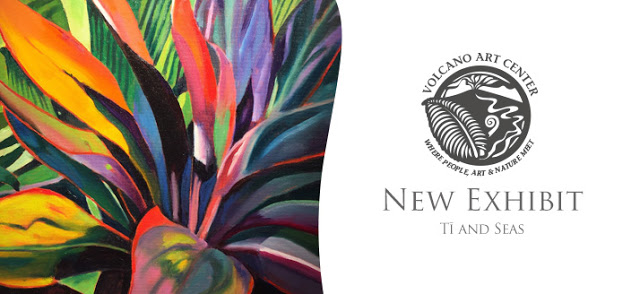
TĪ AND SEAS ART EXHIBIT at Volcano Art Center Gallery, featuring oil paintings by Pāhoa resident Steve Irvine, is open to the public through Sun, Mar 25, 9 a.m. to 5 p.m., daily - volcanoartcenter.org or 967-8222.

KDEN HOW THE OTHER HALF LOVES - March 9 through 24. Performances on Fridays and Saturdays at 7:30 p.m., Sundays at 2:30 p.m, Kīlauea Military Camp's Kīlauea Theater, Hawai‘i Volcanoes National Park. Kīlauea Drama & Entertainment Network performance. KMC open to authorized KMC patrons and sponsored guests. Park entrance fees apply. Call KDEN for ticket info, 982-7344.

TŪTŪ AND ME OFFERS HOME VISITS to those with keiki zero to five years old: home visits to aid with helpful parenting tips and strategies, educational resources, and a compassionate listening ear. Home visits are free, last 1.5 hours, two to four times a month, for a total of 12 visits, and snacks are provided. For info and to register, call Linda Bong 646-9634.

To read comments, add your own, and like this story, see Facebook. Follow us on Instagram and Twitter. See our online calendars and our latest print edition at kaucalendar.com.


Friday, March 16, 2018

Ka‘ū News Briefs Friday, March 16, 2018

Extinct, endangered, and rare plants and animals inhabit the Ka Lae area. From top left to bottom right: Hawaiian rail (extinct), Hawaiian pueo (endangered), Hawaiian Monk seal (endangered), Hawaiian hoary bat (endangered), Carelia cochlea (extinct), ‘ōhai (endangered), hua (common but rare in Ka Lae), and hawksbill turtle (endangered).  See story below. Photos from Wikipedia
ROYAL HAWAIIAN ORCHARDS with operations in Hilo, Pāhala, and California, is becoming a major shareholder in the Australian parent company of MacFarms, LLC, with operations in South Kona. Both MacFarms and Royal Hawaiian are major employers of Kaʻū residents.
     The Royal Hawaiian brand and macadamia snack products will be owned by MacFarms' parent, the Buderim Group, in a "deal that will create the largest retail marketer of branded macadamia nuts in the United States," reports a recent article in Pacific Business News.
     The story reports on a February filing with the U.S. Securities and Exchange Commission, which states that MacFarms will "acquire all assets currently owned by Royal Hawaiian Orchards (OTC: NNUTU) that are used in the marketing and retail sale of macadamia nuts under the Royal's trademark and trade-name brands." In exchange, Royal Hawaiian will acquire 13 percent of Buderim Group, with a valuation of about $2.53 million, according to the SEC filing.
     Royal Hawaiian will remain operator of macadamia orchards on more than 5,000 acres it owns and leases on Hawaiʻi Island - much of it surrounding Pāhala. MacFarms owns thousands of acres of macadamia orchards in South Kona, near the Kaʻū border.
     "The Partnership will also enter into a supply agreement to sell kernel at international prices as well as agreements to process each other's
wet-in-shell nuts as needed, and to explore joint investment in a processing facility in Hawaiʻi." says a Royal Hawaiian statement. Royal Hawaiian "will focus on its orchard business and on sales of macadamia kernel from its orchards and other Hawaiian orchards to MacFarms and other customers worldwide at prices higher than can be obtained by selling wet-in-shell in Hawaiʻi."
     Bradford Nelson, CEO of Royal Hawaiian Orchards, said that members of his team are "excited to become a major shareholder of Buderim, and look forward to supporting its growth by ensuring that we continue to invest in optimizing and expanding our production capacity and capability."
     Royal Hawaiian Orchards Executive Vice President Scott Nelson, in charge of branded products, along with his California marketing team, will transition to MacFarms.

To read comments, add your own, and like this story, see Facebook. Follow us on Instagram and Twitter. See our online calendars and our latest print edition at kaucalendar.com.

The late Robert Herkes walking in a Nāʻālehu Independence Day Parade when
 he served Kaʻū in the state House of Representatives. Photo by Julia Neal
A NEW SIGN HONORING THE LATE ROBERT HERKES went up recently at Kaʻū High School. Herkes, who represented Kaʻū in the state House of Representatives, was integral in helping to fund the $18 million gym's construction to serve high school sports, community events, and to become a regional Disaster Shelter.
     As an elected official, Herkes fought against illegal practices by mortgage lenders and helped bring mobile medicine to Kaʻū. He helped with funding for the water well in Ocean View, bringing mobile medical care units here, assessing weather and geologic risks in the district, and with preservation of the Kaʻū Coast.
     Herkes served on the County Council, House of Representatives
The late Bob Herkes, who helped bring the new gym and disaster
 shelter to Kaʻū is honored on its grounds. Photo by Ron Johnson
and state Senate after a career in the hospitality industry where he worked with Inter-Island Resorts. He died in August of 2014, after a brief illness.

To read comments, add your own, and like this story, see Facebook. Follow us on Instagram and Twitter. See our online calendars and our latest print edition at kaucalendar.com.

ENDEMIC, INDIGENOUS, AND ENDANGERED PLANTS AND ANIMALS were given a special study for the recently released Department of Hawaiian Home Lands South Point Resources Management Plan. Conducted by Geometrician Associates in the summer of 2017, the study documents "flora and fauna, threatened or endangered plant or animal species, critical habitat, and the potential to be currently using any habitat within the Project area."
     The entire archipelago of Hawai‘i - Mokupuni o Hawai‘i  - ranges from Hawai‘i Island, the largest island of the chain, to Kure Atoll, some 1,500 miles to the northwest. Due to the chain's distance from any other land, and the islands' distance from each other, the plants and animals of the islands tend to diverge from similar plants and animals found elsewhere. Endemic animals like nene and plants like ‘ōhai, since they are found only on the islands, tend to lean toward endangered status, especially as human influences - from deforestation to the introduction of alien species - affect their habitats. Many mollusks, insects, birds, and even a mammal - Synemporion keana, a bat that was the only member if its species - once existed on the islands, but are now extinct, the report explains.
The Hawaiian archipelago. Map from soest.hawaii.edu
     The 2017 study surveys Ka Lae to Māhana Bay, covering land around existing and proposed trails, roadways, parking areas, and other sites. It mentions that the, “anchialine pond, nearshore, and marine ecosystems may actually be the most valuable biological asset in coastal Ka‘ū.” The report references a 1993 study by The Nature Conservancy, which noted the biological importance of the anchialine resources, including rare native shrimp, the ‘ōpae‘ula, at Lua o Palahemo, which was threatened by pollution, run-off, and the introduction of alien fish. The report noted: "It is a unique biological site, containing a combination of anchialine pool organisms that is not found anywhere else in the archipelago, or the world. One of the shrimps found at Lua o Palahemo, Halocaridina palahemo, is unique to the site. Other shrimps at the site, including Vetericaris chaceorum, Antecaridina lauensis, Calliasmata pholidota, and Procaris hawaiana, are known from very few sites worldwide. In short, Lua o Palahemo comprises the largest concentration of candidate endangered anchialine pool organisms in the world."
     Vetericaris chaceorum and Procaris hawaiana have since been listed as endangered.
An endangered Hawaiian green sea turtle flies through the water;
  Ka Lae waters and shore areas a critical habitat for this species.
     Turtles and seals are well-documented as seeking feeding, nesting, and resting areas in the waters and beaches of Ka‘ū. The report states that Hawai‘i Island is critical habitat for the endangered green sea turtle, endangered Hawaiian hawksbill turtle, and endangered Hawaiian monk seal.
     No systematic bat surveys were performed, according to the 2017 study, and no bats were observed during the 2017 study. However, it does state bats have been observed in many areas of Ka‘ū. The 1993 report did not find Hawaiian hoary bats or ‘ōpe‘ape‘a Lasiurus cinereus semotus, but stated that the species may exist in the area because of previously collected specimens. The 2017 study states: "This endangered species should be presumed to be present at least occasionally and to roost in some parts and of the Project area." The study did not inventory non-native mammals, amphibians, or reptiles, though they did observe cattle, mongooses, and mice. The study states: "The current scope does not allow detailed discussion, but goats, pigs, cattle, mongooses, rats, mice, cats and various lizards have some potential to interact negatively with native flora and fauna."
Extinct Kona Giant Looper Moth
     Seventeen species of birds, including five natives and 12 alien, were recorded in the 2017 study. The most common land birds were mynas, skylarks, and zebra doves, and were found over all of the Project area, with the
skylarks being more abundant in the buffalograss grasslands, and the mynas and zebra doves in areas with trees and shrubs.
     A single short-eared Hawaiian owl, the pueo, was detected near Pu‘u Ali‘i. A single ‘iwa (great frigate bird) was observed just off-shore of South Point. Noio (black noddy tern) were also seen off the tall cliffs north of South Point. No other seabirds were detected, however, states the report, "most Hawaiian seabirds frequent offshore areas, and the lack of detection does not signify absence." No endangered birds were observed in the area.
     The 2017 study reported that the most valuable bird habitat in the Project area is for shorebirds in the coastal zone. Migratory birds were only seen one day, when several wandering tattlers or ‘ulili and a number of Pacific golden-plovers or kōlea were observed. The 2017 study noted that, in other years, researchers have frequently seen ruddy turnstones or ‘akekeke, and even the occasion a bristle-thighed curlew or kioea at South Point.
Common mynah bird.
     During the 2017 research, the crew recorded 75 plant species: six are endemic, 17 are indigenous, and one is endangered. The 2017 study states that patches of rare plants reported in 1993 are no longer found, and where they are found, the plants are less extensive. No plant critical habitat is present in the Project area, states the study, and only one plant species currently listed as threatened or endangered -‘ōhai (Sesbania tomentosa, a flowering plant in the pea family), which was found in all the same areas noted in the 1993 study, though probably in smaller numbers. Most ‘ōhai, "were contained within roped-off and signed enclosures, with plants sometimes sprawling outside and isolated individuals located nearby," states the study.
     The endangered ʻihi, Portulaca villosa, was reported in the 1993 report to be found in several areas, including Papakolea, west of Māhana Bay, at Ka Lae, and near Hanalua Bay. The herb was not identified in the 2017 study; however, "the small plant may be difficult to spot in dense vegetation, particularly if there are dry conditions and/or it is not flowering. Thus, it is possible that the endangered herb is present," states the study. The rare sprawling shrub, maiapilo, Capparis sandwichiana, was noted in several closely spaced patches in just one rocky area near Hanalua Bay, mauka of the four-wheel drive roads and footpaths, but was not noted in the 1993 report.
Common flowering shrub Lantana.
     Some of the native grasses and plants include: ‘aki‘aki, mau‘u, ‘ilima, ‘uhaloa, kakalaioa, nehe, pa‘ū o Hi‘iaka, kakonakona grass, koali pehu kipukai, and ‘ākulikuli, with hau - Hibiscus tiliaceus, and naupaka sparingly present. In some places, occasionally dominating where ‘ā‘ā is present, are kiawe, koa haole, sourbush, Sodom apple - Solanum linnaeanum, and lantana.
     The 2017 Geometrician Associates study reflected The Nature Conservancy findings in 1993 in regards to the most common vegetation: Mixed Alien Lowland Dry Grass, which is "generally better adapted than native species," state the studies. This invasive vegetation type is pervasive, and, "it is likely that the alien grasslands would develop eventually into either shrubland or forest," if left alone, stated the 1993 study - but the area "has been more heavily dissected and trampled by roads," since then. Buffelgrass is the most common alien grass in the area, with much lesser amounts of pitted beardgrass, Bermuda grass, Guinea grass, and others.
     Invertebrates were not included in the 2017 study.
     The 2017 study showed that "the strand vegetation at South Point is diverse and unique and includes rare, threatened, and endangered species. Where the vegetation is not damaged by human activity, the Project area offers excellent habitat for migratory shorebirds, pueo, and native insects." The study indicated that the proposed management plan to reduce vehicular use in the shoreline portion of the corridor, and restrict vehicles in the Project area, "will significantly improve the environment and enhance and preserve the unique flora and fauna." The study further states that "the areas chosen for the infrastructure necessary to support the management plan, including parking lots, emergency road, guard booth and gate, do not contain valuable native vegetation, flora or animal habitat, and are suitable for their proposed uses."
     See March 3, March 5, March 6, March 7, March 8, March 9, March 10, March 11, March 12, March 13, March 14, March 15, and future Ka‘ū News Briefs for more in the continuing South Point Resource Management Plan series. See the 799-page plan online.

To read comments, add your own, and like this story, see Facebook. Follow us on Instagram and Twitter. See our online calendars and our latest print edition at kaucalendar.com.

A BILL TO FUND K-12 AGRICULTURE WORKFORCE DEVELOPMENT goes to a joint hearing of the Senate Agricultural and Environment, and Senate Labor committees. House Bill 2115 HD1 will be heard on Monday, March 19, at 2 p.m. The bill will help fund schooling to increase the number of Hawai‘i students who go on to a career in agriculture.
     Hawai‘i Farmers Union United urges residents to support the bill, saying "You do not need to write a testimonial to have an impact. Simply weighing in with your support will help." Testimonies and support are due by 2 p.m. on Sunday, March 18. 

To read comments, add your own, and like this story, see Facebook. Follow us on Instagram and Twitter. See our online calendars and our latest print edition at kaucalendar.com.

Russell Suzuki, newly nominated to
Attorney General by Gov. David Ige.
RUSSELL SUZUKI IS APPOINTED TO REPLACE ATTORNEY GENERAL DOUG CHIN, who stepped down recently to become Lieutenant Governor. Gov. David Ige put Suzuki temporarily in the AG position on Feb. 2 when Chin took the Lt. Gov. post. Ige wants Suzuki to stay.
     Ige said in his appointment announcement that Suzuki has served as a public-sector attorney working at the Department of Attorney General for 36 years. His responsibilities have included First Deputy Attorney General under Attorneys General Douglas Chin, David Louie, and Mark Bennett. He also served as Supervising Deputy Attorney General of the Administration Division and Education Division. He also served as counsel to state boards and commissions, including Land Use Commission, Board of Education, Board of Regents, Employees' Retirement System, Employer-Union Health Benefits Trust Fund, and Judicial Selection Commission. Before making the move to the public sector, he practiced criminal defense law, family law, business law, and military law at the law offices of Yoshiro Nakamura. Suzuki earned a B.A. from the University of Hawaiʻi and his J.D. from Ohio State University.
     "Russell brings a wealth of experience to this position, and I know he will continue to provide sound legal advice to the executive, legislative and judicial branches of state government." Said Suzuki, "I am humbled and honored to serve in this position. I'll do my best to serve the people of the State of Hawaiʻi." His appointment is subject to Senate confirmation.

VOLCANO ART CENTER GALLERY PRESENTS HO’OKU’I I NĀ KIKO, Connecting the Dots, by Natalie Mahina Jensen and Lucia Tarallo daily, 9 a.m. to 5 p.m., from Saturday, Mar. 31, to Sunday, May 6. The multi-media exhibition explores the conceptual disparity between threads of history verses ribbons of myth while referencing pivotal events in Hawaiian History. Presented by the Hale Naua III, Society of Maoli Arts, this exhibition references the Battle of Kuamoʻo fought on Hawaiʻi Island on December 31, 1819.
     “The exhibition provides historical details harmoniously embedded in a collection of modern and iconographic works of art,” states the event description.
     A curated collection of photographs, paintings, sculptures and feather work items deliver a sublime message connecting the viewer artistically with the provenance of the design. For instance, Jensen’s paintings, which display indigenous iconographic designs, are rendered to weave a human-life story of a particular event or particular Maoli belief. Feather and ribbon capes and sashes made by Tarallo tell the history of the making of capes during pre and post western contact eras.

     Both artists will be present at the exhibition opening on Saturday, Mar. 31, at the Volcano Art Center Gallery in Hawai‘i Volcanoes National Park. The event will begin at 3 p.m. with a short lecture by Tarallo providing insight into the concepts and items on display. An opening reception will follow the lecture, until 5 p.m. Both events are free and open to the public, however, park entrance fees apply. For more, visit volcanoartcenter.org.

To read comments, add your own, and like this story, see Facebook. Follow us on Instagram and Twitter. See our online calendars and our latest print edition at kaucalendar.com.

See public Ka‘ū events, meetings, entertainment at kaucalendar.com
/janfebmar/februaryevents.html. See Ka‘ū exercise, meditation, daily, 
February print edition of The Ka‘ū Calendar is free to 5,500 mailboxes 
throughout Ka‘ū, from Miloli‘i through Volcano. Also available free on 
stands throughout the district. Read online at kaucalendar.com.

KA‘Ū TROJANS SPORTS SCHEDULE
Girls Softball: Saturday, Mar 17 @ Konawaena
   Monday, Mar 19, KSH @ Ka‘ū
   Thursday, Mar 22, @ Hilo
   Saturday, M
ar 24 @ Kealakehe
   Saturday, Mar 31 @ Honoka‘a
   Monday, Apr 2, @ Kohala
   Saturday, Apr 7, Hawai‘i Prep @ Ka‘ū
   Monday, Apr 9, @ Pāhoa
   Wednesday, Apr 11 @ KSH
   Saturday, Apr 14, Kea‘au @ Ka‘ū
Boys Volleyball: Monday, Mar 19 @ KSH
   Friday, Mar 23 Pāhoa @ Ka‘ū
   Tuesday, Apr 3, @ Waiakea
   Wednesday, Apr 11, Kea‘au @ Ka‘ū
   Friday, Apr 13, Honoka‘a @ Ka‘ū
   Monday, Apr 16, @ Hilo
   Friday, Apr 20, Parker @ Ka‘ū

To read comments, add your own, and like this story, see Facebook. Follow us on Instagram and Twitter. See our online calendars and our latest print edition at kaucalendar.com.

SATURDAY, MARCH 17
RAPID ʻŌHIʻA DEATH SYMPOSIUM-EAST, Sat, Mar 17, 8:30 - noon, University of Hawaiʻi at Hilo, UCB 100. Register at www.RapidOhiaDeath.org

OPTIMAL NUTRITIONAL GARDENING, Sat, Mar 17, 9 - 3 p.m., Volcano Art Center. Hands-on workshop. Students depart with plant materials - seeds and/or cuttings. $30 per VAC member and $35 per non-member. volcanoartcenter.org, 967-8222.

NATURE & CULTURE: AN UNSEVERABLE RELATIONSHIP, Sat, Mar 17, 9:30 - 11:30 a.m., Kahuku Unit of Hawai‘i Volcanoes National Park. Moderate guided hike along the Palm Trail, approx. 2 miles. Free. nps.gov/HAVO

ST. PATRICK'S DAY LUNCHES - ‘O KA‘Ū KĀKOU, Sat, Mar 17, 10 a.m. to 2 p.m., Nāʻālehu Methodist Church. $10 per plate Corned Beef & Cabbage lunches for sale - all proceeds go to senior housing project. okaukakou.org

THE ART EXPRESS, Sat, Mar 17, 10 a.m. to 3 p.m., Discovery Harbour Community Hall. Classes held once monthly. Learn something new or work on a forgotten project. Instructions on oil, acrylic, watercolor, and other mediums. Meliha Corcoran 319-8989, himeliha@yahoo.com, discoveryharbour.net/art-express

OCEAN VIEW C.E.R.T., Sat, Mar 17, 10 a.m. to 1 p.m, Ocean View Community Center. Community Emergency Response Team monthly meeting/training. 939-7033, ovcahi.org

EXPERIMENTAL WATERCOLORS with Patti Pease Johnson, Sat, Mar 17, noon - 3:30 p.m., Volcano Art Center. Students create 3-5, 8"x8", watercolor paintings on hot press paper using pre-broken glass as a catalyst to spark creativity. Beginner and intermediate artists welcome. $45 per VAC member, $50 per non-member, plus a $10 supply fee. volcanoartcenter.org, 967-8222

ST. PATRICK'S DAY BUFFET, Sat, Mar 17, 6 - 10 p.m., Kīlauea Military Camp's Crater Rim Café in Hawai‘i Volcanoes National Park. Corned Beef & Cabbage, Lamb Stew, Shepherd’s Pie, and Vegetarian Shepherd's Pie, plus all the fixings. $20/Adult, $11/Child (6-11 years). Irish ale available. Call 967-8356 for more. KMC is open to authorized patrons and sponsored guests. Park entrance fees apply. kilaueamilitarycamp.com

BUNCO & POTLUCK, Sat, Mar 17, 6 p.m., Discovery Harbour Community Hall. Popular game played with nine dice, also known as Bonko or Bunko. Bring dish to share. Margie Hack, 541-954-8297.

SUNDAY, MARCH 18
PEOPLE AND LAND OF KAHUKU, Sun, Mar 18, 9:30 a.m. - 12:30 p.m., Kahuku Unit of Hawai‘i Volcanoes National Park. Free, guided, 2.5-mile, moderately difficult hike over rugged terrain focuses on the area's human history. nps.gov/HAVO

MONDAY, MARCH 19
DISCOVERY HARBOUR NEIGHBORHOOD WATCH MEETING, Mon, Mar 19, 5 - 6:30 p.m., Discovery Harbour Community Hall. 929-9576, discoveryharbour.net

TUESDAY, MARCH 20
WALK INTO THE PAST WITH DR. THOMAS A. JAGGAR, Tuesdays, Mar 20 and 27, at 10 a.m., noon, and 2 p.m., at Kīlauea Visitor Center. Each performance lasts about an hour. To find out more about this living history program, visit the park website: nps.gov/havo/planyourvisit/walk_into_the_past.htm

THE WONDERFUL WORD OF WINE AND WATERCOLOR, Tue, Mar 20, 4 - 7 p.m., Volcano Art Center. Artist Nancy DeLucrezia shows how to transfer a photo onto watercolor paper and introduces basic techniques in watercolor painting. Sampling of several wines from wine store "Grapes" in Hilo. $30 VAC members/$35 non-members, plus $17 supply fee. volcanoartcenter.org, 967-8222.

DISCOVERY HARBOUR VOLUNTEER FIRE DEPT. Meeting, Tue, Mar 20, 4:30 to 6:30 p.m., Discovery Harbour Community Hall. 929-9576, discoveryharbour.net

WEDNESDAY, MARCH 21
OVCA BOARD MEETING, Wed, Mar 21, 12 - 1 p.m., Ocean View Community Center. 939-7033, ovcahi.org

SENIOR BINGO DAY, Wed, Mar 21, free lunch 11 a.m., free bingo 1 - 2:30 p.m., Pāhala Community Center. Prizes for all. ‘O Ka‘ū Kākou, okaukakou.org

THURSDAY, MARCH 22
STEWARDSHIP OF KῙPUKAPUAULU takes place every Thursday in March: 22 and 29. Participants meet at Kīpukapuaulu parking lot, Mauna Loa Road, off Highway 11, at 9:30 a.m. Volunteers should bring clippers or pruners, sturdy gloves, a hat and water; wear closed-toe shoes. Clothing may be permanently stained by morning glory sap. New volunteers, contact Marilyn Nicholson at nickem@hawaii.rr.com.

KA‘Ū COMMUNITY CHILDREN'S COUNCIL, Thu, Mar 22, noon - 1 p.m., Punalu‘u Bake Shop. Meeting provides local forum for all community members to come together as equal partners to discuss and positively affect multiple systems' issues for the benefit of all students, families, and communities. Chad Domingo, domingoc1975@yahoo.com, ccco.k12.hi.us

FRIDAY, MARCH 23
THE NATURE CONSERVANCY HOSTS A VOLUNTEER WORKDAY on Friday, March 23, at its Kona Hema Preserve Honomolino (located across Hwy 11 from Miloli‘i), from 8 a.m. to 3 p.m. Space is limited. Linda Schubert at 443-5401 or lschubert@tnc.org.


STEWARDSHIP AT THE SUMMIT Fri., March 23. Participants meet Paul and Jane Field at Kīlauea Visitor Center at 8:45 a.m. Volunteers should wear sturdy hiking shoes and long pants, and bring a hat, raingear, day pack, snacks, and water. Gloves and tools provided. Parental or guardian accompaniment, or written consent, required for volunteers under 18. Visit park website for additional planning details: nps.gov/havo/planyourvisit/summit_
stewardship.htm.

ARTS & CRAFTS: SPRING FLOWER COLLAGE, Fri, Mar 23, 2:45 - 3:45 p.m., Kahuku Park, Hawaiian Ocean View Estates. For ages 6 - 12 years. Free. Register Mar 19 - 22. Teresa Anderson, 929-9113, hawaiicounty.gov/pr-recreation

ONGOING
TĪ AND SEAS ART EXHIBIT at Volcano Art Center Gallery, featuring oil paintings by Pāhoa resident Steve Irvine, is open to the public through Sun, Mar 25, 9 a.m. to 5 p.m., daily - volcanoartcenter.org or 967-8222.

KDEN HOW THE OTHER HALF LOVES - March 9 through 24. Performances on Fridays and Saturdays at 7:30 p.m., Sundays at 2:30 p.m, Kīlauea Military Camp's Kīlauea Theater, Hawai‘i Volcanoes National Park. Kīlauea Drama & Entertainment Network performance. KMC open to authorized KMC patrons and sponsored guests. Park entrance fees apply. Call KDEN for ticket info, 982-7344.

TŪTŪ AND ME OFFERS HOME VISITS to those with keiki zero to five years old: home visits to aid with helpful parenting tips and strategies, educational resources, and a compassionate listening ear. Home visits are free, last 1.5 hours, two to four times a month, for a total of 12 visits, and snacks are provided. For info and to register, call Linda Bong 646-9634.

To read comments, add your own, and like this story, see Facebook. Follow us on Instagram and Twitter. See our online calendars and our latest print edition at kaucalendar.com.