About The Kaʻū Calendar

Friday, November 29, 2024

Kaʻū News Briefs Nov. 29, 2024

May be an image of grouse
Not Turkey Trotters
    These game birds are hunted and eaten locally. They are Kalij pheasants, which were introduced to a ranch on this island in the 1960s and spread rapidly. Hawai'i Volcanoes National Park reports they are frequently seen on park trails. Many visitors mistaken them for the state bird, the nēnē goose. The park post says, "Unfortunately, kalij , also spread the seeds of invasive non-native plants. We are especially grateful for our team that works hard behind the scenes to protect Hawaiʻi Volcanoes National Park from invasive, non-native introduced pests. While we do not remove Kalij from the park, we do go after invasive plants like Koster's curse, faya, Himalayan raspberry and many others that prevent native plants from thriving. A big mahalo to the volunteers, Guardians of the Trail, our park staff and cooperating partners who keep the heritage in your World Heritage Site!" NPS Photo by Janice Wei

MORE DEPARTMENT HEADS AND DEPUTIES are announced by Hawai‘i County Mayor-elect Kimo Alameda, who will be sworn-in at noon Monday. On Friday, he named administrators to lead four additional departments and offices. “I am excited to continue to grow our team, and I am confident in the skills and experience that each of these leaders brings to the County,” Alameda said. 

Wesley Segawa
    “With these appointees in place, we will work hard to improve our wastewater and solid waste infrastructure, grow our economy, expand affordable housing, and support sustainability across Hawai‘i Island.”
    Selected directors and deputy directors require County Council confirmation. Here are their descriptions from Alameda:
    Department of Environmental Management Director Wesley Segawa
Greg Kawaguchi
holds a Master’s Degree in Business Administration and a Bachelor’s Degree in Civil Engineering from University of Hawai‘i at Manoa and has decades of experience in engineering, administration, and project management. He began his professional career as an engineer with Hawaiian Dredging and Construction Company and later established Wesley R. Segawa and Associates, Inc., focusing on public and private engineering and construction management projects.
    Department of Environmental Management Acting Deputy Director Craig Kawaguchi has served as the County’s Recycling Coordinator since 2022 and received the award of County of Hawai‘i Supervisor of the Year in 2024. He
Kehaulani Costa

previously served as an Executive Assistant under Mayor Billy Kenoi and a Recycling Specialist where he assisted with the start of the HI-5 recycling program on Hawai‘i Island. Kawaguchi will serve as acting deputy director until a permanent appointment is made.
   Office of Housing & Community Development Director Kehaulani Costa has worked for the County of Hawai‘i as a Housing Planning Specialist and Division Manager for the Office of Housing & Community Development’s Existing Housing Division, which administers the federal Housing Choice Voucher (Section 8) Program. A graduate of Kamehameha Schools and University of Hawai‘i at Hilo, Costa brings decades of experience in non-profit management, education, and housing policy advocacy to the County.

Keiko Mercado
    Office of Housing & Community Development Deputy Director Keiko Mercado has dedicated her career to serving the people of Hawai‘i Island and nurturing relationships between community and government. Throughout her career, she’s learned that true leadership is rooted in a deep sense of responsibility to serve our community. This commitment has shaped her approach to government work, driving a passion for creating solutions that directly benefit residents and strengthen the fabric of communities across Hawai‘i Island.
   Department of Research & Development Director Benson Medina has served at an executive level in tourism, manufacturing, natural resource development, agricultural tourism and community education. Medina also serves as the President of Hui ʻOihana, the Hawaiʻi Island Native Hawaiian
Benson Medina
Chamber of Commerce, and is the District Governor Nominee for Rotary International in Hawai‘i. He directed the islandwide 2022 Access to Care survey that provides critical data for healthcare providers on Hawai‘i Island and was the principal grant writer and project manager for the Hawai‘i Ag-Tourism Association. Medina is an active member of Hula Halau O Kawananakoa and speaks frequently on the relationship between Native Hawaiian values and business.
   
Dennis Lin
Department of Research and Development Deputy Director Dennis Lin
was recently employed as the Community Relations Administrator for HPM Building Supply where he managed their community outreach and government relations. As an active member in his community, he has served as Chair of the Windward Planning Commission and on numerous community boards and councils. Lin is an active member of the Hawai‘i Island Chamber of Commerce as Vice President and Economic Development Chair, and the Japanese Chamber of Commerce and Industry of Hawai‘i.

Laura Acasio
    Office of Sustainability, Climate, Equity & Resilience Administrator Laura Acasio has served the people of Hawai‘i as a former state senator and public school teacher. She currently serves on the County’s Environmental Management Commission and is a member of numerous nonprofit boards, including the governing board for Ka 'Umeke Kāʻeo Hawaiian Immersion Public Charter School and the 
Hui ʻOihana Native Hawaiian Chamber of Commerce.
    See other administrative picks from earlier this month at http://kaunewsbriefs.blogspot.com/2024_11_22_archive.html.


To read comments, add your own, and like this story, see facebook.com/kaucalendar. See upcoming events, print edition and archive at kaunews.com.

CHARGED WITH IDENTY THEFT OF A PERSON OVER 60, a 36-year old Volcano woman is also charged with forging checks and depositing them into her account. Prosecuting Attorney Kelden Waltjen announced the charges against Rebecca Sutliff on Friday. He noted that it is a crime to possess confidential personal information of a person over the age of 60 without authorization.
    According to police reports, Sutliff is alleged to have forged six checks for a total of $1,950.00 and deposited the funds into her own personal account via ATM (automated teller machine) between July 20 and July 29, 2024.

Rebecca Sutliff

    A warrant of arrest was issued on Nov. 25 and Sutliff was arrested on Nov. 29. Sutliff made her initial appearance in Hilo District Court on Friday afternoon. Her bail was maintained at $116,000.00 and she was ordered to appear for preliminary hearing on Tuesday. As the Complaint alleges, Sutliff is charged with 19 offenses including six counts of Identity Theft in the Second Degree, five counts of Theft in the Second Degree (theft of property, the value of which exceeds $250, from a person 60 years of age or older), five counts of Forgery in the Second Degree, and a single count each of Unauthorized Possession of Confidential Personal Information, Theft in the Third Degree, and Theft in the Fourth Degree. 
    Identity Theft in the Second Degree is a class B felony offense which carries a penalty of either a ten-year prison term or four years probation and up to 18 months in jail. Forgery in the Second Degree and Theft in the Second Degree, are both class C felony offenses, which carry a penalty of either a five-year prison term or four years probation and up twelve months in jail. The charges are merely allegations, and the Defendant is presumed innocent unless and until proven guilty.
    The case was initiated by Officer Shaneil Azevedo, Puna Patrol, previously assigned to South Hilo Patrol, and Christopher Barto, South Hilo Patrol. The felony investigation was led by Detective Jenny Lee, Area I Criminal Investigation Section, Hawai‘i Police Department. The case is being prosecuted by Deputy Prosecuting Attorney Georgia Berrenberg.
    "The Office of the Prosecuting Attorney remains dedicated to the pursuit of justice with integrity and commitment," said Hawai'i' County's Prosecuting Attorney. "Anyone having information to assist local law enforcement should call Crime Stoppers at (808) 961-8300. #hawaiiprosecutors #hawaiipolicedepartment #."

To read comments, add your own, and like this story, see facebook.com/kaucalendar. See upcoming events, print edition and archive at kaunews.com.


Thursday, November 28, 2024

Kaʻū News Briefs Nov. 28, 2024

May be an image of text

KAʻŪ'S MEMBER OF THE U.S. SENATE Mazie Hirono sent out a message to constituents for Thanksgiving weekend, saying, "From my 'ohana to yours—Happy Thanksgiving. I'm grateful for everyone in Hawai'i and across the country who are continuing to advance justice and protect American values like aloha, honesty, and decency. Wishing you and your loved ones a happy, festive holiday. Be safe, be kind."

To read comments, add your own, and like this story, see facebook.com/kaucalendar. See upcoming events, print edition and archive at kaunews.com.

KAʻŪ'S MEMBER OF THE U.S. HOUSE OF REPRESENTATIVES  JILL TOKUDA sent out a message to constituents for Thanksgiving weekend, saying, "This Thanksgiving, I want to share my heartfelt gratitude for your friendship and support. It truly inspires me every day. Thanksgiving reminds us to pause, reflect, and embrace the power of gratitude. Let us take this time to enjoy the company of loved ones, share meals filled with laughter and warmth, and take time to recharge.
   "Together, we will continue to stand strong, lifting each other up and showing the world the enduring strength of Hawai'i's people and values. From my ʻohana to yours, Happy Thanksgiving!

To read comments, add your own, and like this story, see facebook.com/kaucalendar. See upcoming events, print edition and archive at kaunews.com.

Governor Josh Green wearing a thanksgiving themed turkey cooking apron.
Gov. Josh Green delivered food to a kauhale village shelter and to fire victims for Thanksgiving. Photo from Green
GOV. JOSH GREEN sent a message for Thanksgiving weekend to constituents: "Happy Thanksgiving! I wanted to take a moment this week to express my thanks to you — it's been an honor to serve as your governor every day for the past two years, and I am truly grateful.
    "This week we have been able to share some of that gratitude with those in need, and thank some of those working every day to build a better Hawai'i.
    "We delivered food to a kauhale village providing shelter for the homeless in Waimānalo, we honored and supported Lāhainā teachers who went above and beyond to help keep school open for students affected by the wildfires, and we served a Thanksgiving meal to residents of Ka La'i Ola, a temporary housing development on Maui that will house up to 1,500 wildfire survivors for up to five years.
   "Thank you again for the faith, trust, and support you have given me as governor over the last two years— it's made all the difference to the work we have been able to do, and I am deeply grateful.
    "From my family to yours, we wish you a safe, healthy, and happy Thanksgiving!"

To read comments, add your own, and like this story, see facebook.com/kaucalendar. See upcoming events, print edition and archive at kaunews.com.

May be an image of 1 person and text
THE TRANSITION FROM THE COUNTY MAYORSHIP OF MITCH ROTH TO KIMO ALAMEDA takes place on Monday, Dec. 2 at noon at the
Kaleiopapa Convention Center at the Outrigger Kona Resort & Spa.
    Some of the comments posted about the outgoing mayor praised him for "real tangible results in quality of services and government on the Big Island." Also, "Thank you for all that you did for the arts and youth arts education on the Big Island." 
    Another, "Thank you for working to achieve some measure of change for the better." Also, "Mahalo for your tireless effort and personal sacrifices made. You're much appreciated not only for your outstanding service but class act campaign;" and "You did an excellent job Mitch, not to mention what a sincere human being you are....you can move forward knowing you gave it your all."
 
To read comments, add your own, and like this story, see facebook.com/kaucalendar. See upcoming events, print edition and archive at kaunews.com.

INCOMING MAYOR KIMO ALAMEDA POSTED THE FOLLOWING regarding his swearing in ceremony on Dec. 2, noon at Kaleiopapa Convention Center at the Outrigger Kona Resort & Spa: 
    "Mahalo to the Hawai‘i County Clerk’s Office for organizing the inauguration." 
    Taking the oath of office will be mayor-elect Dr. Kimo Alameda, the re-elected Prosecuting Attorney Kelden Waltjen, and the newly elected Hawaiʻi County Council: Dr. Michelle Galimba, James Hustace, Dr. Holeka Goro Inaba, Jenn Kagiwada, Matt Kānealiʻi-Kleinfelder, Ashley Kierkiewicz, Heather Kimball, Dennis “Fresh” Onishi, and Rebecca Villegas."

To read comments, add your own, and like this story, see facebook.com/kaucalendar. See upcoming events, print edition and archive at kaunews.com.


May be an image of text


Wednesday, November 27, 2024

Kaʻū News Briefs Nov. 27, 2024

   
A group of Ranchos residents has been opposed to industrial solar covering three acre lots in
their neighborhoods for more than eight years. The plan still remains in front of the state
Public Utilities Commission, with new filings. Photo by Peter Bosted
 A BATTLE AGAINST A PLETHORA OF SOLAR FARMS IN OCEAN VIEW, slated to be built among homes, drew strongly worded briefs for and against in recent filings to the state Public Utilities Commission, which regulates Hawaiian Electric, which would buy the electricity.    
    An Evidentiary Hearing was held last June, with more filings since then. The Hearing Officer's report held that the complaint against the project should not be upheld. However it also recommended that the PUC examine whether such Feed in Tarrif projects are in the Public Interest. The Ocean View plan is an FIT project.
    Feed In Tariff (FIT) was adopted by the PUC in 2008 as an incentive to develop renewable energy projects in Hawai'i. It gave an incentive for owners of new alternative energy sources to receive 23.8c per kWh, a much higher rate than paid today. FIT was intended to encourage owners of agricultural land, like ranchers and farmers, to install facilities and sell the power to the utility.
A neighborhood in Ocean View where industrial solar is still  planned
and would cover three acres lots in the residential community
 where land is zoned agriculture. Photo by Annie Bosted

    The company SPI took the approach of buying up houselots, zoned agriculture, in a residential town of Ocean View in order to cover them with solar panels. Complainants call it a misuse of the program and an effort to industrialize a place where people live.
    In the filings, PUC Hearings Officer Mike Wallerstein wrote, "The Commission directed me to consider evidence whether the FIT Projects are 'closer in concept' to individual projects or to a larger consolidated project and whether the Competitive Bidding Framework would allow the FIT Projects to be considered in the aggregate". Wallerstein recommended that "the commission definitively determine whether the FIT Projects are in the public interest with the benefit of the evidence now in the record."
    Attorneys for SPI, which currently owned by a Chinese solar developer that plans to locate 17 solar farms on three-acre houselots in Ocean View, argued that the project should not be judged as to whether it is a public benefit. They said, "Commission action could potentially lead to invalidating the solar projects in question."
     They wrote, "If the Commission agreed with the Complainants/Consumer Advocate, then the Commission would conduct a public interest analysis to consider if the projects (aggregately) in a way that would make them potentially violate the FIT tariffs and the Competitive Bidding Framework. That would be essentially be a write in of new rules for the FIT Projects that are not – and have never been – included 
or addressed in the FIT tariffs."
    They also stated, "Complainants filed this Complaint and initiated this proceeding in August of 2016. Now, more than eight years later this matter still remains unresolved. The Intervenors' multi-million dollar investment to date, in order to keep these projects alive, still faces regulatory uncertainty."

A newswire photo regarding SPI joining Nasdaq in 2016.
    Ranchos residents who filed the original complaint against the utility (then HECO and HELCO and now Hawaiian Industries) vehemently sided with the Hearings Officer, arguing that the project should be judged whether it is a public benefit. They presented a long list of "public benefit" points for the Commission to consider. They argued that if Ocean View was to be industrialized with power-producing facilities, it could become the victim of a deadly fire similar to Lahina's that was caused by a faulty transmission line. They argued that the project is unpopular and will reduce the value of homes in an economically challenged community. Without battery backup, the project can only produce power during daylight hours and not when it is most needed, said the complainants.
    The Complainants wrote, "The FIT Program requires the utility to purchase power from the FIT Project owner at the rate of 23.8c per kWh for 20 years. Today, new solar projects are competitively negotiated. Accordingly, PV projects with battery backup are selling renewable power to HELCO for about 9c per kWh."
    "We, the Complainants, note that although the Intervenors rigorously argue against the proposal to recommend that the Commission evaluate the Ocean View project, at no time do they argue that the project is, in fact, in the public interest.
"Finally, while not evidentiary, we would conclude with a popular, commonsense adage: If it looks like a duck, and it walks like a duck, and it quacks like a duck, it is a duck!".
Attorneys for Hawaiian Electric sided with SPI's attorneys and argued that the Commission should not "definitively determine whether the FIT Projects are in the public interest."

To read comments, add your own, and like this story, see facebook.com/kaucalendar. See upcoming events, print edition and archive at kaunews.com.

AN AVIAN INFLUENZA OUTBREAK IS A CONCERN OF STATE DEPARTMENT OF HEALTH. The agency sent out a document to help educate the public about the H5N1 disease and its possible risks to humans. On the mainland bird flu has wiped out many populations of turkeys, broiler chickens and egg-laying hens, causing the price of eggs, chicken and turkeys to go up. Even Thanksgiving is effected. Turkey production was the lowest in 2024 since 1985 with farmers raising 205 million this year, down 6% from last year.
Avian Influenza | Disease Outbreak Control Division

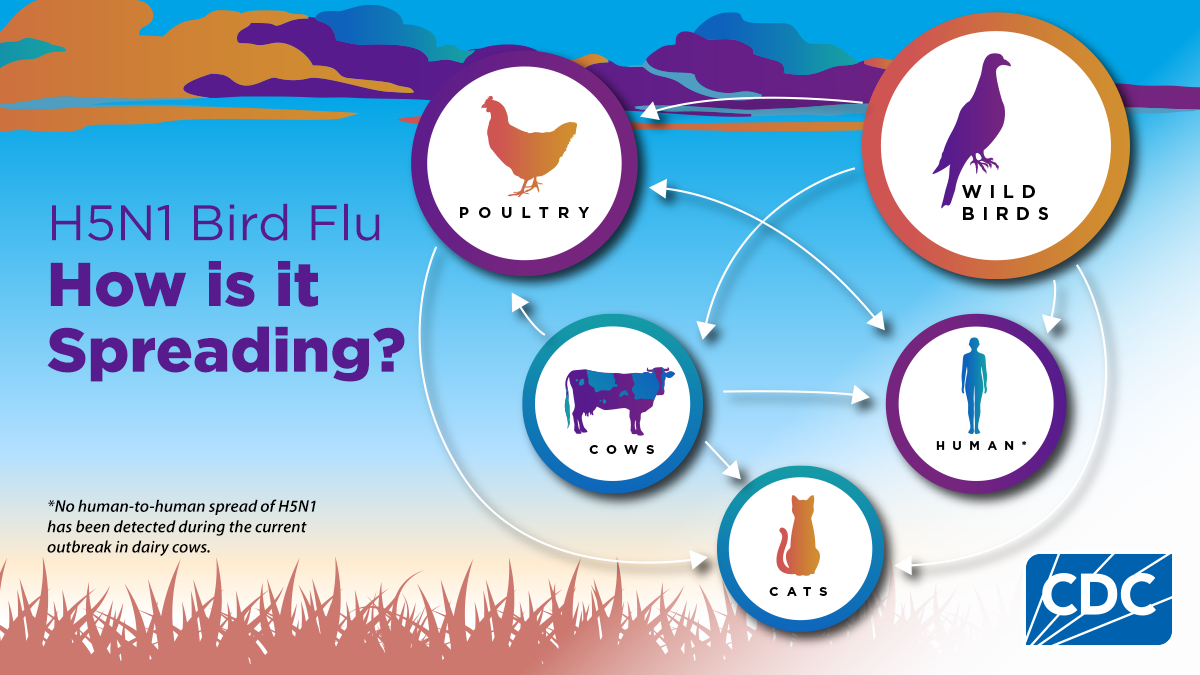
    The state Department of Health states that bird flu is a public health  concern in Hawai'i because, "Influenza viruses undergo genetic reassortment, or change, as they spread between different animal species and humans. There is a risk that the H5N1 or other avian influenza viruses might change to spread more easily among humans, potentially leading to a pandemic. Therefore, it's extremely important to adopt avian influenza prevention practices, monitor for animal and human infections and detect the development of any person-to-person spread as early as possible."
    DOH also states that H5N1, even in its current form, can impact agricultural operations. For poultry farms, when infected birds are found, the whole flock needs to be culled to contain the infection and keep it from spreading to other birds. These measures are of course incredibly disruptive to farm operations and livelihood.
    According to DOH, "It is important to protect people who work closely with animals that are susceptible to infection, such as poultry farm workers. These are the people at highest risk of getting infected. DOH, HDOA and USDA have been working closely together over the past few months to plan for such a scenario. HDOA also is working with the University of Hawai'i College of Tropical Agriculture and Human Resilience to assist in outreach to poultry farms."
    The Health Department's presentation to the public also includes the following:
    Is it safe to eat eggs from local farms? Yes. There have been no reports of sick birds on any commercial farm in Hawaiʻi. The likelihood that eggs from infected poultry are found in the retail market is low and proper storage and preparation reduce further risk.
May be an image of text that says '! AVIAN INFLUENZA CONFIRMED IN BACKYARD FLOCK OF BIRDS NEAR E LOCATION OF THE EARLIER DETECTION IN WASTEWATER Risk to the Public Remains Low ۰ ۲ 0 MENT Department of ofAgriculture STATE OF HAWAI'I'
 Hawaii Department of Agriculture received confirmation from U.S.
 Department of Agriculture's National Veterinary Services Laboratories
  that highly pathogenic avian influenza was detected in a backyard
flock of various birds in Central Oʻahu. The birds were destroyed.

    Do we need to get rid of all those feral chickens? At this point, the best defense against the avian flu is to avoid interacting with feral chickens and wild birds as much as possible. Generally, if the chickens appear healthy and are behaving normally, the risk is probably lower. However, if you find several dead or dying birds in a particular area, please report it as soon as possible to DOH and HDOA. From a medical perspective, it is not clear that a mass culling of feral chickens would appreciably reduce the risk to humans.
    Should I remove or turn in dead or sick birds? To remove a dead wild bird on property, wear disposable gloves or turn a plastic bag inside out and use it to pick up the carcass. Double-bag the carcass and throw it out with the regular trash. Wash hands and disinfect clothing and shoes after handling a dead wild bird. Be mindful of any health symptoms that may develop afterward. For more information, visit: https://www.aphis.usda.gov/sites/default/files/fs-hpai-dead-wild-bird.508.pdf
   What is "bird flu"? Avian influenza (bird flu) viruses occur naturally in wild birds. Avian influenza A viruses have been isolated from more than 100 different species of wild birds around the world, including ducks, geese, terns, plovers and sandpipers. These viruses are very contagious among birds and have the potential to cause severe illness among poultry, other animal species and even among humans exposed to the virus. It has the potential to affect common Hawai'i backyard birds like mynah, bulbuls and zebra doves.
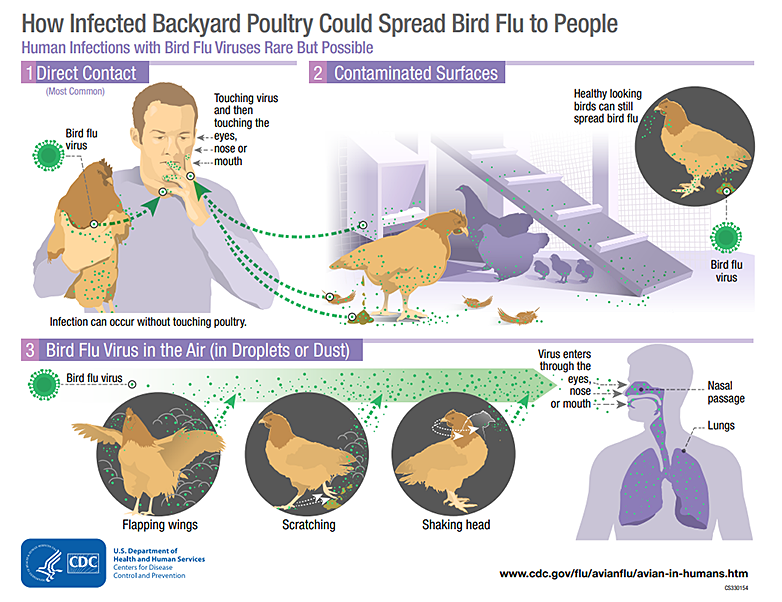
    Am I at risk from H5N1? Although the health risk from bird flu viruses is low, the following may place individuals at increased risk of infection: Unprotected close or direct contact with sick or dead animals, including wild birds, poultry, other domesticated birds and other wild or domesticated animals.
Handling the feces, bedding (litter), or materials that have been touched by, or close to, birds or other animals on a farm with suspected or confirmed H5N1 infection.
Consuming raw, unpasteurized milk or other dairy products.
    How do I know I've been infected? Symptoms of avian influenza in humans usually develop within two to five days of exposure but can take up to 10 days to develop in some cases. Symptoms that are associated with bird flu infection in humans are typically mild and may include fever, cough, sore throat or conjunctivitis ("pink eye"). Avian influenza in humans can be treated with antiviral drugs, prescribed by health care providers.
    Those with symptoms and a known exposure within the past ten days should contact a primary care provider for evaluation and testing. Also contact the DOH Disease Reporting Line at 808-586-4586 for further guidance (calls answered 24/7). Also, call if experienced symptoms that have since been resolved. Health care providers can submit specimen samples to Hawaiʻi's State Laboratory Division (SLD) for bird flu testing.
Hawaiʻi State Department of Health (@HawaiiDOH) / X

    What if I have become infected with bird flu? It is recommended that infected individuals should stay at home and away from others, including household members, except for when seeking medical evaluation. If need to leave home or are not able to fully isolate from others, wear a mask and increase hand hygiene (soap and water for at least 20 seconds) to prevent the spread of the virus.
    Treatment for bird flu infections in humans is available. A health care provider might prescribe an antiviral medication used for treatment of seasonal flu. These drugs can also be used to treat an avian influenza virus infection. It is important to start antiviral treatment as soon as possible and to follow the directions for taking all of the medication that is prescribed.
    Is there an H5N1 vaccine for humans? The Centers for Disease Control and Prevention (CDC) has done the preliminary scientific work that would enable it to produce vaccines, if needed, to protect against the strain of avian flu currently circulating on the U.S. mainland (clade 2.3.4.4b). However, there is no vaccine currently in production. Regular seasonal flu vaccines do not provide protection against avian influenza A viruses, but getting the seasonal flu vaccine lowers the chance of a person becoming infected with seasonal flu and H5N1 at the same time. That's important because it makes it harder for the virus to undergo reassortment, which could make avian flu better adapted to spread in people.
Department of Agriculture

    What is the risk right now? For the moment, the risk to the general public remains low. There have been a small number of human cases reported in the continental U.S., mostly among people working closely with infected animals. Human illnesses in the U.S. have been mild and self-resolving, primarily conjunctivitis or mild respiratory symptoms.
    What is DOH doing to protect the general public? DOH, in partnership with HDOA, the U.S. Department of Agriculture and the Centers for Disease Control and Prevention (CDC), is reinforcing longstanding efforts to detect avian influenza disease in birds, cattle and humans in Hawaiʻi. This includes: 
    Monitoring wastewater, human influenza infections detected in the laboratory, and emergency department visits for influenza as tracked on the Hawaiʻi Respiratory Disease Activity Summary dashboard;
    Participation in the National Poultry Improvement Plan with routine sampling of chickens at the state's largest poultry farm;
    Participation in U.S. Geological Survey (USGS) collection and testing of wild bird specimens;
    Testing of any lactating cows being brought into the state;
Working with federal, state and county agencies to provide updated information to the public in a timely manner.
   Has there been any detection in any other wastewater treatment plant in Hawaiʻi? Other than the Wahiawā plant, there have been no detections reported to DOH as of Nov. 25, 2024.;
Bird Flu | Bird Flu | CDC
   How did this begin? DOH first received a report of H5 detection in wastewater from the municipal Wahiawā wastewater treatment plant on O'ahu on Nov. 12, 2024.     The positive sample had been collected on Nov. 7, and was tested as part of routine wastewater testing conducted by CDCʻs National Wastewater Surveillance System. The detection was made in wastewater as it exited the sewer pipes and before being treated at the wastewater treatment facility. The methods used for routine wastewater testing can only detect one part of the influenza virus, the H5 antigen. The test tells us that H5 influenza is present in the wastewater, but cannot tell us whether the virus detected was H5N1, specifically.See: https://health.hawaii.gov/docd/disease_listing/avian-influenza/

To read comments, add your own, and like this story, see facebook.com/kaucalendar. See upcoming events, print edition and archive at kaunews.com.