|
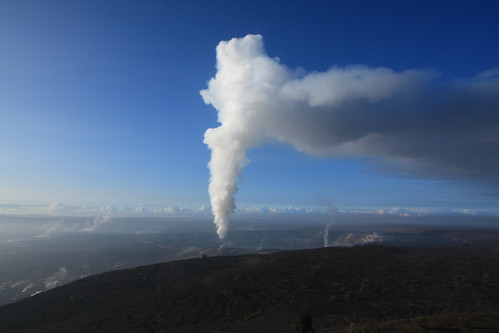
| Lava lake rises and falls rapidly at Halema`uma`u yesterday. Photo courtesy of USGS/HVO |

“We expect it to be in place by the first quarter of 2014,” writes AKP managing partner Chris Eldridge, who has been hosting private meetings with community members to outline the plan. He writes that the first Micro Dee unit will give the community “an opportunity to see and understand the technology. The fuel it produces will be shipped by truck, likely one a week, to Hilo, and it is intended as transportation fuel.”
When built out to capacity, the refinery “is to have about 24 to 30 of the 33-ton units, operating in modules of three, for an estimated 900-ton-a-day facility with 24 million gallons a year of biofuel output,” Eldridge writes. Most of the diesel would service a Hawai`i Electric Light Co. contract for 16 million gallons a year, now up for approval by the PUC. Another 8 million gallons would be sold for transportation fuel. The fuel for HELCO would be trucked up Hwy 11 to the power plant near Kona Airport.
When built out to capacity, the refinery “is to have about 24 to 30 of the 33-ton units, operating in modules of three, for an estimated 900-ton-a-day facility with 24 million gallons a year of biofuel output,” Eldridge writes. Most of the diesel would service a Hawai`i Electric Light Co. contract for 16 million gallons a year, now up for approval by the PUC. Another 8 million gallons would be sold for transportation fuel. The fuel for HELCO would be trucked up Hwy 11 to the power plant near Kona Airport.
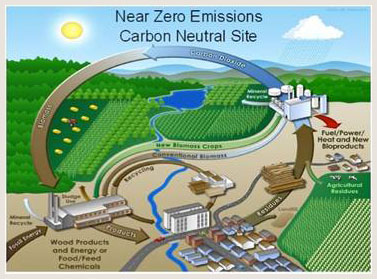 |
| `Aina Koa Pono plans to process biofuel for transportation, independent of PUC approval to sell fuel to Hawai`i Electric Light Company. |
Eldridge notes that AKP has a 20-year agreement to deliver the 16 million gallons of biofuel a year to Keahole power plant. “The fuel must be able to replace imported fossil fuel with no plant modification and meet all the specifications of HELCO.” Eldridge acknowledges that the agreement with HELCO “is subject to review and approval by the Hawai`i Public Utilities Commission, and the PUC has posted a year-long schedule for the process.”
Mayor Billy Kenoi stated that the county will oppose the AKP contract with HELCO if it raises electric rates and is sending in the county lawyers to participate in the arguments. Life of the Land has intervened in the case, saying the plan would be unfair to ratepayers, given less expensive alternatives likely on the horizon. The Big Island Community Coalition formed to reduce electric rates has also declared opposition to the `Aina Koa Plan, based soley on the proposed hike in electric bills. Last year the PUC turned down a similar `Aina Koa Pono proposal.
While the proposal before the PUC asks for surcharges that would increase electric bills on O`ahu and the Big Island, Eldridge contends that “this development is being done at AKP’s expense. We have no government funding, and the electric ratepayer pays none of these development costs. Only after PUC approval, plant construction and delivery of fuel that meets all of HELCO’s specifications, will the utility, and therefore the ratepayer, bear any of the costs.”
He states that the cost of the diesel to be manufactured near Pahala “will be higher at the outset than what HELCO pays for imported fossil fuel, but the world’s oil prices are expected to climb well past our cost. HELCO estimates that over the life of the contract, its customers will save a half billion dollars by using locally produced fuel. That is an average of about $1,300 per electric customer.”
While the proposal before the PUC asks for surcharges that would increase electric bills on O`ahu and the Big Island, Eldridge contends that “this development is being done at AKP’s expense. We have no government funding, and the electric ratepayer pays none of these development costs. Only after PUC approval, plant construction and delivery of fuel that meets all of HELCO’s specifications, will the utility, and therefore the ratepayer, bear any of the costs.”
He states that the cost of the diesel to be manufactured near Pahala “will be higher at the outset than what HELCO pays for imported fossil fuel, but the world’s oil prices are expected to climb well past our cost. HELCO estimates that over the life of the contract, its customers will save a half billion dollars by using locally produced fuel. That is an average of about $1,300 per electric customer.”
 |
| Chris Eldridge, AKP partner |
Eldridge also writes that because the diesel would be locally produced, “residents would benefit from nearly $200 million in general excise and payroll taxes over the contract life – 90 times more taxes than if we continue to import the same amount of fuel. Those taxes can be used to improve schools, build roads and protect the environment.”
After harvesting existing brush and trees between Pahala and Na`alehu, AKP plans to grow crops to grind and dry into pellets to put through the microwave machines and send the gas up a cooling tower to make diesel. In the press release, Eldridge promises that “no genetically modified crops (GMOs) are in our plan. We are evaluating non-GMO crops that will offer us high yields per acre. These tests have begun; we are working with the Hawai`i Agricultural Research Center and consulting with the Hawai`i Islands Land Trust regarding acceptable, non-invasive crops.”
Eldridge compares the planned AKP operation and its practices to the “good stewardship” of the defunct sugar operations that shut down in 1996. “Like the sugar plantation that once was the center of a thriving Ka`u community, we intend a planned agricultural operation and good stewardship, not clear cutting that causes erosion. Additionally, unlike sugar cane, we will use perennial crops that will be ratooned (cut instead of bulldozed), further eliminating risks of erosion.”
The AKP statement says the hui has “a memorandum of understanding with the ILWU for operations and have or are working on project labor agreements with other worker groups. AKP’s Ka`u operation will require 400 construction workers—adding 13 percent to current sector jobs—and 200 permanent jobs,” writes Eldridge.
“We intend to be good neighbors,” states the AKP partner. “Our principals and all but one of our investors are State of Hawai`i residents. The one makes Alaska home. We are good citizens and contribute to our communities. As a company, we have pledged a $250,000 benefits package geared to environmental and educational issues once we are operational at Ka`u.”
Eldridge writes that “some complain that agricultural operation and biorefinery will impact tourism in the area, yet it is a place that once was a bustling agriculture and sugar mill area. Other long time residents welcome a return of local jobs.”
Eldridge also brings up the public hearings on Monday, Oct. 29 at Hilo High School Cafeteria and Tuesday, Oct. 30 at Kealakehe High School in Kona, both at 6 p.m., where HELCO’s current rate hike proposal and `Aina Koa Pono’s request for a surcharge of about $1 per 500 kilowatt hours for its project in Ka`u will be the subject of testimony. Writes Eldridge: “The proposed 4.2 percent HELCO rate increase has nothing to do with our project, and it is unfortunate for us that the issue is being heard at the same time as ours.”
After harvesting existing brush and trees between Pahala and Na`alehu, AKP plans to grow crops to grind and dry into pellets to put through the microwave machines and send the gas up a cooling tower to make diesel. In the press release, Eldridge promises that “no genetically modified crops (GMOs) are in our plan. We are evaluating non-GMO crops that will offer us high yields per acre. These tests have begun; we are working with the Hawai`i Agricultural Research Center and consulting with the Hawai`i Islands Land Trust regarding acceptable, non-invasive crops.”
Eldridge compares the planned AKP operation and its practices to the “good stewardship” of the defunct sugar operations that shut down in 1996. “Like the sugar plantation that once was the center of a thriving Ka`u community, we intend a planned agricultural operation and good stewardship, not clear cutting that causes erosion. Additionally, unlike sugar cane, we will use perennial crops that will be ratooned (cut instead of bulldozed), further eliminating risks of erosion.”
The AKP statement says the hui has “a memorandum of understanding with the ILWU for operations and have or are working on project labor agreements with other worker groups. AKP’s Ka`u operation will require 400 construction workers—adding 13 percent to current sector jobs—and 200 permanent jobs,” writes Eldridge.
“We intend to be good neighbors,” states the AKP partner. “Our principals and all but one of our investors are State of Hawai`i residents. The one makes Alaska home. We are good citizens and contribute to our communities. As a company, we have pledged a $250,000 benefits package geared to environmental and educational issues once we are operational at Ka`u.”
Eldridge writes that “some complain that agricultural operation and biorefinery will impact tourism in the area, yet it is a place that once was a bustling agriculture and sugar mill area. Other long time residents welcome a return of local jobs.”
Eldridge also brings up the public hearings on Monday, Oct. 29 at Hilo High School Cafeteria and Tuesday, Oct. 30 at Kealakehe High School in Kona, both at 6 p.m., where HELCO’s current rate hike proposal and `Aina Koa Pono’s request for a surcharge of about $1 per 500 kilowatt hours for its project in Ka`u will be the subject of testimony. Writes Eldridge: “The proposed 4.2 percent HELCO rate increase has nothing to do with our project, and it is unfortunate for us that the issue is being heard at the same time as ours.”
 |
| HVO scientist-in-charge Jim Kauahikaua |
THE LAVA LAKE INSIDE HALEMA`UMA`U Crater at Kilauea is tantalizing visitors and park staff as it continues repetitive rising and falling, attracting many to the best vantage point: the overlook at Jaggar Museum. The lava lake rose to levels approximately 125 feet or less beneath the crater floor yesterday morning, and Hawaiian Volcano Observatory webcams suggested the lake rose even higher before sinking again Friday afternoon.
Dr. Jim Kauahikaua, HVO’s scientist-in-charge, says the lava lake will be visible from the overlook at Jaggar Museum if it comes within about 65 feet of the crater floor.
All visitors who plan to come after dark are urged to bring flashlights, especially those who park at Kilauea Overlook, which affords panoramic views of the crater and Kilauea caldera. Earth cracks, rocks, and other hazards are not easily seen in the dark.
Dr. Jim Kauahikaua, HVO’s scientist-in-charge, says the lava lake will be visible from the overlook at Jaggar Museum if it comes within about 65 feet of the crater floor.
All visitors who plan to come after dark are urged to bring flashlights, especially those who park at Kilauea Overlook, which affords panoramic views of the crater and Kilauea caldera. Earth cracks, rocks, and other hazards are not easily seen in the dark.
 |
| Hawai`i Volcanoes National Park urges motorists to be cautious of nene when visiting Halema`uma`u. Photo by Julia Neal |
In addition, several pairs of nene, the federally endangered Hawaiian goose, are beginning to nest near the Jaggar Museum parking lot and are sometimes spotted along roadsides and trails. Cars are the leading cause of nene fatalities, and drivers are cautioned to be alert and to drive the speed limit.
“Safety is our number one priority,” said Park Superintendent Cindy Orlando. “We encourage everyone to visit during this fascinating episode, but to exercise caution. Staff will be assisting visitors with parking and interpretation of the current activities. If people come prepared and proceed as directed, they should have an unforgettable experience,” she said. Hawai`i Volcanoes National Park is open 24 hours a day.
“Safety is our number one priority,” said Park Superintendent Cindy Orlando. “We encourage everyone to visit during this fascinating episode, but to exercise caution. Staff will be assisting visitors with parking and interpretation of the current activities. If people come prepared and proceed as directed, they should have an unforgettable experience,” she said. Hawai`i Volcanoes National Park is open 24 hours a day.
THOSE INTERESTED IN FREE AGRITOURISM WORKSHOPS through the Hawai`i AgriTourism Association are urged to attend an organizational meeting today from 2 p.m. to 3:30 p.m. at Pahala Community Center. Information will be provided on scope and timing. Those with agritourism potential in Ka`u can sign up for the workshops, which are funded by a U.S. Department of Agriculture grant.
“The intention of the trainings is to help build economic development for the Ka`u agricultural community and its partners,” said Hawai`i Agritourism Association executive director Lani Weigert. For more, visit hiagtourism.org.
“The intention of the trainings is to help build economic development for the Ka`u agricultural community and its partners,” said Hawai`i Agritourism Association executive director Lani Weigert. For more, visit hiagtourism.org.
AUDITIONS FOR THE AWAKENING OF EVERYONE take place today from 2 p.m. to 4 p.m. and tomorrow from 4 p.m. to 6 p.m. at Pahala Plantation House. The cast requires about 15 characters. Call 928-0007 for more information.

MEMBERS OF THE PUBLIC are invited to a candidate forum sponsored by League of Women Voters of Hawai`i County, American Association of University Women Hilo Branch and Volcano Community Association Monday at Cooper Center in Volcano.
Hawai`i County Council District 6 candidates Maile David and Brenda Ford discuss issues from 6 p.m. to 7 p.m. At 7:15 p.m., Erica Johnson, AAUW co-president and moderator, presents an hour with state Senate District 2 candidates Russell Ruderman and Daryl Lee Smith.
Candidate profiles and election information are available at vote411.org and lwv-hawaii.com.
For more information about the forums, contact Margaret Drake at 967-7295.
VISIT OUR SPONSORS AT PAHALAPLANTATIONCOTTAGES.COM AND KAUCOFFEEMILL.COM. KA`U COFFEE MILL IS OPEN SEVEN DAYS A WEEK.
Hawai`i County Council District 6 candidates Maile David and Brenda Ford discuss issues from 6 p.m. to 7 p.m. At 7:15 p.m., Erica Johnson, AAUW co-president and moderator, presents an hour with state Senate District 2 candidates Russell Ruderman and Daryl Lee Smith.
Candidate profiles and election information are available at vote411.org and lwv-hawaii.com.
For more information about the forums, contact Margaret Drake at 967-7295.
VISIT OUR SPONSORS AT PAHALAPLANTATIONCOTTAGES.COM AND KAUCOFFEEMILL.COM. KA`U COFFEE MILL IS OPEN SEVEN DAYS A WEEK.