|
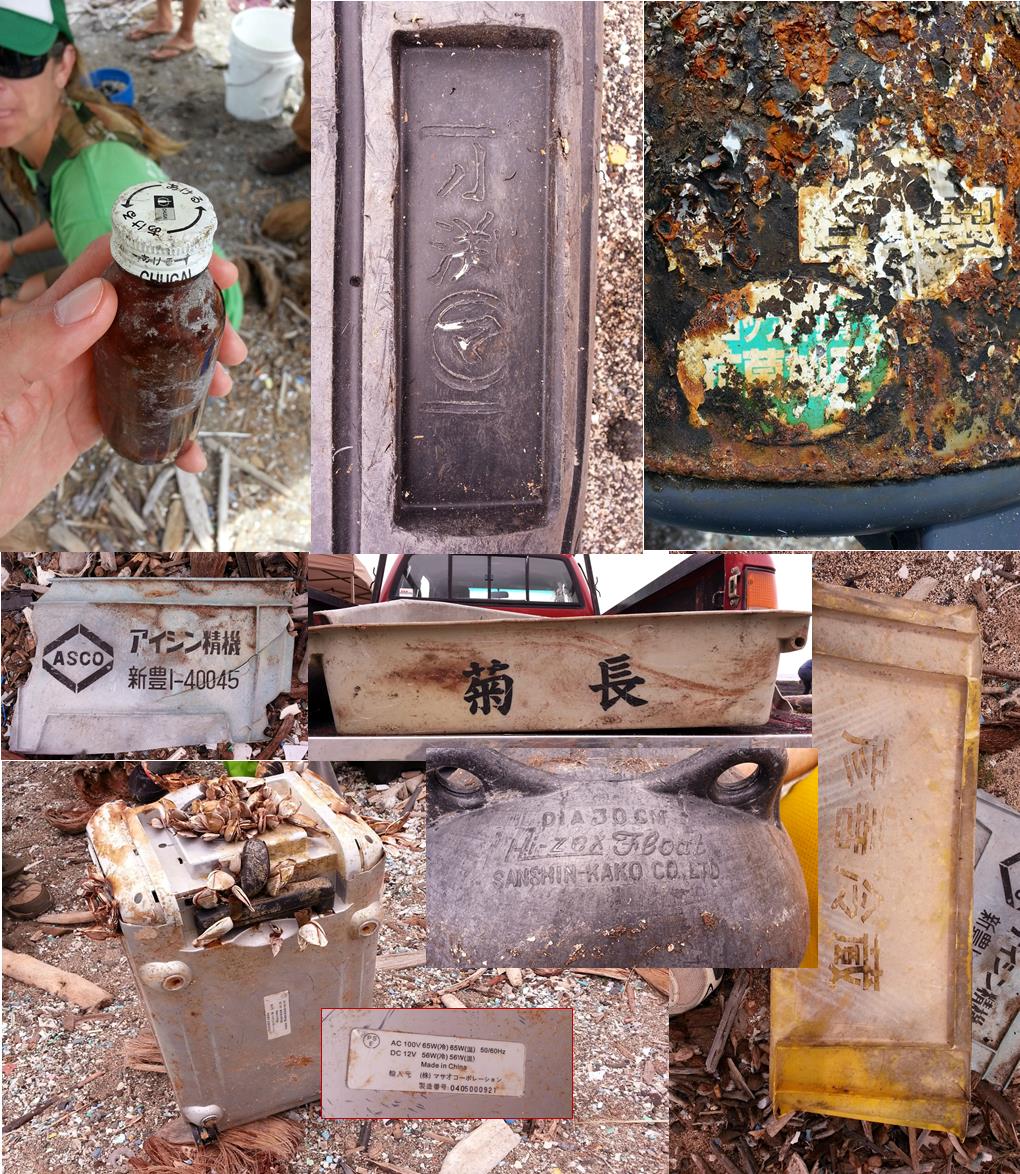
| The Ka`u Coast is famous for being the remote home of sea turtles and could be the site of additional national park lands. Photo by Suz Fields |
Preservation of the Ka`u Coast has been a community initiative for more than a decade, leading to preservation of more than 1,000 acres between Honu`apo Pier and Punalu`u through county, state, federal and private money. The land is under the stewardship of the county with cooperation from community groups.
Thousands of additional Ka`u acres are under consideration around Road to the Sea and the slope above Honu`po across lands toward South Point.
 |
| Sen. Brian Schatz, right, and Gov. Neil Abercrombie visited Ka`u for inauguration ceremonies at historic Pahala Plantation House. Photo by Geneveve Fyvie |
Called the Pacific Islands Parks Act of 2013, the Schatz legislation calls for resource studies on the Ka`u Coast and several other Hawaiian Islands locations to be overseen by the Secretary of the Interior. The studies over three years could be funded from revenues taken in by the federal government from offshore gas and oil operations.
Schatz noted the value of national parks in Hawai`i for the visitor industry, as the parks bring in more than $260 million a year. Comments on the bill can be directed to Schatz’s website at schatz.senate.gov/contact.cfm. See the new parks link.
Hawai`i Volcanoes National Parks Superintendent Cindy Orlando said that the park is very interested in the studies and has been working with Hawai`i’s delegation to congress on this initiative for a number of years. Rep. Ed Case and Mazie Hirono asked for the studies of the Ka`u Coast, following the state’s South Kona – Ka`u Coastal Conservation Task Force of community members recommending preservation of the Ka`u Coast in 2006.
HISTORIC PRESERVATION strategies diverged at a state Senate public hearing yesterday with county and state agencies and the construction industry taking a different path than professionals in the field, including representatives of the Office of Hawaiian Affairs, Hawaiian Civic Clubs, Historic Hawai`i Foundation, the Society for Hawaiian Archaeology and the International Archeological Research Institute.
University of Hawai`i archeology professor Dr. Sara Collins presented testimony from Society for Hawaiian Archaeology, opposing Senate Bill 1171. She said the bill would allow approvals of large projects without completion of a full archaeological inventory survey ahead of construction. The proposed legislation, she explained, would allow “phased reviews.”
Collins said the law “would only add confusion and uncertainty to the historic preservation review process in State law” and that state agencies already have the ability to allow phased reviews through their administrative rules. “It is the rules that establish the project review process and provide the context for when certain kinds of information are needed and when decisions are appropriately made. ….To amend the law without a full consideration of this overarching context is risky and unnecessary.” She concluded by saying that “the procedural safeguards contained in the established regulations are critical to the protection of historic properties and cultural resources.”
 |
| Dr. Sara Collins, of University of Hawai`i, testified against the change in historic site survey laws. |
Most of the testimony from individuals opposed the change in the historic preservation law. Kaua Keaenui testified: “If developers and government entities followed the rules in the first place and didn’t try to undermine and sidestep the law, there wouldn’t be any delay in projects or rising penalty costs. The City (of Honolulu) pays out penalty costs at more than $7 million a month (and rising) for the rail. Is the community okay with this? Get the government to follow the rules. There’s nothing wrong with the rules addressing reviews of historic preservation projects. Government and developers just need to start following the rules and stop trying to circumvent it to address their needs.”
Those supporting the bill include the statewide Hawai`i Chamber of Commerce, Hawai`i Construction Alliance, the Building Industry Association of Hawai`i, the General Contractors Association of Hawai`i, the Mason Union Local 1 & 630 and state and county agencies.
Hawai`i County Planning Directory Bobby Leithead-Todd supported the bill to allow phased review. “We clearly see the benefit of accommodating for the phased review of projects on this island, especially linear projects that carry long distances, such as improvements to the Queen Ka‘ahumanu Highway in the North Kona District and to the Kea‘au-Pahoa Highway in the Puna District, and the construction of the Daniel K. lnouye Memorial Highway between East and West Hawai‘i.Large projects like these should not be handled with an “all-or-nothing” approach. Phased review, approval and implementation provide a practical solution for certain larger projects.
“The proposed bill, if adopted, will have no detrimental impact on the state Department of Land & Natural Resources and Burial Council oversight of the State’s historic and cultural resources. It simply provides an option for the State DLNR to be able to consider a phased review and approval of projects. The fiduciary responsibility of the State DLNR to provide leadership in preserving, restoring, and maintaining the State’s historic and cultural properties, will remain in tact,” testified the Big Island’s Planning Director.
Most of the testimony from community organizations, unaligned with the building industry, opposed the legislation. The Association of Hawaiian Civic Clubs, representing 69 member organizations and founded in 1918 when Prince Kuhio was a Delegate to the U.S. Congress, gave testimony saying that Kuhio “expressed serious concerns about the decline of the Hawaiian people, culture and traditions – issues that the Civic Clubs have always defended.”
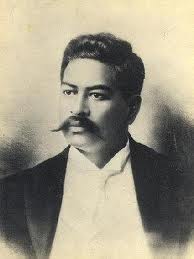 |
| Hawaiian Civic Clubs testified that Prince Kuhio worried about loss of Hawaiian culture. |
The Civic Clubs stated that the proposed “phased review could allow the inexorable approval and forward movement, development and construction of a project, regardless of what lies in its path, due to previous expenditures of time and money. In other words, Senators, if iwi kupuna (the buried remains of ancestors) are hindering the project after so much has already been finished, and after the passage of earlier phased reviews, the argument to press on is valid. But looked at holistically, given a project review in its entirety – not phased –this would not happen because what’s at the end of the path would be revealed before development begins and accommodations could be planned….At this time, SB1171 very much favors development and construction with potential of destroying iwi kupuna and trust in governmental process. We accept kuleana to protect iwi kupuna and oppose this bill.”
Native Hawaiian Legal Corp. testified to examples of delays and cost overruns, as well as desecration of graves resulting from not doing the studies ahead of construction. Listed were a Wal-Mart, Ward Village Shops, and Kawaiaha`o Chruch’s multi-purpose center, all on O`ahu.
Native Hawaiian Legal Corp. gave the example of an Archaeological Inventory Survey being done ahead of a ten-mile long, 600-acres area for Saddle Road, resulting in no delays.
The International Archaeological Research Institute testified that “This bill runs contrary to the intent of historic preservation, as well as to the interests of the public, planners, developers, contractors and government agencies. The phasing of archaeological inventory surveys would build in poorly informed decision-making and planning regarding the protection of cultural resources.”
Historic Hawai`i Foundation also opposed the bill on behalf of its 850 members who “work to preserve Hawai`i’s unique architectural and cultural heritage and believe that historic preservation is an important element in the present and future quality of life, economic
viability and environmental sustainability of the state.” The testimony says that “a blanket provision allowing for a phased review of projects could introduce unintended consequences that could lead to the detriment of historic properties ad cultural resources.”
`AINA KO PONO TESTIMONY from Life of the Land went to the Public Utilities Commission last week opposing the proposal for the hui to sell diesel that would be manufactured in a refinery off Wood Valley Road. The contract would be for 20 years.
Life of the Land stated “There are several weaknesses in this proposed contract including the price, the technology, the externalities, and the availability of cheaper alternatives that make this project unreasonable and not in the public interest.”
Concerning alternatives, Life of the Land testified that “Hawai`i is known around the world for its sun and sand, and for being a tropical paradise. We have every type of renewable energy that exists in the world. Every island has abundant solar, wind, wave and ocean energy resources and some have geothermal resources. We have enough energy resources to power our State (and perhaps to also power California). But we also have precious ecosystems and diverse communities.”

Life of the Land also testified that “Often proponenets of projects will assert that they have found the perfect solution, one with no impacts. What they really mean is that they are blind to the impacts. That sends up a red flag; Watch out! Caveat emptor! They are not looking!”
The testimony gives an example: “Many renewable energy projects rely on trace (rare earth) minerals produced in truly unsustainable manners. Many renewable energy projects rely on fossil fuel to make their components.” The testimony refers to a federal study on Hidden Costs of Energy: Unpriced Consequences of Energy Production and Use, testifying how externalities should be considered in new energy projects. See more in tomorrow’s Ka`u New Briefs or see www.puc.hawaii/gov. Click on Aina Koa Pono, the link, and documents for all the testimony.
JUNIOR RANGER DAY takes place this Saturday when participants connect the culture, people and `aina of the Kahuku Unit of Hawai`i Volcanoes National Park through art, `oli, GPS, and compass and listen to the mo`olelo of Pupu-hulu-ena, Keo-ua-ku-a-hu`ula and Kamehameha I. The free event takes place from 10 a.m. to 2 p.m. and includes lunch and cultural craft demonstrations. Pre-registration required at 985-6019.
HAWAI`I VOLCANOES INSTITUTE presents Life on Recent Lava Flows with botanist Tim Tunison this Saturday from 9 a.m. to 3 p.m. Fee is $50 for Friends and $65 for non-members. Student fees (K-12 and college with valid ID) are $25 for members and $35 for non-members. For more and to register, see fhvnp.org, email institute@fhvnp.org or call 985-7373.