About The Kaʻū Calendar

Tuesday, March 24, 2015

Ka`u News Briefs Tuesday, March 24, 2015

Cultural practitioners and rangers share the art of lauhala weaving tomorrow in Hawai`i Volcanoes National Park. Photo from NPS
WHO WILL BE THE NEXT MISS KA`U COFFEE QUEEN? Four young Ka`u women are hoping to earn the title of Miss Ka`u Coffee on Sunday, April 26 at Pahala Community Center at 6:30 p.m. Doors open at 6 p.m. Tickets are $10 each and available from contenders and their families.
Maria Caroline Miranda
Joyce Anne Ibasan
      All candidates are from families deeply embedded in the Ka`u Coffee industry. In alphabetical order:
      Joyce Anne Ibasan was born on Jan. 26, 1994 in Dagupan, the Philippines. She is the daughter of Orlando Ibasan and Jocelyn Tamayo, of Pahala. The 21-year-old is a 2012 graduate of Ka`u High School. Ibasan graduates this spring with an Associate of Arts degree in administration of justice from Hawai`i Community College and plans to transfer to University of Hawai`i in Hilo to major in criminal justice. She works fulltime at Hawai`i Volcanoes National Park. She completed two high school Youth Ranger internships with the interpretation and eruption crew/protection division of Hawai`i Volcanoes National Park and continues in park internship programs. Ibasan is a fulltime student and fulltime employee.
      Some of her family members recently started a Ka`u Coffee farm above Wood Valley Road. Her talents are singing and dancing.
       Maria Caroline Miranda was born on June 4, 1992 in the California agricultural town of Visalia in the San Joaquin Valley. She is the daughter of award-winning coffee farmers Jose and Berta Miranda, of Discovery Harbour. The 22-year-old graduated from high school through Safe Haven Christian Co-op in 2012. She has completed an Associate of Arts degree and studies nursing at University of Hawai`i in Hilo. At Hawai`i Community College, Miranda interned as a laboratory assistant. She is a Ka`u Chamber of Commerce scholarship winner. She volunteers at Ka`u Hospital, visiting residential patients, some with no family. Miranda works in her family Ka`u Coffee business, from picking to processing and marketing. She is developing a Sunday school program for Amazing Grace Baptist Church of South Point. Her talent is playing piano and singing.
Louise Vivien Santos
Jennifer Flores Tabios
       Louise Vivien Santos was born on Dec. 2, 1994 in Ilocos Norte in the Philippines. She is the daughter of Arnel and Amelita Santos, of Pahala, her father a schoolteacher and mother an employee of a macadamia orchard. 
      Her aunt Anabelle Orcino is a Ka`u Coffee farmer, and Santos helps with the business. The 20-year-old graduated from Ka`u High School in 2013. Santos also graduated from high school with honors in the Philippines. She is a Ka`u Chamber of Commerce scholarship winner who studies in the nursing program at University of Hawai`i – Hilo. She aspires to become a nurse at Ka`u Hospital. She was a member of the National Honor Society, Interact Club and Akamai Finance Academy and has interned with the international Longshore & Warehouse Union. She has tutored at Pahala and Na`alehu schools, won statewide awards for science and engineering projects and speaks several languages. Her talent is playing the violin.
      Jennifer Flores Tabios was born Jan. 11, 1997 on the Big Island. She is the daughter of William and Grace Tabios, of Na`alehu. The 18-year-old is a senior at Ka`u High School. She serves as vice president of the student body and is a member of National Honor Society and the Interact Club. She has earned one of the highest grade-point averages in her class. At the 2015 Science and Engineering Fair at `Imiloa, she won best project for astronomy and earned the Galileo Award for her experiment on surface tension. She works with her family’s The Rising Sun Ka`u Coffee, which has taken top awards at the international Specialty Coffee Association of America competition. She also works with the Will & Grace store in Na`alehu. Upon graduation, Tabios hopes to attend UCLA where she plans to study neurology. Her talent is singing and playing `ukulele.
      To comment on or like this story, go to facebook.com/kaucalendar.

Rep. Richard Creagan
THE HOUSE COMMITTEE ON ENERGY and Environmental Protection is scheduled to decide on a resolution regarding Hawaiian Electric Co.’s proposed merger with NextEra Energy today. HR 158 requests that the Public Utilities Commission protect the public interest in reviewing the proposed acquisition to determine whether NextEra is likely to act in the long-term best interests of Hawai`i ratepayers and whether the transaction is in the long-term public interest, including the state’s ability to achieve its renewable energy goals. It also requests that the PUC consider, at a minimum, imposing strict conditions to ensure the bedrock principles of reliability, reasonable rates, competition and customer choice and protecting local jobs and economic benefits to the state. 
      Ka`u’s Rep. Richard Creagan told Chris D’Angelo, of West Hawai`i Today, that public perception is that the merger “is being rushed forward, which is unacceptable given that it will change lives across the state for a long time.” Creagan also said concerns about NextEra are “real, not rumors” and that the company is not a “white knight coming in to save Hawaiians” from high energy bills.
      “They’re not coming in here to lose money. They’re coming in here to make money,” he said.
      Creagan also told D’Angelo that Hawai`i Island should be given a chance to pursue an independent cooperative.
      See westhawaiitoday.com.
     To comment on or like this story, go to facebook.com/kaucalendar.

NEXTERA ENERGY, INC., HAWAIIAN ELECTRIC CO. and Hawai`i Electric Light Company yesterday announced that the companies will be hosting open house informational meetings to introduce residents to NextEra Energy and the benefits of the companies’ pending merger as well as to provide members of the public with the opportunity to provide input directly to company officials.
      “Since we announced our merger late last year, we’ve been gratified at the reception we’ve received as well as the high level of interest in this important topic for Hawai`i,” said Eric Gleason, president of NextEra Energy Hawai`i, LLC. “NextEra Energy shares Hawaiian Electric’s vision of increasing renewable energy, modernizing its grid, reducing Hawai`i’s dependence on imported oil, integrating more rooftop solar energy and, importantly, lowering customer bills. We recognize that addressing Hawai`i’s energy challenges requires Hawai`i-specific energy solutions, and that is why we look forward to meeting with and listening to residents across Hawai`i. The meetings will provide us with the opportunity to receive valuable feedback while allowing residents to learn more about NextEra Energy and the significant near- and long-term benefits this merger will deliver to Hawaiian Electric customers and the state of Hawai`i.”
      Alan Oshima, Hawaiian Electric’s president and chief executive officer, said, “In selecting NextEra Energy as our partner, we will join a company that shares our community and environmental values, has a proven track record of lowering electric bills, is the world’s largest generator of renewable energy from the wind and sun, and is committed to rooftop solar in Hawai`i. We can’t imagine a better match to help us accelerate the clean energy transformation we all want for Hawai`i. We hope our customers will take the opportunity to meet members of the NextEra Energy team and learn firsthand why NextEra Energy is the right partner to help us achieve a cleaner and more affordable energy future for Hawai`i.” 
      Each open house meeting will be held from 5 p.m. to 8 p.m. Meetings are on Monday, April 13 at Hilo and Pahoa High School Cafeterias and Tuesday, April 14 at Kealakehe High School Cafeteria and Hawai`i Preparatory Academy’s Village Campus Dining Hall.
      To comment on or like this story, go to facebook.com/kaucalendar.

Beekeepers James Severtson and Carol Conner Photo from Aloha Honey Co.
LITTLE LEAGUE REGISTRATION is now open for children from nine to 12 years old. Registration forms and fees of $55 are due by this Friday. All parents or guardians must bring participants’ birth certificates and three documents proving residency or one document supporting school enrollment. Anyone interested can stop by Na`alehu Park in the afternoons or call Jolisa Masters at 640-2135. 

BEEKEEPERS JAMES SEVERTSON AND CAROL CONNER discuss Bees In Hawai`i: Trouble in Paradise? today at After Dark in the Park. The program takes place at 7 p.m. at Kilauea Visitor Center Auditorium in Hawai`i Volcanoes National Park. $2 donations support After Dark programs. Park entrance fees apply.

HAWAI`I VOLCANOES NATIONAL PARK rangers and cultural practitioners share the art of pandanus weaving and how to prepare leaves tomorrow from 10 a.m. to 12 p.m. at Kilauea Visitor Center lanai. Free; park entrance fees apply.

SUPPORT OUR SPONSORS AT PAHALAPLANTATIONCOTTAGES.COM AND KAUCOFFEEMILL.COM. KA`U COFFEE MILL IS OPEN SEVEN DAYS A WEEK.


See kaucalendar.com/KauCalendar_March2015.pdf.
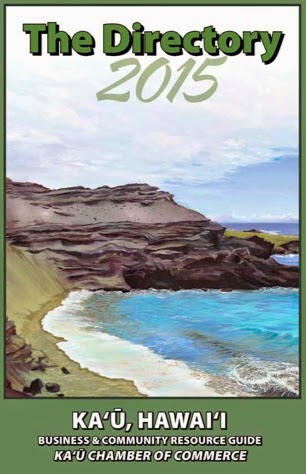
See kaucalendar.com/Directory2015.pdf and
kaucalendar.com/Directory2015.swf.


Monday, March 23, 2015

Ka`u News Briefs Monday, March 23, 2015

The topic at tomorrow's After Dark in the Park is Bees in Hawai`i: Trouble in Paradise? Photo from NPS
KA`U MULTICULTURAL SOCIETY PRESIDENT Darlyne Vierra said she believes that Portuguese families from Ka`u would be interested in becoming involved in a planned Portuguese cultural and education center in Hilo. Ka`u residents could offer copies of family photos and documents showing the history of their culture in this district. Portuguese families have had a large influence of on ranching, sugar and coffee heritage of Ka`u, most recently presenting Portuguese dance, song and food at annual Ka`u Plantation Days, scheduled this year for Saturday, Oct. 17. Call Vierra at 640-8740.
Marlene Hapai, addressing the public in Pahala during her 2012 state House
of Representatives candidacy, is working toward creating a Portuguese
cultural and education center. Photo by Ron Johnson
      Chris D’Angelo, of Hawai`i Tribune-Herald, reported that years after receiving a donation of one acre by Frank De Luz III, Hawai`i Island Portuaguese Chamber of Commerce is resurrecting plans to build the center. “It’s picked up momentum,” HIPCC First Vice President Marlene Hapai told D’Angelo. “It’s a very rich culture. I think it’s long overdue that we need to share it in Hawai`i.”
      Hapai told D’Angelo, “I look at this as a worldwide impact, but also a part special to Hawai`i. It can be something that people come see from all over the world.”
      See hawaiitribune-herald.com.
      To comment on or like this story, go to facebook.com/kaucalendar.

OVER THE PAST SIX YEARS, THE NUMBER of Hawaiian Homestead Lessees overall has increased 4.5 percent from 9,236 to 9,654, according to Department of Hawaiian Home Lands’ recently released Beneficiaries Study Lessee Report.
Hawaiian Home Lands in Ka`u are at Kama`oa, Pu`ueo,
Wailau and Wai`ohinu.
      Even with the change in number of lessees, the demographic composition of Lessees has not changed significantly since the last study. While the median age of lessees has increased from 56 years in 2008 to 62 years, the distribution of ages remains approximately the same. Similarly, the average household size has been at four persons for more than a decade.
      The median household income among lessee households has increased significantly since 2008, climbing from $48,731 in 2008 to $59,600 in 2014. Despite this increase in median household income, a notably larger proportion of lessees are currently below the Housing & Urban Development 80 percent of median income guide (58.7 percent) than in 2008 (46.1 percent).
      Slightly less than half of all lessees (48 percent) reported the need for one or more types of repair to their current housing unit, which is up from 37 percent in 2008. Among those in need of repair, about half of the units require relatively minor repairs while about 38 percent need more extensive repair work to correct problems with foundations, roofs, walls, plumbing and electrical work. Need for repair is directly related to the unit ages. The need for repair is also directly correlated to lower incomes and lack of financial resources.
      The lessee survey classified the issues homestead communities are facing into four types: community quality/maintenance, crime, community organization and community structure. Problems rated as serious by lessees were predominantly related to quality and maintenance issues. Four out of ten lessees rated abandoned cars or trash in yards as a serious problem, while the same number cited lack of places for children to play as an equally serious problem.
      Homestead community members typically rate their communities favorably and do not consider moving away. Many hope that future generations continue living on homestead land. Lessees expressed a sense of safety and unity within their homesteads despite issues that need to be addressed.
A firefighter sprays flame retardant on hot spots at the Ocean View home
destroyed by fire Friday. Photo by Daryl Lee
      See dhhl.hawaii.gov.
      To comment on or like this story, go to facebook.com/kaucalendar.

MARTIN MARIO MOLINA IS FACING charges following a fire that destroyed the Ocean View home where he lived and its contents.
      Ka`u police responded to a 6:11 p.m. call Friday and arrived to find a two-story house on Pineapple Parkway partly engulfed in flames. Firefighters were working to extinguish the fire, which was determined to be the result of arson.
      Police arrested an occupant, 60-year-old Molina, on suspicion of arson.
      At 1:30 p.m. Saturday, March 21, detectives charged Molina with first-degree arson and first-degree criminal property damage. His bail was set at $75,000. He remained at the cellblock until his initial court appearance on today.      Three other residents had left the scene prior to the blaze beginning, and no one was injured.
      Loss was estimated at $270,000.
      A gofundme site has been created to help the family, gofundme.com/phl2is.
      To comment on or like this story, go to facebook.com/kaucalendar.

THE CURRENT ISSUE OF VOLCANO WATCH discusses Mauna Loa’s signs of stirring from its 31-year-long slumber over the past few months. Its most recent eruption began on March 25, 1984. USGS Hawaiian Volcano Observatory has recorded numerous small earthquakes beneath Mauna Loa’s summit and western flank and has detected slight expansion across Moku`aweoweo, the volcano’s summit caldera – signals that Mauna Loa should not be forgotten!
Lava flows erupt from Mauna Loa's Northeast Rift Zone on March 25, 1984,
the first day of the volcano's most recent eruption. Photo from USGS/HVO
      “What can we expect as this great volcano reawakens and builds toward its next eruption?” HVO scientists ask.
      “Mauna Loa’s two most recent eruptions, in 1975 and 1984, occurred as HVO expanded and modernized its seismic and geodetic monitoring networks. Examining these past eruptions can give us insight into how Mauna Loa will behave in future eruptions.
      “Prior to the 1975 eruption, the length of an Electronic Distance Measurement line spanning Moku`aweoweo lengthened as magma accumulated within the volcano and caused it to inflate. In addition, more than a year before lava erupted in July 1975, HVO recorded a significant increase in earthquakes, with the seismicity concentrated in two distinct regions within the volcano. Earthquakes initially clustered northwest of Mauna Loa’s summit at depths between three to six miles were followed by shallow earthquakes that were concentrated less than three miles beneath the summit. In the months leading to the 1975 eruption, the number of earthquakes dramatically increased, reaching levels of several hundred events per day.
      “The sequence of ground deformation and seismicity followed a similar pattern prior to Mauna Loa’s 1984 eruption. Increased numbers of earthquakes were again seen in the two areas where seismicity was concentrated before the 1975 eruption, and EDM measurements across Moku`aweoweo showed extension (inflation) months before the 1984 eruption.
      “How do current observations of Mauna Loa compare to the previous two eruptions?
      “The recent swelling of the volcano is small compared to that observed in 1975 and 1984. Earthquake activity, while notable, is also modest. In terms of magnitude, recent earthquakes beneath the volcano’s northwest flank have not yet reached levels recorded before the 1975 or 1984 eruptions. Additionally, the number of earthquakes beneath the summit is not yet significant. Overall, we expect more persistent and heightened rates of both ground deformation and seismicity as the volcano nears its next eruption.
      “Recent improvements in HVO’s monitoring capabilities enhance our ability to watch for and track changes on Mauna Loa. With upgrades to and expansion of our seismic network and the installation of additional of GPS stations, tiltmeters, gas sensors and webcams, we can better monitor Mauna Loa and other active Hawaiian volcanoes. This, in turn, helps improve our understanding of how these volcanoes work and our ability to forecast eruptions.
Esteve Salmo jumps for
Ka`u High Trojans.
      “The take-home message today is two-fold: (1) Mauna Loa is an active volcano, but an eruption is not imminent, and (2) HVO closely monitors Mauna Loa and will immediately inform authorities and the public if significant changes in activity are detected.”
      Monthly reports on the status of Mauna Loa are posted at http://hvo.wr.usgs.gov/activity/maunaloastatus.php.
      See hvo.wr.usgs.gov.
      To comment on or like this story, go to facebook.com/kaucalendar.

KA`U HIGH SCHOOL TRACK STAR Esteve Salmo was a standout on Saturday, March 21 at the Big Island Interscholastic Federation track and field meet held in Kea`au. He took second in the long jump, leaping 19-01.50 feet, and fourth in the 100-yard dash, finishing in 11.53 seconds, under coach Jacob Findlay.
      To comment on or like this story, go to facebook.com/kaucalendar.


LITTLE LEAGUE REGISTRATION IS NOW OPEN for children from nine to 12 years old. Registration forms and fees of $55 are due by this Friday. All parents or guardians must bring participants’ birth certificates and three documents proving residency or one document supporting school enrollment. Anyone interested can stop by Na`alehu Park in the afternoons or call Jolisa Masters at 640-2135.

BEEKEEPERS JAMES SEVERTSON AND CAROL CONNER discuss Bees In Hawai`i: Trouble in Paradise? tomorrow at After Dark in the Park. They cover a brief history of the introduction of bees to the Hawaiian Islands, honeybee biology, bee parasites and Langstroth vs. top bar beehives. The program takes place at 7 p.m. at Kilauea Visitor Center Auditorium in Hawai`i Volcanoes National Park. $2 donations support After Dark programs. Park entrance fees apply.

`ULANA LAUHALA: PANDANUS WEAVING demonstrations take place Wednesday from 10 a.m. to 12 p.m. at Kilauea Visitor Center lanai in Hawai`i Volcanoes National Park. Park rangers and cultural practitioners share the art and how to prepare leaves for weaving. Free; park entrance fees apply.

HAWAI`I WILDLIFE FUND’S VEHICLES are full for this Saturday’s Ka`u Coast Cleanup, but residents can still sign up and use their own 4WD vehicles. Volunteers meet at Wai`ohinu Park to carpool/caravan to Kamilo Point. Register at kahakai.cleanups@gmail.com or 769-7629.

SUPPORT OUR SPONSORS AT PAHALAPLANTATIONCOTTAGES.COM AND KAUCOFFEEMILL.COM. KA`U COFFEE MILL IS OPEN SEVEN DAYS A WEEK.

Sunday, March 22, 2015

Ka`u News Briefs Sunday, March 22, 2015

University of Arizona's high-resolution images gathered using equipment on a kite flying above Kilauea helps to understand Mars' landscape. Footprints are visible left of center. Photos from University of Arizona


RESIDENTS OF AN OCEAN VIEW HOME near the intersection of Pineapple Parkway and Hukilau Drive are receiving help from friends and the Red Cross after a fire at the two-story house burnt it to the ground Friday evening, destroying everything in the home. 
      Martin Mario Molina, one of the residents, was arrested at the scene on suspicion of first-degree arson, according to Bret Yager, of West Hawai`i Today.
Firefighters work on hot spots following a blaze that destroyed a home and its
contents, including a recreational vehicle, in Ocean View. Photo by Daryl Lee
      Evan Prestriedge told Yager that that he and two others left the house after an argument with Molina. They turned over two guns that had been in the house to police and were at a restaurant about a half hour away when officers called to inform them about the fire.
      Neighbor Michael McCormick told television news cameraman Daryl Lee he was alerted to the blaze when he saw a red glow on an interior wall of his home. When he looked out the window, he saw fire and police personnel already on the scene.
      McCormick said a family member had told him the couple was having marital trouble and the arson suspect was afraid of losing the house. According to McCormick, the suspect’s attitude was, “If he couldn’t have it, nobody could.”
      See westhawaiitoday.com.
      To comment on or like this story, go to facebook.com/kaucalendar.

KILAUEA’S LAVA FLOWS ARE HELPING RESEARCHERS unravel past mysteries that shaped Mars. Scientists of the University of Arizona’s Lunar and Planetary Laboratory have taken to flying kites equipped with equipment to gather images above what they refer to as a “chemical desert” with several geologically very young lava flows, in particular the December 1974 flow, which poured out of the volcano on New Year’s Eve 1974 in a short-lived eruption that is currently accessible by foot. When the researchers compared images of the Martian surface taken by HiRISE camera aboard NASA’s Mars Reconnaissance Orbiter, striking similarities appeared.
A researcher flies a kite equipped to record images
of the December 1974 lava flow from above.
      Insights gained from terrain models are used to inform interpretations of images of the surface of Mars.
      HiRISE has been examining Mars with six instruments since 2006. Led by the UA, HiRISE stands for the High Resolution Imaging Science Experiment and has revealed never-before-seen details of the Martian surface.
      “The idea is to understand places we can’t go by analyzing places we can go,” said Christopher Hamilton, principal investigator of the research team. Hamilton studies volcanic surfaces on Mars to understand the thermal history of the red planet – how the planet’s internal processes manifest on the surface.
      “We can use geologically young and vegetation-free surface features here on Earth — such as Hawaiian lava flows — as terrestrial analogs that can provide us with insights into processes that shape other planets,” he said. “Instead of just saying, ‘This feature looks like X,’ we try to develop diagnostics that help us recognize the actual processes that led to the formation of a certain feature.”
      For example, many features that have been interpreted as channels carved by running water in the red planet’s past are more likely to be the result of a volcanic process that Hamilton describes as a “fill-and-spill” lava emplacement, which developed when lava accumulated in enormous perched ponds that breached like an overtopped dam, giving way to catastrophic floods of lava.
      “It is easy to draw conclusions based on our intuition of how water flows,” Hamilton said, “so it is tempting to interpret similar features on Mars in the same way. But in fact these features formed by flowing lava, not water.”
      Pointing to the terrain model of the December 1974 flow, Hamilton said, “We see that in certain areas, the surface is broken up into plates and what superficially looks like channels carved by running water. However, these turn out to be not carved at all, but rather are the result of a complex pattern of lava movements within the flow.”
      Hamilton explained that liquid lava first filled the area between the cliffs from older lava flows like a big bathtub. When the perched lava pond breached, the lava surged forward, causing plates of cooled lava on the surface to break apart and fresh lava to well up from underneath. As the plates were floating toward the drain, they became crumpled.
      The digital terrain models even revealed a bathtub ring formed when lava filled the pool.
      “The question that drives us is: How can we assemble this kind of data for Mars landscapes and decide whether a feature is volcanic or fluvial — shaped by water — and allow us to develop a story?" Hamilton said. “A single surface texture doesn’t tell you anything if you can’t see the way in which the building blocks combine, such as the tiles that make up the pattern of a mosaic. The relationships between textures allow you where to look and what to look for.”
      To comment on or like this story, go to facebook.com/kaucalendar.

Naliko Kahoali`i Markel is Minister of Interior of The Lawful
Hawaiian Government. Photo from LHG
THE LAWFUL HAWAIIAN GOVERNMENT organization sent six people from Puna to Ocean View’s county Kahuku Park yesterday to discuss The Lawful Hawaiian Government movement and to have lunch with Native Hawaiians. Naliko Kahoali`i Markel made the presentation as Minister of Interior of The Lawful Hawaiian Government. About 30 people attended throughout the afternoon. Seventeen registered to vote in elections for legislators and Minister of Interior of The Lawful Hawaiian Government. Elections take place every four years and will be held at the Game Shack at Hilo’s Prince Kuhio Plaza in September, said voting registrar Hope Alohalani Cermelj. 
     Another presentation by The Lawful Hawaiian Government will be held on Saturday, April 4 at Miloli`i, also led by Markel. For more information, call Markel at 238-0428.
      For more on the movement, see its Hawaiian Kingdom Government website, www.thelawfulhawaiiangovernment.org/home.htm.

SN 1994D, at lower left, is a type 1A supernova in
NGC 4526 galaxy. Photo from Wikipedia
ASTRONOMER LEW COOK DISCUSSES supernovae, stellar explosions, in the current issue of Stars Over Ka`u. “Supernovae are different types, but one type, coming from the spilling of matter onto a white dwarf star from its companion in a binary system (two stars revolving around each other), sets off a tremendous runaway explosion once it reaches the mass limit called the Chandrasekhar limit,” Cook writes. Subrahmanyan Chandrasekhar, an astrophysicist who developed the limit in 1930 was 19 at the time.
      “This limit is 1.4 times the mass of the sun,” according to Cook. “The resultant explosion gives astronomers a ‘standard candle.’ Why is this important? Think about it for a moment: a bright new star appears in a distant galaxy. You can measure (even with your eyes) how bright it is relative to stars nearby (many of which are of known brightness). Judging by its brightness, and knowing that distant stars appear fainter than nearby stars can you determine its distance? Yes! Since all supernovae (of type 1A) are known to be of the same brightness, simply by measuring its apparent brightness, you can calculate the distance to the galaxy it is in. By knowing that distance, you can measure other stars in that galaxy.
      “So, what conclusions have been derived? Stars studied so far all behave the same. They all have similar properties as those in our Milky Way galaxy, they all age the same, and they all die similar deaths. The further away a galaxy is, the faster it appears to be moving away from us, like the raisins in a loaf of raisin bread as it rises and bakes. This effect is a fundamental property of the universe, called expansion of the universe.”
      See kaucalendar.com.
      To comment on or like this story, go to facebook.com/kaucalendar.

Tyson Ryder does an upper block (jodan uke) from a horse
stance (naihanchi) during his successful test for purple
belt rank. Photo from Cliff Field
TYSON RYDER SUCCESSFULLY PASSED his test for purple belt rank in International Karate League’s Pahala Dojo on Friday, March 20. IKL is a traditional Shorin Ryu style founded by Walter Nishioka. Pahala Dojo meets every Tuesday and Friday at Pahala Community Center at 5:30 p.m. New students are welcomed. 

THE TOPIC AT THIS WEEK’S AFTER DARK IN THE PARK is Bees In Hawai`i: Trouble in Paradise?  Beekeepers James Severtson and Carol Conner cover a brief history of the introduction of bees to the Hawaiian Islands, honeybee biology, bee parasites and Langstroth vs. top bar beehives. Participants can taste tropical blend honeys in three forms: liquid, creamed and in the comb. The program takes place Tuesday at 7 p.m. at Kilauea Visitor Center Auditorium in Hawai`i Volcanoes National Park. $2 donations support After Dark programs. Park entrance fees apply. 

THE FINAL SANCTUARY OCEAN COUNT of 2015 takes place Saturday from 8 a.m. to 12:15 p.m. Volunteers count and monitor whales at various coastal sites including South Point, Punalu`u and Ka`ena Point. Preregistration is required at sanctuaryoceancount.org.

SUPPORT OUR SPONSORS AT PAHALAPLANTATIONCOTTAGES.COM AND KAUCOFFEEMILL.COM. KA`U COFFEE MILL IS OPEN SEVEN DAYS A WEEK.


See kaucalendar.com/KauCalendar_March2015.pdf.