About The Kaʻū Calendar

Sunday, December 18, 2016

Ka`u News Briefs, Sunday, Dec. 18, 2016


Gabe and Jana Heschler's home in Ranchos, Ocean View, is a destination for touring Christmas lights enthusiasts.
Photo by Peter Bosted
ʻALALĀ FLEW INTO FOREST NEAR VOLCANO last week after almost 15 years of the species being extinct in the wild. The five critically endangered young Hawaiian crows now live in Pu‘u Maka‘ala Natural Area Reserve. The release date was last Tuesday, Dec, 14. A film from San Diego Zoo, edited by Big Island Video News, documented the release. Bryce Masuda, Conservation Program Manager for San Diego Zoo Globals, described the ‘Alalā 's first minutes in the wild. “When they left their aviary, they were curious and immediately went out and started exploring their new home, foraging around in the forest, looking for different food items. Each of the ‘Alalā are wearing a small light-weight transmitter that will allow us to track it in the forest, so we can determine where they are going, how they behave and what they are feeding on.”
ʻAlalā have been released in the wild near Volcano, after being exinct
in the wild for almost 15 years. Photo from San Diego Zoo
    San Diego Zoo Global and many partners, including the state Department of Land & Natural Resources, and U.S. Fish & Wildlife Service, worked on the conservation breeding that brought the ʻAlalā back from the brink of total extinction. Masuda said that, “Although the birds have now been released, we will continue to monitor them and provide appropriate supplemental food, to ensure they are supported as they encounter challenges.”
     Jackie Gaudioso-Levita, project coordinator of the ‘Alalā Project, spoke about the birds’ new home. She told Big Island Video News that “Decades of intensive management by the Three Mountain Alliance watershed partnership have led to the preservation of some of the most intact native-dominated wet and mesic forest on windward Hawai‘i Island, known as Pu‘u Maka‘ala Natural Area Reserve.”
     ʻAlalā have existed only in captivity since 2002, hatched and raised under the care of Bird Conservation Centers at Volcano and on Maui, managed by San Diego Zoo Global. More than 100 are living at the two centers.
      The release was preceded by great fanfare, including Volcano Art Center's  juried Return of the ʻAlalā art show, as well as an ‘Alalā mask-making workshop and several presentations on the bird’s recovery. An ʻAlalā release party was held in November at Mokupaʻpapa Discovery Center in Hilo.
     See more at www.bigislandvideonews.com and at www.sandiegozoo.org.

To read comments, add your own, and like this story, see facebook.com/kaucalendar.

WORD ABOUT A LIFE SIZE MECHANICAL SANTA that waves, sings and laughs “ho, ho, ho” is quickly spreading around Ocean View’s Ranchos neighborhood. He is making a reputation for the two nearby houses, whose over-the-top Christmas light displays are attracting the curious to Maikai Blvd. between Jasmine and Macadamia.
The Hardin home on Maikai Blvd. in Ranchos, Ocean View, is decorated with hoops
 and arches that the Hardins built, and a lighted Santa with reindeer that they rewired 
with LED lights to save energy. Photo by Peter Bosted
     Bright, colorful Christmas decorations light up front yards on both sides of the street. On the right, the street is lined with colorful lighted hoops, and larger hoops form arches leading to the house where lighted Santa and five reindeer cover the home’s front wall. Across the street, lighted candy canes lean against the front wall, along side the word “Noel” in lights. Behind Noel, lighted reindeer leap across the yard past lighted penguins, lighted Santas and more. 
     The home on the left belongs to Gabe and Jana Heschler, and their toddler George. Gabe is a retired marine studying for a master’s degree in education while teaching two days a week at Kaʻū High in Pāhala. Jana is a supervising nurse. 
    Gabe explains how his obsession with Christmas decorations began with his being raised by his grandparents who could not afford them, but would drive him around to look at homes that were well decorated.
     “My first job was packing chickens, where I made $50 a week, enough to let me buy a few strings of lights to decorate our bushes. I spent money on lights each year until I had a good enough display that people would drive by to look at my lights. That Idea has stayed with me. When we bought this house, we closed just before Christmas of 2011. Our first purchase was a Christmas tree – before we bought a fridge. Here in Ranchos, people drive by to look at my lights. They honk or wave or stop and get out of their cars to look at our yard. I like that.”
Santa in his house outside the Heschler home in Ranchos, Ocean
View. The life-size  Santa will sing and “ho, ho, ho” as admirers
walk or drive in close proximity. Photo by Peter Bosted
     The home on the right belongs to Mike and Jennifer Hardin who keep bees and have a successful honey business. Asked about their obsession with decorating, they explain that unlike Georgia where they came from, Hawaiʻi does not have a “real” winter, so they need to decorate to remind themselves that this is Christmas.
    Both couples admit that a bit of friendly rivalry has driven them to their extravagant displays.
    “We egg each other on,” explains Gabe. “When I put up a few reindeer, Mike and Jen added some huge snowflakes to keep up.” 
    However, as both couples bought homes within months of each other, they have become close friends, and seasonal decorating has become a strong bond.  Ask them what they will do next and Jen replies: “We could build a bridge over the road between our properties!”
    Gabe replies, “It would have to be higher than the water trucks,” and Mike adds, “We would need a crane and maybe a forklift . . . “
    “Perhaps there will be more surprises in Ranchos next Christmas,” said a fan.  


To read comments, add your own, and like this story, see facebook.com/kaucalendar.

THE CHRISTMAS KEIKI PARTY drew nearly 600 to Ocean View on Saturday at the Kahuku County Park. Booths, cooked food, gifts, prizes, Christmas decorations and a visit from Santa put party-goers in the holiday spirit.
St. Jude's Church brought a second Santa to the Ocean View keiki's party.
 Don Hatch listened to Christmas wishes from Lio, aged 4, and his
two-year-old sister Keala. Photo by Ann Bosted
     Ian Bailey, who reluctantly acknowledges that he was the organizer, modestly called the event “a big block party,” explaining that “anyone who worked events was here. We had churches and all sorts of organizations. It was a real community effort running on community spirit. I see the organizers as being part of a community I call ‘Kaʻū Strong’, meaning that we live in a hard place, so we need to be strong. This makes us all more capable. We were helped by an amazing response from businesses – we got a lot of donations from all sorts of people.”
     According to Lee and Kathie Griffeth, the planning for the Christmas Keiki Party began two short months ago. Informally calling themselves the Ocean View One Crew, the group of local residents got organized. First they had to fix up the dilapidated Kahuku County Park, which needed painting and cleaning. Then they did some fund raising, which continued right up to the night before the party.
     “People and businesses donated a lot,” recalls Bailey. “People donated Kaʻū beef, a Kaʻū pig, 400 apples, buckets of flowers and even services.” When shopping needed to be done, Ocean View One Crew members dug deep into their own pockets or came up with innovative ideas.
Volunteers Kailani Toriano and
Rowena Puakela get into the
Christmas spirit while they wait
for keiki to visit their booth to
create personalized Christmas
cards. Photo by Ann Bosted
      Lee and Kathie Griffeth donated gift certificates of labor – so each is now beholden for about 20 hours of yard work and house work.
      Many volunteers organized themselves and opened booths to either feed or entertain the keiki. The booth handing out shave ice had the longest line, and booths helping kids make Christmas cards were also popular.
     “Each keiki was given a bag,” explained Griffith, “so they could keep their handouts, gifts, prizes and treats safe. I can’t tell you how gratifying it was to see all these kids with bulging bags and smiles on their faces. It was a magical moment.”
      Across the street, St. Jude’s Church also had booths and a Santa with elves, gifts, treats and a hand-made stockings for each child.
St. Jude's church volunteers made hundreds of custom stockings for 
the keiki that came to the Ocean View Christmas party. Here two of 
Santa's elves, Linda Law and Marvelle Rau, each hold two stockings.
Photo by Ann Bosted
     A white vintage car, provided by the Hillbilly Car Club, brought Santa to the party in fine style. Once ensconced on his throne, surrounded by Christmas trees, lights, flowers and other decorations, Santa conducted personal interviews with each keiki. The keiki could then choose a wrapped gift from a huge selection. The selection was big enough that some kids were able to go through twice. They also gave away door prizes.
    Many members volunteered to cook the donated food and set up a kitchen. They produced enough to feed nearly 600 keiki and adults.
    By mid-afternoon, members of the Ocean View One Crew were cleaning up and breaking down the decorations and food table. An exhausted Kathie Griffith exclaimed “I’m so happy now.”
     “All those smiling faces and laughing kids have put me in the Christmas spirit,” admitted Butch Light. “I wasn’t in the Christmas spirit before, but I am now.”
    Ann Snow and her 16-year-old daughter, Annika joined the Griffeth family in camping out over night at the park to ensure that the elaborate party decorations and preparations were not tampered with. Annika also organized the keiki games.
To read comments, add your own, and like this story, see facebook.com/kaucalendar.

REP. RICHARD CREAGAN’S OCEAN VIEW FORUM will be held at Ocean View Community Center next Monday, Dec. 19 at 6 p.m. Creagan represents District 5 in the Hawaiʻi House of Representatives and chairs the Committee on Agriculture. District 5 includes Honuʻapo to Nāʻālehu, to Ocean View, to Capt. Cook, Kealakekua and part of Kailua-Kona.

KEIKI FUN DAY AND OPEN HOUSE will be held at Pāhala Community Center on Tuesday, Dec. 20 from 8:30 a.m. to 10:30 a.m., sponsored by Tutu & Me.

OCEAN VIEW’S OWN MUSICAL CONDUCTOR Michael Cripps will lead the Chamber Orchestra of Kona in a Christmas Concert, Tuesday, Dec. 20 at Sheraton ballroom at 7 p.m. Tickets can be purchased at www.chamberorchestraofkona.com and at the door.

VOTE FOR THE BEST DECORATED Kilauea Military Camp through the holidays.

CHRISTMAS IN THE COUNTRY is ongoing through the holidays at Volcano Art Center in Hawaiʻi Volcanoes National Park. Free; park entrance fees apply.


www.kaucalendar.com


Saturday, December 17, 2016

Kaʻū News Briefs Saturday, Dec. 17, 2016

A USGS Hawaiian Volcano Observatory geologist tracks the progress of Kīlauea’s “61g” flow on June 28, 2016,
as the ‘a‘ā lava advanced down the flank of the volcano. The 61g flow remains active today,
with lava streaming into the sea at the Kamokuna ocean entry and small lava breakouts near Pu‘u ‘Ō‘ō.
See story below. USGS photo

NO TO HELCO RATE HIKES for electricity was the clear message from Hawaiʻi Island residents who testified before the Public Utilites Commission in Hilo and Kona hearings this week. Hawaiʻi Electric Light Co. asks the PUC to approve rate increases, revised rate schedules and changes to its tariff, which represents a 6.5% increase in revenue equal to $19.3 million per year. HELCO also seeks approval to buy the naptha-burning power plant in Hamakua, which, if approved, will result in a 12.5% rate hike. The PUC is directed to determine whether the rate hike is “just and reasonable.” Opposition continues in 19 public comments e-mailed to the Commission in docket 2015-0170.  
HELCO Pres. Jay Ignacio.
Photo by David Corrigan, Big Island Video News
      During the hearings, HELCO President Jay Ignacio told the audience about the increase in use of renewable energy sources and that the proposed rate hike is the first in six years. “We need to demonstrate that we are providing safe, reliable electric service and at the same time are making real progress in replacing fossil fuels with renewables. Your feed back is important to us.”  
     He listed his company’s financial needs, including technical solutions to integrate nearly 11,000 customer-owned rooftop systems into the grid. He also talked about the expense in cutting and clearing away downed and dangerous trees, like albizia, that take out power during storms.
     Dean Nashina, state Consumer Advocate, explained that his department “will take and independent look at HELCO’s request for approval of this rate increase.” 
     Speaking in Hilo, Cory Harden, of the Hawaiʻi Island chapter of the Sierra Club, told the commissioners that she hoped HELCO’s future plans “will avoid unworkable hazardous approaches.” She contended that “Puna Geothermal sickened scores of people with a toxic release during tropical storm Iselle. Its air quality permit is two years out of date. Neighbors are pursuing three legal actions over health and safety. It’s a high risk for lava flows.” She listed another concern as “naptha going to power at Hamakua Energy Partners.” She stated that “a barge loaded with naptha came very close to exploding in Hilo Habor in 2004.  It would have killed many people. The naptha now is carried down the Hamakua coast by trucks described by one official as potential bombs.” 
Henry Curtis, of Life of the Land
Photo by David Corrigan, Big Island Video News
   Another Harden worry is a proposal for an interisland cable to take geothermal energy to more populated islands. “It would be really difficult and expensive to build and it would burden outer islands with environmental impacts that benefit Oʻahu and its not clear how you would fix something that deep down in the sea.”  
   The proposed Ocean View solar farm is also on her list. She described it as “a scheme that would line the pockets of developers, but harm residents. I hope plans for the future are for environmentally friendly sources like solar, wind, waves, thermal energy conversion. I hope we look at new models like multiple decentralized sources, rooftop solar, microgrids, co-operatively or county owned electric company,” Harden testified.
     Well known energy guru Henry Curtis from Oʻahu, representing the Life of the Land and the Puna Pono Alliance, told the commissioner that he opposes the proposals in the rate case. He said he will be filing a request for intervention into the rate case by Dec. 27. He said timing is tight since the electric company is expected to submit is latest renewable energy plan on Dec. 23, which could relate to the rate case. He also brought up the rate case dealing “heavily with geothermal and with albizia  and those are important issues that we will address in writing.”
State Consurmer Advocate Dean Nashina
Photo by David Carrigan, Big Island Video News
       State Sen. Russell Ruderman testified that Hawaiʻi Island has the highest rates, and is the poorest island. “My district is the poorest district in the state. Paying the electric bill is not a trivial matter and it disproportionately affects poor people. Therefore, it’s a civil rights issue to me. It’s a humanitarian issue. Its not strictly speaking a business economic issue. I don’t think we can further burden the poorest citizens to enrich one of the wealthiest in the state any more. HELCO is a remarkably profitable company already.”
      Toby Hazel told the commission: “I am sure there are a lot of different technologies that could be utilized besides gassing us in our homes. I am a mile and a half from geothermal which, although it causes a problem in my health, I am not unconscious on the floor of my house, thank goodness.” 
      Deborah Ward told the commission: “I am a farmer, landowner, business owner and retiree after 30 years service. I oppose a regressive tax on the poorest people. I believe we have a state mandate to be fossil fuel free by 2045. HELCO needs to be working much, much harder towards this goal. HELCO needs to stop buying new trucks and thinking about ways to conserve like everybody else on the island. We do not address line loss and it would be better to have distributed power.” 
   Dave Kaiser gave his account of living with geothermal in his neighborhood. “I was one of the ones who was directly affected when they released, inadvertently, their hydrogen sulphide along with a stew of heavy metal gasses. I have been seeing a naturopath for getting all that crud out of my system for the last two years now.”
Corey Hardin, of the Sierra Club.
Photo by David Carrigan, Big Island Video News
     Robert Petricci gave an account of his life with geothermal. “Puna has become a sacrificial community,” he said, pointing out, “We use between 2.5 and 6 megawatts in Puna, but the PGV power plant produces between 30 and 40 megawatts so that power goes around the island to other places, but we have to breathe the gasses and emissions from that power plant. There have been 17 declared civil defense emergencies at that power plant. Our community keeps a suitcase packed so the next time the power plant blows up, we can get in our cars and get out of there if there is not a hurricane blocking the roads. I want to know what the distribution costs are. 
    “We should be going independent solar and microgrids out in those communities as opposed to all these poles, brand new trucks, wires and things that are needed. The grid is a way for HELCO to maintain a monopoly and there is a conflict of interest with solar with the prices of solar coming down so fast. Technologies are advancing faster than most people can keep track of it. The batteries now are catching up with what solar panels are, and the costs are dropping.”
     PUC Chair Randy Iwase and the state Consumer Advocate will continue with their review of HELCO’s request. In 2017, the PUC will hold the Contested Case trial-like hearing when the Consumer Advocate and any other party allowed to intervene can present arguments and testimony. 
To read comments, add your own, and like this story, see facebook.com/kaucalendar.

FIGHTING THE THREAT OF ZIKA VIRUS will receive $1.1 million from the federal Centers for Disease Control to the Hawaiʻi state Department of Health. U.S. Sen. Mazie Hirono said the funds will bolster Hawaiʻi’s lab testing capacity as well as a variety of education, and vector control measures. She said, “Hawaiʻi needs to be vigilant against the continued threat posed by Zika, and this funding increases the Hawaii Department of Health’s capacity to prevent and respond to a potential Zika outbreak.”
    Keith Kawaoka, sate Deputy Director of Environmental Health, said: “With the high volume of travel and warm weather we experience in Hawaiʻi year-round, growing our vector control detection and response capabilities is crucial to preventing potential mosquito-borne disease outbreaks statewide.”
The Aedes mosquitos live in Hawaiʻi and are capable of
carrying Zika though no locally transmitted cases
have been identified here.
Photo from state Department of Health
     State epidemiologist Dr. Sarah Park said: “These funds will allow us to support and enhance key Zika-related department programs to safeguard our state’s public health in the long run. In addition to building a greater capacity for disease investigation and laboratory testing, we’ll also be better able to support the mothers and babies who have been impacted by the effects of Zika.”
      The Centers for Disease Control will fund these programs: Zika Epidemiology and Laboratory Capacity Activities ($919,149) – supports vector control programs, strengthens laboratory capacity, and bolsters participation in the U.S. Zika Pregnancy Registry to monitor pregnant women with Zika and their infants; Public Health Preparedness and Response Activities ($58,603) – awarded to communities at high risk for Zika outbreaks, and can be used to rapidly respond to a Zika outbreak, and to strengthen coordination between government and non-government first responders; and Zika Birth Defects Surveillance Activities ($200,000) – establishes systems to rapidly detect microcephaly–a serious birth defect directly linked to Zika– and other adverse outcomes potentially related to Zika virus infection during pregnancy.
     Zika is carried by Aedes mosquitos that also carry dengue fever and health officials urge everyone to get rid of standing water around homes and other buildings. There have been no locally transmitted cases of Zika in Hawaiʻi, though persons with Zika have come here. The virus has been locally transmitted in southern Florida and is expected to spread over time.
To read comments, add your own, and like this story, see facebook.com/kaucalendar.

EXPLAINING THE 61G FLOW is the focus of this week’s Volcano Watch, presented by the scientists of Hawaiian Volcano Observatory. The writers ask the question: “Have you ever wondered why Kīlauea Volcano’s current lava flow is called the ‘61g’ flow?” They explain:
     “It all started on Jan. 3, 1983, with fissures erupting intermittently along the middle part of Kīlauea’s East Rift Zone. In June 1983, the eruption became localized at a single vent that was later named Puʻu ʻŌʻō. For the next three years, Puʻu ʻŌʻō erupted approximately once a month, usually for less than 24 hours at a time. These eruptive episodes were characterized by spectacular lava fountains up to 470 m (1,540 ft) high, followed by periods of inactivity.
     “HVO scientists kept track of these early intermittent and episodic events by assigning numbers to them (1–47). They were initially called ‘phases,’ but later changed to ‘episodes.’ 

      “It’s important to note that when this eruption began, no one had a clue it would still be going 33-plus years later. It’s difficult to label a series of events if, at the start, the number of events and the duration and style of activity are unknown. In July 1986, episode 48 began with fissures opening uprift and downrift of Pu‘u ‘Ō‘ō, but no episodic lava fountains. Each fissure was given a letter to identify it – 48a, 48b, and 48c. Episode 48c eruptive activity persisted, becoming the Kupaianaha vent, which was active for six years and eventually sent lava flows through Kalapana.
   “This change in eruptive style to nearly continuous effusion complicated the ‘episode’ numbering scheme. Nevertheless, since 1992, as the location of Kīlauea’s active vent has shifted up and down the East Rift Zone near Puʻu ʻŌʻō, episode numbers have been used to track the activity. But, new lava flows from different vents have not always resulted in a new episode number. For instance, during the decade-long episode 55 (1997–2007), new flows were given informal names based on calendar events corresponding to the day on which they began. Examples are the ‘Mother’s Day’ flow and the ‘MLK’ flow (Martin Luther King’s birthday). 
    “These informal names enabled USGS Hawaiian Volcano Observatory (HVO) scientists to differentiate multiple flows within the same episode. The Mother’s Day, MLK, and other flows were all grouped as episode 55 flows because they were all fed from vents on Puʻu ʻŌʻō’s south and west flanks. There was also no significant break between the flows, and many were simultaneously active.
The 61g Flow continues to enter the ocean near Kamokuna. USGS photo
    “Kīlauea’s current episode – number 61 – began in August 2011 with the refilling of Pu‘u ‘Ō‘ō (61a). That event was followed by the ‘Peace Day’ flow (61b) that began on September 21 (International Day of Peace). Other episode 61 flows from related vents on Pu‘u ‘Ō‘ō include flows named for land divisions or start dates – the ‘Kahaualeʻa’ flows (61c and 61d) and the ‘June 27th’ flow (61e), which threatened Pāhoa and other Puna communities in 2014-2015.
    “Naming lava flows can be tricky given the challenge of determining when one episode ends and another begins. Also, it has become increasingly difficult to settle on an appropriate informal name for each new flow. So, in late May 2016, when related flows broke out yet again on the north and east flanks of Pu‘u ‘Ō‘ō, HVO simply called the flows ‘61f,’ which was short-lived, and ‘61g,’ which persists today. This decision was due mainly to the lack of an obvious feature, land division, or noteworthy calendar event for which the flows could be informally named. 
     “To answer our opening question, Kīlauea’s current flow is called ‘61g’ because it is the 7th flow (g) in the sequence of events that compose the 61st episode of the ongoing East Rift Zone eruption. Recent breakouts on Pu‘u ‘Ō‘ō are from the 61g vent, so they are still known as 61g flows.
     “A key point to remember is that none of the lava flow names – whether they are episode numbers/letters or based on calendar dates or land divisions – are official, or formal, names. They are just a way for HVO scientists to distinguish the flows they’ve monitored since 1983. While HVO’s informal naming system is not perfect, it has served its purpose over the years – helping us track the many vents and lava flows of Kīlauea Volcano’s ongoing East Rift Zone eruption.”
Downslope of Puʻu 'Ōʻō along the 61G Flow. USGS photo 
     Volcano Activity Updates: Kīlauea continues to erupt at its summit and East Rift Zone. This past week, the summit lava lake level varied between about 9 and 31.5 m (30–103 ft) below the vent rim. The 61g lava flow continued to enter the ocean near Kamokuna. Recent breakouts from the 61g vent area on the flank of Pu‘u ‘Ō‘ō remained active, with a small surface flow slowly advancing to the east. The 61g lava flows do not pose an immediate threat to nearby communities.
     Mauna Loa is not erupting. During the past week, earthquakes occurred primarily at the upper Southwest Rift Zone at depths less than 5 km (3 mi). A magnitude-3.3 earthquake occurred in the upper Southwest Rift Zone at a depth of 2.4 km (1.5 mi) on Dec. 12. Deformation related to inflation of a magma reservoir beneath the summit and upper Southwest Rift Zone continued.
     HVO website (http://hvo.wr.usgs.gov) offers past Volcano Watch articles, Kīlauea daily eruption updates, Mauna Loa weekly updates, volcano photos, recent earthquakes info, and more; call for summary updates at 808-967-8862 (Kīlauea) or 808-967-8866 (Mauna Loa); email questions to askHVO@usgs.gov.
    Volcano Watch (hvo.wr.usgs.gov/volcanowatch/) is a weekly article and activity update written by U.S. Geological Survey Hawaiian Volcano Observatory scientists.
To read comments, add your own, and like this story, see facebook.com/kaucalendar.

FRIEND-RAISER IS NĀʻĀLEHU ELEMENTARY SCHOOL’S Winter Fest is tomorrow, Saturday. Dec. 17 from 10 a.m. to 2 p.m. “Make New Friends,” declares the poster, which also reports on opportunities to enjoy shave ice, drinks, hot dogs – all for $1. Games are 50 cents. Also featured is a bounce house, raffle, bake sale, splash booth, jail, face painting and information vendors. Winter Fest is sponsored by the Nāʻālehu School Council.

REP. RICHARD CREAGAN’S OCEAN VIEW FORUM will be held at Ocean View Community Center next Monday, Dec. 19 at 6 p.m. Creagan represents District 5 in the Hawaiʻi House of Representatives and chairs the Committee on Agriculture. District 5 includes Honuʻapo to Nāʻālehu, to Ocean View, to Capt. Cook, Kealakekua and part of Kailua-Kona.

KEIKI FUN DAY AND OPEN HOUSE will be held at Pāhala Community Center on Tuesday, Dec. 20 from 8:30 a.m. to 10:30 a.m., sponsored by Tutu & Me.

OCEAN VIEW’S OWN MUSICAL CONDUCTOR Michael Cripps will lead the Chamber Orchestra of Kona in a Christmas Concert, Tuesday, Dec. 20 at Sheraton ballroom at 7 p.m. Tickets can be purchased at www.chamberorchestraofkona.com and at the door.

VOTE FOR THE BEST DECORATED Kilauea Military Camp through the holidays.

CHRISTMAS IN THE COUNTRY is ongoing through the holidays at Volcano Art Center in Hawaiʻi Volcanoes National Park. Free; park entrance fees apply.


Friday, December 16, 2016

Ka‘u News Briefs, Friday, Dec. 16, 2016


Hawai‘i Volcanoes National Park has announced its Stewardship at the Summit schedule for January through March.
See story below. Photo from National Park Service
DID HELCO UNFAIRLY CHARGE CUSTOMERS FOR ELECTRICITY IT RECEIVED FOR FREE FROM ORMAT/PUNA GEOTHERMAL? Kaʻū’s County Council member Maile David is asking the state Public Utilities Commission to look into allegations that Hawai‘i Electric Light Co. received free power and sold it to customers. Instead of testifying Wednesday in Kona at the PUC’s public hearing on the proposed HELCO rate increase, where most people opposed the hike, David sent a letter to PUC Chairman Randy Iwase. At the hearing Iwase publicly stated that he received her letter and that David opposed HELCO’S proposed rate increase. Yesterday, David shared her letter with The Kaʻū Calendar. In the letter she writes:
     “With regard to HELCO’s application I respectfully request that no action or decision regarding the above application be taken until the PUC determines the following:
Randy Iwase (left) and the PUC heard testimony on HELCO’s rate hike and
received a letter from County Council member Maile David.
Photo from Big Island Video News
     · Whether Ormat/Puna Geothermal provided HELCO with electricity free of charge in 2009, 2010 or 2011?
     · Whether a docket or report for free electricity was filed with the PUC by HELCO?
     · How much free energy did HELCO receive in 2009, 2010 or 2011?
     · Was any free energy sold to the ratepayers of Hawai‘i County in 2009, 2010 or 2011?”
     David explained in her letter the back story of a case brought by whistle blowers against companies that operate the geothermal power plant in Puna and sell power to HELCO. The case involved a §1603 grant. This grant allows the U.S. Treasury Department to finance developers of renewable energy projects by providing funds in lieu of Investment Tax Credits. The whistle blowers alleged that the Puna geothermal developers abused the program. The whistle blowers filed a complaint.
    David writes: “The above inquiry is the result of my review of a 2014 United States District Court case entitled United States of
Maile David
Photo by Ann Bosted
America ex els. Tina Calilung & Jamie Kell v. Ormat Industries, Ltd., et al. and Puna Geothermal Venture II, L.P., et al. This was a complaint for damages and other relief under the False Claims Act. I understand that the case settled with Ormat paying the U.S. government $5.5 million (without an admission of guilt).”
     David points to Paragraph 272 of the Complaint, which states: “Though Ormat could not sell energy yet, it wanted to obtain a §1603 grant for the 8 MW Expansion. Accordingly, though plant operation was ‘on hold’ and Power Purchase Agreement approval from PUC was still outstanding, Ormat began delivering energy produced by the 8 MW Expansion to HELCO for free. Ormat believed that if the plant was operating and producing energy it could claim December 2011 as the placed-in-service date for the expansion and thereby qualify the 8MW Expansion project for §1603 funds.”
     David writes: “Although the lawsuit has settled, the question remains whether or not HELCO was provided free energy and more importantly, if it was, did the ratepayers of Hawai‘i county receive its fair share of this free energy?”
     David concludes her letter with an appeal: “I request that this commission look further into this matter. For the reasons set forth above, and, the fact that cost of energy for Hawai‘i County ratepayers are already at a high premium.”
     David told The Kaʻū Calendar that she needs answers, saying: “It is a valid question that I felt the PUC should address. If in fact HELCO did receive free electricity, then such benefit should rightfully be passed on or shared with ratepayers of Hawai‘i County – our citizens, local businesses, and state and county agencies.”
     David added that the HELCO rate case public hearing seemed to her to be a good opportunity to raise this question, as HELCO wants the ratepayers of Hawai‘i Island to pay more for energy and she is opposed to their request.
To read comments, add your own, and like this story, see facebook.com/kaucalendar.

GRANTS ARE AVAILABLE TO STUDENTS K-12 in Hawaiʻi to support emerging environmental projects from Hawaiʻi’s public, private, and charter schools. Called the Hawaiʻi Youth Sustainability Challenge, the contest urges students to design, prototype, and implement innovative and creative sustainability ideas and projects. Sponsored by Kamehameha Schools, Public Schools of Hawaiʻi Foundation, Harold K.L. Castle Foundation and state Department of Education, the program is administered by the Hawaiʻi Conservation Alliance.
Individual students and teams can apply for mini-grans from the
Hawaiʻi Youth Sustainability Challenge.
Photos from Hawaiʻi Conservation Alliance
     The Alliance “encourages fresh projects or ideas that emphasize their environmental passions and motivation, interests in conservation education and desire to create sustainable, localized change,” says a statement announcing the competition. One student can work with a teacher advisor or a group of students can work with a teacher advisor and create an entry for consideration.
   The sustainability project can be an effort to make a change in school or community to support Hawaiʻi’s goal of achieving a sustainable future, demonstrate  environmental passions and and a desire for environmental education as well as motivation to make change.
     Submit the HYSC Mini-Grant Application via the KHF Grant Portal by Jan. 29, 2017 at 11:59 p.m. No applications will be accepted after this date. See more at www.kokuahawaiifoundation.org .
To read comments, add your own, and like this story, see facebook.com/kaucalendar.

Volunteer uncovers a native plant that was
chocked by invasive ginger.
Photo from National Park Service
HELPING TO ENSURE THE FUTURE of the Hawaiian rainforest at the summit of Kīlauea volcano is an effort open for volunteers in the Stewardship at the Summit programs at Hawai‘i Volcanoes National Park, January through March 2017. Stewardship at the Summit begins at 9 a.m. and ends at noon. The dates are: Jan. 6, 14, 21 and 27; Feb. 3, 11, 18 and 20 (Presidents Day and fee-free); and March 3, 10, 18, 25 and 31.
     Volunteers have dedicated more than 7,500 hours and restored more than 61 acres of native rainforest within the national park since 2012. Countless Himalayan ginger, faya, Australian tree fern, strawberry guava, and other invasive, non-native plants that threaten the native understory near the summit of Kīlauea volcano have been removed. In their place, once-shaded ‘ōhi‘a trees, ‘ama‘u and hāpu‘u tree ferns have re-emerged, and pa‘iniu, kāwa‘u, and other important native plants are returning to the stewardship plots.
     Volunteers help remove invasive, non-native plant species that prevent native plants from growing. Meet project leaders Paul and Jane Field at Kīlauea Visitor Center at 8:45 a.m. on any of the above dates. Wear sturdy hiking shoes and long pants. Bring a hat, rain gear, day pack, snacks and water. Gloves and tools are provided. No advance registration is required, and there is no cost to participate, but park entrance fees apply. Visit the park website for additional planning details: www.nps.gov/havo.
       “Hawai‘i Volcanoes National Park has entered its 100th year of stewarding this fragile ecosystem, and we need everyone’s help in making sure the Hawaiian rainforest remains intact beyond the next 100 years,” said volunteer and project leader, Paul Field. “We invite the community and visitors to join us. In addition to giving back to the land, you’ll learn to identify native and invasive plants, how to safely control invasive species, and how to avoid spreading other pest species, including Rapid ‘Ōhi‘a Death,” he said.
     Hawai‘i Volcanoes National Park provides numerous ways for visitors to connect with and appreciate Hawaiian culture, active volcanoes, and native plants and animals. It is a designated World Heritage Site (1987) and International Biosphere Reserve (1980).
kuikamana_004
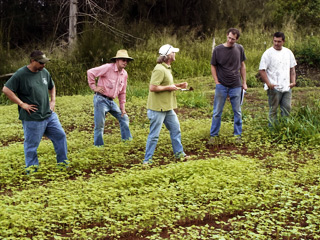
Kaʻū will be one of the sites for GoFarm Hawai`i
classes for new farmers. Photo from The Kohala Center.
To read comments, add your own, and like this story, see facebook.com/kaucalendar.

NEW AND ASPIRING FARMERS AND RANCHERS on Hawai‘i Island can choose from two comprehensive courses being launched by The Kohala Center in early 2017. Some classes will be held in Kaʻū. In addition to its Beginning Farmer-Rancher Development Program, which has graduated more than 120 students since 2013, The Center will host the state’s largest farmer training program, GoFarm Hawai‘i, for the first time on Hawai‘i Island. More information about both programs is available online at kohalacenter.org/farmertraining.
     The seventh cohort of The Kohala Center’s Beginning Farmer-Rancher Development Program begins Saturday, Feb. 4 in Honokaʻa, with classes held every other Saturday through October from 9 a.m. to 4 p.m. Classes will meet primarily in Honokaʻa but will rotate between training sites in Hawi, Kailua-Kona, and Kaʻū to encourage participation from multiple regions of Hawai‘i Island.
     The program provides 188 hours of coursework, on-farm demonstrations, workshops, field trips, and online resources covering topics such as soil fertility management, tropical crop production, livestock production, business planning and financing, and agricultural product marketing. Tuition is $250 for the full program and scholarship assistance is available. Students who successfully complete the program will be eligible for assistance in securing farm leases and capital to successfully produce, market, and distribute their crops. The program is sponsored by the U.S. Department of Agriculture and the County of Hawai‘i Department of Research and Development.
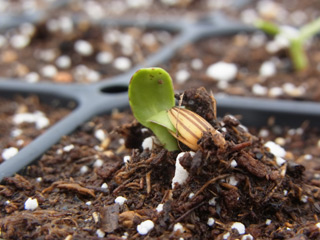
     GoFarm Hawai‘i @ The Kohala Center will offer students classroom instruction, tours of local farms, and hands-on experience in small-scale farming at The Center’s demonstration farm in Honokaʻa. Sponsored in part by Ulupono Initiative, Kamehameha Schools, and the County of Hawai‘i, the program is divided into three phases starting with an “AgCurious” introductory session, followed by four
kuikamana_005
Hands on experience in small-scale farming is part of the
GoFarm Hawaiʻi educational program.
Photo from The Kohala Center
     AgXposure site visits. AgXposure participants may then apply to AgSchool, an intensive, hands-on, four-month farmer training program. Applicants interested in GoFarm @ The Kohala Center are encouraged to attend the AgCurious session on Thursday, Jan. 12 from 6 p.m. to 8 p.m. at the North Hawai‘i Education and Research Center in Honoka‘a. AgCurious will provide an overview of the GoFarm program and the current state of farming in Hawai‘i. AgCurious and AgXposure sessions are available at no cost, while enrollment in the 13-session AgSchool program is $20 per session. Interested applicants may email Derrick Kiyabu at derrick@gofarmhawaii.org to register and for more information.
     “Our farmer training programs were created with a specific goal in mind: to improve food security in Hawai‘i by training and empowering future generations of local food producers,” said Nicole Milne, director of food and agriculture initiatives at The Kohala Center. “Here in Hawai‘i we import roughly 85 percent of our food, the average age of our local farmers is increasing, and the number of farms in the islands and across the U.S. is declining. Encouraging island residents to consider careers in agriculture and give them the knowledge and support they need to succeed are critical elements in our strategy to reduce Hawai‘i’s dependence on imports and move us toward greater food self-reliance.”
     Although no previous farming experience is required, preference is given to applicants who have taken steps to become agricultural producers but would benefit from a comprehensive curriculum.
See more on The Kohala Center at www.kohalacenter.org.

To read comments, add your own, and like this story, see facebook.com/kaucalendar.

Kaʻū ʻOhana Band plays Christmas music tomorrow at
Ocean View Swap Meet at 9:30 a.m.
KAʻŪ OHANA BAND will play Christmas music at 9:30 a.m. at the Ocean View Swap meet tomorrow, Saturday, Dec. 17. The conductor is Steve Moon.

FRIEND-RAISER IS NĀʻĀLEHU ELEMENTARY SCHOOL’S Winter Fest is tomorrow, Saturday. Dec. 17 from 10 a.m. to 2 p.m. “Make New Friends,” declares the poster, which also reports on opportunities to enjoy shave ice, drinks, hot dogs – all for $1. Games are 50 cents. Also featured is a bounce house, raffle, bake sale, splash booth, jail, face painting and information vendors. Winter Fest is sponsored by the Nāʻālehu School Council.

LEARN ABOUT THE JAPANESE DETAINMENT CAMP at Kīlauea Military Camp, during a walk tomorrow, Saturday, Dec. 17 from 10:30 a.m. to 11:30 a.m. Hawaiʻi Volcanoes National Park Staff leads the way. Free. Park entrance fees apply. Meet at the flagpole.

KMC when it was a detention camp for Japanese during
WWII. Take a walk to learn the history this Saturday.
Image from KMC
REP. RICHARD CREAGAN’S OCEAN VIEW FORUM will be held at Ocean View Community Center next Monday, Dec. 19 at 6 p.m. Creagan represents District 5 in the Hawaiʻi House of Representatives and chairs the Committee on Agriculture. District 5 includes Honuʻapo to Nāʻālehu, to Ocean View, to Capt. Cook, Kealakekua and part of Kailua-Kona.

KEIKI FUN DAY AND OPEN HOUSE will be held at Pāhala Community Center on Tuesday, Dec. 20 fron 8:30 a.m. to 10:30 a.m., sponsored by Tutu & Me.

OCEAN VIEW’S OWN MUSICAL CONDUCTOR Michael Cripps will lead the Chamber Orchestra of Kona in a Christmas Concert, Tuesday, Dec. 20 at Sheraton ballroom at 7 p.m. Tickets can be purchased at www.chamberorchestraofkona.com and at the door.

VOTE FOR THE BEST DECORATED Kilauea Military Camp through the holidays.

CHRISTMAS IN THE COUNTRY is ongoing through the holidays at Volcano Art Center in Hawaiʻi Volcanoes National Park. Free; park entrance fees apply.


SUPPORT OUR SPONSORS AT PAHALAPLANTATIONCOTTAGES.COM ANDKAUCOFFEEMILL.COM. KA`U COFFEE MILL IS OPEN SEVEN DAYS A WEEK.