|
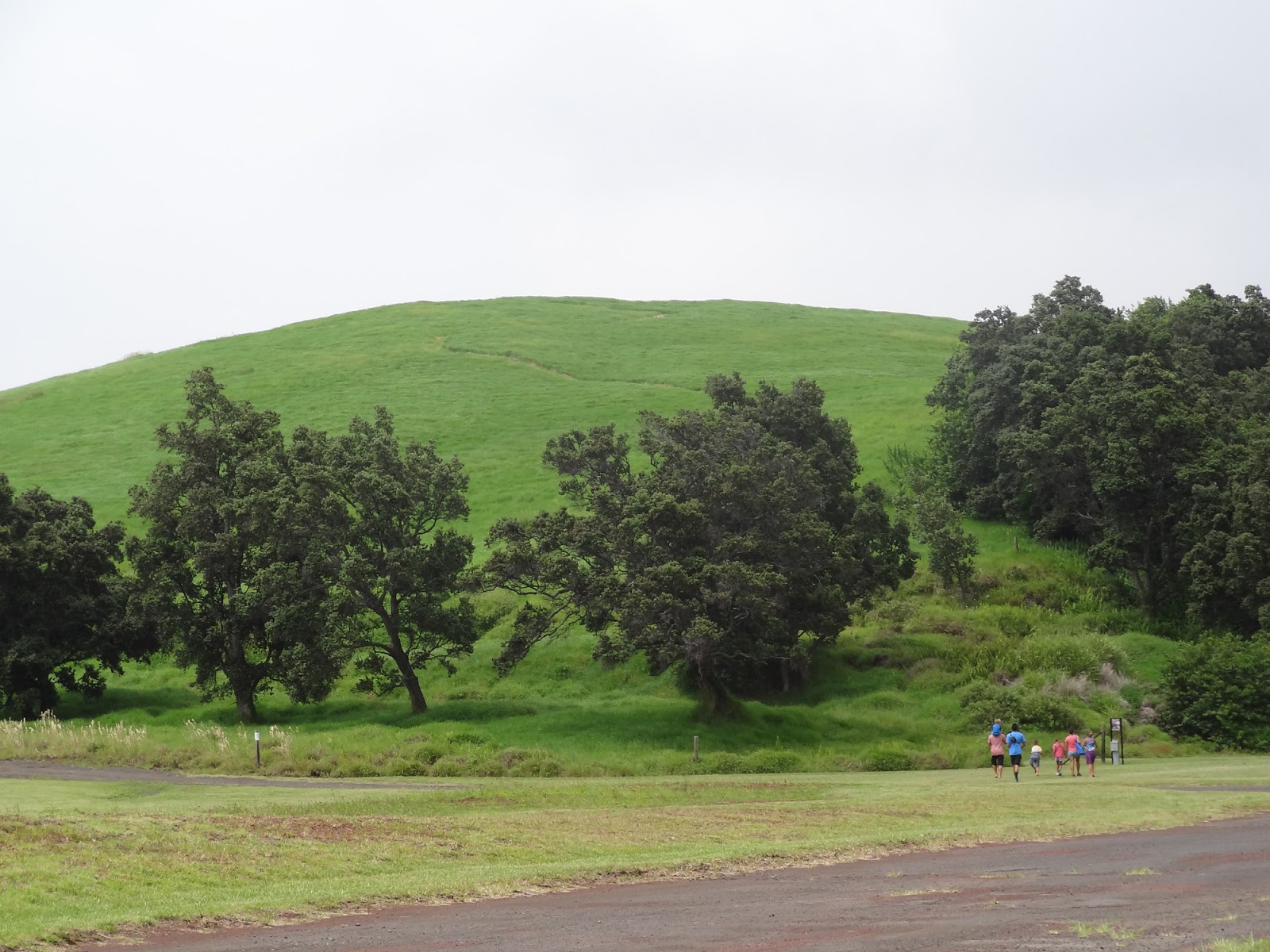
| Hawaiian Volcano Observatory scientists discuss Ka`u's Kamakai`a Hills in the current current issue of Volcano Watch. See more below. Photo from USGS/HVO |
 |
| Ka`u's state Sen. John Green supports inclusion of Hawai`i's yellow-faced bees on the Endangered Species List. Photo by John Kaia from the Xerxes Society |
“Efforts to decrease the use of toxic pesticides have fallen on deaf ears for years in our state. Now we see the result of that negligence.
“I'm calling on the governor to take immediate action to assess all possible ways to protect these pollinators, and us, from reckless spraying.
“I’ll also be pursuing legislative solutions (as in past years) to protect both people and critical species from the effects of man-made agrochemicals.”
To read comments, add your own, and like this story, see Facebook. Follow us on Instagram and Twitter.

The siren test is a steady, one-minute tone on all sirens. The steady tone is used to alert the public to any emergency that may pose a threat to life and property. Besides natural hazards, the Emergency Alert System could be used for terrorist incidents or acts of war.
Contact the county civil defense/emergency management agency to report siren operations issues at 935-0031.
When the siren signal is sounded, tune to any local radio or television station for emergency information and instructions broadcast by emergency management agencies. Participating stations will carry a detailed explanation of what the sirens mean, as well as other related information, during the monthly test.
Tests of outdoor warning sirens and the Emergency Alert System are conducted simultaneously, normally on the first working day of the month, in cooperation with Hawai`i’s broadcasting industry. Emergency management and disaster preparedness information is located in the front section of telephone directories.
To read comments, add your own, and like this story, see Facebook. Follow us on Instagram and Twitter.
Contact the county civil defense/emergency management agency to report siren operations issues at 935-0031.
When the siren signal is sounded, tune to any local radio or television station for emergency information and instructions broadcast by emergency management agencies. Participating stations will carry a detailed explanation of what the sirens mean, as well as other related information, during the monthly test.
Tests of outdoor warning sirens and the Emergency Alert System are conducted simultaneously, normally on the first working day of the month, in cooperation with Hawai`i’s broadcasting industry. Emergency management and disaster preparedness information is located in the front section of telephone directories.
To read comments, add your own, and like this story, see Facebook. Follow us on Instagram and Twitter.
 |
| Sen. Hirono holds up a bottle of HC&S sugar as an example of industries negatively affected by trade agreements. Photo from Office of Sen. Hirono |
“Although we hear that every new trade deal is supposed to ‘level the playing field’ for workers, these agreements end up doing the opposite,” Hirono said. “This is particularly true for Hawaiian Commercial & Sugar Company workers who will lose their jobs after illegal subsidies on Mexican sugar irreparably damaged our domestic sugar industry. Congress should not consider an agreement as massive and far-reaching as the TPP until it has been renegotiated to ensure it protects American jobs, raises American wages and safeguards the environment.”
To read comments, add your own, and like this story, see Facebook. Follow us on Instagram and Twitter.
To read comments, add your own, and like this story, see Facebook. Follow us on Instagram and Twitter.
KA`U’S KAMAKAI`A HILLS ARE THE TOPIC of Hawaiian Volcano Observatory’s current issue of Volcano Watch.
“Visitors to the Jaggar Museum and Ka`u Desert in Hawai`i Volcanoes National Park, struck by the appearance of three dark, symmetrical volcanic cones on the western slope of Kilauea Volcano, often ask ‘what are they?’ and ‘why are they there?’” the article states.
“The cones are the Kamakai`a Hills. Their Hawaiian name means ‘the eye of the fish,’ possibly because the cones, each dimpled with a cup-shaped crater, reminded early Hawaiians of the eyes on prized fish, such as ulua.
“The Kamakai`a cones are merely the largest of a series of vents, including older, more eroded cones, spatter ramparts and large ground cracks, that spewed lava clots and blocks of older rock for short periods. Multiple eruptions have originated along this three-mile long ‘mini-rift’ over a period spanning at least 500 years.
“The two largest eruptions, each probably lasting weeks to a few months, produced far-travelling flows and rootless lava shields similar to those that have grown around Kilauea’s East Rift Zone Pu`u `O`o vent over the last three decades. The big Kamakai`a cones developed during explosive phases of the eruptions, producing fields of volcanic bombs, rubbly scoria and spatter. The largest bombs in these ejecta beds exceed one meter (three feet) in diameter.
“Unusual eruption products at the Kamakai`a Hills correspond with a form of lava that has no equivalent elsewhere on Kilauea –pasty pahoehoe with a distinctively stretched ‘skin’ that resembles the grain one might find on pieces of old driftwood. This lava is also chemically distinctive.
“Preliminary analyses of the lava indicate that at least some of it contains much more silica than ordinary Kilauea basalt. In fact, it is similar to basaltic andesite, a type of lava abundant in the Coast Range of Oregon and northern California. This suggests that the magma beneath the Kamakai`a Hills was stored for a long time before it erupted to the surface, which allowed it to evolve to a greater degree than lava found anywhere else on Kilauea. Such chemical evolution might also explain its explosiveness.
“Initial efforts to establish the ages of the Kamakai`a Hills lava were based on palemagnetism – measurements of ancient orientations of Earth’s magnetic field preserved in the basalt. That study concluded that the Kamakai`a flows were older than the Footprints Ash from the A.D.1790 explosive eruption, which marked the onset of historically recorded eruptions at Kilauea.
“However, current investigations of the Kamakai`a Hills show that two flows are younger than the 1790 Footprints Ash. These flows probably erupted sometime between 1790 and 1823, when the first Euro-Americans visited the volcano. Reverend William Ellis, leader of that first expedition, commented that he observed ‘smoking chasms’ in the vicinity of the Kamakai`a cones – highly suggestive of recent volcanic activity there.
“Geologists also recently discovered sets of fossil human footprints in the Footprints Ash deposit within the Kamakai`a Hills. This significantly extends the area in which people are known to have been moving immediately following the 1790 eruption.
“To explain why the Kamakai`a Hills exist requires combining several critical strands of research, including geophysics, structural geology and geochemistry. Findings from a study presently underway at the USGS Hawaiian Volcano Observatory will likely revise the known geologic history of Kilauea's Southwest Rift Zone.
“The Kamakai`a Hills are positioned where the Koa`e Fault System, which National Park visitors can easily view along the Hilina Pali Road, merges with Kilauea's Southwest Rift Zone. They terminate westward at a bend in the rift zone near Pu`ukou, a site of ongoing shallow earthquake activity.
“Seismicity over the past few decades suggests that magma periodically intrudes from Kilauea’s summit reservoir southward to the Koa`e Fault System, then bends to follow the Southwest Rift Zone into the area beneath the Kamakai`a Hills. Pu`ukou could act as a ‘log jam,’ causing long-term storage of the trapped magma beneath the Hills.
“Repeated eruptions in the Kamakai`a Hills might occur because occasional intrusions of fresh magma drive the older, more evolved magma to the surface. Continuous southward sliding of Kilauea’s seaward slope might also keep the Kamakai`a Hills corridor open and volcanically active.
“Past events provide important insights into Kilauea’s future. Knowing this, we certainly expect that eruptions of unusual character are likely to break out again in this remote and interesting area on the volcano.”
 See hvo.wr.usgs.gov/volcanowatch.
To read comments, add your own, and like this story, see Facebook. Follow us on Instagram and Twitter.
“Visitors to the Jaggar Museum and Ka`u Desert in Hawai`i Volcanoes National Park, struck by the appearance of three dark, symmetrical volcanic cones on the western slope of Kilauea Volcano, often ask ‘what are they?’ and ‘why are they there?’” the article states.
“The cones are the Kamakai`a Hills. Their Hawaiian name means ‘the eye of the fish,’ possibly because the cones, each dimpled with a cup-shaped crater, reminded early Hawaiians of the eyes on prized fish, such as ulua.
“The Kamakai`a cones are merely the largest of a series of vents, including older, more eroded cones, spatter ramparts and large ground cracks, that spewed lava clots and blocks of older rock for short periods. Multiple eruptions have originated along this three-mile long ‘mini-rift’ over a period spanning at least 500 years.
“The two largest eruptions, each probably lasting weeks to a few months, produced far-travelling flows and rootless lava shields similar to those that have grown around Kilauea’s East Rift Zone Pu`u `O`o vent over the last three decades. The big Kamakai`a cones developed during explosive phases of the eruptions, producing fields of volcanic bombs, rubbly scoria and spatter. The largest bombs in these ejecta beds exceed one meter (three feet) in diameter.
 |
| Kamakai`a Hills are between Pahala and Volcano Village. Map from Google |
“Preliminary analyses of the lava indicate that at least some of it contains much more silica than ordinary Kilauea basalt. In fact, it is similar to basaltic andesite, a type of lava abundant in the Coast Range of Oregon and northern California. This suggests that the magma beneath the Kamakai`a Hills was stored for a long time before it erupted to the surface, which allowed it to evolve to a greater degree than lava found anywhere else on Kilauea. Such chemical evolution might also explain its explosiveness.
“Initial efforts to establish the ages of the Kamakai`a Hills lava were based on palemagnetism – measurements of ancient orientations of Earth’s magnetic field preserved in the basalt. That study concluded that the Kamakai`a flows were older than the Footprints Ash from the A.D.1790 explosive eruption, which marked the onset of historically recorded eruptions at Kilauea.
“However, current investigations of the Kamakai`a Hills show that two flows are younger than the 1790 Footprints Ash. These flows probably erupted sometime between 1790 and 1823, when the first Euro-Americans visited the volcano. Reverend William Ellis, leader of that first expedition, commented that he observed ‘smoking chasms’ in the vicinity of the Kamakai`a cones – highly suggestive of recent volcanic activity there.
“Geologists also recently discovered sets of fossil human footprints in the Footprints Ash deposit within the Kamakai`a Hills. This significantly extends the area in which people are known to have been moving immediately following the 1790 eruption.
“To explain why the Kamakai`a Hills exist requires combining several critical strands of research, including geophysics, structural geology and geochemistry. Findings from a study presently underway at the USGS Hawaiian Volcano Observatory will likely revise the known geologic history of Kilauea's Southwest Rift Zone.
“The Kamakai`a Hills are positioned where the Koa`e Fault System, which National Park visitors can easily view along the Hilina Pali Road, merges with Kilauea's Southwest Rift Zone. They terminate westward at a bend in the rift zone near Pu`ukou, a site of ongoing shallow earthquake activity.
“Seismicity over the past few decades suggests that magma periodically intrudes from Kilauea’s summit reservoir southward to the Koa`e Fault System, then bends to follow the Southwest Rift Zone into the area beneath the Kamakai`a Hills. Pu`ukou could act as a ‘log jam,’ causing long-term storage of the trapped magma beneath the Hills.
“Repeated eruptions in the Kamakai`a Hills might occur because occasional intrusions of fresh magma drive the older, more evolved magma to the surface. Continuous southward sliding of Kilauea’s seaward slope might also keep the Kamakai`a Hills corridor open and volcanically active.
“Past events provide important insights into Kilauea’s future. Knowing this, we certainly expect that eruptions of unusual character are likely to break out again in this remote and interesting area on the volcano.”

To read comments, add your own, and like this story, see Facebook. Follow us on Instagram and Twitter.
KA`U RESIDENTS CAN PARTICIPATE in Hawai`i County Council meetings this week. Committees meet Tuesday, with Public Safety & Mass Transit at 9 a.m.; Finance, 10:30 a.m.; Public Works & Parks & Recreation, 1 p.m.; Planning, 1:30 p.m.; Agriculture, Water & Energy Sustainability, 2 p.m.; Environmental Management, 2:30 p.m.; and Governmental Relations & Economic Development, 4 p.m.
The full council meets Wednesday at 9 a.m.
All meetings take place at Council Chambers in Hilo.
Videoconferencing is available at Na`alehu State Office Building. See hawaiicounty.gov for agendas and live streaming of the meetings.
The full council meets Wednesday at 9 a.m.
All meetings take place at Council Chambers in Hilo.
Videoconferencing is available at Na`alehu State Office Building. See hawaiicounty.gov for agendas and live streaming of the meetings.
SUPPORT OUR SPONSORS AT PAHALAPLANTATIONCOTTAGES.COM AND KAUCOFFEEMILL.COM. KA`U COFFEE MILL IS OPEN SEVEN DAYS A WEEK.


 |
| See kaucalendar.com/TheDirectory2016.html and kaucalendar.com/TheDirectory2016.pdf. |