About The Kaʻū Calendar

Monday, October 03, 2016

Ka`u Calendar News Briefs Monday, Oct. 3, 2016

Masses of tropical moisture place Ka`u under a flash flood watch through tomorrow afternoon.
Map from NOAA
A FLASH FLOOD WATCH IS IN EFFECT FOR KA`U and Hawai`i Island. The National Weather Service reported that abundant moisture and an upper level disturbance could trigger heavy rains and thunderstorms until 6 p.m. tomorrow.
      To read comments, add your own, and like this story, see Facebook. Follow us on Instagram and Twitter.

THE NEW YORK TIMES PUBLISHED A MAUNA KEA THIRTY METER TELESCOPE cultural and scientific story this morning. Entitled Under Hawai`i’s Starriest Skies, a Fight Over Sacred Ground, Dennis Overbye’s story examines how the clash of values developed between astronomy supporters and Native Hawaiians against the project.
Thirty Meter Telescope is the topic of a New York Times
story today. Image from TMT
      “To astronomers, the Thirty Meter Telescope would be a next-generation tool to spy on planets around other stars or to peer into the cores of ancient galaxies, with an eye sharper and more powerful than the Hubble Space Telescope, another landmark in humanity’s quest to understand its origins,” Overbye wrote. “But to its opponents, the telescope would be yet another eyesore despoiling an ancient sacred landscape, a gigantic 18-story colossus joining the 13 telescopes already on Mauna Kea.”
      Kealoha Pisciotta, president of Mauna Kea Anaina Hou, which is against the project, takes a different view. “This is a very simple case about land use,” she told Overbye. “It’s not science versus religion. We’re not the church. You’re not Galileo.”
      According to Overbye, Pisciotta used to work at an observatory on Mauna Kea with hopes of becoming a cosmologist, but she “became disenchanted when a family shrine disappeared from the summit and the plans for the outriggers (smaller telescopes at Keck Observatory) impinged on a cinder cone.”
      “Cinder cones are burial sites,” Pisciotta told Overbye. “It’s time to not let this go on.”
      Overbye quoted from a report by sociologist Peter Adler commissioned by the Moore Foundation, which has contributed large sums to the project. “Should TMT decide to pursue a Mauna Kea site, it will inherit the anger, fear and great mistrust generated through previous telescope planning and siting failures and an accumulated disbelief that any additional projects, especially a physically imposing one like the TMT, can be done properly,” Adler wrote.
      That anger was apparent on the day groundbreaking was scheduled. “Like snakes you are. Vile snakes,” Overbye reported Joshua Lanakila Mangauil saying to those gathered for the event. “We gave all of our aloha to you guys, and you slithered past us like snakes. For what? For your greed to look into the sky? You guys can’t take care of this place.”
      See nytimes.com.
      To read comments, add your own, and like this story, see Facebook. Follow us on Instagram and Twitter.

Kealoha Pisciotta
KEALOHA PISCIOTTA, known for her opposition to the Thirty Meter Telescope (see story above), is challenging Richard Onishi as Ka`u’s state representative in the November election. 
      The Green Party candidate’s platform includes creating a model for a regenerative economy. “Hawai`i Island, and especially District III, has a unique and diverse population with a blend of many ethnicities, cultures and lifestyles, and also a range of rural and urban centers,” Pisciotta says on her website. “Our economy is dependent on the natural beauty, health and wellbeing of the land. I believe we have much to offer our island and state by promoting and protecting our island way of living.
      “State House District III is uniquely suited for initiatives that improve the residents’ quality of life while increasing food and energy security for the entire island. With large tracts of arable land, connectivity to commercial areas and one of the state’s most significant tourist attractions, the district offers those intent on living a sustainable lifestyle the opportunity to thrive. Support at the state level for programs that increase residents’ capacity to grow food, raise livestock, catch water and generate power in sufficient volumes for sustainability is an important first step.
      “Policies that help expand this core farming community’s productivity, allowing it to also feed its urban neighbors and the more than one million national park visitors that pass through the area each year, will evolve the district’s self-sufficiency achievements into a thriving, regenerative economy.”
      Pisciotta’s also has plans for creating what she calls a just economy for Hawai`i, creating educational models that strengthen communities and “raising the standard of Aloha always and in all things.”
      “There’s a lot state government can do to ensure that Hawai`i lives up to its reputation as the Aloha State, and emphasizing the interrelationship of all things as a core social value is the place to begin,” Pisciotta says.
      See kealohapisciotta.com.
      To read comments, add your own, and like this story, see Facebook. Follow us on Instagram and Twitter.

Proxima Centauri is the sun's closest stellar neighbor.
Chart from NASA
A PLANET LARGER THAN EARTH has been found circling our nearest stellar neighbor, the star Proxima Centauri, astronomer Lew Cook reported in the October issue of Stars Over Ka`u. Proxima means closest to earth.
      “Astronomers using European Southern Observatory’s telescopes in Chile have discovered what can only be a planet orbiting the closest star to Earth,” Cook wrote. “This planet orbits this star every 11.8 days. Eleven days! That’s a short year. Newton’s laws of gravitational motion require this to be very close to the star, so you would think it would be extremely hot there. It would be, if the star were a sun-like star. But it is not! Proxima is small, cool and dim, only putting the planet at a “comfortable” distance, in the Goldilocks zone (because the temperature is ‘just right.’ Is there life on this planet? No one around here (Earth) knows!
      “If you could stand on its surface, you’d see its star – its sun shining dimly, but about four times as large as our sun. But even in the daytime, Alpha and Beta Centauri could be seen in a clear sky from Proxima’s planet.”
      See kaucalendar.com.
      To read comments, add your own, and like this story, see Facebook. Follow us on Instagram and Twitter.

Hawai`i County Council member
Margaret Wille
IMPLEMENTING SUSTAINABILITY AND RESILIENCE PRINCIPLES is the topic of a bill to be discussed by Hawai`i County Council’s Committee on Agriculture, Water & Energy Sustainability tomorrow at 2 p.m. Margaret Wille’s Bill 242 requires an affirmative finding of consistency with the goals of long-term environmental, cultural and economic wellbeing by the Planning Department and Leeward and Windward Planning Commissions prior to any approval of an application, determination or advisory recommendation.
      The goals are set forth in the Hawai`i Revised Statutes, the Hawai`i County Charter and the Hawai`i State Constitution.
      Ka`u residents can participate in this and other meetings this week. Other committees meeting tomorrow are Public Safety & Mass Transit at 9 a.m.; Finance, 10:30 a.m.; Public Works & Parks & Recreation, 1 p.m.; Planning, 1:30 p.m.; Environmental Management, 2:30 p.m.; and Governmental Relations & Economic Development, 4 p.m.
      The full council meets Wednesday at 9 a.m.
      All meetings take place at Council Chambers in Hilo.
      Videoconferencing is available at Na`alehu State Office Building. See hawaiicounty.gov for agendas and live streaming of the meetings.
      To read comments, add your own, and like this story, see Facebook. Follow us on Instagram and Twitter.

Ka`u High students helped break ground for the new gym
four years ago today. Photo by Julia Neal
GROUNDBREAKING FOR THE KA`U DISTRICT GYM & SHELTER took place four years ago today. It opens Wednesday, with a blessing at 10 a.m. and a community open house at 5 p.m. See flyer below.
      The size and diversity of the new facility is in direct response to comments gathered from the community, said Mayor Billy Kenoi. “The Ka`u District Gym & Shelter has been designed to expand athletic and recreational opportunities, serve as a destination for community events and emergency shelter during natural disasters.”
      Releasing funding for the gym was one of former Gov. Neil Abercrombie’s first actions for Ka`u as governor.
      Releasing the funding was also one of the first efforts by Ka`u County Council member Brittany Smart. She asked the governor to release the funds the first time she met him after the election. The late Sen. Gil Kahele and Rep. Bob Herkes also helped with funding.
      Acquisition of money for the gym followed an effort led by former County Council member Guy Enriques, in cooperation with the Pahala School principal. Enriques, who runs volleyball tournaments on the mainland each summer and takes local students to volleyball events across the country, said he hopes to bring volleyball tournaments to Pahala.
      To read comments, add your own, and like this story, see Facebook. Follow us on Instagram and Twitter.

Jackie Pualani Johnson as Queen Lili`uokalani.
Image from NPS
JACKIE PUALANI JOHNSON PRESENTS Lili`uokalani at Washington Place tomorrow at 7 p.m. at Kilauea Visitor Center Auditorium in Hawai`i Volcanoes National Park. The one-woman show features the last monarch of Hawai`i, with material taken directly from writings of Queen Lili`uokalani, her family and other historical sources.
      $2 donations support After Dark in the Park programs; park entrance fees apply.

ADVOCATS OFFERS A FREE SPAY/NEUTER CLINIC Wednesday from 7:30 a.m. to 7:30 p.m. at Ocean View Community Center. Call 895-9283 to sign up.

SUPPORT OUR SPONSORS AT PAHALAPLANTATIONCOTTAGES.COM AND KAUCOFFEEMILL.COM. KA`U COFFEE MILL IS OPEN SEVEN DAYS A WEEK.


See kaucalendar.com.
See kaucalendar.com/TheDirectory2016.html
and kaucalendar.com/TheDirectory2016.pdf.


Sunday, October 02, 2016

Ka`u Calendar News Briefs Sunday, Oct. 2, 2016

Hawaiian Volcano Observatory scientists discuss Ka`u's Kamakai`a Hills in the current
current issue of Volcano Watch. See more below. Photo from USGS/HVO
LAST WEEK’S INCLUSION OF NATIVE HAWAIIAN BEES on the federal Endangered Species List is supported by Ka`u’s state Sen. Josh Green.
Ka`u's state Sen. John Green supports inclusion of Hawai`i's
yellow-faced bees on the Endangered Species List.
Photo by John Kaia from the Xerxes Society
      “Federal authorities confirmed what many of us have been concerned about for some time: The decimation of several species of bees in Hawai`i,” Green said. “Why is this important? First of all, bees are critical pollinators that sustain many parts of our agro-ecosystem. Bees also function as the ecological canary in the coal mine, serving as a crucial indicator of the health and development of people. Dead bees suggest toxic exposure to our children.
      “Efforts to decrease the use of toxic pesticides have fallen on deaf ears for years in our state. Now we see the result of that negligence.
      “I'm calling on the governor to take immediate action to assess all possible ways to protect these pollinators, and us, from reckless spraying.
      “I’ll also be pursuing legislative solutions (as in past years) to protect both people and critical species from the effects of man-made agrochemicals.”
      To read comments, add your own, and like this story, see Facebook. Follow us on Instagram and Twitter.

HAWAI`I EMERGENCY MANAGEMENT AGENCY monthly test of the statewide outdoor siren warning system, coordinated with the test of the live audio broadcast segment of the Emergency Alert System, is scheduled for tomorrow at 11:45 a.m.
      The siren test is a steady, one-minute tone on all sirens. The steady tone is used to alert the public to any emergency that may pose a threat to life and property. Besides natural hazards, the Emergency Alert System could be used for terrorist incidents or acts of war.
      Contact the county civil defense/emergency management agency to report siren operations issues at 935-0031.
      When the siren signal is sounded, tune to any local radio or television station for emergency information and instructions broadcast by emergency management agencies. Participating stations will carry a detailed explanation of what the sirens mean, as well as other related information, during the monthly test.
      Tests of outdoor warning sirens and the Emergency Alert System are conducted simultaneously, normally on the first working day of the month, in cooperation with Hawai`i’s broadcasting industry. Emergency management and disaster preparedness information is located in the front section of telephone directories.
      To read comments, add your own, and like this story, see Facebook. Follow us on Instagram and Twitter.

Sen. Hirono holds up a bottle of HC&S sugar as an example
of industries negatively affected by trade agreements.
Photo from Office of Sen. Hirono
THE TRANS-PACIFIC PARTNERSHIP SHOULD NOT BE CONSIDERED by Congress until it is renegotiated, Sen. Mazie Hirono and others told the Obama Administration. In a letter to the Administration, the senators outlined TPP’s fundamental flaws and the need to fix them before Congress votes on the agreement, which is the biggest trade agreement ever negotiated.
      “Although we hear that every new trade deal is supposed to ‘level the playing field’ for workers, these agreements end up doing the opposite,” Hirono said. “This is particularly true for Hawaiian Commercial & Sugar Company workers who will lose their jobs after illegal subsidies on Mexican sugar irreparably damaged our domestic sugar industry. Congress should not consider an agreement as massive and far-reaching as the TPP until it has been renegotiated to ensure it protects American jobs, raises American wages and safeguards the environment.”
      To read comments, add your own, and like this story, see Facebook. Follow us on Instagram and Twitter.

KA`U’S KAMAKAI`A HILLS ARE THE TOPIC of Hawaiian Volcano Observatory’s current issue of Volcano Watch.
      “Visitors to the Jaggar Museum and Ka`u Desert in Hawai`i Volcanoes National Park, struck by the appearance of three dark, symmetrical volcanic cones on the western slope of Kilauea Volcano, often ask ‘what are they?’ and ‘why are they there?’” the article states.
      “The cones are the Kamakai`a Hills. Their Hawaiian name means ‘the eye of the fish,’ possibly because the cones, each dimpled with a cup-shaped crater, reminded early Hawaiians of the eyes on prized fish, such as ulua.
      “The Kamakai`a cones are merely the largest of a series of vents, including older, more eroded cones, spatter ramparts and large ground cracks, that spewed lava clots and blocks of older rock for short periods. Multiple eruptions have originated along this three-mile long ‘mini-rift’ over a period spanning at least 500 years.
      “The two largest eruptions, each probably lasting weeks to a few months, produced far-travelling flows and rootless lava shields similar to those that have grown around Kilauea’s East Rift Zone Pu`u `O`o vent over the last three decades. The big Kamakai`a cones developed during explosive phases of the eruptions, producing fields of volcanic bombs, rubbly scoria and spatter. The largest bombs in these ejecta beds exceed one meter (three feet) in diameter.
Kamakai`a Hills are between Pahala and Volcano Village.
Map from Google
      “Unusual eruption products at the Kamakai`a Hills correspond with a form of lava that has no equivalent elsewhere on Kilauea –pasty pahoehoe with a distinctively stretched ‘skin’ that resembles the grain one might find on pieces of old driftwood. This lava is also chemically distinctive.
      “Preliminary analyses of the lava indicate that at least some of it contains much more silica than ordinary Kilauea basalt. In fact, it is similar to basaltic andesite, a type of lava abundant in the Coast Range of Oregon and northern California. This suggests that the magma beneath the Kamakai`a Hills was stored for a long time before it erupted to the surface, which allowed it to evolve to a greater degree than lava found anywhere else on Kilauea. Such chemical evolution might also explain its explosiveness.
      “Initial efforts to establish the ages of the Kamakai`a Hills lava were based on palemagnetism – measurements of ancient orientations of Earth’s magnetic field preserved in the basalt. That study concluded that the Kamakai`a flows were older than the Footprints Ash from the A.D.1790 explosive eruption, which marked the onset of historically recorded eruptions at Kilauea.
      “However, current investigations of the Kamakai`a Hills show that two flows are younger than the 1790 Footprints Ash. These flows probably erupted sometime between 1790 and 1823, when the first Euro-Americans visited the volcano. Reverend William Ellis, leader of that first expedition, commented that he observed ‘smoking chasms’ in the vicinity of the Kamakai`a cones – highly suggestive of recent volcanic activity there.
      “Geologists also recently discovered sets of fossil human footprints in the Footprints Ash deposit within the Kamakai`a Hills. This significantly extends the area in which people are known to have been moving immediately following the 1790 eruption.
      “To explain why the Kamakai`a Hills exist requires combining several critical strands of research, including geophysics, structural geology and geochemistry. Findings from a study presently underway at the USGS Hawaiian Volcano Observatory will likely revise the known geologic history of Kilauea's Southwest Rift Zone.
      “The Kamakai`a Hills are positioned where the Koa`e Fault System, which National Park visitors can easily view along the Hilina Pali Road, merges with Kilauea's Southwest Rift Zone. They terminate westward at a bend in the rift zone near Pu`ukou, a site of ongoing shallow earthquake activity.
      “Seismicity over the past few decades suggests that magma periodically intrudes from Kilauea’s summit reservoir southward to the Koa`e Fault System, then bends to follow the Southwest Rift Zone into the area beneath the Kamakai`a Hills. Pu`ukou could act as a ‘log jam,’ causing long-term storage of the trapped magma beneath the Hills.
      “Repeated eruptions in the Kamakai`a Hills might occur because occasional intrusions of fresh magma drive the older, more evolved magma to the surface. Continuous southward sliding of Kilauea’s seaward slope might also keep the Kamakai`a Hills corridor open and volcanically active.
      “Past events provide important insights into Kilauea’s future. Knowing this, we certainly expect that eruptions of unusual character are likely to break out again in this remote and interesting area on the volcano.”
      See hvo.wr.usgs.gov/volcanowatch.
      To read comments, add your own, and like this story, see Facebook. Follow us on Instagram and Twitter.

KA`U RESIDENTS CAN PARTICIPATE in Hawai`i County Council meetings this week. Committees meet Tuesday, with Public Safety & Mass Transit at 9 a.m.; Finance, 10:30 a.m.; Public Works & Parks & Recreation, 1 p.m.; Planning, 1:30 p.m.; Agriculture, Water & Energy Sustainability, 2 p.m.; Environmental Management, 2:30 p.m.; and Governmental Relations & Economic Development, 4 p.m.
      The full council meets Wednesday at 9 a.m.
      All meetings take place at Council Chambers in Hilo.
      Videoconferencing is available at Na`alehu State Office Building. See hawaiicounty.gov for agendas and live streaming of the meetings.

SUPPORT OUR SPONSORS AT PAHALAPLANTATIONCOTTAGES.COM AND KAUCOFFEEMILL.COM. KA`U COFFEE MILL IS OPEN SEVEN DAYS A WEEK.


See kaucalendar.com/TheDirectory2016.html
and kaucalendar.com/TheDirectory2016.pdf.


Saturday, October 01, 2016

Ka`u Calendar News Briefs Saturday, Oct. 1, 2016

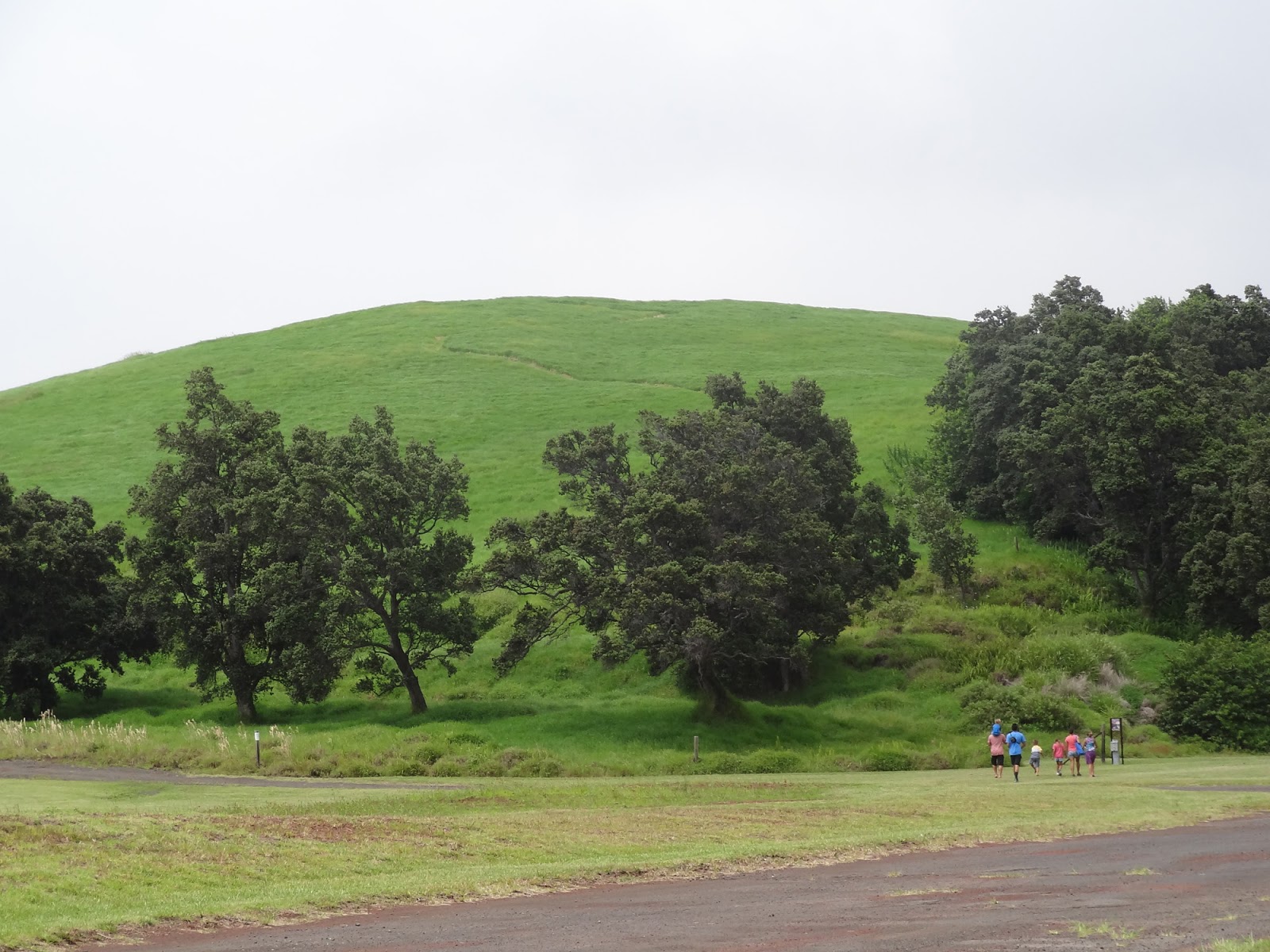
Explore Pu`u o Lokuana during a free, guided hike tomorrow.
See more below. Photo from NPS
HAWAIIAN YELLOW-FACED BEES yesterday became the first bees in the U.S. placed on the Endangered Species List. Seven species of the bee which live in many of the eco niches around the islands were given endangered status following an application submitted in 2009 by the Xerces Society, which helps protect invertebrates. 
      The U.S. Fish & Wildlife Service conducted studies. Matthew Shepherd, of the Xerces Society, wrote Friday that “the USFWS decision is excellent news for these bees, but there is much work that needs to be done to ensure that Hawai`i’s bees thrive. There is only one genus of bees that is native to the Hawaiian Islands, Hylaeus, commonly called yellow-faced bees because of colored markings on their faces. These bees are often found in small patches of habitat hemmed in by agricultural land or developments. Unfortunately, the USFWS has not designated any ‘critical habitat,’ areas of land of particular importance for the endangered bees.”
Hawaii`'s native yellow-faced bees are now protected.
Photo by Karl Magnacca, University of Hawai`i
      Xerces recognized work of researcher Karl Magnacca, who has spent years studying Hawai`i’s bees and provided evidence for these listings. Photographer John Kaia captured images that “have done much to lift these bees out of obscurity,” wrote Shepherd.
      On Xerces.org, the organization states its mission is to “protect nature’s pollinators and invertebrates, which play a vital role in the health of the overall ecosystem.”
      Threats to the seven species of Hawaiian include the present or threatened destruction, modification or curtailment of their habitat by urbanization, land use conversion, nonnative plants and animals; predation by nonnative ants and the western yellow jacket wasp; inadequate habitat protection; small population sizes; and competition with nonnative invertebrates such as the European honeybee. These threats are ongoing and, in some cases (such as some nonnative species) are considered irreversible. Fire is also a potential threat to the habitat of these species in some locations.
      On March 23, 2009, FWS received five petitions from the Xerces Society requesting that FWS list seven species of Hawaiian yellow-faced bees as endangered and designate critical habitat for the species. FWS determined that emergency listing was not warranted at that time. On June 16, 2010, FWS published a 90-day finding that indicated the listing may be warranted. After reviewing all available scientific and commercial information, FWS on Sept. 6, 2011 determined that listing the bees as endangered throughout their range was warranted. However, Kevin Foote, of Pacific Islands Fish & Wildlife Office, announced that listing the bees “is not possible at this time due to higher priority actions to amend the Lists of Endangered and Threatened Wildlife and Plants.”  
      Following Friday’s announcement, FWS spokesman Brent Lawrence said, “Pollinators play such an important role. Listing these species as endangered will certainly help draw attention to the threats that have brought them close to extinction, and it also allows us to begin the process of bringing about recovery.”  
      To read comments, add your own, and like this story, see Facebook. Follow us on Instagram and Twitter. 

Dr. Clifford Kopp at the crest of Hwy 11 in Hawai`i Volcanoes
National Park.
AFTER REACHING NA`ALEHU ON WEDNESDAY, Dr. Clifford Kopp hit the mid-point of his 500-mile walk around Hawai`i Island, with an aim to bring light to the issue of unsheltered homelessness in Hawai`i County.
      The 500-mile trek began on Friday, Sept. 23 and is Kopp’s fifth walk in less than a year. Adding an additional 200 miles to previous walks, Kopp said the number is more closely aligned with how many unsheltered women and children he believes are on the island.
      “According to my accounts, half the homeless on our island are women and children. They don’t deserve the way they are treated,” Kopp said. “There is probably nowhere else in the country where women and children who are unsheltered are as ignored as they are in our county. I am walking to raise awareness for them.”
      Earlier this year, the Kailua-Kona dentist outlined an idea for 12- and 48-bed concepts that would provide shelter needs to 300 people in West Hawai`i. Kukuiola Village would offer a practical way of sheltering the homeless before providing services to transition into more permanent living situations.
      Kopp began his 16-day journey in West Hawai`i, walking the island clockwise. He is now about to embark on his second loop of the island, totaling an additional 200 miles from previous walks conducted in December/January, January/February, March and June. He will conclude his current walk on Oct. 8 as he travels on that day from an area about nine miles out of Hawi to his home in Kailua-Kona.
      “I’m walking most of the time, not feeling well. The only thing that gets me though it is knowing the travesty that’s happening on our island, where the people who have done nothing wrong are being treated so poorly,” Kopp said. “Keeping them in mind allows me to keep walking mile-after-mile, even when I don’t think I have it in me.
      “You could never do this type of walk if it was for a personal reason, but you can do it with an understanding of the number of good people being absolutely ignored by the government.”
      To read comments, add your own, and like this story, see Facebook. Follow us on Instagram and Twitter.

HAWAI`I VOLCANOES NATIONAL PARK will use aircraft this month as it continues its centennial celebration. Park management requires flights to monitor and research volcanic activity, conduct search-and-rescue missions and law enforcement operations, support management of natural and cultural resources, and maintain backcountry facilities.
      On Oct. 6 and 8 between 9 a.m. and 11 a.m., crews will shuttle equipment and camp supplies to Napau Campground for resource surveys/
      On Oct. 17 and 20 between 9 a.m. and 11 a.m., crews will shuttle equipment and camp supplies to Keauhou, `Apua Point, and Halape campgrounds for invasive Guinea grass control work and hawksbill turtle monitoring project.
      During the week of Oct. 17, two flights between 8 a.m. and 12 p.m. will monitor petrel from the summit of Kilauea to Mauna Loa at about the 9,000-ft. elevation.
      In addition, USGS Hawaiian Volcano Observatory may conduct flight operations over Kilauea and Mauna Loa to assess volcanic activity and maintain instrumentation.
      Dates and times are subject to change based on aircraft availability and weather.
      To read comments, add your own, and like this story, see Facebook. Follow us on Instagram and Twitter.

U.S. Rep. Tulsi Gabbard voted for funding to combat Zika, a virus
spread by mosquitoes. Photo from Hawai`i Department of Health
KA`U'S U.S. REP. TULSI GABBARD VOTED to pass the bipartisan Continuing Resolution and the Water Resources Development Act to fund the government and combat the Zika virus.
      “For months, Congress failed to answer the calls for help from communities in need across the nation,” Gabbard said. “After more than seven months of delay, we also passed a $1.1 billion package to combat the Zika virus in states across the country. As we saw in Hawai`i with the rapid spread of dengue fever earlier this year, a disease carried by the same Aedes aegypti mosquito as the Zika virus, many of our communities are under-equipped to handle and control the spread of these dangerous mosquito-borne illnesses. This funding will help to support mosquito eradication efforts, lab testing, education and outreach, vital healthcare services, research and more, and will reimburse state and local health departments that have taken on much of the financial burden of this public health pandemic.”
      Gabbard voted in favor of the CR to fund the federal government through Dec. 9, which includes more than $200 million for Hawai`i military construction and and the Zika. It maintains current levels of funding for programs included in last year’s omnibus bill, including Native Hawai`i Education Act grants, through Dec. 9.
      To read comments, add your own, and like this story, see Facebook. Follow us on Instagram and Twitter.

Ron Ebert
HULA, FIREFIGHTERS AND HAWAIIAN MONARCHS were honored in September as Pahala Volunteer Fire Captain Ron Ebert won third in the Kupuna Kane Hula competition in Kona.
      Ebert, of Punalu`u, danced He`eia, a surf hula. Ebert said he dedicated the hula to King Kalakaua, a volunteer firefighter. According to Ebert, Hawaiian monarchs were firefighters dating back to King Kamehameha III, who started volunteer fire departments in Hawai`i in 1850. All succeeding monarchs participated, Ebert said.
      The kupuna hula competition is more than three decades running, sponsored by Hawai`i County Office of Elderly Services.
      To read comments, add your own, and like this story, see Facebook. Follow us on Instagram and Twitter.

EXPLORE PU`U O LOKUANA TOMORROW from 9:30 a.m. to 10:30 a.m. at the Kahuku Unit of Hawai`i Volcanoes National Park.     Participants learn about formation and various uses of this grassy cinder cone and enjoy a breathtaking view of lower Ka`u on this free, moderately difficult, 0.4-mile hike to the top.

DEADLINE TO REGISTER FOR KAHUKU `OHANA DAY is Monday. Keiki 17 and younger and their families can help the park’s natural resources staff restore native forest by planting native trees in the Kahuku Unit on Saturday, Oct. 15 from 10 a.m. to 2 p.m.
      Bring lunch, snacks, water, a re-usable water bottle, sunscreen, hat, long pants and shoes.
      Call 985-6019 to register.

SUPPORT OUR SPONSORS AT PAHALAPLANTATIONCOTTAGES.COM AND KAUCOFFEEMILL.COM. KA`U COFFEE MILL IS OPEN SEVEN DAYS A WEEK.


See kaucalendar.com.
See kaucalendar.com/TheDirectory2016.html
and kaucalendar.com/TheDirectory2016.pdf.