About The Kaʻū Calendar

Friday, March 03, 2017

Ka`u News Briefs Friday, March 3, 2017

The teachers union is calling for a Day of Action on Tuesday, inviting teachers, parents, community members and students
to come to school early and wear red. Photo froM HSTA
HAWAI`I STATE  TEACHERS ASSOCIATION has called for A Day of Action next Tuesday, March 7. The public teachers union is calling for all teachers, parents and supportive community members, including students, to wear red; wave signs at each school for 15 to 30 minutes before classes begin; and photograph and post on social media the support group in front of the school. "Walk in to the school as a group just before the start of the work day and feel free to chant as you enter," states the HSTA website.
     Na`alehu and Ka`u High and Pahala Elementary are expected to draw participants.
     The average starting salary of teachers in Hawai`i is $41,027. The average salary is $57,431. The highest paying averages are in New York with $77,957, Massachusetts with $76,981, District of Columbia with $75,810, California with $72,842 and Connecticut with $72,013. Hawai`i ranks eighteenth in teacher salaries but has the highest cost of living. Most other high cost-of-living states and the District of Columbia have higher teacher salaries.
     The union is asking for a "fair contract" to be approved at the state Board of Education meeting on Tuesday evening in Honolulu and asking for testimony to submit ahead of time.
      According to HSTA, issues include more funding for public schools and approving a proposal for a state constitutional amendment to create a steady funding stream for the state Department of Education.      
     States HSTA, "It is important that we increase education funding so we can attract and retain teachers." The union is calling for "fair and appropriate compensation – teacher pay, health premiums, supplemental pay for hard-to-staff areas; improving the teaching and learning environment with lower class sizes, preparation time, SPED (staffing formula, supports, meeting time), and support for English as a second language students." The HSTA is pushing for "teaching and school empowerment – allowing for more school level decisions, improving the teacher transfer and assignment process and an appropriate teacher evaluation – a supportive, not punitive system of evaluation."
     Another concern of HSTA is "protecting and supporting all teachers – equity of treatment for charter teachers, supports and mentors for probationary teachers."  See more at Hawai`i State Teachers Association, www.hsta.org.

To read comments, add your own, and like this story, see Facebook. Follow us on Instagram and Twitter.

AN EIGHT FOOT SHARK SEEN IN WATERS NEAR PUNALU`U BEACH on Friday prompted the county to shut down Punalu`u Beach Park. The Hawai`i Fire Department's Ocean Safety Department planned to search for the shark Saturday morning and reopen the beach if no sharks are seen. (UPDATE: THE BEACH REOPENED SATURDAY MORNING.)
A tiger shark is the kind most likely seen at Punalu`u Beach in Ka`u
on Friday before the county shut down Punalu`u Beach Park.
Photo from Wikipedia
     In 2016, there were ten shark incidents across the state with most on Maui, including one death. In 2015 there were four on the Big Island, three on O`ahu, two on Maui and one on Lana`i. In 2014, there were six statewide with most on Maui. In 2013 when there were 14, including one death.
     Historically, October through December sees the highest rates of shark incidents. The last shark bite recorded at Punalu`u was Dec. 11, 2013 when a tiger shark bit a bodyboarder 20 yards off shore in 8 feet of water at Ninole Horseshoe surf spot around 8 a.m.. The 29 year-old Captain Cook man was paddling out to bodyboard for his second session with two friends when a shark knocked him off his board.
     According to police reports, companions of the surfer identified the attacker as a tiger shark about ten to 12 feet long. Friends escorted the victim to Ka`u Hospital where he was treated in the Emergency Room, receiving stitches and released. As a precaution, the lifeguard at Punalu`u posted signs along the waterfront. Swimming, wading, diving and surfing were prohibited until a helicopter flyover the next day resulted in an all-clear announcement.
     Punalu`u waterman Guy Enriques said his sons had seen a tiger shark in the bay earlier in the week before the surfer was bitten, when they were diving at Punalu`u. Punalu`u is a favorite spot for sea turtles and hawksbill turtles, a favorite food of tiger sharks.
      The state Department of Land & Natural Resources advises everyone to "swim, surf or dive with other people, and don’t move too far away from assistance; stay out of the water at dawn, dusk and night, when some species of sharks may move inshore to feed; realize that sharks, especially tiger sharks, have been known to bite people any time of the day or night; and do not enter the water if you have open wounds or are bleeding in any way."
      DLNR reminds everyone that "Sharks can detect blood and body fluids in extremely small quantities."
      The DLNR also recommends: "Avoid murky waters, harbor entrances and areas near stream mouths (especially after heavy rains), channels or steep drop-offs; do not wear high-contrast clothing or shiny jewelry."  DLNR points out that since sharks see contrast very well, "refrain from excessive splashing; keep pets, which swim erratically, out of the water; do not enter the water if sharks are known to be present and leave the water quickly and calmly if one is sighted. Do not provoke or harass a shark, even a small one. "
     Other cautionary measures: "If fish or turtles start to behave erratically, leave the water; avoid swimming near dolphins, as they are prey for some large sharks; remove speared fish from the water or tow them a safe distance behind you; do not swim near people fishing or spear fishing; stay away from dead animals in the water; and swim or surf at beaches patrolled by lifeguards and follow their advice."

To read comments, add your own, and like this story, see Facebook. Follow us on Instagram and Twitter.

HAWAI`I ISLAND HAS THE HIGHEST SIGNIFICANT FIRE POTENTIAL between March and June and Hawai`i Wildfire Management Organization reminds residents that 0.5 percent of Hawai`i's total land area burns annually, much more than the porportion of land that burns in any other state.
      Hawai`i Wildfire Managemnet Organization recently joined a field trip with Pacific Fire Exchange on managing fire risk in native dryland forests on this island. Participants saw the difference between forests overgrown with dense and flammable grasses and shrubs, as well as other invasives such as silver oak trees.  
Land that burned in a year in Hawai`i.
Image from Hawa`i Wildfare Management Organization
     Participants also inspected native, fire resistant forests with such species as the native lama with its berries, and uhiuhi flowers, which require persistent management of fire fuels, like fountain grasses that grow on lava.
      Hawai`i Wildfire Management Organization provides services to help people create a Firewise Community by documenting wildfire hazards and teaching firewise practices. Some communities on this island, such as Waikoloa and Puako, have planned the development of fuel breaks to stop fires coming toward their neighborhood. The organization also helps communities become Firewise certified. See more at hawaiiwildfire.org.

To read comments, add your own, and like this story, see Facebook. Follow us on Instagram and Twitter.

Edible Gardening & Landscaping in the Rainforest, Sat, Mar 4, 9 a.m. – 4 p.m., Volcano Art Center. Zach Mermel presents this two-part workshop for all gardening & landscaping enthusiasts. $50/$5 VAC members plus $10 material fee. 967-8222

Hawaiian Cordage Workshops, Tue, Mar 7/28, 1 – 4 p.m., Volcano Art Center.
With Gary Eoff. 967-8222

Unforeseen Consequences of Sandalwood Trade
, Tue, Mar 7, 7 p.m., Kīlauea Visitor Center Auditorium in Hawai`i Volcanoes National Park. Paul Field, park volunteer and retired professor of History at Windward Community College, discusses how the sandalwood trade impacted relations between commoners and chiefs, altered the concept of mana and led to the first official interference of the U.S. government in affairs of the Hawaiian Kingdom. Free; park entrance fees apply.  


Ka`u News Briefs Thursday, March 2, 2017

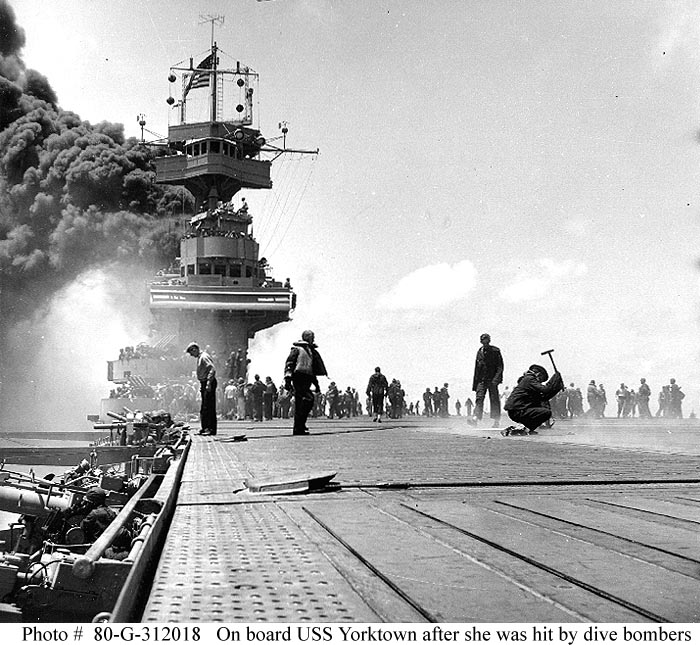
Hawai`i's Midway Island, now a war memorial and wildlife refuge, was mentioned by Pres. Donald Trump on Thursday, when he
praised the aircraft carriers and the crew that fought there during World War II. Trump promised more aircraft carriers for
the Navy and to spend billions of dollars to build up the military. See story below.
Image from www.Midway-Island.com
ATTORNEY GENERAL JEFF SESSIONS recused himself on Thursday from involvement in any current or future investigations into Russian interference in the 2016 presidential elections.  Sessions denied any wrongdoing, saying that as Senator, it was common for him to speak with Russian officials even before he became involved with the Trump campaign and before his nomination for Attorney General.
    Sen. Mazie Hirono weighed in on Tuesday evening: "Just three weeks into Trump’s presidency, National Security Advisor Michael Flynn resigned due to illicit contact with Russia. Now, new information shows Attorney General Jeff Sessions met with the Russian ambassador twice before the election and did not disclose these contacts while under oath at his confirmation hearing.
     "Not one -- but two -- of Trump’s most trusted advisors are now known to have met with and misled the public about their meetings with Russia. And my fear is this may just be the tip of the iceberg.
     "Join me in calling for an independent investigation of the Trump administration’s ties with the Russian government.
"When the security of our country and the integrity of our democracy are at stake, the President and his administration must be held accountable. I pledge to do that every day, but I need your help. Sign on and support an independent investigation into the administration’s ties with Russia now," urged Hirono.

To read comments, add your own, and like this story, see Facebook. Follow us on Instagram and Twitter.

WHILE HAWAI`I'S CONGRESSIONAL DELEGATION PROMOTES PEACEMAKING AND INTERNATIONAL DIPLOMACY and warns of fear fanning the kind of discrimination against minorities that happened in World War II, Pres. Donald Trump on Thursday, brought up Hawai`i as he promised to spend billions of dollars on readiness for war.
Pres. Donald Trump harkened back to World War II and the Battle of Midway on
Thursday when promising to spend billions of dollars on building up the military.
He praised the Yorktown, Enterprise and Hornet aircraft carriers and crew.
     The President spoke on the Mainland at the construction site of a new $10.44 billion Navy aircraft carrier named the USS Gerald R. Ford, to be commissioned this summer. Trump used the occasion to announce his plans to spend many billions of dollars in building up the U.S. military, including expanding the number of aircraft carriers to a dozen. 
      Harkening back to the way countries conducted war and peace 75 years ago during World War II, Trump mentioned Admiral Chester Nimitz,  "the great admiral Nimitz" who commanded the Pacific Fleet. Trump quoted Nimitz saying, "It is the function of the Navy to carry the war to the enemy so it will not be fought on U.S. soil." Trump also brought up the Battle of Midway in the Northern Hawaiian Islands, now a wildlife refuge and memorial. Trump praised the three aircraft carriers and crew who fought there in WWII on the Enterprise, Yorktown and Horn. Trump noted that the ships were built by the same company that is constructing the USS Ford. Trump emphasized that additional carriers are now needed to strengthen the Navy.
Trump brought up Admiral Nimitz saying,
"It is the function of the Navy is to carry
the war to the enemy so it will not be
fought on U.S. soil."
       Pres. Gerald's Ford's own words about an aircraft carrier named after Nimitz were read during Trump's appearance, as also appropriate for the USS Gerald Ford: "I see this great ship as a symbol of the United States, of our immense resources, and skilled workers and our boundless energy and our military strength. Wherever this ship flies her flag, she will be a symbol of Unites States' strength. Made in America and operated by Americans, whether her mission is one of defense, diplomacy or humanity, this aircraft carrier will command awe and admiration from some, caution from others and respect from all."
       Trump added, "America sailors are the best war fighting sailors anywhere in the world and it isn't not even close." He talked about the "great rebuilding of our military might...We will give the men and women of America's Armed Services the resources you need to keep us safe. We will have the finest equipment in the world, planes, ships and everything else." He promised the military "the tools you need to prevent war and, if required, to fight war and only do one thing, Win! Win!"  
    He described the USS Ford as "four and a half acres of combat power and sovereign U.S. territory, the likes of which there is nothing to compete. There is no competition to this ship." He called it "a monument to American might that will provide the strength necessary to insure peace." He noted that the ship will carry 4,500 personnel and 70 aircraft." Trump said it "will "project American power in distant lands. Hopefully it's power we don't have to use, but if we do, there is big, big trouble." 
     Trump said that he has asked Congress to eliminate the sequester on the Department of Defense and for Congress to support the  "great rebuilding of the United States military and the United States Navy." He said he is calling for "one of the largest Defense spending increases in history." Trump said the Navy is the smallest it's been since World War I. "Don't worry, it's going to be the largest."

To read comments, add your own, and like this story, see Facebook. Follow us on Instagram and Twitter.

A PULSING MAGMA SUPPLY IS DETECTED at Kīlauea. This is the focus of this week's Volcano Watch by scientists at Hawaiian Volcano Observatory: This is the story of how a new concept—slowly pulsing magma supply to Kīlauea—emerged from observations of the Overlook Lava Lake in Halemaʻumaʻu.
     "Every weekday volcanic ash is collected from ten buckets near the lava lake. Gas bubbles in the lake pop, and pieces of the skin—such as Pele's hair and tears—fly into the air, and the buckets catch them. The ash is weighed, and an ash accumulation rate is calculated—how many grams of ash fall into the buckets per hour.
     "Bubbles are almost always breaking—a process called spattering—but the rate at which ash accumulates in the buckets varies. There are several reasons for this—wind direction, locations of spattering, depth to the lava lake, and more. But, when averaged over a month, such short-term effects tend to cancel, and we see month-to-month variation, with peaks and troughs in ash accumulation lasting several months each. Does this relate to anything else that we can measure?
     "Yes. Almost daily, we measure the depth to the lake surface with a laser rangefinder. Lake level rises during summit inflation and drops during deflation. Such changes typically last a day or two, sometimes longer, but not for a month.
   
A Valentine's Day 2017 view of Kīlauea Volcano's summit lava lake, here the surface of the lake is about 21 m (69 ft) below
the vent rim.The lake diameter is about 255 m or 840 ft. Careful tracking of the amount of ash emitted by
lake processes suggest an important new into the supply of magma to Kīlauea's summit. USGS Photo
 "It turns out that the average monthly lake level and the monthly accumulation of ash track each other. Over a several-month period, lake level and ash accumulation may rise, peak, and fall off. More ash falls in the buckets when lava level is high than when it is low. The closer bubbles are to the buckets, the more ash. Simple.
     "But why does the monthly average lake level change over periods of several months? We think we've found an answer—a pulsing rate of magma supply to the shallow storage reservoir under the caldera.
      "Generally, magma supply to Kīlauea is considered to be pretty steady. For 3-4 years about a decade ago, the magma supply rate was higher than it is today. This was a long-term change and stood out by its magnitude and duration.
     "But now, the rising and falling lava lake over periods lasting only several months suggests a shorter-term variation in the supply rate. How can we check this idea?
     "GPS instruments at Kīlauea summit measure elevation change. Close examination of the GPS data, again averaged over month-long periods to minimize short-term effects, shows good correspondence with lake level. Rising lake level indicates faster summit uplift, and dropping lake level slower uplift.
     "The simplest explanation for all this is that the rate of magma supply is slowly pulsing over periods of several months. It isn't simply a question of transferring magma from one place in the summit to another, like robbing Peter to pay Paul. The entire summit goes up or down, seemingly reflecting waxing and waning of the magma supply rate to the entire summit reservoir. Only once, in 2012, did the southern part of the reservoir go down when the northern went up—the Peter-Paul effect.
     "We've identified about a dozen pulses since the Halemaʻumaʻu eruption began in 2008. The pulses may be driven by changes in the rate of melting in the mantle or be induced during transport upward from the mantle to the shallow storage reservoir, an 80-100-km (50-60 mile) distance.
     "Without the lava lake and its precisely measured level, we probably wouldn't have detected a pulsing supply rate. And, the only reason that we looked at lake level at this scale was to explain the monthly changes in ash accumulation. Research is full of surprises, and seemingly minor observations can have major ramifications, concludes the writers of Volcano Watch.

To read comments, add your own, and like this story, see Facebook. Follow us on Instagram and Twitter.

Stewardship at the Summit, Fri, Mar 3, 10, 18, 25 & 31; 9 a.m. – 12 p.m., Kīlauea Visitor Center in Hawai‘i Volcanoes National Park. Volunteers clear ginger from park trails. Free; park entrance fees apply. nps.gov/havo.

Girl’s Day Doll Craft, Fri, Mar 3, 2 – 3 p.m., Kahuku Park. Ages 6 – 12.
Register Mar 1/2. 929-9113.

Edible Gardening & Landscaping in the Rainforest, Sat, Mar 4, 9 a.m. – 4 p.m., Volcano Art Center. Zach Mermel presents this two-part workshop for all gardening & landscaping enthusiasts. $50/$5 VAC members plus $10 material fee. 967-8222

Hawaiian Cordage Workshops, Tue, Mar 7/28, 1 – 4 p.m., Volcano Art Center.
With Gary Eoff. 967-8222

Unforeseen Consequences of Sandalwood Trade, Tue, Mar 7, 7 p.m., Kīlauea Visitor Center Auditorium in Hawai`i Volcanoes National Park. Paul Field, park volunteer and retired professor of History at Windward Community College, discusses how the sandalwood trade impacted relations between commoners and chiefs, altered the concept of mana and led to the first official interference of the U.S. government in affairs of the Hawaiian Kingdom. Free; park entrance fees apply.




Wednesday, March 01, 2017

Ka`u News Briefs Wednesday, March 1, 2017

New interpretive signage for the famed Ka`u footprints shows the area well traveled in the 1700's by Hawaiian families
 trading and visiting. While walking through Ka`u, wet ash rained down and their footprints became frozen in time.
 Painting by John Dawson
THE FAMED KA`U FOOTPRINTS were likely left in the 1700’s by Hawaiian families traveling between Ka`u and Puna, rather than by warriors caught in volcanic ash raining down on the Ka`u Desert. That is the new evidence from the footprints with new educational displays accessible from Manu Iki trail in Hawai`i Volcanoes National Park. The trailhead is makai of Hwy 11 between Pahala and Volcano, between mile markers 38 and 39.
Ranger Jay Robinson feels the texture of the famous Ka'u footprints on the life-size
model, which weighs over 300 pounds. It was created by Joh Geigle from photos
and measurements of the real footprints. It was brought to the shelter by 
helicopter last month. Photo by Ann Bosted
   The new signage is illustrated by artists John Dawson and Kathleen Kam. Dawson is known for his wildlife paintings at Hawai`i Volcanoes National Park Visitors Center, on U.S. postage stamps, and in galleries. Kam is known for her wildlife and cultural murals at Ka`u High School, Ka`u Coffee Mill, Keauhou Bird Refuge, Volcano Store, Kamehameha School and in Hilo.
     One illustration for the footprints shows people traveling along a trail and suddenly being covered with wet ash. The footprints may have been left during two separate ash-falling events in the 1700s.
     Near the trail, the park has installed a model of footprints themselves. This prevents visitors from touching the actual Native Hawaiian footprints that were were made in wet ash – not lava - during eruptions from Kīlauea in the 1700s. Hawai`i Volcanoes National Park replicated the footprints and visitors can touch the life-size model in order to appreciate them. In addition, several interpretive signs are added to the first quarter mile of the Mauna Iki trail that goes to the footprints, as well as a historic shelter.
     Park Ranger Jay Robinson and park volunteer George Jensen were installing interpretive signs along the trail last month. Jensen explained that these are the final touches in a long project that  included placing interpretive signs and displays in a structure built by the Civilian Conservation Corps in 1941.
      “The stone protective shelter was originally conceived as a way of conserving some outstanding examples of very old Hawaiian footprints, that were created in freshly fallen wet ash,” explained Jensen. Robinson added that park rangers were able to look at photos of the original protective shelter and restore or mimic many of the original features, but not the original catchment-fed water fountain, which does not conform to modern health standards.
A footprint made in wet volcanic ash in 1790. likely by a male adult. It is one 
of 1,773 separate footprints belonging to at least 400 individuals that have been
 documented by NPS archeologists, led by Dr. Jadlyn Moniz-Nakamura. 
Photo by Ann Bosted
    “Protecting the trail’s highlight, the actual preserved footprints, required a completely new approach that would allow them to be viewed, yet not disturbed,” explained Robinson. A newly designed A-frame protective cover was set on a stone wall that dates to 1941. Three glass panels on one side now allow the public to peer in and look down to the ground and see some of the original footprints.  “The glass
ensures that visitors can see, but cannot touch the actual footprints in the ground,” explained Jensen.
     On the other side is the 300-pound model of the footsteps, created, from photographs and measurements of the footprints. Here, one can look at the exact replica and also touch without destroying the original footprints. This model had to be flown in by helicopter, as the historic shelter is now in a designated wilderness area, so closed to vehicles, including wheelbarrows, which can cause damage. There are three original cabinets for interpretive signs in the shelter, plus space for two new signs near the model. Two of the glass doors were restored by park carpenter Daniel Patao, then all the wood was repainted, making the shelter look as good as new.
     Robinson, who has fielded many questions from visitors, explains: “It just seems like for years ­we had gotten just about everything wrong about the footprints. First of all, the footprints were not made in hot lava! That’s just impossibly crazy! They were made in cool wet ash that quickly hardened like concrete. Secondly, most of the footprints were not made by Keōua’s army. And third, the footprints are along a very busy trail that connected Ka‘ū to Hilo and Puna. There were really a lot of people caught out there in a couple of pretty nasty eruptions. They survived and are the ancestors of many of my Ka‘ū friends, which explains a lot about why they are so tough today.”
     The most recent set of footprints were created in 1790 when Kīlauea erupted violently, covering all the land around with one to two inches of wet ash. This event was well documented in Hawaiian oral tradition, and was called Keonehelelei, the Falling Sands. Sand and small, pellet-sized ash were embedded in this ash layer before it hardened. While small and harmless looking, after falling from perhaps several miles high, they would have been extremely painful to encounter.
The explosion of ash that rained down on Ka`u not only left footprints, it
injured and killed many people. Illustration by John Dawson
     This, however, is not the same ash layer that is enclosed under the glass. Hawaiian Volcano Observatory geologist, Don Swanson, has discovered that a similar terrifying event took place some decades earlier. The mountain erupted violently, spewing wet ash, on an earlier generation of island residents, immortalizing their footprints on this popular trading route. Again, there are large, man-size prints, others that were likely women, and even smaller prints from children traveling along-side their parents.
     Park archeologists, led by Dr. Jadelyn Moniz-Nakamura, have documented 1,773 separate footprints belonging to at least 400 individuals. A layer of gritty black sand can be found below, above and between the two layers. It is likely that the sand erupted from Kīlauea during the caldera collapse of around 1500. As the winds blew the older sands around, they buried much of first ash layer before the second layer fell in 1790 – in some places it is thick, and in others it is non-existent. Today, as the layers erode, the relentless winds of Ka‘ū continue to blow the sands, sometimes covering the footprints, and sometimes revealing them.
One of the many interpretive panels explaining the power of the volcano and
the raining ash that helped form the footprints.
Illustration by John Dawson
     When the footprints were first discovered by Ruy Finch of the Hawaiian Volcano Observatory in 1919, they were thought to be made by the army of Keōuakū‘ahu‘ua, the great war chief of Ka‘ū. As they were returning home from Hilo, they passed near the summit of Kīlauea during an extremely violent eruption. One third of the warriors (as many as 400 people) perished in a scalding pyroclastic surge that swept across them with hurricane force winds. With his army diminished by Pele’s wrath, Keōua never stood to fight again. Within a year he was sacrificed by Kamehameha at the dedication of Pu‘ukoholā Heiau.
    “The theory that they were all from Keōua’s army is now considered incorrect as the footprints were not made by people running or even hurrying,” said Robinson. “The footprints show their makers were walking both mauka and makai on a busy trail. Some footprints are made by people walking east and west. Both sets of prints – those made in 1790 and the sets made decades earlier – involve a similar mix of travelers - mostly men, but nearly half were women and children.”
    The exhibit artist John Dawson wanted to know what the wet dripping ash would look like. Robinson used himself as a Guinea pig. He mixed ash with water in a bucket and then dripped it over himself. He reported “at first it was cold, heavy, and got into your ears, eyes and other places that were uncomfortable. Most amazingly we found that in less than a 20 minutes, the wet ash had hardened and was unable to take any foot prints. We figured that the preserved footprints were likely made in just a few hours.” Where layers of ash are exposed along the Mauna Iki and Ka‘ū Desert Trails today, they have a rock-like hardness. “For so many footprints to be made in so short a time, the islands population of must have been large,” explains Robinson. (These ash layers are not to be confused with the far thicker and heavier Pāhala ash layers which are from around 16,000-31,000 years ago).
     The self-experiment has got Robinson wondering. “I’ve spent many hours just sitting out there near different sets of footprints and thinking about who made them and what they must have gone through. I mean, hundreds and hundreds of people were caught in what must have been absolutely terrifying eruptions. Just imagine, daylight turns to night as dark clouds crack with lighting and dump cold mud on you. Then as things just start to look up, rocks and sand begin falling. Those people must have all survived to have left so many footprints, but what a horrible day . . . and it will probably happen again someday ”.
     Now that the protective shelter has been hung with new, lavishly illustrated interpretive panels explaining the footprints, Robinson and Jensen, are erecting interpretive panels along the Mauna Iki trail to explain to visitors the significance of features they are looking at. Two panels explain an epic, but often forgotten, battle fought between the armies of Keōua and Kamehameha in the story of Kaua ʻo Kauaʻawa, the bitter Battle of the ʻAwa Rain. An additional exhibit is set further along the trail near a huge lava ball. The panel explains how lava balls form (they get bigger as they are turned by the flowing lava, in much the same way as snowballs grow) and where they come from.
George Jensen, a long-time National Park Service volunteer, hikes along Mauna Iki
 Trail toward a new interpretive exhibit that he and Ranger Jay Robinson installed. 
Photo by Jay Robinson
 Between the last panel and the shelter, hikers using the Mauna Iki trail make an abrupt change from hiking past younger ‘a‘ā lava from Mauna Loa (200 – 400 years old), to the lower, smoother, pāhoehoe flow from Kīlauea (400 – 750 years old). The Mauna Iki trail can be accessed from the Ka`u Desert Trailhead on Hwy 11, 9.2 miles from the park entrance to Kilauea crater in Volcano. There is pull out parking on the side of the road between mile markers 38 and 39. There is no charge for hiking the trail.
     With the improvements by Hawai‘i Volcanoes National Park, hiking in the Ka’ū Desert is further enriched as a learning experience with appreciation of the ancestors of the people of Ka‘ū.


PRESIDENT DONALD TRUMP'S Joint Address to Congress on Feb. 28 drew the following statement Tuesday evening from the U.S. Senator representing Ka`u. Mazie Hirono: wrote: "With this President, I pay attention to what he does more than what he says because in his first month in office, Donald Trump's actions have not lived up to the clichés he delivered tonight.
      "He stands by executive orders that have spread fear and chaos throughout the country. Tonight he called for repealing the Affordable Care Act and replacing it with rhetoric. He also clearly called for school vouchers, and in this he has the right Education Secretary who does not believe in public education. For all his rhetoric about national security and American interests, he had absolutely nothing to say about getting to the bottom of Russian interference with our democracy. No matter what the President said tonight, I remain resolved to resist his dangerous, divisive actions."  
      On Wednesday morning, Hirono focused on her introduction of Senate Resolution 70, marking the 75th anniversary of the issuance of Executive Order 9066, which led to the internment of more than 120,000 Japanese Americans during World War II. "S.Res.70 affirms that policies that discriminate on the basis of actual or perceived race, ethnicity, national origin, or religion would repeat the mistakes of the internment."
After Pres. Donal Trump's remarks on immigration during his talk to congress, Sen.
Mazie Hirono pointed to what happened to the Japanese in camps on O`ahu (above)
and at Kilauea Military Camp during World War II.
     Said Hirono, “The President can continue to live in a world of alternative facts, but it’s clear that his administration’s policies harken back to the hateful rhetoric that led to the internment of Japanese Americans. This internment of Japanese Americans was deeply wrong, and it set a precedent – that it should never happen again. We will resist any and all attempts that take us back to this dark era.”
     Japanese Cultural Center of Hawai`i president and executive director Carole Hayashino wrote, “We stand with Senator Hirono and pledge our commitment to honor the memory of the Japanese Americans incarcerated from Hawai‘i simply because of their ancestry. Whether our wartime imprisonment was a result of martial law or executive order, the government action was based upon ‘race prejudice, war hysteria, and a failure of political leadership.’ May we never repeat the mistakes of the past.”
      National Council of Asian Pacific Americans National Director Chirstopher Kang wrote, "It has been 75 years since our nation succumbed to fear and shamefully incarcerated 120,000 Japanese Americans. Today, as we sit at a similar precipice in history, we must not forget the lessons of the past. We must continue to speak out and force our leaders to recognize the harms to our immigrant, refugee and Muslim communities from recent discriminatory policies and executive orders."
More than 120,000 Japanese Americans were
interned in WWII.
      Muslim Advocates staff attorney and Head of Program to Counter Anti-muslim Hate, Madihha Ahussain, wrote: "As President Trump attempts to write anti-Muslim bigotry into law, we are reminded of another very dark time in our country's history when race was used as the basis to intern thousands of Japanese Americans. We cannot allow prejudice to divide our communities during this time of concern."
     The resolution is supported by more than 30 organizations including: the American Bar Association, American Civil Liberties Union, Council on American-Islamic Relations, Demand Progress, Democracy for America, the Fred T. Korematsu Institute, the Japanese Cultural Center of Hawai`i, the National Asian Pacific American Bar Association, the National Council of Asian Pacific Americans, the Japanese American Citizens League, South Asian Americans Leading Together, the Sikh American Legal Defense and Education Fund, Muslim Advocates, the Shoulder to Shoulder Campaign, and the Sikh Coalition. Click here to download a copy of the resolution.

PROTECTING MEDICARE, MEDICAID AND SOCIAL SECURITY is the aim of a letter sent to Pres. Donald Trump today from 16 U.S. Senators including Mazie Hirono. They urged the President to keep a campaign promise to protect Social Security, Medicare, and Medicaid from drastic cuts and privatization. The Senators’ letter called on the President to issue a public statement saying that he would not sign legislation that makes significant changes to Social Security, Medicare, and Medicaid through the reconciliation process, and to issue official guidance making clear the President’s support for these programs.
     The letter asserts to Trump: "Your appointment for Secretary of Health and Human Services, Tom Price, has authored proposals that would undermine the hard-earned, guaranteed benefits of Medicare by privatizing the system and ending Medicare as we know it. Price has also supported plans to make significant cuts to Medicaid, which would weaken the vital support it provides. As The Washington Post reported after his confirmation hearing before the Senate Health, Education, Labor, and Pensions Committee, Trump has pledged not to cut Medicaid or Medicare, but Price did not do the same.’
     “Simply put, the stakes of rushed, ill-conceived, or ideologically-focused changes to Social Security, Medicare, and Medicaid on the lives and security of American families are too high to be left ambiguous, particularly as you and our Senate colleagues seek to pursue legislation related to health care.”
     In January, Senators Hirono and Joe Donnelly led an amendment to protect Medicare and Medicaid from drastic cuts through the budget reconciliation process.


Open Mic Night, Wed, Mar 1, 6 – 10 p.m., Kīlauea Military Camp’s Lava Lounge in Hawai‘i Volcanoes National Park. Open to authorized patrons and sponsored guests. Park entrance fees apply. Sign up at 967-8365 after 4 p.m.

Ocean View Neighborhood Watch meeting, Thu, Mar 2, 7 p.m., Ocean View Community Center. 939-2442 & 928-2015.

Stewardship at the Summit, Mar 3, 10, 18, 25 & 31; 9 a.m. – 12 p.m., Kīlauea Visitor Center in Hawai‘i Volcanoes National Park. Volunteers clear ginger from park trails. Free; park entrance fees apply. nps.gov/havo.

Girl’s Day Doll Craft, Fri, Mar 3, 2 – 3 p.m., Kahuku Park. Ages 6 – 12.
Register Mar 1/2. 929-9113.