About The Kaʻū Calendar

Monday, April 18, 2022

Ka‘ū News Briefs, Monday, April 18, 2022

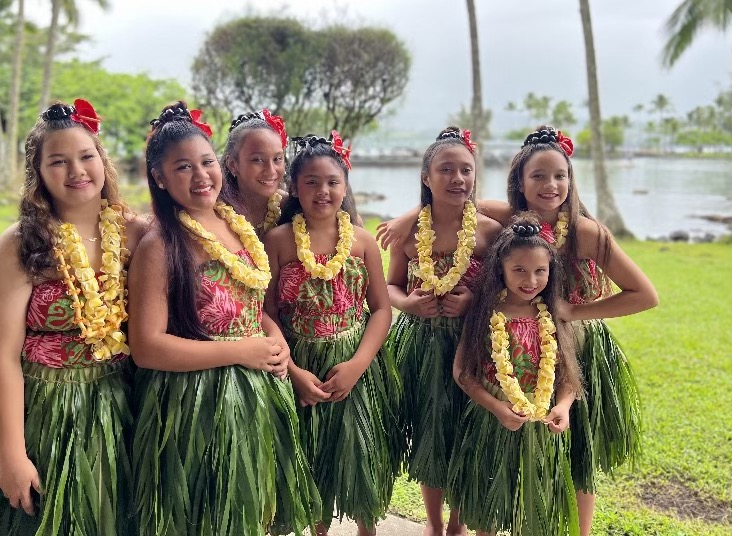
The young ladies of Pāhala's Hālau Hula ‘O Leionālani performed at Hilo Hawaiian Hotel on Monday. See more below.
Photo by Brenda Iokepa-Moses
HAWAI'I SUSTAINABILITY WAS ADDRESSED IN PALAU BY MAYOR MITCH ROTH during the Our Ocean Conference. Roth returned from the event over the weekend, after joining Celeste Connors of Hawai'i Green Grown in providing updates on the Aloha+ Challenge and on the county''s efforts to further sustainable actions. Roth attended as the personal guest of President Surangel Whipps, Jr. of Palau.
     Other presenters included United States Special Presidential Envoy for Climate, John Kerry who is also former Secretary of State. Also speaking was Gov. Lou Leon Guerrero of Guam.
     Roth said, “It was an honor to be personally invited to the Our Ocean Conference by President Whipps to showcase all of the amazing things we are doing in Hawaiʻi to combat climate change and build a sustainable island chain where our keiki can thrive and succeed for generations to come. We truly believe that we can be a classroom for the world when it comes to the vision and practice of sustainable actions,
Mayor Mitch Roth, John Kerry and Celeste Connors
at the Our Ocean Conference in Palau.
Photo from County of Hawai'i
and creating global partnerships to ensure that happens will be paramount to our success. Fortunately, through the work of organizations like Hawaiʻi Green Growth, we were able to synthesize our approach and gain the attention of global leaders on the forefront of climate action.”
     Our Ocean Conference was held on April 13-14 in Koror, with pre-event receptions and meetings beginning April 12. The Republic of Palau is the first small island developing state to host the Our Ocean Conference. The theme was “Our Ocean, Our People, Our Prosperity,” drawing on Palau’s rich tradition as an ocean society and focused on islander perspectives and approaches to ensuring the health of the ocean.      The U.S. Office of Ocean and Polar Affairs supports Our Ocean Conferences. The statement from the mayor's office said they "have catalyzed unprecedented action by the global community to fight marine pollution, acidification, and unsustainable and illegal fishing and promote the blue economy and maritime security. The Our Ocean conferences focus on the key ocean issues of our time – marine protected areas, sustainable fisheries, marine pollution, and climate-related impacts on the ocean. In addition, the conferences emphasize commitments for action by participants and other stakeholders around the globe." 
     Hawaiʻi Green Growth is a United Nations Local 2030 hub that brings together diverse stakeholders committed to economic, social, and environmental priorities. Their work seeks to connect generations of indigenous knowledge and systems-thinking with modern science, technology, and policy to support scalable solutions that can be applied globally. 

To read comments, add your own, and like this story, see www.facebook.com/kaucalendar/.See latest print edition at www.kaucalendar.com. See upcoming events at https://kaunewsbriefs.blogspot.com/2022/03/upcoming-events-for-kau-and-volcano
Hālau Hula ‘O Leionālani, of Pāhala, traveled to Hilo Monday to help launch the Merrie Monarch Festival with
a performance at Hilo Hawaiian Hotel. Photo by Brenda Iokepa-Moses

The young ladies of Hālau Hula ‘O Leionālani, with the ladies
 of the halau looking on during outdoor performances Easter
 Sunday at Pāhala Hongwanji. Photo by Julia Neal
HULA SISTERS FROM PĀHALA AND JAPAN graced Pāhala Hongwanji on Easter Sunday. They performed again on Monday at Hilo Hawaiian Hotel on Monday in the premiere hula performance for the opening of the Merrie Monarch Festival.  
    Hālau Hula ‘O Leionālani, under the direction of Kumu Debbie Ryder, kicked off Merrie Monarch in Pahala by inviting halau members and their families to an outdoor Easter celebration of dance and food. Pop up tents Halau families popped up tents that surrounded the edge of the grounds of the Hongwanji. Hula, music by the band Ke'aiwa and a luncheon rounded out the afternoon.
      The halau traveled to Hilo on Monday to become the first performers in the opening of Merrie Monarch events by dancing at Hilo Hawaiian Hotel. 
      The schedule for Merrie Monarch includes the Arts and Crafts Fair this Wednesday through Friday, which often features many Kaʻū and Volcano artists and craftsmen. This Wednesday is the  Ho'oike Performances at 6 p.m. at Edith Kanaka'ole Stadium. 

The old Japanese Schoolhouse in Pāhala serves as the learning place for Hālau Hula ‘O Leionālani,
with an Easter and Merrie Monarch Celebration this past Sunday. Photo By Brenda Iokepa-Moses
At the same venue, Miss Aloha Hula is on Thursday and the Hula Kahiko competition is Friday, followed by the Hula 'Auana & Awards on Saturday. All of the competitive events at the stadium begin at 6 p.m. and are live streamed Thursday, Friday and Saturday. Go to HawaiiNewsNow.com/MerrieMonarch or by click on the Merrie Monarch icon on the Hawaii News Now app each night.

Pop up tents sheltered families on the grounds of Pāhala Hongwanji, below monster mango trees, as Hālau Hula ‘O Leionālani celebrated Easter and the beginning of Merrie Monarch. Photo by Julia Neal

To read comments, add your own, and like this story, see www.facebook.com/kaucalendar/.See latest print edition at www.kaucalendar.com. See upcoming events at https://kaunewsbriefs.blogspot.com/2022/03/upcoming-events-for-kau-and-volcano

FIFTEEN MOTORISTS WERE ARRESTED during the week of April 11, through April 17. Hawai‘i Island police arrested 15 driving under the influence of an intoxicant. Four of the drivers were involved in a traffic accident. Two of the drivers were under the age of 21.
    So far this year, there have been 323 DUI arrests compared with 377 during the same period last year, a decrease of 14.3 percent.
There have been 217 major accidents so far this year compared with 237 during the same period last year, a decrease of 8.4 percent.
    To date, there were 10 fatal crashes, resulting in 12 fatalities (one of which had multiple deaths), compared with 8 fatal crashes, resulting in eight fatalities for the same time last year. This represents is an increase of 25 percent for fatal crashes, and 50 percent for fatalities.
    
Hawai'i Island Police promise that DUI roadblocks and patrols will continue island wide.

To read comments, add your own, and like this story, see www.facebook.com/kaucalendar/.See latest print edition at www.kaucalendar.com. See upcoming events at https://kaunewsbriefs.blogspot.com/2022/03/upcoming-events-for-kau-and-volcano


See The Ka'u Calendar April edition at 
www.kaucalendar.com,
on newsstands and in the mail. 


Sunday, April 17, 2022

Ka‘ū News Briefs, Sunday, April 17, 2022

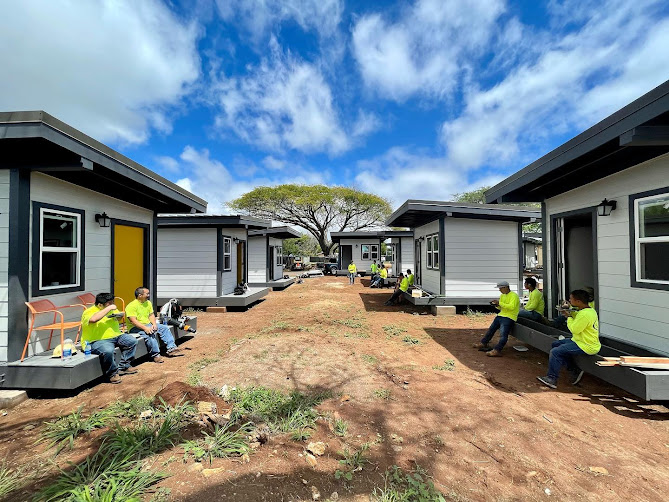
Lt. Gov. Josh Green, who is running for governor, calls the housing crisis a "state of emergency" and released a ten point plan
 this weekend to build more housing to solve the problem. He pointed to Kauhale  programs to construct tiny houses.
Photo from homeaidhawaii.org

THE AFFORDABLE HOUSING CRISIS IS A TARGET OF GUBERNATORIAL CANDIDATE JOSH GREEN, in a plan he released this weekend. Green said, "Hawai'i’s housing crisis has reached a state of emergency." 
    He called it "an issue that impacts us all in some way, and touches almost every other major challenge we face as a state. No matter where I go across our islands, people tell me how our lack of affordable housing affects them, their families, and their communities.
    "I see the worry on people’s faces when they talk about housing, whether it’s a mother afraid her son will have to move to the mainland to find opportunity, or a teacher who can’t afford to stay in Hawai'i and keep doing the job she loves.
     Green pointed out that the statewide average cost of a single-family home now exceeds $1 million, "threatening to divide us permanently into two classes: those who can afford to own a home and those who can’t. Young people can’t afford to live on their own. Seeking a lower cost of living, many choose to
Tiny homes like these can be built on state and private land,
Hawaiian Home Lands, by non-profits and builders,
 said Green, promising to take on the housing
 crisis first day in office if elected to the governorship.
Photo from homeaidhawaii.org

leave the island where they grew up, and thousands more move to the mainland for good.
    "Essential workers including nurses and teachers either give up their struggle to find affordable housing and leave our state, or turn down opportunities to work in Hawai'i in the first place. Many working people in Hawai'i simply can’t afford a place to live, lack family support, and end up living in their car, in a tent, or on the street. Our housing crisis is costing us dearly, as we lose talented local people to the lower cost of living on the mainland, and we price ourselves out of the market to attract skilled workers."
     Green said the housing crisis, "also affects our state’s ability to deal with urgent issues like homelessness, the cost of living, education, access to healthcare, workforce shortages, Native Hawaiian concerns, economic inequality, and more. High housing costs put the greatest burden on low income families, often representing over 50% of their cost of living, while economic studies show that housing costs should not exceed 30% of a family’s income."
    He noted that Hawai'i suffers a chronic shortage of 1,200 teachers each year "as we struggle to retain qualified and experienced educators, mainly due to our high cost of living and unaffordable housing. People working in the hospitality and tourism industry often drive two hours or more every day to get to work and back, because they can’t find affordable housing closer to their jobs."
    In discussing the housing shortage among Native Hawaiians, Green pointed out that in 1920, the Department of Hawaiian Homelands was created to deliver land to Native Hawaiians for homesteading. "More than a century later, DHHL has more than 28,000 Native Hawaiians on its rolls while holding over 200,000 acres of unused land. Today, Native Hawaiians are twice as likely to become homeless in Hawaii, a disparity that is both unjust and cruelly ironic."
    He also targeted vacation rentals, saying "Tens of thousands of illegal vacation rentals and empty investor units flood our state, reducing the supply of affordable housing and inflating prices. Luxury developments consume land and infrastructure resources, and military housing allowances further impact supply.
    "We have reached a point of crisis, with a housing deficit that requires at least 50,000 new units for low and middle income families right now just to meet current demand and maintain our workforce. We must take action now and commit to a new era of building homes for the middle class, making it our top priority — Hawai'i’s version of a moon shot."
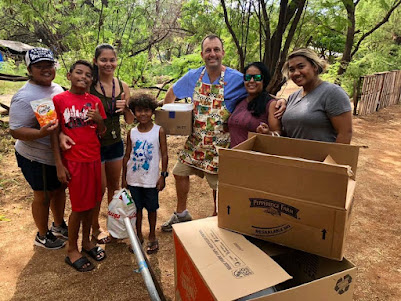
Lt. Gov. Josh Green has made it a practice to regular visit
homeless people, providing assistance and coming up with
a strategy for the housing crisis. Photo from ltgov.hawaii.gov
    After consulting with experts and stakeholders from across the state, Green said, he has put together a 10-point emergency plan to address the housing crisis and promised to start working on the problem "on day one of my administration" should he be elected. He said he would do the following:
    Enact an Emergency Housing Plan for Hawai'i and immediately issue an executive order to all state and county housing agencies to speed up construction of affordable housing by eliminating red tape, streamlining processes and approvals, and coordinating efforts to address the crisis.
     Green said he would make housing for Hawai'i residents the top priority by aggressively enforcing existing laws "to shut down the 25,000 illegal vacation rentals across the state, taxing the 35,000 vacant investor units, and limiting permits and increasing taxes on new luxury developments by out of state investors."
      He promised to create a Path to Home Ownership for first-time home buyers and essential workers with a new state-subsidized loan program, including financial education and assistance to help navigate the home buying process.
    He promised to create an Office of Emergency Housing to serve as a “one stop shop” to eliminate bureaucratic red tape and provide faster services and approvals.
    He promised to use vacant state lands to build affordable homes and rentals with federal, state, and private partnerships.
    He promised to continue to increase the rental housing revolving fund, increase the low income housing tax credit, and create new deductions and incentives for long term rentals to low and middle income families.

Candidate Green said, as governor, he would direct Department of 
Hawaiian Home Lands to to deliver land immediately to Native
Hawaiian beneficiaries for homesteading.
    
    Regarding the native Hawaiian community, Green said he would direct Department of Hawaiian Home Lands to deliver land immediately to Native Hawaiian beneficiaries for homesteading, and to work with the Office of Hawaiian Affairs to build housing for Native Hawaiians.
   Regarding homelessness, he promised to reduce it by building kauhale housing villages and funding new programs, services, and incentives such as vouchers to house the homeless.
   Green said he would work with the counties to lower the costs of building affordable housing by addressing water, sewer, park, and other fees as well as zoning and exaction requirements, all while maintaining environmental protections.
   He also vowed to work with Hawai'i’s Congressional delegation to increase federal housing voucher funding, homeless funding, infrastructure funding, and a bond cap increase to build housing.
    "We must also reach out to our construction industry, labor unions, the U.S. military, and every other major employer and stakeholder in Hawai'i to bring to bear their expertise, manpower, and capital to aid in this effort," said Green. "We will partner with developers across the state to build tens of thousands of new units of affordable housing, which will in turn create new jobs, build our communities, and grow our economy.
    "Our housing crisis will likely continue to be the most challenging issue we face in the coming years. It will be crucially important that our next governor comes into office with the trust, credibility, and the strongest possible plan to take on this challenge."

To read comments, add your own, and like this story, see www.facebook.com/kaucalendar/.See latest print edition at www.kaucalendar.com. See upcoming events at https://kaunewsbriefs.blogspot.com/2022/03/upcoming-events-for-kau-and-volcano

A HOME ON KOA LANE WAS FULLY ENGULFED IN FLAMES on Sunday, according to a report from the Hawai'i Fire Department. The report says the call came at 9:37 a.m. and the fire was extinguished by 12:15 p.m. The damage to the 1,600 square ft. home is valued at $150,000.  The structure collapsed. The resident was not at home and no one was injured, according to the report. Fourteen members of HFD responded along with three volunteer firefighters. 
To read comments, add your own, and like this story, see www.facebook.com/kaucalendar/.See latest print edition at www.kaucalendar.com. See upcoming events at https://kaunewsbriefs.blogspot.com/2022/03/upcoming-events-for-kau-and-volcano


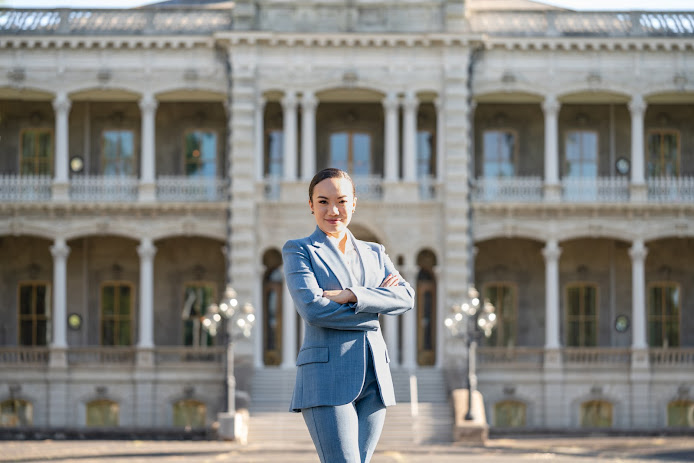
State Rep. Jeanne Kapela released a message on Easter Day. Photo from Kapela

STATE REPRESENTATIVE JEANNE KAPELA, who serves Kaʻū into Kona, released an Easter Day message. It says, "At this time of year, we are steeped in images of renewal. Spring flowers are in bloom. Children are searching for colored eggs in their yards. Families are gathering around their dinner tables to rekindle their bonds of love.
    "Yet, many of our neighbors are left out of those pictures. Too many parents can't afford to make candy-filled baskets for their keiki because of the soaring cost of groceries. Too many people in our community are living in financial insecurity, unsure if they will be able to pay next month's rent.
    "We can do better. For the most vulnerable among us, we need to create a society that is based on compassion, not competition. That is why I am working tirelessly to expand tax breaks for working families, strengthen food security by investing in regenerative agriculture, and guarantee all workers a living wage of at least $18/hour and paid sick and family leave.
    "This is the season of restoration. In that spirit, let's revive hope for those less fortunate than ourselves. And let's deliver prosperity not just to a privileged few, but to all who call our islands home."

To read comments, add your own, and like this story, see www.facebook.com/kaucalendar/.See latest print edition at www.kaucalendar.com. See upcoming events at https://kaunewsbriefs.blogspot.com/2022/03/upcoming-events-for-kau-and-volcano


See The Ka'u Calendar April edition at 
www.kaucalendar.com,
on newsstands and in the mail. 

Saturday, April 16, 2022

Ka‘ū News Briefs, Saturday, April 16, 2022

Cleanup around the Punalu'u Black Sand Beach area continued on Saturday, with volunteers from O Kaʻū Kakou and the
 broader community, as well as Black Sand Beach, LLC staff and family members. See more below Photo by Matt Baker

FOUR NATIVE HAWAIIAN BIRDS WILL LIKELY GO EXTINCT IN NEXT TWO TO TEN YEARS, unless more measures are taken to save them. One of the measures could translocate some of the birds to places like Kaʻū where they could be released into a mosquito free area, high in the massive native forest on Mauna Loa. All four of the most endangered Hawaiian birds live on other islands, two on Kaua'i and two on Maui.
    A  recent study, with results released this week, says that avian malaria, a non-native disease spread by non-native mosquitoes, is the major culprit and that the territory of the mosquitoes carrying malaria is expanding uphill into native forest bird habitat, as temperatures rise with global warming and climate change. "Just one bite from an infected mosquito can result in the death of a bird," said Dr. Robert Reed, Deputy Director of USGS Pacific Island Ecosystems Research Center. In announcing the report, Reed noted the the study involved USGS, U.S Fish & Wildlife Service and U.S. Department of Interior's Office of Native Hawaiian Relations. It was published by University of Hawai'i Hilo's Hawai'i Cooperative Studies Unit.

The four most endangered native Hawaiian forest birds may be translocated to high elevations
to places like Kaʻū where mosquitos won't kill them with avian malaria. DLNR photos
    The four most endangered Hawaiin birds are all native honeycreepers. One is the ‘akikiki, which is found only at the highest elevations on in Koke'e State Park and the Alaka'i Wilderness Peserve on Kaua'i, with 45 birds in the wild and 45 in captivity. Another is the ‘akeke‘e, which is found only on Kaua'i in Waimea Canyon State Park, Alaka'i Wilderness Preserve and Koke'e State Park, with 638 in the wild and seven in captivity.  The third is kiwikiu, the Maui parrotbill, which is found only in a 50 square-meter area on the windward slope of Haleakala on Maui, with 135 in the wild and two in captivity. The fourth is ʻākohekohe, which lives only above 5,000 feet on Maui, with 1,657 in the wild, none in captivity.
Ridding the islands of mosquitos by using a bacteria that prevents
 them from reproducing would go a long way toward preventing
 extinction of native forest birds. Image from DLNR
    The study came up with three ways to prevent extinction: Suppressing mosquito population using the naturally occurring bacterium wolbachia; bringing birds into captivity; and/or translocating birds from their native forests to higher elevation forests on other islands. The report does not recommend a specific set of actions for preventing extinction of the four birds. It does provide expert assessment of the probability of success of the various management actions to inform decision makers, said Reed.
    He said, as many as 11 other Hawaiian forest birds are threatened with extinction in coming decades. If disease continues to spread, conservation strategies enacted now may help these other birds and keep them from the brink of extinction.
    David Smith, administrator of the state Division of Forestry & Wildlife, emphasized that mosquitos are expanding their range uphill, making more birds vulnerable to avian malaria. In the past, mosquitos were limited to a range from sea level to up to about 4,000 ft. in elevation, but higher temperatures are allowing mosquitoes to live at higher elevations. Smith said there is a rapid decline in several species of native birds and that all Hawaiian forest birds are in danger.
Stanton Enomoto said saving native
 Hawaiian birds is akin to 'ohana
supporting an ill family member.
    Stanton Enomoto, Office of Native Hawaiian Relation's Senior Program Director, noted the importance of involving Hawaiian cultural practitioners in determining the path toward saving the birds from extinction. “It’s akin to ‘ohana supporting an ill family member undergoing treatment here in Hawaiʻi. ‘Ohana support for these bird species not only enhances their chance for recovery, but it sustains the biocultural relationship and preserves their legacy in the event they decline towards extinction,” said Enomoto.

To read comments, add your own, and like this story, see www.facebook.com/kaucalendar/.See latest print edition at www.kaucalendar.com. See upcoming events at https://kaunewsbriefs.blogspot.com/2022/03/upcoming-events-for-kau-and-volcano
 

A COMMUNITY CLEANUP ON LANDS AROUND PUNALU'U BLACK SAND BEACH drew some 30 people on Saturday, including volunteers with O Kaʻū Kakou and the Black Sand Beach, LLC staff and family members. They were assisted with some machinery.
    The morning work ended as heavy rains began and volunteers picked up free pizza from Eva Liu and Matt Baker. Liu, who owns the property with her Black Sand Beach company, participated in the cleanup. OKK, led by Wayne Kawachi, has volunteered cleaning up the pond at Black Sand Beach for many years but concentrated on the coconut tree grove between the pond and the walkway to new parking for beach goers. Last Wednesday parking was restricted from the Black Sand Beach area, with the exception of vehicles used by lifeguards, lei stand employees and the handicapped.

A cleanup day on Saturday followed the establishment of no parking along the roadside nearest
Punalu'u Black Sand Beach. Also restricted this week is parking on the black sand. Photo by Matt Baker

To read comments, add your own, and like this story, see www.facebook.com/kaucalendar/.See latest print edition at www.kaucalendar.com. See upcoming events at https://kaunewsbriefs.blogspot.com/2022/03/upcoming-events-for-kau-and-volcano

OVERLAPPING ERUPTION HISTORIES OF MAUNA LOA AND KILAUEA are the subject of this week's Volcano Watch, written by postdoctoral researcher Julie Chang at USGS Hawaiian Volcano Observatory. She writes:
     Mauna Loa and Kīlauea are the two most active volcanoes on the Island of Hawai‘i, and they have overlapping eruption histories. They are located in close proximity, with their summit craters only about about 34 kilometers (21 miles) apart. In fact, part of Kīlauea is built on the southeast flank of Mauna Loa, which is the older of the two volcanoes.
      Both volcanoes produce lava flows that can travel many miles from the volcanic vent. Additionally, they produce tephra (material ejected explosively) that can be erupted high into the atmosphere and travel long distances by wind. With this in mind, it can sometimes be difficult to determine, with the unaided eye, which volcano is responsible for a specific lava flow or tephra layer.
A geologist examines a two-meter-thick (7 feet) tephra outcrop on the
southeast flank of Mauna Loa. USGS photo by J.M. Chang
    Knowing the source of the erupted material, whether from Mauna Loa or Kīlauea, is important for assessing volcanic hazards on the island. Geologists look to past eruptions, both effusive (in the form of lava flows) and explosive (in the form of volcanic ash and other tephra) to understand the frequency of volcanic eruptions. Recurrence intervals can be calculated to determine how often effusive or explosive events occur, which can help forecast when they may occur in the future.
    For example, if geologists observe an outcrop with six tephra layers sandwiched between an upper lava flow dated at 800 years ago and a lower lava flow dated at 2,000 years ago—a time period of 1,200 years preserved between the two flows—the minimum recurrence interval would be 200 years (1,200 years divided by six explosive eruptions).
    This means that an explosive eruptive event occurred, on average, every 200 years within that 1,200 year time period. If we know that there are six tephra layers, but we donʻt know if they erupted from Mauna Loa or Kīlauea, it is difficult to understand how often eruptions occurred from the individual volcanoes.
    For example, if only one of the tephra layers were from Mauna Loa, the minimum recurrence interval would be 240 years for Kīlauea and over 1,200 years for Mauna Loa. But if three of the tephra layers were from Mauna Loa, the minimum recurrence interval would be 400 years for Kīlauea and 400 years for Mauna Loa.
    So how, then, do geologists determine which volcano produced a certain flow or tephra? Field geologists often use detailed mapping. An explosive eruption, for example, will generally have thicker deposits near the source and thin out away from the source.
    Geologists can also use geochemistry to determine if a particular eruptive product is from Mauna Loa or Kīlauea. Studies have shown that the two volcanoes have different geochemical signatures. For example, Mauna Loa lavas generally have higher silica (Si) and lower calcium (Ca), titanium (Ti), and potassium (K) at a given magnesium (Mg) content than Kīlauea lavas.
Julie M. Chang
    The two volcanoes and their older predecessors generally have different trace element concentrations and isotope signatures as well, with the geochemistries defining two different families along the island chain. On the Island of Hawaiʻi, Mauna Loa and Hualālai form one family, and Kīlauea, Mauna Kea, and Kohala form another. The chemical differences are thought to originate in the hotspot plume and demonstrate that the magma systems for the two volcanoes are not interconnected.
    A new study is applying these geochemical differences between Mauna Loa and Kīlauea to understand the volcanic source of individual layers within a two-meter-thick (7 feet) tephra exposure on the southeast flank of Mauna Loa. The exposure is located approximately 19 kilometers (12 miles) south of Moku‘āweoweo, the summit caldera of Mauna Loa, and 35 kilometers (22 miles) southwest of Halemaʻumaʻu, the summit crater of Kīlauea. Due to varying wind directions, either volcano could potentially be the source of the tephra.
    Initial geochemistry obtained from fresh glass shards found in the tephra layers suggests that tephra from both Kīlauea and Mauna Loa are present at the field site. Tephras from both the Keanakākoʻi Ash (circa 1500–1820 CE) and the Kulanaokuaiki Tephra (circa 400–1000 CE), which erupted from Kīlauea, appear to be present, as well as at least one tephra layer from Mauna Loa.
    The new data will be important for constraining recurrence interval calculations for explosive events on Mauna Loa and Kīlauea and will help the USGS Hawaiian Volcano Observatory provide more robust hazard assessments for the Island of Hawaiʻi.

To read comments, add your own, and like this story, see www.facebook.com/kaucalendar/.See latest print edition at www.kaucalendar.com. See upcoming events at https://kaunewsbriefs.blogspot.com/2022/03/upcoming-events-for-kau-and-volcano


See The Ka'u Calendar April edition at 
www.kaucalendar.com,
on newsstands and in the mail.