About The Kaʻū Calendar

Friday, January 27, 2023

Kaʻū News Briefs, Friday, Jan. 26, 2023

A young honu, sea turtle, dead and decomposing in an abandoned fishing net on the Kaʻū Coast. Photo from James Akau                   

James Akau and Jackie Ka'ili'awa with an abandoned
 net they found on the Kaʻū Coast containing a dead honu.
Photo by Nathan Bears
A TURTLE DEAD, ENTANGLED IN AN ABANDONED NET ON KAʻŪ COAST is recent evidence that abandoned fishing nets kill honu. The mess was found recently by fishermen Jackie Ka'ili'awa, Jame Akau and Nathan Bears. The young turtle was dead and decomposed in a net found along the Ka'u shore, with other marine life caught in the tangle. 
    Sea turtles are endangered and protected under federal and state law. Under state regulations, it is unlawful to leave a lay net unattended for more than a half hour. Lay nets and gill nets must be inspected completely within two hours after the beginning of the set. All threatened, endangered, prohibited, or unwanted species must be released. 
    It is unlawful to discard, abandon, or leave any lay net, or peice of a net in the water for longer than four hours. Lay nets are illegal to use from a half hour after sunset to a half hour before sunrise. Drift gill nets are prohibited in Hawaiian waters.
    When finding an entangled marine animal in a net, call U.S. Fish & Wildlife's Marine Animal Response Hotline at 888-256-9840.

To read comments, add your own, and like this story, see facebook.com/kaucalendar. See latest print edition at kaucalendar.com, in the mail and on stands.

U.S. DEPARTMENT OF DEFENSE FUNDING will go into environmental restoration and protection in Hawai'i. including projects on this island. U.S. Congressman Ed Case announced on Thursday that $10 million in federal funding from the U.S. Department of Defense will implement four natural resource conservation projects under DOD’s Readiness and Environmental Protection Integration Program. The funds will be matched with $18.5 million in private partner contributions to work towards improving coastal, forest and watershed resilience on military-utilized lands and nearby communities. “Our military’s operations in Hawai‘i are critical to our country’s national security and a major contributor to our local economy, but require a constant commitment to full partnership in our present and future and full stewardship of our communities and resources,” said Case. "The REPI program is a key avenue for our military to fulfill this commitment.

Sec. of the Army Christine Wormuth, center, with Ed
Case, right) visit the greenhouse at Pohakuloa. 
Photo by Tiffany DeMasters/Big Island Now
    Case recently accompanied Secretary of the Army Christine Wormuth at Pōhakuloa Training Area to view the Army’s REPI-funded conservation efforts to protect and recover native Hawaiian plants and animals, including Hawai'i's state bird, the nēnē goose, and several endangered endemic plants, all located on the military’s owned and leased lands. It's part of the military's REPI work with state and local governments, conservation organizations and willing private landowners to implement compatible uses of lands for both the military mission and conservation. Case said the unique partnerships and funding opportunities for natural resources protection have made REPI a main focus for him in his role as a member of the House Appropriations Committee. For the current Fiscal Year, Case helped secure $175 million for the national REPI program.
    DOD REPI awards this year in Hawai‘i: $1.3 million to mitigate impacts on rare plants on Hawai‘i Island, supported by $1.3 million in partner contributions; $3.1 million for detection and management of land and waterbased invasive species near military installations on Hawai'i, Kaua‘i and O‘ahu Islands, supported by $5.6 million in partner contributions; $2.9 million to increase the resilience of endangered wildlife on Lāna‘i Island, supported by $4.8 million in partner contributions; $2.7 million to preserve threatened and endangered species and enhance watersheds on O‘ahu Island, supported by $6.8 million in partner contributions.
   Since 2021, the REPI program in Hawai‘i has matched $30.2 million in federal funding and $35.2 million in partner contributions for projects at eight locations restoring critical habitats and native forests, protecting island aquifers, climate adaptation efforts, and promoting compatible land uses.

To read comments, add your own, and like this story, see facebook.com/kaucalendar. See latest print edition at kaucalendar.com, in the mail and on stands.

The mahiole stolen from
Volcano House lobby. 
Photo from NPS

NATIONAL PARK SERVICE INVESTIGATORS continue to seek the public's help in identifying a person of interest wanted for questioning in the theft of Hawaiian cultural artwork from a hotel located in Hawai'i Volcanoes National Park. On Friday, Jan. 13 around 11:45 p.m., a contemporary replica of a mahiole - the traditional Hawaiian feather helmet - was stolen from the Volcano House hotel. An image from a hotel surveillance camera shows a man carrying a large item beneath a red cloth in front of the hotel's front desk. The person of interest appears to be a man wearing a dark ball cap and bandana face covering.
    According to NPS, a woman seen in a separate surveillance image reached out to investigators and is no longer a person of interest.
    The stolen mahiole was created by renowned local artist Rick San Nicolas, who sold it to the hotel several years ago. Traditional mahiole were worn by high-ranking Hawaiian chiefs and painstakingly crafted using feathers and native fibers such as the roots of the 'ie'ie vine. It was displayed in a clear case near the hotel's front desk and featured brightly dyed crimson and yellow goose feathers.
    Anyone with information can  contact the National Park Service by calling or texting 888-653-0009. Tips can also be submitted online at https://go.nps.gov/SubmitATip or via email at nps_isb@nps.gov.

To read comments, add your own, and like this story, see facebook.com/kaucalendar. See latest print edition at kaucalendar.com, in the mail and on stands.

KAʻŪ TROJANS BOYS BASKETBALL TEAM heads to Honoka'a on Monday, Jan. 30 for a chance to make the finals in Big Island Interscholastic Federation championships. Coach Troy Gacayan said the Trojans will play the Dragons in the semifinals. If Kaʻū wins, the Trojans will advance to the Division II Chamipionship Game on Tuesday, Jan. 31 at the Hilo Civic.
    "If you are able to, please say a prayer and come out to cheer and support our Kaʻū Trojans," said the coach. Thank you all for your continued support!
    "Go Trojans! Let's make history. Play hard, stay humble," Gacayan told the team.

To read comments, add your own, and like this story, see facebook.com/kaucalendar. See latest print edition at kaucalendar.com, in the mail and on stands.
 
FREE FOOD
St. Jude's Hot Meals are free to those in need on Saturdays from 9 a.m. until food runs out, no later than noon. Volunteers from the community are welcome to help and can contact Karen at pooch53@gmail.com. Location is 96-8606 Paradise Circle Drive in Ocean View. Those in need can also take hot showers from 9 a.m. to noon and use the computer lab from 9:30 a.m. to 1 p.m.

Free Meals Mondays, Wednesdays, and Fridays are served from 12:30 p.m. to 3:30 p.m. at Nā'ālehu Hongwanji. Volunteers prepare the food provided by 'O Ka'ū Kākou with fresh produce from its gardens on the farm of Eva Liu, who supports the project. Other community members also make donations and approximately 150 meals are served each day, according to OKK President Wayne Kawachi.

OUTDOOR MARKETS
Volcano Evening Market, Cooper Center, Volcano Village, Thursdays, 3 p.m. to 6 p.m., with live music, artisan crafts, ono grinds, and fresh produce. See facebook.com.

Volcano Swap Meet, fourth Saturday of the month from 8 a.m. to noon. Large variety of vendors with numerous products. Tools, clothes, books, toys, local made healing extract and creams, antiques, jewelry, gemstones, crystals, food, music, plants, fruits, and vegetables. Also offered are cakes, coffee, and shave ice. Live music.

Volcano Farmers Market, Cooper Center, Volcano Village on Sundays, 6 a.m. to 10 a.m., with local produce, baked goods, food to go, island beef and Ka'ū Coffee. EBT is used for Supplemental Nutrition Assistance Program, formerly Food Stamps. Call 808-967-7800.

'O Ka'ū Kākou Market, Nā'ālehu, Wednesdays, 8 a.m. to 2 p.m. Contact Nadine Ebert at 808-938-5124 or June Domondon 808-938-4875. See facebook.com/OKauKakouMarket.

Ocean View Community Market, Saturdays and Wednesdays, 6:30 a.m. to 2 p.m., corner of Kona Drive and Highway 11, where Thai Grindz is located. Masks mandatory. 100-person limit, social distancing required. Gate unlocked for vendors at 5:30 a.m., $15 dollars, no reservations needed. Parking in the upper lot only. Vendors must provide their own sanitizer. Food vendor permits required. Carpooling is encouraged.


Thursday, January 26, 2023

Kaʻū News Briefs, Thursday, Jan. 26, 2023

Ke Ola Pu'uhonua is a new cultural garden sponsored by nonprofit Uhane Pohaku Na Moku O Hawaii, Inc. on the grounds of Punalu'u Bakeshop in Na`alehu. A blessing and presentation of hula and cultural demonstrations took place on Saturday, Jan. 21.
 See more below. Photo by Laurie Roush-Ortega
   
THE PROPOSED NEXAMP NA'ALEHU SOLAR FARM DREW COMMUNITY MEMBERS Thursday evening to Nā'ālehu Community Center. More than 30 attended and many spoke up asking questions about location, management of the land and the amount of savings planned for those who sign up to receive up to 15 percent in savings on their Hawaiian Electric bills.
    Location is makai of Hwy 11 near Kamaoa Road on a 20 acre site that as part of a 190 acre parcel of Class D agriculture land. The solar farm would serve about 500 households and 20 nonprofits according to Nexamp's Business Development manager Mike Billet, of O'ahu.
     A representative of the Carpenters Union asked what legislative permits would be needed to proceed with the project. 

Solar panels would be 15 feet above ground and
move to tilt toward the sun. Photo from Nexamp
    Billet said the project would need approval from the Public Utilities Commission and is going through the state Department of Land & Natural Resources' State Historic Preservation Division process that involves assessing impacts on any historic, cultural and archeological sites. 
    With those approvals and a successful final negotiation with Hawaiian Electric for a 20 year contract, Nexamp would move forward with permitting for construction. Nā'ālehu Solar would be operative in 2025.
    Billet said the company prefers to hire local contractors and subcontractors and would provide ongoing employment for maintenance of the solar farm. 
    While Billet said that the 15 ft. tall posts with solar panels would be hidden from views from Hwy 11, several people with land adjacent and on hillsides above the site objected to the location. A woman said she owns 14 acres next to the site and doesn't want it by her. Billet said it might be possible to move the 20 acre solar site from being close to property boundaries within the 190 acre property in order to address concerns of the neighbors. 
    A resident who lives about 1200 feet in elevation, above the site, said that he and neighbors would have the solar farm in their view plane. He called it "industrial solar" and said that solar farms are not recommended in the Kaʻū Community Development Plan. Another man said the site should be industrial like the old sugar mill lands.
    A Waiohinu man said he opposes the project being located on ag land, even though it is Ag D, a state classification ranking it as poor for production. Another woman asked whether the site being unused for ag during 20 year solar farm contract with Hawaiian Electric, would fare well for future agriculture. Billet

Concerns were expressed about siting the Nā'ālehu Solar
 away from homes and views. Photo from Nexamp

said that there is a possibility of planting native crops or other farming around the solar panels as well as on the rest of the parcel. He said some solar farms include productive agriculture on their grounds.              Another woman said she is concerned about big trees being chopped down for the project, saying some are at least 100 years old and it would take a long time to grow them back, should the project be abandoned after its 20 year commitment.
    The question of electric bill savings to local residents came up, with one man saying that he would hope that Lower to Moderate Income families, which the project is mandated to serve, would receive more than 15 percent savings on their electric bills. He called a 15 percent savings "shallow."
    Another said he can't get approval for Hawaiian Electric to buy power from his rooftop solar because Hawaiian Electric is maxed out accepting it in his neighborhood. Would Nexamp's contract with Hawaiian Electric make it harder for people in the area to sell their rooftop electricity to Hawaiian Electric? Billet noted that Nexamp would be improving infrastructure for the grid, which could allow Hawaiian Electric to use more solar from the area.
    A man who said he was an engineer at the sugar mill in Pahala, which closed in 1996, noted that the sugar factory produced back up for power for Hawaiian Electric - burning the sugar cane waste - the bagasse for electricity. He said he approves of the solar farm and other energy producers like windmills for backup. He also said he worked for the Navy on nuclear ships and said that solar is a lot better than nuclear.
    Another man said he already has solar on his house, but supports Nā'ālehu Solar for the community. "One thousand solar panels is better than one smokestack. I'm in, because it's clean energy."
    Other topics included safety of the lithium batteries to be installed on the solar farm. If they were to catch fire, could the fire be stopped? Billet said there is NEST, the Nexamp Energy Storage Team that

Agriculture could possibly surround the solar panels,
according to Nexamp. Photo from Nexamp
works on safety. One man asked about the environmental cost of using lithium batteries, given how they are manufactured. Billet noted that the batteries would provide "smoothing" for the ups and downs of producing electricity and also could act as a microgrid for the area during outages. He said he believes that the best option for the environment overall is solar with batteries. In the future that could change with the invention of better energy options.
    Several asked whether Nexamp's solar panels would soon be obsolete. Billet said they are the latest development, using a single access tracker, "already using tomorrow's module." One man noted that an advancement allows the heat of the solar panels to be harvested for extra electricity.
    One man asked whether the solar panels will be made in America? Billet said Korea and that components come from all over the world but that Nexamp prefers to source from the U.S. He noted new federal incentives to buy parts made in the U.S.
    Regarding the 20-year term of the contract with Hawaiian Electric, Billet said 20 years is a common contract, given the likelihood that innovations will create less expensive electricity sources in the future. He also said without the kinds of community solar proposed by Nexamp, Hawai'i may not reach its goals of becoming energy self-sufficient.
    Nexamp is planning another community outreach in April. With questions, contact naalehusolar@nexam.com. Billet said the company website will be updated at https://www.nexamp.com/naalehu-solar.

To read comments, add your own, and like this story, see facebook.com/kaucalendar. See latest print edition at kaucalendar.com, in the mail and on stands.

GOV. JOSH GREEN DEFENDED HIS EMERGENCY PROCLAMATION TO FAST TRACK HOUSING, particularly villages for homeless people. His statement issued Thursday says, "The proclamation allows for exemptions from certain processes that typically delay projects in order to expedite construction of low-impact kauhale, or tiny home communities." Green said, "We amended our homelessness emergency proclamation to reflect guardrails that will ensure we don't have to choose between our kuleana to culture and land, and our responsibility to the people who are most vulnerable in our communities.
     "My intention in signing the emergency proclamation was always to protect sacred sites, iwi kūpuna and the environment – while building kauhale and working towards aggressively ending chronic homelessness and unsheltered suffering statewide. To do this, we must take bold but thoughtful action."
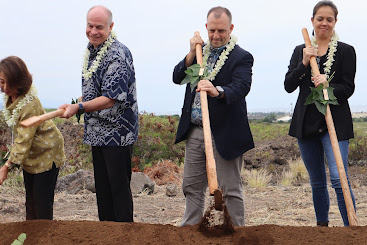
A groundbreaking for a Kona Kauhale, with permanent and temporary
housing for the homeless, was held on Thursday with Mayor Mitch
 Roth and Gov. Josh Green. Photo from the Mayor's Office
    Signed during his State of the State Address Monday, the initial emergency proclamation contains the same language as previous proclamations in effect from 2015 to 2020, that allowed for expedited construction of kauhale – including Pu'uhonua o Wai'anae, a project that was 100-percent community-driven, said the statement from the governor's office. "Past proclamations had no rules or processes guiding how projects would qualify, or how basic considerations of life-safety, the environment, culture, or other considerations would be addressed." 
     James Koshiba, Governor's Coordinator on Homelessness, said, "The Governor has amended the proclamation to make it clear that this process is required, and his Administration is crafting rules to outline how that process will work. The proclamation does not signal a free-for-all, for developers. Construction projects designed to serve and house the houseless are deeply unprofitable and are unattractive to for-profit developers."
     The governor's statement noted that fewer than one dozen projects were built during the 2015 to 2020 Emergency Proclamation period, largely led by County or State governments, using public funding. "In only a few instances did private nonprofit developers attempt to build, because the process is costly and difficult, even with the exemptions."
    The amended emergency proclamation expires March 20, 2023, the same end date as the original document signed earlier this week.
    A groundbreaking was held in Kona Thursday for a Kauhale for permanent and temporary housing, with Green and Mayor Mitch Roth attending.

To read comments, add your own, and like this story, see facebook.com/kaucalendar. See latest print edition at kaucalendar.com, in the mail and on stands.

KE OLA PU'UHONUA IS A NEW CULTURAL GARDEN, sponsored by nonprofit Uhane Pohaku Na Moku O Hawai'i, Inc. on the grounds of Punalu'u Bakeshop in Nā'ālehu. A blessing and presentation of hula and cultural demonstrations took place on Saturday, Jan. 21. The non-profit is led by cultural practitioner Kawehi Ryder and Kumu Hula Debbie Ryder of Halau Hula O Leonalani, based in Nā'ālehu. On hand for the blessing were former Mayor Harry Kim, Ka'u's County Councilwoman Michelle Galimba and Punalu'u Bakeshop owner Duane Kurisu, along with members, friends and family of the Halau. The opening of the grounds to the public is expected in March.

Cultural practitioners teach keiki at the new Ke Ola Pu'uhonua.
Photo by Laurie Roush-Ortega
    Cultural practitioners teaching keiki and the community include Uncle Chucky Leslie for Lawai'a, net making. He is often called the  Last Traditional Opelu Fisherman. Kupuna Linda Saffery shares the skills of a Lauhala and Makaloa master weaving. Kupuna  John (Bully) Davis teachers coconut weaving. Kupuna Waltah Wong shows skills of a Traditional Hale Builder and Kupuna Meheula shares traditions as Floral, Lei
maker.
    These practitioners are some of the cultural experts who will be at the Pu'uhonua in March with its opening. A Live Traditional Keiki Hula show is expected to perform twice a month on Saturday at noon,
Duane Kurisu, Harry Kim and Kawehi Ryder
Photo by Julia Neal

with dates to be announced.
    The slogan of Ke Ola Pu'uhonua is "A Living Cultural Refuge embracing Humility, Reverence and Disciplien with Aloha of the Spirit." The stated mission is "to provide Native Hawaiian Cultural Practices to all youth, their families and the community to create living environments integrating Mauka to Makai opportunities for places of learning and healing through the concept of Pu'uhonua, place of refuge."
    The organization's statement says, "We have experienced that the development of heritage based life skills can perpetuate economic success and independence with a sense of family for individuals."
    Planning for Ke Ola Pu'uhonua includes a walk for the public to experience places of: Hawaiian Food Plants; 'Aumakua Ancestral Forest; Lawai'a - Fisherman's Environment; La'au - Medicinal Plants; Kukui Grove - candlenuts; Plumeria Garden - flowers, foliage and lei; Hawaiian Antiquities Mo'olelo - Storytelling; and Makahiki Games - Hawaiian Games.
    For more information, email leionalani47@hotmail.com. Call 808-238-5633.

Halau Hula O Leionalani, under direction of Kumu Hula Debbie Ryder, during the blessing of the new cultural
garden, Ke Ola Pu'uhonua on the grounds of Punalu'u Bakeshop. Photo by Julia Neal

To read comments, add your own, and like this story, see facebook.com/kaucalendar. See latest print edition at kaucalendar.com, in the mail and on stands.
 
FREE FOOD
St. Jude's Hot Meals are free to those in need on Saturdays from 9 a.m. until food runs out, no later than noon. Volunteers from the community are welcome to help and can contact Karen at pooch53@gmail.com. Location is 96-8606 Paradise Circle Drive in Ocean View. Those in need can also take hot showers from 9 a.m. to noon and use the computer lab from 9:30 a.m. to 1 p.m.

Free Meals Mondays, Wednesdays, and Fridays are served from 12:30 p.m. to 3:30 p.m. at Nā'ālehu Hongwanji. Volunteers prepare the food provided by 'O Ka'ū Kākou with fresh produce from its gardens on the farm of Eva Liu, who supports the project. Other community members also make donations and approximately 150 meals are served each day, according to OKK President Wayne Kawachi.

OUTDOOR MARKETS
Volcano Evening Market, Cooper Center, Volcano Village, Thursdays, 3 p.m. to 6 p.m., with live music, artisan crafts, ono grinds, and fresh produce. See facebook.com.

Volcano Swap Meet, fourth Saturday of the month from 8 a.m. to noon. Large variety of vendors with numerous products. Tools, clothes, books, toys, local made healing extract and creams, antiques, jewelry, gemstones, crystals, food, music, plants, fruits, and vegetables. Also offered are cakes, coffee, and shave ice. Live music.

Volcano Farmers Market, Cooper Center, Volcano Village on Sundays, 6 a.m. to 10 a.m., with local produce, baked goods, food to go, island beef and Ka'ū Coffee. EBT is used for Supplemental Nutrition Assistance Program, formerly Food Stamps. Call 808-967-7800.

'O Ka'ū Kākou Market, Nā'ālehu, Wednesdays, 8 a.m. to 2 p.m. Contact Nadine Ebert at 808-938-5124 or June Domondon 808-938-4875. See facebook.com/OKauKakouMarket.

Ocean View Community Market, Saturdays and Wednesdays, 6:30 a.m. to 2 p.m., corner of Kona Drive and Highway 11, where Thai Grindz is located. Masks mandatory. 100-person limit, social distancing required. Gate unlocked for vendors at 5:30 a.m., $15 dollars, no reservations needed. Parking in the upper lot only. Vendors must provide their own sanitizer. Food vendor permits required. Carpooling is encouraged.

Ocean View Swap Meet at Ocean View makai shopping center, near Mālama Market. Hours for patrons are 8 a.m. to 3 p.m., Saturday and Sunday. Vendor set-up time is 5 a.m. Masks required.

The Book Shack is open every Wednesday, 9 a.m. to 3 p.m. on the Kauaha'ao Congregational Church grounds at 95-1642 Pinao St. in Wai'ōhinu.


Wednesday, January 25, 2023

Kaʻū News Briefs, Wednesday, Jan. 25, 2023

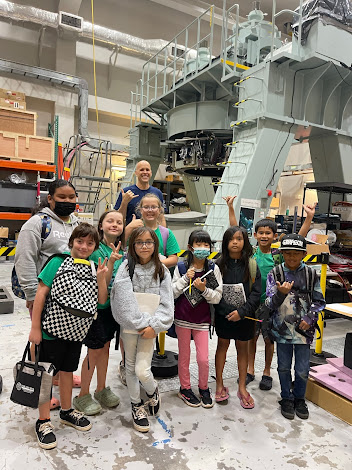
Nā'alehu Elementary School 3rd and 4th graders take a field trip to Subaru Telescope and 'Imiloa. See more below.
Photo from Subaru Telescope

NĀ'ĀLEHU SOLAR GOES BEFORE THE PUBLIC on Thursday, Jan. 26 at a meeting to be held at Nā'alehu Community Center from 5 p.m. to 7 p.m.  The solar will take up a small portion, 20 acres of the 176-acre parcel makai of Hwy 11 near Nā'alehu and Waiohinu. The plan by project owners Nexamp is for the solar to start feeding the Hawaiian Electric grid by June of 2025.
     The proposal is for agricultural land, where solar is an allowed activity. According to Nexamp, the solar farm would serve about 500 households who would sign up for the program and save an average of about 15 percent on Hawaiian Electric Bills. 
    A minimum of 60 percent of those receiving electricity through the Nexamp program must be low to moderate income households as rated by U.S. Department of Housing & Urban Development. The rest of the subscribers would be non-profits, including government agencies.    Nexamp representatives said the site was chosen to minimize cultural and environmental impacts and visibility. Nāʻālehu Solar is planned to be a 3.5 MG plus battery facility. 
Location of the planned Nāʻālehu Solar farm, which
would take up a 20-acre portion of a 176 acre site.
Image from Nexamp

     Nexamp's website notes that "Hawai'i is
moving away from fossil fuels and into a renewable future. Nāʻālehu Solar is designed to support the island’s goal of being 100% renewable by 2045. The project, located south of Mamalahoa Highway, will generate clean power, build grid reliance, and lower electricity costs..... Nexamp will finance, construct, own and operate the project. We plan to use local labor at prevailing wages for construction and ongoing maintenance and have already established relationships with local contractors."
    Nexamp calls its program the "Utility of the Future" and says, "We’re working with communities, businesses, and municipalities to democratize clean energy and support U.S. energy independence." See more at nexamp.com/naalehu-solar.
      Nexamp's Nāʻālehu Solar is one of seven projects recently chosen by Hawaiian Electric for a shared solar program, to offer savings through solar energy for those unable to install solar panels. 
    Nexamp also operates in Illinois, New York, Minnesota, Maine and other locations. 

To read comments, add your own, and like this story, see facebook.com/kaucalendar. See latest print edition at kaucalendar.com, in the mail and on stands.

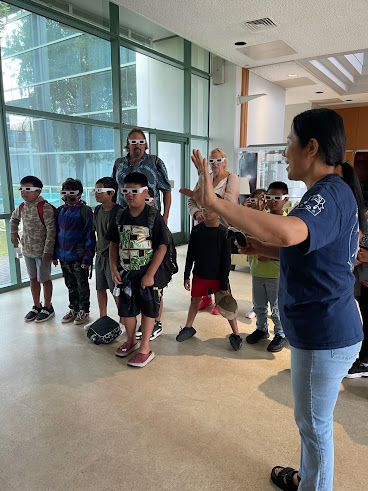
SUBARU TELESCOPE WELCOMED SOME 100 NĀ'ALEHU ELEMENTARY third and fourth graders recently to its Hilo base facility. The Subaru Stars program brings astronomy and STEM education to 
Nā'alehu Elementary School 3rd and 4th graders visit telescope
simulator at Subaru Telescope's base facility. Photo form Subaru
students across Hawai'i Island. The field trip, in partnership with 'Imiloa Astronomy Center, allowed students to enjoy a fun-filled day exploring both facilities, where they learned about exoplanets, astronomy, super computers, telescope operations, and more.
    "Most of us were inspired by experiences in our childhood that led to our future occupations," said Subaru Telescope director Satoshi Miyazaki. "I hope the visiting students were excited about what they learned about Subaru Telescope."
    "Whether it was soaring through the solar system looking at stars through 3D glasses, learning about a 100-eye monster PANOPTES citizen science project, checking out the Subaru Telescope simulator, or lassoing the moon, every second of the excursion was maximized with intriguing scientific discovery," said the statement from Subaru.
    Nine-year-old Makamae Tayamen said a favorite part of the field trip was learning about PANOPTES (Panoptic Astronomical Networked 
Observatories for a Public Transiting Exoplanets Survey), a citizen science project based at the Subaru Telescope office that aims to build low-cost robotic telescopes that can be used to detect transiting exoplanets. "We learned that the PANOPTES robot wakes up at night and looks at the stars and finds planets, then it sleeps in the day. When it finds planets and stars, [the astronomers] put all that information into a computer and learn about the planets."
    At 'Imiloa Astronomy Center, senior planetarium technician and educator Emily Peavy discussed what is going on in the solar system and which planets could be seen with the naked eye in the skies above the Big Island that very evening. She also talked about past lava flows on the moon. Students learned about what makes the sun a star, the different types of planets in our solar system (rocky and gaseous) and the difference between a planet and a dwarf planet.
    "My favorite part of 'Imiloa was when I went to the planetarium because we sat down and pretended to lasso the moon," said nine-year old Evelyn Cardwell. "It really looked like the moon was coming closer!"
    'Imiloa Astronomy Center school group education program facilitator Chrissy Ghiasi said, "Having the opportunity to interact with scientists who live and work in Hilo and who can share about the science happening right here on our island can inspire students in a very unique way by making the information that much more relevant.
Nā'alehu Elementary School 3rd and 4th graders cruise through space
with Subaru Telescope's Dr. Kumiko Usuda-Sato as their guide.
Photo from Subaru Telescope
   Providing students with opportunities to interact with exhibits or having the experience of learning in the planetarium can ignite their curiosity and create connections about what they are learning that will become deeply ingrained as they continue on their journey as students."
    Subaru Telescope and 'Imiloa Astronomy Center plan additional student trips in 2023 as part of the Subaru Stars program to bring this type of educational experience to students in underserved communities. Subaru Stars program was established in 2022 as a way to bring astronomy and STEM education to students and communities across Hawai'i Island, whether it be traveling to school campus settings or bringing students directly to our Hilo base facility. The traveling program focuses on hands-on, engaging activities to ignite an interest (and perhaps a future career) in astronomy, science, technology, engineering and mathematics-related fields. 
    The base facility program encourages students to get excited about learning about astronomy. They see a super computer in action, learn about daily telescope operations, use virtual reality to explore the cosmos, and experience all the amazing work being done by Subaru Telescope in the field of astronomy right here on Hawai'i Island.
    The Subaru Telescope is an 8.2 meter optical-infrared telescope at the summit of Maunakea. It is operated by the National Astronomical Observatory of Japan, National Institutes of Natural Sciences . One of Subaru Telescope's main missions, in addition to telescope operations and astronomical discoveries, is to foster education in the next generation of researchers.The observatory of Subaru Telescope was officially established in April 1997.

To read comments, add your own, and like this story, see facebook.com/kaucalendar. See latest print edition at kaucalendar.com, in the mail and on stands.

THE FIFTH ANNUAL KEIKI WATER CONSERVATION POSTER CONTEST IS OPEN FOR SUBMISSIONS through Friday, March 10. The county Department of Water Supply invites Hawai‘i Island students attending kindergarten through the sixth grade to enter the contest themed Our Water, Our Future, Conserve It.
A previous winner in the Keiki Water Conservation poster contest,
open for submissions through March 10. See www.hawaiidws.org.
A previous winner in the Keiki Water Conservation poster contest,
open for submissions through March 10. See www.hawaiidws.org.
    To encourage more keiki to learn about conserving water, Dept. of Water Supply is including sixth-grade students for the first time. Prizes will be awarded first and second place entrants from each grade level K-6, as chosen by a panel of judges, for a maximum total of 14 winners island-wide. The Department will announce winning entries at a future meeting of the Water Board of the County of Hawai‘i.
    Friday, March 10 is the deadline to submit an original artwork illustrating Our Water, Our Future, Conserve It on a flat, 11- by 17-inch paper. Any medium may be used, except for three-dimensional renderings, chalk, charcoal and oil-based crayon. No computer graphics or photographs will be accepted. Make sure each poster lists the artist’s name in legible print.
Each poster submission should be accompanied by a completed entry form available below, at www.hawaiidws.org, via email by contacting dws@hawaiidws.org or by calling DWS on regular working
Submissions are open to keiki from K through Sixth
grade with deadline March 10. See www.hawaiidws.org

days at (808) 961-8050. There is no charge to enter. Contest entries should be mailed to DWS in Hilo or dropped off in designated bins at DWS’ offices in Hilo, Kona or Waimea by Friday, March 10. Address locations and additional contest rules are listed on the attached entry form and at www.hawaiidws.org.
The free contest aims to highlight the importance of reducing water waste and protecting drinking water supplies. "It challenges keiki to utilize artistic ways of conserving our most precious resource – safe drinking water," says the statement from Dept. Of Water Supply. Conservation ideas, including the video Save Water to Help the Earth, are posted under the “Conservation” link at www.hawaiidws.org.
Founded in 1949, Department of Water Supply is a semi-autonomous agency of County of Hawai‘i. The Department’s mission is to provide customers with an adequate and continuous supply of safe drinking water through the operation of its 23 separate water systems that combined deliver about 25 million gallons of water each day to Hawai‘i Island communities.

To read comments, add your own, and like this story, see facebook.com/kaucalendar. See latest print edition at kaucalendar.com, in the mail and on stands.
 
FREE FOOD
St. Jude's Hot Meals are free to those in need on Saturdays from 9 a.m. until food runs out, no later than noon. Volunteers from the community are welcome to help and can contact Karen at pooch53@gmail.com. Location is 96-8606 Paradise Circle Drive in Ocean View. Those in need can also take hot showers from 9 a.m. to noon and use the computer lab from 9:30 a.m. to 1 p.m.

Free Meals Mondays, Wednesdays, and Fridays are served from 12:30 p.m. to 3:30 p.m. at Nā'ālehu Hongwanji. Volunteers prepare the food provided by 'O Ka'ū Kākou with fresh produce from its gardens on the farm of Eva Liu, who supports the project. Other community members also make donations and approximately 150 meals are served each day, according to OKK President Wayne Kawachi.

OUTDOOR MARKETS
Volcano Evening Market, Cooper Center, Volcano Village, Thursdays, 3 p.m. to 6 p.m., with live music, artisan crafts, ono grinds, and fresh produce. See facebook.com.

Volcano Swap Meet, fourth Saturday of the month from 8 a.m. to noon. Large variety of vendors with numerous products. Tools, clothes, books, toys, local made healing extract and creams, antiques, jewelry, gemstones, crystals, food, music, plants, fruits, and vegetables. Also offered are cakes, coffee, and shave ice. Live music.

Volcano Farmers Market, Cooper Center, Volcano Village on Sundays, 6 a.m. to 10 a.m., with local produce, baked goods, food to go, island beef and Ka'ū Coffee. EBT is used for Supplemental Nutrition Assistance Program, formerly Food Stamps. Call 808-967-7800.

'O Ka'ū Kākou Market, Nā'ālehu, Wednesdays, 8 a.m. to 2 p.m. Contact Nadine Ebert at 808-938-5124 or June Domondon 808-938-4875. See facebook.com/OKauKakouMarket.

Ocean View Community Market, Saturdays and Wednesdays, 6:30 a.m. to 2 p.m., corner of Kona Drive and Highway 11, where Thai Grindz is located. Masks mandatory. 100-person limit, social distancing required. Gate unlocked for vendors at 5:30 a.m., $15 dollars, no reservations needed. Parking in the upper lot only. Vendors must provide their own sanitizer. Food vendor permits required. Carpooling is encouraged.

Ocean View Swap Meet at Ocean View makai shopping center, near Mālama Market. Hours for patrons are 8 a.m. to 3 p.m., Saturday and Sunday. Vendor set-up time is 5 a.m. Masks required.

The Book Shack is open every Wednesday, 9 a.m. to 3 p.m. on the Kauaha'ao Congregational Church grounds at 95-1642 Pinao St. in Wai'ōhinu.