About The Kaʻū Calendar

Monday, May 01, 2023

Kaʻū News Briefs, Monday, May 1, 2023

 ʻĀkulikuli, Sesuvium portulacastrum, is an indigenous plant of Kaʻū. Illustration by Joan Yoshioka

IT'S MAY DAY AND TIME TO CELEBRATE A NATIVE PLANT OF KAʻŪ, ʻĀkulikuli. Sesuvium portulacastrum is the subject of the Lāʻau Letters column written by Jodie Rosam and illustrated by Joan Yoshioka. Each month, read about Kaʻū’s native plants and their moʻolelo (stories), uses, preferred habitats, and opportunities to adopt them for stewardship. This column seeks to encourage making new plant friends and to reunite with others.
    Description: Introducing one of the most salt-tolerant of all of Hawaiʻi’s coastal plants: ʻākulikuli! ʻĀkulikuli, a.k.a. sea purslane, is in the Aizoaceae (ice plant or fig-marigold family). The Sesuvium genus contains eight species, and of those eight, S. portulacastrum is the only species native to Hawaiʻi Nei. This sweet and salty succulent is a common component of Hawaiian wetlands and coastal ecosystems, where it provides habitat for wetland invertebrates and is a food source for native waterbirds. Its slender, green leaves are roughly ½ to 2 inches long, and turn reddish-orange as they age. ʻĀkulikuli flowers are small but beautiful and bloom year-round in shades of pink, purple, and white. It can be mistaken for its riparian friend ʻaeʻae, but just remember that ʻaeʻae flowers are always white and have rounded petals while ʻākulikuli petals are more pointed, and ʻaeʻae leaves tend to be more rounded than slender.
    Uses: ʻĀkulikuli is one of the few plants that was listed as an emergency food source during WWII. The
ʻĀkulikuli, with its striking flower and edible leaves.
U.H. Botany photo by G.D. Carr
fleshy parts of ʻākulikuli are edible and can be eaten raw or cooked, and I highly encourage you to try it! Everyone loves an edible plant. The succulent leaves pack a salty crunch that is delicious when sprinkled on salads, in stir-fry, or (my personal favorite) in your favorite fresh poke bowl. Aside from culinary uses, ʻākulikuli can be used to clean stagnant waters through its root system. In fact, platforms of ʻakulikuli were placed in the Ala Wai Canal (near Waikīkī on Oʻahu) to filter toxins and unwanted materials from the water. The small flowers of ʻākulikuli can be used in lei if you can find enough of them!
    Habitat: ʻĀkulikuli grows along our shorelines on all of the main islands and on Pihemanu (Midway Atoll), Holoikauaua (Pearl & Hermes Atoll), Papaʻāpoho (Lisianski), Kauō (Laysan), and Mokumanamana (Necker). It thrives in sunny and windy sandy beaches, coastal coralline areas, and around wetlands and anchialine pools. It is common along the Kaʻū coastline, so the next time you are at the beach, go find a nice ʻākulikuli patch and introduce yourself!
    Growing and Purchasing: ʻĀkulikuli grows easily from cuttings and will thrive along a water feature in your yard (or somewhere that is constantly wet or can be watered regularly). They can handle full sun and wind, and even thrive off of salt spray. ʻĀkulikuli require little to no fertilization, especially if they are part of a water feature. Plant them 6-12” apart to allow the plants to spread, and before long, you will have a hardy groundcover to admire. Because plants need friends too, consider planting ʻākulikuli alongside other native coastal species like ʻilima or pāʻū o Hiʻiaka. Planted in your home garden or in the wild, take a moment to focus in on this little native plant, and I promise you will find yourself admiring her succulent beauty, and maybe even snacking on her tasty leaves!

To read comments, add your own, and like this story, see facebook.com/kaucalendar. See latest print edition at kaucalendar.com, in the mail and on stands.

Kalia, Keone, Jennifer and Kaikala with their Four Scoops
 of Aloha food truck, at their home base in Pāhala.
Photo from Four Scoops of Aloha
GRACE FAMILY BRINGS FOOD TRUCK TO PĀHALA. Keone Grace is servicing Pāhala with a food truck and parks it most weekdays and soon on Saturdays next to Kamani Street by Kamae Gas Station.
    A long time food manager at Kaʻū Hospital, Grace said he has been dreaming of going out on his own for many years to support his family, Kalia and Kaikala and their mom Jennifer, who grew up in Kaʻū. Grace was able to purchase an 18-foot food truck with a stainless steel interior and finish it off with certification. He left his post at the hospital and said he is happy to provide food to Kaʻū folks from approximately 10 a.m. to 4 p.m. and return the rig to his Pāhala home each day to make ready for the next.
    The name of the enterprise is Four Scoops of Aloha and the menu varies from burgers to chicken and pork, Thai and seared ahi, along with burritos, quesadillas and more. He also takes orders for family and group dining and catering. Text, call 808-747-2910. Email kaliakahu@gmail.com. See Four Scoops of Aloha for the menu on instagram.


THE PUBLIC IS INVITED TO THE KAʻŪ  RURAL HEALTH ANNUAL MEETING on Friday, May 26. The public Conference and Annual Meeting of Kaʻū Rural Health Community Association, Inc. is set for 9 a.m. to 1 p.m. at Robert Herkes Gym multipurpose room next to the Pahala school campus.

    The organization has invited Gov. Josh Green, Mayor Mitch Roth and food guru Derek Kurisu to be speakers. There will be door prizes, lucky numbers and refreshments. Focus will be workforce development, employment opportunities and continuing education in the health fields and beyond. Numerous participating employers in the community will be on hand. 

To read comments, add your own, and like this story, see facebook.com/kaucalendar. See latest print edition at kaucalendar.com, in the mail and on stands.

A NEW DEPUTY DIRECTOR FOR COUNTY DEPARTMENT OF RESEARCH & DEVELOPMENT is a familiar face in the field. Frecia Cevallos has worked at R&D for more than 15 years as an Economic Development Specialist. She takes the post of long time public servant Bob Agres, as he retires.
    Mayor Mitch Roth made the announcement Monday, saying, “Frecia’s dedication and commitment to the County of Hawaiʻi, along with her years of expertise in regenerative tourism, culture, sustainability, and community building makes her a natural candidate to assume the role of Deputy Director. We’re confident that Frecia will bring all the skills necessary to bolster our efforts as we continue to forge a sustainable Hawaiʻi Island where our keiki can thrive and succeed for generations to come.”

Frecia Cevalos is new Deputy
Director for County R&D
 
Hawai'i County photo
    As Deputy Director, Cevallos will continue to oversee economic development and sustainability efforts and initiatives, working closely with the department’s leadership team to ensure the implementation of sound policies and practices that support the County’s economic growth and development.
Bob Agres retires as Hawai'i County Dept. of
Research & Development Deputy Director.
Photo from Hawai'i County
    For the past nine years, Ms. Cevallos has successfully managed the development and implementation of the Hawaiʻi Island Tourism Strategic Plan and Destination Management Action Plan, which includes the County’s community-based tourism initiatives and the Hawaiʻi Island Visitor Promotions Program.
    In addition to her work with the County, Ms. Cevallos has also worked in the social service sector, providing outreach and capacity-building support for culture-based education, community-based stewardship, and economic diversification initiatives on Hawaiʻi Island. She has also managed public relations and political campaigns for the United Nations Center for Human Rights and Amnesty International, coordinated special events and student activities at the Seattle Center and the University of Washington, and owned a small business.
    Cevallos holds a Bachelor’s Degree in Communications and a Master’s Degree in Political Science. She is a passionate runner, swimmer, biker, and surfer and resides in her hometown of Hilo with her husband and three sons.
A NEW DIRECTOR OF DEPARTMENT OF INFORMATION & TECHNOLOGY will take the helm on May 15 at  Hawai'i County after working at the Planning Department. A statement from  the County says
Robert Ewbank "has over 20 years of hands-on technical and supervisory experience. As Director of the Department of Information Technology, Robert will focus on providing users and clients with a stable computing environment that maintains confidentiality, integrity, and availability.
    "Robert brings extensive experience with IT systems and supervision in various settings, as well as years of experience in county government. His appointment reflects the County’s commitment to providing the best possible technology services internally and externally."
    Mayor Mitch Roth said, “We are thrilled to have Robert Ewbank join our team as the Director of the Department of Information Technology,” said Mayor Mitch Roth. “Robert’s experience and expertise make him the ideal candidate for the position, and we look forward to working with him to continue to improve technology services for the County.”
     Ewbank takes over the post held by Scott Uehara who transitions to Civil Defense to work on emergency communication systems.

Sunday, April 30, 2023

Kaʻū News Briefs, Sunday, April 30, 2023

Cheryl Baldonado becomes the new manager of Mizuno Superette in Pāhala, as the food store stays open and blends into 'Ohana Foods, which operates along with the Union 76 gas station in Nā‘ālehu. Photo by Julia Neal

MIZUNO SUPERETTE WILL TRANSITION TO NEW MANAGEMENT AND OWNERSHIP with a blessing on Friday, May 12 at 10 a.m. The locally run store, with a family history of enterprise in Pāhala for nearly a century, will retain its name and the legacy of families such as Mizuno, Yamaguchi and Hara, says new operator Carl Okuyama who also has a long history in Kaʻū with food stores in Nā‘ālehu and 'Ohana Foods in Hilo. Mizuno will blend into 'Ohana Foods.
    Okuyama said said he plans a visual display of Mizuno Superette's service to the community throughout the sugar plantation days and into the emergence of the Kaʻū Coffee culture. The most recent operators arrived more than 33 years ago, Rochelle and the late Derek Hara, remembered fondly in the community as an avid fisherman, who passed away while diving. Since then Rochelle has operated Mizuno and
recently told her employees that she must retire and set a date for the end of June. 
    When Okuyama and Olson Trust, owner of the adjacent shopping center, learned of the situation and the possibility of the only grocery store in Pāhala shutting down, they pulled together to create a seamless and early transition. 
    Okuyama said he would hire the workers and keep the doors open as Rochelle moves into retirement. He interviewed employees and most will stay on, with long-time assistant manager Cheryl Baldonado becoming manager and Carla Andrade continuing as assistant manager. Supervisors will include T-J George, Zara Galigo, Kama Wroblewski and Courtney Louis. Anthony Andrade is stocking manager.
    Daryn Galigo, manager at ‘Ohana Foods Union 76 in Nā'ālehu, has been promoted to Kaʻū Area Retail Supervisor. Galigo will provide assistance during the transition and ongoing guidance. Mizuno employs about 12 people. ‘Ohana Foods Union 76 Station employs 19 and ‘Ohana Foods in Hilo 25. 
    Rochelle Hara posted a message on the front of the store in April: "I would sincerely like to thank the community for welcoming my late husband Derek and me over 33 years ago. We have tried our hardest to provide the town with items it needed. I've pushed myself too much and have been really struggling to work through all of the pain. It's been difficult to keep the store stocked during the pandemic. Unfortunately I can’t keep up the pace. However, a new company will take over right after we close on Thursday, May 11." 
    She said that as a mahalo "we are running an in-store sale, at prices below our cost. More sales will be added daily until May 11. I appreciate all the love and support this community has given! Thank you all!"      
    Okuyama said Mizuno will continue to operate on its current schedule of 6 a.m. to 7 p.m. on weekdays, 7 a.m. to 5 p.m. on Saturdays and 8 a.m. to noon on Sundays. 
    Over time there will be renovations and improvements, said Okuyama. He is leasing the space from Edmund C. Olson Trust II, which purchased the property from Hara. Olson Trust owns the adjacent Pāhala Center, with its bank, post office, hair salon, coffee shop and Longs Drugs. Mizuno Superette will join Pāhala Center where it has long shared the parking lot. 
    For the blessing, the public is invited on May 12 at 10 a.m. There will be light refreshments.


The Kaʻū High Trojans' esport club Valorant Team, on the left, made it to the final competition in the
Hawai'i state tournament on Oa'hu this weekend. Photo by Andrew Honma

THE ESPORT CLUB FROM KAʻŪ HIGH beat Kea'au in the state championships this weekend, but lost to Castle High in the final competition, held at Hawai‘i Pacific University’s Esports Arena on O'ahu.
    The Trojan esport club's varsity Valorant Team competed in Vanta Hawai‘i Esports League's HS Valorant semifinal game. It pitted Kaʻū against Kea‘au High in a best of three. Ka‘ū won, advancing to the final match where the Trojans lost to Castle. See more on the competition and local sponsors supporting the Trojans' trip to O'ahu at http://kaunewsbriefs.blogspot.com/2023_04_27_archive.html.


TROJAN KALIA GRACE JUST MISSED QUALIFYING FOR STATES in the 200 meter during the Big Island Interscholastic final track meet of the season, Friday and Saturday. She ranked seventh overall. Also
Isaiah Manila Louis is a freshman, showing promise in 
 in running and long jump. Photo by Coach Tolu Rasmussen
ranking seventh was Cheska Aurelio in the 1500 m. 
    Coach Tolu Rasmussen said he and Coach Jacob Davenport have high hopes for next year's track team and call on more Trojans to come out for the sport. He noted that Grace is a freshman and has three more years ahead of her. Freshman Isaiah Manila Louis has excelled in long jump, hurdles, 100m, 200m and 400m. Freshman Cody Rasmussen competes in the 800 and 400. Aurelio will be a junior and presents a lot of talent. Stephen Adler runs the 100m and 200m, and jumped his personal best at the BIIFF finals. He will compete next year as a senior. "He gives it all every time," said Rasmussen. 
    Rasmussen said he is looking for flexibility in the sports program to allow more dual sports participation. For track he hopes for year round field events and track recruitment. He noted that track helps with almost every other sport, particularly football, which is off season during track. He also said that track is good for pig hunting, a popular sport in this community with many of the young pig hunters already in good shape, hiking and running in the mountains going after the pua‘a. 
    The coach also noted that in the track community, there is a high level of respect. "Everyone supports each other to do their best," even those on teams from other schools. "If you want respect and you want to represent Ka‘ū, come out for track." Rasmussen said that he and Davenport will be out recruiting.


LIVE MUSIC WITH OLA LOA, the band from Volcano, Comes to After Dark in the Park on Tuesday, May 2 at 7 p.m. at Kīlauea Visitor Center auditorium. Christopher Miller on guitar, Gary Dikito on ʻukulele and Jeff Hamilton on stand-up bass play Hawaiian, rhythm and blues and classic hits. Sponsored by the Friends of Hawaiʻi Volcanoes National Park. Free, but park entrance fees apply.

Saturday, April 29, 2023

Kaʻū News Briefs, Saturday, April 29, 2023

Thursday Night at the Center presents Marc Hughes and his marine life videography on May 11 from 6 p.m. to
7:30 p.m, at Volcano Art Center Niualani Campus. See more below. Photo by Marc Hughes

GOV. JOSH GREEN: MAJOR DIRECTIONAL CHANGES FOR HAWAI'I. That's the message in the Governor's review of his first five months in office, saying, "In just under five months we are already initiating major directional changes for Hawai'i.

    "Based on what was announced by legislative leaders about the budget earlier this week, signature positive results include rebuilding our public education system with a new contact that rewards those who become teachers, more than $60M for kauhale and 'Ohana Zones to address chronic homelessness, $30M in loan forgiveness to recruit and retain social workers, nurses and physicians for Hawai'i, a new housing package to accelerate the response to our housing crisis, millions to improve rural hospitals on the Big Island and more than $100M for statewide environmental programs and climate response.
    "Generational tax reform to help ALICE, which refers to Asset Limited, Income Constrained, Employed families, has begun and the legislature approved about half of Green Affordability Plan (GAP Plan) in this

Gov. Josh Green says tax reform will help ALICE families.

first session. There is still work to do on proposals such as the Green Fee and early education (which the Lt. Governor is spearheading), but the seeds have been planted for the coming years.
    "We filled a Cabinet of 18 directors and more than 20 deputies, losing 3 nominees along the way where we didn't have a meeting of the minds with the Senate, but this wasn't altogether unexpected.

    "Our team authorized $50M of grants-in-aid that had been neglected in 2022 and released more than $300M in capital funding for projects all across Hawai'i.
    "We made major progress transferring lands to farmers and ranchers via Act 90 in a very short time and should see growth in agriculture quickly.
    "Over the next eight months we will focus on building multiple kauhale, greenlighting affordable housing developments including $600M for the Department of Hawaiian Homelands. We will press the military to drain Red Hill safely and we will begin to implement our new tax policy to help people survive in Hawai'i.
    "With the initial legislative rebuff of HTA we will need to refocus our approach to tourism to avoid major economic harm to Hawai'i. I have hopes that this will be resolved this weekend. Still, it is a good time to reinvent tourism in our state, with a focus on managing the impact of almost 10M visitors annually.
    "Now that we have the final parameters on funding a new Aloha Stadium, we can launch the project and court a partner to build it.
   "In all, this has been one of the most active periods for government in recent memory and we are grateful to be able to make change for the better in the coming months and years."

To read comments, add your own, and like this story, see facebook.com/kaucalendar. See latest print edition at kaucalendar.com, in the mail and on stands.n stands.


POLICE ARE SEARCHING FOR A RUNAWAY IN VOLCANO. Hawai‘i Island police are asking for the

public’s assistance in locating 13-year-old Passion Faamama, who was reported as a runaway.
    Faamama was last seen on Friday, April 28 at 9 p.m. on 10th Street in Mauna Loa Estates in Volcano wearing maroon sweatshirt and gray sweatpants. Faamama is described as local with a dark complexion, approximately 5 feet 3 inches tall, 115 pounds, with black hair and brown eyes.
    Police ask anyone with information about Faamama’s whereabouts to call 911 immediately.

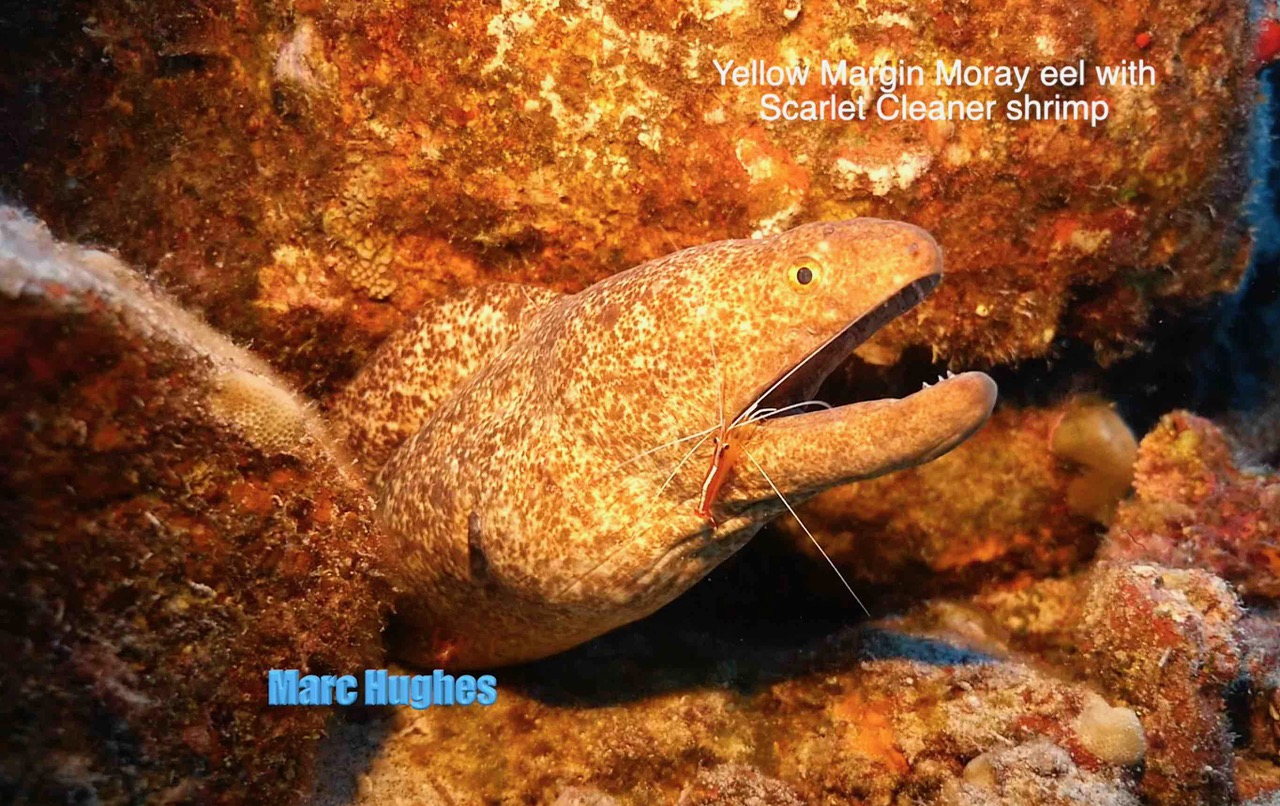
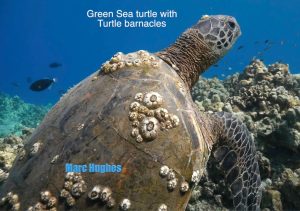
MUTUALISM, PARASITISM, COMMENSALISM in the underwater world around Hawai'i Island are topics to be explored by Marc Hughes who presents his videography on Thursday, May 11 at 6 p.m. The venue is Volcano Art Center Niaulani Campus in Volcano Village.
    The presentation provides a visual display of many associations that can be seen in scuba diving and snorkeling depths in the oceans around the Big Island. It encompasses a wide range of behavioral adaptations including symbiotic classifications such as mutualism, parasitism, and commensalism.
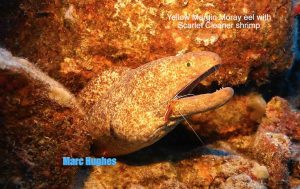
   Symbiotic relationships of marine animals shown include: Sharks, dolphins, Moray eels, octopus and other marine creatures that often form bonds and associations between their different species. "The Hawaiian Islands have some of the most interesting examples of these relationships," said Hughes.
    "The videos and accompanying explanations of the intricate nature of these interactions show just how complex the marine environment is and how important it is to preserve the coastal areas. Questions and discussions are welcome, and the goal of the presentation is to highlight the importance of individual species of animals as they relate to the overall health of the marine environment."
    Hughes is a dive guide and marine life educator in Kailua-Kona, Hawaii. He graduated with a degree in Marine Science and Conservation Biology from the University of Hawaii in Hilo and participated in research cruises in the Northwestern Hawaiian Islands as well as cephalopods research cruise in the Main Hawaiian Islands. All the videos in the presentation have been taken by him and part of his program for teaching the public and students through visual examples with a storytelling point of view.
    The presentation is part of a once-a-month Thursday night series at the Volcano Art Center, focusing on art, Hawaiian culture and this environment. The series is intended to inspire, enhance your appreciation of art and life experience, while fostering community connections. This presentation is free, although a $5 donation is greatly appreciated.


HAWAIIAN VOLCANO OBSERVATORY WAS FOUNDED 111 YEARS AGO. Volcano Watch, the weekly column by scientists and affiliates of USGS Hawaiian Volcano Observatory, tells the story:LL
Hawaiian Volcano Observatory, founded in 1912 by Thomas A. Jaggar, was the first of five volcano observatories supported by USGS today. The Technology Station (circled) on the eastern rim of Halema‘uma‘u crater—at the summit of Kīlauea—was the first, though temporary, of several buildings that HVO has occupied since its founding. USGS photo by Frank A. Perret
    Over 111 year after its founding, HVO is one of five volcano observatories supported by the U.S. Geological Survey HVO staff has grown from one geologist, Thomas A. Jaggar, in 1912 to more than 30 people today. This team includes scientists and specialists in geology, geophysics, geochemistry, field engineering and telemetry, information technology, administration, public communications and more. Hundreds of volunteers, students, and visiting scientists—many from the University of Hawaiʻi—have also provided valuable assistance to HVO through the years.

Logo and motto of Hawaiian Volcano Research
Association, a private source of financial support for
 HVO for several decades. Thomas Jaggar's vision
became the USGS Hawaiian Volcano Observatory.
  HVO methods of observing and analyzing data from instruments and field studies have changed dramatically since Jaggar's time. Presently, our monitoring network consists of more than 200 sensors, including seismometers, GPS, tiltmeters, infrasound, gas detectors, and thermal/visual cameras. These sensors transmit data to HVO 24 hours a day in order to track activity and support research into how volcanoes work. Remote sensing data from instruments on aircraft, including UAS systems piloted by HVO, as well as satellites provide additional coverage.
    When HVO was founded, Hawai'i was not yet a state. Hawaiʻi Volcanoes National Park did not yet exist. A lake of molten lava was on the floor of Halemaʻumaʻu similar to what we’ve seen over the past three years. HVO was originally operated with support from the Massachusetts Institute of Technology (MIT) and the Hawaiian Volcano Research Association, and later managed by a series of federal agencies including the U.S. Weather Bureau, the National Park Service, and the USGS.
   The USGS became the permanent administrator of HVO in 1947. Based on HVO's success, the USGS went on to establish additional observatories to monitor and study 161 active volcanoes throughout the United States and U.S. Territories.
    HVO focuses on the six active volcanoes in Hawaiʻi including two “very high threat” volcanoes—Kīlauea and Mauna Loa—and one “high threat volcano,” Hualālai. HVO also monitors active volcanoes in American Samoa.
    Cascades Volcano Observatory (CVO) was authorized in 1980 following the eruption of Mount St.

Helens and formally dedicated in 1982. CVO focuses on volcanoes in Washington, Oregon and Idaho. CVO is also home to the USGS Volcano Disaster Assistance Program (VDAP) which aids crisis response at volcanoes around the world.
    Alaska Volcano Observatory (AVO) was founded in 1988 following the 1986 eruption of Augustine Volcano. AVO, a collaboration between the USGS, the University of Alaska Fairbanks, and the State of Alaska, focuses on volcanoes in Alaska and the Commonwealth of Northern Mariana Islands.
    Yellowstone Volcano Observatory (YVO) was founded in 2001. YVO, a consortium of nine state and federal agencies, focuses on volcanic activity in the Yellowstone Plateau region and intermountain west U.S. states.
    California Volcano Observatory (CalVO) was formed in 2012. CalVO, with expanded scope beyond the Long Valley Observatory (LVO) established in 1982, focuses on volcanoes in California and Nevada.
    The collective knowledge, skills and experience of people at these five observatories is extensive and complementary. Staff communicate and travel between observatories in true team fashion. HVO staff help install instruments on volcanoes outside of Hawaii, and vice versa. The lead scientist for the Kīlauea Seismic Imaging Project described in a recent Volcano Watch article is based at CVO, and many scientists from other observatories are traveling to Hawai'i to assist. Staff from all observatories assisted HVO during the 2018 Kīlauea and 2022 Mauna Loa eruptions. HVO supported eruption responses at other volcanoes such as Mount St. Helens, and will help respond to future events at other volcanoes.
    Fulfilling our mission involves constant evolution and holistic future planning. As an example of preparing for possible future scenarios, HVO is participating in a virtual “tabletop exercise” led by CVO to practice responding to simulated unrest at a volcano in Oregon. And at the national scale, we are
collectively developing the National Volcano Warning System (NVEWS) to ensure that volcanoes are monitored at levels commensurate to their threats. HVO has grown and changed significantly over the past 111 years. Together with four other USGS volcano observatories established since that time, our mission continues—to assess hazards, issue warnings, and advance scientific understanding to reduce the impacts of volcanic eruptions. And to communicate the results of our work to the public, emergency managers, and the scientific community. Imua!
    HVO has grown and changed significantly over the past 111 years. Together with four other USGS volcano observatories established since that time, our mission continues—to assess hazards, issue warnings, and advance scientific understanding to reduce the impacts of volcanic eruptions. And to communicate the results of our work to the public, emergency managers, and the scientific community. Imua!
    Volcano Activity Updates: Kīlauea is not erupting. Its USGS Volcano Alert level is ADVISORY.
Webcams show no signs of active lava in Halemaʻumaʻu crater, at the summit of Kīlauea in Hawai‘i Volcanoes National Park. Over the past week, summit tiltmeters generally showed mild inflation and slightly elevated seismicity. The summit sulfur dioxide (SO2) emission rate was most recently measured on April 26, when it totaled 75 tonnes per day.
    Mauna Loa is not erupting. Its USGS Volcano Alert Level is at NORMAL.
    Webcams show no signs of activity on Mauna Loa. Seismicity remains low. Summit ground deformation rates show inflation above background levels, but this is not uncommon following eruptions. SO2 emission rates are at background levels.
    There were eight earthquakes with 3 or more felt reports in the Hawaiian Islands during the past week: a M3 earthquake 14 km (8 mi) S of Fern Forest at 4 km (3 mi) depth on April 26 at 10:09 p.m. HST, a M3.9 earthquake 10 km (6 mi) NNE of Honaunau-Napo'opo'o at 26 km (16 mi) depth on April 26 at 7:27 p.m. HST, a M4.2 earthquake 12 km (7 mi) ESE of Pāhala at 29 km (18 mi) depth on April 26 at 4:30 p.m. HST, a M2.4 earthquake 3 km (1 mi) SE of Volcano at 1 km (0 mi) depth on April 23 at 2:59 p.m. HST, a M2.5 earthquake 2 km (1 mi) SSE of Volcano at 1 km (0 mi) depth on April 22 at 2:33 p.m. HST, a M4.1 earthquake 2 km (1 mi) SSE of Volcano at 1 km (0 mi) depth on April 22 at 2:23 p.m. HST, a M3.2 earthquake 3 km (1 mi) SSW of Pāhala at 34 km (21 mi) depth on April 21 at 10:17 p.m. HST, a M2.2 earthquake 2 km (1 mi) SSE of Volcano at 1 km (0 mi) depth on April 21 at 9:59 p.m. HST.